AI Summary Powered by PixelBrainy
Can your hospital continue delivering high quality patient care when doctors are still waiting for patient records to load and departments cannot seamlessly exchange critical information?
For many large multi branch hospital networks, this is not a hypothetical question. It is an everyday operational challenge.
Clinical staff deal with slow data retrieval. IT teams spend countless hours fixing recurring system issues. Departments operate in silos because outdated applications struggle to communicate with each other. Frequent system crashes disrupt workflows, while disconnected databases make it difficult to access a complete patient history when it matters most.
If your organization has been operating on legacy healthcare software for more than a decade, you are not alone.
Healthcare leaders across the world are under growing pressure to modernize medical software and integrate your legacy systems with new EHRs without interrupting patient care or increasing compliance risks. This growing demand has also increased the importance of partnering with experienced AI healthcare software development companies that understand both healthcare complexities and enterprise scale technology transformation.
The investment trend reflects this urgency. According to Grand View Research, the global Artificial Intelligence in Healthcare market is expected to reach USD 50.7 billion in 2026 and expand to approximately USD 505.6 billion by 2033, driven by the increasing need for automation, predictive analytics, and intelligent healthcare operations.
At the same time, Gartner highlights that healthcare CIOs are shifting their focus from maintaining aging infrastructure to implementing AI initiatives that deliver measurable clinical and operational outcomes.
This shift has made AI integration with legacy healthcare system environments a critical component of Healthcare digital transformation.
For healthcare executives, CIOs, CTOs, hospital administrators, and healthcare IT directors, the real question is no longer whether existing systems require change. The question is:
"We are a large multi-branch hospital network that has been operating on legacy healthcare software for over a decade and our clinical staff is constantly dealing with slow data retrieval, frequent system crashes, and poor interoperability between departments, we need to understand how AI integration can solve these specific issues and what kind of timeline and budget we should expect for a full-scale implementation?"
This guide provides the answers.
You will explore how Legacy healthcare system modernization can help hospitals integrate AI capabilities into existing infrastructure, connect legacy applications with modern EHR platforms, improve clinical efficiency, strengthen decision making, and build a practical roadmap covering implementation steps, expected costs, compliance requirements, technologies, timelines, and the challenges healthcare organizations should prepare for before starting their AI transformation journey.
Your hospital has been using the same software for 12 years. Patient records take too long to load. Departments struggle to share information. System crashes disrupt daily operations.
So, is this simply an IT inconvenience?
Not necessarily.
In many hospitals and clinics, these are clear indicators of a legacy system in healthcare.
A legacy healthcare system refers to software that healthcare organizations continue to rely on despite being built on outdated technologies, older architectures, or obsolete standards that can no longer support modern healthcare demands efficiently. These systems often include aging EHR platforms, laboratory information systems, radiology applications, billing software, or an outdated hospital management system that has been repeatedly patched over the years instead of strategically modernized.
While these platforms may still perform their core functions, they were not designed for today's healthcare environment, where seamless data exchange, AI capabilities, cloud connectivity, and real time access to patient information have become business necessities.
This challenge is more common than many healthcare leaders realize.
According to the latest HIMSS State of Interoperability and Connected Care report, 42% of healthcare leaders identify integrating data from multiple EHR systems as their biggest interoperability challenge, while 41% struggle to integrate new solutions into existing workflows.
The findings reinforce a reality that hospital administrators and CTOs experience every day. Technology that once supported growth can gradually become a barrier to efficiency and innovation.
So why do healthcare organizations continue using these systems?
The answer often comes down to risk and cost. Replacing mission critical software requires substantial investment, staff retraining, workflow redesign, and careful migration of sensitive patient data. For many providers, maintaining existing systems appears to be the safer option.
However, the operational consequences can be significant.
Common problems associated with legacy healthcare systems include:
If your hospital has been relying on the same software for more than a decade and repeatedly faces delays, downtime, and disconnected workflows, these challenges are often symptoms of legacy technology limitations rather than isolated technical failures.
This is why many healthcare organizations are turning to AI integration services. Instead of replacing every system overnight, hospitals can modernize existing infrastructure, strengthen EHR integration, eliminate operational bottlenecks, and unlock greater value from the technology investments they already have.
For hospitals struggling with slow data retrieval, recurring system crashes, and poor interoperability, the obvious solution may seem straightforward: replace the legacy system and start over.
However, healthcare technology decisions are rarely that simple.
A large hospital network may rely on dozens of interconnected applications, including EHRs, laboratory systems, radiology platforms, billing software, patient portals, and clinical management tools. Replacing this entire ecosystem can take years, require substantial investment, disrupt clinical workflows, and create significant risks during data migration.
That is why many healthcare leaders are choosing a different path.
Instead of replacing everything, they are enhancing existing infrastructure through AI-powered healthcare solutions.
Most legacy healthcare systems still contain valuable patient data, established workflows, and business-critical functionality. The challenge is not that these systems are completely unusable. The challenge is that they were not designed for today's requirements, such as AI-driven automation, predictive analytics, real-time decision support, and seamless EHR integration.
This is where Healthcare AI implementation creates immediate value.
By integrating AI into existing software environments, healthcare organizations can modernize capabilities without abandoning the systems they already depend on.
Modern healthcare organizations use APIs, interoperability frameworks, and AI middleware for legacy systems to bridge the gap between old and new technologies.
Think of AI middleware as a smart connection layer.
It allows AI models, analytics engines, and automation tools to communicate with legacy applications, extract data, process information, and return actionable insights without requiring a complete software rebuild.
This approach enables hospitals to:
For healthcare executives facing budget constraints, AI integration offers a lower-risk alternative to full system replacement.
Instead of launching a costly multi-year transformation project, organizations can modernize incrementally. They can start with a single department, a specific workflow, or a targeted use case and expand adoption as measurable results are achieved.
This phased strategy supports Hospital IT infrastructure modernization while preserving previous technology investments.
It is also one reason many healthcare organizations partner with top AI product development companies in USA to build customized integration frameworks that align with existing healthcare ecosystems, compliance requirements, and long-term digital transformation goals.
For hospitals asking, "We cannot afford a full system replacement right now. Is there a way to add AI capabilities to our current legacy healthcare software without rebuilding everything?" the answer is yes.
AI integration provides the middle ground between maintaining outdated systems and undertaking a complete replacement initiative. It enables healthcare organizations to modernize faster, reduce costs, improve interoperability, and unlock the full value of their existing technology infrastructure.
"We are a mid-sized hospital still running a 10-year-old EHR system and we need to know how we can integrate AI without losing years of patient data or facing system downtime."
This is one of the most common concerns healthcare executives, CIOs, hospital administrators, and IT leaders have when evaluating modernization initiatives.
The challenge is understandable. Healthcare organizations have invested years building patient databases, clinical workflows, billing systems, and EHR infrastructures. Replacing everything at once can be expensive, disruptive, and risky. Fortunately, modernization does not always require a complete system replacement.
Through AI Integration with Legacy Healthcare System environments, hospitals can preserve existing data, enhance operational capabilities, strengthen interoperability, and introduce intelligent automation without disrupting patient care. The result is a more efficient, connected, and future-ready healthcare ecosystem.
Below are the most significant benefits healthcare organizations can achieve through AI adoption.
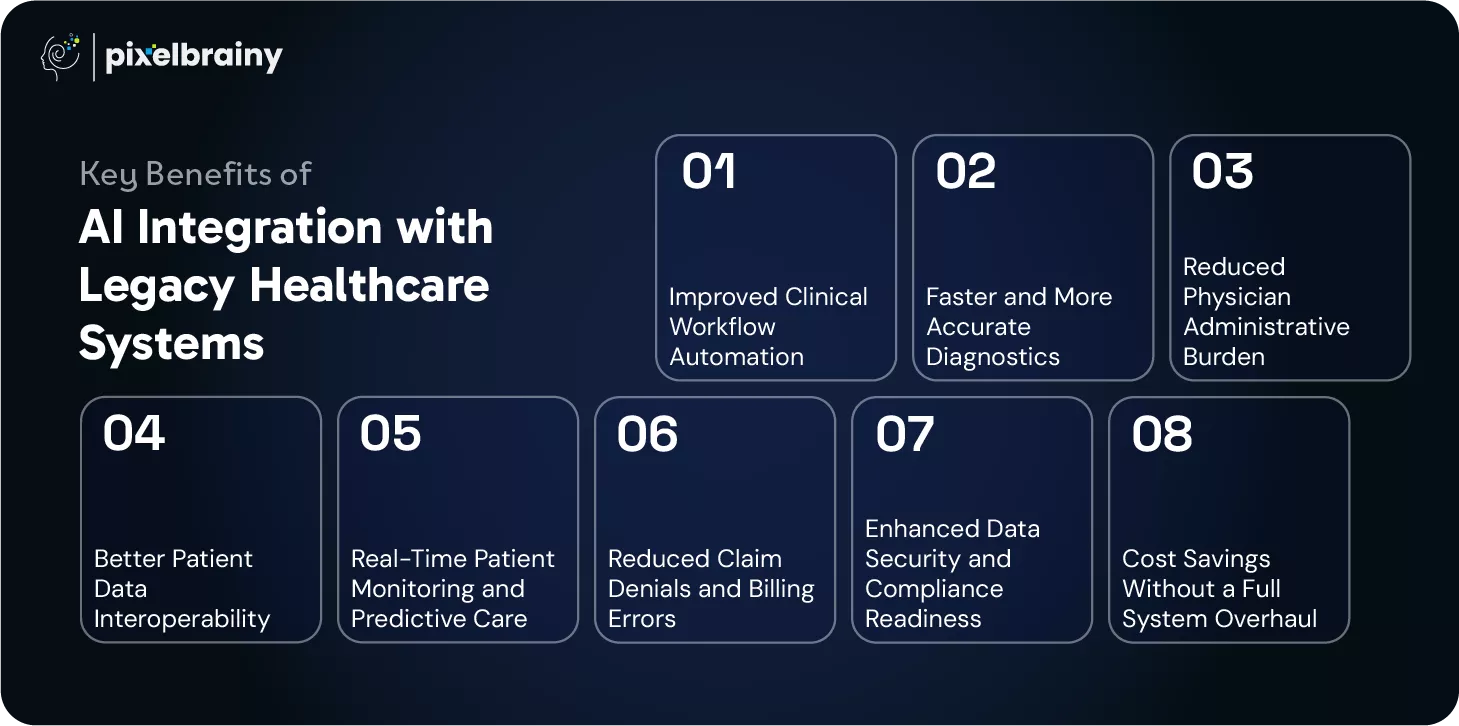
Administrative processes consume a significant portion of healthcare professionals' time every day. From appointment scheduling and patient intake to documentation and prescription management, many critical tasks still rely heavily on manual effort.
Through clinical workflow automation, AI can automate repetitive processes, reduce paperwork, and streamline day-to-day operations. Healthcare teams spend less time navigating multiple systems and more time focusing on patient care.
This not only improves staff productivity but also reduces delays, minimizes human errors, and creates a more efficient clinical environment.
Modern healthcare generates enormous volumes of clinical data, imaging studies, pathology reports, and laboratory results.
AI can analyze this information rapidly and identify patterns that may be difficult for humans to detect quickly. When integrated into existing healthcare systems, AI supports clinicians by providing data-driven insights that accelerate diagnostic workflows and improve decision-making.
Earlier detection of diseases and faster access to relevant patient information can ultimately contribute to better treatment outcomes and enhanced patient care.
One of the leading causes of physician burnout is excessive administrative work.
Healthcare providers often spend hours documenting patient encounters, updating records, and completing compliance-related tasks. AI-powered tools can automatically generate visit summaries, organize patient information, and assist with clinical documentation.
By reducing time spent on administrative responsibilities, physicians can devote more attention to patient interactions, resulting in higher provider satisfaction and improved care experiences.
Disconnected systems remain one of the biggest obstacles in healthcare technology.
Patient records are frequently distributed across EHRs, laboratory platforms, imaging systems, billing applications, and departmental databases. This fragmentation creates delays and increases the risk of incomplete information during clinical decision-making.
With AI-powered EHR integration, healthcare organizations can connect previously isolated systems and create a more unified patient data ecosystem. AI helps identify, organize, and synchronize information across multiple platforms, making it easier for care teams to access comprehensive patient records when needed.
Healthcare providers are increasingly moving toward proactive care models rather than reacting after complications occur.
AI can continuously monitor patient data from wearable devices, bedside monitoring equipment, EHR systems, and clinical databases. By analyzing these data streams in real time, AI can identify early warning signs of deterioration, infection risks, or potential complications.
This allows healthcare teams to intervene sooner, improve patient outcomes, and potentially reduce avoidable hospital readmissions.
Revenue cycle management remains a major challenge for many hospitals and healthcare providers.
Coding errors, incomplete documentation, and claim inaccuracies can result in delayed reimbursements and financial losses. AI can review claims before submission, detect inconsistencies, identify missing information, and recommend corrective actions.
This helps healthcare organizations reduce claim denials, improve billing accuracy, accelerate payment cycles, and strengthen financial performance.
As cyber threats continue to target healthcare organizations, protecting patient information has become a top priority.
AI-powered security systems can monitor network activity, identify unusual behavior patterns, detect potential threats, and provide early warnings before security incidents escalate. AI can also assist compliance teams by monitoring access controls, auditing data usage, and identifying potential regulatory gaps.
These capabilities help healthcare organizations strengthen security while maintaining compliance with evolving healthcare regulations.
For many hospitals, the most attractive benefit is the ability to modernize without replacing every technology platform.
Through Legacy healthcare software integration with AI, organizations can extend the value of existing systems while introducing advanced capabilities such as automation, predictive analytics, intelligent decision support, and interoperability improvements.
This phased approach minimizes disruption, reduces implementation risks, and avoids the significant costs associated with large-scale replacement projects.
The benefits of AI integration in legacy hospital systems extend far beyond technology upgrades. Organizations gain stronger interoperability, better clinical outcomes, reduced administrative burdens, improved patient experiences, and greater Healthcare operational efficiency while preserving years of valuable clinical and operational data.
As healthcare demands continue to evolve, the growing benefits of AI in healthcare clearly demonstrate Why legacy healthcare systems need AI modernization. Rather than rebuilding everything from scratch, hospitals can leverage the Integration of artificial intelligence with legacy healthcare system environments to modernize strategically, improve performance across departments, and create a scalable foundation for future innovation.
"Which hospitals have successfully integrated AI into their legacy systems and what results did they achieve?"
This is one of the most important questions healthcare executives ask before investing in AI initiatives.
The reason is simple. Decision-makers do not want theoretical benefits. They want proof that AI can work within existing healthcare environments without requiring a complete EHR replacement, disrupting clinical workflows, or risking years of patient data.
Fortunately, there are already several well-documented examples of healthcare organizations and technology providers successfully integrating AI into established systems and delivering measurable outcomes.
The following AI in healthcare real examples demonstrate how hospitals and healthcare platforms are using AI to modernize legacy infrastructure while preserving existing technology investments.
One of the most widely recognized AI EHR integration examples is the partnership between athenahealth and Abridge.
Rather than asking healthcare providers to replace their EHR systems, Abridge's ambient AI technology was integrated directly into athenahealth's platform. The solution automatically converts clinician-patient conversations into structured clinical documentation during patient visits.
This allows physicians to spend less time typing notes and more time focusing on patient care. According to early results associated with athenahealth's Ambient Notes solution, physicians experienced up to a 36% reduction in after-hours documentation time, helping address one of the biggest contributors to clinician burnout.
This example demonstrates how AI can enhance existing workflows without requiring healthcare organizations to abandon their current EHR investments.
Medical imaging departments often operate on complex legacy infrastructures that are difficult and expensive to replace.
To address this challenge, GE HealthCare partnered with Blackford to integrate AI capabilities directly into its existing PACS imaging environments. Instead of rebuilding imaging systems, the integration allows radiologists to access multiple AI applications from a centralized platform within their current workflow.
The result is faster image analysis, streamlined diagnostic processes, and easier deployment of advanced imaging algorithms.
Among today's leading Hospital AI modernization success stories, this example highlights how AI can improve diagnostic capabilities while leveraging existing healthcare technology infrastructure.
OSF HealthCare provides one of the strongest examples of large-scale AI adoption within an established healthcare ecosystem.
Rather than focusing on a single department, OSF integrated AI across multiple operational and clinical functions, including patient care optimization, decision support, workflow improvement, and healthcare delivery initiatives.
The organization reported significant value creation through its clinical AI platform. According to Healthcare IT News, OSF generated approximately $2.6 million in value while improving both operational performance and clinical outcomes.
This represents a compelling Successful AI healthcare integration case study because it demonstrates that AI can generate measurable financial and clinical returns when implemented strategically across existing healthcare systems.
A common theme across these examples is that none of these organizations started by replacing every legacy application.
Instead, they focused on targeted modernization initiatives. AI was integrated into existing EHRs, imaging platforms, clinical workflows, and operational systems to solve specific business problems first.
This approach allowed healthcare organizations to improve efficiency, reduce administrative burdens, enhance clinical decision-making, and strengthen interoperability while preserving historical patient data and minimizing disruption.
For hospitals operating on aging EHR platforms or legacy management systems, these examples provide clear evidence that modernization does not always require a complete technology overhaul. In many cases, strategic AI integration can deliver meaningful results faster, at lower cost, and with significantly less operational risk than a full replacement project.
"I am the CTO of a mid-sized private healthcare organization and our current legacy system was built on outdated architecture that does not support modern APIs or cloud connectivity. We have tried upgrading in the past but faced major data loss risks, so we are now looking for a step-by-step AI integration approach that ensures zero data disruption, full regulatory compliance, and smooth adoption by our non-technical medical staff."
This is one of the most common scenarios healthcare technology leaders face today.
The good news is that successful AI Integration with Legacy Healthcare System environments rarely begins with replacing everything at once. Instead, organizations follow a structured roadmap that minimizes risk, protects patient data, and delivers measurable outcomes through controlled implementation phases.
The following Step-by-step process to healthcare AI integration provides a practical framework healthcare organizations can use to modernize existing systems safely and effectively.
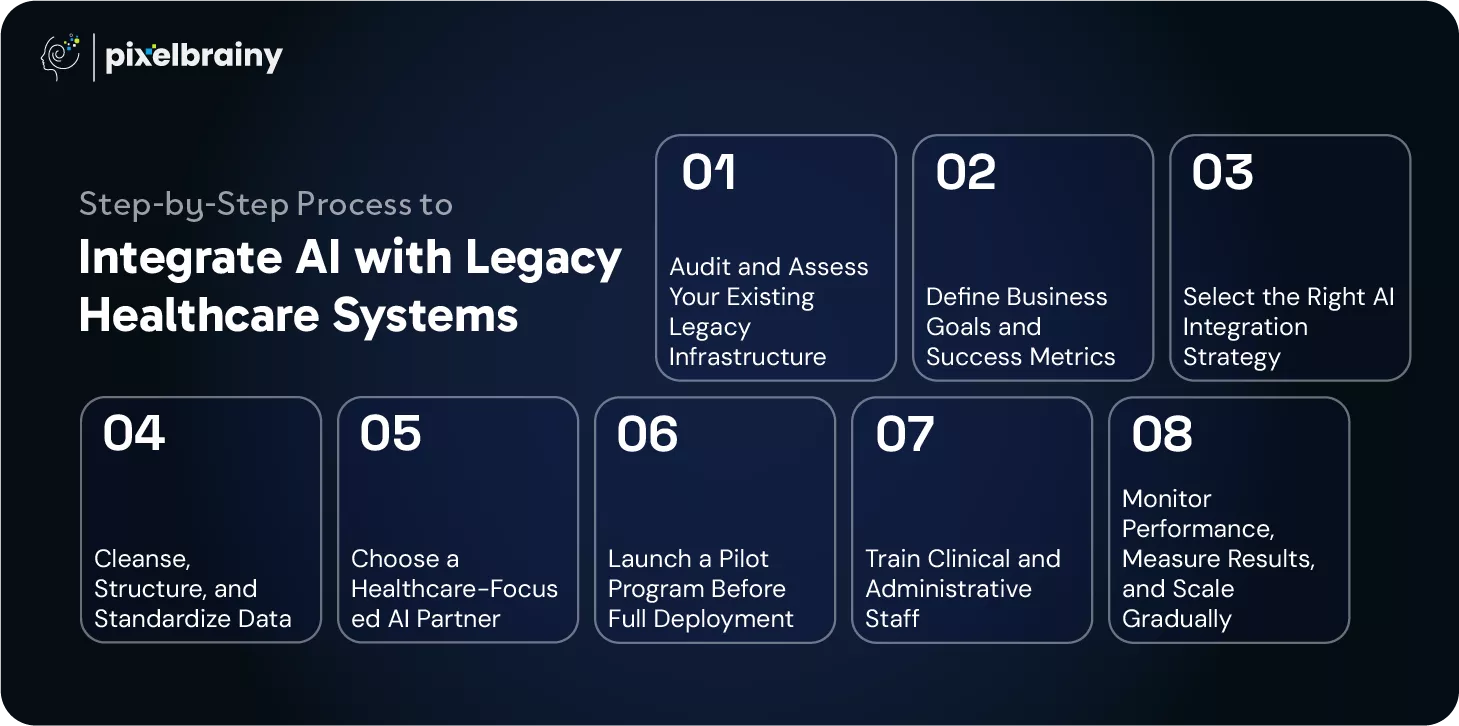
Before introducing AI, healthcare organizations must develop a complete understanding of their current technology landscape.
This assessment should identify all EHR systems, hospital management platforms, laboratory applications, imaging systems, billing software, databases, and third-party integrations currently in use. Teams should also document performance issues, interoperability challenges, security gaps, and workflow bottlenecks.
A detailed audit helps leadership understand where AI can deliver the greatest impact while avoiding unnecessary disruptions.
AI projects fail when organizations focus on technology before defining outcomes.
Start by identifying the specific problems you want AI to solve. These may include reducing physician documentation time, improving patient data retrieval, automating administrative workflows, enhancing diagnostics, or strengthening interoperability.
Establish measurable KPIs such as reduced processing times, lower claim denial rates, improved patient satisfaction scores, or increased operational efficiency to evaluate project success.
Not every healthcare organization requires the same implementation model.
Some hospitals benefit from API-based integrations, while others require middleware solutions capable of connecting older systems with modern AI platforms. In more complex environments, a phased rollout approach may be the safest option.
The objective is to modernize legacy healthcare software with AI without introducing unnecessary risk to mission-critical operations.
AI systems are only as effective as the data they receive.
Before implementation, organizations should identify duplicate records, inconsistent formats, incomplete information, and data quality issues across existing systems. Standardizing healthcare data using frameworks such as HL7 and FHIR improves interoperability and ensures AI models can access reliable information.
This step is often overlooked but has a significant impact on long-term success.
Healthcare AI projects require expertise in technology, compliance, security, and clinical workflows.
Whether working with top AI development companies or specialized healthcare vendors, organizations should prioritize partners with proven healthcare implementation experience, HIPAA knowledge, interoperability expertise, and a track record of successful deployments.
Many organizations also engage best healthcare AI consulting firms during the planning phase to reduce implementation risks and accelerate decision-making.
Attempting organization-wide deployment from day one increases project risk.
Instead, select a specific department, workflow, or use case for initial implementation. Common pilot areas include clinical documentation, patient scheduling, revenue cycle management, or diagnostic support.
Pilot programs allow teams to validate performance, identify challenges, gather user feedback, and make adjustments before broader deployment.
Technology adoption depends heavily on user confidence.
Even the most advanced AI solution will struggle if physicians, nurses, and administrative teams do not understand how to use it effectively. Training should focus on practical workflows, role-specific use cases, compliance requirements, and clear explanations of how AI supports daily responsibilities.
For healthcare organizations with non-technical staff, change management is often just as important as the technology itself.
AI integration should be treated as an ongoing optimization process rather than a one-time deployment.
Organizations should continuously monitor performance metrics, user adoption rates, workflow improvements, security controls, compliance requirements, and operational outcomes. Regular reviews help identify opportunities for improvement and support data-driven expansion into additional departments.
This phased approach enables a healthcare organization to integrate AI into its existing legacy healthcare software while maintaining operational stability. It also provides a practical roadmap for organizations looking to implement AI into its legacy EHR and hospital management systems without risking data integrity, disrupting patient care, or creating compliance challenges.
When executed correctly, this structured process transforms AI adoption from a high-risk technology initiative into a controlled modernization strategy that delivers sustainable long-term value.
One of the first questions healthcare executives ask is:
"How much does it cost to integrate AI into a legacy healthcare system?"
The honest answer is that there is no one-size-fits-all price. The cost depends on your existing infrastructure, the complexity of integrations, compliance requirements, data quality, and the type of AI capabilities you want to deploy.
A small clinic integrating an AI scheduling assistant will have a very different investment profile than a multi-branch hospital network implementing AI across EHRs, diagnostics, billing, and patient engagement systems.
Several variables determine the total cost of an AI modernization project.
Older healthcare environments often contain multiple disconnected systems, custom databases, outdated architectures, and unsupported integrations. The more complex the environment, the greater the implementation effort required.
Integrating AI into a single department is significantly different from connecting multiple hospitals, clinics, laboratories, and administrative offices under one ecosystem.
AI-powered diagnostics, clinical decision support, medical imaging analysis, workflow automation, predictive analytics, revenue cycle management, and billing automation all have different development and integration requirements.
Healthcare projects often require extensive HIPAA, HL7, FHIR, data governance, audit logging, and security validation work. Compliance-related activities can represent a substantial portion of the project scope.
Pre-built AI tools may reduce upfront costs, while highly customized AI solutions provide greater flexibility but require additional development and integration effort.
Many organizations underestimate the amount of work needed to cleanse, normalize, validate, and structure healthcare data before AI deployment.
Successful implementation requires physician training, administrative onboarding, workflow adjustments, and user adoption support across the organization.
While every project is unique, healthcare organizations can generally expect the following investment ranges:
| Project Type | Estimated Cost Range |
|---|---|
| Basic AI integration using middleware and existing workflows | $25,000 to $100,000 |
| Mid-scale hospital AI integration with custom APIs and interoperability requirements | $100,000 to $400,000 |
| Enterprise-level multi-branch healthcare AI modernization | $400,000 to $750,000+ |
Additionally, healthcare organizations should be aware that HL7 integration projects typically range from $50,000 to $750,000, depending on integration scope, data complexity, and interoperability requirements.
Many vendors focus on implementation costs while overlooking expenses that emerge later in the project lifecycle.
Common hidden costs include:
These expenses should be included in budget planning from the beginning to avoid unexpected overruns.
The most successful healthcare organizations do not evaluate AI solely based on implementation cost.
They evaluate it based on operational and financial impact.
AI can reduce administrative workloads, decrease claim denials, improve patient throughput, automate repetitive tasks, reduce documentation time, and minimize costly human errors. These efficiency gains often generate measurable returns that continue long after deployment.
A notable example is OSF HealthCare, which reported significant value generation through its clinical AI initiatives, demonstrating how AI investments can translate into both operational improvements and financial benefits.
Healthcare organizations can significantly lower risk and cost by following a strategic implementation approach.
Instead of deploying AI across the entire organization immediately:
Ultimately, AI integration should be viewed as a modernization investment rather than a technology expense. When planned correctly, healthcare organizations can improve efficiency, strengthen interoperability, enhance patient care, and achieve long-term returns without replacing the systems they rely on today.
One of the biggest misconceptions about healthcare AI adoption is that hospitals need to completely replace their existing software before implementing AI.
In reality, successful AI integration with legacy healthcare systems depends less on replacing technology and more on selecting the right tools that can connect, secure, process, and analyze data across existing environments.
Whether your organization is operating an aging EHR platform, an outdated hospital management system, or multiple disconnected clinical applications, the right technology stack can help bridge the gap between legacy infrastructure and modern AI capabilities.
The goal is simple: enable AI to access healthcare data securely, communicate with existing systems, support compliance requirements, and deliver actionable insights without disrupting patient care.
The following tools and technologies form the foundation of most successful healthcare AI integration projects.
| Technology Category | Purpose | Common Examples |
|---|---|---|
| AI Middleware Platforms | Connect legacy systems with modern AI applications without replacing existing software | Mulesoft, Red Hat Integration, Boomi |
| API Management Tools | Enable secure communication between AI models, EHRs, and healthcare applications | Postman, Kong, Apigee |
| Healthcare Interoperability Standards | Standardize healthcare data exchange across systems | HL7, FHIR, CDA |
| AI & Machine Learning Platforms | Build and deploy predictive analytics and intelligent automation solutions | Azure AI, Google Vertex AI, AWS Health AI |
| EHR Integration Tools | Connect AI capabilities directly with clinical workflows and patient records | Epic APIs, Cerner APIs, athenahealth APIs |
| Data Warehousing & Analytics Platforms | Consolidate healthcare data from multiple sources for AI processing | Snowflake, Databricks, Microsoft Fabric |
| Security & Compliance Solutions | Protect patient data and support HIPAA compliance requirements | Microsoft Purview, Okta, CrowdStrike |
| Robotic Process Automation (RPA) Tools | Automate repetitive administrative and operational tasks | UiPath, Automation Anywhere |
| Monitoring & Observability Platforms | Track system performance, AI accuracy, and operational health | Datadog, New Relic, Splunk |
| Cloud Infrastructure Platforms | Provide scalable environments for AI deployment and integration | AWS, Microsoft Azure, Google Cloud |
For many hospitals, AI middleware for legacy systems is the most critical component of the entire integration architecture.
Middleware acts as a bridge between outdated healthcare applications and modern AI tools. Instead of modifying core systems directly, middleware allows data to flow securely between applications, reducing implementation risks and minimizing disruption to existing workflows.
This approach is often faster, safer, and more cost-effective than replacing core healthcare platforms.
Even the most advanced AI model will struggle if healthcare systems cannot exchange data effectively.
This is why standards such as HL7 and FHIR integration play a central role in healthcare modernization projects. They enable patient information, clinical records, laboratory results, and billing data to move consistently across different systems and departments.
Strong interoperability creates the foundation for accurate AI-driven insights and automation.
Healthcare organizations handle highly sensitive patient information, making security a non-negotiable requirement.
Every AI integration project should include encryption, identity management, access controls, audit logging, threat monitoring, and HIPAA compliance safeguards from the beginning. Security should never be treated as an afterthought once AI deployment is underway.
The most successful legacy healthcare software modernization projects are not defined by a single AI tool. They combine interoperability frameworks, integration layers, compliance technologies, cloud infrastructure, analytics platforms, and AI capabilities into a unified ecosystem that supports long-term growth and innovation.
The right combination of tools can transform an outdated healthcare system into an intelligent, interoperable, and AI-ready platform without requiring a complete technology replacement.
"What HIPAA and data compliance requirements must hospitals follow when integrating AI with legacy healthcare systems? We recently failed a compliance audit because our legacy system cannot support modern AI data handling. What regulations do we need to meet before starting AI integration?"
For many healthcare organizations, this is one of the most important questions in the entire AI adoption journey.
While AI can significantly improve clinical workflows, diagnostics, interoperability, and operational efficiency, healthcare providers must ensure that every integration initiative meets strict regulatory and security requirements. Failing to address compliance early can lead to audit failures, regulatory penalties, data breaches, and costly project delays.
Before implementing AI, hospitals should focus on the following key compliance areas.
Any HIPAA compliant AI healthcare integration project must protect the confidentiality, integrity, and availability of Protected Health Information (PHI).
AI systems that process patient records, clinical notes, imaging data, billing information, or health histories must follow HIPAA Privacy, Security, and Breach Notification Rules. This includes implementing access controls, audit logs, user authentication, data encryption, and continuous monitoring.
Healthcare organizations should also conduct regular risk assessments to identify vulnerabilities before AI systems are deployed.
Many healthcare organizations overlook one critical requirement.
If an AI vendor, cloud provider, or technology partner accesses, stores, processes, or transmits patient data, they typically qualify as a Business Associate under HIPAA regulations.
This means a formal Business Associate Agreement healthcare AI contract must be established before data sharing begins. The BAA clearly defines security responsibilities, compliance obligations, breach reporting requirements, and data protection expectations between both parties.
Without a properly executed BAA, healthcare organizations may face significant compliance risks.
Modern AI solutions rely on accurate, accessible, and standardized healthcare data.
This is where HL7 FHIR healthcare compliance becomes essential. HL7 provides widely adopted messaging standards for healthcare information exchange, while FHIR enables modern API-based interoperability between EHRs, clinical systems, patient portals, and AI applications.
Organizations attempting to integrate AI into older healthcare environments often discover that their legacy systems lack support for modern interoperability standards. Addressing these gaps is frequently a prerequisite for successful AI implementation.
Healthcare organizations participating in CMS-regulated programs must also consider interoperability requirements established under the CMS Interoperability and Patient Access Final Rule.
These regulations promote secure patient access to healthcare data and encourage standardized information exchange across providers, payers, and healthcare technology platforms.
AI initiatives that depend on data sharing, analytics, and patient engagement should align with these interoperability requirements from the beginning.
Strong security controls remain a core component of Healthcare data privacy regulations.
Healthcare organizations should implement encryption for both data at rest and data in transit, multi-factor authentication, role-based access controls, automated threat detection, security monitoring, and detailed audit trails.
Because AI systems often access large volumes of sensitive patient information, regulators increasingly expect organizations to demonstrate comprehensive data governance practices.
Successful AI compliance in legacy healthcare systems begins long before the first AI model is deployed. Hospitals that prioritize HIPAA requirements, interoperability standards, vendor agreements, security controls, and regulatory readiness from the planning stage are far more likely to achieve successful outcomes while avoiding costly compliance setbacks.
The safest approach is to treat compliance as a core component of AI integration strategy rather than a final checklist before deployment.
Integrating AI into a healthcare environment is not simply a technology upgrade. It is a transformation initiative that affects data infrastructure, clinical workflows, compliance processes, staff adoption, and operational efficiency.
While the benefits of AI are substantial, healthcare organizations often encounter obstacles that can delay implementation, increase costs, or limit expected outcomes if they are not addressed proactively.
In fact, many healthcare leaders begin their modernization journey after experiencing an unsuccessful integration attempt. A common concern sounds like this:
"We tried integrating a new AI tool into our hospital system last year and it failed because of data compatibility issues. What went wrong and how do we do it correctly?"
The reality is that most AI projects fail for predictable reasons, many of which can be avoided through proper planning, governance, and implementation strategies.
Understanding these Challenges of AI integration in healthcare and the solutions behind them can significantly improve the success rate of modernization initiatives.
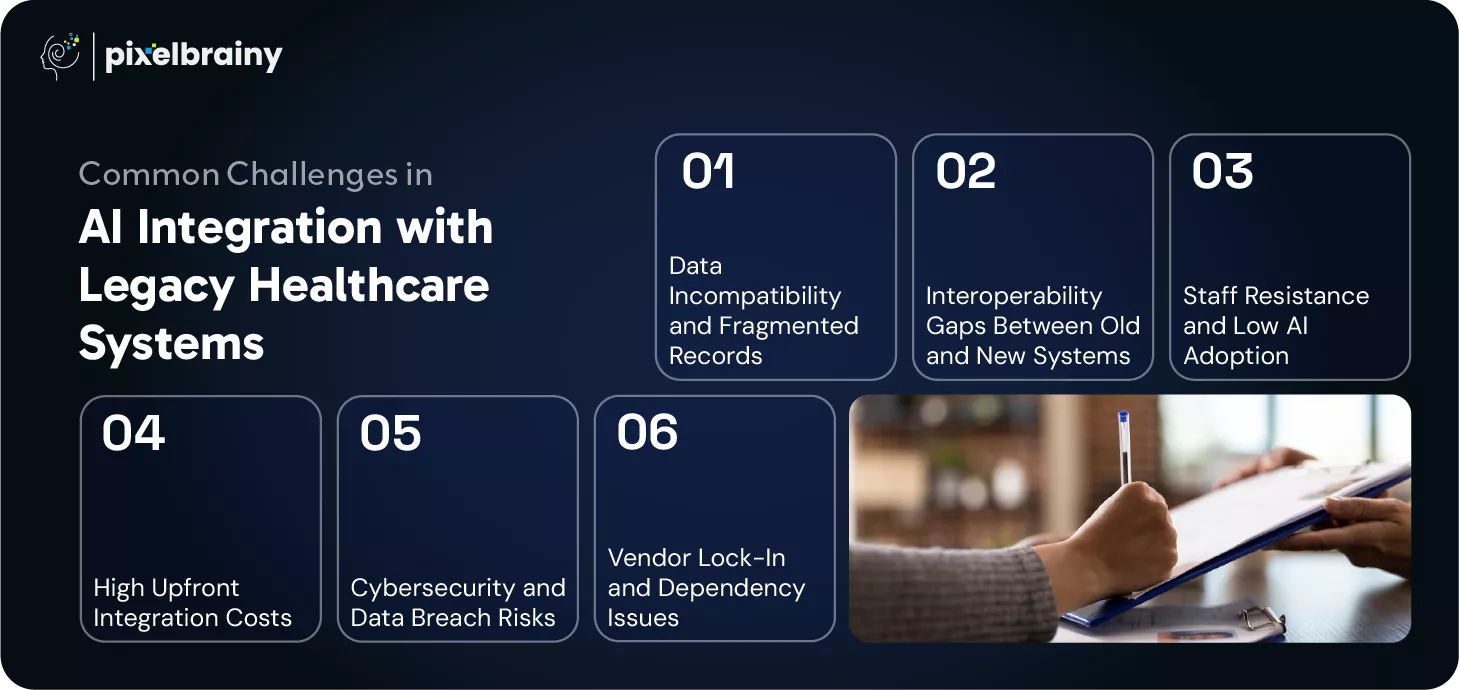
Legacy healthcare systems often store patient information across multiple databases, departments, and applications. Data formats may be inconsistent, incomplete, duplicated, or incompatible with modern AI platforms.
Solution: Conduct a comprehensive data assessment before implementation. Standardize records using healthcare interoperability standards such as HL7 and FHIR, eliminate duplicate entries, and establish data governance policies that ensure data quality and consistency.
One of the most common Legacy system interoperability issues occurs when outdated applications cannot communicate effectively with modern AI tools, cloud platforms, or newly implemented EHR systems.
Solution: Implement middleware platforms, API gateways, and interoperability frameworks that act as bridges between legacy infrastructure and modern applications. A phased integration strategy typically reduces disruption while improving scalability.
Technology adoption often fails because of human factors rather than technical limitations.
Physicians, nurses, and administrative teams may be hesitant to trust AI tools if they believe the technology will complicate workflows or replace human expertise.
Solution: Invest in change management initiatives, practical training programs, and pilot projects that demonstrate clear value. Involving end users early in the implementation process significantly improves adoption rates.
Budget concerns remain one of the most significant Healthcare AI adoption barriers for hospitals and healthcare providers.
Costs can include software licensing, infrastructure upgrades, compliance assessments, integration work, training, and ongoing support.
Solution: Start with high-impact use cases that deliver measurable ROI. Departments such as clinical documentation, billing, scheduling, and diagnostics often provide quick wins that help justify future investments.
Healthcare organizations manage highly sensitive patient information, making security a critical concern during AI adoption.
Every new integration introduces additional data flows, access points, and potential vulnerabilities.
Solution: Implement end-to-end encryption, role-based access controls, multi-factor authentication, continuous monitoring, security audits, and HIPAA-compliant safeguards throughout the project lifecycle.
Some healthcare providers become overly dependent on a single vendor's proprietary ecosystem, creating challenges when future upgrades or migrations become necessary.
Solution: Choose technology partners that support open standards, API-based architectures, HL7 messaging, and FHIR interoperability. Maintaining control over your data and integrations helps preserve long-term flexibility.
When approached strategically, the challenges of AI integration become manageable milestones rather than barriers to healthcare modernization.
For healthcare leaders, the challenge is rarely deciding whether AI can deliver value. The real challenge is finding the right partner who can integrate AI into existing healthcare systems without disrupting operations, compromising patient data, or creating compliance risks.
Many healthcare organizations ask:
"Which company can help us integrate AI into our legacy hospital system without replacing everything or putting our patient data at risk?"
The answer lies in working with a partner that understands both healthcare technology and the realities of legacy infrastructure.
As an experienced AI product development company for healthcare, PixelBrainy helps hospitals, clinics, healthcare networks, and medical organizations modernize existing systems through practical, scalable, and compliance-focused AI solutions.
Rather than recommending costly system replacements, PixelBrainy focuses on integrating AI into the technology infrastructure you already use. Whether your organization relies on aging EHR platforms, hospital management systems, billing applications, laboratory software, or disconnected clinical systems, our team develops strategies that maximize existing investments while introducing modern AI capabilities.
Our approach begins with a comprehensive system assessment. We evaluate infrastructure limitations, interoperability challenges, data quality issues, compliance requirements, and modernization opportunities before recommending a tailored implementation roadmap.
As part of our Healthcare legacy system modernization services, we provide end-to-end support that includes:
Healthcare compliance remains a core part of every project. As a HIPAA compliant AI development company, PixelBrainy follows industry best practices for data security, encryption, audit logging, access controls, HIPAA compliance, HL7 interoperability, and FHIR-ready development.
Our team includes healthcare technology specialists, AI engineers, integration architects, and compliance-focused developers who understand the unique requirements of modern healthcare environments.
Most importantly, we deliver custom AI solutions for hospitals through a phased implementation approach. This allows organizations to introduce AI gradually, validate results, minimize operational disruption, and reduce implementation risks while preserving critical patient data and existing workflows.
Whether you are exploring AI-powered clinical automation, predictive analytics, EHR modernization, workflow optimization, or enterprise-wide healthcare transformation, PixelBrainy provides the expertise and strategic guidance needed to move forward with confidence.
If you're ready to modernize your legacy healthcare systems with AI, PixelBrainy can help you build a secure, compliant, and scalable roadmap tailored to your organization's goals.
If your hospital is still dealing with slow patient data retrieval, disconnected departments, recurring system limitations, or aging EHR infrastructure, the challenge is not simply maintaining outdated technology. The bigger challenge is ensuring your organization can continue delivering efficient, data-driven, and patient-centered care in an increasingly connected healthcare environment.
Throughout this guide, we explored how AI integration with legacy healthcare system environments can help healthcare organizations modernize existing infrastructure without the cost and disruption of a complete system replacement. From improving interoperability and automating clinical workflows to strengthening compliance, enhancing diagnostics, and reducing operational inefficiencies, AI provides a practical path toward sustainable Healthcare AI modernization.
The most successful healthcare organizations are not waiting for the perfect opportunity to transform their systems. They are taking incremental steps, identifying high-impact use cases, and building a roadmap that aligns technology investments with business and patient care goals.
If you are ready to Start AI integration in healthcare, the best first step is understanding where your current systems stand and what modernization opportunities exist.
Book a free consultation with PixelBrainy today and get a personalized legacy system assessment to discover the most effective AI integration strategy for your healthcare organization.
Yes. Many legacy healthcare systems can still be connected to AI solutions using middleware, custom connectors, data integration layers, and interoperability frameworks. Hospitals do not always need API-ready software to begin their AI modernization journey.
The timeline depends on system complexity, data quality, compliance requirements, and implementation scope. A focused pilot project may take a few months, while enterprise-wide AI integration across multiple departments or facilities can take significantly longer through phased deployment.
Not necessarily. Many healthcare organizations integrate AI into existing environments while keeping patient records within current EHRs and databases. The objective is often to enhance access, interoperability, and intelligence without performing a full-scale data migration.
Departments such as clinical documentation, patient scheduling, revenue cycle management, medical billing, claims processing, and diagnostic imaging often generate the fastest returns because AI can quickly reduce manual workloads and improve operational efficiency.
Yes. AI combined with interoperability technologies can help unify patient information across multiple EHRs, clinics, and departments. This improves data accessibility, reduces duplication, and creates a more comprehensive view of patient health records.
Healthcare organizations should assess the partner's experience with healthcare systems, HIPAA compliance expertise, HL7 and FHIR interoperability knowledge, security practices, healthcare AI implementation experience, and ability to work with existing legacy infrastructure rather than forcing a complete system replacement.

About The Author
Sagar Bhatnagar
Sagar Sahay Bhatnagar brings over a decade of IT industry experience to his role as Marketing Head at PixelBrainy. He's known for his knack in devising creative marketing strategies that boost brand visibility and market influence. Sagar's strategic thinking, coupled with his innovative vision and focus on results, sets him apart. His track record of successful campaigns proves his ability to utilize digital platforms effectively for impactful marketing efforts. With a genuine passion for both technology and marketing, Sagar continuously pushes PixelBrainy's marketing initiatives to greater success.

Working with the PixelBrainy team has been a highly positive experience. They understand the design requirements and create beautiful UX elements to meet the application needs. The dev team did an excellent job bringing my vision to life. We discussed usability and flow. Sagar worked with his team to design the database and begin coding. Working with Sagar was easy. He has the knowledge to create robust apps, including multi-language support, Google and Apple ID login options, Ad-enabled integrations, Stripe payment processing, and a Web Admin site for maintaining support data. I'm extremely satisfied with the services provided, the quality of the final product, and the professionalism of the entire process. I highly recommend them for Android and iOS Mobile Application Design and Development.

Great experience working with them. Had a lot of feedback and I found that unlike most contractors they were bugging me for updates instead of the other way around. They were extremely time conscience and great at communicating! All work was done extremely high quality and if not on time, early! They were always proactive when it comes to communication and the work is great/above par always. Very flexible and a great team to work with! Goes above and beyond to present us with multiple options and always provides quality. Amazing work per usual with Chitra. If you have UI/UX or branding design needs I recommend you go to them! Will likely work with them in the future as well, definitely recommended!

PixelBrainy is a joy to work with and is a great partner when thinking through branding, logo, and website layout. I appreciate that they spend time going into the "why" behind their decisions to help inform me and others about industry best practices and their expertise.

I hired them to design our software apps. Things I really like about them are excellent communication skills, they answer all project suggestions and collaborate right away, and their input on design and colors is amazing. This project was complex and needed patience and creativity. The team is amazing to do business with. I will be using them long-term. Glad to see there are some good people out there. I was afraid to try and outsource my project to someone but I am glad I met them! I really can't say enough. They went above and beyond on this project. I am very happy with everything they have done to make my business stand out from the competition.

It was great working with PixelBrainy and the team. They were very responsive and really owned the project. We'll definitely work with them again!

I recently worked with the PixelBrainy team on a project and I was blown away by their communication skills. They were prompt, clear, and articulate in all of our interactions. They listened and provided valuable feedback and suggestions to help make the project a success. They also kept me updated throughout the entire process, which made the experience stress-free and enjoyable.

PixelBrainy is very good at what it does. The team also presents themselves very professionally and takes care of their side of things very well. I could fully trust them taking up the design work in a timely and organised manner and their attention to detail saved us lots of effort and time. This particular project was quite intense and the team showed that they function very well under pressure. Very much looking forward to working with her again!

It's always an absolute pleasure working with them. They completed all of my requests quickly and followed every note I had for them to a T, which made our process go smoothly from start to finish. Everything was completed fast and following all of the guidelines. And I would recommend their services to anyone. If you need any design work done in the future, PixelBrainy should be your first call!

They took ownership of our requirements and designed and proposed multiple beautiful variants. The team is self-motivated, requires minimum supervision, committed to see-through designs with quality and delivering them on time. We would definitely love to work with PixelBrainy again when we have any requirements.

PixelBrainy was a big help with our SaaS application. We've been hard at work with a new UI/UX and they provided a lot of help with the designs. If you're looking for assistance with your website, software, or mobile application designs, PixelBrainy and the team is a great recommendation.

PixelBrainy designers are amazing. They are responsive, talented, and always willing to help craft the design until it matches your vision. I would recommend them and plan to continue them for my future projects and more!!!

They were awesome! Did a good job fast, and good communication. Will work with them again. Thank you

Creative, detail-oriented, and talented designers who take direction well and implement changes quickly and accurately. They consistently over-delivered for us.

PixelBrainy team is very talented and creative. Great designers and a pleasure to work with. PixelBrainy is an excellent communicator and I look forward to working with them again.

PixelBrainy has a very talented design team. Their work is excellent and they are very responsive. I enjoy working with them and hope to continue on all of our future projects.


Transform your ideas into reality with us.
Across these industries, each engagement brings unique challenges, from early-stage product development to scaling complex systems, helping us build a practical understanding of real-world product environments.