AI Summary Powered by PixelBrainy
Mental health awareness is no longer a silent movement; it is a global priority. With millions of people seeking accessible therapy options, digital platforms have become the bridge between individuals and licensed professionals. Apps like BetterHelp have changed how people approach therapy by offering confidential, affordable, and on-demand mental health support. If you are wondering how to build a Mental Health App like BetterHelp, you are already exploring one of the most impactful and profitable areas of digital healthcare.
A Mental Health App like BetterHelp allows users to connect with certified therapists through text, audio, and video sessions, helping them receive the care they need anytime and anywhere. This convenience has made such apps a vital part of modern mental wellness, breaking barriers related to cost, distance, and stigma. For entrepreneurs and healthcare organizations, developing a Mental Health App like BetterHelp represents a meaningful business opportunity that combines innovation with purpose.
The demand for digital therapy solutions continues to rise as users increasingly prefer personalized and remote counseling experiences. By investing in Mental Health App development like BetterHelp, you can position your brand as a trusted provider in this growing space.
In this detailed guide, we will explore everything you need to know to create an app like BetterHelp, including its working model, essential and advanced features, development steps, technology stack, cost, and best practices. Let’s dive in and uncover how you can turn your vision into a transformative digital therapy platform.
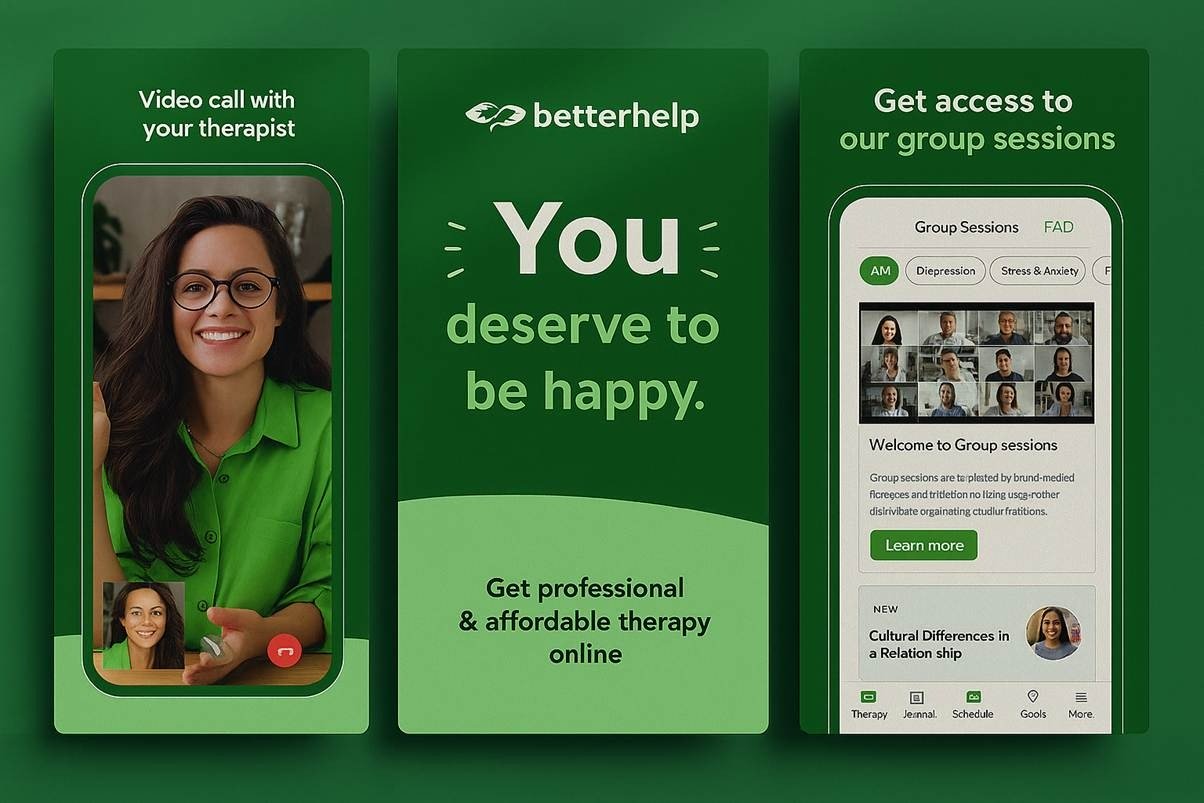
A Mental Health App like BetterHelp is a digital therapy platform that connects users with licensed therapists and counselors online. It makes mental health care more accessible, private, and convenient for people who may not have the time, confidence, or resources to attend in-person therapy sessions. These apps focus on creating a safe and supportive environment where users can talk openly about stress, anxiety, depression, or any emotional challenges they face.
Unlike traditional therapy that requires appointments and physical visits, a BetterHelp-like app brings therapy to the user’s smartphone or computer. It allows individuals to find help whenever they need it and communicate in ways that suit their comfort level.
After signing up, the user fills out a short questionnaire about their emotional goals, concerns, and preferences. The app then uses this information to match them with a therapist who specializes in the areas they want to focus on. This matching process helps ensure users receive the right kind of support from the start.
Once matched, users can talk to their therapist through live video sessions, phone calls, or text messages. This flexibility allows people to choose what feels most comfortable, whether they prefer face-to-face conversations or messaging at their own pace.
One of the biggest advantages of a Mental Health App like BetterHelp is that users can reach out for support whenever they need it. They can message their therapist between sessions or schedule appointments that fit their schedule. This on-demand approach helps people stay consistent with their mental health journey without interruptions.
A well-built Mental Health App like BetterHelp focuses on accessibility, personalization, and trust. It provides users with ongoing support and helps them manage their emotional well-being in a way that feels simple, safe, and effective.
The demand for online therapy is growing rapidly as people seek convenient, affordable, and private mental health support. For businesses and entrepreneurs, building a Mental Health App like BetterHelp is not just a trend but a long-term investment in an industry that combines technology with human care.
Here are six key reasons why you should develop an app like BetterHelp for your business:
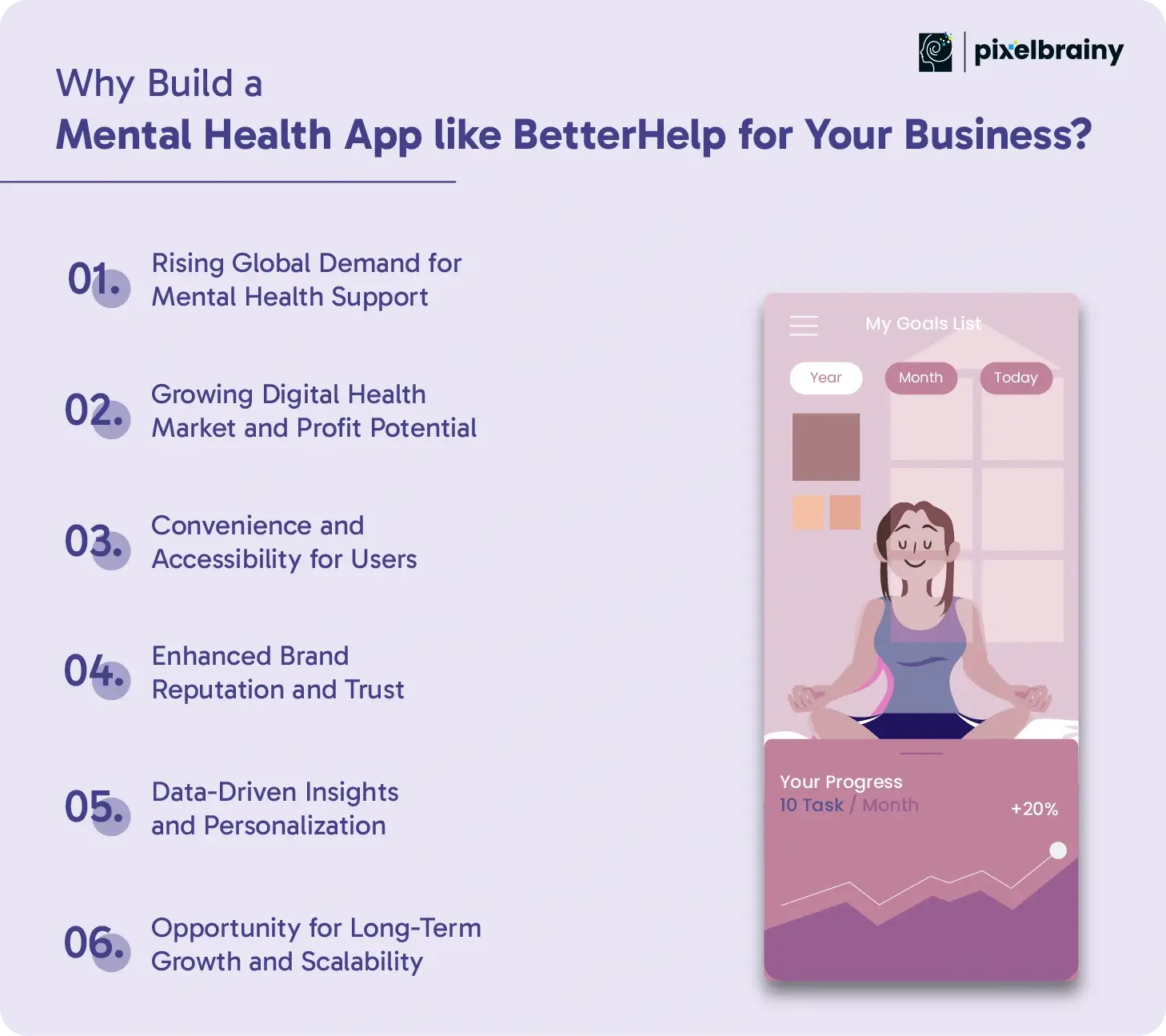
Mental health issues such as stress, anxiety, and depression have become increasingly common, especially after the global pandemic. Millions of people are now turning to online therapy as a practical solution. By developing a Mental Health App like BetterHelp, businesses can tap into this growing market and provide accessible support to users worldwide. For example, BetterHelp currently serves millions of users in over 190 countries, showing the potential scale of such a platform.
The digital mental health market is projected to reach billions in revenue in the next few years. Businesses that build an app like BetterHelp can benefit from multiple revenue streams such as subscription plans, pay-per-session models, and partnerships with organizations. This combination of social impact and financial return makes Mental Health App development like BetterHelp an attractive opportunity for tech startups and healthcare investors.
One of the biggest advantages of developing a Mental Health App like BetterHelp is the accessibility it provides. Users can connect with therapists from any location at any time, without worrying about travel or scheduling limitations. This flexibility attracts a wider user base, including working professionals, students, and people in remote areas. Offering such convenience builds strong user loyalty and long-term engagement.
When a company invests in building a Mental Health App like BetterHelp, it positions itself as a socially responsible and forward-thinking brand. Mental health awareness is a sensitive yet powerful topic. Businesses that prioritize wellness and empathy gain respect from users, partners, and even investors. By offering quality care through technology, your brand can build trust and emotional connection with its audience.
Modern therapy apps use AI-based algorithms to personalize the user experience. By analyzing user behavior and preferences, you can recommend therapists, content, and exercises tailored to individual needs. This personalization not only improves therapy outcomes but also increases user satisfaction. For instance, many leading apps now integrate mood tracking and progress analytics to help both users and therapists measure improvements over time.
A well-planned Mental Health App like BetterHelp is built to grow over time. Businesses can expand their services by adding new therapy categories, self-help tools, or partnerships with wellness professionals. The subscription-based model also ensures consistent recurring revenue, making it easier to scale sustainably. By developing a Mental Health App like BetterHelp, you set the foundation for a platform that can evolve with user needs and market trends.
Building a Mental Health App like BetterHelp allows businesses to make a real impact while entering a rapidly growing market. It bridges the gap between technology and emotional well-being, offering users professional help and giving your brand a strong position in the digital health industry.
When you plan to build a Mental Health App like BetterHelp, the key is to design a solution that’s easy to use, secure, and truly valuable for both users and therapists. The strength of a successful mental health platform lies in how well it integrates communication, personalization, and privacy features to deliver a seamless therapy experience.
Here are the 15 must-have features that will make developing a Mental Health App like BetterHelp effective and scalable:
| Core Feature | Description |
| User Registration & Profile Setup | Allow users to create an account quickly using their email, phone number, or social logins. Profiles should include personal details, therapy goals, and preferences for better personalization. |
| Therapist Onboarding & Verification | Set up a dedicated registration flow for therapists with document verification and license checks. This ensures that only certified professionals can provide therapy through your platform. |
| Smart Matching Algorithm | Use AI-powered algorithms to match users with therapists who specialize in their specific needs. This intelligent matching process improves engagement and satisfaction rates. |
| Secure Chat & Messaging | Provide private, encrypted chat options that let users communicate comfortably with their therapists. Confidentiality and ease of use help build long-term trust. |
| Video and Audio Therapy Sessions | Include high-quality video and voice call functionality for real-time therapy. This replicates the in-person experience while keeping therapy flexible and convenient. |
| Session Scheduling System | Offer an intuitive calendar to manage appointments easily. Users should be able to view therapist availability, book sessions, and receive automatic reminders. |
| Push Notifications & Reminders | Keep users informed about upcoming sessions, messages, or motivational content. Regular notifications improve user engagement and help maintain therapy consistency. |
| Progress Tracking Dashboard | Display user progress through visual charts, reports, and session summaries. This encourages accountability and helps both users and therapists measure improvements. |
| In-App Payments & Subscription Plans | Add a secure payment system for subscriptions or one-time sessions. Supporting multiple payment options increases accessibility and conversion. |
| Multi-Device Accessibility | Ensure the app runs smoothly across smartphones, tablets, and desktops. Cross-platform compatibility makes it easier for users to stay connected anywhere. |
| Resource Library & Self-Help Tools | Include a library of articles, mental health exercises, and mindfulness guides. This keeps users engaged and provides ongoing value between sessions. |
| Group Therapy & Community Sessions | Allow users to join group sessions based on shared experiences or conditions. Group therapy fosters connection and emotional support among users. |
| Therapist Dashboard & Analytics | Give therapists tools to manage sessions, view user progress, and track outcomes. Built-in analytics help them enhance therapy effectiveness over time. |
| Data Privacy & HIPAA Compliance | Implement robust data encryption and comply with regulations like HIPAA or GDPR. Security and privacy are essential in Mental Health App development like BetterHelp. |
| Feedback & Rating System | Let users provide feedback and rate their experiences after each session. Continuous feedback helps maintain service quality and strengthens user trust. |
A well-planned Mental Health App like BetterHelp with these features ensures long-term growth, user satisfaction, and strong credibility in the digital wellness market.
Once you have built the core structure of your platform, adding advanced features can take your app from good to exceptional. These functionalities enhance user engagement, personalization, and long-term retention — making your Mental Health App like BetterHelp stand out in a competitive market.
| Advanced Feature | Description |
| AI-Powered Therapy Recommendations | Integrate artificial intelligence to analyze user mood patterns and suggest personalized therapy content, coping exercises, or mindfulness sessions. This keeps users engaged between consultations. |
| Emotion Recognition Technology | Use facial or voice emotion recognition to help therapists better understand user emotions during sessions. This feature adds an innovative and empathetic layer to online counseling. |
| Mood Tracking and Journaling | Let users record their daily emotions, thoughts, and triggers in a digital journal. Visual mood trends help users and therapists identify progress and behavioral patterns over time. |
| Chatbot for Initial Support | Include an AI-based chatbot that provides immediate responses, emergency resources, or basic emotional support when therapists are unavailable. This ensures users never feel left alone. |
| Gamified Wellness Activities | Introduce reward-based wellness activities, challenges, and guided tasks that motivate users to stay consistent in their self-improvement journey. Gamification improves user retention. |
| Integration with Wearable Devices | Connect the app with smartwatches or fitness trackers to monitor heart rate, sleep quality, and stress levels. These real-time insights help therapists design more effective therapy plans. |
| Personalized Content Feed | Offer tailored articles, podcasts, and therapy tips based on user preferences and mental health goals. Personalization increases the perceived value of your Mental Health App development like BetterHelp. |
| Crisis Management and Emergency Helplines | Add a dedicated safety feature that connects users to local helplines or emergency contacts during high-stress moments. This ensures user safety and builds trust. |
| AI Session Summaries and Notes | Provide automatic summaries after each session for both users and therapists. These summaries help track progress, making it easier to continue therapy seamlessly. |
| Multilingual Support and Localization | Expand your app’s accessibility by offering multiple language options. This feature allows you to reach a wider audience and scale your BetterHelp-like Mental Health App globally. |
Integrating these advanced features during Mental Health App development like BetterHelp helps create a more personalized, reliable, and innovative platform that truly enhances the therapy experience for every user.
Creating a successful Mental Health App like BetterHelp requires more than just coding; it needs empathy, planning, and a deep understanding of both technology and user psychology. Entrepreneurs, healthcare startups, and wellness brands aiming to enter this space must follow a structured process to ensure long-term success. Every phase plays a key role in creating a trusted and engaging platform that helps users improve their emotional well-being while strengthening your business position in the digital health industry.
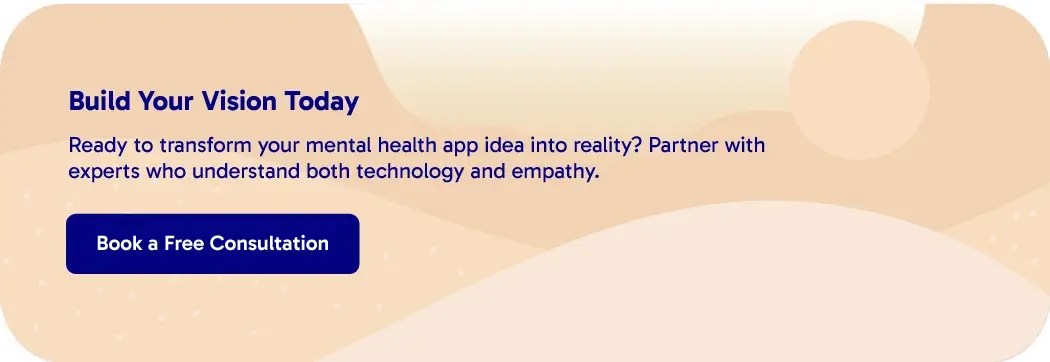
Below is a detailed breakdown of the development process of a Mental Health App like BetterHelp in seven essential steps:
Before diving into development, conduct thorough market research to understand your target audience — such as working professionals, students, or individuals seeking affordable therapy. Study your competitors and identify the key gaps in existing mental health platforms like BetterHelp or Talkspace. Focus on unique user challenges such as lack of therapist availability or language preferences.
Developing a Proof of Concept (PoC) helps validate your idea by confirming that it addresses real pain points and user needs before you invest heavily.
Why this matters / Aim: This step helps ensure your concept resonates with real users and gives you a data-backed foundation for product strategy. Understanding your audience early reduces business risk and strengthens investor confidence.
Outline the essential features that users and therapists will rely on, including onboarding, live sessions, payments, and tracking tools. Collaborate with experienced developers and architects to design a scalable system that can evolve over time. Prioritize secure data handling and compliance with healthcare standards to protect user trust.
This phase lays the groundwork for the building of a Mental Health App like BetterHelp that functions smoothly even as your user base grows.
Why this matters / Aim: This step ensures your app remains stable, secure, and adaptable as you expand services or integrate advanced technologies later. A strong foundation prevents future scalability issues and ensures consistent performance.
A mental health platform must feel calm, intuitive, and safe. Partner with a reliable UI/UX design company that understands wellness psychology and accessibility design. Focus on soothing colors, simple navigation, and clear typography that encourages users to feel relaxed. Your audience should never feel overwhelmed — they should feel guided and supported at every step.
Why this matters / Aim: A thoughtful design creates emotional comfort and builds long-term trust. It’s especially critical for mental health users who may already be dealing with anxiety or stress. A great interface can become your app’s strongest retention factor.
Start small but meaningful by launching an MVP that includes core functionalities such as chat, therapist search, and video sessions. An MVP allows you to test how users actually interact with your product before scaling. Once real feedback is collected, refine the app and gradually expand to features like AI chatbots, progress tracking, or mood analytics.
Why this matters / Aim: The MVP approach helps reduce time-to-market while ensuring you’re building something users truly value. It allows entrepreneurs and healthcare startups to launch early, attract investors, and validate the app’s real-world usability.
Also Read: Mental Health AI Chatbot Development: Tools, Techniques, and Challenges
To stand out, focus on Mental Health App Development like BetterHelp integrating AI. Artificial intelligence can personalize therapy suggestions, recommend resources, and analyze user engagement patterns. Partnering with top AI development companies in the USA will help you integrate tools like predictive analytics, emotional tone analysis, or AI chatbots for initial support.
Why this matters / Aim: AI helps make therapy smarter and more personal. It increases engagement by offering tailored recommendations while helping therapists make informed decisions. This improves both user satisfaction and therapy outcomes, giving your app a modern edge.
Testing is a critical step in how to make a Mental Health App like BetterHelp. Perform functional testing to check performance, security testing to ensure compliance with HIPAA and GDPR, and usability testing to confirm the app feels natural to users. Consider beta testing with a small group of users to identify real-world issues before the public launch.
Why this matters / Aim: Thorough testing ensures your users experience reliability and safety from day one. For mental health users, even small bugs can disrupt trust, so delivering a polished, stable product strengthens your brand’s credibility.
Once your app passes testing, launch it across app stores and promote it using targeted marketing campaigns. Focus on social media outreach, influencer partnerships, and SEO-based content strategies to reach your ideal audience. After launch, continue to enhance features, fix issues, and introduce new tools. The goal is to turn your MVP into a full-fledged therapy ecosystem that grows with your users.
Why this matters / Aim: Launching successfully is not the end — it’s the beginning of a long-term relationship with your users. Continuous updates and data-driven improvements will help retain users and attract new ones, ensuring consistent business growth.
By following these steps carefully, you can develop a Mental Health App like BetterHelp that’s secure, scalable, and meaningful for your audience. This process ensures your app delivers both emotional value to users and sustainable success for your business.
Also Read: How To Build An AI Mental Health and Wellness App Like Wysa?
Estimating costs accurately is key if you’re serious about entering the online therapy market. Below is a breakdown of typical cost ranges you’ll encounter when contemplating what is cost to develop a Mental Health App like BetterHelp, considering everything from design and development to compliance and launch.
| App Tier | Estimated Cost | What’s Included |
| Basic Mental Health App like BetterHelp | ≈ US $20,000 – US $50,000 | Core features: user registration, therapist directory, chat/voice only, simple UI/UX. Minimum compliance, no advanced analytics or AI. |
| Intermediate Mental Health App like BetterHelp | ≈ US $50,000 – US $120,000 | Adds video sessions, scheduling, payment integration, progress tracking dashboard. More robust UI/UX, stronger security and compliance. |
| Advanced Mental Health App like BetterHelp | ≈ US $120,000 – US $200,000+ | Full-fledged platform: chat + video + audio + AI-powered recommendations, emotion recognition, wearable integration, multi-language support, advanced analytics, high-end compliance. |
By understanding these cost tiers and drivers you’ll be in a stronger position to budget and negotiate when you develop an app like BetterHelp or plan for Mental Health App Development cost like BetterHelp Integrating AI.
When you’re looking to develop a Mental Health App like BetterHelp, choosing the right tools and technology stack is just as important as the idea itself. The stack you select should support scalability, security, real-time interaction, and compliance with healthcare standards.
Below is a detailed overview of the recommended technologies and tools that are commonly used in successful Mental Health App development like BetterHelp projects.
| Layer / Function | Recommended Tools / Technologies | Why It Matters for Building a Mental Health App like BetterHelp |
| Front-End Mobile / Web Apps | Frameworks such as React Native (for iOS & Android) or Flutter (single codebase) | Using a cross-platform framework enables faster development and consistent user experience across devices, critical for a therapy-oriented app where simplicity and reliability matter. |
| Web app front-end with Vue.js or React | For browser access (therapist dashboard or user login via web) this allows flexibility and reach beyond mobile. | |
| Back-End / Server Side | Node.js, Express or Python Django / Flask | The back end must handle user management, session orchestration, data storage, analytics, and integrations—so choosing a robust, scalable server framework is essential. |
| Real-Time Communication | WebRTC for video/voice sessions, Socket.io for live messaging | Therapy sessions rely on real-time audio/video and messaging, so incorporating reliable real-time communication tech is fundamental for your platform. |
| Database / Storage | SQL (PostgreSQL, MySQL) + NoSQL (MongoDB) | You may need structured data (user profiles, sessions) and flexible data (chat logs, notes). A combined approach supports both. |
| Cloud Infrastructure / Hosting | AWS (Amazon Web Services) / Microsoft Azure / Google Cloud Platform | Hosting on a mature cloud platform helps with scalability, compliance (e.g., data residency), backup/disaster recovery—key for a health app. |
| Authentication & Security | OAuth 2.0 / JWT (JSON Web Tokens); encryption at rest and in transit | Since you are dealing with sensitive health information, strong authentication and encryption are non-negotiable. |
| APIs & Third-Party Integrations | Payment gateways (Stripe, Braintree); Teleconferencing SDKs (Twilio, Daily.co) | These integrations let you implement monetization and session tools without building everything from scratch. |
| AI / Analytics / ML Tools | TensorFlow, PyTorch, scikit-learn; data pipelines on Google BigQuery or AWS SageMaker | If you are looking into Mental Health App Development Cost like BetterHelp Integrating AI, you’ll need these tools to power features like mood analytics, recommendation engines, emotion detection. |
| DevOps / CI-CD Tools | Docker, Kubernetes, Jenkins, GitLab CI | For smooth deployment, updates, and ensuring reliability of your platform over time. |
| Compliance & Monitoring Tools | Logging/monitoring (ELK stack, Prometheus), auditing, HIPAA/GDPR compliance frameworks | Regulatory compliance (HIPAA in US, GDPR in EU) is very important for a therapy app. |
Selecting the right technology stack is a strategic decision in building a Mental Health App like BetterHelp. A strong tech foundation ensures your app is reliable, secure, and able to scale as you add new features or expand your audience.
Whether you are how to make a Mental Health App like BetterHelp from scratch or extending an existing platform, this stack framework gives you the flexibility and performance needed for success.
A strong business model is the backbone of any successful digital therapy platform. When you plan to build a Mental Health App like BetterHelp, understanding how such platforms generate revenue is crucial to achieving both social impact and financial sustainability. BetterHelp’s success lies in combining accessibility, professional therapy, and a subscription-based system that keeps users engaged long-term.
Let’s break down the key components that define the business model of a Mental Health App like BetterHelp and how you can apply them to your own project.
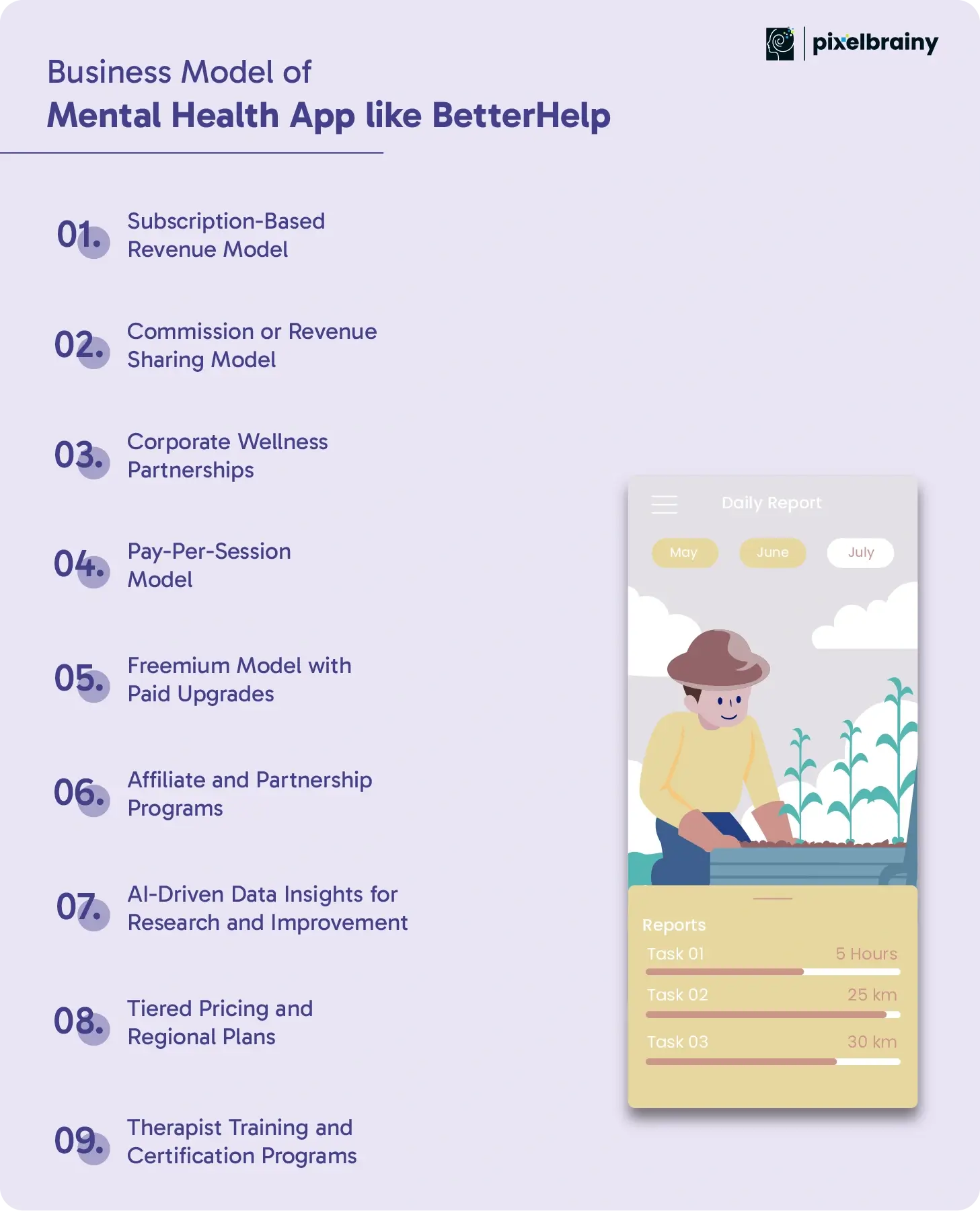
The most common model used by BetterHelp is subscription-based. Users pay a weekly or monthly fee to access therapy services through chat, audio, or video sessions. Subscriptions often include unlimited messaging and a set number of live sessions.
This model ensures a steady income stream and high user retention. It’s ideal for businesses looking to maintain predictable revenue while offering flexible pricing tiers to suit different budgets.
In this approach, therapists receive a percentage of the fee paid by the user, while the platform retains a commission. For instance, if a session costs $80, the therapist might receive $60, and the platform keeps $20 as its share.
This model is beneficial during the initial Mental Health App Development like BetterHelp phase because it motivates professionals to join while allowing your platform to scale profitably over time.
Many companies are now investing in employee mental health programs. By partnering with organizations, your app can offer therapy packages as part of corporate wellness initiatives. These partnerships create bulk subscription deals and strengthen your brand’s credibility in the business-to-business (B2B) segment.
This channel expands your audience beyond individual users and generates consistent, high-value contracts.
This flexible model allows users to pay only for the sessions they attend, without committing to a subscription. It attracts individuals who prefer short-term therapy or are exploring professional help for the first time.
Offering this model alongside subscription plans gives users freedom of choice and broadens your market reach. It’s an excellent way to gain first-time users who may later upgrade to a recurring plan.
A freemium strategy allows users to access limited features for free, such as basic self-help tools or educational content, while premium features like therapist sessions, AI mood tracking, and advanced analytics remain paid.
This approach increases app downloads, builds trust, and allows users to experience your app’s value before committing financially.
Your app can also generate revenue through affiliate programs with healthcare providers, meditation apps, or wellness brands. By recommending related products and services, you earn commissions or referral fees.
This not only diversifies your income but also positions your app as a comprehensive mental wellness ecosystem rather than just a therapy tool.
As part of the Cost of creating a Mental Health App like BetterHelp, integrating AI analytics can create additional revenue opportunities. Anonymized and aggregated data can be used for mental health research partnerships (always ensuring ethical standards and user consent).
Such collaborations can attract funding from research institutions, universities, or government wellness initiatives.
Adopting a tiered pricing structure allows you to cater to various user demographics and income levels. Offer affordable local pricing in emerging markets and premium plans with advanced AI features in developed regions.
This flexible strategy ensures inclusivity while optimizing profitability globally.
Once your platform grows, you can offer online certification or training programs for new therapists joining the network. This creates an additional revenue stream and strengthens your app’s reputation as a trusted mental health provider.
A well-planned business model for a Mental Health App like BetterHelp combines steady revenue generation with genuine user value. Whether you choose subscriptions, partnerships, or AI-driven innovations, your success will depend on balancing empathy, trust, and technology — creating a platform that thrives financially while improving mental wellness worldwide.
Building a custom Mental Health App like BetterHelp requires more than technical knowledge. It means understanding people, their emotions, and their challenges, and transforming that understanding into a supportive digital experience. To create a product that users trust and therapists value, every design and development decision should prioritize empathy, privacy, and simplicity.
Here are some proven best practices to follow during Mental Health App development like BetterHelp that can help you build a platform users feel safe returning to every day.
Mental health data is extremely sensitive. Always comply with standards like HIPAA, GDPR, and ISO security certifications. Use end-to-end encryption, secure authentication (OAuth or biometric login), and data anonymization to protect user privacy.
Best practice: Incorporate privacy-by-design principles from day one. Users are more likely to trust and continue using your app when they feel their personal information is safe.
The app’s interface should feel calming, friendly, and easy to navigate. Avoid cluttered layouts or overly complex steps that could frustrate users who are already under emotional strain.
Best practice: Collaborate with UI/UX experts who specialize in healthcare and emotional wellness apps. Use soft colors, simple icons, and supportive microcopy to create a sense of safety and comfort.
Every user’s mental health journey is different. Integrate personalized therapy recommendations, adaptive learning paths, and multi-language support.
Best practice: Build an inclusive app by adding features like adjustable text sizes, voice guidance, and accessibility compliance (WCAG standards) to ensure everyone can benefit from your platform.
A mental health app’s credibility depends on the quality of its therapy network. Partner with certified psychologists, psychiatrists, and counselors to provide accurate, ethical, and professional care.
Best practice: Create an expert onboarding and verification process that validates credentials and ensures compliance with medical ethics before therapists start accepting clients.
Instead of launching a full-fledged product immediately, begin with an MVP that includes essential features such as therapist matching, chat, and video sessions. Gather user feedback, monitor engagement, and refine before scaling.
Best practice: Use real data to guide development decisions. This approach helps control costs, reduce risk, and ensure your app aligns with actual user needs.
AI can enhance personalization and provide 24/7 support, but it should never replace human empathy. Use AI to detect emotional cues, recommend coping strategies, and automate basic interactions, but ensure all AI features are transparent and supervised.
Best practice: Work with ethical AI consultants and data scientists to avoid bias, ensure explainability, and meet healthcare AI compliance standards.
Mental health crises can happen at any time. Include backup support options like emergency hotlines or alternate therapists when the primary counselor is unavailable.
Best practice: Maintain a system that monitors therapist availability and auto-suggests alternative time slots or support channels to avoid user frustration.
A well-executed custom Mental Health App like BetterHelp combines innovation, security, and compassion. By following these best practices, you can create a platform that not only meets technical excellence but also genuinely transforms how people access and experience mental health care.
Developing a Mental Health App like BetterHelp is an exciting venture, but it also comes with unique challenges that require careful planning and execution. From data security to therapist onboarding, every step demands accuracy, empathy, and a deep understanding of both technology and human psychology.
Here are some of the most common challenges developers and businesses face — and how to overcome them effectively.
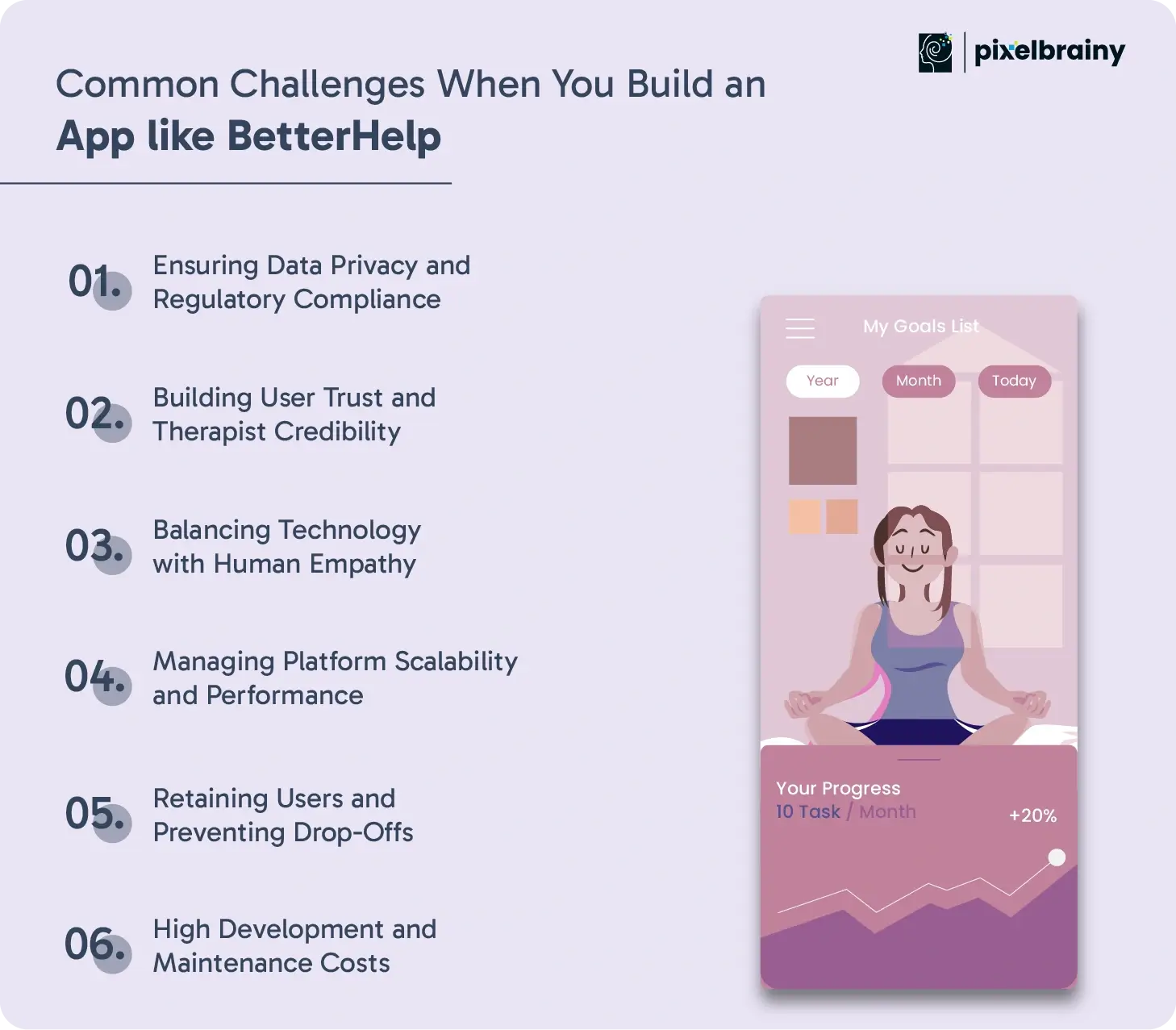
Challenge: Handling sensitive health information is one of the biggest responsibilities in this industry. Any breach or weak security measure can damage trust and cause serious legal consequences.
Solution: Follow HIPAA, GDPR, and ISO security standards strictly. Use encrypted communication, secure cloud hosting, and role-based access control. Regular security audits and working with compliance consultants can help maintain ongoing protection for both users and therapists.
Challenge: Mental health users need reassurance that they are connecting with qualified and genuine professionals. A lack of transparency or poor onboarding can lead to distrust and low retention.
Solution: Implement a strong verification process for therapists that includes license checks, certifications, and identity validation. Display therapist profiles with verified badges and transparent credentials to build confidence among users.
Challenge: While automation and AI improve efficiency, they can sometimes make the experience feel impersonal. Users seeking therapy need emotional connection, not just data-driven responses.
Solution: Use AI as a support tool, not a replacement for therapists. Employ AI to assist with matching, reminders, and journaling insights, but ensure human professionals remain at the core of therapy interactions.
Challenge: As your user base grows, maintaining performance, video quality, and data synchronization can become difficult. Lag or downtime can seriously impact the therapy experience.
Solution: Invest in a robust backend architecture and cloud infrastructure early. Use load balancing, microservices, and real-time monitoring tools to ensure smooth communication even during high traffic.
Challenge: Many mental health users download apps but stop using them after a few sessions due to lack of engagement or follow-up.
Solution: Build a personalized experience that includes progress tracking, reminders, gamified self-care activities, and feedback loops. Encourage consistency by sending motivational content and celebrating user milestones.
Challenge: The cost of building a Mental Health App like BetterHelp can be high due to complex features, compliance needs, and ongoing updates. Without proper planning, budgets can easily spiral.
Solution: Start with an MVP, validate your concept, and scale gradually. Partner with experienced tech vendors and explore cost-effective tools for AI, hosting, and analytics. Outsourcing certain components can also help control expenses while maintaining quality.
Overcoming these challenges requires a mix of technical expertise, user empathy, and long-term planning. When approached strategically, each obstacle becomes an opportunity to create a Mental Health App like BetterHelp that is reliable, secure, and truly life-changing for its users.
When planning to develop a Mental Health App like BetterHelp, choosing the right technology partner determines how effectively your vision becomes reality. PixelBrainy stands out as a trusted development partner, helping healthcare innovators and startups create intelligent, secure, and human-centered therapy platforms.
As a reputed AI Development company in USA, we combine deep expertise in health tech with advanced artificial intelligence and modern design practices to deliver custom-built wellness applications that truly make an impact.
PixelBrainy has helped several organizations build personalized digital therapy platforms that mirror the reliability and warmth of real-life counseling. Our experience in Custom Mental Health App like BetterHelp projects allows us to design intuitive interfaces, integrate secure databases, and deliver seamless communication features that connect therapists and users efficiently.
One of our healthcare clients in North America partnered with us to launch an AI-enhanced therapy and wellness app. The platform featured multilingual video sessions, smart therapist matching, and mood tracking tools. Within six months of release, it reached over 25,000 active users and significantly improved therapist response times and retention rates.
PixelBrainy is more than just a development partner — we are a long-term ally in innovation. With our blend of empathy, technology, and reliability, we help businesses transform ideas into meaningful digital therapy solutions. If you’re ready to build your own Mental Health App like BetterHelp, PixelBrainy a leading AI app development company can bring your vision to life with precision and care.
Building a Mental Health App like BetterHelp is more than a business idea — it’s a step toward making mental health care accessible, affordable, and personalized for everyone. With the right strategy, technology, and trusted development partner, you can create a platform that truly transforms lives.
PixelBrainy specializes in Mental Health App Development like BetterHelp, helping startups and healthcare brands design secure, AI-powered, and user-friendly therapy platforms. Our team ensures every project aligns with real user needs and global compliance standards.
If you are ready to develop a Mental Health App like BetterHelp that combines empathy with innovation, our experts can guide you through every step of the journey.
Book an appointment with PixelBrainy today and start building your next-generation mental health solution.
The development timeline usually ranges from 3 to 9 months, depending on features, platform complexity, and integrations. An MVP version can be built faster, while a full-featured app with AI, analytics, and advanced security takes longer.
While you don’t need to be a medical organization, you must ensure that all therapists on your platform are certified professionals. Your app should also comply with regulations like HIPAA or GDPR to handle health data securely.
While you don’t need to be a medical organization, you must ensure that all therapists on your platform are certified professionals. Your app should also comply with regulations like HIPAA or GDPR to handle health data securely.
Key features include secure messaging, video sessions, scheduling, therapist matching, and progress tracking. Advanced versions may include mood tracking, AI-powered chatbots, and resource libraries for self-help.
Focus on personalization, simplicity, and trust. Offer flexible communication options, culturally sensitive therapy, and AI-driven recommendations. A great user experience often determines success more than features alone.
PixelBrainy has a proven track record in Custom Mental Health App like BetterHelp projects. With expertise in AI, healthcare compliance, and empathetic design, we help businesses turn their vision into secure and impactful digital wellness solutions.

About The Author
Sagar Bhatnagar
Sagar Sahay Bhatnagar brings over a decade of IT industry experience to his role as Marketing Head at PixelBrainy. He's known for his knack in devising creative marketing strategies that boost brand visibility and market influence. Sagar's strategic thinking, coupled with his innovative vision and focus on results, sets him apart. His track record of successful campaigns proves his ability to utilize digital platforms effectively for impactful marketing efforts. With a genuine passion for both technology and marketing, Sagar continuously pushes PixelBrainy's marketing initiatives to greater success.

Working with the PixelBrainy team has been a highly positive experience. They understand the design requirements and create beautiful UX elements to meet the application needs. The dev team did an excellent job bringing my vision to life. We discussed usability and flow. Sagar worked with his team to design the database and begin coding. Working with Sagar was easy. He has the knowledge to create robust apps, including multi-language support, Google and Apple ID login options, Ad-enabled integrations, Stripe payment processing, and a Web Admin site for maintaining support data. I'm extremely satisfied with the services provided, the quality of the final product, and the professionalism of the entire process. I highly recommend them for Android and iOS Mobile Application Design and Development.

Great experience working with them. Had a lot of feedback and I found that unlike most contractors they were bugging me for updates instead of the other way around. They were extremely time conscience and great at communicating! All work was done extremely high quality and if not on time, early! They were always proactive when it comes to communication and the work is great/above par always. Very flexible and a great team to work with! Goes above and beyond to present us with multiple options and always provides quality. Amazing work per usual with Chitra. If you have UI/UX or branding design needs I recommend you go to them! Will likely work with them in the future as well, definitely recommended!

PixelBrainy is a joy to work with and is a great partner when thinking through branding, logo, and website layout. I appreciate that they spend time going into the "why" behind their decisions to help inform me and others about industry best practices and their expertise.

I hired them to design our software apps. Things I really like about them are excellent communication skills, they answer all project suggestions and collaborate right away, and their input on design and colors is amazing. This project was complex and needed patience and creativity. The team is amazing to do business with. I will be using them long-term. Glad to see there are some good people out there. I was afraid to try and outsource my project to someone but I am glad I met them! I really can't say enough. They went above and beyond on this project. I am very happy with everything they have done to make my business stand out from the competition.

It was great working with PixelBrainy and the team. They were very responsive and really owned the project. We'll definitely work with them again!

I recently worked with the PixelBrainy team on a project and I was blown away by their communication skills. They were prompt, clear, and articulate in all of our interactions. They listened and provided valuable feedback and suggestions to help make the project a success. They also kept me updated throughout the entire process, which made the experience stress-free and enjoyable.

PixelBrainy is very good at what it does. The team also presents themselves very professionally and takes care of their side of things very well. I could fully trust them taking up the design work in a timely and organised manner and their attention to detail saved us lots of effort and time. This particular project was quite intense and the team showed that they function very well under pressure. Very much looking forward to working with her again!

It's always an absolute pleasure working with them. They completed all of my requests quickly and followed every note I had for them to a T, which made our process go smoothly from start to finish. Everything was completed fast and following all of the guidelines. And I would recommend their services to anyone. If you need any design work done in the future, PixelBrainy should be your first call!

They took ownership of our requirements and designed and proposed multiple beautiful variants. The team is self-motivated, requires minimum supervision, committed to see-through designs with quality and delivering them on time. We would definitely love to work with PixelBrainy again when we have any requirements.

PixelBrainy was a big help with our SaaS application. We've been hard at work with a new UI/UX and they provided a lot of help with the designs. If you're looking for assistance with your website, software, or mobile application designs, PixelBrainy and the team is a great recommendation.

PixelBrainy designers are amazing. They are responsive, talented, and always willing to help craft the design until it matches your vision. I would recommend them and plan to continue them for my future projects and more!!!

They were awesome! Did a good job fast, and good communication. Will work with them again. Thank you

Creative, detail-oriented, and talented designers who take direction well and implement changes quickly and accurately. They consistently over-delivered for us.

PixelBrainy team is very talented and creative. Great designers and a pleasure to work with. PixelBrainy is an excellent communicator and I look forward to working with them again.

PixelBrainy has a very talented design team. Their work is excellent and they are very responsive. I enjoy working with them and hope to continue on all of our future projects.

Transform your ideas into reality with us.
Across these industries, each engagement brings unique challenges, from early-stage product development to scaling complex systems, helping us build a practical understanding of real-world product environments.