AI Summary Powered by PixelBrainy
The rise of chronic diseases such as diabetes, hypertension, heart disorders, asthma and COPD has created a global healthcare crisis, pushing medical systems to their limits. Patients require continuous monitoring, lifestyle management, regular follow-ups and timely interventions. Traditional healthcare models struggle to provide this level of ongoing support, especially when resources, staff and infrastructure are already overstretched. In this environment, AI Chatbots for Chronic Disease Management have emerged as powerful tools capable of transforming the patient care journey.
These intelligent assistants are designed to engage patients daily, monitor symptoms, track vital signs, offer personalized recommendations and bridge communication between patients and healthcare providers. They enable scalable, round-the-clock support without increasing the burden on medical teams. As a result, hospitals, telemedicine platforms, digital health startups and healthcare enterprises are increasingly exploring AI Chatbot Development for Chronic Disease Management as part of their innovation strategy.
Understanding how to make a Chronic Disease Management AI Chatbot goes far beyond simply building a conversational interface. It requires designing a clinically informed system with strong data security, HIPAA compliance, robust architecture, patient-centered UX and reliable integration with wearables and EHR systems. The building of Chronic Disease Management AI solutions also demands knowledge of predictive analytics, personalized care pathways and real-time alert mechanisms.
This blog serves as a complete roadmap for the development of AI Chatbots for Chronic Disease Management covering essential features, technical workflow, cost breakdown, tools, monetization strategies, challenges and future trends. Whether you are a founder, CTO, clinician, investor or digital health innovator, this guide will help you navigate the strategic, technical and operational aspects of creating a successful chronic care AI chatbot.
An AI chatbot for chronic disease management is a digital health assistant designed to support patients who live with long-term health conditions such as diabetes, hypertension, asthma, heart disease, COPD and arthritis. Unlike generic chatbots, these are clinically informed systems that track symptoms, guide patients on daily routines, offer personalized recommendations and escalate issues to doctors when needed.
These chatbots use natural language processing NLP, machine learning, and predictive analytics to understand patient concerns, identify risk patterns and provide timely responses. They also integrate with wearables, IoT medical devices and Electronic Health Records EHR to deliver accurate, real-time health insights. Essentially, they become a continuous companion in a patient’s health journey, ensuring better adherence, improved monitoring and reduced hospital visits.
An AI chatbot for chronic disease management operates through a multilayered architecture that connects patients, data sources, and healthcare providers in a seamless digital ecosystem. Its functioning is not limited to basic question-and-answer automation. Instead, it uses advanced AI models, real-time monitoring tools, predictive algorithms and secure integrations to deliver personalized, condition-specific support.
Below is a detailed breakdown of how the system works from the moment a patient interacts with the chatbot to the delivery of actionable healthcare insights.
The user interaction layer is the front face of the chatbot. Patients communicate through a mobile app, web portal, SMS, WhatsApp, voice assistant or smart device interface. This layer captures natural language inputs such as symptoms, medication queries, diet questions, or emotional concerns.
Key components include:
Once the patient sends a message, the chatbot uses NLP to interpret the text or voice input.
Here’s what happens:
Medical NLP models and clinical ontologies ensure the system understands condition-specific terminology accurately.
This layer acts as the brain of the chatbot. It decides how the chatbot should respond based on the patient’s condition, data, and medical guidelines.
It includes:
For example, if a diabetic patient logs high blood glucose levels for two consecutive days, the engine may trigger a warning, suggest corrective actions, or escalate the case to a clinician.
Chronic disease management requires a real-time understanding of patient health metrics.
The chatbot integrates with multiple data sources such as:
This integration ensures the chatbot has access to accurate, updated health information without requiring manual entry from patients.
Once the data is collected, it is analyzed for patterns, anomalies and long-term trends.
This layer performs:
Healthcare providers can access dashboards that display each patient’s risk level, adherence score, and vitals over time.
This layer determines how the chatbot replies based on the decision made earlier.
Responses may include:
The goal is to make responses medically reliable, empathetic and easy for patients to act upon.
When the AI identifies a high-risk situation, it triggers an escalation workflow.
This may involve:
This ensures timely intervention and prevents medical emergencies.
Since these chatbots handle sensitive health data, this layer ensures:
Security is essential to maintaining patient trust.
AI models learn from user behavior, feedback and new medical data.
Over time, the chatbot becomes:
Developers continuously update algorithms, add new features and integrate clinical updates to improve performance.
Chronic diseases now account for around 74% of all deaths worldwide, according to the World Health Organization. Investing in developing an AI Chatbot for Chronic Disease Management is becoming a key strategy for healthcare organisations.
For those focused on Chronic Disease Management AI Chatbot development, the ability to deliver continuous support, personalised care and cost-effective solutions makes this tool indispensable.
Below are the key reasons why healthcare providers, clinics, telemedicine companies and startups should consider initiating projects to make AI Chatbot for Chronic Disease Management.
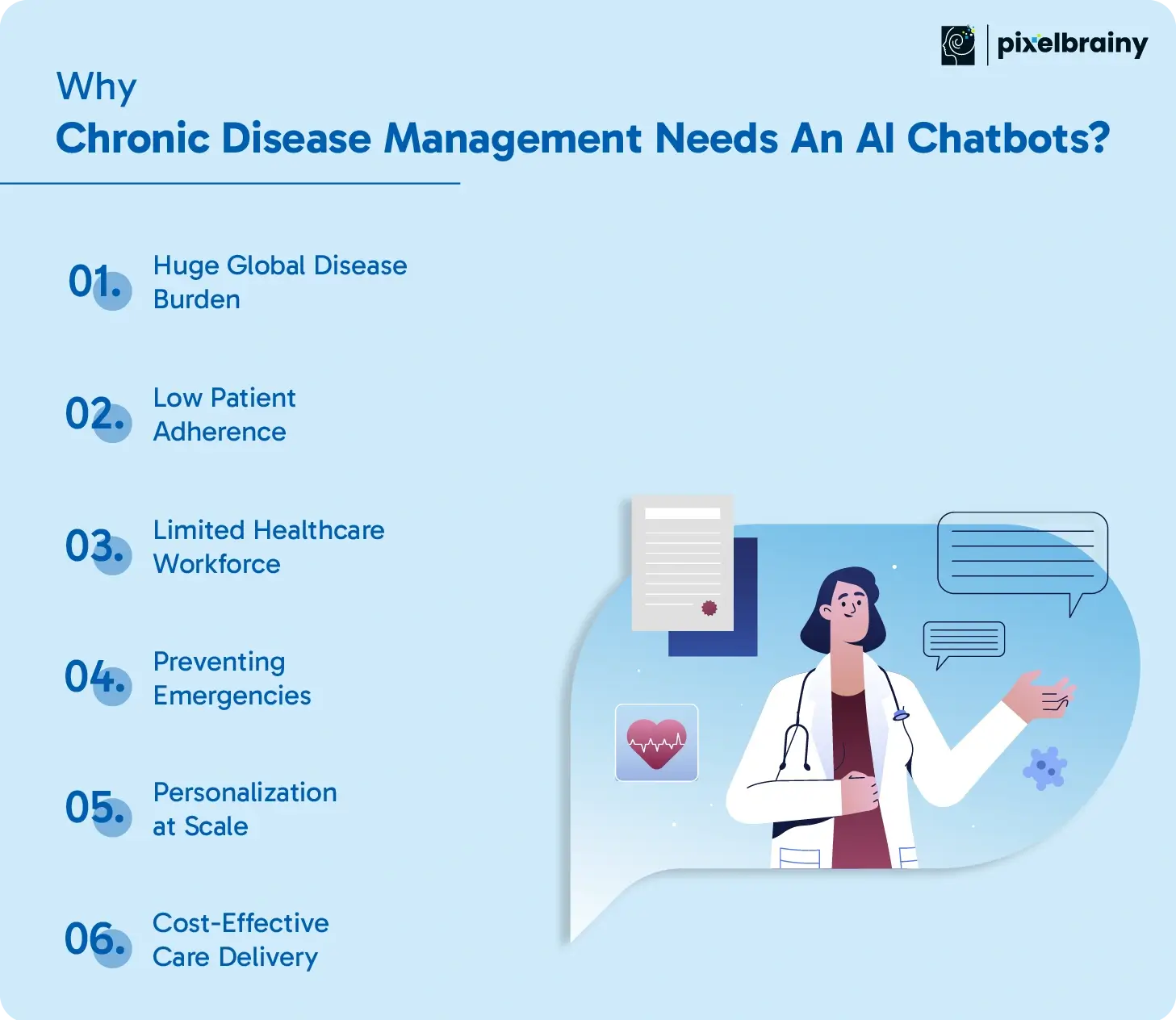
Chronic diseases such as cardiovascular disease, diabetes, cancer and chronic respiratory illnesses place an enormous burden on healthcare systems. The WHO reports that non-communicable diseases were responsible for at least 43 million deaths in 2021, equating to about 75% of non-pandemic-related global deaths.
Because the volume of patients is so large and growing, traditional care models struggle to provide adequate monitoring, follow-up and lifestyle support. Investing in AI Chatbot for Chronic Disease Management enables health providers to scale their care delivery, reach more patients and proactively manage risk without proportionally increasing workforce or physical infrastructure.
One of the biggest challenges in chronic care is that many patients fail to follow prescribed medication schedules, skip appointments or do not adopt necessary lifestyle changes. Poor adherence directly exacerbates disease progression, increases hospitalisations and raises costs. By engaging patients daily, sending reminders, providing motivational feedback and tracking progress, an AI Chatbot for Chronic Disease Management can help improve adherence rates significantly.
These bots offer real-time motivation, nudges and personalised messages — which build behaviour change over time. For chronic disease management AI Chatbot development, incorporating adherence-tracking features and feedback loops becomes a core functionality to address this major care gap.
Healthcare systems globally face shortages of doctors, nurses and allied health staff — especially in low- and middle-income regions where the chronic disease burden is highest. According to OECD data, in an average of 24 countries more than one-third of adults had a long-standing illness in 2021, putting additional strain on care delivery.
An AI Chatbot for Chronic Disease Management offers 24 / 7 availability, handling routine monitoring, symptom checks and lifestyle conversations so human clinicians can focus on high-risk cases. When organisations embark on chronic disease management AI Chatbot development, they gain an extension of their workforce, enabling scalable patient engagement without linear growth in staffing.
Many chronic conditions worsen gradually and silently until they trigger acute events such as heart attacks, strokes, kidney failure or exacerbations of COPD. Early detection and prompt intervention are key to preventing hospitalisations, reducing costs and improving outcomes. A well-designed AI Chatbot for Chronic Disease Management continuously monitors symptoms, behavioural indicators and device-derived vitals, identifies alarming patterns and can escalate cases early.
By linking to wearables or home health devices, these chatbots analyse trends and alert patients or clinicians at the first sign of deterioration. In the lifecycle of chronic care, this preventive layer is essential — and is a major value proposition when planning the development of AI Chatbots for Chronic Disease Management.
Each patient with a chronic condition has a unique profile: different symptom patterns, comorbidities, lifestyle contexts, device data and emotional responses. Traditional face-to-face care cannot personalise at scale for thousands or millions of patients. Through AI-driven models, chatbots can tailor interactions based on vitals, habits, therapy history and preferences.
When investing in building a Chronic Disease Management AI Chatbot, the architecture must support user segmentation, adaptive messaging, dynamic content and continuous learning. This degree of personalization not only engages patients better but drives higher adherence and better outcomes.
Chronic disease management is resource-intensive: repeated visits, long-term monitoring, staff time, remote follow-ups and operations add up. With budgets strained globally, healthcare organisations need efficient solutions. By automating routine interactions, providing remote monitoring and reducing unnecessary interventions, AI chatbots substantially decrease operational costs.
In the context of Chronic Disease Management AI Chatbot development, organisations can optimise care pathways, reduce readmissions and deliver remote support without linear staff increases. The ROI becomes compelling when digital tools support thousands of patients concurrently.
AI chatbots strengthen chronic disease care by supporting continuous monitoring, improving adherence, reducing clinical pressure and enabling personalized guidance at scale, making them an essential component of modern healthcare delivery.
AI Chatbots development for Chronic Disease Management requires a careful blend of medical accuracy, personalization and real-time monitoring. When teams focus on the building of AI Chatbot for Chronic Disease Management, the feature set becomes one of the most important factors determining patient outcomes and long-term engagement.
Below is a structured overview of the most essential features needed to develop a clinically reliable and scalable chronic care chatbot.
| Feature | Purpose |
| Symptom Tracking and Health Logging | Allows patients to record symptoms, vitals and daily health patterns. Helps identify early signs of deterioration and improves continuous monitoring across chronic conditions. |
| Medication Reminders and Adherence Support | Sends timely alerts for medication schedules, refills and dosage instructions. Improves adherence rates which is crucial for chronic disease stability. |
| Personalized Care Recommendations | Provides tailored guidance on diet, exercise, sleep and lifestyle changes based on patient data. Enhances the effectiveness of AI Chatbots development for Chronic Disease Management. |
| Wearable and IoT Device Integration | Syncs with devices like glucometers, BP monitors and fitness watches. Offers real-time vitals data to support predictive analysis and proactive care. |
| Predictive Risk Scoring | Uses machine learning to detect risk patterns and forecast potential complications. Supports early interventions and reduces emergency occurrences. |
| Dynamic Conversation and NLP Accuracy | Uses advanced NLP to understand medical queries, patient emotions and complex descriptions. Ensures smooth, natural and clinically relevant conversations. |
| Multilingual Interaction | Provides access to patients in multiple languages to increase adoption across diverse populations. Essential for global chronic disease management implementations. |
| Emergency Alert and Escalation System | Triggers alerts to caregivers, doctors or nurses when high-risk symptoms appear. Supports life-saving early responses in conditions like hypertension or asthma. |
| EHR and Telehealth Integration | Connects with Electronic Health Records and virtual care systems for accurate data sharing. Helps streamline communication between patients and healthcare providers. |
| Mental Health and Emotional Wellness Support | Provides stress management, anxiety check-ins and motivational prompts. Recognizes the strong link between emotional well-being and chronic disease outcomes. |
| Daily Habit and Lifestyle Tracking | Monitors routines like diet, physical activity, sleep cycles and water intake. Encourages healthy habits and behavior change over time. |
| Secure Data Handling and Privacy Compliance | Ensures HIPAA, GDPR and regional healthcare regulation compliance. Protects user data with encryption and role-based access systems. |
| Personalized Progress Dashboards | Offers graphical summaries of patient progress, vitals trends and adherence metrics. Helps both patients and clinicians track improvement over time. |
| Adaptive Learning and Personalization Engine | Learns from each interaction to refine recommendations and conversation patterns. Makes the chatbot more accurate and supportive as patient data grows. |
| Appointment Scheduling and Care Coordination | Allows patients to book appointments, request follow-ups and receive care reminders. Enhances care continuity within the chronic care ecosystem. |
A strong feature foundation ensures that chronic disease management A chatbots deliver meaningful clinical support, consistent engagement and measurable improvements in patient health outcomes.
Understanding what is the process to build AI Chatbot for Chronic Disease Management is essential for healthcare organizations, startups and digital health innovators aiming to deliver safe and scalable patient support systems.
The Chronic Disease Management AI Chatbot Development workflow requires a structured plan that ensures clinical accuracy, seamless patient experience and compliance with healthcare standards.
Below is a comprehensive breakdown of all the important stages involved in the development of AI Chatbot for Chronic Disease Management, along with the purpose and value of each step.
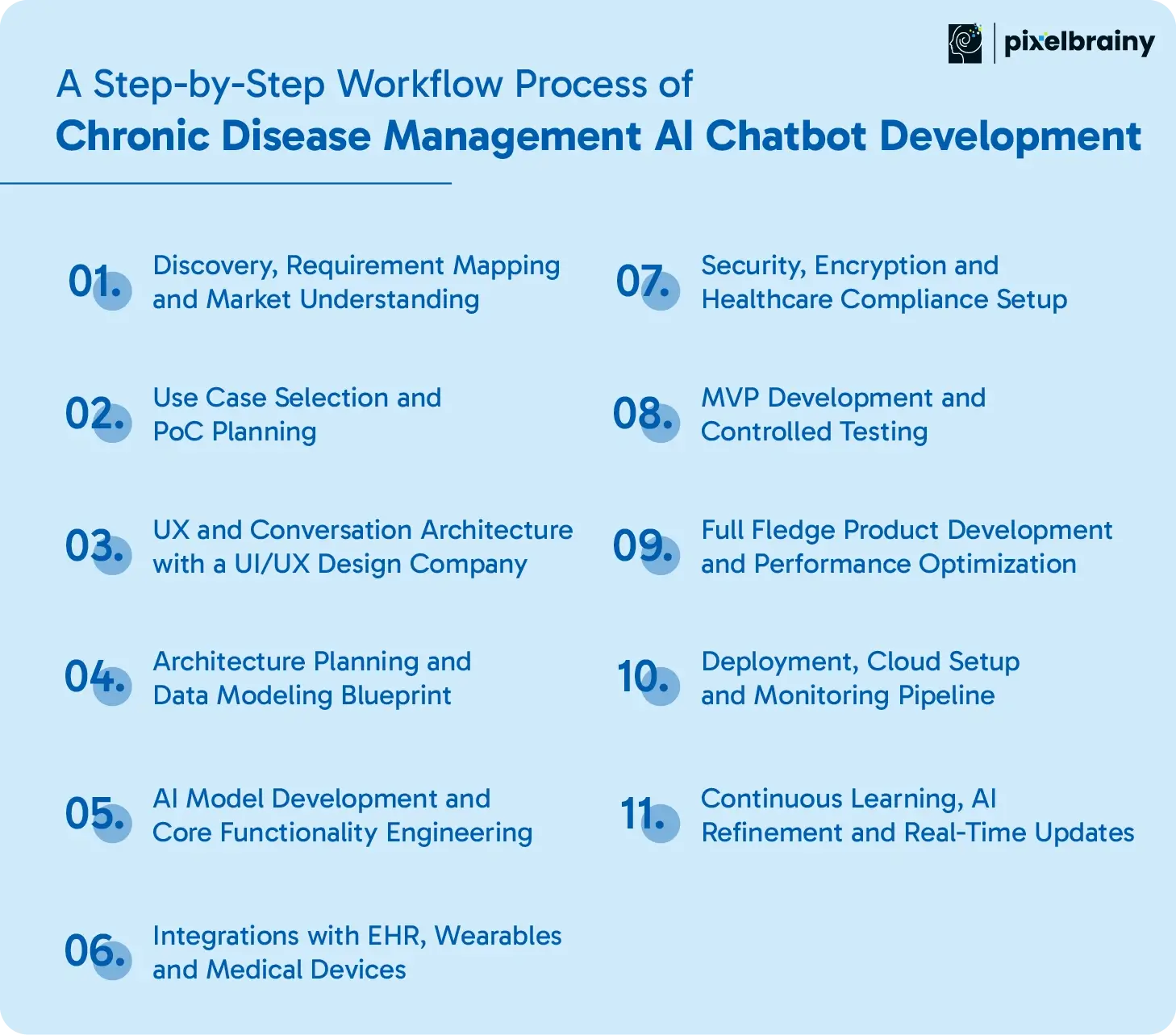
This phase involves defining the problem, identifying target chronic conditions and understanding patient needs. Teams analyze clinical workflows, current care gaps and the role of automation in long-term management. Research also includes competitor analysis and reviewing what top AI chatbot development companies in USA are offering in the health-tech domain.
Aim of this step: To create a clear project vision and align technical goals with patient care priorities.
Why this matters: A strong discovery phase ensures that the solution is built with clinical relevance and reduces unnecessary development cycles later.
In this stage, teams decide on the core features and initial capabilities needed for the chatbot. A PoC is created to validate feasibility, patient interaction patterns and technical assumptions. It helps determine which chronic conditions are suitable for the first rollout.
Aim of this step: To validate real-world usability and technical feasibility before fully committing resources.
Why this matters: Early validation reduces risks, avoids costly redesigns and helps teams focus on features that deliver maximum patient impact.
A dedicated UI/UX Design company helps design user flows, chatbot personality, tone of communication and the overall conversational structure. Accessibility and clarity are prioritized because many chronic disease patients are elderly or have limited digital literacy. Wireframes and interactive prototypes are produced to visualize the experience.
Aim of this step: To ensure a user friendly, empathetic and medically guided experience.
Why this matters: Strong UX reduces patient drop-off, increases adherence rates and builds long-term trust in digital health tools.
This stage involves planning the complete technical architecture including NLP engines, databases, security frameworks, wearable integrations and clinical data structures. The blueprint also outlines how the system will handle vitals, symptoms, patterns and long-term data storage.
Aim of this step: To create a scalable and secure technology foundation for developing Chronic Disease Management AI Chatbot solutions.
Why this matters: Good architecture prevents system bottlenecks, ensures interoperability and supports future upgrades smoothly.
Teams build and train machine learning models that power symptom understanding, intent recognition, risk scoring, personalized recommendations, and AI model development. This step also includes integrating medical guidelines, decision trees and clinical rules to strengthen accuracy. Developers ensure that the system can learn from past interactions and adapt.
Aim of this step: To make Chronic Disease Management AI Chatbot systems intelligent, context aware and clinically reliable.
Why this matters: AI accuracy directly impacts patient safety, intervention timing and the chatbot’s credibility.
The next step in Chronic Disease Management Chatbot Development Integrating AI involves connecting the system with glucose monitors, BP cuffs, ECG devices, wearables and Electronic Health Records. Data synchronization enables real-time analytics, alerts and insights for both patients and clinicians.
Aim of this step: To connect all patient data sources into one unified intelligent system.
Why this matters: Integration creates a holistic view of patient health and allows proactive care interventions.
Security protocols such as encrypted communication, role-based access and audit logging are implemented. The system must comply with HIPAA, GDPR and other regional healthcare data regulations to ensure maximum patient protection.
Aim of this step: To guarantee privacy, data integrity and compliance across every layer of the system.
Why this matters: Trust is crucial for digital health adoption and strong compliance safeguards the organization against legal risks.
Once the key functionalities are ready, an MVP is built and tested with a small group of patients or clinicians. Real users interact with the chatbot to validate conversation flows, accuracy of responses, data syncing speed and usability.
Aim of this step: To validate the real world performance of the minimum feature set.
Why this matters: Controlled testing exposes blind spots and ensures the experience is refined before large scale deployment.
After successful MVP validation, developers expand features, add automation, refine AI models and strengthen the backend. Advanced capabilities like predictive analytics, multi language support and habit monitoring are added.
Aim of this step: To transform the validated MVP into a complete and scalable product.
Why this matters: This upgrade phase enables high performance, advanced personalization and full clinical readiness.
The system is deployed on a secure cloud environment with monitoring pipelines for performance, uptime, security and analytics. The chatbot becomes available for patient use through mobile apps, web portals or integrated hospital systems.
Aim of this step: To release a stable version of the chatbot that can be safely accessed by patients and clinicians.
Why this matters: Reliable deployment ensures seamless operation and supports long-term patient engagement.
Once the system is live, the AI models are continuously improved based on patient feedback, new clinical guidelines and evolving data patterns. The chatbot becomes more intelligent and accurate as more patients interact with it.
Aim of this step: To maintain relevance, accuracy and adaptability across all patient groups.
Why this matters: Chronic disease management demands long term consistency, and continuous improvement keeps the system clinically effective.
A structured and intelligent workflow ensures that every stage of chatbot development is aligned with safety, scalability and patient-centered care, resulting in a truly impactful chronic disease management solution.
Also Read: How To Develop Custom AI Chatbot: Benefits, Types, And Cost
The cost to create an AI Chatbot for Chronic Disease Management typically ranges from $10,000 to $100,000+, depending on complexity, integrations and regulatory requirements. Healthcare organizations often evaluate several pricing factors such as features, data analytics, wearable connectivity and compliance standards.
Understanding these elements is essential when estimating the price to build Chronic Disease Management AI Chatbot, the budget for developing Chronic Disease Management AI Chatbot, the development cost of Chronic Disease Management AI Chatbot, and the overall investment for Chronic Disease Management Chatbot Development.
Below is a detailed breakdown of three major pricing tiers healthcare companies commonly consider.
| Type of Chatbot | Estimated Cost Range | What It Includes |
| MVP AI Chatbot for Chronic Disease Management | $10,000 to $30,000 | This version includes basic features such as symptom tracking, medication reminders, simple conversation workflows and basic reporting. Ideal for testing ideas, validating patient engagement and understanding market fit before scaling. |
| Medium AI Chatbot for Chronic Disease Management | $30,000 to $60,000+ | Includes advanced NLP, personalized care insights, wearable device connections, analytics dashboards, secure authentication and integration with simple EHR systems. This tier is suitable for clinics and telemedicine providers seeking a functional and scalable chronic care assistant. |
| Advanced AI Chatbot for Chronic Disease Management | $60,000 to $100,000+ | Designed for enterprise use with AI driven risk scoring, predictive analytics, full EHR interoperability, multilingual support, emotion recognition, automated triage systems and robust compliance features. Best suited for hospitals, large providers and digital health enterprises planning long term deployment. |
More advanced algorithms require more time, data and engineering resources, which increases development cost.
Connecting with multiple EHRs, wearable devices and health monitoring systems increases backend engineering and API development.
Following HIPAA, GDPR and regional healthcare laws requires additional security layers, audits and testing.
A more advanced patient centric interface with custom journeys increases UI and UX design time.
Systems designed for thousands of concurrent users require higher infrastructure and optimization cost.
Ongoing AI training, feature upgrades and performance monitoring influence yearly operational expenses.
The total cost of building a Chronic Disease Management AI chatbot depends on its scope, intelligence level and integrations, making it essential to define clear goals before starting development.
Also Read: AI Chatbot Development Cost: Factors and Examples
Selecting the right tools and technology stack is essential for building a secure, scalable and intelligent chronic care solution. From frontend frameworks to NLP engines and cloud platforms, every component influences performance, compliance and user experience.
Below is a detailed table outlining the recommended technologies used in the development of Chronic Disease Management AI Chatbot systems, along with their purposes and advantages.
| Category | Recommended Tools and Technologies | Explanation |
| Frontend Development | React Native, Flutter, Angular, iOS Swift, Android Kotlin | These frameworks enable responsive, mobile friendly interfaces that support effortless chatbot interactions across devices. React Native and Flutter are ideal for cross platform apps, while Swift and Kotlin offer native performance. |
| Backend Development | Node.js, Python Django, Ruby on Rails, .NET Core | Backend frameworks handle logic, APIs, patient data routing and integration tasks. Python Django is ideal for AI focused applications, while Node.js supports high concurrency for real time chatbot interactions. |
| AI and NLP Engines | TensorFlow, PyTorch, Rasa, Dialogflow, OpenAI API, Microsoft LUIS | These tools provide natural language understanding, intent recognition and predictive analytics capabilities. TensorFlow and PyTorch are used for custom ML models, while Dialogflow and Rasa simplify conversational flow design. |
| Database Systems | MongoDB, PostgreSQL, MySQL, Firebase | Databases store patient profiles, symptom logs, device data and conversation history. MongoDB handles large unstructured datasets well, while PostgreSQL and MySQL support structured medical records. |
| EHR and Health Data Integration | HL7, FHIR APIs, Redox, Health Gorilla | These tools enable secure connectivity with Electronic Health Records and clinical systems. HL7 and FHIR ensure standardised health data exchange which is essential for interoperability. |
| Wearable and IoT Integration | Fitbit SDK, Apple HealthKit, Google Fit, Bluetooth LE APIs | These integration tools capture real time vitals from glucose monitors, heart rate sensors, BP devices and fitness trackers. The data enriches the chatbot’s ability to assess patient health trends. |
| Cloud and Hosting Platforms | AWS, Microsoft Azure, Google Cloud Platform | Enterprise cloud platforms provide secure hosting, auto scaling, load balancing, model deployment and monitoring tools. They support compliance requirements and ensure high availability. |
| Security Tools | JWT Authentication, OAuth 2.0, SSL Encryption, Firewall Rules | These tools protect patient information, manage secure logins and prevent unauthorized access. Proper security implementation is essential for healthcare data protection. |
| DevOps and Deployment Tools | Docker, Kubernetes, Jenkins, GitHub Actions | These tools streamline deployment, CI CD automation, version control and container orchestration. Kubernetes ensures smooth scaling as chatbot usage increases. |
| Analytics and Monitoring Tools | Power BI, Google Analytics, Mixpanel, Elastic Stack | These tools track patient engagement, symptom trends, usage metrics and interaction patterns. Analytics plays a key role in improving AI model accuracy and patient experience. |
These above recommended technology stack ensures that a Chronic Disease Management AI chatbot performs reliably, integrates smoothly with healthcare systems and remains secure as it scales.

Monetizing a Chronic Disease Management AI chatbot requires strategic planning, understanding patient needs and identifying revenue models that deliver long term value. Organizations focusing on AI chatbot development for chronic care can generate sustainable income while improving patient outcomes.
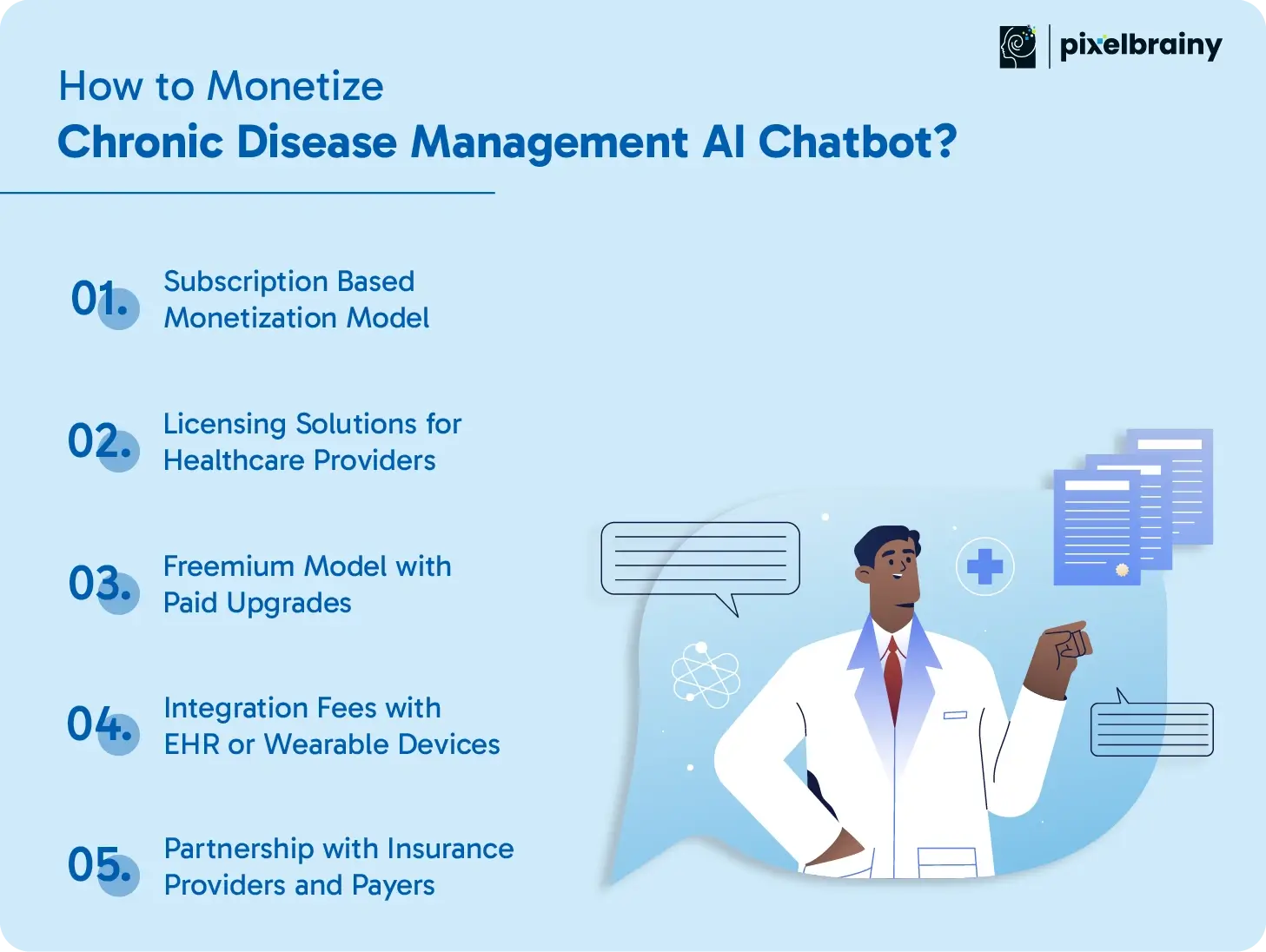
This is one of the most popular approaches to monetize AI Chatbots for Chronic Disease Management. Users, clinics or healthcare providers pay a recurring fee to access premium features, advanced analytics and long term chronic care support.
How it generates revenue:
Hospitals, telemedicine platforms and remote care clinics often license chatbot technology to support patient management workflows. This model works well for enterprises investing in Chronic Disease Management AI chatbot development.
Revenue opportunities include:
In this model, the basic chatbot remains free while advanced features require payment. It supports faster user acquisition while generating revenue from high value add ons. This strategy is ideal when building or scaling an AI chatbot for chronic care solutions.
Ways to earn revenue:
Organizations often charge for integrating the chatbot with EHR systems, glucose monitors, blood pressure devices and IoT sensors. This is valuable for enterprises looking to improve long term patient monitoring.
Revenue can come from:
Insurance companies increasingly invest in digital tools that reduce claims and improve chronic care outcomes. A Chronic Disease Management AI chatbot can help reduce hospital visits, improve adherence and track progress, making insurers willing partners.
Monetization channels:
A well designed monetization strategy ensures that a Chronic Disease Management AI chatbot not only enhances patient care but also becomes a sustainable and profitable digital health solution.
Developing AI Chatbot solutions for chronic disease care requires precision, clinical reliability and strict compliance. Chronic illnesses demand continuous monitoring, personalized support and timely intervention, which increases technical and operational complexity.
Below are the most critical challenges that teams face during Chronic Disease Management chatbot development, along with proven mitigation strategies that ensure safety, accuracy and long term success.
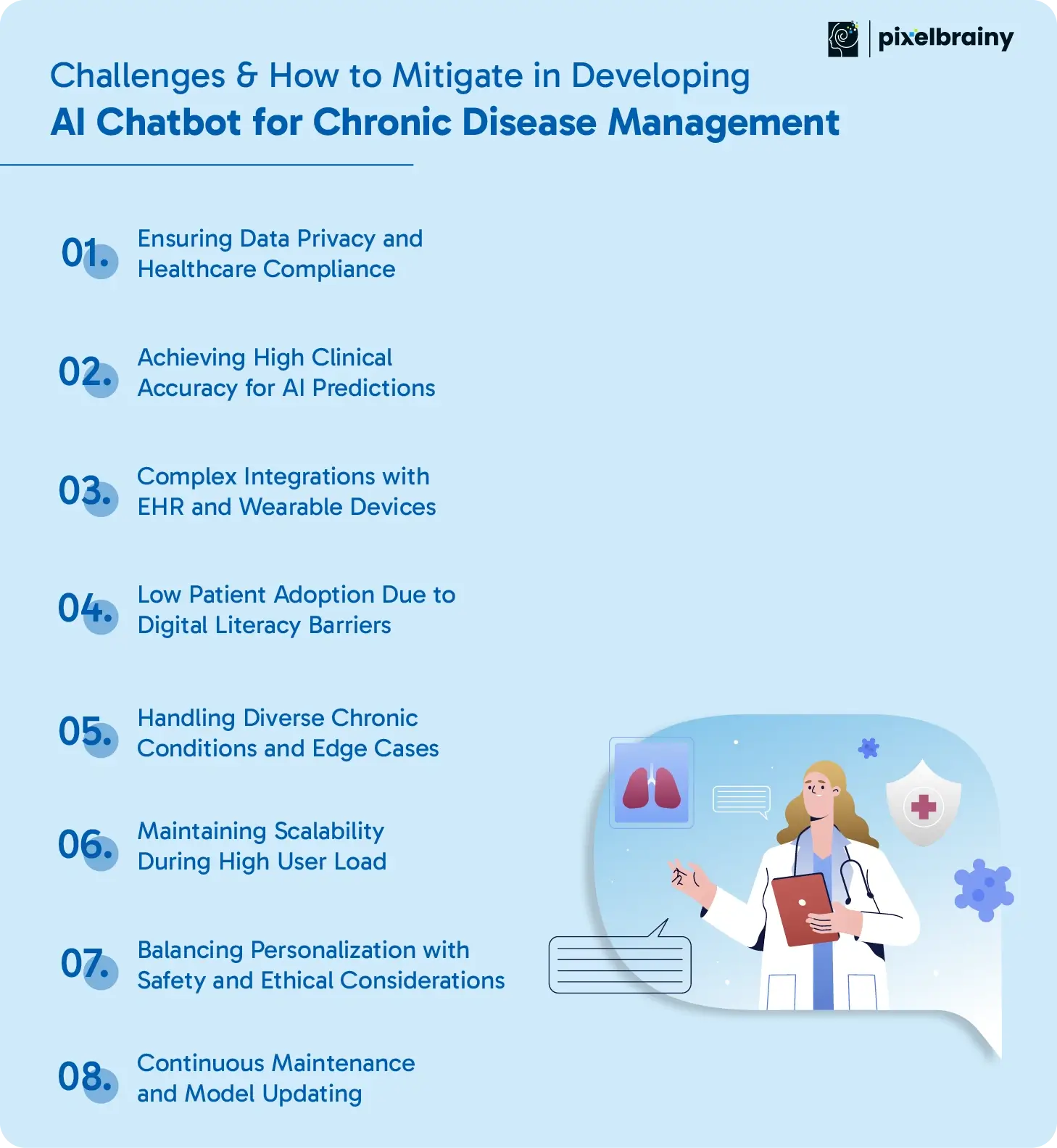
Chronic disease chatbots handle sensitive medical information, including vitals, symptoms and patient history. Any breach or mishandling of data can lead to serious privacy concerns and legal consequences.
How to mitigate:
AI models must interpret symptoms accurately, predict risks reliably and produce safe recommendations. Incorrect insights may cause delayed interventions or unnecessary anxiety for patients.
How to mitigate:
Chronic care requires real time access to vitals and clinical data. Connecting with multiple EHRs, device APIs and hospital systems can be technically challenging.
How to mitigate:
Many chronic disease patients are elderly or not comfortable with digital tools. If the chatbot feels difficult to use, engagement decreases quickly.
How to mitigate:
Different chronic diseases have unique patterns, symptoms and intervention requirements. Designing a chatbot that works accurately across all cases is challenging.
How to mitigate:
As patient numbers grow, the chatbot must handle more data, interactions and analytics operations without slowing down.
How to mitigate:
AI generated recommendations must be personalized but never unsafe or misleading. Over personalization without medical supervision can cause risk.
How to mitigate:
Chronic disease guidelines, patient behaviors and AI technologies evolve constantly. Without continuous updates, chatbot performance declines over time.
How to mitigate:
By understanding these challenges and applying the right mitigation strategies, organizations can build reliable, safe and intelligent AI chatbots that truly enhance chronic disease management and long term patient care.
The future of Chronic Disease Management AI chatbot development is shaping a new era of intelligent, personalized and proactive healthcare delivery. As technology evolves, these chatbots will become more capable of interpreting complex medical data, predicting risks earlier and offering tailored guidance that adapts to each patient’s unique health journey.
Below are the most impactful trends that will define the next generation of chronic care chatbots.
Digital twin technology involves creating a virtual replica of a patient that simulates real world health scenarios.
Future chatbots will use these models to analyze how lifestyle changes, medications or environmental factors might affect a patient’s health.
This allows healthcare providers to test interventions digitally before applying them in real life, reducing risks and improving long term outcomes.
Advanced sentiment analysis will enable chatbots to understand mood, stress levels and emotional cues.
This evolution will support mental health aspects of chronic disease, offering empathetic communication and emotional support.
By detecting emotional fluctuations early, chatbots can guide patients toward self care actions or escalate to professionals when needed.
The future interface will go beyond text.
Chatbots will interpret voice, images, medical reports and wearable sensor data in one unified flow.
Patients may upload photos of meals for dietary guidance or use voice commands for hands free symptom logging, enhancing accessibility especially for elderly users.
Generative AI will deliver highly customized health plans based on genetics, lifestyle, historical vitals and environmental factors.
Chatbots will adapt recommendations in real time as patient conditions evolve.
This type of personalized coaching will significantly improve adherence and engagement.
AI powered predictive systems will help forecast complications such as heart failure events, glucose spikes or asthma attacks days in advance.
These insights will allow clinicians to intervene earlier and prevent emergencies.
Patients will receive action steps long before symptoms worsen, shifting care from reactive to preventive.
Smart homes equipped with sensors will support seamless monitoring of chronic patients.
Chatbots will connect with smart appliances, sleep trackers, environmental sensors and home assistants to deliver comprehensive real time care.
For example, air quality sensors could help asthma patients avoid high risk conditions.
Governments are developing stricter rules for AI transparency, safety, and clinical validation.
Future chatbots will need clear explainability, risk documentation and ethical guidelines to ensure safe use.
These stronger frameworks will build trust and accelerate adoption across clinics and hospitals.
As AI capability grows, chronic care chatbots will evolve into autonomous assistants that manage daily routines, detect deviations and take proactive actions.
They may coordinate care tasks, schedule appointments automatically and continuously evaluate treatment effectiveness.
This reduces burden on clinicians and delivers uninterrupted support to patients.
These future trends indicate that AI chatbots will become central to chronic disease management, offering smarter, safer and more personalized care that improves patient outcomes across all stages of long term health management.
PixelBrainy stands out as an AI chatbot development company that brings together technical expertise, clinical understanding and human centered design to build reliable and impactful digital health solutions. With a strong foundation in AI healthcare software development, the team focuses on creating systems that are safe, accurate and intuitive for both patients and healthcare providers.
PixelBrainy specializes in chronic disease management AI chatbot development using advanced NLP, personalized care algorithms and cloud based architectures that support real time monitoring and predictive insights. Every solution is crafted with medical expert input to ensure clinical alignment, precise decision logic and patient friendly communication. This approach allows organizations to create AI chatbot for chronic disease management that delivers consistent support, accurate recommendations and higher engagement across long term care journeys.
The company has successfully completed multiple healthcare AI projects for the USA market, demonstrating its ability to meet strict compliance requirements, complex integration needs and enterprise scale expectations. Client identities remain confidential, but each project showcases PixelBrainy’s ability to deliver advanced AI capabilities, secure data handling and practical usability for diverse patient populations.
PixelBrainy also excels in wearable device integration, EHR connectivity and multilingual conversational systems, ensuring that its solutions work seamlessly across different clinical environments and user groups. With a continuous commitment to optimization, transparent AI practices and high level security, PixelBrainy remains a trusted partner for healthcare organizations seeking to build advanced chronic disease management chatbot solutions.

From the above insights, it is clear that AI chatbots are becoming a powerful foundation for modern chronic disease management. They support patients with continuous monitoring, timely reminders, personalized coaching and early risk detection, helping healthcare providers deliver care that is more proactive and efficient. With the right development strategy, secure architecture and clinically aligned features, organizations can build AI driven solutions that strengthen patient engagement and reduce long term healthcare burdens.
As digital health technology grows, adopting intelligent chatbots will enable hospitals, clinics and startups to scale chronic care services while maintaining high quality outcomes. The future of chronic disease support lies in smart, automated and patient friendly systems that evolve with each user’s needs.
Looking to build your own chronic care chatbot? Book an appointment with PixelBrainy today.
AI chatbots can assist with diabetes, hypertension, asthma, arthritis, heart disease, obesity, mental health conditions and many other long term illnesses by tracking symptoms, offering lifestyle guidance and monitoring vitals.
Development time varies based on features and integrations but typically takes 8 to 20 weeks for a functional version, depending on complexity and regulatory requirements.
Yes, as long as the chatbot is clinically aligned, medically reviewed and designed with safety protocols. These tools support self management but do not replace professional medical advice.
Most advanced chatbots integrate with wearables like Fitbit, Apple Watch and IoT health devices to collect real time vitals for better insights and monitoring.
Yes, healthcare providers can fully customize flows, integrations, languages and dashboards to match clinical protocols and patient engagement strategies.
Maintenance costs typically include cloud hosting, updates, data handling, new feature releases and AI training, usually starting from a few hundred dollars monthly depending on scale.

About The Author
Sagar Bhatnagar
Sagar Sahay Bhatnagar brings over a decade of IT industry experience to his role as Marketing Head at PixelBrainy. He's known for his knack in devising creative marketing strategies that boost brand visibility and market influence. Sagar's strategic thinking, coupled with his innovative vision and focus on results, sets him apart. His track record of successful campaigns proves his ability to utilize digital platforms effectively for impactful marketing efforts. With a genuine passion for both technology and marketing, Sagar continuously pushes PixelBrainy's marketing initiatives to greater success.

Working with the PixelBrainy team has been a highly positive experience. They understand the design requirements and create beautiful UX elements to meet the application needs. The dev team did an excellent job bringing my vision to life. We discussed usability and flow. Sagar worked with his team to design the database and begin coding. Working with Sagar was easy. He has the knowledge to create robust apps, including multi-language support, Google and Apple ID login options, Ad-enabled integrations, Stripe payment processing, and a Web Admin site for maintaining support data. I'm extremely satisfied with the services provided, the quality of the final product, and the professionalism of the entire process. I highly recommend them for Android and iOS Mobile Application Design and Development.

Great experience working with them. Had a lot of feedback and I found that unlike most contractors they were bugging me for updates instead of the other way around. They were extremely time conscience and great at communicating! All work was done extremely high quality and if not on time, early! They were always proactive when it comes to communication and the work is great/above par always. Very flexible and a great team to work with! Goes above and beyond to present us with multiple options and always provides quality. Amazing work per usual with Chitra. If you have UI/UX or branding design needs I recommend you go to them! Will likely work with them in the future as well, definitely recommended!

PixelBrainy is a joy to work with and is a great partner when thinking through branding, logo, and website layout. I appreciate that they spend time going into the "why" behind their decisions to help inform me and others about industry best practices and their expertise.

I hired them to design our software apps. Things I really like about them are excellent communication skills, they answer all project suggestions and collaborate right away, and their input on design and colors is amazing. This project was complex and needed patience and creativity. The team is amazing to do business with. I will be using them long-term. Glad to see there are some good people out there. I was afraid to try and outsource my project to someone but I am glad I met them! I really can't say enough. They went above and beyond on this project. I am very happy with everything they have done to make my business stand out from the competition.

It was great working with PixelBrainy and the team. They were very responsive and really owned the project. We'll definitely work with them again!

I recently worked with the PixelBrainy team on a project and I was blown away by their communication skills. They were prompt, clear, and articulate in all of our interactions. They listened and provided valuable feedback and suggestions to help make the project a success. They also kept me updated throughout the entire process, which made the experience stress-free and enjoyable.

PixelBrainy is very good at what it does. The team also presents themselves very professionally and takes care of their side of things very well. I could fully trust them taking up the design work in a timely and organised manner and their attention to detail saved us lots of effort and time. This particular project was quite intense and the team showed that they function very well under pressure. Very much looking forward to working with her again!

It's always an absolute pleasure working with them. They completed all of my requests quickly and followed every note I had for them to a T, which made our process go smoothly from start to finish. Everything was completed fast and following all of the guidelines. And I would recommend their services to anyone. If you need any design work done in the future, PixelBrainy should be your first call!

They took ownership of our requirements and designed and proposed multiple beautiful variants. The team is self-motivated, requires minimum supervision, committed to see-through designs with quality and delivering them on time. We would definitely love to work with PixelBrainy again when we have any requirements.

PixelBrainy was a big help with our SaaS application. We've been hard at work with a new UI/UX and they provided a lot of help with the designs. If you're looking for assistance with your website, software, or mobile application designs, PixelBrainy and the team is a great recommendation.

PixelBrainy designers are amazing. They are responsive, talented, and always willing to help craft the design until it matches your vision. I would recommend them and plan to continue them for my future projects and more!!!

They were awesome! Did a good job fast, and good communication. Will work with them again. Thank you

Creative, detail-oriented, and talented designers who take direction well and implement changes quickly and accurately. They consistently over-delivered for us.

PixelBrainy team is very talented and creative. Great designers and a pleasure to work with. PixelBrainy is an excellent communicator and I look forward to working with them again.

PixelBrainy has a very talented design team. Their work is excellent and they are very responsive. I enjoy working with them and hope to continue on all of our future projects.


Transform your ideas into reality with us.
Across these industries, each engagement brings unique challenges, from early-stage product development to scaling complex systems, helping us build a practical understanding of real-world product environments.