AI Summary Powered by PixelBrainy
Can hospitals truly deliver faster, safer, and more accurate clinical decisions without overwhelming their medical teams?
AI clinical decision support systems are advanced healthcare solutions that use artificial intelligence to analyze patient data and assist clinicians in making accurate, timely decisions. As healthcare systems become more data intensive, hospitals are increasingly investing in AI clinical decision support system development to improve patient outcomes, reduce errors, and streamline clinical workflows.
Across the industry, healthcare leaders are asking the same question: how can we effectively adopt AI without compromising compliance, usability, or trust? If your organization is thinking, "we are looking to develop an AI clinical decision support system for our hospital and need a reliable development partner who understands healthcare compliance and AI platforms," you are addressing one of the most critical challenges in modern healthcare transformation.
Understanding how to develop AI clinical decision support system solutions requires more than just technical implementation. It involves integrating clinical data sources, ensuring regulatory compliance, and designing systems that align with real world medical workflows. Organizations aiming to build AI-based clinical decision support software must balance innovation with safety, transparency, and clinician usability.
This blog is written for hospital decision makers, healthcare CTOs, and digital health innovators who want a clear and practical roadmap for AI clinical decision support system. It will help to understand the architecture, use cases, and strategies required for successful AI clinical decision support system development, enabling to move forward with clarity and confidence.

An AI clinical decision support system (AI CDSS) is a healthcare software solution that uses artificial intelligence, machine learning, and clinical data to help healthcare professionals make faster, more informed, and evidence-based decisions. It analyzes patient information and converts complex clinical data into actionable insights that can support diagnosis, treatment planning, risk assessment, and ongoing patient monitoring.
Unlike traditional rule-based clinical decision support systems that depend primarily on predefined guidelines and fixed logic, modern solutions developed through AI clinical decision support software development can analyze larger and more diverse datasets. They can combine multiple AI technologies to identify patterns, generate contextual insights, and support more personalized clinical workflows.
Modern AI CDSS platforms commonly combine:
An AI clinical decision support system can process different types of patient and clinical information, including:
By bringing these data sources together, the system can provide support across important clinical activities, such as:
For healthcare organizations planning to develop AI-based clinical decision support software, the system must also fit existing clinical workflows, data environments, security requirements, and compliance processes. Integration with healthcare systems and reliable data handling are therefore essential parts of AI CDSS development.
Most importantly, an AI clinical decision support system is designed to support clinicians rather than replace clinical expertise. By providing data-driven insights at the right point in the workflow, it can help healthcare professionals evaluate information more efficiently and make better-informed clinical decisions.
If you have a healthcare clinic and want to build an AI decision support system, understanding the architectural level of AI clinical decision support software is the most critical step. A well-designed AI clinical decision support system is not just about implementing AI models. It is about designing a scalable, secure, and interoperable architecture that transforms complex healthcare data into meaningful, real time clinical insights.
At the architectural level, AI clinical decision support software development involves multiple interconnected layers that work together to ensure performance, accuracy, compliance, and usability. Each layer contributes to building a reliable system that supports clinicians in high-pressure decision-making environments.
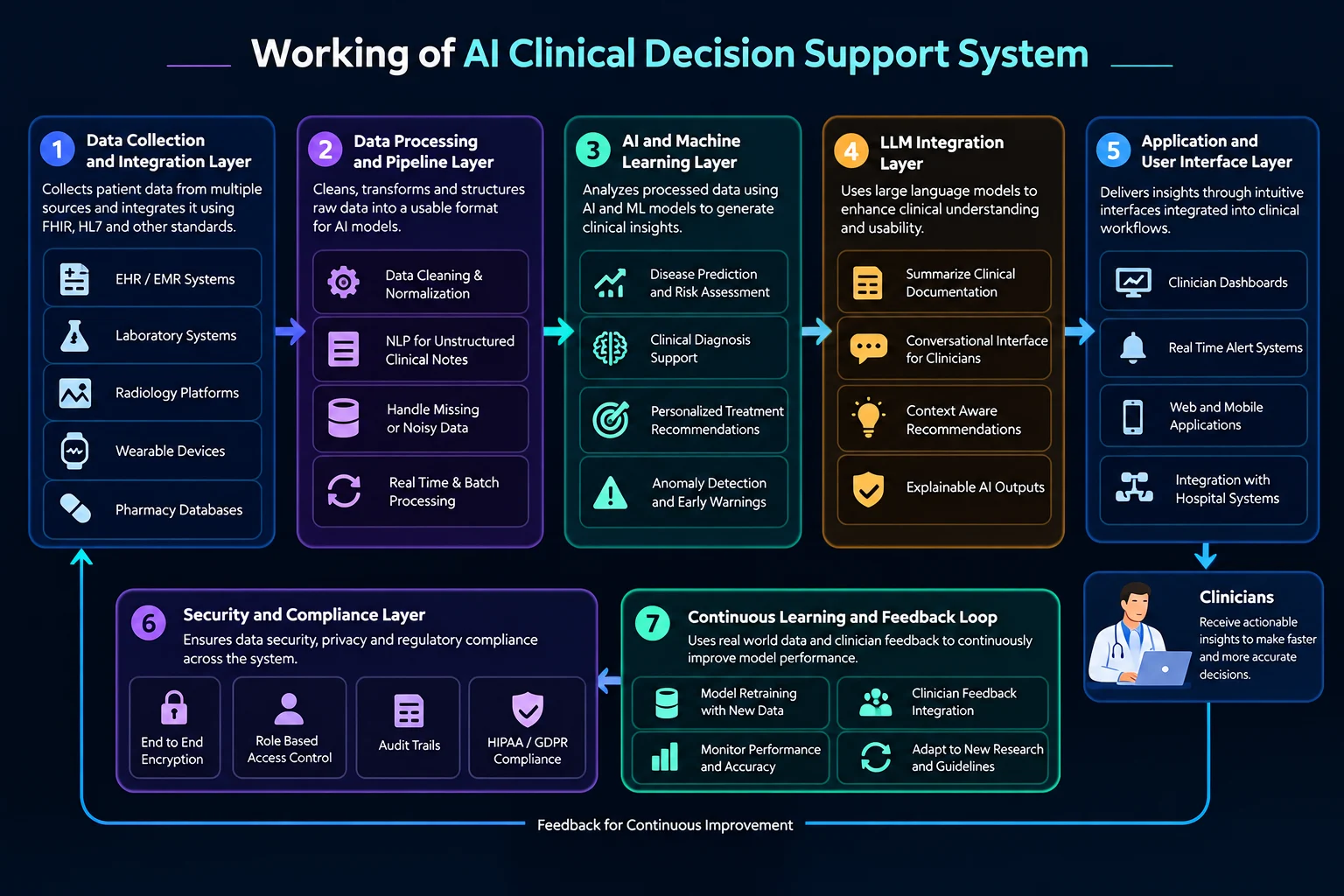
At the architectural level of AI clinical decision support software, this layer serves as the data foundation. It collects patient data from multiple sources such as EHR and EMR systems, lab systems, radiology platforms, wearable devices, and pharmacy databases.
For clinics exploring how to develop AI clinical decision support system solutions, one of the biggest challenges is handling fragmented data. This layer ensures seamless interoperability using standards like FHIR and HL7, enabling unified and structured patient data across systems.
At the core architecture level, raw healthcare data must be transformed into a usable format. This layer is responsible for building robust data pipelines that handle:
A strong data pipeline architecture ensures that your AI-powered clinical decision support software operates on accurate and high-quality data, which directly impacts clinical reliability.
This layer represents the intelligence engine at the architectural level of AI clinical decision support systems. It includes the development, training, and deployment of models that:
Healthcare organizations aiming to make AI-based clinical decision support software often combine multiple approaches such as machine learning, deep learning, and knowledge-based systems to achieve robust outcomes.
At a modern architectural level, integrating large language models is becoming essential in AI clinical decision support system development. This layer enhances system intelligence and usability by enabling:
This layer helps bridge the gap between complex AI computations and practical clinical understanding.
From an architectural perspective, this layer defines how end users interact with the system. It includes:
A well-designed interface ensures that the AI clinical decision support system fits naturally into clinical routines without causing disruption.
At the architectural level of AI clinical decision support software, security is a foundational component, not an afterthought. This layer ensures:
For any clinic planning how to develop AI clinical decision support system solutions, embedding compliance into the architecture is essential for trust and long-term sustainability.
A key architectural component of modern AI clinical decision support systems is continuous improvement. This layer enables:
This ensures that the system evolves over time and remains clinically relevant and effective.
A well-defined architectural level of AI clinical decision support software is what enables successful AI clinical decision support system development integrating AI, helping healthcare clinics transition from basic digital tools to intelligent, data driven clinical decision-making systems.
For many healthcare leaders today, the question is no longer whether to adopt AI, but how quickly they can invest in the right solution. If your organization is thinking, "we are looking to develop an AI clinical decision support system for our hospital and need a reliable development partner who understands healthcare compliance and AI platforms," then understanding the real value of investment becomes essential.
The demand for AI clinical decision support systems is rapidly accelerating across global healthcare systems.
These numbers clearly show that investing in AI clinical decision support system development is not just a trend. It is becoming a core part of future healthcare infrastructure.
One of the strongest reasons for investing in AI clinical decision support systems is their ability to reduce diagnostic errors and improve treatment accuracy. These systems analyze large volumes of patient data in real time, helping clinicians make more informed decisions.
For healthcare providers, this directly translates into better patient outcomes and reduced clinical risks.
In high pressure environments like emergency care or ICU settings, time is critical. AI powered systems provide instant insights, risk alerts, and recommendations, enabling faster interventions.
This is especially valuable for clinics and hospitals looking to build AI-driven clinical decision support software that supports real time care delivery.
Healthcare organizations are constantly balancing quality care with operational costs. Investing in clinical decision support system development with AI helps:
AI driven automation reduces administrative burden and allows clinicians to focus more on patient care.
Modern AI systems go beyond reactive care. They enable predictive and preventive healthcare by identifying risks before conditions worsen.
This shift toward proactive care is a major reason why healthcare leaders are investing in AI.
Today's AI CDSS solutions are designed to integrate seamlessly with EHR systems and clinical workflows. This means healthcare providers can enhance their existing infrastructure rather than replacing it.
The convergence of AI with EHR systems is already enabling early risk prediction and improved clinical safety across healthcare organizations.
Healthcare is becoming increasingly data driven. Organizations that invest early in AI clinical decision support systems gain a significant competitive edge by:
In fact, around 75% of healthcare organizations now prioritize AI-enabled CDSS capabilities when selecting vendors.
A key concern for decision makers is compliance. Investing in the right development partner ensures:
This is why choosing an experienced AI development company that understands healthcare regulations is critical when planning for development of AI clinical decision support system solutions.
Investing in AI is not just about technology. It is about execution.
Healthcare organizations should look for an AI development company that:
A reliable partner ensures that your investment delivers long term value, not just a prototype.
That's why if you are plan to make AI-based clinical decision support software, the timing is right. Market growth, technological maturity, and clinical demand are all aligned.
Investing in AI clinical decision support systems is no longer optional for forward thinking healthcare organizations. It is a strategic move toward delivering smarter, faster, and more reliable patient care while staying competitive in an evolving healthcare landscape.
If you are thinking, "we are looking to understand the key use cases of AI clinical decision support system development across different healthcare domains such as diagnostics, treatment planning, and patient risk prediction, and how we can build or implement these solutions in our hospital or healthcare platform," you are asking the right question at the right stage.
Before building an AI clinical decision support system, it is important to clearly identify where AI delivers the most clinical and operational value. The top use cases of AI clinical decision support systems span multiple healthcare domains and can be implemented in a phased and practical way depending on your hospital's infrastructure and goals.
Below are the most impactful use cases, explained with consistent depth to help you evaluate and plan implementation effectively.
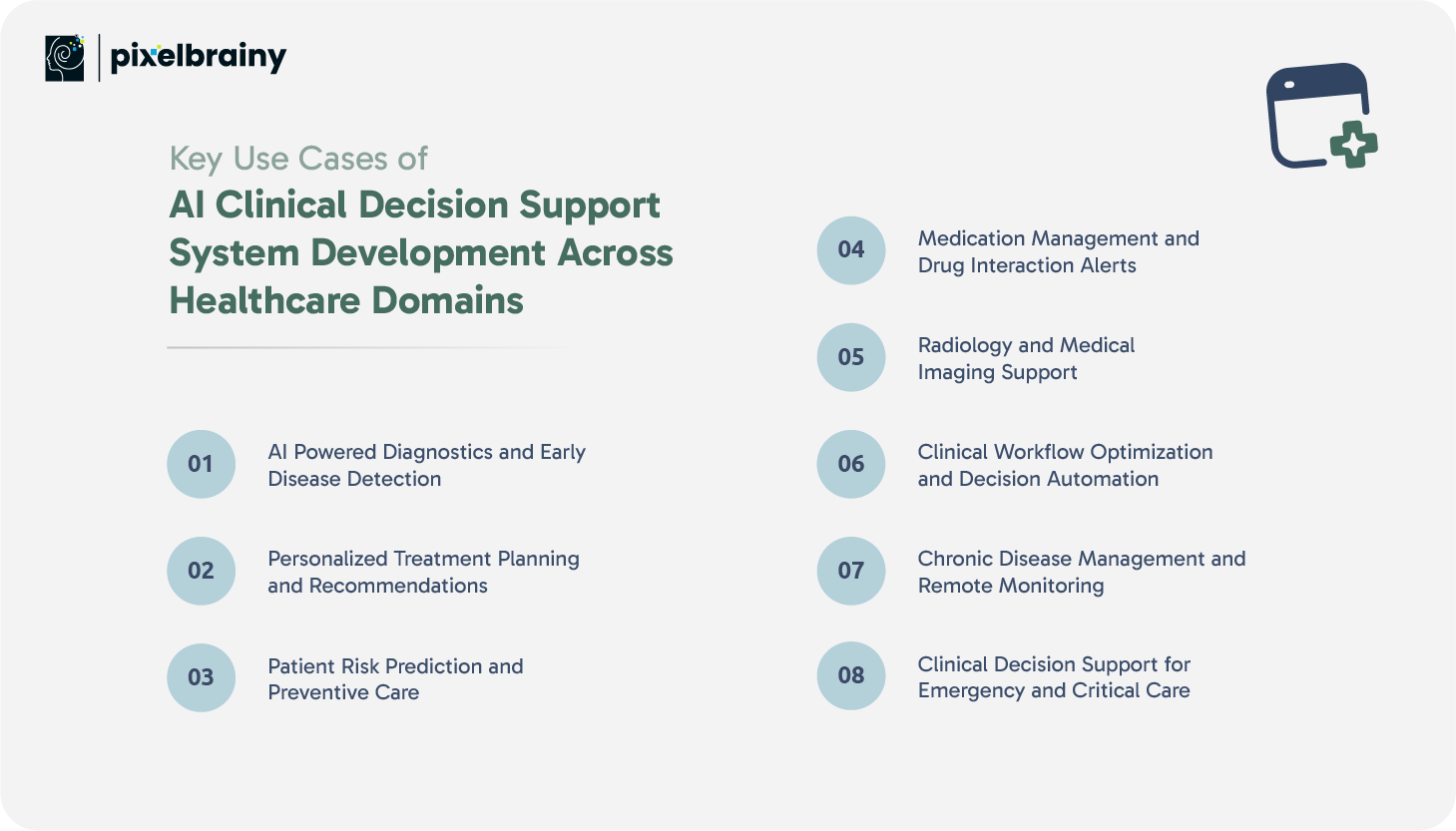
One of the most important use cases in clinical decision support software development using AI is improving diagnostic accuracy. AI models analyze patient symptoms, medical history, lab reports, and imaging data to support clinicians in identifying diseases at an early stage.
This is especially useful in detecting conditions such as cancer, infections, and cardiovascular diseases where early intervention is critical. For organizations planning to make AI clinical decision support systems, this use case helps reduce diagnostic errors, improve clinical confidence, and ensure timely treatment decisions across departments.
AI enables healthcare providers to move from standardized treatment approaches to personalized care strategies. By analyzing patient specific data, clinical guidelines, and historical outcomes, AI systems can recommend tailored treatment plans that align with individual patient needs.
This includes optimizing medication selection, suggesting therapy adjustments, and predicting treatment effectiveness. When building an AI clinical decision support system, this use case plays a key role in improving treatment outcomes while ensuring that care delivery is both efficient and patient centric.
Predictive analytics is one of the most valuable capabilities of AI in healthcare. AI models can identify patients who are at risk of developing serious conditions before symptoms become severe.
Common applications include predicting hospital readmissions, identifying high risk patients with chronic diseases, and generating early warning alerts in ICU settings. For organizations aiming to create AI clinical decision support software system, this use case supports a shift from reactive treatment to proactive and preventive care strategies.
Medication errors can lead to serious complications, making this a critical use case in clinical decision support software development with AI. AI systems analyze patient prescriptions, medical history, and allergies to identify potential drug interactions and contraindications.
They also provide dosage recommendations and real time alerts for clinicians during prescribing. When building an AI clinical decision support system, this capability enhances patient safety, reduces adverse drug events, and ensures compliance with treatment protocols.
AI has significantly improved the efficiency and accuracy of radiology workflows. These systems analyze medical images such as X rays, CT scans, and MRIs to detect abnormalities and assist radiologists in diagnosis.
They help prioritize critical cases, reduce reporting time, and improve detection accuracy for conditions like tumors or fractures. For healthcare providers investing in creating AI clinical decision support systems, this use case offers immediate clinical value and integrates well with existing imaging systems.
AI clinical decision support systems can also streamline operational workflows across healthcare settings. By automating repetitive tasks and prioritizing clinical activities, these systems improve overall efficiency.
Examples include automating clinical documentation, triaging patients based on urgency, and reducing administrative workload for healthcare staff. Organizations focused on building an AI clinical decision support software can use this use case to enhance productivity and allow clinicians to focus more on patient care.
Managing chronic diseases requires continuous monitoring and timely interventions. AI powered systems support this by analyzing patient data from wearable devices and remote monitoring tools.
They provide alerts for abnormal patterns, recommend treatment adjustments, and support long term care management. For teams working to create AI clinical decision support systems, this use case is essential for expanding care beyond hospital settings into remote and home-based environments.
In emergency and critical care settings, timely decisions can be life-saving. AI systems assist clinicians by providing real time insights and recommendations based on patient data.
They support triage decisions, generate alerts for critical conditions, and recommend immediate interventions during emergencies. When building an AI clinical decision support system, this use case ensures faster response times and improved patient outcomes in high pressure clinical environments.
A reliable AI clinical decision support system needs more than advanced AI models. Its features must support real clinical workflows, connect with existing healthcare infrastructure, protect sensitive patient data, and deliver actionable insights at the point of care. For organizations planning AI clinical decision support software development, the right feature set should balance clinical usability, interoperability, predictive capabilities, security, explainability, and long-term scalability.
Consider this real-world scenario: “We are a healthcare technology startup building an AI clinical decision support system for primary care that helps physicians manage chronic disease complexity by identifying evidence-based care gaps, medication optimization opportunities, and preventive care reminders directly within the physician workflow, without requiring them to leave their EHR. Which development companies have built AI clinical decision support systems with EHR-embedded workflows and documented improvements in physician usability?” This type of requirement highlights why feature selection must begin with the clinical workflow and integration environment rather than AI capabilities alone.
For teams planning to build AI-based clinical decision support software, features such as EHR/EMR integration, real-time decision support, predictive analytics, explainable AI, clinical alerts, healthcare interoperability, and secure architecture form the foundation. Additional capabilities such as wearables integration, continuous model updates, customization, and multi-platform accessibility can support broader use cases as the system scales.
Below is a structured overview of essential features every modern AI clinical decision support system should include.
| Feature | Description |
|---|---|
| Real Time Clinical Decision Support | The system should deliver real time insights based on continuously updated patient data such as vitals, lab reports, and medical history. This enables clinicians to make faster and more accurate decisions during critical situations. It also improves response time and reduces delays in diagnosis and treatment. |
| EHR and EMR Integration | Seamless integration with EHR and EMR systems ensures that all patient data is available in one place. This reduces the need to switch between systems and improves workflow efficiency. It also enhances data accuracy and supports better clinical coordination. |
| Advanced Predictive Analytics | Predictive analytics helps identify patient risks, disease progression, and potential complications before they occur. This allows healthcare providers to take preventive actions rather than reactive measures. It is a key component in improving patient outcomes and reducing hospital readmissions. |
| Natural Language Processing Capability | NLP enables the system to process unstructured clinical data such as physician notes and discharge summaries. This transforms text into structured insights that can be analyzed effectively. It also improves the completeness and depth of clinical decision making. |
| Explainable AI Outputs | The system should provide clear explanations for its recommendations to build clinician trust. Explainable AI ensures transparency in how decisions are generated. This is essential for both user adoption and meeting regulatory requirements. |
| Clinical Alerts and Notifications | Intelligent alerts notify clinicians about critical conditions, abnormal lab results, and drug interactions. These alerts help prevent medical errors and enhance patient safety. They should be optimized to avoid alert fatigue and maintain relevance. |
| Interoperability with Healthcare Standards | Support for standards such as FHIR and HL7 ensures seamless data exchange across different systems. This enables better communication between healthcare platforms. It is essential for building connected and efficient healthcare ecosystems. |
| Scalable Cloud Based Architecture | A cloud based infrastructure allows the system to scale as data and user demand grow. It ensures high availability, performance, and flexibility. This is particularly important for expanding healthcare organizations and multi location setups. |
| Data Security and Compliance Framework | Strong security measures such as encryption, access control, and audit logging are essential. The system must comply with regulations like HIPAA and GDPR. This ensures patient data is protected and builds trust with stakeholders. |
| User Friendly Clinical Interface | The interface should be intuitive and aligned with clinical workflows to ensure ease of use. A well designed UI reduces training time and increases adoption among healthcare professionals. It also improves overall user experience and efficiency. |
| Decision Support Customization | The system should allow customization based on hospital protocols, specialties, and workflows. This ensures that recommendations are relevant to specific clinical contexts. Customization enhances usability and effectiveness across departments. |
| Continuous Learning and Model Updates | AI models should continuously learn from new data and clinical feedback. This helps maintain accuracy and relevance over time. Regular updates ensure the system evolves with changing medical practices and guidelines. |
| Integration with Wearables and IoT Devices | Integration with wearable devices enables real time patient monitoring outside clinical settings. This supports remote care and chronic disease management. It also expands the reach of healthcare services beyond hospitals. |
| Audit Trails and Reporting | The system should maintain detailed logs of decisions and user actions for transparency. This supports compliance, performance analysis, and quality improvement initiatives. It also helps in tracking system effectiveness over time. |
| Multi-Platform Accessibility | Accessibility across web, mobile, and tablet devices ensures clinicians can use the system anytime and anywhere. This flexibility supports modern healthcare delivery models. It also improves responsiveness in urgent care scenarios. |
A strong feature foundation enables AI CDSS product development to remain clinically relevant, interoperable, secure, and scalable while fitting naturally into physician workflows. The right combination of features can also create a stronger foundation for future AI capabilities, integrations, and healthcare use cases.
As healthcare organizations move beyond basic decision support, advanced capabilities can make an AI clinical decision support system more adaptable, intelligent, and useful across complex clinical environments. These capabilities can strengthen clinical reasoning support, improve workflow efficiency, enhance data analysis, and prepare the platform for broader healthcare use cases.
A practical question for a healthcare organization is: “We want to build an AI clinical decision support system that can give clinicians conversational access to patient histories, explain recommendations, analyze multimodal data, calculate real-time risk scores, and continuously monitor model performance. Which advanced features should we include to make the system scalable and clinically useful?” The answer depends on the clinical use case, available data, integration requirements, and level of intelligence expected from the platform.
For organizations planning AI clinical decision support software development, advanced capabilities such as LLM-powered clinical assistants, explainability engines, federated learning, multimodal processing, workflow automation, predictive population analytics, and model drift detection can extend the functionality of a core CDSS platform. These features can also support more specialized requirements across hospitals, clinics, specialty care, and distributed healthcare networks.
Below is a detailed overview of advanced features that can make AI-based clinical decision support software more powerful, scalable, and clinically valuable.
| Feature | Description |
|---|---|
| LLM Powered Clinical Assistant | Integrating large language models enables conversational interaction within the system. Clinicians can ask questions, summarize patient histories, and receive contextual insights in real time. This improves usability and reduces the time spent navigating complex data. |
| Clinical Decision Explainability Engine | This feature provides deeper transparency into how AI models generate recommendations. It presents reasoning, contributing factors, and confidence levels behind each decision. This builds trust among clinicians and supports regulatory compliance requirements. |
| Federated Learning for Data Privacy | Federated learning allows AI models to train across multiple data sources without sharing raw patient data. This enhances privacy and ensures compliance with data protection regulations. It is especially useful for multi hospital networks and distributed healthcare systems. |
| Voice Enabled Clinical Interaction | Voice recognition allows clinicians to interact with the system using natural speech. This supports hands free operation during patient care and improves efficiency. It also helps in faster data entry and retrieval in busy clinical environments. |
| Real Time Clinical Risk Scoring | This feature continuously evaluates patient data to generate dynamic risk scores. It helps clinicians identify deteriorating conditions early and take preventive actions. Real time scoring is critical in ICU and emergency care scenarios. |
| Digital Twin Patient Modeling | A digital twin creates a virtual representation of a patient using historical and real time data. This allows simulation of treatment outcomes before actual implementation. It supports more informed and personalized clinical decision making. |
| Advanced Clinical Workflow Automation | Automation at an advanced level helps streamline complex workflows across departments. It can trigger actions based on clinical events, reducing manual intervention. This improves efficiency and ensures consistency in care delivery. |
| Multimodal Data Processing Capability | This feature enables the system to process multiple data types such as text, images, and sensor data simultaneously. It enhances the depth of analysis and improves decision accuracy. It is essential for comprehensive clinical insights across different data sources. |
| Predictive Population Health Analytics | Beyond individual patients, this feature analyzes trends across patient populations. It helps identify disease patterns, resource needs, and preventive care opportunities. This is valuable for healthcare organizations focusing on long term planning and public health management. |
| Continuous Model Monitoring and Drift Detection | AI models can lose accuracy over time due to changing data patterns. This feature monitors model performance and detects drift in predictions. It ensures that the system remains reliable and clinically relevant over time. |
Incorporating the right advanced capabilities can help AI CDSS software product development evolve beyond basic alerts and recommendations into a more intelligent clinical support platform. These features should be implemented according to clinical requirements, data readiness, workflow needs, and validation requirements to support sustainable long-term performance.
After you have finalized the feature list for your AI clinical decision support system, the next step is to turn those requirements into a structured development plan. Successful AI clinical decision support system development requires more than implementing individual features. The process needs to connect clinical objectives, data readiness, AI model development, EHR integration, usability, security, testing, and continuous monitoring into one practical roadmap.
Consider a health system planning a solution specifically for sepsis early warning and deterioration detection: “We want to build an AI clinical decision support system that continuously analyzes patient vital signs, laboratory values, and nursing assessments across our ICU and general medical units and alerts clinical teams before sepsis progresses to septic shock. Which development companies have built AI early warning systems for hospitals with documented sensitivity and specificity benchmarks and clinical outcome data showing reduced sepsis mortality?” A project with this level of clinical responsibility requires careful planning around data integration, model validation, clinical workflows, and measurable performance.
For healthcare organizations ready to develop AI clinical decision support system solutions, the development lifecycle should move from clinical objectives and data preparation through feasibility validation, AI and LLM integration, MVP development, clinical UX, system integration, testing, deployment, and continuous improvement.
Below is a practical step-by-step process for taking your finalized feature requirements toward a reliable AI-based clinical decision support software solution.
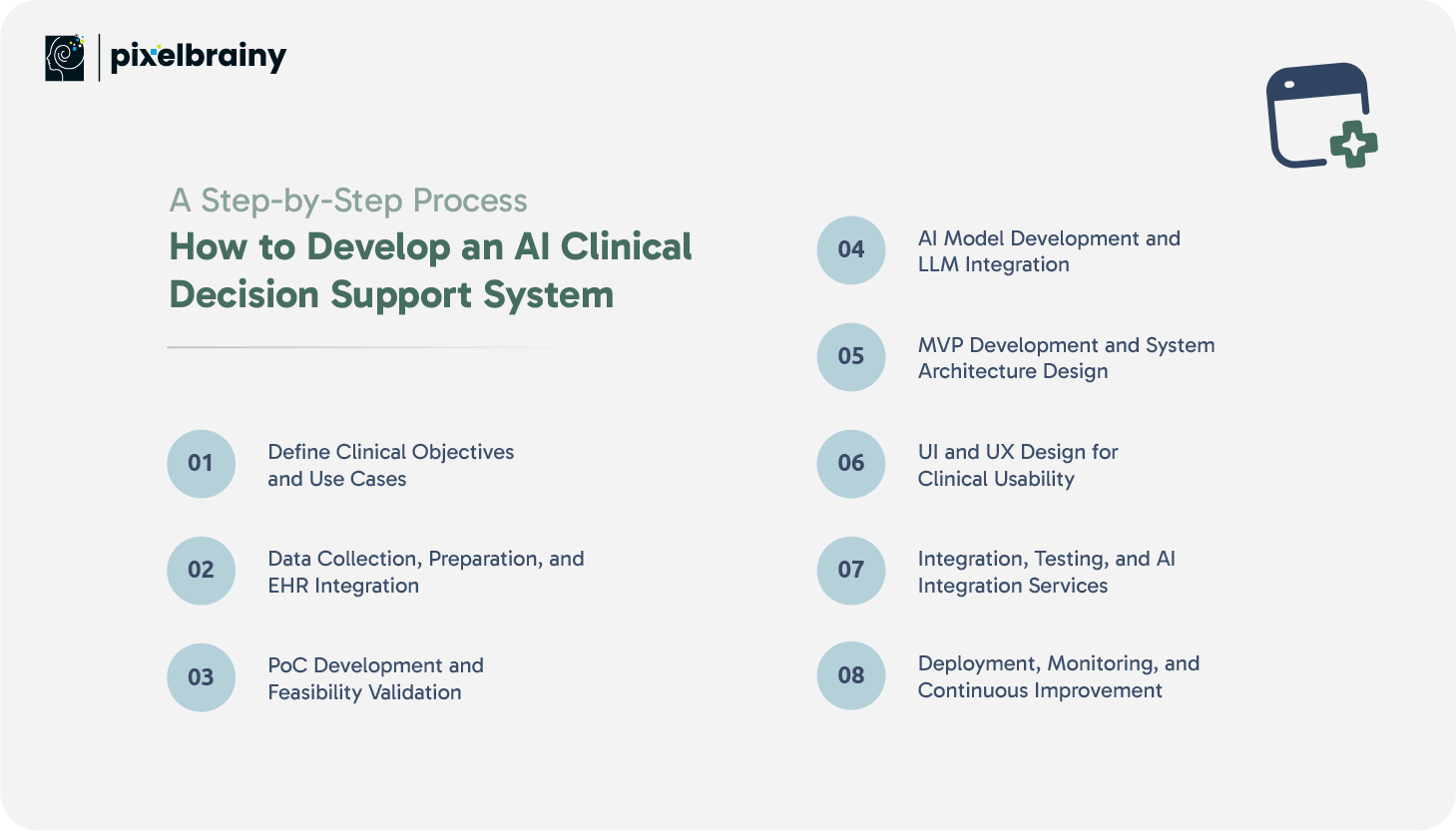
The first step in the AI CDSS system development lifecycle is identifying the exact clinical problems your system should solve. This involves working closely with doctors, care teams, and administrators to define use cases such as diagnostics, treatment planning, or risk prediction.
Clear problem definition ensures that the system is built with purpose and delivers measurable outcomes. It also helps prioritize features and avoid unnecessary complexity during development.
Goal of this step: To establish a strong clinical foundation and align development with real healthcare needs.
A successful system depends on high quality data, especially when developing AI clinical decision support system with EHR integration. This step includes collecting data from EHR systems, lab reports, imaging platforms, and other sources.
Data must be cleaned, standardized, and structured to ensure consistency. Interoperability standards help unify different data formats, making them usable for AI models.
Goal of this step: To create a reliable and well-structured data foundation that supports accurate AI predictions.
Before investing in full scale development, organizations should begin with PoC Development to test feasibility. A proof of concept focuses on a single use case and evaluates whether the AI model can deliver meaningful results.
This step helps identify potential challenges related to data quality, model performance, and system integration. It also provides early validation to stakeholders.
Goal of this step: To reduce risk by validating the technical and clinical feasibility of the solution.
Once feasibility is confirmed, the next step is to design and develop AI models based on selected use cases. This includes choosing appropriate algorithms and continuously testing model performance.
For teams looking for developers to build AI healthcare platforms with LLM integration, this stage also involves adding language models to support features like clinical summarization and conversational insights.
Goal of this step: To build intelligent models that generate accurate, explainable, and clinically relevant outputs.
Also Read: Top 12+ AI Model Development Companies in the USA
At this stage, a functional version of the system is created through MVP Development. The focus is on building core features and defining system architecture without overloading the product with unnecessary functionality.
The MVP allows real world testing and feedback from clinicians, helping refine workflows and improve system usability before full scale deployment.
Goal of this step: To validate the product in real environments and refine it based on user feedback.
Also Read: Top 10 AI MVP Development Companies in USA
Design plays a critical role in adoption, which is why collaborating with a specialized UI/UX design company is important. The system should be intuitive and aligned with how clinicians work daily.
A well-designed interface ensures that insights are easy to understand and act upon. It reduces cognitive load and improves overall efficiency in clinical settings.
Goal of this step: To create a user-friendly system that integrates smoothly into clinical workflows.
Also Read: Top 10+ UI/UX Design Companies in USA
In this phase, the system is connected with existing infrastructure using professional AI integration services. This includes integrating with EHR systems and ensuring smooth data flow across platforms.
Extensive testing is performed to validate functionality, performance, and compliance with healthcare regulations. This ensures system reliability and safety before deployment.
Goal of this step: To ensure seamless integration, system stability, and regulatory compliance.
Also Read: Top 10+ AI Integration Companies in USA
The final stage focuses on deploying the system and continuously monitoring its performance. Key metrics such as accuracy, usability, and adoption rates should be tracked regularly.
Ongoing updates and improvements are necessary to keep the system aligned with evolving clinical practices. This step also supports long term scalability and innovation.
Goal of this step: To maintain system performance and continuously improve outcomes over time while advancing AI platform development for clinical decision support.
A structured development roadmap helps turn a finalized feature set into a scalable AI clinical decision support system that can align with clinical workflows, integrate with existing healthcare infrastructure, and evolve through ongoing monitoring and clinical feedback.
Also Read: How to Build an AI Clinical Research Platform: Features, Steps & Development Cost
After defining the clinical use cases, features, and development roadmap, the next step is estimating the AI clinical decision support system development cost. The budget depends on factors such as AI capabilities, EHR integration, data requirements, compliance, scalability, and system complexity.
A practical question is: “We want to develop an AI clinical decision support system that integrates with our EHR, analyzes patient data in real time, provides risk predictions and clinical alerts, and generates LLM-powered clinical summaries. How much should we budget?”
The cost to develop an AI clinical decision support system typically ranges from $35,000 to $250,000+, depending on the required features, integrations, intelligence, and deployment scale.
| System Type | Estimated Cost | Purpose |
|---|---|---|
| Basic AI Clinical Decision Support System (MVP) | $35,000 – $80,000 | This level focuses on building a minimum viable product with core functionalities such as basic data integration, simple predictive models, and limited clinical decision support features. It is ideal for testing a single use case like diagnosis support or risk prediction. Organizations use this stage to validate ideas, gather feedback, and reduce initial investment risks before scaling further. |
| Medium AI Clinical Decision Support System | $80,000 – $150,000 | A mid-level system includes more advanced features such as multiple use cases, improved predictive analytics, EHR integration, and better user interfaces. It supports real clinical workflows and can be deployed across departments. This level is suitable for hospitals looking to move beyond experimentation and implement AI into day-to-day operations. |
| Advanced AI Clinical Decision Support System | $150,000 – $250,000+ | This level includes full scale AI capabilities such as LLM integration, real time analytics, advanced automation, and multi system interoperability. It supports complex clinical scenarios, large data volumes, and enterprise level deployment. It is ideal for healthcare networks aiming to build a scalable and future ready AI driven clinical ecosystem. |
Integrating multiple data sources such as EHRs, lab systems, and imaging platforms increases complexity and cost. Implementation of standards like FHIR and HL7 requires additional effort.
Estimated cost impact: $10,000 – $40,000 depending on system complexity.
Developing accurate AI models requires data preparation, training, validation, and optimization. More advanced models such as deep learning or LLMs increase both time and cost.
Estimated cost impact: $20,000 – $70,000 based on model complexity.
Healthcare systems must comply with regulations such as HIPAA and GDPR. Implementing encryption, access control, and audit systems adds to the development cost.
Estimated cost impact: $10,000 – $30,000 depending on compliance scope.
Designing intuitive interfaces for clinicians requires specialized expertise. More advanced dashboards and user experiences increase design and development effort.
Estimated cost impact: $5,000 – $20,000 depending on feature depth.
Building a scalable system on cloud platforms involves infrastructure setup, storage, and computing resources. Costs increase with higher data volume and user load.
Estimated cost impact: $10,000 – $50,000 annually.
Using third party AI platforms or APIs can accelerate development but may introduce licensing or usage costs. This includes NLP tools, LLM APIs, and analytics platforms.
Estimated cost impact: $5,000 – $25,000 depending on usage.
The cost to hire developers for AI CDSS development varies based on experience, location, and team size. Specialized AI engineers and healthcare experts typically command higher rates.
Estimated cost impact: $30,000 – $100,000+ depending on project scope.
A practical development budget for an AI clinical decision support system should start with a clearly defined clinical use case and roadmap. Many organizations begin with an MVP, validate performance and workflows, and then expand the system based on clinical requirements and results.
This approach helps control initial investment while creating a scalable foundation for AI clinical decision support software development.

A reliable AI clinical decision support system depends on a technology stack that can handle clinical data, AI workloads, interoperability, security, and real-time decision support. The right combination of AI platforms, healthcare technologies, data engineering tools, and cloud infrastructure creates the foundation for scalable and clinically usable software.
Consider a healthcare organization asking: “We want to develop an AI clinical decision support system that connects with our EHR, processes real-time patient data, supports predictive analytics and LLM-powered clinical summaries, and meets healthcare security requirements. Which AI platforms, tools, and technologies should we include in the technology stack?” The answer depends on the system’s clinical use cases, integration requirements, data volume, AI capabilities, and deployment environment.
Below is an overview of the key AI platforms, tools, and technologies for clinical decision support system development, covering AI/ML frameworks, NLP and LLM platforms, healthcare interoperability standards, cloud infrastructure, data processing, databases, application development, security, DevOps, and monitoring.
| Category | Technologies / Tools | Description |
|---|---|---|
| AI and Machine Learning Frameworks | TensorFlow, PyTorch, Scikit-learn | These frameworks are used to build, train, and deploy machine learning models. They support predictive analytics, classification, and deep learning capabilities required for clinical decision making. They also provide flexibility for handling large healthcare datasets. |
| Natural Language Processing (NLP) Tools | spaCy, NLTK, Hugging Face Transformers | NLP tools help process unstructured clinical data such as doctor notes and discharge summaries. They convert text into structured insights that can be used for decision support. This is essential for improving data completeness and analysis accuracy. |
| Large Language Model (LLM) Platforms | OpenAI, Azure OpenAI, Google Vertex AI | These platforms enable advanced capabilities such as clinical summarization, conversational interfaces, and contextual recommendations. They enhance usability and help clinicians interact with the system more naturally. LLM integration is becoming a key component of modern AI CDSS solutions. |
| Healthcare Data Standards and Interoperability | HL7, FHIR | These standards ensure seamless data exchange between different healthcare systems. They enable interoperability across EHRs, lab systems, and other clinical platforms. This is critical for building connected and efficient healthcare ecosystems. |
| Cloud Platforms | AWS, Microsoft Azure, Google Cloud Platform | Cloud platforms provide scalable infrastructure for storing and processing healthcare data. They support high availability, security, and performance for AI applications. Cloud deployment also enables easy scaling as system usage grows. |
| Data Engineering and Processing Tools | Apache Spark, Apache Kafka, Airflow | These tools manage data pipelines, real time data streaming, and workflow automation. They ensure that data is processed efficiently and delivered to AI models without delays. This is essential for real time clinical decision support. |
| Database Technologies | PostgreSQL, MongoDB, Snowflake | Databases are used to store structured and unstructured healthcare data securely. They support fast data retrieval and scalability. Choosing the right database ensures system performance and reliability. |
| Backend Development Technologies | Python, Node.js, Java | Backend technologies handle business logic, API development, and system integration. They ensure smooth communication between different system components. Python is widely used due to its strong AI and data ecosystem. |
| Frontend Development Technologies | React, Angular, Vue.js | Frontend frameworks are used to build user interfaces for clinicians. They enable interactive dashboards and real time data visualization. A responsive frontend improves usability and adoption. |
| Security and Compliance Tools | OAuth 2.0, SSL/TLS, Identity and Access Management (IAM) | These tools ensure secure access to the system and protect sensitive healthcare data. They support authentication, authorization, and encryption. Compliance with healthcare regulations depends heavily on these technologies. |
| DevOps and Deployment Tools | Docker, Kubernetes, Jenkins | DevOps tools help automate deployment, scaling, and monitoring of applications. They ensure consistent performance across environments. This is important for maintaining system reliability and uptime. |
| Monitoring and Analytics Tools | Prometheus, Grafana, ELK Stack | Monitoring tools track system performance, usage, and errors in real time. They help identify issues quickly and maintain system stability. Analytics tools also provide insights for continuous improvement. |
A well-defined technology stack for AI clinical decision support software development supports secure data flow, reliable AI performance, interoperability, and scalable clinical workflows.
Successful AI clinical decision support system development depends on more than AI capabilities. Healthcare organizations need to ensure that clinical data, privacy, explainability, workflow integration, scalability, and clinician usability are addressed throughout development.
Consider a healthcare organization asking: “We want to develop an AI clinical decision support system with LLMs that can analyze patient data, summarize clinical information, provide explainable recommendations, and integrate into existing hospital workflows. What best practices should we follow to ensure the system is reliable, secure, and useful for clinicians?” The answer starts with building the right foundation across data quality, compliance, AI transparency, integration, monitoring, and user experience.
Below are the key best practices organizations should follow when developing AI clinical decision support software with LLMs and advanced AI platforms.
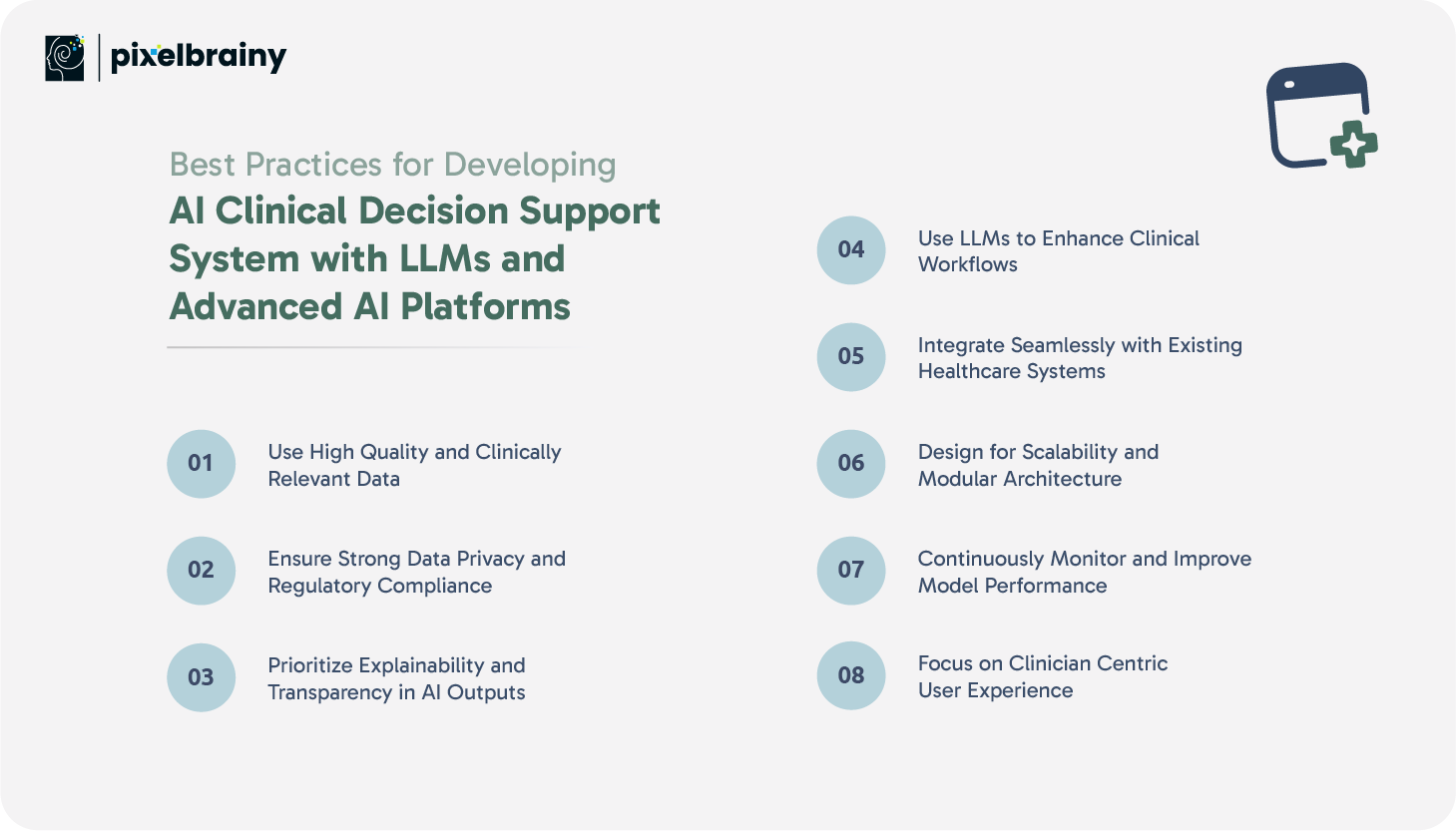
The effectiveness of any AI system depends on the quality of the data it learns from. Inaccurate or biased data can lead to unreliable clinical recommendations and reduced trust among clinicians.
Healthcare organizations must ensure that datasets are clean, diverse, and representative of real patient populations. This improves model accuracy and ensures consistent performance across different clinical scenarios.
Key considerations:
Data security is critical when handling sensitive healthcare information. Compliance should be built into the system from the beginning rather than added later.
This is especially important during the development of AI clinical decision support system software, where regulatory requirements must be considered at every stage. It builds trust and reduces legal risks.
Key considerations:
Clinicians need clear reasoning behind AI recommendations to trust and adopt the system. Black box models can create hesitation and limit usability in clinical environments.
Explainable AI helps users understand how decisions are made, making the system more reliable and acceptable in healthcare settings.
Key considerations:
Large language models can significantly improve usability when used correctly. They are particularly effective for summarizing clinical data and generating contextual insights.
This becomes highly valuable when building AI-driven diagnosis support systems for hospitals, where quick and accurate interpretation of patient data is essential.
Key considerations:
A system that does not fit into existing workflows will struggle with adoption. Integration with EHR systems and hospital platforms is essential for smooth operation.
Providing insights within familiar interfaces ensures that clinicians can use the system without disruption to their routine.
Key considerations:
Healthcare systems evolve quickly, and AI solutions must be able to scale accordingly. A modular architecture allows easy updates and expansion as new requirements emerge.
This is a critical factor in AI clinical decision support software development, ensuring long term flexibility and performance.
Key considerations:
AI systems require ongoing evaluation to maintain accuracy. Changes in data patterns can impact model performance if not addressed proactively.
Continuous monitoring and retraining help ensure that the system remains relevant and effective in real world clinical settings.
Key considerations:
User experience plays a major role in adoption. A complex or confusing interface can discourage clinicians from using the system, regardless of its capabilities.
Designing with clinicians in mind ensures that insights are clear, actionable, and easy to access during patient care.
Key considerations:
Following these practices helps create an AI clinical decision support system that is secure, explainable, scalable, and aligned with real clinical workflows.
As AI adoption in healthcare grows, organizations developing clinical decision support systems must address challenges across technology, ethics, data security, and regulatory compliance. Identifying these barriers early can help teams build AI clinical decision support software that is reliable, secure, explainable, and suitable for real clinical environments.
Consider a healthcare organization asking: “We want to develop an AI clinical decision support system that integrates with our EHR, analyzes patient data in real time, provides predictive recommendations, and uses LLMs for clinical summaries. What technical, ethical, and regulatory challenges should we address before deployment?” These considerations are essential for planning AI clinical decision support system development and supporting responsible AI adoption.
Below is a structured breakdown of the key challenges and practical solutions.
| Challenge | Solution |
|---|---|
| Data Fragmentation Across Systems | Healthcare data is often spread across EHRs, lab systems, and imaging platforms, making integration complex. Implement interoperability standards such as FHIR and HL7 to unify data sources. Use centralized data pipelines to ensure consistent and reliable data flow across systems. |
| Poor Data Quality and Inconsistency | Incomplete or inconsistent data can lead to inaccurate AI predictions. Establish strong data governance practices including validation, cleaning, and normalization processes. Regular audits and automated data quality checks can significantly improve reliability. |
| Model Accuracy and Reliability Issues | AI models may not perform consistently across different patient populations or clinical scenarios. Use diverse training datasets and conduct continuous validation. Implement model monitoring and retraining mechanisms to maintain accuracy over time. |
| Integration with Legacy Systems | Many hospitals rely on outdated systems that are difficult to integrate with modern AI platforms. Use middleware and APIs to bridge gaps between legacy systems and new AI solutions. Gradual integration strategies help reduce disruption. |
| Scalability and Performance Limitations | As data volume grows, system performance can degrade if not designed properly. Adopt cloud-based architectures and scalable infrastructure. Use distributed computing and optimized data pipelines to handle large workloads efficiently. |
| Challenge | Solution |
|---|---|
| Bias in AI Models | AI systems can inherit biases from training data, leading to unequal treatment outcomes. Use diverse and representative datasets during model training. Conduct fairness testing and bias audits to ensure equitable performance across populations. |
| Lack of Transparency in Decision Making | Black box AI models can reduce trust among clinicians. Implement explainable AI techniques that provide clear reasoning behind recommendations. Transparency is critical for adoption and accountability. |
| Over Reliance on AI Systems | Excessive dependence on AI can reduce clinician judgment and oversight. Maintain a human in the loop approach where clinicians validate AI recommendations. This ensures balanced decision making and patient safety. |
| Patient Consent and Data Usage Concerns | Patients may be unaware of how their data is used in AI systems. Implement clear consent mechanisms and data usage policies. Transparency in data handling builds trust and ensures ethical compliance. |
| Challenge | Solution |
|---|---|
| Strict Healthcare Regulations | Compliance with laws such as HIPAA and GDPR adds complexity to system development. Engage legal and compliance experts early in the process. Build systems with compliance by design rather than retrofitting later. |
| Data Security Risks | Sensitive patient data is a prime target for cyber threats. Implement strong security measures including encryption, secure authentication, and access controls. Regular security audits help identify vulnerabilities. |
| Lack of Standardized AI Regulations | AI regulations in healthcare are still evolving, creating uncertainty for developers. Follow best practices and guidelines from recognized healthcare authorities. Design flexible systems that can adapt to future regulatory changes. |
| Clinical Validation Requirements | AI systems must be validated before being used in real clinical settings. Conduct pilot programs, clinical trials, and user testing to ensure safety and effectiveness. Continuous validation is essential for long term adoption. |
Addressing technical, ethical, and regulatory challenges early creates a stronger foundation for AI clinical decision support system development. A proactive approach helps healthcare organizations build systems that are secure, reliable, scalable, and better aligned with clinical requirements.
The next generation of AI clinical decision support systems will extend beyond traditional alerts and recommendations. Advances in LLMs, multimodal AI, predictive analytics, remote monitoring, and cloud-native infrastructure are creating new possibilities for how clinical data can be analyzed and used across care environments.
Consider a healthcare organization asking: “We want to invest in an AI clinical decision support system that supports predictive care, analyzes multimodal patient data, integrates wearable monitoring, and provides LLM-powered clinical intelligence. Which emerging technologies should we plan for to keep the system relevant over the next few years?” This highlights the importance of understanding emerging technologies when planning an AI clinical decision support software development roadmap.
Below are the key trends shaping the future of AI clinical decision support systems.
Large language models are becoming a core component of modern AI systems. They enable advanced capabilities such as clinical summarization, conversational interfaces, and contextual recommendations.
In the future, LLMs will act as intelligent assistants for clinicians, helping them interpret complex data quickly and efficiently. This will significantly improve decision making speed and reduce cognitive load in clinical environments.
Healthcare is moving from reactive treatment to proactive care. AI systems will increasingly focus on predicting diseases before symptoms appear.
Advanced predictive models will identify risks early, enabling timely interventions and reducing hospitalizations. This shift will play a major role in improving patient outcomes and lowering healthcare costs.
The use of wearable devices and remote monitoring tools is expanding rapidly. AI clinical decision support systems will integrate with these devices to provide continuous patient monitoring.
This enables real time insights and alerts, allowing healthcare providers to manage chronic conditions more effectively and extend care beyond hospital settings.
AI will enable highly personalized treatment plans based on individual patient data, genetics, and lifestyle factors.
Clinical decision support systems will analyze multiple data sources to recommend treatments tailored to each patient. This approach improves treatment effectiveness and reduces the risk of adverse outcomes.
Future AI systems will combine multiple data types such as text, images, genomic data, and sensor data. This is known as multimodal AI.
By analyzing diverse data sources together, these systems will provide deeper insights and more accurate clinical recommendations, especially in complex cases.
As AI adoption increases, the need for transparency and trust will become more important. Future systems will focus on explainable AI that clearly shows how decisions are made.
This will improve clinician confidence, support regulatory compliance, and encourage wider adoption across healthcare organizations.
Automation will go beyond simple tasks and extend into complex clinical workflows. AI systems will assist in scheduling, documentation, triage, and decision-making processes.
This will reduce administrative burden, improve efficiency, and allow clinicians to focus more on patient care.
Cloud based infrastructure will continue to play a major role in scaling AI clinical decision support systems.
Future systems will leverage cloud native technologies for faster deployment, better performance, and seamless scalability. This is especially important for large healthcare networks and multi-location operations.
Governments and regulatory bodies are actively working on frameworks for AI in healthcare.
As regulations become more standardized, it will become easier for organizations to develop and deploy compliant AI systems. This will accelerate adoption and innovation across the industry.
While full automation is still evolving, future systems will move closer to autonomous decision support. These systems will provide highly accurate recommendations with minimal human intervention.
However, human oversight will remain essential to ensure safety, accountability, and ethical decision making in clinical environments.
Tracking these trends can help healthcare organizations plan AI clinical decision support system development with the flexibility to adopt new AI capabilities, data sources, and clinical workflows as the technology evolves.
Healthcare organizations need more than a technology vendor when developing an AI clinical decision support system. They need an AI healthcare software development company that understands clinical workflows, healthcare data, compliance, and advanced AI technologies. PixelBrainy positions itself as a leading AI healthcare software development company, combining AI platforms, LLM intelligence, scalable architecture, and human-centered design to develop clinically relevant solutions.
A healthcare organization may ask: “Which AI healthcare software development company can build a scalable clinical decision support system with EHR integration, predictive risk scoring, LLM-powered clinical summaries, real-time alerts, and healthcare compliance?” PixelBrainy’s approach addresses these requirements through an end-to-end development process.
PixelBrainy starts with clinical workflows, patient journeys, and operational requirements before defining the AI solution. This keeps the technology aligned with practical healthcare needs and clinician workflows.
From consultation and data integration to AI model development, LLM integration, UI/UX, testing, and deployment, PixelBrainy supports the complete AI clinical decision support software development lifecycle.
PixelBrainy integrates advanced AI platforms and LLMs to support capabilities such as:
Solutions are designed to support growing data volumes, users, integrations, and multi-location deployments while maintaining interoperability, performance, and scalability.
Security and compliance are considered throughout development, with approaches covering HIPAA, GDPR, data protection, access controls, and secure healthcare data handling.
PixelBrainy focuses on intuitive interfaces that fit existing clinical workflows, helping clinicians access relevant insights without unnecessary complexity or disruption.
Client Goal:
A multi-specialty hospital wanted to improve diagnostic accuracy, reduce patient readmissions, and help clinicians make faster, data-driven decisions. The hospital was dealing with fragmented clinical data, delayed decision-making, and limited predictive capabilities.
PixelBrainy’s Solution:
PixelBrainy developed a customized AI clinical decision support system integrated with the hospital’s existing EHR infrastructure. The solution included:
Results:
Within six months of deployment, the hospital reported a significant improvement in early diagnosis accuracy and a noticeable reduction in readmission rates. Clinicians were also able to access relevant patient insights faster, supporting more timely treatment decisions.
This case demonstrates PixelBrainy’s approach to combining AI platforms, LLM intelligence, healthcare data, and clinical workflows to develop practical AI healthcare solutions.
Looking to develop an AI clinical decision support system? Connect with PixelBrainy today to discuss your requirements and get started.

An AI clinical decision support system can help healthcare organizations improve clinical decision-making, streamline workflows, and deliver timely insights from complex patient data. From diagnostics and treatment planning to risk prediction and patient monitoring, AI clinical decision support software can support clinicians across a wide range of healthcare use cases.
Successful AI clinical decision support system development requires more than advanced AI. Strong data foundations, secure architecture, healthcare interoperability, regulatory compliance, clinician-focused workflows, and continuous model improvement are essential for building reliable and scalable solutions.
As AI adoption in healthcare continues to grow, organizations that invest in structured AI clinical decision support software development can create solutions that address current clinical needs while supporting future AI capabilities and healthcare workflows.
Planning to build or scale an AI clinical decision support system? Connect with PixelBrainy to discuss your requirements with our experts.
Before starting AI clinical decision support system development, business and healthcare leaders should define the clinical use case, required data sources, EHR integration needs, AI capabilities, security requirements, and expected outcomes. This creates a clear roadmap for development and deployment.
The AI clinical decision support system development cost can range from $35,000 to $250,000+, depending on the system's complexity, AI models, EHR integration, LLM requirements, security, infrastructure, and deployment scale.
If your organization wants to build an AI clinical decision support system, the technology stack may include machine learning frameworks, NLP tools, LLM platforms, FHIR and HL7, cloud infrastructure, databases, APIs, and monitoring tools. The final stack should match the clinical use case and integration environment.
For businesses planning AI clinical decision support software development, EHR integration can be implemented using interoperability standards such as FHIR and HL7, along with APIs and healthcare data pipelines. This allows clinical insights, alerts, and recommendations to fit into existing workflows.
Yes. LLM-powered clinical decision support systems can be designed to generate clinical summaries, support conversational interfaces, and provide contextual insights. Healthcare organizations should define appropriate validation, oversight, security, and workflow controls before using LLM outputs in clinical environments.
A business planning to develop AI-based clinical decision support software may consider features such as predictive analytics, real-time clinical alerts, EHR integration, explainable AI, NLP, LLM-powered assistance, interoperability, audit trails, continuous model monitoring, and clinician-focused dashboards.
Organizations planning enterprise AI clinical decision support system development should consider cloud-native infrastructure, modular architecture, standardized healthcare data exchange, centralized monitoring, and scalable data pipelines. These foundations can support expansion across departments, facilities, and clinical use cases.
Businesses evaluating an AI healthcare software development company should assess experience with healthcare workflows, EHR integration, AI/ML development, LLM integration, security, interoperability, and scalable architecture. PixelBrainy LLC offers end-to-end AI clinical decision support system development covering these areas.

About The Author
Sagar Bhatnagar
Sagar Sahay Bhatnagar brings over a decade of IT industry experience to his role as Marketing Head at PixelBrainy. He's known for his knack in devising creative marketing strategies that boost brand visibility and market influence. Sagar's strategic thinking, coupled with his innovative vision and focus on results, sets him apart. His track record of successful campaigns proves his ability to utilize digital platforms effectively for impactful marketing efforts. With a genuine passion for both technology and marketing, Sagar continuously pushes PixelBrainy's marketing initiatives to greater success.

Working with the PixelBrainy team has been a highly positive experience. They understand the design requirements and create beautiful UX elements to meet the application needs. The dev team did an excellent job bringing my vision to life. We discussed usability and flow. Sagar worked with his team to design the database and begin coding. Working with Sagar was easy. He has the knowledge to create robust apps, including multi-language support, Google and Apple ID login options, Ad-enabled integrations, Stripe payment processing, and a Web Admin site for maintaining support data. I'm extremely satisfied with the services provided, the quality of the final product, and the professionalism of the entire process. I highly recommend them for Android and iOS Mobile Application Design and Development.

Great experience working with them. Had a lot of feedback and I found that unlike most contractors they were bugging me for updates instead of the other way around. They were extremely time conscience and great at communicating! All work was done extremely high quality and if not on time, early! They were always proactive when it comes to communication and the work is great/above par always. Very flexible and a great team to work with! Goes above and beyond to present us with multiple options and always provides quality. Amazing work per usual with Chitra. If you have UI/UX or branding design needs I recommend you go to them! Will likely work with them in the future as well, definitely recommended!

PixelBrainy is a joy to work with and is a great partner when thinking through branding, logo, and website layout. I appreciate that they spend time going into the "why" behind their decisions to help inform me and others about industry best practices and their expertise.

I hired them to design our software apps. Things I really like about them are excellent communication skills, they answer all project suggestions and collaborate right away, and their input on design and colors is amazing. This project was complex and needed patience and creativity. The team is amazing to do business with. I will be using them long-term. Glad to see there are some good people out there. I was afraid to try and outsource my project to someone but I am glad I met them! I really can't say enough. They went above and beyond on this project. I am very happy with everything they have done to make my business stand out from the competition.

It was great working with PixelBrainy and the team. They were very responsive and really owned the project. We'll definitely work with them again!

I recently worked with the PixelBrainy team on a project and I was blown away by their communication skills. They were prompt, clear, and articulate in all of our interactions. They listened and provided valuable feedback and suggestions to help make the project a success. They also kept me updated throughout the entire process, which made the experience stress-free and enjoyable.

PixelBrainy is very good at what it does. The team also presents themselves very professionally and takes care of their side of things very well. I could fully trust them taking up the design work in a timely and organised manner and their attention to detail saved us lots of effort and time. This particular project was quite intense and the team showed that they function very well under pressure. Very much looking forward to working with her again!

It's always an absolute pleasure working with them. They completed all of my requests quickly and followed every note I had for them to a T, which made our process go smoothly from start to finish. Everything was completed fast and following all of the guidelines. And I would recommend their services to anyone. If you need any design work done in the future, PixelBrainy should be your first call!

They took ownership of our requirements and designed and proposed multiple beautiful variants. The team is self-motivated, requires minimum supervision, committed to see-through designs with quality and delivering them on time. We would definitely love to work with PixelBrainy again when we have any requirements.

PixelBrainy was a big help with our SaaS application. We've been hard at work with a new UI/UX and they provided a lot of help with the designs. If you're looking for assistance with your website, software, or mobile application designs, PixelBrainy and the team is a great recommendation.

PixelBrainy designers are amazing. They are responsive, talented, and always willing to help craft the design until it matches your vision. I would recommend them and plan to continue them for my future projects and more!!!

They were awesome! Did a good job fast, and good communication. Will work with them again. Thank you

Creative, detail-oriented, and talented designers who take direction well and implement changes quickly and accurately. They consistently over-delivered for us.

PixelBrainy team is very talented and creative. Great designers and a pleasure to work with. PixelBrainy is an excellent communicator and I look forward to working with them again.

PixelBrainy has a very talented design team. Their work is excellent and they are very responsive. I enjoy working with them and hope to continue on all of our future projects.


Transform your ideas into reality with us.
Across these industries, each engagement brings unique challenges, from early-stage product development to scaling complex systems, helping us build a practical understanding of real-world product environments.