AI Summary Powered by PixelBrainy
How can healthcare organizations turn complex genomic data, patient histories, and rapidly evolving medical research into personalized treatment recommendations that physicians can trust?
For healthcare leaders, particularly Chief Medical Officers managing large oncology departments, this question has become increasingly important. Oncologists must evaluate genomic profiles, cancer staging, previous therapies, comorbidities, medication interactions, clinical trial eligibility, and the latest treatment guidelines before making critical decisions. Reviewing this information manually can consume valuable clinical time, delay multidisciplinary discussions, and make it difficult to consistently evaluate every relevant treatment option.
An AI personalized treatment recommendation app can help address these challenges by bringing patient-specific clinical information and trusted medical evidence into a unified decision-support workflow. Using artificial intelligence (AI), machine learning (ML), natural language processing (NLP), and retrieval-augmented generation (RAG), the application can analyze structured and unstructured medical records, identify clinically relevant evidence, and present potential treatment options with supporting citations, contraindications, and eligibility criteria.
The opportunity is growing alongside healthcare AI adoption. According to the US Food and Drug Administration (FDA), more than 1,600 AI-enabled medical devices had been authorized for marketing in the United States as of September 2026. This official figure demonstrates the expanding use of AI in regulated healthcare technologies, although it does not represent the number of treatment recommendation applications specifically.
For healthcare executives and digital health founders, the next step is understanding how to translate this opportunity into a safe, scalable clinical application. Whether you want to build AI personalized treatment recommendation app software for precision oncology or create a broader clinical decision-support platform, the development process requires more than integrating a language model. It involves clinical workflow design, interoperable data infrastructure, evidence management, model validation, privacy safeguards, and ongoing performance monitoring.
This guide explains how to create an AI personalized treatment recommendation app, the essential and advanced features to consider, the technology stack, development stages, regulatory requirements, common challenges, and estimated costs. It also explores how personalized treatment recommendation app development with AI can help healthcare organizations improve clinical efficiency while preserving physician oversight.
For organizations evaluating a custom AI personalized treatment recommendation app for healthcare business, the objective should be clear: build a reliable clinical decision-support system that helps qualified clinicians evaluate evidence-based options for individual patients, rather than an autonomous tool that replaces medical judgment.

An AI personalized treatment recommendation app is a healthcare software solution that analyzes patient-specific medical information and clinical evidence to help healthcare professionals identify appropriate treatment options. Unlike conventional treatment tools that rely on standardized protocols, these applications consider individual factors such as medical history, diagnosis, laboratory results, medications, allergies, genetic information, and previous treatment responses.
AI personalized treatment recommendation app development focuses on building software that supports evidence-based clinical decisions, improves treatment planning, and helps healthcare providers deliver individualized care. These applications provide clinical decision support while keeping healthcare professionals responsible for final treatment decisions.
The development process typically supports a six-step clinical workflow:
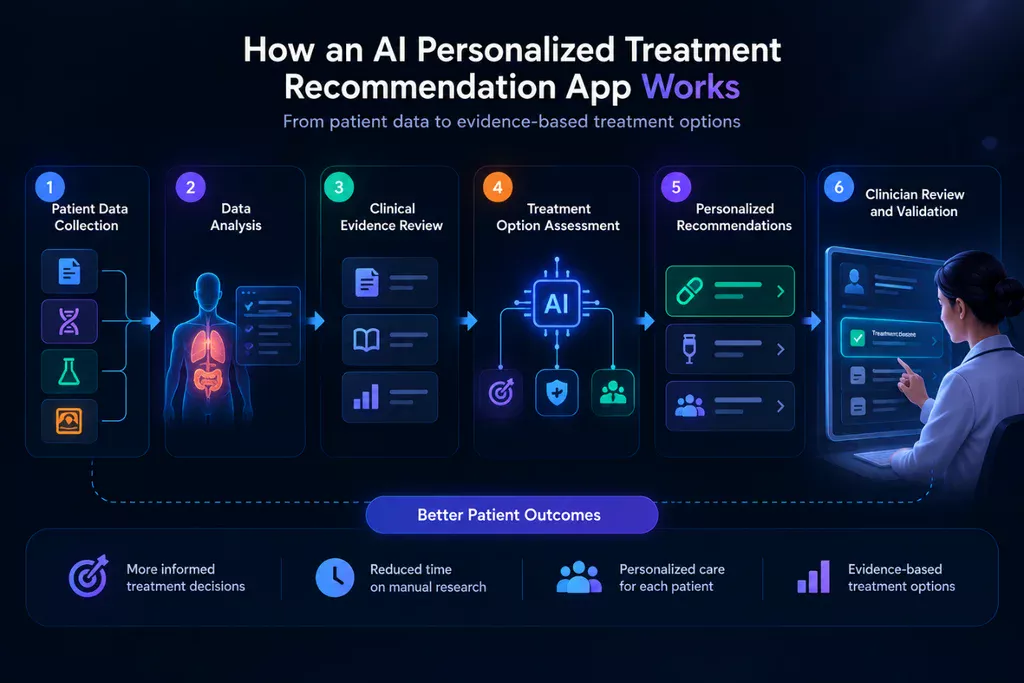
1. Patient data collection: The application gathers relevant information from electronic health records (EHRs), diagnostic reports, laboratory systems, medication lists, and other authorized healthcare data sources.
2. Patient data analysis: The system organizes patient information to identify relevant clinical factors, existing conditions, potential risks, and treatment considerations.
3. Clinical evidence review: The application references relevant clinical guidelines, medical literature, and validated healthcare resources to inform potential treatment options.
4. Treatment option assessment: Potential treatments are evaluated against the patient's diagnosis, medical history, allergies, contraindications, and other patient-specific factors.
5. Personalized recommendation generation: The application presents relevant treatment options alongside supporting evidence, eligibility considerations, potential risks, and any missing information that could affect the decision.
6. Clinician review and validation: A qualified healthcare professional reviews the recommendations, considers the patient's preferences and clinical circumstances, and determines the appropriate course of treatment.
Consider a patient diagnosed with breast cancer. The application evaluates the patient's pathology report, cancer stage, biomarker results, previous treatments, existing medical conditions, and relevant clinical guidelines. Based on this information, it presents potential treatment options for the oncologist to assess, including supporting evidence, eligibility criteria, and possible safety concerns.
This workflow can help oncology teams organize complex medical information, identify relevant evidence more efficiently, and prepare for informed treatment discussions.
The value of an AI personalized treatment recommendation app lies in connecting individual patient data with relevant clinical evidence. Reliable recommendations require high-quality data, clinical validation, transparent reasoning, strong privacy protections, and appropriate physician oversight.
Healthcare businesses are increasingly exploring AI personalized treatment recommendation app development to deliver more individualized care, improve clinical workflows, and build scalable digital health services. Hospitals, specialty clinics, oncology centers, and digital health startups can use these applications to help clinicians evaluate patient information, compare treatment options, and make evidence-informed decisions.
The market outlook also signals growing investment opportunities. According to Grand View Research’s 2026 clinical decision support market report, the global AI clinical decision support market is projected to grow from $1.5 billion in 2026 to $4.5 billion by 2033, representing a compound annual growth rate of 17.1%. This growth highlights the commercial potential of intelligent clinical support solutions.
6 Reasons to Invest in AI Personalized Treatment Recommendation Apps
Healthcare organizations can enter a rapidly expanding digital health segment. Fortune Business Insights, in a report updated in September 2026, estimates the global AI in healthcare market will grow from $56.01 billion in 2026 to $1.03 trillion by 2034. This forecast points to long-term opportunities for businesses developing specialized AI healthcare applications.
AI treatment recommendation software can help clinicians assess medical history, diagnostic results, allergies, biomarkers, and previous treatment responses together. This supports more individualized care planning, particularly in oncology, cardiology, and chronic disease management. The WHO European Observatory's personalized medicine policy brief discusses how personalized approaches can support more cost-effective treatment selection.
Clinicians often need to review multiple records, guidelines, and research sources before selecting a treatment approach. AI-powered applications can organize relevant information and surface evidence for review, helping teams spend less time searching across disconnected systems. The business value depends on how well the application integrates into existing clinical workflows.
Treatment recommendation apps can display clinical references, contraindications, potential drug interactions, and patient-specific considerations. This helps clinicians examine recommendations more systematically. The FDA's AI-enabled medical devices resource reported more than 1,600 authorized AI-enabled medical devices as of September 2026, demonstrating the growing presence of AI across regulated healthcare products.
Hospitals and specialty clinics can differentiate their services through better-informed treatment discussions, coordinated care, and personalized patient experiences. Healthcare startups can also develop solutions for specific specialties rather than competing directly with broad, general-purpose platforms.
Healthcare technology companies can explore subscription plans, hospital licensing, enterprise deployments, and partnerships with clinics or diagnostic networks. Future opportunities may include expanded precision medicine capabilities and integration with electronic health records. Sustainable growth requires clinical validation, privacy safeguards, regulatory compliance, and measurable value for healthcare providers.
Healthcare businesses investing in AI personalized treatment recommendation app development can position themselves for the next phase of digital healthcare while building solutions around safer, evidence-informed, patient-centered care.
Hospitals, cancer centers, chronic disease management programs, mental health providers, pharmaceutical companies, and digital health startups can benefit from developing AI-powered solutions that support patient-specific treatment decisions.
Businesses exploring AI treatment recommendation app development should focus on clinical areas where treatment selection depends on multiple patient factors, medical evidence, and individual responses to previous therapies. These applications can help healthcare professionals evaluate treatment options, identify relevant clinical evidence, and personalize care plans while keeping clinicians responsible for final decisions.
Whether you are planning an AI treatment recommendation app for physicians, exploring AI oncology treatment recommendation app development, or investing in AI treatment planning app development for hospitals, the right application should address a defined clinical challenge and fit existing healthcare workflows.
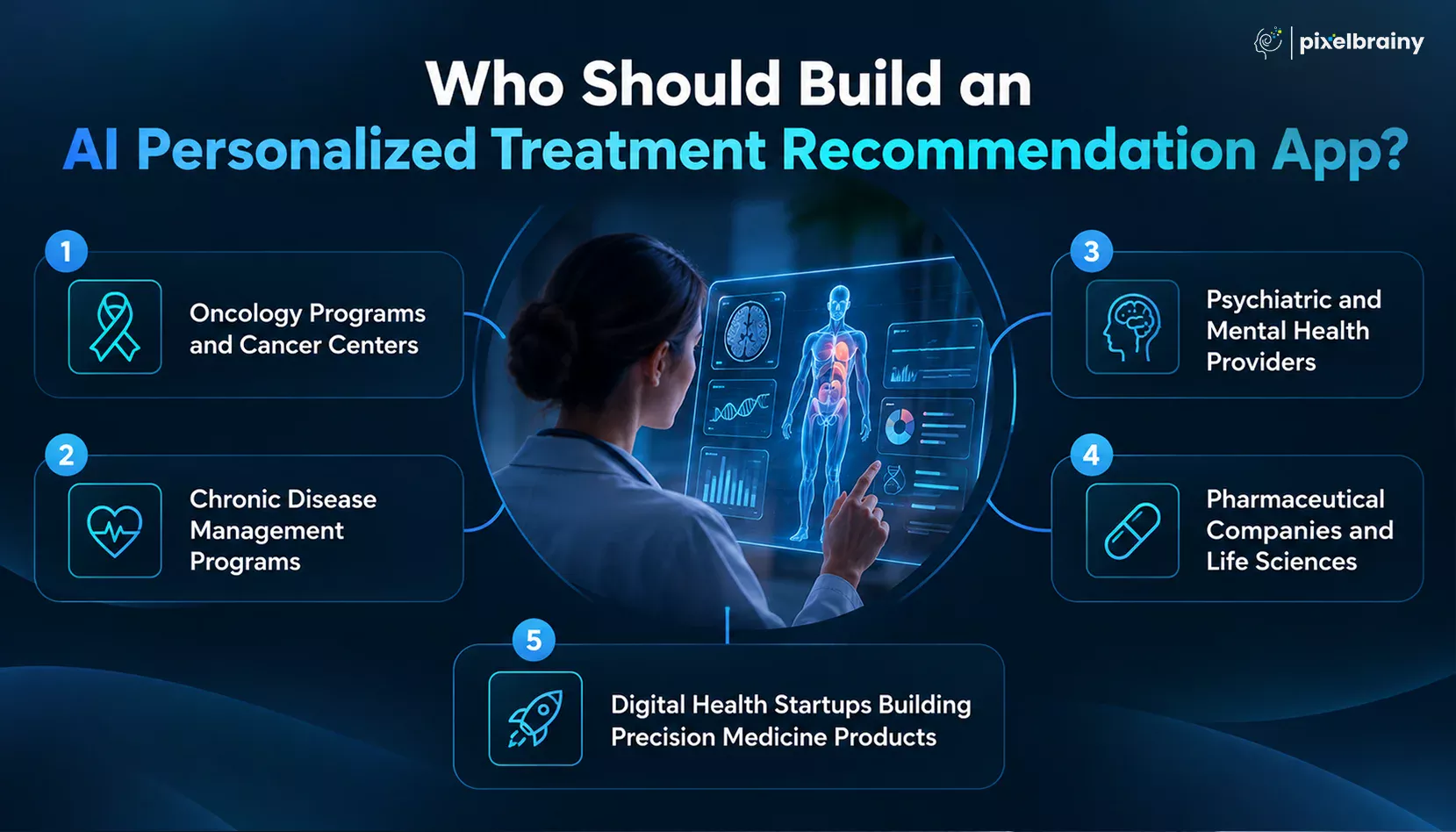
Cancer treatment selection often involves complex decisions based on tumor type, disease stage, genomic alterations, biomarker profiles, previous therapies, and clinical trial eligibility.
An AI oncology treatment recommendation app can help oncologists organize these factors and identify relevant treatment options supported by current clinical evidence.
Primary value:
Healthcare programs managing diabetes, hypertension, heart failure, and other long-term conditions can use AI to support ongoing treatment reviews. Patient-specific factors such as laboratory results, medication history, comorbidities, and previous treatment responses can inform clinical assessments.
Primary value:
AI recommendations should support clinical evaluation rather than independently change prescriptions or medication doses.
Psychiatric medication selection can involve several adjustments before a suitable treatment is identified. AI-supported applications can help clinicians review symptom history, previous medications, adverse effects, and relevant pharmacogenomic information.
Primary value:
These tools should account for clinical guidelines, patient preferences, and the limitations of predicting an individual's response to psychiatric medication.
Pharmaceutical companies can develop physician-facing applications that help healthcare professionals evaluate patient profiles against approved therapy indications, published clinical evidence, and clinical trial eligibility criteria.
Primary value:
Applications must maintain appropriate boundaries between clinical decision support, product promotion, and approved prescribing information.
Startups developing precision medicine solutions can build specialized applications for particular diseases, patient groups, or treatment workflows. Rather than serving every medical specialty, a focused product can address a specific unmet clinical need.
Primary value:
| Builder type | Primary clinical use case | Key AI feature priority | Key regulatory consideration |
| Oncology program | Genomics-informed treatment selection | Genomic and biomarker analysis | Applicable medical device software requirements |
| Chronic disease program | Ongoing medication review | Treatment response assessment | Clinical decision support requirements |
| Psychiatric provider | Individualized medication selection | Pharmacogenomic data integration | Prescribing and clinical software requirements |
| Pharmaceutical company | Therapy and patient profile matching | Clinical evidence and eligibility matching | Promotional and product-claim compliance |
| Digital health startup | Precision medicine product development | Patient-specific recommendation support | Regulatory pathway assessment |
The strongest AI treatment recommendation apps begin with a clearly defined clinical need, reliable patient data, and measurable healthcare outcomes. Selecting the right specialty helps businesses develop clinically relevant solutions that fit provider workflows and support more personalized treatment decisions.
What features should an AI personalized treatment recommendation app include? A successful application needs essential capabilities that help healthcare professionals access patient information, evaluate treatment options, review clinical evidence, and make informed decisions. The right feature set also supports healthcare data security, clinical workflow integration, and transparent recommendations.
For businesses investing in AI personalized treatment recommendation app development, these core features establish the foundation for reliable clinical decision support. Whether you are building an AI treatment recommendation app for physicians or planning treatment planning software for hospitals, prioritize features that solve everyday clinical problems before introducing advanced capabilities.
Below are the 15 Essential Features of an AI Personalized Treatment Recommendation App
| Feature | Description |
| Patient Profile Management | Creates a centralized patient profile containing demographics, diagnoses, medical history, allergies, and relevant clinical information. This helps healthcare professionals review essential patient details before evaluating potential treatment options. |
| Electronic Health Record Integration | Connects the application with electronic health record systems to retrieve authorized patient information. Interoperability reduces duplicate data entry and helps clinicians access relevant records within existing healthcare workflows. |
| Medical History Tracking | Maintains a structured record of previous diagnoses, procedures, hospitalizations, and treatment outcomes. Clinicians can review a patient's medical journey to identify relevant factors influencing current treatment decisions. |
| Medication Management | Displays current medications, previous prescriptions, dosage information, and documented adverse reactions. This feature helps clinicians assess existing therapies and identify medication-related considerations before recommending changes to a treatment plan. |
| Allergy and Contraindication Checks | Flags documented allergies, contraindications, and relevant safety concerns associated with potential treatments. These checks help clinicians identify options requiring further evaluation before making patient-specific prescribing decisions. |
| Clinical Data Dashboard | Presents important patient information, including diagnoses, laboratory results, vital signs, and medication history, in a structured interface. A clear dashboard helps clinicians review relevant information without navigating multiple screens. |
| Treatment Recommendation Engine | Evaluates patient-specific clinical information against configured clinical guidelines and validated decision criteria. It presents potentially suitable treatment options for clinician review rather than independently prescribing or selecting a final treatment. |
| Clinical Guidelines Integration | Makes relevant clinical practice guidelines and approved care protocols available during treatment evaluation. Keeping recommendations aligned with applicable evidence helps healthcare professionals compare options against established standards of care. |
| Medical Literature Access | Provides access to relevant medical research, published studies, and clinical evidence sources. Clinicians can examine supporting literature when evaluating recommendations and determine whether the evidence applies to an individual patient's circumstances. |
| Drug Interaction Checking | Checks medication combinations for documented interactions using appropriate drug information resources. The application can flag potentially significant interactions so clinicians can assess risks, review alternatives, and determine appropriate monitoring. |
| Dosage Reference Support | Provides access to validated dosing references and relevant prescribing information, including applicable patient-specific considerations. Healthcare professionals can review recommended dosing parameters while accounting for clinical judgment and medication-specific requirements. |
| Treatment Plan Management | Allows clinicians to document proposed treatment plans, selected therapies, monitoring requirements, and follow-up instructions. Structured treatment plans improve continuity of care and help healthcare teams coordinate patient management. |
| Clinical Notes and Documentation | Enables healthcare professionals to record clinical assessments, treatment rationales, and decisions associated with recommendations. Consistent documentation supports communication between care team members and provides a record for subsequent clinical reviews. |
| User Roles and Access Control | Assigns permissions according to professional responsibilities, such as physician, nurse, pharmacist, or administrator. Role-based access helps protect sensitive patient information and ensures users access only the functions authorized for their roles. |
| Audit Trails and Reporting | Records relevant user activity, recommendation reviews, data access, and changes to treatment plans. Reporting capabilities help healthcare organizations review application usage, support accountability, and investigate potential security or workflow issues. |
These essential features provide the functional foundation for an AI personalized treatment recommendation app, helping healthcare organizations connect patient information with clinical evidence while supporting safe, consistent, and clinician-led treatment decisions.
What advanced features can make an AI personalized treatment recommendation app more intelligent, predictive, and clinically useful? Beyond essential patient management and treatment planning capabilities, advanced features can help healthcare providers interpret complex medical data, anticipate treatment responses, and deliver more individualized care.
For businesses investing in AI personalized treatment recommendation app development, these capabilities can create product differentiation and support specialized clinical workflows. The right features depend on the target medical specialty, available patient data, clinical validation requirements, and intended use of the application.
| Advanced feature | Description |
| Predictive Treatment Response Modeling | Analyzes relevant patient characteristics and historical clinical outcomes to estimate the likelihood of response to specific treatments. Validated models can help clinicians compare potential options while accounting for uncertainty and individual patient differences. |
| Genomic and Biomarker Analysis | Integrates genomic findings, molecular profiles, and relevant biomarkers to support treatment selection in areas such as oncology and precision medicine. Clinicians can use these insights alongside established guidelines and other patient-specific clinical evidence. |
| Clinical Trial Matching | Compares patient characteristics, diagnoses, biomarkers, and eligibility criteria against available clinical trial information. This feature can help healthcare professionals identify potentially relevant research opportunities for patients who may qualify for further assessment. |
| Explainable AI Recommendations | Shows the clinical factors, supporting evidence, and relevant limitations behind a generated recommendation. Transparent explanations help physicians understand why an option was suggested and assess whether the reasoning applies to the individual patient's circumstances. |
| What-If Treatment Simulation | Allows clinicians to explore how changing selected patient factors or treatment assumptions may affect projected outcomes. These simulations support comparative evaluation but require validated models and clear communication that predicted results are not guaranteed clinical outcomes. |
| Pharmacogenomics-Based Decision Support | Uses relevant genetic information to support the assessment of medication selection, dosing considerations, and potential adverse reactions. Recommendations should follow validated pharmacogenomic guidance and account for other clinical factors that influence prescribing decisions. |
| Real-Time Clinical Evidence Updates | Refreshes relevant clinical guidelines, drug safety information, and research references as trusted sources are updated. Version tracking and evidence review processes help ensure that clinicians can identify the sources and dates supporting recommendations. |
| Remote Patient Monitoring Integration | Incorporates authorized information from connected medical devices and remote monitoring systems, such as blood pressure readings or glucose measurements. Longitudinal data can help clinicians evaluate treatment response and determine when a patient needs further assessment. |
| Multidisciplinary Treatment Collaboration | Enables physicians, pharmacists, specialists, and other authorized care team members to review recommendations, share clinical assessments, and document decisions. Collaborative workflows can improve coordination when treatment planning involves multiple specialties. |
| Continuous Model Performance Monitoring | Tracks model accuracy, recommendation patterns, data quality, and potential performance changes across relevant patient groups. Ongoing evaluation helps healthcare organizations identify model drift, investigate unexpected results, and maintain appropriate clinical oversight. |
These advanced capabilities can help businesses build a more differentiated AI treatment recommendation app for physicians, particularly in oncology, precision medicine, and complex chronic disease management.
The best development strategy is to prioritize advanced features that address a measurable clinical need, demonstrate reliable performance, and fit the application's intended regulatory pathway.
How do you develop an AI personalized treatment recommendation app from idea to launch? The process involves identifying a clinical problem, validating the business idea, preparing healthcare data, developing reliable AI models, integrating clinical systems, and testing the application for safety, usability, and regulatory compliance.
For healthcare businesses, building an AI personalized treatment recommendation app requires more than selecting an AI model. The application must provide clinically relevant recommendations, protect sensitive patient information, explain its outputs, and support qualified healthcare professionals in making treatment decisions.
The following eight steps explain the development process of an AI personalized treatment recommendation app, from initial planning to deployment and ongoing improvement.
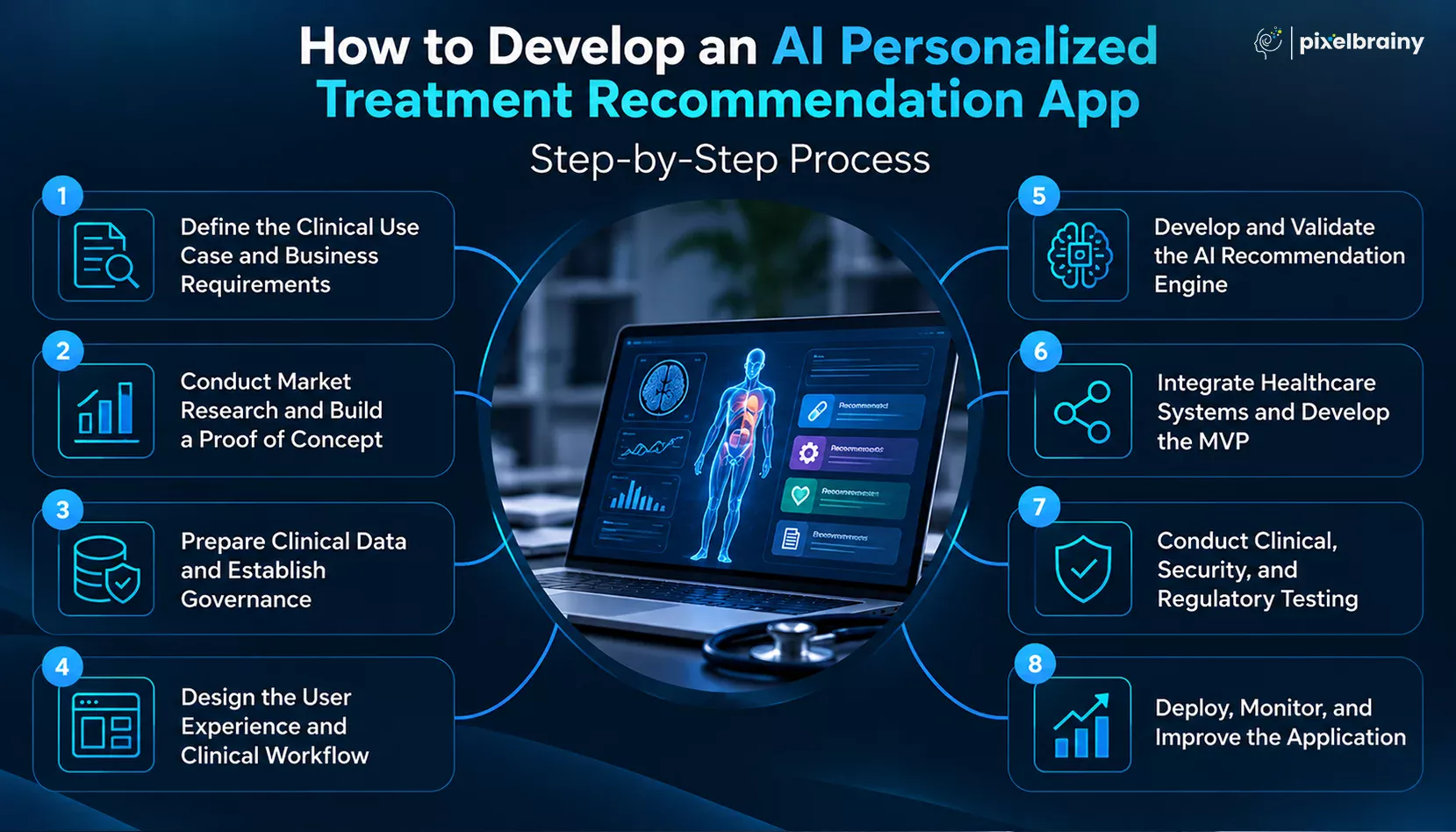
Start by identifying the medical specialty, target users, and treatment decisions the application will support. Determine whether the product will serve oncologists, chronic disease specialists, pharmacists, hospitals, or pharmaceutical companies.
For example, a pharmaceutical company may want physicians to compare patient clinical profiles with evidence from trials involving its approved therapies. Define the intended use, patient population, expected outputs, and limitations before choosing technology.
Conduct AI consultation with clinical experts, regulatory specialists, and product stakeholders to establish requirements, success metrics, and potential risks. This initial planning creates a practical foundation for developing an application that addresses a genuine healthcare need.
Also Read: Top 10 AI Consulting Companies in USA
Evaluate competing healthcare applications, existing clinical decision support tools, physician workflows, and unmet clinical needs. Interview intended users to understand which decisions require the most effort and where software could provide meaningful support.
Next, undertake PoC development to test whether the proposed solution can match patient characteristics with relevant clinical evidence and produce useful results. Use appropriately authorized, de-identified, or synthetic data where suitable, and define measurable evaluation criteria before testing.
A proof of concept should demonstrate technical feasibility and potential clinical utility, not establish clinical safety on its own. Feedback from physicians and regulatory specialists helps determine whether the concept is suitable for further development.
Also Read: Top 10+ AI PoC Development Companies In USA
Identify the data required to generate recommendations, including diagnoses, medication histories, laboratory results, biomarkers, treatment outcomes, and relevant clinical literature. Assess data quality, completeness, consistency, provenance, and representativeness before using it for model development.
Establish clear rules for data access, consent where applicable, privacy protection, retention, and authorized use. For pharmaceutical applications, verify permissions for clinical trial datasets, product information, and any patient-level data used for matching.
Standardize data formats and map relevant information to appropriate clinical terminology. Strong data governance helps reduce errors, supports reproducibility, and creates a reliable foundation for AI model development and subsequent clinical validation.
Also Read: Top 12+ AI Model Development Companies in the USA
Design the application around how healthcare professionals review patient information and make treatment decisions. Physicians should be able to view relevant clinical details, compare eligible treatment options, inspect supporting evidence, and identify missing information without navigating unnecessary screens.
Work with a UI/UX design company that understands healthcare workflows, accessibility, and complex data visualization. Create wireframes and interactive prototypes, then test them with representative users before development begins.
The interface should clearly distinguish evidence-based findings from uncertain predictions and display relevant limitations. Avoid presenting recommendations as definitive prescriptions. A well-designed experience makes clinical information easier to interpret while preserving physician control over final treatment decisions.
Also Read: Top 10+ UI/UX Design Companies in USA
Choose an approach that matches the intended clinical task and available evidence. Depending on the use case, the application may use validated prediction models, clinical rules, evidence retrieval, or combinations of these methods.
For pharmaceutical patient matching, define transparent eligibility criteria based on approved prescribing information, relevant trial inclusion and exclusion criteria, and suitable clinical evidence. The tool should distinguish trial eligibility from suitability for an approved therapy because these are different clinical questions.
Evaluate model performance using appropriate datasets, predefined metrics, subgroup analysis, and independent validation where feasible. Document limitations and uncertainty. AI model development should follow a risk-based validation plan, with qualified clinical experts reviewing outputs before the application is used in real clinical workflows.
Build the initial version around the most important user journey rather than implementing every possible feature at once. Essential capabilities may include secure authentication, patient profile review, clinical criteria matching, evidence display, recommendation documentation, and audit logging.
Use MVP development to deliver a limited but testable product that can be evaluated by intended users. Integrate electronic health records, clinical databases, or other systems through authorized interfaces and suitable interoperability standards, such as HL7 FHIR where supported.
AI integration should include secure data flows, access controls, error handling, monitoring, and clear separation between generated suggestions and clinician-approved decisions. Test each integration carefully to prevent incomplete or mismatched patient information from affecting recommendations.
Also Read: Top 10 AI MVP Development Companies in USA
Before deployment, assess whether the application performs as intended and meets applicable legal and regulatory requirements. Testing should cover recommendation accuracy, evidence traceability, usability, data security, access permissions, audit trails, and performance across relevant patient groups.
Determine whether the software qualifies as regulated medical device software or may fall within a different regulatory category based on its intended use and functionality. In the United States, review the FDA's Clinical Decision Support Software guidance and seek specialist advice when needed.
For pharmaceutical tools, review approved product labeling, promotional boundaries, clinical evidence claims, and applicable rules governing communications with healthcare professionals. Independent clinical review and documented risk management should be completed before launch.
Launch the application in a controlled environment with appropriate user training, technical support, and monitoring. Begin with a limited deployment where feasible, collect feedback from physicians, and assess whether the tool improves workflow efficiency and supports appropriate clinical decisions.
Organizations evaluating top AI healthcare software development companies should prioritize healthcare expertise, secure engineering practices, clinical validation experience, and post-launch support. If building an internal team, hire AI developers with experience in regulated software, data engineering, and model evaluation. Businesses comparing top AI app development companies should also assess interoperability and long-term maintenance capabilities.
Monitor errors, model drift, data quality, and user feedback. Establish processes for updating clinical evidence, managing software changes, and investigating unexpected outputs.
Consider a pharmaceutical company that wants to build an AI personalized treatment recommendation tool for its brand-specific therapies. The goal is to help physicians assess whether a patient's clinical profile aligns with the therapy's approved indication and relevant clinical evidence.
A compliant development approach should:
The resulting application should support informed clinical evaluation rather than automatically determine which medication a patient must receive.
A successful AI personalized treatment recommendation app combines a clearly defined clinical need, validated recommendations, secure data integration, regulatory planning, and continuous performance monitoring.
The cost to develop an AI personalized treatment recommendation app typically ranges from $40,000 to $300,000+, depending on the application's features, AI complexity, clinical data requirements, healthcare integrations, and regulatory obligations. A basic application with essential recommendation capabilities requires a smaller investment, while an enterprise-grade platform with predictive analytics and multiple clinical integrations can require a substantially larger budget.
For businesses planning AI personalized treatment recommendation app development, accurate cost estimation starts with defining the intended clinical use case, target users, and required level of clinical validation.
The development budget for an AI personalized treatment recommendation app should also account for data preparation, cybersecurity, testing, deployment, and ongoing maintenance. These expenses are especially important for health systems handling sensitive patient information.
So, what is the development pricing for an AI personalized treatment recommendation app? The following estimates provide an initial planning guide for healthcare businesses, startups, and hospital systems. They are illustrative estimates, not fixed vendor quotations or independently verified market averages.
| App development type | Estimated cost | What it includes |
| Basic AI Personalized Treatment Recommendation App | $40,000 to $80,000 | Patient profiles, clinical data entry, basic treatment recommendation workflows, guideline-based rules, a simple dashboard, and essential security controls. |
| Advanced AI Personalized Treatment Recommendation App | $80,000 to $180,000 | EHR integration, more sophisticated recommendation logic, medication interaction checks, clinical evidence retrieval, reporting, and expanded testing. |
| Enterprise AI Personalized Treatment Recommendation App | $180,000 to $300,000+ | Multiple healthcare integrations, predictive models, complex clinical data processing, advanced access controls, audit trails, extensive validation, and enterprise deployment support. |
These ranges represent estimated initial development costs. Applications that require extensive clinical validation, proprietary datasets, regulated medical device development, or complex hospital integrations may exceed $300,000.
1. Feature complexity: Patient profiles and rule-based recommendations generally cost less than predictive treatment response models and complex clinical decision support workflows.
2. AI model development: Building and validating custom models requires additional data preparation, specialist expertise, testing, and ongoing performance monitoring.
3. Clinical data availability: Cleaning, standardizing, labeling, and validating patient data can increase costs, especially when datasets come from multiple sources.
4. Healthcare system integration: Connecting EHR platforms, laboratory systems, pharmacy databases, and remote monitoring devices adds implementation and testing work.
5. Security and compliance: Encryption, access controls, audit trails, privacy safeguards, and regulatory assessments increase the initial development budget.
6. Clinical validation: Testing recommendation accuracy, safety, usability, and performance across relevant patient groups requires clinical expertise and structured evaluation.
7. UI/UX design: Interfaces designed for physicians, pharmacists, and patients require different workflows, accessibility considerations, and usability testing.
8. Deployment and maintenance: Cloud infrastructure, security updates, evidence refreshes, technical support, and AI model monitoring contribute to ongoing operating expenses.
The final cost depends on clinical complexity, data readiness, integrations, and validation requirements, so a phased MVP is often the most practical starting point for healthcare businesses.
What technologies are needed to build a secure, scalable, and clinically reliable AI personalized treatment recommendation app? The ideal tech stack combines a responsive user interface, a secure backend, healthcare data integration, reliable AI infrastructure, and strong privacy controls.
For businesses investing in AI personalized treatment recommendation app development, the technology stack should support accurate patient data processing, evidence-based recommendations, interoperability, and ongoing clinical validation. The best combination depends on the application's intended use, target healthcare providers, data sources, and regulatory requirements.
Whether you plan to develop an AI treatment recommendation app for physicians, build a hospital-based clinical decision support platform, or launch a precision medicine product, each technology should serve a clear functional purpose.
| Technology layer | Recommended technologies | Purpose |
| Frontend development | React, Next.js, Flutter | Builds responsive web and mobile interfaces for physicians, pharmacists, and patients. |
| Backend development | Python, FastAPI, Django, Node.js | Handles business logic, patient data processing, authentication, and communication between application components. |
| AI and machine learning | PyTorch, TensorFlow, scikit-learn | Supports predictive modeling, clinical classification, risk estimation, and treatment response analysis when appropriate. |
| Large language model integration | Approved LLM APIs, self-hosted models | Helps summarize clinical evidence and organize medical information with suitable safeguards and human review. |
| Clinical data processing | Python, Pandas, Apache Spark | Cleans, standardizes, and processes clinical datasets for analysis and recommendation workflows. |
| Healthcare interoperability | HL7 FHIR, DICOM where relevant | Supports structured data exchange with electronic health records, imaging systems, and compatible healthcare platforms. |
| Database management | PostgreSQL, MongoDB | Stores structured patient records, application data, and selected unstructured information according to the system's data model. |
| Clinical knowledge retrieval | PostgreSQL full-text search, Elasticsearch, vector databases | Retrieves relevant clinical guidelines, approved product information, and medical literature to support evidence-based recommendations. |
| Cloud infrastructure | AWS, Microsoft Azure, Google Cloud | Provides hosting, storage, scalable computing, monitoring, and infrastructure services with appropriate healthcare security configurations. |
| Security and identity management | OAuth 2.0, OpenID Connect, role-based access control | Protects accounts, restricts access to sensitive information, and supports secure authentication and authorization. |
| DevOps and deployment | Docker, Kubernetes, GitHub Actions | Automates testing and deployment while supporting consistent environments and scalable application operations. |
| Monitoring and analytics | Prometheus, Grafana, cloud-native monitoring tools | Tracks application availability, latency, errors, infrastructure health, and relevant model performance indicators. |
The technologies listed are options rather than mandatory components. For example, a rule-based MVP may not need a custom machine learning model or vector database, while a large hospital platform may require more extensive integration and infrastructure.
A well-designed tech stack balances clinical reliability, healthcare interoperability, security, and scalability with the actual requirements of the AI personalized treatment recommendation app.
What compliance and security requirements must a healthcare business meet when developing an AI personalized treatment recommendation app? The answer depends on the application's intended use, the sensitivity of patient data, the level of clinical decision support it provides, and the countries where it will operate.
AI personalized treatment recommendation app development requires a security-first approach to patient privacy, clinical safety, data governance, and regulatory compliance. Applications that analyze medical records or suggest treatment options must protect sensitive information and provide reliable, appropriately validated outputs.
For hospitals, pharmaceutical companies, and digital health startups, compliance should be considered from the planning stage rather than added after development. The following requirements help businesses build secure healthcare applications while identifying applicable legal and regulatory obligations.
Key Compliance and Security Requirements for AI Treatment Recommendation Apps
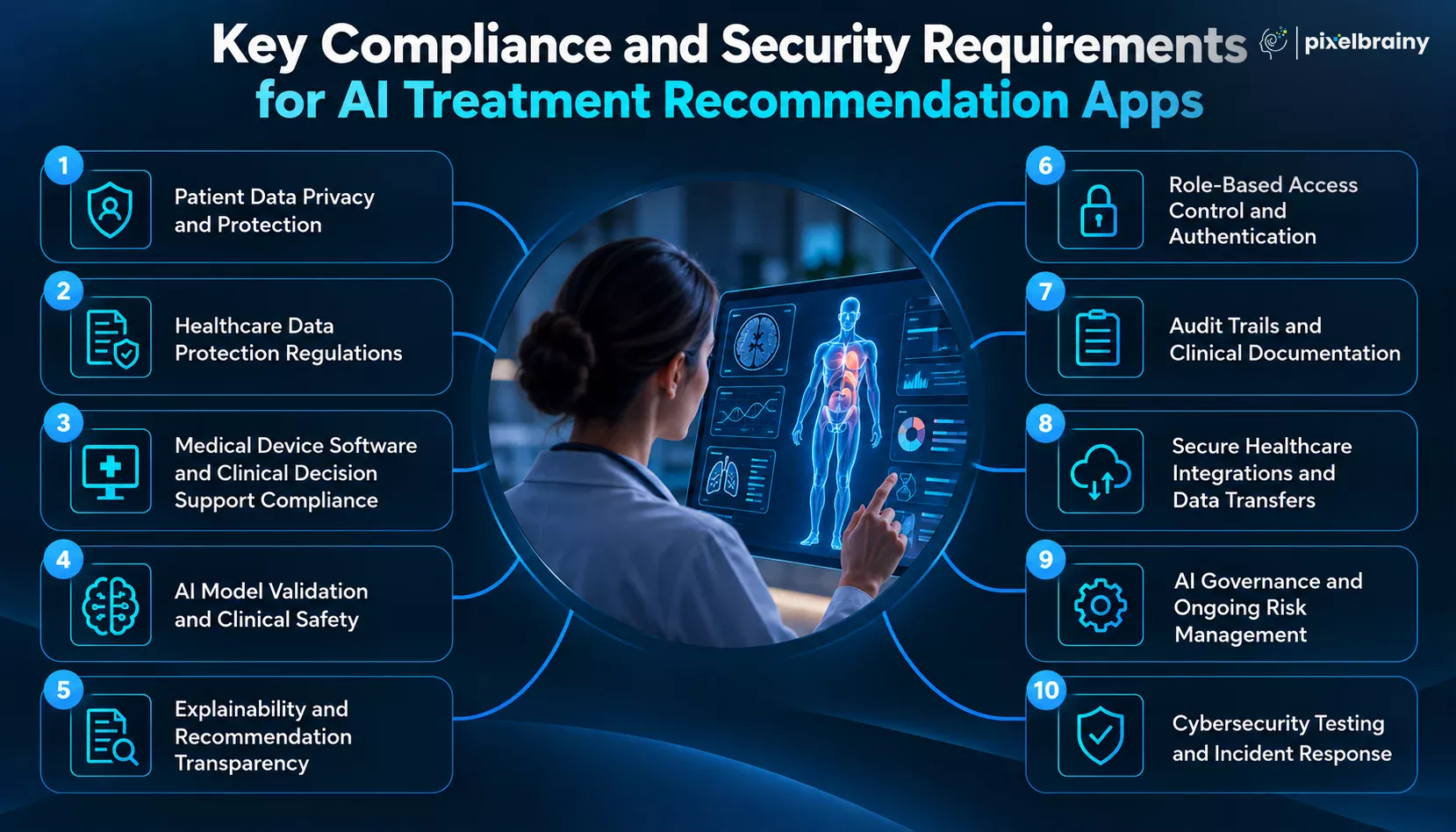
Healthcare applications must protect sensitive patient information throughout collection, processing, storage, and sharing. Establish clear rules for data access, consent where required, retention, and deletion.
The applicable privacy laws depend on where the application operates and whose data it processes.
Compliance is determined by the organization's activities, jurisdiction, and applicable legal requirements, not simply by the application's location.
Does an AI treatment recommendation app qualify as medical device software? It depends on its intended purpose, functionality, claims, and how healthcare professionals use its outputs.
Applications that provide patient-specific diagnostic or treatment recommendations may require regulatory assessment before commercialization.
In the United States, review the FDA's Clinical Decision Support Software guidance. In the European Union, assess applicable medical device requirements under the EU Medical Device Regulation.
AI-generated recommendations must be evaluated before they are used to support clinical decisions. A model that performs well on historical data may not perform reliably across different hospitals, patient populations, or clinical settings.
Clinical validation requirements should reflect the application's risk level and intended clinical role.
Healthcare professionals need sufficient information to assess whether an AI-generated recommendation is appropriate for a particular patient.
Transparent outputs help clinicians evaluate the recommendation rather than treating the AI result as an unquestionable medical decision.
Not every user should have access to every patient record or application function. Access permissions should reflect each user's responsibilities.
These controls reduce the risk of unauthorized disclosure and misuse of patient information.
Maintain records of important application activities to support accountability, security investigations, and regulatory reviews.
Audit records may include user access, patient data changes, recommendation outputs, evidence versions, clinician decisions, and system updates. Protect these records against unauthorized modification and establish appropriate retention periods.
For clinical applications, documenting which evidence and model version supported a recommendation can also help organizations investigate unexpected results.
AI treatment recommendation apps frequently connect with electronic health records, laboratory systems, pharmacy databases, and external clinical information sources.
Incorrect patient matching or incomplete clinical records can affect recommendation quality, making integration testing a critical safety requirement.
Compliance does not end when the application launches. Healthcare organizations need ongoing processes to monitor model performance, manage updates, and respond to potential safety incidents.
Establish clear responsibilities for clinical oversight, model approval, software changes, incident reporting, and periodic risk reviews. For systems within scope, assess relevant requirements under the EU AI Act, including applicable obligations for high-risk AI systems.
Healthcare applications can face phishing, ransomware, credential theft, insecure APIs, and other cybersecurity threats. Security testing should be incorporated throughout the development lifecycle.
A documented security program helps organizations reduce exposure and respond more effectively when incidents occur.
Before releasing an AI personalized treatment recommendation app, confirm that the project has:
Building a compliant AI personalized treatment recommendation app requires privacy protection, clinical validation, secure engineering, and continuous governance from initial design through post-launch operations.
When you develop an AI personalized treatment recommendation app, you may encounter challenges related to patient data quality, AI accuracy, healthcare integrations, regulatory compliance, cybersecurity, and clinician adoption. These challenges can affect development costs, recommendation reliability, and the application's ability to fit real-world clinical workflows.
Understanding these risks early helps healthcare businesses plan more effectively, protect sensitive patient information, and build AI-powered clinical decision support solutions that physicians can trust.
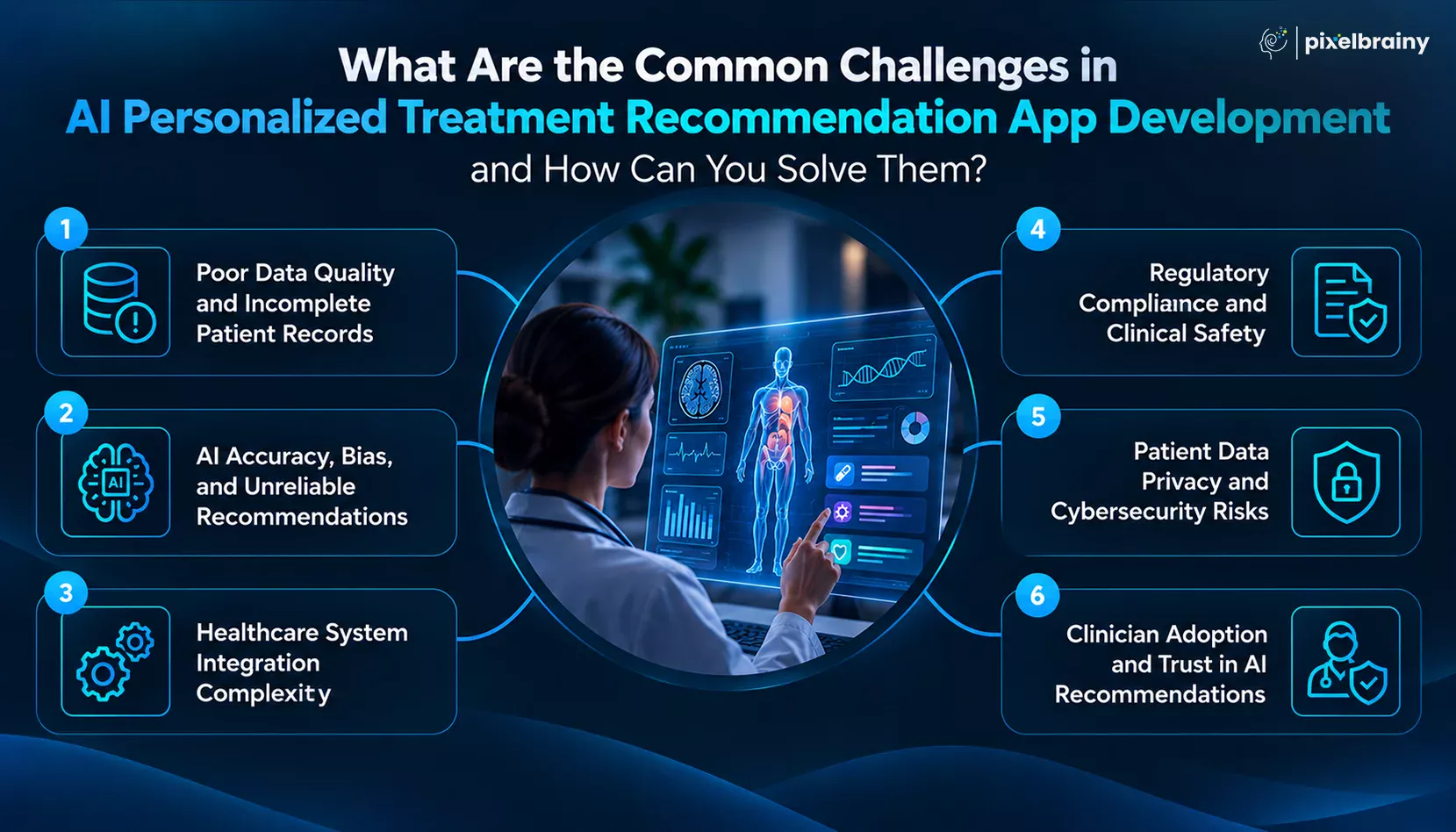
Challenge: When you build an AI treatment recommendation app, missing laboratory results, inconsistent medical records, and incomplete medication histories can affect recommendation quality.
How to solve it:
Reliable patient data helps the application produce more consistent, clinically relevant insights.
Challenge: When you use AI to recommend treatment options, inaccurate predictions or biased training data can lead to unreliable results across different patient populations.
How to solve it:
Clinical validation helps establish whether the model performs adequately for its intended purpose.
Challenge: When you integrate an AI treatment recommendation app with hospital systems, differences between electronic health records, laboratory platforms, and pharmacy databases can complicate data exchange.
How to solve it:
Reliable integrations help physicians access relevant patient information without disrupting existing workflows.
Challenge: When you develop AI-powered healthcare software, determining whether the application qualifies as medical device software and identifying applicable regulatory requirements can be complex.
How to solve it:
Regulatory obligations depend on the application's functionality, intended purpose, and target jurisdiction.
Challenge: When your application processes sensitive medical records, weak access controls, insecure APIs, or improperly configured infrastructure can expose confidential patient information.
How to solve it:
Strong security measures help protect patient privacy and reduce operational risks.
Challenge: When physicians cannot understand why an AI system recommends a particular treatment, they may hesitate to use it. Excessive alerts and complicated interfaces can also reduce adoption.
How to solve it:
Transparent recommendations and clinician oversight make AI decision support more practical for everyday healthcare settings.
By addressing these six challenges early, healthcare businesses can build AI personalized treatment recommendation apps that prioritize clinical reliability, patient safety, data protection, and physician trust.
Businesses looking to bring AI-powered healthcare products to market need a technology partner that understands clinical workflows, healthcare data security, and the complexities of personalized treatment planning. PixelBrainy supports healthcare businesses in translating product concepts into practical digital solutions aligned with their operational and technical requirements.
Whether you represent a hospital, pharmaceutical company, or digital health startup, the right development partner should understand how to combine patient data, clinical evidence, and AI capabilities while maintaining appropriate clinical oversight.
PixelBrainy can help businesses plan AI personalized treatment recommendation app development services around specific clinical needs, target users, and product objectives. The development approach should prioritize reliable data processing, evidence-based recommendations, secure architecture, and usability for healthcare professionals.
From initial requirements gathering to implementation and testing, the focus is on building software that fits real clinical workflows rather than adding AI features without a defined purpose.
Every healthcare organization has different requirements. A hospital may need clinical decision support integrated with its existing systems, while a digital health startup may want to launch a specialized application for chronic disease management.
PixelBrainy can work with businesses to build AI personalized treatment recommendation app for healthcare business use cases by defining the scope, identifying essential features, planning integrations, and establishing an appropriate development roadmap.
Effective healthcare AI requires more than generating recommendations. It must process relevant information, provide understandable outputs, and allow healthcare professionals to evaluate the supporting evidence.
Businesses seeking to develop AI personalized treatment recommendation app solutions can prioritize clinical data integration, recommendation logic, evidence retrieval, secure access controls, and performance testing. This approach helps create a practical foundation for an application intended to support, rather than replace, professional judgment.
A healthcare technology business exploring personalized chronic disease management needed a solution to organize patient profiles, medication histories, and ongoing clinical measurements.
The proposed product direction included a centralized patient dashboard, structured clinical data processing, treatment consideration workflows, and clinician-reviewed recommendations. The objective was to help healthcare professionals assess relevant patient information more efficiently.
The project approach emphasized secure data handling, clearly documented recommendation criteria, and a phased implementation strategy. Client-identifying details are omitted to preserve confidentiality. This example illustrates a potential project approach, not a verified claim of completed deployment or measured clinical outcomes.
Whether you want to create AI personalized treatment recommendation app software for a specific specialty or need AI personalized treatment recommendation app development integrating AI into existing healthcare systems, project planning should account for data readiness, validation, interoperability, and regulatory assessment.
For businesses comparing partners, PixelBrainy can be evaluated as a potential technology partner and best AI healthcare software development company in USA based on relevant portfolio evidence, healthcare expertise, security practices, and delivery capabilities.
Have a healthcare AI idea you want to turn into a practical product? Connect with PixelBrainy to discuss your requirements, development roadmap, and project scope.
AI personalized treatment recommendation apps are transforming how healthcare providers analyze patient data, evaluate treatment options, and support clinical decisions. From essential features and advanced AI capabilities to development steps, technology choices, costs, and regulatory requirements, every part of the process influences an app’s safety, reliability, and long-term value.
Successful AI personalized treatment recommendation app development requires more than integrating machine learning into a healthcare platform. It involves understanding clinical workflows, protecting sensitive patient information, validating AI-generated recommendations, and keeping healthcare professionals involved in decision-making. Businesses that address these priorities early can build solutions that support more personalized, evidence-based care while meeting evolving healthcare needs.
Whether you are a healthcare provider, digital health founder, or life sciences company, partnering with an experienced development team can help turn your idea into a practical, scalable solution. With the right strategy, you can develop an AI personalized treatment recommendation app that supports better-informed clinical decisions.
Ready to bring your healthcare AI idea to life? Book an appointment with PixelBrainy to discuss your project.
An AI personalized treatment recommendation app analyzes patient history, symptoms, laboratory results, medications, and relevant clinical guidelines to help doctors evaluate suitable treatment options. It can identify patient-specific risks and highlight evidence that supports different approaches. The final treatment decision should remain with a qualified healthcare professional.
The cost to build an AI personalized treatment recommendation app typically ranges from $40,000 to $300,000 or more, depending on its features, AI model complexity, clinical data requirements, integrations, security controls, and validation needs. A basic application costs less than an enterprise platform with advanced predictive analytics and multiple EHR integrations.
AI personalized treatment recommendation app development may require patient demographics, medical history, diagnoses, medications, allergies, laboratory results, biomarkers, and relevant clinical guidelines. Genomic data may also be necessary for specialized applications. Data must be lawfully obtained, appropriately protected, and clinically relevant to the intended use.
Yes. AI can support personalized treatment planning for chronic conditions by analyzing factors such as blood glucose levels, blood pressure, medication history, lifestyle patterns, and comorbidities. These insights can help clinicians assess treatment options and identify potential risks. Recommendations must be validated for the intended clinical setting and reviewed by healthcare professionals.
The development timeline depends on the app's scope, data readiness, integrations, and clinical validation requirements. A basic MVP may take around three to six months, while an advanced or enterprise healthcare platform can require six to twelve months or longer. Regulatory review and clinical studies may extend the overall timeline.
Applicable requirements depend on the app's intended purpose, target market, and functionality. In the United States, HIPAA may apply to protected health information, while FDA requirements may apply if the software qualifies as a regulated medical device. In Europe, GDPR and potentially the EU Medical Device Regulation and AI Act may be relevant. Regulatory classification should be assessed early in development.
Healthcare businesses should use representative, high-quality clinical data, validate models on appropriate datasets, assess bias, document recommendation logic, and monitor performance after deployment. Integrating trusted clinical guidelines and providing explanations for AI outputs can also improve transparency. Human oversight and ongoing clinical evaluation are essential for safe use.
Look for a development partner like PixelBrainy, offering expertise in AI personalized treatment recommendation app development services, healthcare software, AI integration, and data security. Evaluate its technical expertise and development approach to build a reliable, scalable healthcare solution.

About The Author
Sagar Bhatnagar
Sagar Sahay Bhatnagar brings over a decade of IT industry experience to his role as Marketing Head at PixelBrainy. He's known for his knack in devising creative marketing strategies that boost brand visibility and market influence. Sagar's strategic thinking, coupled with his innovative vision and focus on results, sets him apart. His track record of successful campaigns proves his ability to utilize digital platforms effectively for impactful marketing efforts. With a genuine passion for both technology and marketing, Sagar continuously pushes PixelBrainy's marketing initiatives to greater success.

Working with PixelBrainy has been a great experience. They took our vision for an AI-powered platform and turned it into a fully functional product. What impressed me most was their strong understanding of both design and development, and their ability to handle complex requirements with ease. The team was responsive, cooperative, and always open to feedback. They kept things organized, communicated clearly, and delivered quality work on time. I highly recommend PixelBrainy to anyone looking for a skilled and reliable development partner.

Working with the PixelBrainy team has been a highly positive experience. They understand the design requirements and create beautiful UX elements to meet the application needs. The dev team did an excellent job bringing my vision to life. We discussed usability and flow. Sagar worked with his team to design the database and begin coding. Working with Sagar was easy. He has the knowledge to create robust apps, including multi-language support, Google and Apple ID login options, Ad-enabled integrations, Stripe payment processing, and a Web Admin site for maintaining support data. I'm extremely satisfied with the services provided, the quality of the final product, and the professionalism of the entire process. I highly recommend them for Android and iOS Mobile Application Design and Development.

Great experience working with them. Had a lot of feedback and I found that unlike most contractors they were bugging me for updates instead of the other way around. They were extremely time conscience and great at communicating! All work was done extremely high quality and if not on time, early! They were always proactive when it comes to communication and the work is great/above par always. Very flexible and a great team to work with! Goes above and beyond to present us with multiple options and always provides quality. Amazing work per usual with Chitra. If you have UI/UX or branding design needs I recommend you go to them! Will likely work with them in the future as well, definitely recommended!

PixelBrainy is a joy to work with and is a great partner when thinking through branding, logo, and website layout. I appreciate that they spend time going into the "why" behind their decisions to help inform me and others about industry best practices and their expertise.

I hired them to design our software apps. Things I really like about them are excellent communication skills, they answer all project suggestions and collaborate right away, and their input on design and colors is amazing. This project was complex and needed patience and creativity. The team is amazing to do business with. I will be using them long-term. Glad to see there are some good people out there. I was afraid to try and outsource my project to someone but I am glad I met them! I really can't say enough. They went above and beyond on this project. I am very happy with everything they have done to make my business stand out from the competition.

It was great working with PixelBrainy and the team. They were very responsive and really owned the project. We'll definitely work with them again!

I recently worked with the PixelBrainy team on a project and I was blown away by their communication skills. They were prompt, clear, and articulate in all of our interactions. They listened and provided valuable feedback and suggestions to help make the project a success. They also kept me updated throughout the entire process, which made the experience stress-free and enjoyable.

PixelBrainy is very good at what it does. The team also presents themselves very professionally and takes care of their side of things very well. I could fully trust them taking up the design work in a timely and organised manner and their attention to detail saved us lots of effort and time. This particular project was quite intense and the team showed that they function very well under pressure. Very much looking forward to working with her again!

It's always an absolute pleasure working with them. They completed all of my requests quickly and followed every note I had for them to a T, which made our process go smoothly from start to finish. Everything was completed fast and following all of the guidelines. And I would recommend their services to anyone. If you need any design work done in the future, PixelBrainy should be your first call!

They took ownership of our requirements and designed and proposed multiple beautiful variants. The team is self-motivated, requires minimum supervision, committed to see-through designs with quality and delivering them on time. We would definitely love to work with PixelBrainy again when we have any requirements.

PixelBrainy was a big help with our SaaS application. We've been hard at work with a new UI/UX and they provided a lot of help with the designs. If you're looking for assistance with your website, software, or mobile application designs, PixelBrainy and the team is a great recommendation.

PixelBrainy designers are amazing. They are responsive, talented, and always willing to help craft the design until it matches your vision. I would recommend them and plan to continue them for my future projects and more!!!

They were awesome! Did a good job fast, and good communication. Will work with them again. Thank you

Creative, detail-oriented, and talented designers who take direction well and implement changes quickly and accurately. They consistently over-delivered for us.

PixelBrainy team is very talented and creative. Great designers and a pleasure to work with. PixelBrainy is an excellent communicator and I look forward to working with them again.

PixelBrainy has a very talented design team. Their work is excellent and they are very responsive. I enjoy working with them and hope to continue on all of our future projects.


Transform your ideas into reality with us.
Across these industries, each engagement brings unique challenges, from early-stage product development to scaling complex systems, helping us build a practical understanding of real-world product environments.