 AI Summary Powered by PixelBrainy
What if an AI pregnancy tracker could understand each woman's unique pregnancy journey, recognize changing symptom patterns, consider her health history and risk factors, and guide her toward appropriate care before a potentially serious warning sign is overlooked?
That is the opportunity behind the next generation of AI pregnancy tracker apps. Traditional pregnancy applications primarily provide due-date calculations, weekly fetal development updates, fetal-size comparisons, symptom logs, appointment reminders, nutrition information, and pregnancy education. A production-grade AI platform can go much further by combining longitudinal health data, symptom tracking, pregnancy history, risk factors, conversational AI, clinical knowledge, personalized education, and care-navigation workflows.
For a digital health entrepreneur asking, "I want to build an AI pregnancy tracker app that goes beyond week-by-week fetal size comparisons to deliver genuinely personalized prenatal health guidance where the AI monitors each pregnant woman's specific symptom patterns, risk factors, and health history to provide timely guidance that reduces the anxiety of pregnancy while identifying symptoms that warrant clinical attention. What does a production-grade AI pregnancy tracker app cost to build and which development companies have built AI pregnancy apps with documented maternal health outcome improvement?", the answer requires more than choosing an AI model or developing a mobile interface.
The market opportunity is substantial. Grand View Research estimates that the global pregnancy tracking and postpartum care apps market will reach $2.1 billion in 2026 and is projected to grow to $6.1 billion by 2033, representing a 16.6% CAGR.
US research is also demonstrating the potential of AI in maternal healthcare. A 2026 US study examined an AI-powered chatbot designed to support maternal mental-health screening and engagement among Black mothers, highlighting the potential of conversational AI to address gaps in perinatal support. A separate 2026 US-led study evaluated an AI maternal-health agent using more than 4.4 million longitudinal clinical visits, demonstrating the potential of AI to predict maternal and infant conditions from longitudinal healthcare data.
For companies researching AI pregnancy monitoring app development services, the opportunity is therefore moving beyond generic pregnancy content toward personalized, longitudinal maternal-health support. This guide explains how to build a smart AI pregnancy tracker app with NLP and conversational health coaching features, covering features, AI architecture, development steps, technology stack, development costs, business models, clinical safety, regulatory considerations, and the leading pregnancy applications to study for 2027.

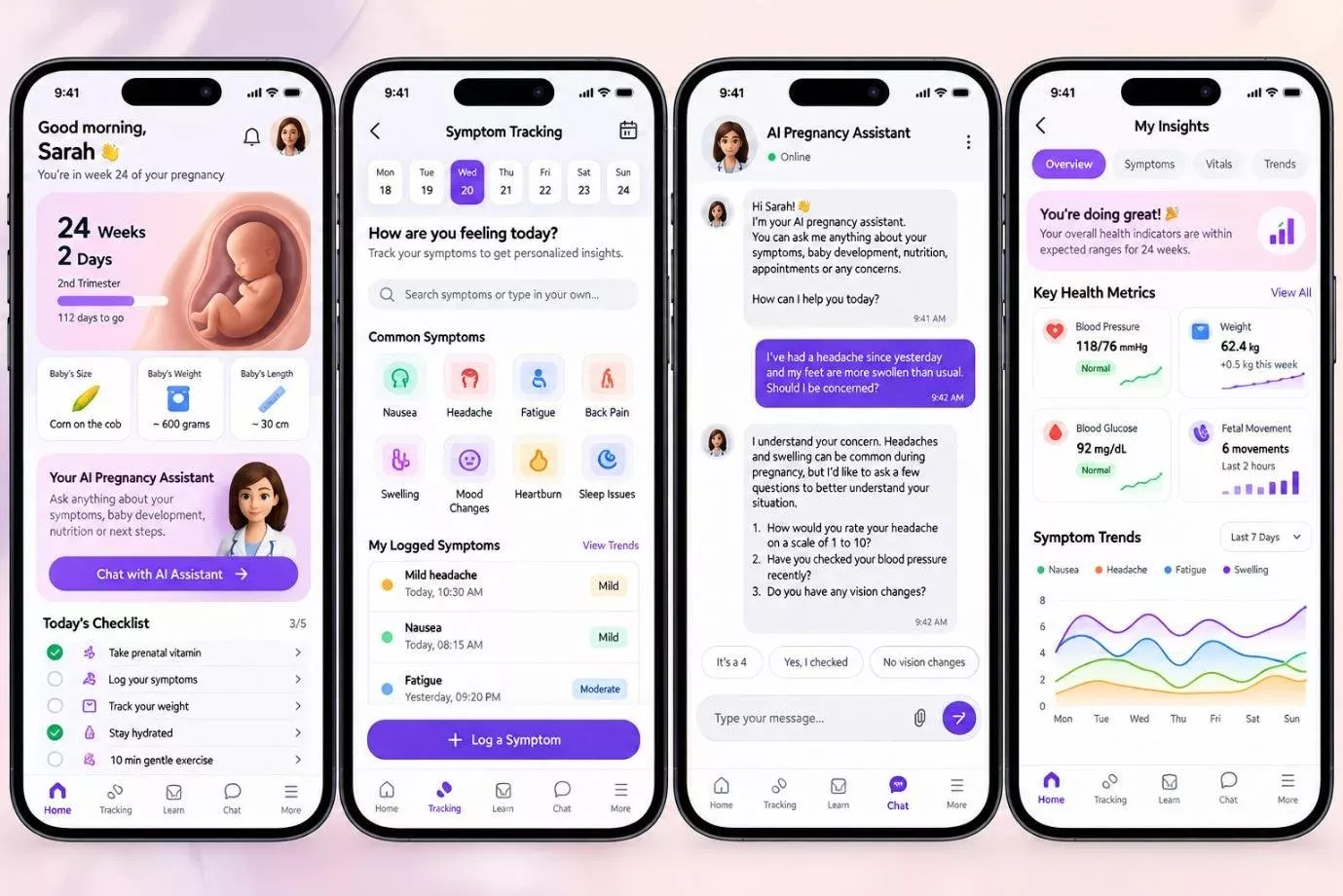
An AI pregnancy tracker app is a digital health application that uses artificial intelligence, machine learning, natural language processing (NLP), and health data to provide personalized pregnancy monitoring and prenatal guidance. Unlike traditional pregnancy apps that mainly provide week-by-week fetal development information, due-date calculations, symptom logs, reminders, and educational content, an AI-powered platform can understand a woman's pregnancy history, symptoms, health information, and risk factors to deliver more relevant support.
A production-grade AI pregnancy monitoring app can combine pregnancy tracking with intelligent health-management capabilities, including:
The key value comes from connecting these capabilities into one personalized pregnancy profile. Instead of treating every symptom as an isolated entry, the system can use historical information to understand changes across the pregnancy journey.
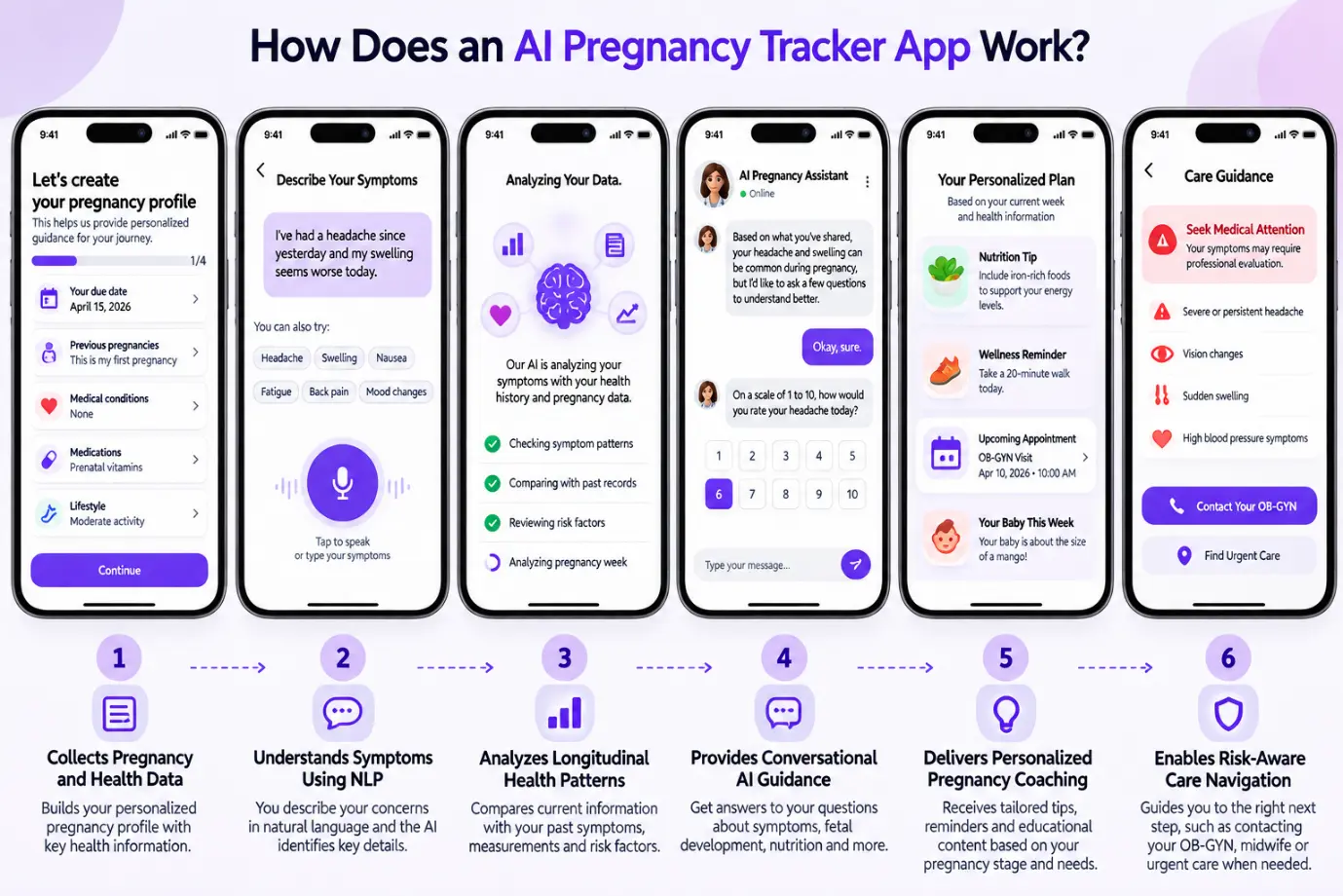
During onboarding, the application can collect gestational age, estimated due date, previous pregnancies, pregnancy complications, medical conditions, medications, allergies, symptoms, lifestyle information, and other relevant health data. This information establishes the user's individual pregnancy profile.
NLP allows users to describe concerns using natural language. For example, a user might write, "I've had a headache since yesterday and my swelling seems worse today." The AI can identify relevant details such as symptoms, duration, severity, and changes, then ask appropriate follow-up questions.
The system can compare current information with previous symptoms, health measurements, pregnancy history, and risk factors. This longitudinal approach enables the application to identify meaningful changes that may require additional attention.
An AI pregnancy assistant can answer questions about pregnancy symptoms, fetal development, nutrition, prenatal appointments, childbirth preparation, and other pregnancy topics. During AI pregnancy tracker app development, the conversational layer should combine an LLM with retrieval-augmented generation (RAG), clinically reviewed knowledge, safety rules, and response validation.
The AI can use pregnancy stage, health history, preferences, previous interactions, and available health data to personalize educational content, reminders, check-ins, and wellness guidance.
When information matches a clinically defined escalation pathway, the application can guide the user toward an appropriate next step, such as contacting an OB-GYN, midwife, maternity-care team, urgent-care provider, or emergency service.
For US-focused AI pregnancy tracker app development, the architecture can also support HIPAA-conscious data practices, FHIR-based interoperability, EHR integration, wearable connectivity, secure health-data exchange, clinician dashboards, and audit logging.
This combination of AI, NLP, longitudinal health data, personalized pregnancy monitoring, conversational health coaching, and clinical care navigation creates a more intelligent alternative to conventional pregnancy tracking applications while keeping clinical decision-making with qualified healthcare professionals.
Why is pregnancy tracker app development becoming a serious investment opportunity for US digital health companies rather than simply another consumer wellness category? The answer lies in the combination of a large addressable market, persistent gaps in prenatal care access, increasing healthcare spending, growing demand for virtual maternity services, and the rapid adoption of AI-driven digital health technologies.
The US market alone presents a substantial commercial opportunity. Grand View Research estimates that the US pregnancy tracking and postpartum care apps market will reach $730.6 million by 2030, compared with $269.2 million in 2023. The market is projected to grow at a 15.3% CAGR from 2024 to 2030.
For a company considering AI pregnancy tracker app development, this growth creates room for differentiated products that move beyond generic pregnancy calendars toward personalized monitoring, conversational AI, and connected prenatal-care experiences.
The latest CDC data provides another strong investment rationale. In 2024, only 75.5% of US pregnancies received prenatal care beginning during the first trimester. Meanwhile, prenatal care beginning in the second trimester increased to 17.3%, while late or no prenatal care increased to 7.3%. From 2021 to 2024, late or no prenatal care increased in 36 states and the District of Columbia.
This creates a clear product-development opportunity for an AI pregnancy monitoring app that can provide structured digital engagement between appointments and support appropriate care navigation.
According to the Peterson Health Technology Institute, virtual maternity-care solutions had attracted more than $2.5 billion in investment as of March 2026. The organization also reports that more than 2.3 million US women live in maternity-care deserts, while approximately one in three US counties lacks obstetric clinicians.
For entrepreneurs researching how to build an AI pregnancy tracker app, these figures indicate that digital maternity care is attracting both capital and healthcare-system attention.
PHTI estimates that preterm births cost the US approximately $25 billion annually, while pregnancy-related complications account for more than $32 billion in spending.
This makes maternal health a strategically important category for health plans, employers, hospitals, Medicaid programs, and digital-health companies looking for technology capable of supporting prenatal care workflows.
Grand View Research projects the US women's digital health market to reach $3.25 billion by 2030, growing at a 19.2% CAGR from 2024 to 2030.
This broader market creates opportunities to develop a pregnancy platform that can eventually expand into postpartum care, maternal mental health, lactation, newborn care, and other women's health services.
The commercial question is no longer simply whether to build another pregnancy tracker. The more relevant question is how to build an AI pregnancy tracker app that creates a defensible healthcare product around personalized data, conversational AI, symptom monitoring, clinical knowledge, and care navigation.
For a US-based company, investing now can position the product at the intersection of pregnancy technology, AI healthcare, virtual maternity care, women's digital health, and personalized prenatal support.
The strongest investment thesis is therefore not another generic pregnancy calendar. It is a clinically responsible AI-powered maternal-health platform designed around the realities of the US prenatal-care system.
An AI pregnancy tracker app is relevant to more than consumer health startups. Health systems, OB-GYN practices, insurers, employers, women's health companies, pharmaceutical organizations, and community health groups can build an AI pregnancy tracker app when they have a defined maternal-health use case and access to a relevant patient, member, employee, or research population.
The strongest use cases typically involve extending care between appointments, supporting high-risk pregnancies, improving maternity engagement, strengthening care navigation, or collecting structured real-world health data.
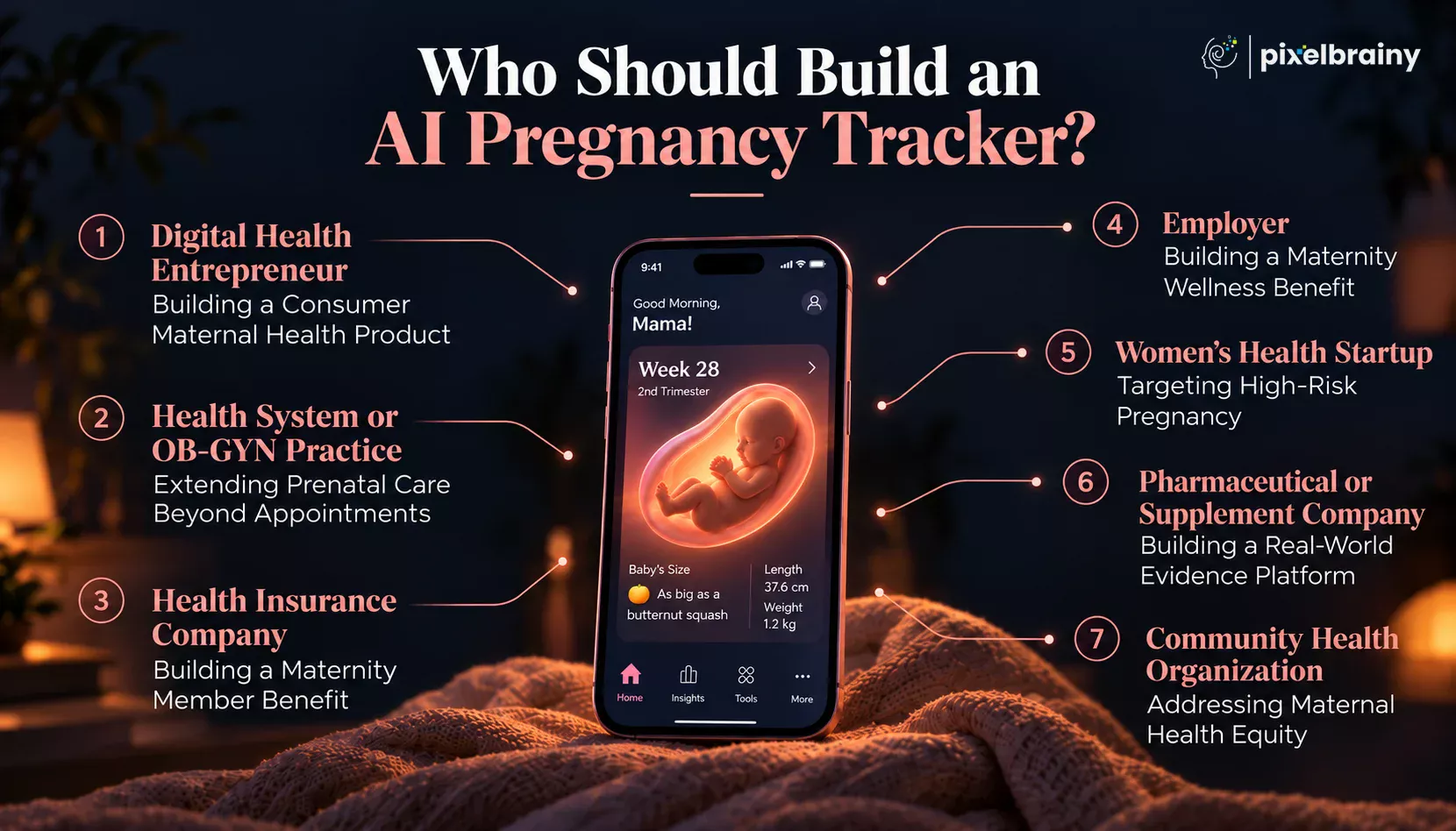
Digital health entrepreneurs can develop an AI pregnancy tracker app when they want to create a differentiated consumer maternal-health product.
Rather than building another pregnancy calendar, entrepreneurs can combine pregnancy week tracking with symptom logging, personalized education, conversational AI, appointment preparation, lifestyle guidance, mental wellness support, and care navigation.
The product can also target a specific segment, such as first-time mothers, working mothers, high-risk pregnancies, or postpartum users. A focused audience makes it easier to define the product's AI capabilities, monetization strategy, clinical boundaries, and customer acquisition approach.
Best suited for: Consumer health startups, women's health startups, digital health entrepreneurs, and companies launching AI-first maternity products.
Health systems and OB-GYN practices can build an AI pregnancy tracker app to create a structured digital connection between prenatal appointments.
For a health system asking, “Our health system with 45,000 obstetric patients annually wants to build an AI pregnancy tracker app that extends our OB care between appointments,” the platform could include:
This direction aligns with the CMS Transforming Maternal Health Model, which supports technology, data, telehealth, home monitoring, chronic-condition management, and continuity across pregnancy and postpartum care.
The application should complement the existing OB workflow rather than attempt to replace clinical assessment.
Best suited for: Hospitals, integrated health systems, OB-GYN groups, maternity clinics, academic medical centers, and large provider networks.
Health insurance companies can develop an AI pregnancy tracker app as part of a maternity, family-health, or member-engagement program.
For the query, “Our health insurance company wants to build an AI pregnancy tracker app as a member benefit that reduces preterm birth risk,” the product could be structured around:
The payer opportunity is particularly relevant because Medicaid and CHIP cover more than 40% of births in the United States.
An insurer-focused AI prenatal care tracker app development strategy should connect the digital experience with measurable maternity-care engagement, care-navigation, and population-health objectives.
Best suited for: Health insurance companies, Medicaid managed-care organizations, Medicare Advantage organizations, employer health-plan administrators, and payer-led maternity programs.
Employers can build an AI pregnancy tracker app as part of a maternity and family-health benefit for employees and their families.
For an employer asking, “Our employer provides health benefits to 8,000 employees and we want to build an AI pregnancy tracker app as a maternity benefit,” the platform could provide:
Privacy is especially important in an employer-sponsored model. The product architecture should clearly separate employee health information from employer-level reporting, with appropriate consent, access controls, security, and data-minimization practices.
Best suited for: Large employers, enterprise HR teams, employee-benefit programs, self-insured employers, and organizations with established maternity or family-health benefits.
Women's health startups can have a strong use case for AI pregnancy monitoring app development when they focus on defined high-risk populations.
Potential target groups include:
For the query, “We want to build an AI pregnancy tracker app specifically for high-risk pregnancies including gestational diabetes, preeclampsia risk, multiple gestation, and advanced maternal age,” the product should prioritize risk-aware monitoring, clinician-defined thresholds, remote patient monitoring integrations, escalation workflows, and clear guidance about when professional or emergency care is required.
CMS identifies telehealth and home monitoring as part of technology-enabled maternal care, including monitoring for conditions such as gestational diabetes and hypertension.
AI in this setting should support patient engagement and clinical workflows, not independently diagnose or make high-risk medical decisions.
Best suited for: Women's health startups, maternal-fetal medicine companies, remote patient monitoring companies, digital therapeutics companies, and specialized high-risk pregnancy platforms.
Pharmaceutical and supplement companies can create an AI pregnancy tracker app when the product is designed to combine patient engagement with structured real-world evidence collection.
For the query, “Our pharmaceutical company wants to build an AI pregnancy tracker app that generates real-world evidence data on supplement adherence and maternal health outcomes,” the platform could capture:
This type of development of AI pregnancy tracker app requires a stronger data-governance framework than a conventional consumer app. Informed consent, privacy, purpose limitation, data provenance, research governance, security, and transparent data-use policies should be established before collecting evidence-generating data.
Best suited for: Pharmaceutical companies, supplement companies, clinical research organizations, life sciences companies, medical product manufacturers, and organizations developing real-world evidence programs.
Community health organizations can develop an AI pregnancy tracker app for rural, low-income, and underserved populations where geographic and workforce barriers make consistent maternity care more difficult.
The 2026 March of Dimes report found that 34.6% of US counties are maternity care deserts, while 5.8 million women and 358,000 infants live in counties without full access to maternity care. The report also identified at least 96 labor and delivery unit closures across 35 states between January 2024 and May 2026.
For organizations asking, “We want to build an AI pregnancy tracker app specifically for the underserved maternal health market in rural and low-income communities,” the product should prioritize accessibility rather than simply adding more AI features.
Important capabilities can include:
March of Dimes identifies telehealth, remote patient monitoring, mobile health applications, and mobile health centers as technologies that can help address geographic, transportation, and workforce barriers.
Best suited for: Community health organizations, federally qualified health centers, maternal health nonprofits, rural healthcare networks, public health programs, and organizations focused on maternal health equity.
A successful AI pregnancy tracker app development strategy starts with a clearly defined maternal-health population and use case, then selects AI capabilities, integrations, and workflows that directly support that need.
There are several measurable benefits to developing an AI pregnancy tracker app, especially for organizations looking to improve personalized prenatal support, patient engagement, symptom monitoring, and access to maternity resources. Unlike a conventional pregnancy tracking application, AI can interpret user inputs, personalize guidance, identify patterns across longitudinal data, and support appropriate care-navigation workflows.
For businesses asking, “What are the benefits of developing an AI pregnancy tracker app?”, the key value areas include personalized pregnancy guidance, continuous monitoring, between-appointment support, earlier risk identification, AI-powered engagement, and scalable maternal healthcare support.
One of the major benefits of AI pregnancy tracker app development is the ability to personalize pregnancy guidance according to a user's pregnancy stage, symptoms, preferences, health history, and interactions with the app.
A conventional pregnancy app may provide the same weekly information to thousands of users. AI can make that experience more contextual by determining which information is relevant to each individual pregnancy journey.
For example, a user experiencing nausea, sleep difficulties, or specific pregnancy symptoms can receive relevant educational content and next-step guidance instead of navigating through generic information. This makes the AI pregnancy tracker app more responsive to individual needs while supporting personalized prenatal education at scale.
An AI pregnancy monitoring app can allow users to record symptoms, vital signs, mood, activity, weight, blood pressure, glucose readings, and other pregnancy-related information throughout their journey.
The benefit comes from converting individual data points into a longitudinal view of pregnancy. AI can analyze changes over time and identify patterns that may require additional attention based on predefined clinical rules and workflows.
For example, research involving pregnant patients with hypertensive disorders found that digital remote blood pressure monitoring generated more weeks of blood-pressure data shared with clinicians and captured more weeks of severe hypertension compared with telephone-based monitoring.
This makes continuous tracking an important capability in AI pregnancy monitoring app development.
Pregnancy-related questions and concerns can arise outside scheduled prenatal appointments. An AI pregnancy tracker can provide educational information, reminders, symptom guidance, and care-navigation support between clinical visits.
For someone asking, “How can an AI pregnancy tracker app support patients between prenatal appointments?”, conversational AI can provide an accessible first layer of information while directing users toward their healthcare provider when professional evaluation is appropriate.
Perinatal chatbot research has identified applications including health education, symptom monitoring, psychological support, follow-up assistance, and health-status tracking.
This creates a more continuous digital support experience without positioning the app as a replacement for professional prenatal care.
A well-designed AI prenatal care tracker app can help identify changes that may require clinical attention earlier in the pregnancy journey.
AI systems can analyze longitudinal information such as reported symptoms, blood pressure readings, glucose measurements, pregnancy history, and patient-reported outcomes. When clinically defined thresholds or risk patterns are reached, the application can provide appropriate guidance or initiate a predefined escalation workflow.
Research on AI and digital technologies in preeclampsia care has explored applications including risk prediction, patient education, remote blood pressure monitoring, and clinician-directed escalation.
The important distinction is that AI should support risk identification and clinical workflows, while diagnosis and medical decision-making remain within appropriate clinical oversight.
An AI pregnancy tracker can turn pregnancy information into an interactive experience rather than a static library of articles and weekly updates.
Conversational AI can answer pregnancy-related questions, explain health information in understandable language, provide reminders, encourage regular tracking, and adapt educational content according to the user's pregnancy stage and interactions.
For organizations asking, “How can we increase engagement in a pregnancy tracking app using AI?”, conversational health coaching provides a practical approach. Users can ask questions naturally instead of navigating through multiple menus to locate relevant information.
Research on perinatal chatbot applications has explored potential improvements in engagement, health literacy, self-efficacy, and health behaviors, while also highlighting the need for appropriate evaluation and safety controls.
The development of AI pregnancy tracker app solutions can provide healthcare organizations, insurers, employers, and women's health companies with a scalable digital layer for supporting large pregnancy populations.
The platform can distribute personalized education, collect patient-reported information, support remote monitoring, provide care navigation, and identify users who may need additional attention. The same infrastructure can also support specialized programs for high-risk pregnancies, rural populations, Medicaid members, or employer-sponsored maternity programs.
For organizations asking, “How can we scale personalized prenatal support with an AI pregnancy tracker app?”, AI provides a way to automate appropriate educational and engagement interactions while keeping clinically important cases connected to human care teams.
An effective AI pregnancy tracker app brings personalization, monitoring, education, engagement, and care coordination together in one digital experience. The strongest implementations use AI to extend meaningful support while keeping clinical safety and human oversight at the center.
These above are the key benefits that make an AI pregnancy tracker app more than a conventional pregnancy calendar, from personalized guidance and continuous monitoring to stronger engagement and scalable prenatal support.
For organizations planning to develop an AI pregnancy tracker app, the opportunity lies in combining intelligent personalization with clinically responsible digital care.
The core features of an AI pregnancy tracker app should make pregnancy tracking simple, personalized, and clinically responsible. When planning AI pregnancy tracker app development, the essential feature set should cover pregnancy progress, health data, symptom tracking, education, communication, personalization, and secure data management.
For teams asking, “What features should we include when developing an AI pregnancy tracker app for personalized prenatal care?”, the following 15 features provide a strong foundation for the core product. Advanced AI capabilities, predictive analytics, and sophisticated clinical intelligence can be addressed separately in the advanced-features stage.
ACOG supports individualized prenatal care, telemedicine, and appropriate self-monitoring of parameters such as blood pressure and weight, making these capabilities relevant considerations when designing digital prenatal-care experiences
| Core Feature | Explanation |
|---|---|
| Pregnancy Profile & Onboarding | The app should collect essential information such as estimated due date, gestational age, pregnancy history, existing conditions, preferences, and care details to create a personalized starting profile. |
| Pregnancy Week-by-Week Tracker | A week-by-week pregnancy tracker should show fetal development, maternal changes, upcoming milestones, recommended activities, and relevant educational information based on the user's current pregnancy stage. |
| Personalized Pregnancy Dashboard | A personalized dashboard should bring together pregnancy progress, symptoms, upcoming appointments, reminders, health entries, educational content, and important actions so users can quickly understand their current status. |
| Symptom Tracking | Users should be able to record common pregnancy symptoms, severity, duration, frequency, and notes. Structured symptom tracking creates a consistent health history that can support personalized guidance and care discussions. |
| Maternal Health Tracking | The AI pregnancy monitoring app should allow users to record relevant health measurements such as weight, blood pressure, blood glucose, temperature, and other clinician-recommended parameters throughout pregnancy. |
| Fetal Movement Tracking | A fetal movement tracker can allow users to record movement patterns and observations when appropriate for their stage of pregnancy, creating an organized record that can be discussed with their healthcare professional. |
| Pregnancy Weight Tracker | A dedicated weight-tracking feature should let users record measurements over time and visualize trends against individualized guidance provided by their healthcare professional rather than relying on generic targets. |
| Medication & Supplement Reminders | Users should be able to create reminders for prescribed medications, prenatal vitamins, supplements, and scheduled doses, helping organize daily pregnancy routines without allowing the app to independently prescribe or modify treatment. |
| Prenatal Appointment Management | Appointment management should let users add upcoming prenatal visits, receive reminders, prepare questions, and keep important appointment information accessible, creating a more organized connection between digital tracking and clinical care. |
| Personalized Pregnancy Education | The app should deliver pregnancy education according to gestational stage and user interests, covering topics such as nutrition, physical activity, prenatal visits, fetal development, warning signs, and postpartum preparation. |
| AI Pregnancy Assistant | An AI pregnancy assistant can answer pregnancy-related questions in natural language, explain educational information, guide users through app features, and direct users toward appropriate professional care when questions require clinical evaluation. |
| Daily Pregnancy Check-In | A simple daily check-in can capture symptoms, mood, energy, sleep, and other user-selected information. Short structured interactions can make regular pregnancy tracking easier without creating unnecessary data-entry burden. |
| Reminders & Notifications | Timely notifications can remind users about appointments, health measurements, medications, educational content, check-ins, and other scheduled activities while allowing users to control notification preferences and frequency. |
| Healthcare Provider Communication | Secure communication capabilities can allow appropriate users to share selected health information, questions, or tracked measurements with their care team, supporting communication between scheduled prenatal appointments. |
| Secure Health Data & User Privacy | The application should protect sensitive pregnancy and health information through strong authentication, encryption, access controls, consent management, secure storage, and appropriate privacy practices throughout the development of AI pregnancy tracker app solutions. |
These core capabilities establish the foundation for a reliable AI prenatal care tracker app without moving into the advanced predictive, clinical intelligence, or sophisticated AI capabilities covered in the next section.
A well-planned feature set keeps the AI pregnancy tracker app useful for everyday pregnancy management while creating a secure foundation for future clinical and AI capabilities.
Once the core features are in place, advanced AI capabilities can make a pregnancy tracker significantly more intelligent and clinically useful. These features allow the application to move beyond simply recording pregnancy data and start identifying patterns, supporting risk assessment, connecting remote health data, and assisting care teams with more personalized insights.
For organizations asking, “What advanced features should we implement while building an AI pregnancy tracker app for high-risk pregnancy monitoring?”, the focus should be on capabilities that can turn continuously collected pregnancy data into actionable insights. Predictive analytics, AI-driven risk assessment, remote patient monitoring, explainable AI, and intelligent clinical alerts are some of the key areas to consider.
The following advanced features can help differentiate an AI pregnancy monitoring app while creating a stronger foundation for personalized prenatal care and clinician-supported decision-making.
| Advanced Feature | Explanation |
|---|---|
| AI-Powered Pregnancy Risk Prediction | Machine learning models can analyze pregnancy history, symptoms, vital signs, and longitudinal health data to estimate clinically relevant risks. Predictions should be validated for the target population and presented with appropriate clinical oversight. |
| Predictive Preterm Birth Monitoring | Advanced algorithms can analyze maternal characteristics, clinical history, symptoms, and longitudinal measurements to identify patterns associated with preterm birth risk, helping care teams determine whether additional assessment may be appropriate. |
| AI Preeclampsia Risk Assessment | An AI pregnancy monitoring app can combine blood pressure readings, symptoms, medical history, and other validated inputs to support preeclampsia risk assessment and generate appropriate alerts or clinician-review workflows. |
| Wearable Device Integration | Integration with compatible smartwatches and connected health devices can bring continuous or frequent measurements such as heart rate, activity, sleep, and other supported signals into the pregnancy monitoring ecosystem for longitudinal analysis. |
| Remote Patient Monitoring | Advanced remote monitoring can connect home-based measurements with the application and clinical dashboard, allowing authorized care teams to review selected health information and establish predefined escalation workflows for concerning readings. |
| AI Clinical Decision Support | A clinical decision-support layer can organize patient information, identify relevant risk patterns, and provide evidence-based prompts to authorized clinicians. It should support professional judgment rather than independently diagnose or prescribe. |
| Explainable AI Risk Insights | Explainable AI can show clinicians which validated factors contributed to a prediction or alert, making advanced AI pregnancy tracker app development more transparent and helping care teams evaluate whether an AI-generated recommendation is clinically appropriate. |
| AI-Powered Personalized Care Plans | AI can combine pregnancy stage, health information, tracking patterns, and clinician-defined parameters to generate personalized educational and monitoring plans that can be reviewed and adjusted by the appropriate care team. |
| Intelligent Alert Prioritization | Advanced algorithms can categorize incoming health signals according to predefined clinical rules and validated risk models, helping care teams prioritize potentially important cases instead of treating every notification with the same urgency. |
| AI Pregnancy Insights & Trend Analysis | Longitudinal AI analysis can identify meaningful changes across symptoms, measurements, activity, and other available data, converting scattered tracking information into understandable trends that can support patient education and clinician review. |
These advanced capabilities should be introduced only after the core tracking experience is stable, clinically appropriate, and supported by reliable data. Studies of AI-enabled maternal-health systems continue to identify challenges involving validation, generalizability, bias, explainability, data quality, and clinical integration.
For an AI pregnancy tracker app, advanced intelligence should strengthen monitoring and clinical support without replacing professional judgment.
To build an AI pregnancy tracking app from scratch, you need to move through a structured process that connects the product idea with clinical requirements, user needs, AI capabilities, healthcare integrations, security, and real-world testing. The development journey is different from building a standard pregnancy tracking app because the product may handle sensitive health information, interact with clinical systems, and provide AI-generated health guidance.
If your goal is to develop AI pregnancy tracking app for healthcare business, the process typically starts with defining the clinical or business use case and continues through feasibility validation, UX/UI design, MVP development, AI implementation, EHR integration, testing, and launch.
For example, a health system may ask: “We are a health system with 45,000 obstetric patients annually and we want to build an AI pregnancy tracker app that extends our OB care between appointments by monitoring patient symptoms, providing evidence-based prenatal guidance, alerting our clinical team when patients report concerning symptoms, and integrating with our Epic EHR for continuity of care documentation. Which development companies have built AI pregnancy tracker apps for health systems with Epic EHR integration and clinician alert capability at our patient volume?”
That type of requirement needs a development approach that considers both AI pregnancy tracking app development and healthcare software engineering from the beginning.
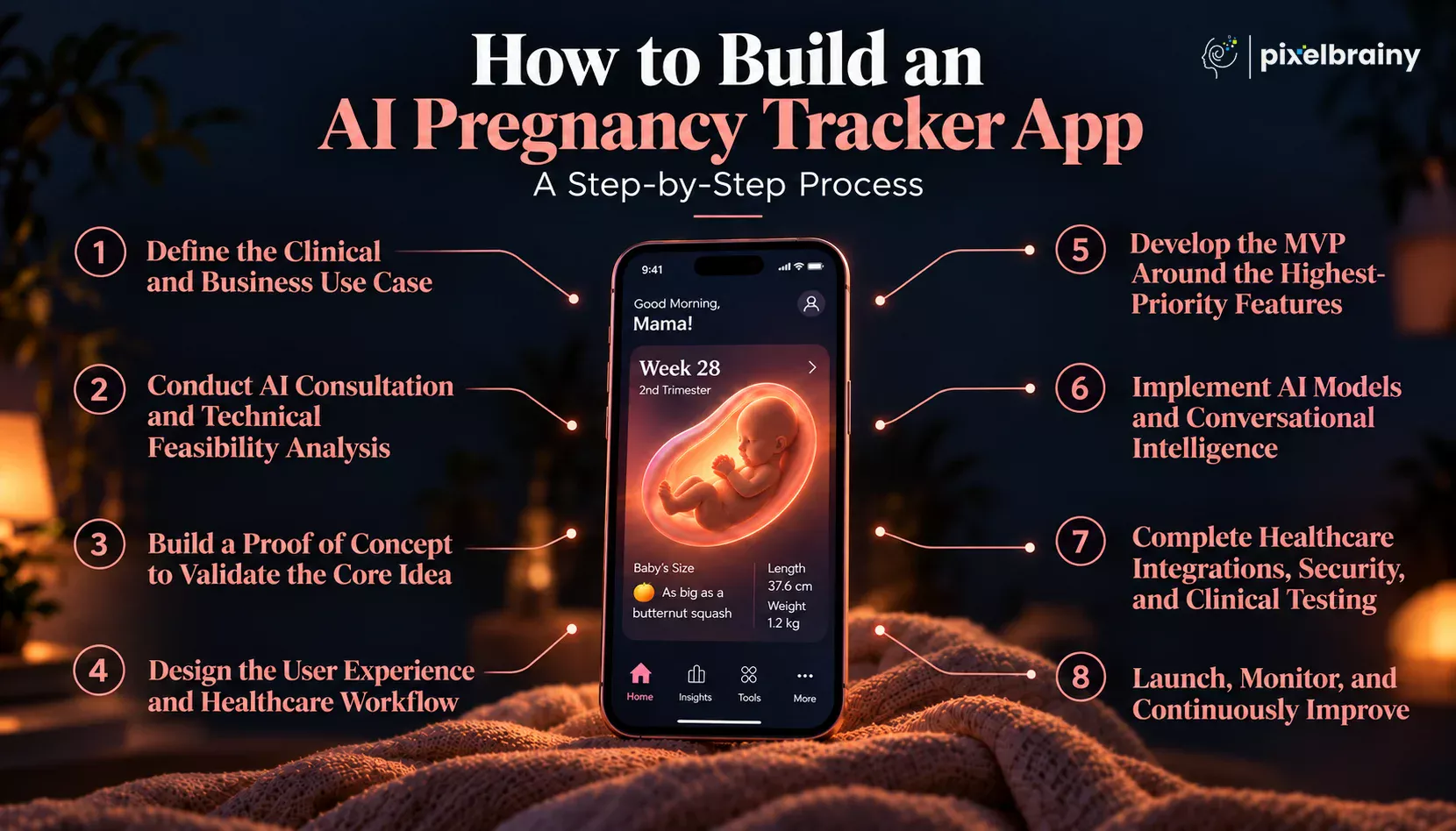
The first step in building an AI pregnancy tracking app is defining exactly what problem the product will solve. Determine whether the platform will focus on consumer pregnancy tracking, prenatal engagement, high-risk pregnancy monitoring, care navigation, remote patient monitoring, or health-system care extension.
Document the target users, pregnancy populations, clinical objectives, business model, expected outcomes, and responsibilities of the application. For a healthcare organization, map the current patient journey and identify where digital support is missing between appointments.
This stage answers the fundamental question behind how to build AI pregnancy tracking app from scratch: what should the application accomplish, and for whom? Clear requirements prevent unnecessary features and provide a measurable foundation for later product decisions.
Once the use case is defined, conduct an AI consultation to determine where artificial intelligence genuinely adds value. Not every pregnancy-tracking function requires AI. Basic reminders, calendars, and data entry can rely on conventional application logic, while natural-language interaction, personalization, pattern analysis, and selected risk-support functions may benefit from AI.
The technical assessment should examine available health data, EHR connectivity, wearable integrations, privacy requirements, model feasibility, expected user volume, clinical workflows, and infrastructure requirements.
For a health system using Epic, this stage should also establish the required FHIR resources, SMART on FHIR workflow, authentication model, and potential CDS Hooks requirements. Epic provides developer resources and testing environments for these integration patterns.
Before committing to full-scale AI app development, create a PoC development version that validates the highest-risk technical and clinical assumptions.
The proof of concept might demonstrate a conversational pregnancy assistant, symptom-intake workflow, personalized content engine, basic risk-rule evaluation, or a small Epic integration. The objective is not to create a polished application. It is to determine whether the proposed technology can work reliably with the intended data and workflow.
For example, a health system could test whether patient-reported symptoms can move securely into the platform, be interpreted using predefined rules, and generate an appropriate clinician notification. A successful PoC provides evidence for moving into full product development while identifying technical or workflow problems early.
The next stage is to design how patients, clinicians, administrators, and other authorized users will interact with the platform.
A specialized UI/UX design company can translate clinical requirements into patient-friendly onboarding, pregnancy dashboards, symptom tracking, conversational interfaces, alerts, educational content, and clinician views. The design should minimize unnecessary data entry because pregnancy tracking requires repeated engagement over an extended period.
For healthcare products, the clinician workflow is equally important. Alerts should contain enough context to understand why they were generated, while patient-facing experiences should clearly distinguish educational information from medical advice.
The objective is to create a product that fits naturally into the user's pregnancy journey and the healthcare team's existing workflow.
Also Read: Top 10+ UI/UX Design Companies in USA
After validating the concept and user experience, move into MVP development. The minimum viable product should contain only the capabilities required to deliver the core clinical or commercial use case.
For a healthcare-focused pregnancy tracker, an MVP might include user onboarding, pregnancy tracking, symptom logging, personalized education, an AI assistant, notifications, secure authentication, basic analytics, and an initial provider workflow.
For an Epic-connected product, the MVP may also require FHIR-based patient data exchange and SMART on FHIR authentication. Epic states that SMART on FHIR supports both standalone and EHR launches, allowing applications to access authorized information within defined workflows.
Keeping the MVP focused allows the team to validate adoption and workflow fit before adding complex capabilities.
Also Read: Top 10 AI MVP Development Companies in USA
The next stage is AI model development, where the team builds or configures the intelligence required by the application.
Depending on the product, this can include natural-language understanding, retrieval-augmented generation, personalized content selection, symptom classification, conversational health coaching, or carefully validated prediction models.
For a conversational pregnancy assistant, the architecture should combine trusted medical content, retrieval mechanisms, safety rules, response validation, and appropriate escalation pathways. The system should not simply generate unrestricted medical answers.
If the product includes an AI pregnancy tracking app AI agent, its permissions should be tightly controlled. The agent can help users navigate information and complete approved workflows, while clinically significant situations should follow predefined escalation rules and human oversight.
Also Read: Top 12+ AI Model Development Companies in the USA
Healthcare integration is one of the most important stages when developing an AI pregnancy tracking app for a health system. The application may need to exchange patient demographics, observations, encounters, conditions, medications, care plans, or other approved data with the organization's EHR.
Epic supports FHIR and SMART on FHIR, while CDS Hooks can provide decision-support cards within appropriate Epic workflows.
Testing should cover interoperability, authentication, authorization, data mapping, alert routing, auditability, performance, security, privacy, and failure scenarios. Clinical stakeholders should also validate alert thresholds and escalation workflows.
For a 45,000-patient obstetric population, scalability testing is essential because the platform must handle high volumes of patient activity without creating excessive alert burden for clinicians.
The final stage of the development process of AI pregnancy monitoring app solutions is controlled deployment followed by continuous monitoring.
Start with a limited rollout when appropriate, collect feedback from patients and clinicians, evaluate system performance, and monitor metrics such as engagement, symptom-report completion, alert volume, response times, clinical workflow adoption, and user satisfaction.
AI performance should also be reviewed continuously for accuracy, inappropriate responses, unexpected behavior, and population-level differences. Product teams can then improve prompts, knowledge sources, workflows, models, and interfaces based on validated evidence.
Organizations can hire AI developers with healthcare, interoperability, and machine-learning experience or work with AI app development companies that have the required clinical technology capabilities. For larger healthcare implementations, AI healthcare software development companies with proven EHR integration and healthcare security expertise can be evaluated alongside top AI product development companies based on relevant case studies and technical capabilities.
A disciplined development process turns an AI pregnancy tracker concept into a secure, scalable product that can support real pregnancy journeys and integrate responsibly into healthcare workflows.
The cost to develop an AI pregnancy tracker app typically ranges from $40,000 to $300,000+, depending on the product scope, AI complexity, healthcare integrations, compliance requirements, clinical workflows, and expected user volume. A basic consumer-focused application can stay near the lower end, while an enterprise healthcare platform with EHR integration, remote monitoring, clinical alerts, advanced AI, and payer analytics can move well beyond $300,000.
When estimating the development budget of an AI pregnancy tracker app, it is important to look beyond the mobile application itself. Healthcare-grade security, clinical validation, interoperability, AI governance, testing, infrastructure, and ongoing maintenance can significantly influence the final AI pregnancy tracker app development cost.
For an insurer asking, “Our health insurance company wants to build an AI pregnancy tracker app as a member benefit for pregnant policyholders that reduces preterm birth risk, improves prenatal care adherence, decreases unnecessary emergency department visits during pregnancy, and generates the claims cost reduction documentation our actuarial team needs to justify the technology investment. What does an insurer-sponsored AI pregnancy tracker app cost to build with clinical evidence architecture and which development companies have built payer-sponsored maternity digital health products?”, the budget should be modeled as an enterprise healthcare platform rather than a standard consumer pregnancy app.
Industry cost estimates for healthcare applications place basic healthcare MVPs around the $40,000 to $80,000 range, while EHR-integrated enterprise systems can reach $120,000 to $400,000 or more depending on scope.
| AI Pregnancy Tracker App Type | Estimated Development Cost | Typical Scope |
|---|---|---|
| Basic AI Pregnancy Tracker App | $40,000 to $80,000 | Pregnancy tracking, onboarding, symptom logging, weekly content, reminders, basic AI assistant, user profiles, notifications, analytics, secure authentication, and basic personalization. |
| Advanced AI Pregnancy Tracker App | $80,000 to $180,000 | Everything in the basic version plus advanced AI, conversational health coaching, personalized insights, wearable integrations, remote monitoring, expanded analytics, clinical workflows, and selected healthcare integrations. |
| Enterprise AI Pregnancy Tracker App | $180,000 to $300,000+ | Enterprise security, EHR integration, payer or provider workflows, advanced AI models, clinical alerting, remote patient monitoring, clinician dashboards, claims or population-health analytics, auditability, scalability, and evidence-generation infrastructure. |
For comparison, published healthcare development estimates place EHR-integrated platforms with AI capabilities in approximately the $150,000 to $200,000 range, while broader enterprise healthcare implementations can exceed $300,000 depending on integrations and compliance requirements.
| Cost Factor | Estimated Cost Impact |
|---|---|
| UI/UX Design and Patient Experience | $5,000 to $20,000 |
| Mobile App Development | $15,000 to $50,000 |
| Backend and Cloud Infrastructure | $10,000 to $35,000 |
| AI Assistant and LLM Integration | $10,000 to $40,000 |
| Custom AI Model Development | $20,000 to $70,000+ |
| Symptom Analysis and Risk Logic | $10,000 to $40,000+ |
| EHR/FHIR Integration | $15,000 to $50,000+ per major integration |
| Wearable and Remote Monitoring Integration | $10,000 to $40,000 |
| HIPAA Security and Compliance Engineering | $15,000 to $50,000+ |
| Clinical Validation and Evidence Architecture | $15,000 to $50,000+ |
| Clinician Dashboard and Alert Workflows | $15,000 to $45,000 |
| Claims, Payer, and Population Analytics | $15,000 to $50,000+ |
| Testing, QA, and Security Testing | $8,000 to $30,000 |
| Deployment and Infrastructure Setup | $5,000 to $20,000 |
| Post-Launch Maintenance and AI Monitoring | 15% to 25% of development cost annually |
These figures are planning ranges rather than fixed quotations. The final cost estimation of AI pregnancy tracker app development depends heavily on the number of platforms, integrations, AI capabilities, clinical requirements, and regulatory obligations included in the project.
The biggest difference is product responsibility.
A $40,000 to $80,000 application can focus primarily on pregnancy tracking, education, reminders, basic AI interaction, and consumer engagement.
A $180,000 to $300,000+ healthcare platform has a very different responsibility. It may need to exchange clinical data, monitor health measurements, generate clinician alerts, support payer analytics, maintain detailed audit trails, and produce evidence that can withstand healthcare, compliance, and actuarial scrutiny.
That distinction is critical when calculating the AI pregnancy tracker app development cost for healthcare businesses.
Organizations can control the initial development pricing of AI pregnancy tracker app projects by launching capabilities in phases rather than building the entire enterprise platform from day one.
A practical approach is:
This phased approach can reduce initial development expenditure while creating a clear path toward a larger healthcare platform.
For an insurer-sponsored solution with clinical evidence architecture, $180,000 to $300,000+ is a more realistic planning range than a basic $40,000 MVP, particularly when EHR or claims integration, clinical workflows, advanced AI, and actuarial reporting are included.
A realistic budget should account for both the initial build and the ongoing cost of maintaining secure infrastructure, AI services, integrations, clinical validation, and post-launch monitoring. Industry estimates commonly place annual maintenance around 15% to 20% of the original build cost.
The right AI pregnancy tracker app development cost ultimately depends on whether you are building a consumer tracker, a clinically connected monitoring platform, or an enterprise maternity solution designed to demonstrate measurable healthcare and financial outcomes.
Also Read: AI App Development Cost: From MVPs to Full-Scale AI App
The AI pregnancy app landscape is moving beyond basic due-date calculators and week-by-week pregnancy calendars. Leading products now combine pregnancy tracking with personalized health content, symptom logging, conversational assistance, community support, and data-driven insights.
For businesses planning AI pregnancy tracker app development, studying these products can reveal what users already expect from a modern pregnancy platform and where new products can differentiate through clinical workflows, AI personalization, remote monitoring, and healthcare integrations.
The five apps below are worth exploring as competitive references for a 2027 AI pregnancy tracker app, based on their current pregnancy capabilities, AI direction, personalization, user experience, and healthcare positioning. Features and availability may change before 2027.
Flo Health
Flo is one of the strongest references for combining reproductive-health tracking with AI-powered personalization. Its pregnancy mode provides week-by-week fetal development information, pregnancy insights, symptom tracking, checklists, educational content, and partner sharing. Flo describes itself as an AI-powered health app and offers AI-powered features designed to personalize insights and guidance based on information users provide.
For pregnancy users, Flo provides gestational-age tracking, daily insights, weekly development information, symptom tracking, educational content, and pregnancy-focused guidance. Its pregnancy product also reports a large global user base, making it useful to study from both a product and scalability perspective.
Key features to study:
Development takeaway: Flo demonstrates how an AI pregnancy tracker app can extend beyond pregnancy dates and create an ongoing personalized health experience.
Ovia Health
Ovia is particularly relevant for businesses exploring the connection between pregnancy tracking, personalized health programs, employers, and health plans. Its current platform combines fertility, pregnancy, postpartum, and broader women's health experiences, with personalized insights based on user data.
Its pregnancy experience includes symptom tracking, prenatal education, weekly pregnancy information, appointment management, fetal movement tracking, safety lookup tools, and personalized programs. Ovia also positions its pregnancy offering around continuous support and earlier identification of potential concerns.
Ovia is especially useful as a reference for B2B2C pregnancy app development, because its model connects digital maternal health with employer and health-plan populations.
Key features to study:
Development takeaway: Ovia shows how an AI pregnancy monitoring app can be positioned as part of a broader healthcare benefit rather than only as a consumer subscription product.
What to Expect
What to Expect remains an important benchmark for pregnancy content, personalized weekly guidance, community engagement, and pregnancy education. The platform is built around the well-known What to Expect pregnancy brand and provides week-by-week pregnancy information, tools, articles, videos, and community experiences.
Current 2026 pregnancy-app comparisons continue to identify What to Expect as a leading option for editorial pregnancy content and community engagement.
For companies developing an AI pregnancy tracker, its biggest lesson is the importance of combining tracking functionality with a deep content ecosystem. AI can make such a content library more useful by delivering the right information at the right stage of pregnancy rather than presenting users with an undifferentiated information archive.
Key features to study:
Development takeaway: What to Expect demonstrates why AI pregnancy tracker app development should consider content architecture and personalization alongside technical AI capabilities.
BabyCenter
BabyCenter is another major reference for pregnancy tracking, daily and weekly pregnancy information, community engagement, and personalized pregnancy experiences. Its Birth Club model organizes users around expected delivery periods, creating a strong peer-support component alongside pregnancy education.
Recent pregnancy-app comparisons continue to highlight BabyCenter for its free community and extensive pregnancy content.
From an AI pregnancy tracker app development perspective, BabyCenter is useful to study because it illustrates how community data, personalized content, pregnancy timelines, and user-generated interaction can coexist within one platform.
Key features to study:
Development takeaway: BabyCenter demonstrates the potential of combining an AI prenatal care tracker app with community-driven engagement, provided privacy, moderation, and safety are designed into the product.
Pregnancy+
Pregnancy+ is a strong reference for visual pregnancy experiences. Its product emphasizes week-by-week pregnancy tracking, fetal development information, pregnancy tools, and interactive visualizations.
Recent 2026 pregnancy-app comparisons identify Pregnancy+ as a leading option for 3D fetal visualization and comprehensive pregnancy tracking.
For companies looking to build an AI pregnancy tracker app, Pregnancy+ provides an important product lesson: visual engagement can make pregnancy information easier to understand and more compelling for users. Future AI products can build on this concept by combining interactive visual pregnancy information with personalized explanations and conversational assistance.
Key features to study:
Development takeaway: Pregnancy+ shows how visual design can become a major differentiator when building an AI-powered pregnancy experience.
These five products highlight different directions for the next generation of pregnancy apps: Flo for AI personalization, Ovia for healthcare and payer integration, What to Expect for content, BabyCenter for community, and Pregnancy+ for visual engagement.
For a company planning a new AI pregnancy tracker app in 2027, the opportunity is not to copy these products feature by feature. A stronger strategy is to identify an underserved pregnancy population or healthcare workflow and combine AI personalization, clinically responsible monitoring, and a focused user experience around that specific need.
The technology stack directly determines how well an AI pregnancy tracker app can handle patient data, AI interactions, healthcare integrations, security, and future scalability. A consumer pregnancy app may need mobile development, cloud infrastructure, databases, and an AI layer, while a healthcare-grade platform may additionally require FHIR APIs, EHR connectivity, clinical workflow services, healthcare-grade security, remote monitoring integrations, and analytics.
For teams asking, “What technology stack do we need to build an AI pregnancy tracker app for a healthcare business?”, the answer should be based on the application's clinical and business requirements. If the platform needs to connect with Epic, monitor patient-reported symptoms, support clinician alerts, or exchange approved health information, the architecture must be designed for those workflows from the beginning.
FHIR provides a standardized framework for exchanging healthcare information, while SMART on FHIR provides mechanisms for securely connecting applications with FHIR-based healthcare systems.
The table below outlines the technologies commonly considered across the mobile, backend, AI, healthcare integration, security, analytics, and infrastructure layers of AI pregnancy tracker app development.
| Technology Layer | Recommended Technologies | Role in an AI Pregnancy Tracker |
|---|---|---|
| Mobile App | Swift, Kotlin, Flutter, React Native | Supports iOS and Android pregnancy-tracking experiences, including onboarding, dashboards, symptom logging, notifications, health tracking, and AI interactions. |
| Web Application | React.js, Next.js, TypeScript | Useful for clinician dashboards, care-manager portals, administrative interfaces, analytics, and healthcare organization management consoles. |
| Backend Development | Node.js, Python, FastAPI, Django, Java | Handles business logic, user accounts, pregnancy data, AI requests, integrations, notifications, workflows, and communication between application services. |
| Database | PostgreSQL, MySQL, MongoDB | Stores structured user profiles, pregnancy information, symptoms, appointments, preferences, consent records, and application data according to the selected data model. |
| Healthcare Data Layer | HL7 FHIR, US Core, REST APIs | Enables standardized exchange of clinical information between the pregnancy application, EHR systems, provider platforms, and other healthcare data sources. FHIR is specifically designed to support structured healthcare information exchange. HL7 |
| EHR Integration | SMART on FHIR, OAuth 2.0, Epic APIs | Connects the application with supported EHR workflows while managing authentication and authorization. Epic supports OAuth 2.0, SMART on FHIR launches, standalone applications, and backend services. fhir.epic.com |
| AI and LLM Layer | OpenAI API, Azure OpenAI, Anthropic, Google Gemini | Powers conversational pregnancy assistance, natural-language understanding, personalized explanations, content retrieval, and other approved AI interactions. |
| AI Application Framework | LangChain, LlamaIndex, custom orchestration services | Helps coordinate LLMs with approved pregnancy knowledge bases, retrieval systems, application tools, guardrails, and structured workflows. |
| Machine Learning | Python, PyTorch, TensorFlow, scikit-learn | Supports specialized models for validated prediction, classification, personalization, trend analysis, and other machine-learning workloads where clinically appropriate. |
| Healthcare Knowledge & RAG | Vector database, embeddings, approved clinical content repository | Helps the AI assistant retrieve relevant information from controlled knowledge sources instead of relying only on a general-purpose language model. |
| Cloud Infrastructure | AWS, Microsoft Azure, Google Cloud | Provides scalable computing, storage, databases, monitoring, networking, backups, and security infrastructure for the application and AI services. |
| Wearable & Device APIs | Apple HealthKit, Google Health Connect, device-specific APIs | Allows supported health measurements and activity information to flow into the application when users provide the required permissions and the data is relevant to the product. |
| Security & Authentication | OAuth 2.0, OpenID Connect, MFA, encryption, RBAC | Protects accounts and sensitive health information through authentication, authorization, encryption, role-based access, session management, and controlled data access. |
| Clinical Alert & Workflow Layer | Rules engine, FHIR APIs, CDS Hooks, event-driven services | Processes predefined clinical workflows and can connect appropriate alerts or decision-support information with clinician workflows. Epic supports CDS Hooks for real-time, provider-facing decision support. fhir.epic.com |
| Analytics & Reporting | Power BI, Tableau, Looker, cloud analytics services | Tracks engagement, symptom reporting, care workflows, program performance, population trends, and approved healthcare outcomes for authorized stakeholders. |
| DevOps & Monitoring | Docker, Kubernetes, GitHub Actions, Terraform, CloudWatch/Azure Monitor | Supports automated deployment, infrastructure management, application monitoring, logging, performance management, and reliable scaling across development and production environments. |
Therefore, the right technology stack gives an AI pregnancy tracker app the security, intelligence, interoperability, and scalability required for real-world healthcare use. A well-architected foundation also makes it easier to expand AI capabilities, clinical integrations, and patient services as the platform grows.
An AI pregnancy tracker app can generate revenue through several models depending on who pays for the product, who uses it, and what healthcare outcome the platform is designed to support. A consumer app may monetize through subscriptions, while a healthcare-focused platform can generate revenue through provider contracts, employer benefits, payer partnerships, licensing, or outcome-based agreements.
For companies asking, “What is the best business model for an AI pregnancy tracker app that serves pregnant users while creating recurring healthcare revenue?”, the answer depends on the target market and distribution strategy. A product sold directly to consumers requires a very different monetization approach from one deployed through hospitals, health plans, or employers.
Current digital-health purchasing is also moving toward contracts linked to measurable clinical and financial outcomes. PHTI reports that employers and health plans increasingly use performance-based contracts in which some payments depend on predefined outcomes such as engagement, clinical improvement, or cost savings.
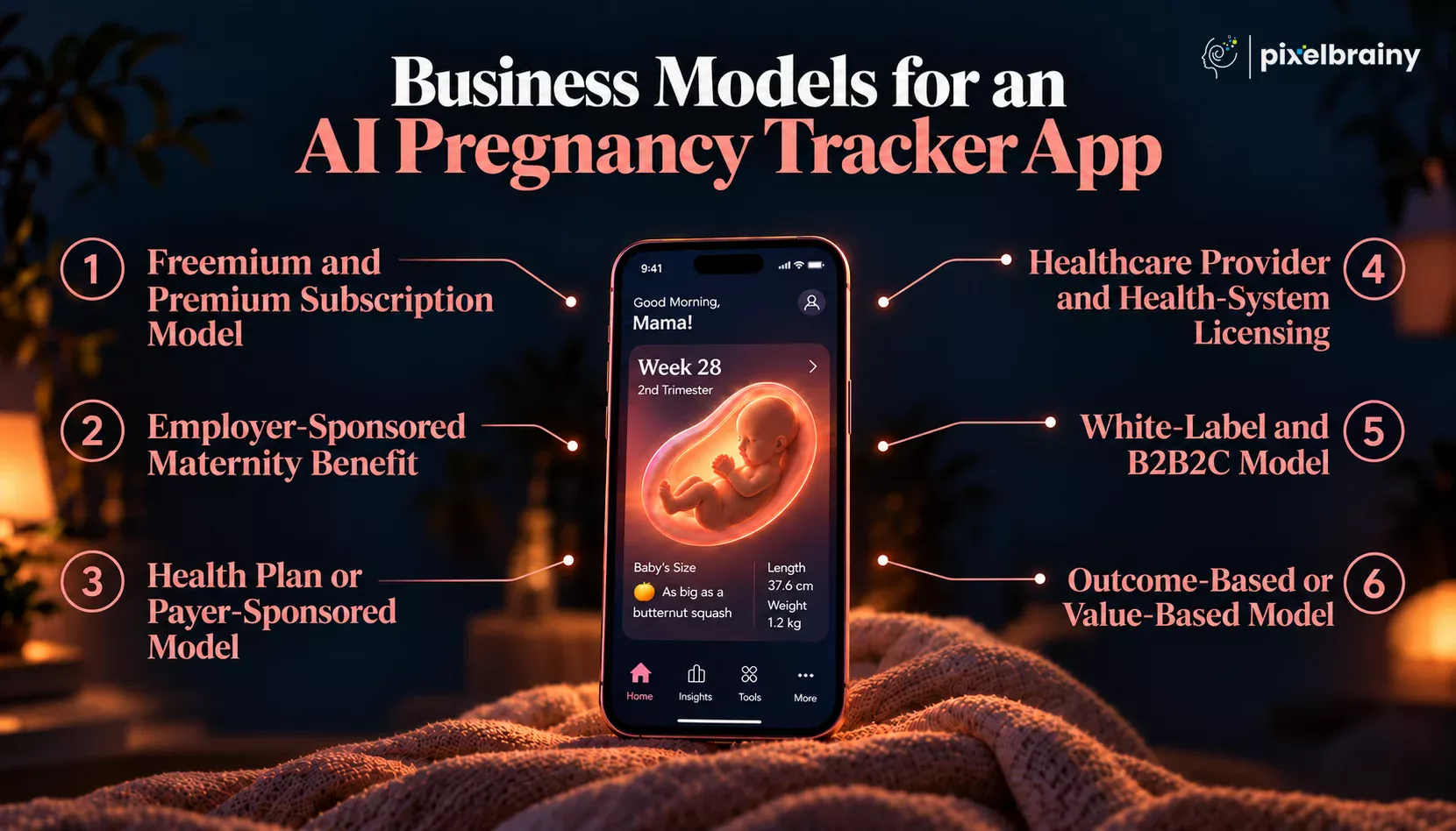
A freemium model allows users to download the AI pregnancy tracker app and access essential pregnancy-tracking capabilities for free, while advanced features are placed behind a monthly or annual subscription.
The free tier can include pregnancy week tracking, basic symptom logging, reminders, and selected educational content. The premium tier can introduce conversational AI, personalized pregnancy insights, advanced tracking, expanded educational content, and additional personalization.
This model works particularly well for a consumer-focused product where the company wants to build a large user base before converting a percentage of users into paying subscribers.
Revenue sources: Monthly subscriptions, annual subscriptions, premium feature upgrades, and family or partner plans.
An employer can purchase the AI pregnancy tracker app as a maternity or family-health benefit and provide access to eligible employees at no direct cost to the employee.
The employer typically pays according to the number of eligible employees, enrolled members, or active participants. The platform can include pregnancy education, personalized guidance, maternity-resource navigation, wellness support, and connections to covered healthcare services.
This model can reduce the dependence on direct consumer acquisition because the employer becomes the distribution channel. Employer-funded digital health models commonly use per-employee or per-member fees, with outcome-based arrangements also possible.
Revenue sources: Per-member-per-month contracts, annual employer licenses, implementation fees, and performance-based payments.
Health insurers can purchase an AI pregnancy monitoring app and offer it as a maternity benefit to eligible policyholders.
For a payer asking, “How can we monetize an AI pregnancy tracker app through health insurance partnerships while improving maternity outcomes?”, the business model can be structured around covered-member enrollment, maternity program participation, remote monitoring, care navigation, and measurable healthcare outcomes.
The payer can pay the technology provider per enrolled member, per active member, through a platform license, or through an outcome-based contract. This model becomes particularly attractive when the platform can demonstrate measurable improvements in prenatal engagement, avoidable utilization, or other agreed-upon outcomes.
Revenue sources: Per-member fees, annual contracts, implementation fees, and performance-based contracts.
Hospitals, OB-GYN groups, maternity clinics, and health systems can license an AI prenatal care tracker app to extend their existing prenatal services.
The provider can deploy the platform under its own brand or offer it as an integrated digital service for patients. Features may include pregnancy tracking, symptom collection, patient education, clinician communication, remote monitoring, and EHR-connected workflows.
This model is particularly suitable for organizations that want to develop an AI pregnancy tracker app for healthcare business rather than launch a standalone consumer application.
Revenue sources: Annual software licenses, implementation fees, per-patient fees, integration charges, and support contracts.
A white-label model allows a digital health company to build an AI pregnancy tracker app once and provide customized versions to multiple healthcare organizations, employers, insurers, or maternity programs.
Each organization can receive its own branding, onboarding experience, educational resources, care pathways, and selected workflows while the underlying technology platform remains shared.
This creates a B2B2C structure where the business sells to an organization, while that organization distributes the product to its members, employees, or patients. Existing maternal-health digital platforms have used combinations of employer, provider, and health-plan distribution rather than relying solely on direct consumer acquisition.
Revenue sources: Setup fees, annual platform licenses, per-member fees, customization charges, and recurring support contracts.
An outcome-based model connects part of the technology provider's compensation to measurable results.
For an insurer or employer, this could involve agreed metrics such as maternity-program engagement, prenatal-care adherence, remote-monitoring participation, avoidable utilization, or other validated clinical and financial measures.
This model directly addresses the question, “How can an AI pregnancy tracker app demonstrate financial value to a payer or employer?” Instead of charging only for software access, the vendor and purchaser establish measurable targets and link a portion of payment to verified performance.
PHTI notes that purchasers increasingly want digital-health contracts tied to meaningful clinical and financial outcomes rather than relying only on satisfaction or engagement metrics.
Revenue sources: Base platform fees plus performance payments, shared savings, milestone payments, or other mutually defined outcome incentives.
| Target Customer | Suitable Business Model | Primary Revenue Approach |
|---|---|---|
| Individual pregnant users | Freemium + Premium | Monthly or annual subscription |
| Employers | Employer-sponsored benefit | Per-member or annual contract |
| Health insurers | Payer-sponsored model | Per-member + outcome-based fees |
| Hospitals and OB-GYN groups | Enterprise licensing | Annual license + implementation |
| Multiple healthcare organizations | White-label B2B2C | Platform license + customization |
| Payers and large employers | Value-based model | Base fee + performance payments |
For a consumer product, subscription monetization provides the most direct path to revenue. For healthcare businesses, enterprise licensing, payer contracts, employer sponsorship, and B2B2C distribution can create larger recurring revenue opportunities. A hybrid model can combine these approaches when the product serves both consumers and institutional buyers.
The strongest AI pregnancy tracker app business model aligns the payer with the value being created, whether that value is premium personalization for consumers, employee engagement for employers, improved maternity services for providers, or measurable healthcare outcomes for insurers.
Building an AI pregnancy tracker app for real-world healthcare involves challenges that do not exist in a conventional wellness application. Pregnancy data is sensitive, AI-generated guidance can influence health decisions, clinical alerts must be reliable, and integrations need to work within existing healthcare workflows.
For healthcare organizations asking, “What are the biggest challenges in developing an AI pregnancy tracker app that provides personalized prenatal guidance without creating clinical, regulatory, or patient-safety risks?”, six areas deserve particular attention. Experienced teams address them through clinical governance, privacy-by-design architecture, validated AI, interoperability standards, human oversight, and continuous post-launch monitoring.
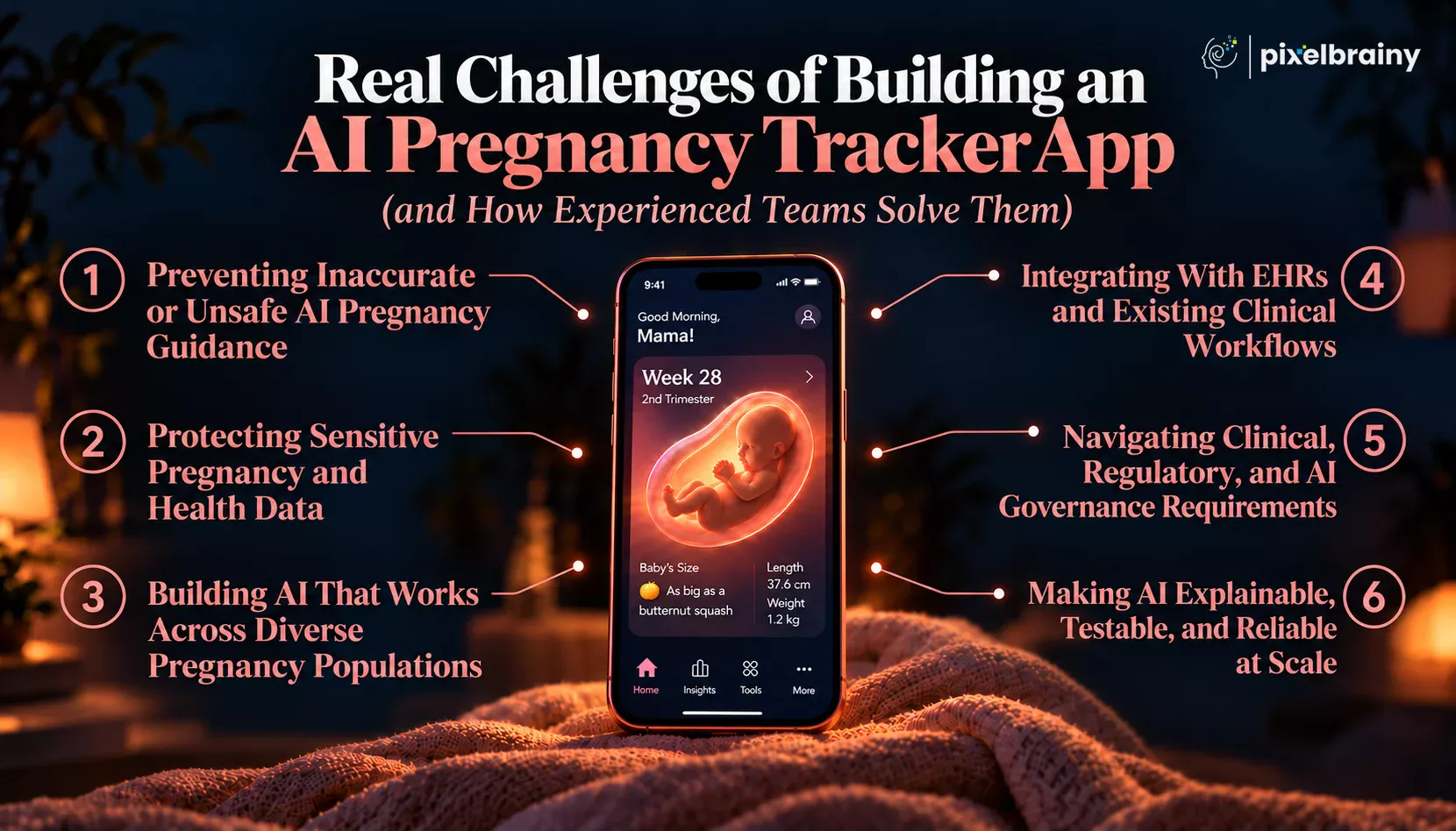
The challenge: Generative AI can produce inaccurate, incomplete, or overly confident answers. In pregnancy care, incorrect guidance about symptoms, medications, bleeding, hypertension, fetal movement, or emergency warning signs can create significant safety concerns.
How experienced teams solve it: They restrict AI to clearly defined use cases, ground responses in clinically reviewed knowledge through RAG, implement safety guardrails, test high-risk prompts, and establish deterministic escalation rules for concerning symptoms. Human clinical oversight remains essential for high-risk decisions.
NIST's AI Risk Management Framework emphasizes validity, reliability, safety, transparency, explainability, privacy, and management of harmful bias as characteristics of trustworthy AI systems.
The challenge: AI pregnancy tracker app development can involve symptoms, pregnancy history, medications, blood pressure, glucose readings, conversations, EHR information, and other sensitive data. A poorly designed data architecture can expose users and healthcare organizations to substantial privacy and security risks.
How experienced teams solve it: They apply privacy-by-design principles, encryption, role-based access controls, MFA, audit logging, consent management, secure cloud configurations, data minimization, and appropriate retention policies. For covered entities and business associates, HIPAA requires safeguards protecting the confidentiality, integrity, and availability of electronic protected health information.
The challenge: An AI model that performs well for one patient population may not perform equally well across different ages, clinical histories, languages, geographic areas, socioeconomic groups, or high-risk pregnancy populations. Poorly representative data can introduce performance disparities.
How experienced teams solve it: Teams evaluate training and validation data for representation, measure model performance across relevant subgroups, conduct bias testing, involve diverse clinical populations during validation, and continuously monitor performance after deployment.
NIST specifically identifies harmful bias and subgroup performance disparities as risks associated with generative AI systems.
For organizations developing an AI pregnancy monitoring app, fairness testing should therefore be part of model evaluation rather than an afterthought.
The challenge: An AI pregnancy monitoring app becomes harder to implement when patient-generated information needs to flow into an EHR, clinician dashboard, remote-monitoring program, or care-management workflow.
Simply connecting an API is not enough. Teams must determine what data should move between systems, where it should appear, who can access it, and what happens when an alert requires clinical attention.
How experienced teams solve it: They design interoperability around standards such as FHIR and existing clinical workflows, establish clear data mappings, validate authentication and authorization, and test integration scenarios before large-scale deployment.
They also design clinician alerts carefully so the application adds useful information without overwhelming care teams with unnecessary notifications.
The challenge: The regulatory position of an AI pregnancy application depends partly on what the software is intended to do. An educational pregnancy assistant and software intended to perform clinical decision support or patient-specific medical functions can raise very different regulatory considerations.
How experienced teams solve it: They define intended use early, document AI functions, establish clinical governance, maintain model and data documentation, and assess regulatory requirements before implementing high-risk functionality.
The FDA's current Clinical Decision Support Software guidance distinguishes certain non-device CDS functions from software functions that may remain subject to medical-device oversight, including relevant patient or caregiver-facing functions.
For AI pregnancy tracker app development, regulatory assessment should therefore begin during product definition rather than immediately before launch.
The challenge: A pregnancy platform may work during an MVP pilot but behave differently when thousands of users interact with it across different pregnancy stages, symptoms, devices, and clinical situations. AI models can also change as prompts, knowledge bases, data, or underlying models are updated.
How experienced teams solve it: They establish AI evaluation frameworks, version models and prompts, maintain audit trails, monitor response quality, test clinical scenarios, measure false-positive and false-negative alerts, and implement controlled release procedures.
Transparency becomes particularly important for clinical AI. ONC's HTI-1 framework introduced transparency requirements for predictive algorithms within certified health IT so clinical users can assess factors including fairness, validity, effectiveness, appropriateness, and safety.
For teams asking how to overcome challenges in AI pregnancy tracker app development, the answer is not simply better technology. Successful development requires AI engineering, healthcare security, clinical governance, interoperability, validation, and continuous monitoring to work together from the beginning.
From this point, it is important to identify the right development partner that can translate a maternal-health concept into a secure, scalable, and commercially viable digital product. PixelBrainy as a leading AI app development company brings together AI engineering, healthcare software development, product strategy, data architecture, and user experience to support organizations creating intelligent pregnancy platforms.
For a pharmaceutical company asking, “Our pharmaceutical company develops supplements and medications for pregnancy and postpartum care and we want to build an AI pregnancy tracker app that provides evidence-based pregnancy nutrition and supplement guidance to pregnant women while generating real-world evidence data on supplement adherence and maternal health outcomes that supports our clinical research and regulatory strategy. Which development companies have built AI pregnancy apps for pharmaceutical companies with real-world evidence generation and clinical trial integration capability?”, the development partner needs capabilities that extend beyond standard mobile app development.
PixelBrainy begins by defining the product's intended users, clinical objectives, evidence requirements, business model, data requirements, and AI responsibilities. This helps determine whether the application should focus on patient education, supplement adherence, clinical research, real-world evidence, postpartum support, or a combination of these areas.
This foundation supports AI pregnancy tracker app development services that are aligned with both commercial objectives and healthcare requirements.
The platform can combine curated clinical and nutritional knowledge with AI-powered personalization. Instead of providing generic supplement information, the application can deliver pregnancy-stage-specific educational content while keeping medical and nutritional claims within the organization's approved evidence framework.
AI can also support conversational interactions, adherence reminders, personalized educational journeys, and structured patient feedback.
For pharmaceutical and life sciences organizations, data collection is a core product requirement rather than an additional analytics feature.
PixelBrainy can architect workflows for informed consent, longitudinal data collection, supplement adherence tracking, patient-reported outcomes, symptom information, and relevant maternal-health outcomes. The platform can also structure data for research analysis and integration with appropriate clinical research workflows.
This approach allows organizations to create AI pregnancy tracker app experiences that support both patient engagement and evidence-generation objectives while maintaining appropriate data governance.
PixelBrainy worked on a confidential healthcare engagement involving a digital platform designed to support patient education, structured health-data collection, and longitudinal engagement around a healthcare product.
The solution incorporated secure user onboarding, personalized educational content, adherence tracking, data capture workflows, analytics, role-based access, and an AI-assisted interaction layer. The architecture was designed to support longitudinal datasets that could be analyzed by authorized stakeholders for healthcare and research purposes.
Because the client and study details are confidential, specific company names, product information, patient volumes, and research outcomes cannot be disclosed.
Whether an organization wants to develop AI pregnancy tracker app capabilities for consumer use, pharmaceutical research, or clinical programs, PixelBrainy can support the product lifecycle from discovery and architecture through AI implementation, healthcare integrations, testing, deployment, and ongoing optimization.
The focus is to build AI pregnancy tracker app solutions that balance patient experience, AI capabilities, security, clinical responsibility, data governance, and commercial objectives.
Ready to turn your maternal-health concept into a production-ready AI platform? Connect with PixelBrainy to discuss your requirements.
An AI pregnancy tracker app can become much more than a digital pregnancy calendar when it combines personalized guidance, symptom tracking, conversational AI, remote monitoring, secure health-data management, and appropriate clinical workflows. As this guide has covered, successful AI pregnancy tracker app development starts with a clearly defined healthcare or consumer use case, followed by thoughtful product design, the right technology stack, validated AI capabilities, healthcare integrations, security, and continuous monitoring.
For healthcare providers, insurers, employers, pharmaceutical companies, and women's health startups, the opportunity is to develop an AI pregnancy tracker app around a specific population and measurable outcome rather than simply adding AI to an existing tracker. The development budget, business model, features, and architecture should all support that objective.
The strongest products will combine intelligent automation with evidence-based information and appropriate human oversight, creating meaningful value for both pregnant users and healthcare organizations.
Book an appointment with PixelBrainy to discuss your AI pregnancy tracker app idea and turn it into a scalable healthcare product.
Yes. An AI pregnancy tracker app can personalize content based on gestational age, reported symptoms, pregnancy history, preferences, health measurements, and user interactions. A properly designed system can use these inputs to deliver relevant education, reminders, and guidance instead of showing identical content to every user.
An AI pregnancy monitoring app can connect patients across multiple locations through centralized pregnancy tracking, symptom reporting, educational content, care navigation, and clinician workflows. With appropriate EHR integration, authorized providers can access relevant patient information and receive predefined alerts without requiring patients to repeat the same information at every appointment.
Yes. AI pregnancy tracker app development can be tailored for populations such as patients with gestational diabetes, hypertension, previous preterm birth, multiple gestation, or other clinically defined risk factors. Advanced capabilities can support remote monitoring, risk assessment, personalized education, and escalation workflows, provided these functions are clinically validated and appropriately supervised.
Yes. A pharmaceutical-focused platform can collect consented longitudinal information such as supplement or medication adherence, patient-reported outcomes, symptoms, treatment experiences, and relevant maternal-health data. Developing an AI pregnancy tracker app for real-world evidence requires careful consent management, data governance, privacy controls, research workflows, and appropriate separation between patient engagement and evidence-generation activities.
An AI pregnancy tracker app can use healthcare interoperability standards and Epic-supported integration technologies such as FHIR and SMART on FHIR. Depending on the intended workflow, the application can exchange approved patient information, support authorized EHR launches, and connect relevant data with clinical workflows. The exact integration scope depends on the health system's Epic configuration and use case.
Beyond basic tracking, organizations can consider conversational AI, personalized pregnancy education, symptom interpretation, longitudinal trend analysis, risk-support models, intelligent alerts, AI-generated patient summaries, and personalized care-plan support. The appropriate AI pregnancy monitoring app development strategy should prioritize clinically useful capabilities rather than adding AI features simply for differentiation.
An insurer can establish measurable outcomes before deployment, such as member engagement, prenatal-care adherence, remote-monitoring participation, avoidable emergency department utilization, maternity-program enrollment, and agreed clinical outcomes. AI pregnancy tracker app development for payers can also include claims analytics and reporting infrastructure to compare program participants with appropriate populations and support actuarial evaluation.
Before hiring a development partner, evaluate its experience with healthcare AI, mobile applications, EHR and FHIR integrations, healthcare security, clinical workflows, data governance, AI validation, and scalable cloud architecture. Teams should also be able to explain how they will build an AI pregnancy tracker app safely, validate its AI behavior, and support the product after launch.

About The Author
Sagar Bhatnagar
Sagar Sahay Bhatnagar brings over a decade of IT industry experience to his role as Marketing Head at PixelBrainy. He's known for his knack in devising creative marketing strategies that boost brand visibility and market influence. Sagar's strategic thinking, coupled with his innovative vision and focus on results, sets him apart. His track record of successful campaigns proves his ability to utilize digital platforms effectively for impactful marketing efforts. With a genuine passion for both technology and marketing, Sagar continuously pushes PixelBrainy's marketing initiatives to greater success.

Working with PixelBrainy has been a great experience. They took our vision for an AI-powered platform and turned it into a fully functional product. What impressed me most was their strong understanding of both design and development, and their ability to handle complex requirements with ease. The team was responsive, cooperative, and always open to feedback. They kept things organized, communicated clearly, and delivered quality work on time. I highly recommend PixelBrainy to anyone looking for a skilled and reliable development partner.

Working with the PixelBrainy team has been a highly positive experience. They understand the design requirements and create beautiful UX elements to meet the application needs. The dev team did an excellent job bringing my vision to life. We discussed usability and flow. Sagar worked with his team to design the database and begin coding. Working with Sagar was easy. He has the knowledge to create robust apps, including multi-language support, Google and Apple ID login options, Ad-enabled integrations, Stripe payment processing, and a Web Admin site for maintaining support data. I'm extremely satisfied with the services provided, the quality of the final product, and the professionalism of the entire process. I highly recommend them for Android and iOS Mobile Application Design and Development.

Great experience working with them. Had a lot of feedback and I found that unlike most contractors they were bugging me for updates instead of the other way around. They were extremely time conscience and great at communicating! All work was done extremely high quality and if not on time, early! They were always proactive when it comes to communication and the work is great/above par always. Very flexible and a great team to work with! Goes above and beyond to present us with multiple options and always provides quality. Amazing work per usual with Chitra. If you have UI/UX or branding design needs I recommend you go to them! Will likely work with them in the future as well, definitely recommended!

PixelBrainy is a joy to work with and is a great partner when thinking through branding, logo, and website layout. I appreciate that they spend time going into the "why" behind their decisions to help inform me and others about industry best practices and their expertise.

I hired them to design our software apps. Things I really like about them are excellent communication skills, they answer all project suggestions and collaborate right away, and their input on design and colors is amazing. This project was complex and needed patience and creativity. The team is amazing to do business with. I will be using them long-term. Glad to see there are some good people out there. I was afraid to try and outsource my project to someone but I am glad I met them! I really can't say enough. They went above and beyond on this project. I am very happy with everything they have done to make my business stand out from the competition.

It was great working with PixelBrainy and the team. They were very responsive and really owned the project. We'll definitely work with them again!

I recently worked with the PixelBrainy team on a project and I was blown away by their communication skills. They were prompt, clear, and articulate in all of our interactions. They listened and provided valuable feedback and suggestions to help make the project a success. They also kept me updated throughout the entire process, which made the experience stress-free and enjoyable.

PixelBrainy is very good at what it does. The team also presents themselves very professionally and takes care of their side of things very well. I could fully trust them taking up the design work in a timely and organised manner and their attention to detail saved us lots of effort and time. This particular project was quite intense and the team showed that they function very well under pressure. Very much looking forward to working with her again!

It's always an absolute pleasure working with them. They completed all of my requests quickly and followed every note I had for them to a T, which made our process go smoothly from start to finish. Everything was completed fast and following all of the guidelines. And I would recommend their services to anyone. If you need any design work done in the future, PixelBrainy should be your first call!

They took ownership of our requirements and designed and proposed multiple beautiful variants. The team is self-motivated, requires minimum supervision, committed to see-through designs with quality and delivering them on time. We would definitely love to work with PixelBrainy again when we have any requirements.

PixelBrainy was a big help with our SaaS application. We've been hard at work with a new UI/UX and they provided a lot of help with the designs. If you're looking for assistance with your website, software, or mobile application designs, PixelBrainy and the team is a great recommendation.

PixelBrainy designers are amazing. They are responsive, talented, and always willing to help craft the design until it matches your vision. I would recommend them and plan to continue them for my future projects and more!!!

They were awesome! Did a good job fast, and good communication. Will work with them again. Thank you

Creative, detail-oriented, and talented designers who take direction well and implement changes quickly and accurately. They consistently over-delivered for us.

PixelBrainy team is very talented and creative. Great designers and a pleasure to work with. PixelBrainy is an excellent communicator and I look forward to working with them again.

PixelBrainy has a very talented design team. Their work is excellent and they are very responsive. I enjoy working with them and hope to continue on all of our future projects.


Transform your ideas into reality with us.
Across these industries, each engagement brings unique challenges, from early-stage product development to scaling complex systems, helping us build a practical understanding of real-world product environments.