
 AI Summary Powered by PixelBrainy
What happens when a worried parent notices unusual symptoms in their child at 2 AM but cannot immediately reach a doctor and has no reliable way to determine whether the situation is serious?
This scenario reflects a growing challenge across the healthcare industry. Hospitals are overwhelmed by rising patient volumes, healthcare professionals face increasing workloads, and patients often struggle to find trustworthy medical guidance when they need it most. Many traditional symptom assessment tools still rely on outdated rule-based systems that can produce inaccurate recommendations. In some cases, these tools fail to account for patient history, symptom complexity, or age-specific clinical factors, leaving patients with more questions than answers and creating additional pressure on healthcare providers.
As a healthcare business owner, hospital administrator, or health-tech founder, you are likely witnessing the increasing demand for smarter digital healthcare solutions. Patients now expect immediate access to personalized health insights through mobile devices. This shift is driving significant interest in AI symptom checker app development, as organizations look for ways to improve patient engagement, streamline care delivery, and enhance healthcare accessibility.
The demand becomes even more specialized when pediatric care is involved. Many healthcare innovators ask: "I want to build an AI symptom checker app for pediatric patients, but most vendors only have experience with adult-focused solutions. Can a development partner understand pediatric clinical pathways and the additional safety requirements involved?" This concern highlights the growing need for specialized healthcare technology expertise.
Whether you are exploring how to develop an AI symptom checker app for a specific patient population or evaluating opportunities in symptom checker mobile app development integrating AI, understanding the complete development landscape is essential.
In this guide, you will discover the architecture, features, technology stack, development process of AI symptom checker app, costs, compliance requirements, and best practices needed to successfully build and launch a modern AI-powered symptom checker solution.
If you're asking, "What is an AI symptom checker app?", the simplest answer is that it is a healthcare application that uses artificial intelligence to analyze symptoms, ask relevant follow-up questions, assess potential health risks, and guide patients toward the most appropriate level of care.
Unlike a basic health search tool that simply displays articles or generic medical information, an AI medical diagnosis app actively interacts with users to understand their unique situation. It does not just search for symptoms. It evaluates symptom combinations, patient responses, medical history, and risk factors to provide personalized recommendations.
Many people also ask, "Is an AI symptom checker the same as a chatbot?" The answer is no. While some symptom checkers use conversational interfaces, they are much more clinically focused than a standard chatbot. Their purpose is to support symptom assessment, patient triage, and healthcare decision-making.
The biggest difference between rule-based and AI symptom checker platforms lies in how they process information.
| Rule-Based Symptom Checker | AI-Powered Symptom Checker |
| Uses fixed decision trees | Learns from large healthcare datasets |
| Follows predefined rules | Adapts using machine learning models |
| Limited personalization | Personalized symptom assessment |
| Often misses complex cases | Identifies patterns across multiple symptoms |
| Static recommendations | Dynamic risk-based recommendations |
For example, a patient enters "fever and chest tightness" into an AI-powered patient triage app. Instead of immediately suggesting possible conditions, the system asks follow-up questions about age, symptom duration, breathing difficulty, medical history, and severity. Based on the responses, it may recommend urgent care, schedule a telehealth consultation, or suggest monitoring symptoms at home.
Modern symptom checkers typically fall into three categories:
Several technologies power these solutions. Natural Language Processing (NLP) helps an NLP symptom analysis app understand symptoms written in everyday language. Machine Learning (ML) identifies patterns and improves prediction accuracy over time. ICD-10 is a globally recognized system for classifying diseases and medical conditions. SNOMED CT is a standardized clinical terminology that helps healthcare systems interpret and exchange medical information consistently.
Together, these technologies transform symptom checkers from simple search tools into intelligent healthcare platforms capable of delivering more accurate, personalized, and clinically relevant guidance.
Also Read: AI Medical Diagnosis Chatbot Development: Features and Cost
If you are considering AI symptom checker app development, one question likely comes first: Is there enough market demand to justify the investment? The answer is increasingly clear. Healthcare organizations worldwide are investing heavily in AI-driven patient engagement and symptom assessment platforms because they address a growing need for accessible, scalable, and cost-efficient healthcare services.
The global healthcare industry is experiencing a major digital transformation, and symptom assessment technology is becoming a critical component of that shift. According to MarketsandMarkets, the global AI in healthcare market was projected to grow from $20.9 billion in 2024 to $148.4 billion by 2029, reflecting a CAGR of 48.1%.
In addition, Grand View Research estimates that the global AI healthcare market will continue expanding rapidly as healthcare providers, insurers, and digital health companies accelerate AI adoption.
The symptom checker segment itself is also growing quickly. DataIntelo reports that the global Symptom Checker Platforms market was valued at approximately $1.23 billion in 2024 and is expected to exceed $5.12 billion by 2033.
These figures demonstrate why investors, healthcare executives, and entrepreneurs increasingly view the AI symptom checker app market size 2026 and beyond as a significant opportunity.
The demand is no longer limited to technology startups. Today, several healthcare sectors are actively funding and deploying AI-powered symptom assessment platforms.
These include:
For many organizations, symptom checkers serve as the first point of interaction between patients and healthcare providers. This makes them valuable tools for improving care navigation, patient engagement, and operational efficiency.
Many decision-makers ask:
"We are a health insurance company. Is building an AI symptom checker app actually worth the investment, and what kind of return should we expect?"
The answer depends on the organization's goals, but the financial case is becoming increasingly compelling.
An AI patient triage app ROI calculation often extends beyond direct revenue generation. These platforms help healthcare organizations automate initial symptom assessments, guide patients toward appropriate care pathways, and reduce the volume of unnecessary consultations.
For hospitals, this can help reduce pressure on emergency departments and call centers.
For insurance providers, symptom checkers can encourage members to choose appropriate care options instead of automatically seeking expensive emergency services.
For telehealth providers, AI-powered assessments can pre-screen patients before consultations, allowing healthcare professionals to focus on higher-value clinical interactions.
As healthcare costs continue to rise globally, organizations are looking for scalable solutions that can support thousands of patient interactions simultaneously without requiring proportional increases in staffing.
A major reason investors and healthcare companies are exploring this space is the flexibility of the AI symptom checker business model. These platforms can generate revenue through multiple channels depending on the target market and deployment strategy.
In this model, the symptom checker platform is licensed directly to hospitals, clinics, healthcare groups, and provider networks. Organizations typically pay recurring monthly or annual licensing fees based on user volume, patient interactions, or feature access. This model creates predictable recurring revenue while allowing healthcare providers to offer advanced digital services without building the technology internally.
A consumer-focused platform may provide basic symptom assessments at no cost while charging users for premium services. These services can include advanced health reports, physician consultations, personalized health insights, specialist recommendations, or ongoing symptom monitoring programs. This approach helps attract a large user base while creating opportunities for upselling premium healthcare services.
Many symptom checker applications integrate directly with virtual healthcare platforms. After completing a symptom assessment, users can schedule appointments with physicians or specialists. Platform owners earn referral fees, booking commissions, or revenue-sharing payments from telemedicine providers for each successful consultation generated through the application.
Healthcare organizations increasingly seek customized digital health solutions under their own brand. A white-label model allows hospitals, insurers, and healthcare startups to launch branded symptom checker applications without investing in full-scale development. Vendors generate recurring SaaS revenue through subscription plans, implementation fees, customization services, and ongoing support contracts.
Large healthcare systems, insurance companies, pharmaceutical firms, and government healthcare organizations often require highly customized enterprise solutions. These deployments may include proprietary clinical workflows, EHR integrations, analytics dashboards, multilingual support, and advanced compliance controls. Enterprise contracts typically generate the highest revenue per customer and often include long-term licensing, maintenance, and consulting agreements.
Organizations most likely to benefit from investing in AI symptom checker technology include:
If you are preparing an investor pitch, evaluating digital transformation initiatives, or exploring new healthcare technology opportunities, the market data clearly indicates that demand for intelligent symptom assessment platforms continues to grow. The combination of strong market expansion, increasing healthcare digitization, and multiple revenue-generation opportunities makes AI symptom checker app development one of the most promising segments within modern health technology.
Also Read: AI Healthcare Triage Software Development: A Complete Guide
Many healthcare organizations evaluating AI symptom checker app architecture receive conflicting recommendations from vendors. One proposes a rule-based system, another recommends a fully machine learning approach, while a third suggests a hybrid architecture. The reality is that a production-grade symptom checker requires multiple interconnected layers working together to deliver accurate, secure, and clinically reliable outcomes.
User Interface → NLP & Entity Extraction → Inference & Reasoning Engine → Medical Knowledge Base → Compliance & Security Layer → Output & Care Routing Layer
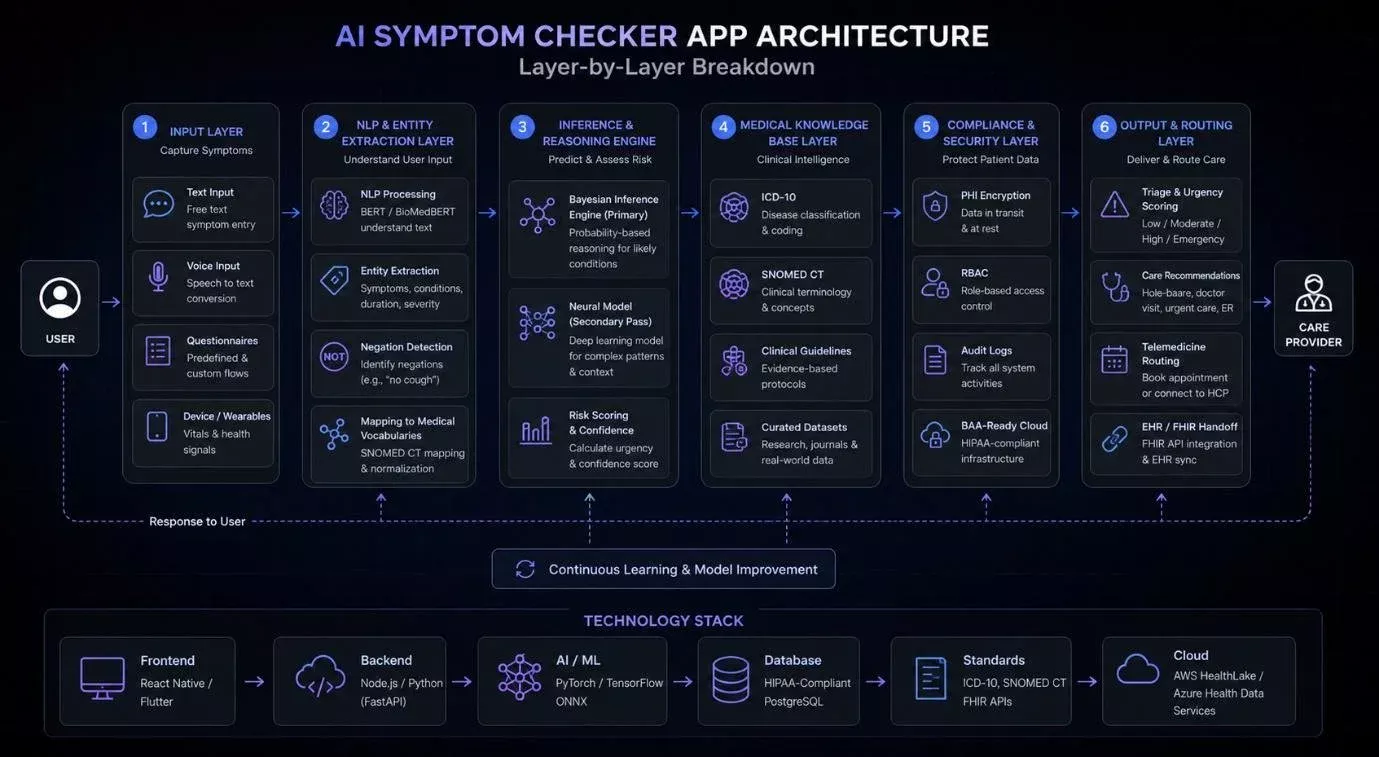
This layer captures patient information through symptom forms, conversational chat interfaces, voice input, and questionnaires. Users can describe symptoms naturally, such as "I have chest tightness and fever."
Without this layer, patients would be limited to selecting predefined symptoms, resulting in poor user experience and incomplete clinical information.
This is the core NLP pipeline for symptom checker systems. Models such as BERT and BioMedBERT analyze patient language and extract clinical entities.
For example:
"I don't have shortness of breath but I do have chest pain."
The system identifies symptoms, detects negation, and maps terms to standardized medical vocabularies like SNOMED CT.
Without this layer, symptom interpretation becomes inconsistent and inaccurate.
This layer powers the clinical decision-making process.
A Bayesian model AI symptom checker uses probability-based reasoning to estimate the likelihood of different conditions based on symptom combinations. A secondary neural network model evaluates more complex symptom patterns and contextual relationships.
This hybrid approach is superior to purely rule-based systems because it handles uncertainty more effectively. It is also safer than relying entirely on large language models, which can occasionally generate unsupported clinical conclusions.
The reasoning engine requires trusted medical data sources.
Common components include:
Without a structured knowledge base, recommendations cannot be clinically grounded.
A HIPAA-compliant AI healthcare app architecture must protect sensitive patient data at every stage.
This layer typically includes:
Without strong security controls, regulatory compliance becomes impossible.
After symptom analysis, the system generates recommendations and next steps.
Possible outcomes include:
For organizations using Epic, Cerner, or other healthcare systems, this layer often includes FHIR API integration symptom checker capabilities that enable seamless patient data exchange and EHR synchronization.
Without proper routing, valuable symptom insights never reach the healthcare providers responsible for care delivery.
As healthcare organizations continue investing in digital transformation, AI-powered symptom assessment platforms are becoming far more than patient convenience tools. They are helping hospitals, insurers, clinics, and telehealth providers improve operational efficiency, optimize resource allocation, and deliver better patient experiences at scale.
Whether you plan to develop an AI symptom tracking app for chronic care management or launch a comprehensive digital health platform, understanding the business and clinical value of these solutions is essential. Below are the most significant benefits organizations can expect from AI symptom checker app development.
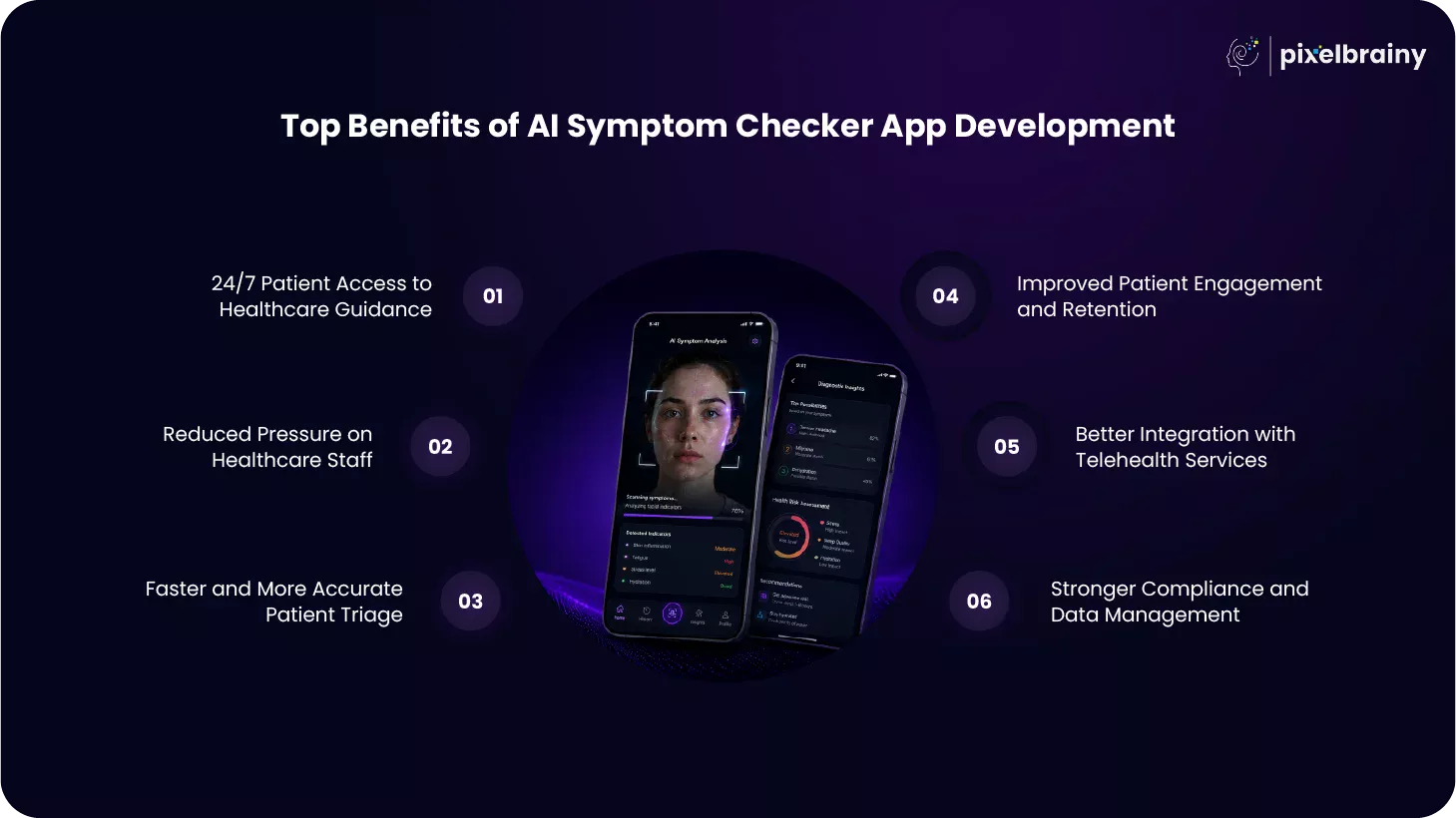
One of the biggest advantages of AI symptom checkers is their ability to provide round-the-clock support. Patients can assess symptoms anytime without waiting for clinic hours or physician availability. This improves accessibility and helps users make informed decisions when immediate medical guidance is unavailable.
Hospitals and clinics often spend considerable time handling routine symptom-related inquiries. AI symptom checkers can automate initial assessments and patient screening, allowing healthcare professionals to focus on more complex cases. This helps improve workforce productivity while reducing administrative burdens.
AI-powered systems can evaluate symptoms, identify risk levels, and recommend appropriate care pathways within seconds. Patients receive timely guidance about whether they should seek emergency care, schedule a physician visit, use telehealth services, or monitor symptoms at home.
Modern patients expect digital-first healthcare experiences. Interactive symptom assessment tools increase engagement by providing personalized recommendations, follow-up questions, and health insights. This creates stronger patient relationships and encourages ongoing use of healthcare services.
Organizations that build a telemedicine-integrated AI symptom checker app can create a seamless patient journey from symptom assessment to virtual consultation. This reduces friction, increases appointment conversions, and improves overall care coordination.
Healthcare providers must manage sensitive patient information responsibly. Organizations that create a GDPR-compliant AI healthcare symptom app or make a HIPAA and FDA-compliant AI symptom checker app for clinics can strengthen patient trust while meeting regulatory requirements and maintaining secure healthcare operations.
Ultimately, AI symptom checker app development enables healthcare organizations to deliver smarter, faster, and more scalable patient care while preparing for the future of digital healthcare.
Also Read: Top 12 AI Patient Portal Development Companies in USA
The success of an AI symptom checker does not depend solely on its diagnostic accuracy. It depends on how effectively the platform collects patient information, analyzes symptoms, integrates with healthcare systems, and guides users toward appropriate care. This is why feature planning plays a critical role during development.
Many healthcare organizations ask questions like: "Our clinic needs a symptom checker with voice input for elderly patients who cannot type. Is that possible?" or "We want multilingual support and EHR integration, but what should be included in the first version?" The answer is yes, these capabilities are achievable. However, not every feature should be included in the initial release.
When evaluating AI symptom checker app features, it is best to divide functionality into two categories: core features required for an MVP and advanced features that can be added as the platform scales.
These are the must-have features for development of AI symptom checker app projects. Without them, the platform cannot perform reliable symptom assessment or patient triage.
| Core Feature | Purpose | Business Value |
| User Registration & Authentication | Secure patient access | Protects patient data and enables personalized assessments |
| Symptom Input Interface | Allows users to enter symptoms through forms or chat | Creates the starting point for assessment |
| AI Conversational Assistant | Guides users through symptom reporting | Improves engagement and data accuracy |
| NLP-Based Symptom Analysis | Understands symptoms entered in natural language | Converts patient language into structured medical data |
| Dynamic Follow-Up Questions | Collects additional context based on responses | Improves diagnostic accuracy |
| Symptom Severity Assessment | Evaluates urgency levels | Supports safe patient triage |
| Risk Scoring Engine | Estimates likelihood of potential conditions | Enables informed healthcare recommendations |
| Care Recommendation Module | Directs patients to appropriate care pathways | Reduces unnecessary appointments |
| Symptom History Tracking | Stores previous assessments | Supports continuity of care |
| Admin Dashboard | Allows healthcare teams to monitor activity | Improves operational visibility |
Once the MVP proves successful, advanced capabilities can significantly enhance patient experience, provider workflows, and healthcare outcomes.
| Advanced Feature | Purpose | Business Value |
| Voice Input & Speech Recognition | Allows patients to speak symptoms instead of typing | Improves accessibility for elderly users |
| Multilingual Support | Supports multiple languages | Expands market reach and inclusivity |
| Telemedicine Appointment Booking | Connects users directly with providers | Increases consultation conversions |
| Video Consultation Integration | Enables seamless virtual care | Improves patient convenience |
| Wearable Device Integration | Imports health data from connected devices | Provides richer clinical context |
| Predictive Health Monitoring | Identifies symptom trends over time | Supports proactive healthcare management |
| Provider Clinical Dashboard | Gives clinicians deeper patient insights | Improves care coordination |
| AI Health Insights & Reports | Generates personalized recommendations | Enhances patient engagement |
| Real-Time Notifications | Sends reminders and alerts | Improves treatment adherence |
| Population Health Analytics | Tracks trends across patient groups | Supports healthcare decision-making |
If you are launching your first version, focus on:
These features provide the foundation needed to validate the product while keeping development costs manageable.
After gaining user traction, consider adding:
For healthcare providers planning FHIR EHR integration symptom checker application development, EHR connectivity should typically be implemented after the core assessment engine has been validated. This ensures resources are focused first on clinical accuracy and user adoption before investing in complex healthcare system integrations.
The strongest AI symptom checker platforms are not built by adding every feature at once, but by launching with a focused core feature set and expanding strategically based on patient, provider, and business needs.
Many healthcare organizations start with a simple question: "Can we launch our AI symptom checker within six months?" Others wonder whether they should hire an internal team or partner with an external vendor. Regardless of the approach, understanding the complete AI symptom checker app development process is critical for avoiding delays, compliance issues, and costly rework.
The reality is that successful symptom checker platforms are not built by simply integrating an AI model into a mobile application. They require clinical expertise, healthcare data, regulatory planning, AI engineering, and extensive testing. If you want to create an AI symptom checker from scratch, the following roadmap provides a realistic step-by-step development journey.
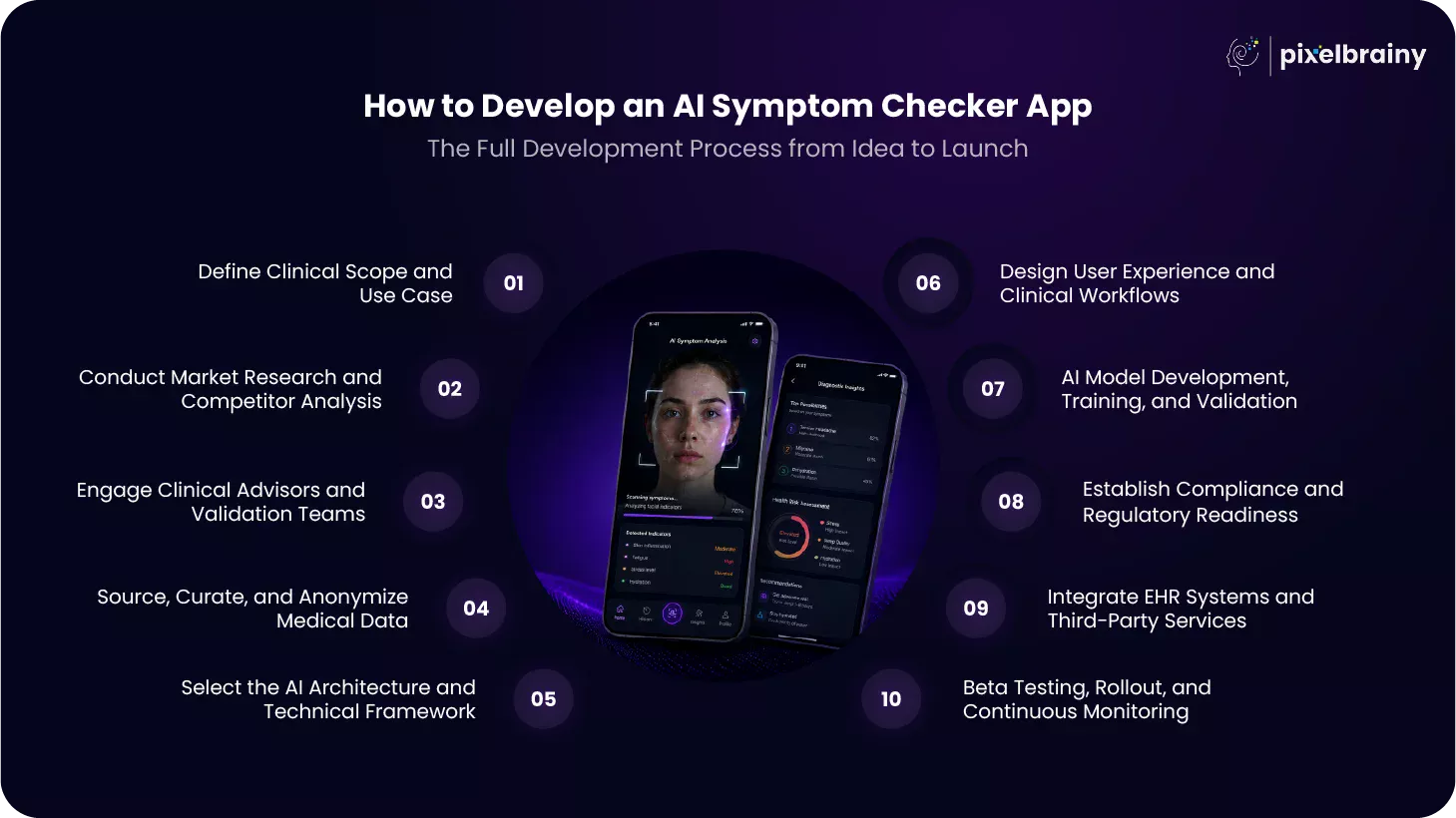
The first step is deciding exactly what the application will do.
Will it function as a triage tool, a diagnostic support system, a chronic disease monitoring platform, or a pediatric symptom assessment solution?
This phase is typically led by product managers, healthcare stakeholders, and clinical consultants.
Timeline: 1 to 2 weeks
If skipped, teams often build overly complex products with unclear objectives, resulting in scope creep and budget overruns.
Before development begins, evaluate existing symptom checker solutions, identify market gaps, and understand user expectations.
This stage involves product strategists, business analysts, and healthcare researchers.
Timeline: 2 to 3 weeks
Skipping this step increases the risk of developing a product that lacks differentiation or fails to address actual market needs.
Healthcare software requires clinical oversight from the beginning.
Physicians, specialists, medical researchers, and healthcare compliance experts should help define symptom pathways, risk models, and triage logic.
Timeline: 2 to 4 weeks
Without clinical validation, even technically advanced systems may generate unsafe recommendations.
The quality of an AI symptom checker depends heavily on the quality of its underlying data.
Development teams collect and organize clinical datasets, symptom-condition relationships, ICD-10 codes, SNOMED CT terminology, and evidence-based treatment pathways.
Healthcare data scientists and medical informatics specialists typically manage this stage.
Timeline: 4 to 8 weeks
Poor data quality often leads to inaccurate symptom assessments and unreliable model performance.
This stage determines how the intelligence layer will function.
Teams evaluate Bayesian reasoning models, NLP pipelines, machine learning frameworks, and healthcare-specific language models. Organizations also define backend architecture, infrastructure requirements, and integration strategies.
This phase often involves healthcare architects, AI engineers, and specialists providing AI consulting services.
Timeline: 2 to 4 weeks
Choosing the wrong architecture can limit scalability, reduce explainability, and create regulatory challenges later.
At this stage, the focus shifts toward creating intuitive patient experiences.
The product team develops conversational flows, symptom questionnaires, accessibility features, mobile screens, and provider dashboards. Elderly users, pediatric caregivers, and patients with disabilities should all be considered during design.
Many healthcare organizations collaborate with a specialized UI/UX design company to ensure usability and accessibility.
Timeline: 3 to 5 weeks
Skipping design validation often results in poor adoption rates and patient frustration.
This is where the actual intelligence is built.
Engineers develop NLP systems, train symptom assessment models, validate risk scoring algorithms, and measure performance against clinical benchmarks.
Healthcare AI specialists, machine learning engineers, and data scientists lead this phase, often supported by dedicated AI integration services teams.
Timeline: 6 to 12 weeks
Without extensive testing and validation, model accuracy and patient safety may be compromised.
Healthcare applications must meet strict regulatory requirements before launch.
This stage includes HIPAA controls, GDPR policies, audit logging, consent management, security testing, and evaluation of FDA Software as a Medical Device requirements where applicable.
Organizations focused on developing a HIPAA-compliant AI medical app for symptom checker should begin compliance planning early rather than treating it as a final-stage activity.
Timeline: 3 to 6 weeks
Failure to address compliance can delay product launches and expose organizations to legal risks.
Most enterprise healthcare deployments require interoperability.
Development teams integrate FHIR APIs, telemedicine platforms, appointment scheduling systems, payment gateways, identity providers, and EHR platforms such as Epic or Cerner.
This phase ensures that symptom assessments become part of existing clinical workflows.
Timeline: 3 to 8 weeks
Skipping integration planning often creates operational silos and manual workflows.
Before a full launch, the application should undergo controlled testing with real users.
Teams monitor system performance, collect patient feedback, identify workflow issues, and validate clinical outcomes. A phased rollout helps reduce deployment risks while allowing gradual scaling.
This stage is commonly treated as an advanced form of PoC development before broader commercialization.
Timeline: 4 to 8 weeks
Organizations that skip pilot testing often discover critical usability and performance issues after launch.
| Project Type | Estimated Timeline | Typical Scope |
| MVP Development | 4 to 6 Months | Core symptom assessment, NLP, triage engine, basic dashboard |
| Mid-Tier Platform | 6 to 9 Months | Telemedicine integration, multilingual support, patient history, analytics |
| Enterprise Solution | 9 to 18 Months | EHR integrations, advanced AI models, compliance certifications, population health features |
For startups seeking faster validation, MVP development is often the most practical approach. Larger healthcare providers and enterprises may require more extensive timelines due to integration, compliance, and scalability requirements.
Whether you choose an internal team, external specialists, or one of the top AI healthcare software development companies, the development journey remains largely the same. The difference lies in execution quality, healthcare expertise, and the ability to balance clinical accuracy, compliance, and user experience throughout the project lifecycle.
A successful AI symptom checker is not built in a single development phase but through a structured process that combines healthcare expertise, AI engineering, compliance readiness, and continuous clinical validation.
One of the first questions healthcare founders, hospitals, insurers, and digital health startups ask is: "How much does it cost to build an AI health app?" Unfortunately, there is no single answer. This is why one vendor may quote $30,000 while another proposes $300,000 for what appears to be the same project.
The reality is that the final AI symptom checker app development cost depends on several factors, including the sophistication of the AI engine, clinical validation requirements, compliance obligations, integrations, scalability needs, and long-term maintenance expectations.
A simple symptom checker that follows predefined rules is significantly cheaper than a platform capable of natural language understanding, probabilistic diagnosis, EHR integration, and enterprise-grade security.
When organizations compare proposals, they are often comparing completely different products.
A $30,000 project may include:
A $300,000 platform may include:
In other words, the quote difference usually reflects differences in functionality, compliance, scalability, and clinical reliability.
The easiest way to estimate your budget is by understanding which product category aligns with your business goals.
| Product Type | Estimated Cost Range | Typical Scope |
| Rule-Based Symptom Checker | $15,000 – $30,000 | Static questionnaires, decision trees, basic recommendations |
| AI-Powered MVP for Symptom Checker | $50,000 – $100,000 | NLP symptom analysis, triage engine, patient dashboard |
| ML-Based Diagnostic Platform for Symptom Checker | $50,000 – $150,000 | Machine learning models, symptom prediction, risk scoring |
| Advanced Healthcare Platform for Symptom Checker | $150,000 – $300,000 | Telemedicine, analytics, multilingual support, EHR connectivity |
| Enterprise AI Symptom Checker | $200,000 – $500,000+ | Advanced AI, compliance frameworks, healthcare integrations, large-scale deployment |
This table represents a realistic view of AI symptom checker app cost development 2026 based on current healthcare software development trends.
The most accurate budgeting approach is to evaluate individual components separately.
| Development Component | Estimated Cost Range |
| Product Discovery & Planning | $5,000 – $20,000 |
| UI/UX Design | $8,000 – $30,000 |
| Backend Development | $15,000 – $80,000 |
| Mobile App Development | $15,000 – $70,000 |
| NLP Layer Development | $40,000 – $100,000 |
| AI Model Development & Training | $25,000 – $120,000 |
| Clinical Validation | $10,000 – $50,000 |
| Compliance & Security Setup | $15,000 – $60,000 |
| EHR & FHIR Integration | $10,000 – $80,000 |
| QA & Testing | $10,000 – $40,000 |
| Deployment & DevOps | $5,000 – $25,000 |
This represents a detailed AI symptom checker app development cost breakdown that most vendors use when preparing proposals.
Many healthcare founders ask:
"We have a $75,000 budget. What can we realistically build?"
The answer depends on prioritization.
At this level, the focus is typically on launching a market-ready MVP.
Features usually include:
Features that usually wait for Version 2:
This budget enables a robust commercial healthcare product.
Features typically include:
This range is common for venture-backed startups and mid-sized healthcare providers.
Enterprise budgets support highly regulated healthcare deployments.
Capabilities may include:
This level is often required by hospitals, insurers, and healthcare enterprises.
Development geography can significantly affect pricing.
| Region | Average Hourly Rate | Relative Cost |
| United States | $120 – $250/hr | Highest |
| United Kingdom | $90 – $180/hr | High |
| Eastern Europe | $40 – $100/hr | Moderate |
| South Asia (India) | $25 – $70/hr | Most Cost Effective |
Many organizations choose Indian healthcare development teams because they can reduce overall project costs by approximately 40% to 60% while maintaining comparable technical capabilities and delivery quality.
The common assumption that lower development rates automatically result in lower quality is often inaccurate. Success depends far more on healthcare domain expertise, clinical understanding, compliance knowledge, and technical leadership than geographic location alone.
One area frequently underestimated during budgeting is compliance.
The cost to develop HIPAA-compliant AI app solutions includes much more than basic security features.
Typical compliance expenses include:
Depending on project scope, compliance implementation may add $15,000 to $60,000 or more to development costs.
Organizations operating internationally may also need GDPR compliance and FDA Software as a Medical Device assessments.
The initial development budget is only part of the total investment.
Recurring expenses often include:
| Ongoing Cost Category | Annual Cost Estimate |
| Cloud Infrastructure | $5,000 – $100,000+ |
| AI Model Retraining | $5,000 – $50,000 |
| Data Labeling & Annotation | $3,000 – $30,000 |
| Security Monitoring | $2,000 – $20,000 |
| Compliance Audits | $5,000 – $50,000 |
| Third-Party APIs | $1,000 – $25,000 |
| Bug Fixes & Improvements | Variable |
Healthcare AI platforms require continuous optimization, making post-launch investment an essential part of long-term success.
A practical rule used across healthcare software development is that annual maintenance typically equals 15% to 20% of the original build cost.
For example:
| Initial Build Cost | Estimated Annual Maintenance |
| $50,000 | $7,500 – $10,000 |
| $150,000 | $22,500 – $30,000 |
| $300,000 | $45,000 – $60,000 |
| $500,000 | $75,000 – $100,000 |
Maintenance includes security updates, compliance updates, cloud management, performance optimization, AI model improvements, and ongoing support.
The final AI symptom checker app development cost depends less on the number of screens in the application and more on the sophistication of the AI engine, healthcare integrations, compliance requirements, and clinical validation processes.
Organizations focused on launching quickly can build a capable MVP within the $50,000 to $100,000 range, while enterprise-grade healthcare platforms often require investments exceeding $300,000 to deliver the accuracy, scalability, and regulatory readiness expected in modern healthcare environments.
Building a modern AI symptom checker requires far more than a mobile app and an AI model. The platform must process natural language, understand medical terminology, perform symptom analysis, manage sensitive patient data, integrate with healthcare systems, and scale securely across thousands of users. Selecting the right technology stack directly impacts application performance, clinical accuracy, regulatory compliance, scalability, and long-term maintenance costs.
Whether you are developing a basic symptom triage solution or an enterprise-grade healthcare platform, every layer of the system requires specialized technologies. From frontend development frameworks and AI models to healthcare interoperability standards and cloud infrastructure, the technology stack serves as the foundation of a successful AI healthcare solution.
| Technology Layer | Recommended Tools & Technologies | Purpose |
| Frontend Development | React Native, Flutter | Cross-platform mobile application development |
| Web Dashboard | React.js, Next.js, Angular | Provider and admin portals |
| Backend Development | Node.js, Python (FastAPI, Django) | API development and business logic |
| AI & Machine Learning | PyTorch, TensorFlow, Scikit-learn | Model development and training |
| NLP Engine | BioMedBERT, ClinicalBERT, spaCy, Hugging Face Transformers | Symptom understanding and medical language processing |
| Database | PostgreSQL, MongoDB | Secure patient and application data storage |
| Healthcare Standards | ICD-10, SNOMED CT, LOINC | Medical coding and terminology mapping |
| Healthcare Interoperability | HL7 FHIR APIs | EHR and healthcare system integration |
| Cloud Infrastructure | AWS HealthLake, Azure Health Data Services, Google Cloud Healthcare API | Secure healthcare data management |
| Authentication & Security | OAuth 2.0, OpenID Connect, MFA | Secure user authentication |
| Compliance & Monitoring | AWS CloudTrail, Azure Monitor, Splunk | Audit logging and compliance tracking |
| DevOps & Deployment | Docker, Kubernetes, GitHub Actions | Automated deployment and scalability |
| Analytics & Reporting | Power BI, Tableau, Metabase | Operational and clinical insights |
| Telemedicine Integration | Twilio, Vonage, Agora | Video consultation capabilities |
The success of an AI symptom checker depends not only on the quality of its AI models but also on a carefully selected technology stack that ensures accuracy, security, scalability, interoperability, and long-term healthcare compliance.
For many healthcare organizations, compliance is not the most exciting part of product development, but it is often the factor that determines whether a symptom checker can legally launch, scale, and operate across multiple regions. Many founders focus on AI capabilities first and regulations later. Unfortunately, that approach often results in costly redesigns, delayed launches, and unexpected legal risks.
If you plan to launch an AI symptom checker in the United States, Europe, the Middle East, or Asia, understanding AI medical app regulatory requirements 2026 is just as important as selecting the right technology stack.
| Regulation | Applies To | Key Requirements | Potential Penalties |
| HIPAA (US) | Healthcare providers, insurers, healthcare vendors handling PHI | PHI encryption, audit logs, access controls, Business Associate Agreements | Up to $1.5M+ annually depending on violations |
| GDPR (EU) | Organizations processing EU citizen data | Consent management, data minimization, right-to-erasure, breach reporting | Up to €20M or 4% of global annual revenue |
| FDA SaMD (US) | AI software performing medical functions | Clinical validation, risk management, quality controls | Product recalls, warning letters, market restrictions |
| EU MDR | Medical software marketed in Europe | Clinical evidence, post-market surveillance, risk documentation | Market access restrictions and regulatory penalties |
| UAE PDPL | Organizations handling UAE resident data | Data protection controls, user consent, security measures | Financial penalties and enforcement actions |
| India DPDP Act | Organizations processing Indian personal data | User consent, secure processing, breach notification | Significant financial penalties for violations |
HIPAA-compliant AI symptom checker app development is mandatory if your application collects, stores, or processes Protected Health Information (PHI) in the United States.
Your application must include:
Many organizations seeking to build HIPAA-compliant AI healthcare app solutions begin security planning during architecture design rather than after development.
GDPR healthcare app compliance focuses heavily on user privacy and data ownership.
Unlike HIPAA, GDPR gives users significant control over their personal data, including:
For organizations launching in both the US and Europe, HIPAA and GDPR generally complement each other rather than conflict. The best approach is designing systems around the stricter requirement whenever possible.
Many founders ask whether their symptom checker qualifies as a medical device.
If the application provides clinical recommendations that influence diagnosis or treatment decisions, it may fall under FDA SaMD AI symptom checker regulations or require EU MDR compliance AI health app assessments.
A particularly important FDA concept is the Predetermined Change Control Plan (PCCP). This framework allows AI systems to evolve through machine learning updates while maintaining regulatory oversight. Instead of seeking approval for every model update, organizations can define approved modification procedures in advance.
One of the most expensive mistakes healthcare startups make is postponing compliance planning.
| Approach | Typical Outcome |
| Compliance-by-Design | Lower long-term costs, faster approvals, easier scaling |
| Compliance Added Later | Major redevelopment, delayed launches, higher legal risk |
Every production-grade AI symptom checker should include:
A common concern is: "What happens if the AI gives an incorrect recommendation and a patient delays treatment?"
Most healthcare companies reduce liability through a combination of clinical validation, risk-based triage systems, physician oversight where appropriate, regulatory compliance, documented disclaimers, quality assurance processes, and professional liability insurance. The goal is not to position the AI as an independent physician but as a decision-support and patient-guidance tool operating within clearly defined clinical boundaries.
Before launching your AI symptom checker app, make sure the following compliance requirements have been addressed:
Pro Tip: Treat this checklist as a pre-launch compliance audit. Every unchecked item can increase legal, operational, and regulatory risk after deployment.
The most successful AI symptom checker platforms treat compliance as a core product feature from day one, not as a regulatory task to address after development is complete.
Building an AI symptom checker is far more complex than developing a standard healthcare application. Beyond creating an intuitive user experience, organizations must ensure clinical accuracy, regulatory compliance, patient safety, healthcare interoperability, and long-term scalability. Even well-funded healthcare companies often encounter obstacles that can delay launches, increase costs, or impact patient trust.
Understanding these challenges before development begins can help you reduce risk, improve project outcomes, and accelerate time to market.
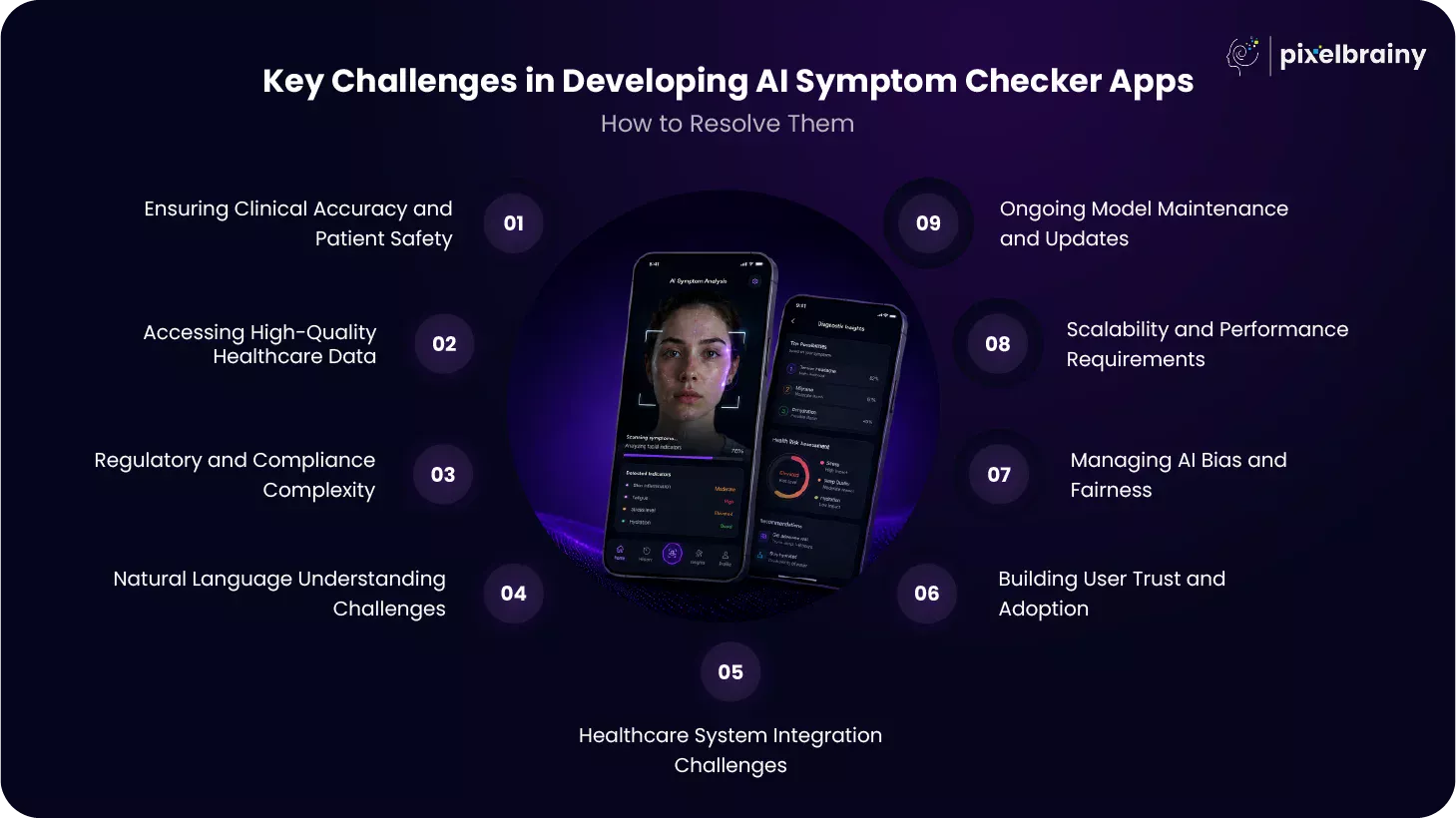
The biggest challenge in AI symptom checker development is delivering recommendations that are clinically reliable. Incorrect symptom assessments can lead to delayed treatment, unnecessary healthcare visits, or patient distrust.
Why It Happens:
How to Resolve It:
AI models are only as effective as the data used to train them. Healthcare data is often fragmented, inconsistent, expensive, or restricted due to privacy regulations.
Why It Happens:
How to Resolve It:
Healthcare regulations vary significantly across regions. A symptom checker launched in the United States may require different compliance controls than one deployed in Europe, the UAE, or India.
Why It Happens:
How to Resolve It:
Patients rarely describe symptoms using medical terminology. They often use vague, incomplete, or conversational language.
For example:
"I feel weird pressure in my chest and I'm kind of dizzy."
The system must accurately interpret these statements and map them to clinical concepts.
Why It Happens:
How to Resolve It:
Many symptom checker projects fail to achieve adoption because they operate independently from existing clinical workflows.
Why It Happens:
How to Resolve It:
Even a technically advanced symptom checker can fail if patients do not trust its recommendations.
Why It Happens:
How to Resolve It:
Healthcare AI models can unintentionally produce biased outcomes if training data does not adequately represent diverse patient populations.
Why It Happens:
How to Resolve It:
As adoption grows, symptom checkers must handle thousands of simultaneous assessments without performance degradation.
Why It Happens:
How to Resolve It:
Launching the app is only the beginning. Medical knowledge evolves continuously, requiring ongoing updates to maintain accuracy.
Why It Happens:
How to Resolve It:
| Challenge | Recommended Solution |
| Clinical Accuracy | Clinical validation and evidence-based datasets |
| Data Quality | Curated medical datasets and data governance |
| Regulatory Compliance | Compliance-by-design approach |
| NLP Complexity | Healthcare-specific language models |
| EHR Integration | FHIR-based interoperability standards |
| User Trust | Transparent recommendations and human oversight |
| AI Bias | Diverse datasets and fairness testing |
| Scalability | Cloud-native architecture and load testing |
| Model Maintenance | Continuous monitoring and retraining |
The most successful AI symptom checker projects are not the ones that avoid challenges entirely, but the ones that proactively address clinical, technical, regulatory, and operational risks from the very beginning of development.
Choosing an AI symptom checker app development company can be more difficult than choosing the technology itself. Many agencies claim they build healthcare AI solutions, but very few have experience with clinical workflows, healthcare compliance, medical data standards, and EHR integrations. This is why many healthcare organizations end up overspending, missing launch deadlines, or rebuilding their platforms from scratch.
If you're searching for the best AI healthcare app development company, your goal should not be finding the cheapest vendor. Your goal should be finding a partner that understands healthcare, compliance, AI, and long-term product success.
Before you hire AI symptom checker development team, ask these questions:
The quality of the answers often reveals more than the proposal itself.
Many organizations ask: "How do I verify real experience before signing?"
Watch for these warning signs:
If a vendor focuses only on app screens and ignores clinical workflows, proceed with caution.
A credible healthcare AI portfolio should demonstrate experience with:
When learning how to find AI symptom checker app developer partners, look for evidence of healthcare outcomes, not just attractive user interfaces.
By this point, you have likely realized that building an AI symptom checker is not simply a software development project. It requires clinical expertise, healthcare compliance knowledge, AI engineering capabilities, interoperability experience, and a deep understanding of how healthcare organizations actually operate.
Many healthcare leaders ask questions such as:
"Which company can build a full AI symptom checker with NLP, FHIR integration, and HIPAA compliance without me managing multiple vendors?"
Or:
"I want to work with a healthcare AI development company that can guide us through compliance, architecture, and AI development. Who should I talk to?"
The answer lies in choosing a partner that understands healthcare from the ground up. This is where PixelBrainy AI symptom checker app development services stand apart.
One of the biggest reasons healthcare AI projects fail is that clinical validation is treated as an afterthought. At PixelBrainy, medical advisors and healthcare specialists are involved from the earliest planning stages.
Before a single line of code is written, the team works to define symptom pathways, patient journeys, triage workflows, clinical safeguards, and healthcare use cases. This approach helps ensure that the final product aligns with real-world healthcare requirements rather than simply demonstrating technical capabilities.
Many organizations discover compliance challenges late in development, leading to delays and expensive rework.
As a HIPAA-compliant AI app development company PixelBrainy, compliance is incorporated into architecture, infrastructure, and workflows from the very first sprint.
This includes:
By treating compliance as a foundational requirement, PixelBrainy helps clients reduce regulatory risks while accelerating time to market.
Healthcare organizations often struggle with fragmented vendor ecosystems where one company handles AI, another manages mobile development, and a third oversees integrations.
PixelBrainy eliminates that complexity by providing end-to-end expertise across:
This integrated approach reduces communication gaps, accelerates delivery timelines, and ensures consistent quality throughout the project lifecycle.
One of the most common frustrations clients experience is budget uncertainty.
As a trusted PixelBrainy AI healthcare software development company, projects are structured around clearly defined milestones, phased roadmaps, and transparent deliverables. Clients know what is being built, when it will be delivered, and how each phase contributes to the overall business objective.
This eliminates unexpected costs and provides greater confidence throughout development.
A symptom checker becomes significantly more valuable when it connects seamlessly with existing healthcare systems.
PixelBrainy supports integrations with:
For organizations seeking an experienced AI symptom checker development partner India, this integration expertise helps ensure that symptom assessments become part of existing clinical workflows rather than operating as standalone tools.
Launching an AI symptom checker is only the beginning. Healthcare AI systems require continuous monitoring, compliance updates, model improvements, and performance optimization.
PixelBrainy provides support throughout the entire journey, including:
If you're looking to hire PixelBrainy for AI health app development, you gain more than a software vendor. You gain a healthcare technology partner capable of guiding your project from concept to compliant, production-ready deployment.
If you're ready to build an AI symptom checker app that works in the real world, not just in a demo, let's talk. Book a free 30-minute consultation with PixelBrainy's healthcare AI team and explore how your vision can become a clinically reliable, compliant, and scalable healthcare solution.
By now, you have a complete understanding of what successful AI symptom checker app development really involves. From architecture and feature planning to compliance, AI technologies, development costs, and vendor selection, you now know the critical factors that separate production-ready healthcare solutions from basic symptom assessment tools.
The opportunity is significant. Healthcare organizations, insurers, telehealth providers, and digital health startups are increasingly investing in AI-powered patient engagement platforms. At the same time, regulatory requirements are becoming more stringent, patient expectations continue to evolve, and competition is growing rapidly. Organizations that act today will be in a much stronger position to lead tomorrow's healthcare landscape.
If you are planning to build AI healthcare app solutions that are clinically reliable, scalable, secure, and compliant, choosing the right strategy and development partner is essential from day one.
Whether you're evaluating concepts, selecting an AI symptom checker development company, or ready to get started with AI health app development, the next step is a conversation with experts who understand both healthcare and AI. Reach out to PixelBrainy for a personalized consultation and explore how your vision can become a real-world healthcare solution that delivers measurable impact for patients and providers alike.
An AI symptom checker app is a healthcare application that uses artificial intelligence to analyze patient-reported symptoms and recommend appropriate next steps. Users enter symptoms through text, voice, or chat interfaces, and the system asks follow-up questions to gather additional context. Using technologies such as Natural Language Processing (NLP), machine learning, and medical knowledge bases, the app evaluates potential conditions and provides triage recommendations. Unlike traditional health search engines, AI symptom checkers offer personalized assessments based on individual responses rather than displaying generic medical information.
The AI healthcare app development cost FAQ answer depends on complexity and compliance requirements. A basic rule-based symptom checker typically costs between $15,000 and $30,000. An AI-powered MVP with NLP capabilities usually ranges from $50,000 to $100,000. More advanced platforms with machine learning models, EHR integrations, and telemedicine features can cost between $150,000 and $300,000. Enterprise-grade healthcare solutions with extensive compliance requirements and advanced AI capabilities often exceed $500,000.
It depends on how the application is used. If the symptom checker simply provides educational information and general wellness guidance, it may not be classified as a medical device. However, if the platform provides clinical recommendations that influence diagnosis or treatment decisions, it may fall under FDA Software as a Medical Device (SaMD) regulations. Organizations should conduct a regulatory assessment early in development to determine applicable requirements and compliance obligations.
The timeline varies depending on project scope and complexity. A basic MVP can typically be developed in 4 to 6 months. Mid-tier platforms with telemedicine integration, multilingual support, and advanced analytics often require 6 to 9 months. Enterprise healthcare solutions involving EHR integrations, compliance certifications, and advanced AI models may take 9 to 18 months. Careful planning and phased development can help accelerate time to market.
One of the most common HIPAA AI app compliance questions involves understanding which regulations apply. In the United States, HIPAA compliance is generally required if patient health information is processed. Organizations serving European users must also address GDPR requirements. Depending on functionality, FDA SaMD regulations, EU MDR requirements, UAE PDPL regulations, or India's DPDP Act may apply. Compliance requirements vary based on geography, patient population, and intended use.
Yes. Modern symptom checkers commonly integrate with Epic, Cerner, Athenahealth, and other healthcare systems using FHIR and HL7 interoperability standards. These integrations allow patient assessments, symptom histories, and triage recommendations to be transferred directly into electronic health records. Proper integration improves clinical workflows, reduces manual data entry, and helps healthcare providers access symptom assessment data within existing systems.
This is one of the most frequently searched AI medical app development questions. Rule-based symptom checkers rely on predefined decision trees and static clinical pathways. AI-powered systems use machine learning, NLP, and probabilistic reasoning to evaluate symptom combinations, patient history, and contextual information. AI solutions are generally more adaptive, scalable, and capable of handling complex symptom scenarios compared to traditional rule-based systems.
The ideal technology stack typically includes React Native or Flutter for mobile development, Python or Node.js for backend services, and PyTorch or TensorFlow for machine learning. NLP capabilities are often powered by BioMedBERT, ClinicalBERT, or Hugging Face models. PostgreSQL is commonly used for healthcare data storage, while AWS HealthLake or Azure Health Data Services provide secure cloud infrastructure. The best stack depends on scalability, compliance, and integration requirements.
No symptom checker can guarantee perfect accuracy, but risk can be significantly reduced through clinical validation, high-quality healthcare datasets, physician oversight, and continuous model testing. Many organizations combine AI recommendations with evidence-based medical guidelines and escalation protocols for high-risk cases. Regular model retraining and monitoring are also essential to maintain reliability and support patient safety over time.
Organizations researching how to build AI symptom checker FAQ topics often compare outsourcing destinations. The United States and Western Europe offer strong healthcare expertise but at higher development costs. Eastern Europe provides a balance between quality and affordability. India has become a leading destination for healthcare AI development because of its large talent pool, healthcare technology expertise, and cost advantages that can reduce development expenses by 40% to 60% compared to many Western markets while maintaining high-quality delivery standards.

About The Author
Sagar Bhatnagar
Sagar Sahay Bhatnagar brings over a decade of IT industry experience to his role as Marketing Head at PixelBrainy. He's known for his knack in devising creative marketing strategies that boost brand visibility and market influence. Sagar's strategic thinking, coupled with his innovative vision and focus on results, sets him apart. His track record of successful campaigns proves his ability to utilize digital platforms effectively for impactful marketing efforts. With a genuine passion for both technology and marketing, Sagar continuously pushes PixelBrainy's marketing initiatives to greater success.


Transform your ideas into reality with us.
Working with the PixelBrainy team has been a highly positive experience. They understand the design requirements and create beautiful UX elements to meet the application needs. The dev team did an excellent job bringing my vision to life. We discussed usability and flow. Sagar worked with his team to design the database and begin coding. Working with Sagar was easy. He has the knowledge to create robust apps, including multi-language support, Google and Apple ID login options, Ad-enabled integrations, Stripe payment processing, and a Web Admin site for maintaining support data. I'm extremely satisfied with the services provided, the quality of the final product, and the professionalism of the entire process. I highly recommend them for Android and iOS Mobile Application Design and Development.

Great experience working with them. Had a lot of feedback and I found that unlike most contractors they were bugging me for updates instead of the other way around. They were extremely time conscience and great at communicating! All work was done extremely high quality and if not on time, early! They were always proactive when it comes to communication and the work is great/above par always. Very flexible and a great team to work with! Goes above and beyond to present us with multiple options and always provides quality. Amazing work per usual with Chitra. If you have UI/UX or branding design needs I recommend you go to them! Will likely work with them in the future as well, definitely recommended!

PixelBrainy is a joy to work with and is a great partner when thinking through branding, logo, and website layout. I appreciate that they spend time going into the "why" behind their decisions to help inform me and others about industry best practices and their expertise.

I hired them to design our software apps. Things I really like about them are excellent communication skills, they answer all project suggestions and collaborate right away, and their input on design and colors is amazing. This project was complex and needed patience and creativity. The team is amazing to do business with. I will be using them long-term. Glad to see there are some good people out there. I was afraid to try and outsource my project to someone but I am glad I met them! I really can't say enough. They went above and beyond on this project. I am very happy with everything they have done to make my business stand out from the competition.

It was great working with PixelBrainy and the team. They were very responsive and really owned the project. We'll definitely work with them again!

I recently worked with the PixelBrainy team on a project and I was blown away by their communication skills. They were prompt, clear, and articulate in all of our interactions. They listened and provided valuable feedback and suggestions to help make the project a success. They also kept me updated throughout the entire process, which made the experience stress-free and enjoyable.

PixelBrainy is very good at what it does. The team also presents themselves very professionally and takes care of their side of things very well. I could fully trust them taking up the design work in a timely and organised manner and their attention to detail saved us lots of effort and time. This particular project was quite intense and the team showed that they function very well under pressure. Very much looking forward to working with her again!

It's always an absolute pleasure working with them. They completed all of my requests quickly and followed every note I had for them to a T, which made our process go smoothly from start to finish. Everything was completed fast and following all of the guidelines. And I would recommend their services to anyone. If you need any design work done in the future, PixelBrainy should be your first call!

They took ownership of our requirements and designed and proposed multiple beautiful variants. The team is self-motivated, requires minimum supervision, committed to see-through designs with quality and delivering them on time. We would definitely love to work with PixelBrainy again when we have any requirements.

PixelBrainy was a big help with our SaaS application. We've been hard at work with a new UI/UX and they provided a lot of help with the designs. If you're looking for assistance with your website, software, or mobile application designs, PixelBrainy and the team is a great recommendation.

PixelBrainy designers are amazing. They are responsive, talented, and always willing to help craft the design until it matches your vision. I would recommend them and plan to continue them for my future projects and more!!!

They were awesome! Did a good job fast, and good communication. Will work with them again. Thank you

Creative, detail-oriented, and talented designers who take direction well and implement changes quickly and accurately. They consistently over-delivered for us.

PixelBrainy team is very talented and creative. Great designers and a pleasure to work with. PixelBrainy is an excellent communicator and I look forward to working with them again.

PixelBrainy has a very talented design team. Their work is excellent and they are very responsive. I enjoy working with them and hope to continue on all of our future projects.


