AI Summary Powered by PixelBrainy
What if your veterinary team is spending more time managing paperwork than saving animal lives?
For many veterinary clinics, this question reflects a daily operational reality rather than a hypothetical concern. Administrative work has quietly become one of the biggest obstacles to delivering faster, higher quality veterinary care. Appointment confirmations consume hours every morning. Veterinarians repeatedly write similar prescriptions and treatment notes. Staff manually track vaccination schedules, surgery follow ups, and diagnostic reports using disconnected systems that were never built for intelligent automation. Instead of improving clinical efficiency, many traditional veterinary management platforms simply digitized paperwork without eliminating it.
Consider this real-world scenario. I own a small animal clinic with four veterinarians and we are drowning in administrative work. Our front desk spends three hours every morning just confirming appointments, our vets are hand writing the same prescription notes they have written a hundred times before, and our follow up care reminders for post-surgery patients are completely manual. A client actually lost their dog last month because nobody flagged the follow up appointment that was overdue. I want to build or buy an AI veterinary app that handles all of this automatically but I have no idea where to start.
This is exactly where AI veterinary app development is transforming modern veterinary care. In 2026, AI powered veterinary applications have become sophisticated enough to automate repetitive workflows, assist veterinarians with AI supported diagnostics, streamline appointment management, enable telemedicine consultations, generate clinical documentation, and uncover actionable health insights from years of accumulated patient records. Instead of replacing veterinarians, AI enables them to dedicate more time to diagnosis, treatment, and compassionate patient care.
This comprehensive guide explains everything you need to know about veterinary app development with AI, including must have features, business and clinical benefits, the custom AI veterinary app development process, development costs, recommended technology stack, compliance requirements, emerging industry trends, and how to build an AI veterinary app with the right development partner. Whether you operate a growing clinic or are launching a pet health startup, this guide will help you understand how to build an AI veterinary app that creates measurable value.
The veterinary software industry remains one of the few healthcare sectors where truly AI native platforms have yet to become the norm. That makes 2026 one of the strongest opportunities to invest in AI veterinary app development for small animal clinics and next generation pet healthcare platforms.
As artificial intelligence becomes a core part of veterinary healthcare, many people use the terms AI veterinary app and AI vet chat app interchangeably. However, they serve very different purposes. Understanding this difference is essential before investing in AI veterinary app development, especially if your goal is to improve clinic operations or launch a pet health platform.
An AI veterinary app is a comprehensive software solution that combines artificial intelligence with veterinary practice management. It helps clinics automate repetitive administrative tasks, organize electronic medical records, assist veterinarians with AI powered diagnostic recommendations, streamline appointment scheduling, generate prescriptions, enable telemedicine consultations, and monitor pet health over time. Instead of solving one problem, it creates an intelligent ecosystem that supports both clinical care and business operations.
An AI vet chat app, on the other hand, is primarily designed for conversations. It allows pet owners to ask health related questions, receive basic symptom assessments, get pet care advice, and determine whether they should visit a veterinarian. While it enhances customer engagement and improves access to veterinary guidance, it does not replace a complete AI powered veterinary management platform.
Think of it this way.
If your goal is to build a conversational assistant for pet owners, you can explore our detailed guide on AI Vet Chat App Development, where we cover its features, use cases, development process, and costs in detail.
In short, an AI vet chat app is one valuable component of a much larger AI veterinary ecosystem. Clinics and pet health startups looking to improve efficiency, enhance patient outcomes, and scale their services should focus on veterinary app development with AI, which delivers intelligent automation across every stage of veterinary care.
An AI veterinary app works by collecting a pet's symptoms and health history, analyzing them against verified veterinary clinical knowledge, generating an AI assisted triage recommendation, and connecting pet owners with veterinarians while automatically updating medical records and follow up care.
Whether you plan to develop an AI veterinary app for a veterinary clinic or build an AI powered veterinary app for a pet health startup, understanding its workflow is essential. Unlike a basic chatbot that simply generates responses, an AI veterinary application follows a structured clinical process to deliver personalized recommendations, streamline veterinary workflows, and improve patient outcomes.
An AI veterinary app follows a simple but intelligent workflow that transforms pet health information into actionable clinical guidance.
The process begins when a pet owner describes their pet's symptoms through the app using text, voice, or images. They can explain issues such as vomiting, limping, coughing, loss of appetite, or unusual behavior in natural language without needing medical knowledge.
The app instantly retrieves the pet's profile, including species, breed, age, weight, vaccination history, previous illnesses, allergies, medications, and past clinic visits. This information gives the AI the context needed to evaluate the current situation accurately.
Instead of searching the public internet, the AI compares the reported symptoms with trusted veterinary clinical knowledge, breed specific risk factors, disease databases, and evidence-based treatment guidelines. Every recommendation is personalized according to the pet's unique health profile.
The system evaluates the urgency of the case and assigns a severity score. For minor conditions, it may suggest safe home care steps and symptom monitoring. If the symptoms indicate a potentially serious condition, the app immediately recommends professional veterinary attention.
For urgent or complex cases, the platform allows the pet owner to connect directly with a licensed veterinarian through secure chat or video consultation without leaving the application.
Before the consultation begins, the veterinarian can review a structured summary containing the reported symptoms, medical history, AI generated triage assessment, and other relevant health information. This reduces repetitive questioning and allows more time for diagnosis and treatment.
After the consultation, the application updates the pet's digital health record, schedules follow up appointments, sends medication and vaccination reminders, and continues monitoring recovery until the reported symptoms are resolved.
Unlike searching symptoms on Google, every recommendation is generated using verified veterinary clinical knowledge and personalized for the individual pet rather than generic internet information.
The workflow of an AI veterinary app can be divided into three connected stages that move seamlessly from pet owner input to clinical action.
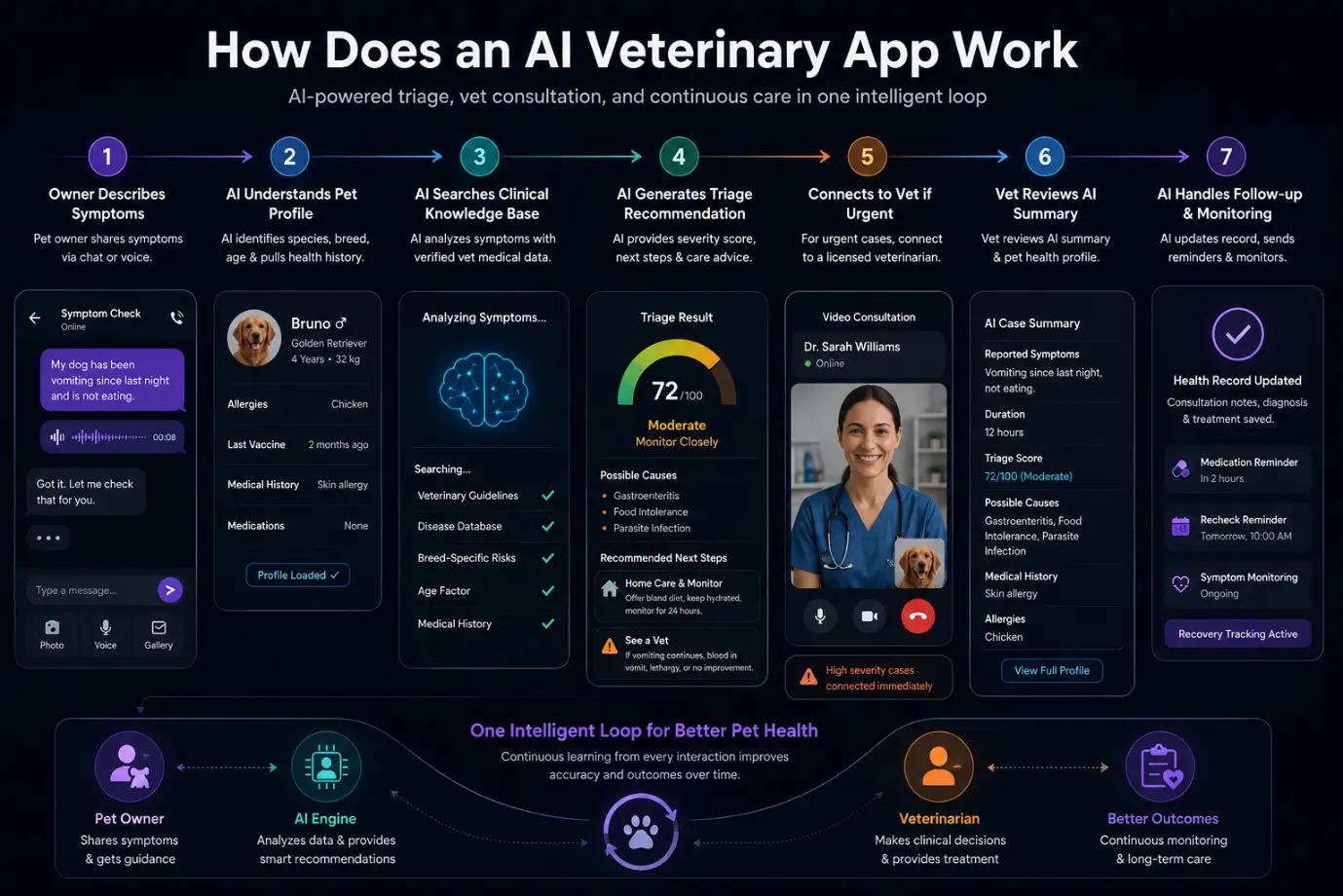
Input Stage: The pet owner describes symptoms, uploads photos or videos if needed, and the app automatically reads the pet's health profile and medical history.
Processing Stage: The AI retrieves relevant information from a verified veterinary knowledge base, evaluates breed and species-specific risk factors, calculates a triage score, and prepares a consultation summary when veterinary intervention is required.
Output Stage: The pet owner receives personalized care recommendations and clear next steps, the veterinarian receives a pre populated case summary, and the pet's electronic health record is updated automatically after every interaction.
The real intelligence behind AI veterinary platform development lies in how recommendations are generated. Rather than producing answers from general internet knowledge, the AI retrieves information from trusted veterinary clinical sources and filters it according to the pet's species, breed, age, medical history, and current symptoms.
Before presenting any recommendation, the system performs a confidence threshold check. If confidence is low or the symptoms indicate a possible emergency, the case is automatically escalated to a licensed veterinarian instead of providing uncertain advice.
Every recommendation can also be traced back to verified clinical references, making the platform significantly more trustworthy for AI animal health app development, where decisions directly affect the health and safety of a beloved family member.
Now that you understand how an AI veterinary app works, let's explore the key benefits it delivers for veterinary clinics, pet health startups, veterinarians, and pet owners.
Every veterinary clinic measures success differently. Some want to reduce administrative workload, others want to improve diagnostic accuracy, while pet health startups often focus on building scalable digital services. Regardless of the goal, AI veterinary app development creates value by combining workflow automation, AI assisted clinical decision support, telemedicine, and personalized pet care into a single platform. The result is better operational efficiency, improved patient outcomes, stronger client relationships, and new revenue opportunities for veterinary businesses.
Real Founder Query: "We want to build an AI veterinary app with AI diagnostic tools and telemedicine, but which features actually deliver measurable value for clinics and are practical for an MVP?"
The following benefits explain why veterinary clinics, founders, and investors continue investing in intelligent veterinary software.
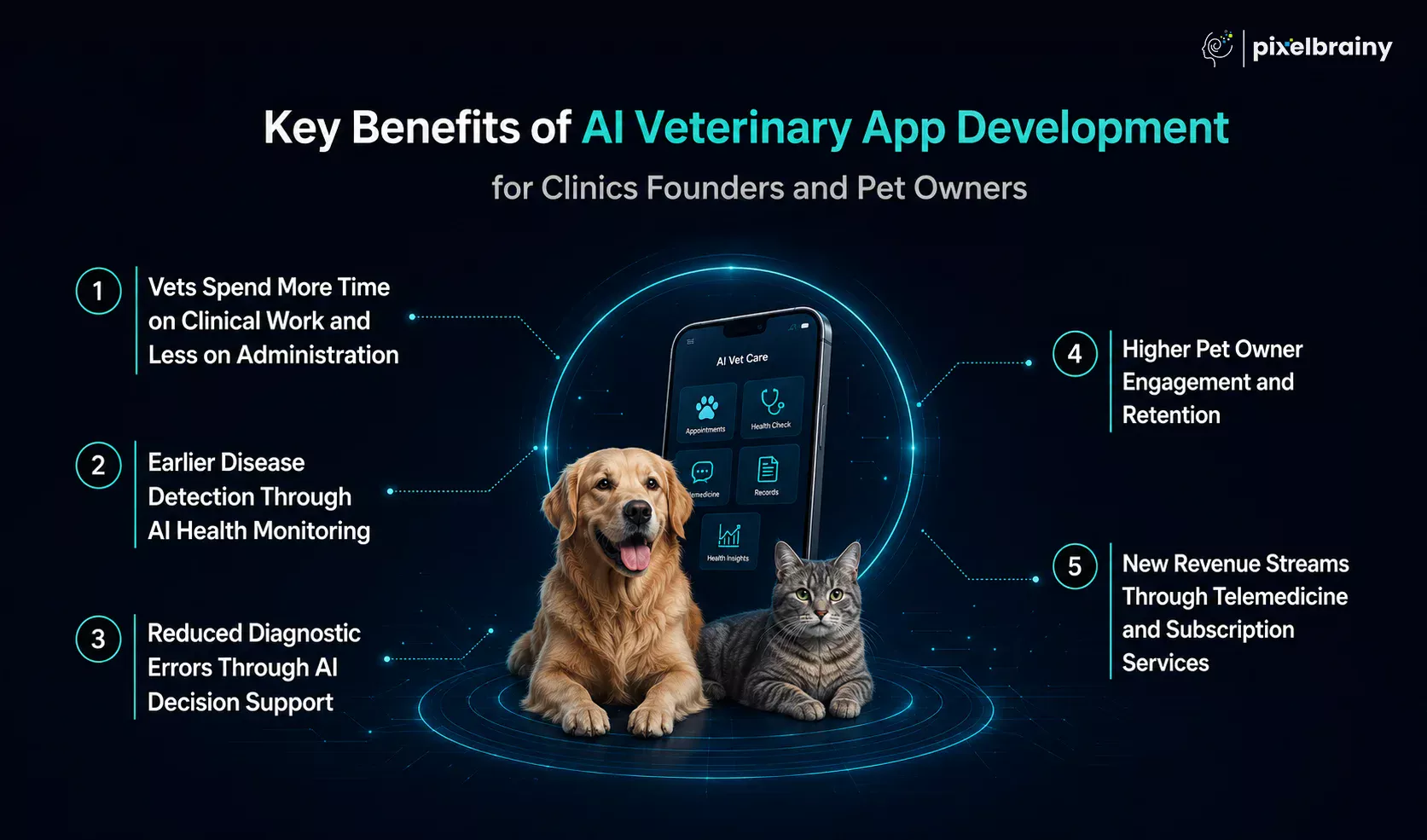
Administrative work occupies a significant portion of a veterinarian's day. Tasks such as appointment scheduling, prescription writing, follow up reminders, patient communication, and documentation often reduce the time available for direct patient care.
Through smart veterinary app development, AI automates these repetitive workflows while keeping medical records and communication organized within a single platform.
Clinical benefit: Veterinarians spend more time examining patients, discussing treatment options, and delivering higher quality care.
Business benefit: Clinics can increase patient throughput per veterinarian without expanding administrative staff, improving revenue and operational efficiency.
AI continuously evaluates historical medical records, laboratory reports, wearable device data, vaccination history, and breed specific health risks to identify patterns that may not be noticeable during individual consultations.
Instead of relying solely on isolated clinic visits, the application builds a complete health profile for every patient and highlights animals that may benefit from preventive screening.
Clinical benefit: Earlier identification of chronic diseases and inherited conditions supports timely intervention, improves treatment outcomes, and reduces emergency cases.
One of the strongest advantages of build an AI veterinary app with AI diagnostic tools is its ability to support clinical decision making. The system compares reported symptoms with verified veterinary guidelines, recommends possible differential diagnoses, suggests relevant diagnostic tests, and highlights potential treatment options.
This additional clinical validation is particularly valuable when evaluating complex cases involving multiple symptoms or uncommon diseases.
Clinical benefit: AI assisted decision support helps reduce diagnostic oversight, improve treatment accuracy, and increase consistency across veterinary teams.
When you create an AI veterinary app with telemedicine integration, communication continues long after an appointment ends. AI powered vaccination reminders, medication alerts, personalized wellness recommendations, preventive care notifications, and virtual consultations help pet owners stay actively involved in their pet's health.
Regular digital engagement strengthens trust while making veterinary care more convenient and accessible.
Business benefit: Higher client engagement contributes to stronger retention, more repeat visits, and greater annual revenue per client relationship.
An AI veterinary platform enables clinics and startups to expand their services beyond traditional in clinic appointments. Telemedicine consultations allow veterinarians to provide professional guidance remotely, while subscription-based wellness plans, preventive care programs, and continuous health monitoring create recurring income throughout the year.
These digital services also improve accessibility for pet owners who require follow up support without visiting the clinic.
Business benefit: Additional revenue streams reduce dependence on appointment availability and create a more scalable business model for both clinics and founders.
| Benefit | Who Benefits | Measurable Outcome |
|---|---|---|
| More clinical time and less administration | Veterinarians | Higher patient throughput per veterinarian |
| Earlier disease detection | Animal patients | Better treatment outcomes and reduced emergency interventions |
| Reduced diagnostic errors | Veterinarians and patients | Lower risk of misdiagnosis and improved clinical quality |
| Higher pet owner engagement | Clinics and pet owners | Higher annual revenue per client relationship and improved client retention |
| New telemedicine revenue | Clinic operators and founders | Revenue beyond traditional consultation hours |
| AI personalized pet health guidance | Pet owners | Better informed healthcare decisions between veterinary visits |
Whether your objective is improving clinic efficiency, building an AI veterinary app for animal hospitals, or launching a scalable pet health platform, these benefits demonstrate why AI veterinary app development delivers measurable clinical, operational, and business value across the veterinary ecosystem.
The success of an AI veterinary app development project depends on choosing the right product type before defining features, selecting technologies, or designing the system architecture. Every AI veterinary application serves a different audience, solves a different problem, and follows a unique business model.
Whether you plan to build an AI veterinary app for pet owners, veterinary clinics, or enterprise healthcare networks, identifying the right product category is the first step toward long term success.
Real Founder Query: "My co-founder and I are building an AI veterinary app for exotic pet owners in the US because most veterinary telehealth platforms only support dogs and cats. Is this a viable niche, and what type of AI veterinary app should we build?"
The following are the most common types of AI veterinary apps being developed in 2026.
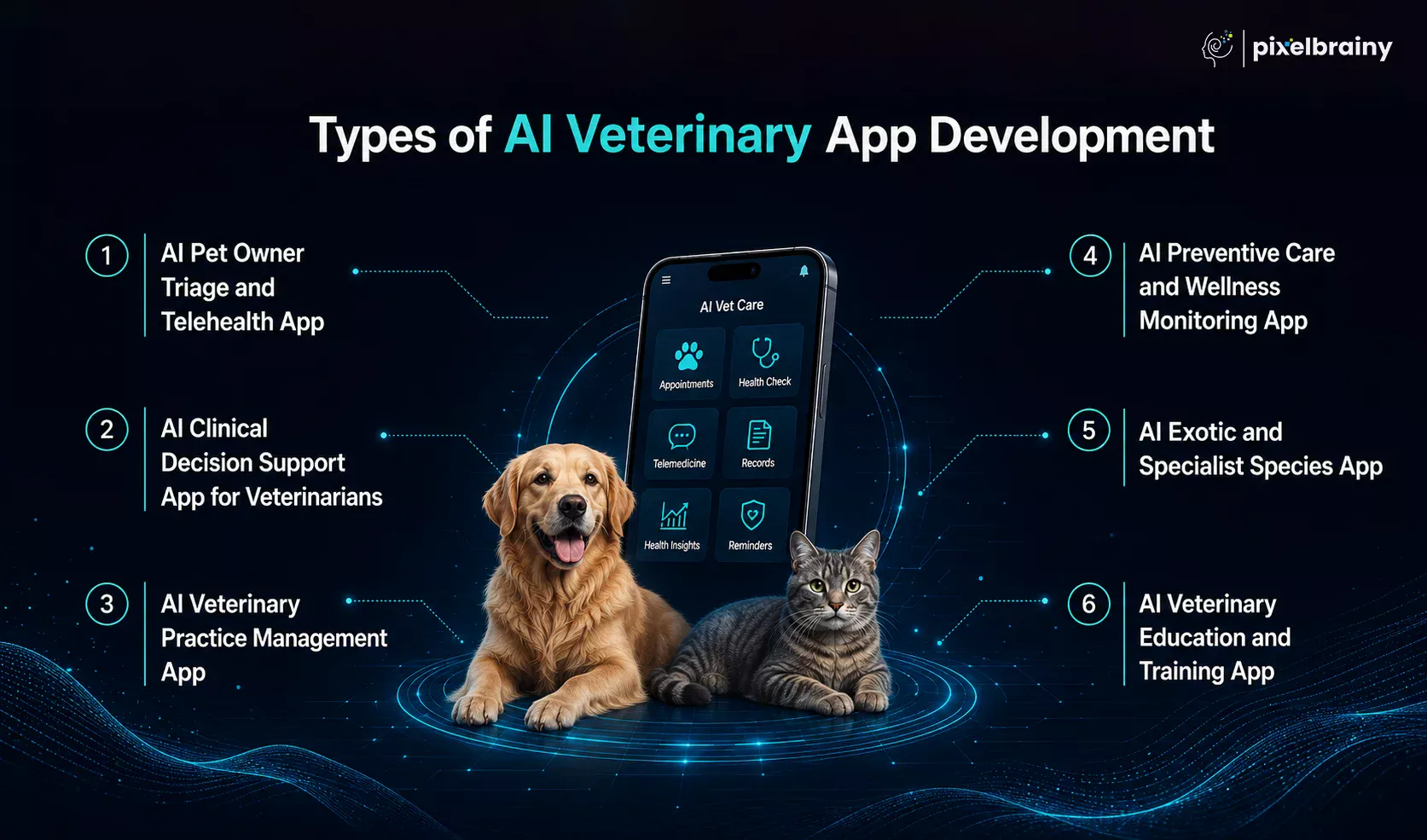
This consumer facing application enables pet owners to access AI powered symptom assessment, receive preliminary triage recommendations, and connect with licensed veterinarians through secure video or chat consultations. The AI manages high volumes of routine health questions while escalating urgent or high-risk cases to a veterinarian for immediate attention.
Best suited for: Pet health startups, telemedicine providers, and founders targeting the consumer pet care market.
Product design implication: Prioritize conversational AI, telemedicine integration, secure messaging, appointment scheduling, and an intuitive user experience for pet owners.
Designed specifically for veterinary professionals, this application assists veterinarians during consultations by providing AI powered differential diagnosis suggestions, drug interaction alerts, dosage calculations, and quick access to evidence based clinical protocols. The platform supports clinical decision making while leaving final medical judgment to the veterinarian.
Best suited for: Veterinary hospitals, specialist clinics, and founders building professional clinical software.
Product design implication: Focus on high-quality clinical knowledge bases, medical accuracy, explainable AI, and seamless integration with electronic medical records.
This enterprise solution combines AI powered appointment scheduling, automated documentation, prescription generation, client communication, inventory management, billing, and operational analytics into one centralized platform. It is particularly valuable for organizations managing multiple veterinary locations.
Related Enterprise Query: "We operate more than 50 veterinary clinics across the US and want an AI platform that integrates with our existing practice management system while automating operations across every location."
Best suited for: Corporate veterinary groups, animal hospitals, franchise networks, and multi-location practices.
Product design implication: Build scalable cloud architecture, API based integrations, role-based access control, enterprise security, and centralized reporting dashboards to support AI veterinary platform development.
This type of application focuses on continuous health monitoring rather than treating illness after symptoms appear. It integrates with smart collars, wearable pet devices, and connected health sensors to monitor activity levels, sleep patterns, weight changes, and behavioral trends. AI analyzes this data to identify early warning signs and deliver personalized wellness recommendations.
Best suited for: Digital pet health companies, wellness startups, pet insurance providers, and preventive healthcare platforms.
Product design implication: Prioritize IoT integration, predictive analytics, personalized health insights, and long-term data visualization.
Most veterinary platforms primarily support dogs and cats, leaving owners of birds, reptiles, rabbits, fish, and other exotic animals with limited digital healthcare options. This specialized application provides species specific symptom assessment, husbandry guidance, specialist veterinarian matching, and AI powered triage tailored to less common companion animals.
Best suited for: Founders targeting underserved veterinary niches and specialty veterinary practices.
Product design implication: Build separate clinical knowledge models for each species instead of relying on generalized veterinary datasets to improve recommendation accuracy.
This platform is designed to support veterinary students and licensed professionals through AI powered case simulations, diagnostic exercises, clinical reasoning assessments, and interactive learning experiences. It provides a safe environment for practicing complex clinical scenarios before applying them in real patient care.
Related Organizational Query: "Our nonprofit animal shelter network across multiple states wants to develop an AI veterinary app that helps staff triage incoming animals, document health assessments, and improve training consistency across locations."
Best suited for: Veterinary schools, continuing education providers, nonprofit animal organizations, and professional veterinary associations.
Product design implication: Focus on realistic clinical simulations, adaptive learning pathways, progress tracking, and evidence based educational content.
The type of application you choose influences every stage of AI veterinary app development, including regulatory compliance, clinical validation requirements, AI model selection, feature prioritization, technical architecture, and monetization strategy.
Defining the right product category from the beginning creates a stronger foundation for teams planning how to build scalable AI veterinary apps for clinics and enterprise veterinary networks in 2026.
The features included in the first version of an AI veterinary application directly influence user adoption, clinical efficiency, and long-term scalability. Whether your goal is to build an AI veterinary app for a small animal clinic, launch a pet health startup, or develop an enterprise veterinary platform, the MVP should focus on solving everyday clinical and operational challenges. Selecting the right feature set also creates a stronger foundation for future AI capabilities without increasing development complexity during the initial release.
Common Product Planning Question: "We have funding to build an AI veterinary app, but our MVP budget is limited. Which features should we prioritize first so veterinary clinics and pet owners actually use the platform?"
The following features represent the core functionality every modern AI veterinary app development project should include before expanding into advanced AI capabilities.
| Feature | Why It Matters |
|---|---|
| AI Symptom Checker | Allows pet owners to describe symptoms in natural language and receive AI assisted triage recommendations based on verified veterinary knowledge. It helps prioritize urgent cases, improves patient guidance, and reduces unnecessary clinic calls before consultations. |
| Pet Profile Management | Stores complete pet information including species, breed, age, vaccinations, allergies, medications, previous illnesses, and treatment history. Centralized records enable personalized care while giving veterinarians instant access to essential patient information during every consultation. |
| Appointment Scheduling | Enables pet owners to book, modify, or cancel appointments online while automatically updating clinic calendars. This reduces manual scheduling work, minimizes appointment conflicts, and improves overall clinic productivity and patient convenience. |
| Electronic Medical Records (EMR) | Maintains a centralized digital record of consultations, prescriptions, laboratory reports, diagnostic history, and treatment plans. Easy access to complete medical records supports better clinical decisions and continuity of care across multiple visits. |
| Prescription Management | Allows veterinarians to generate, manage, and securely store digital prescriptions while maintaining complete medication histories. This minimizes paperwork, reduces prescription errors, and improves treatment consistency throughout the patient's healthcare journey. |
| Vaccination and Reminder System | Automatically reminds pet owners about vaccinations, medication schedules, preventive treatments, wellness checkups, and follow up visits. Consistent reminders improve treatment compliance while reducing missed appointments and overdue preventive care. |
| Telemedicine Consultation | Supports secure video and chat consultations for follow up care, behavioral advice, routine assessments, and non-emergency cases. Telemedicine improves healthcare accessibility while creating additional consultation opportunities for veterinary practices. |
| Secure Messaging | Enables encrypted communication between veterinarians and pet owners for treatment updates, prescription clarification, post-surgery guidance, and routine healthcare questions without relying on external messaging applications. |
| Billing and Payment Integration | Simplifies invoice generation, online payments, consultation billing, and financial record management through one integrated platform. Faster payment processing improves operational efficiency while providing greater convenience for pet owners. |
| AI Assisted Clinical Notes | Automatically converts consultation discussions into structured medical documentation, reducing administrative workload for veterinarians. Standardized records improve documentation quality while allowing more time for direct patient care. |
| Laboratory Report Management | Organizes blood tests, pathology reports, diagnostic imaging, and laboratory results within each patient's medical record. Quick access to historical and current reports supports faster diagnosis and more informed treatment planning. |
| Notification Center | Delivers real time alerts for appointments, medication reminders, laboratory reports, vaccination schedules, payment confirmations, and important clinic announcements. Timely notifications improve communication and strengthen patient follow up compliance. |
| Multi User Access | Provides role-based access for veterinarians, technicians, receptionists, administrators, and pet owners while protecting sensitive medical information. Controlled permissions improve collaboration and maintain data privacy across the platform. |
| Search and Filter System | Helps clinic staff quickly locate patient records, prescriptions, laboratory reports, invoices, appointments, and treatment history. Fast information retrieval improves workflow efficiency, particularly in busy clinics and multi-location veterinary networks. |
| Analytics Dashboard | Displays insights into appointment trends, patient retention, clinic revenue, veterinarian productivity, and preventive care compliance. Data driven reporting helps clinic owners make informed operational and business decisions while identifying growth opportunities. |
These core features establish the foundation of successful AI veterinary app development, making it easier to scale the platform with advanced AI diagnostic tools, predictive analytics, and intelligent automation as user needs continue to evolve.
Once the core functionality is in place, advanced AI capabilities can transform a veterinary application into an intelligent clinical platform. These features are ideal for organizations planning long term product growth, enterprise adoption, or AI driven innovation. While they are not essential for a minimum viable product, they provide a competitive advantage through automation, predictive analytics, and personalized veterinary care. If your goal is to build an AI veterinary app that stands out in 2026, these advanced capabilities are worth considering during the product roadmap phase.
Common Product Strategy Question: "Our MVP is complete and gaining users. Which advanced AI features should we build next to differentiate our veterinary app and create long term competitive value?"
The following advanced capabilities are commonly included in next generation AI veterinary app development projects serving clinics, animal hospitals, and pet health platforms.
| Advanced Feature | Why It Matters |
|---|---|
| AI Medical Image Analysis | Uses computer vision to analyze X rays, ultrasound images, skin conditions, and other diagnostic images to help veterinarians identify abnormalities more quickly. It supports faster clinical decision making while improving diagnostic consistency across veterinary practices. |
| Predictive Disease Risk Analytics | Continuously analyzes medical history, laboratory reports, breed specific risks, lifestyle factors, and wearable device data to predict future health conditions before symptoms appear, enabling earlier preventive care and personalized treatment planning. |
| Voice to Clinical Documentation | Automatically converts veterinarian conversations into structured consultation notes, treatment summaries, and electronic medical records using speech recognition and natural language processing, significantly reducing documentation time and administrative workload. |
| Wearable Device and IoT Integration | Connects with smart collars, GPS trackers, activity monitors, and health sensors to continuously monitor pet activity, sleep, heart rate, and behavioral changes, providing veterinarians with valuable real time health insights. |
| Personalized AI Wellness Plans | Generates customized nutrition plans, exercise recommendations, vaccination schedules, weight management programs, and preventive healthcare guidance based on each pet's breed, age, lifestyle, and medical history to improve long term health outcomes. |
| Predictive Appointment and Resource Optimization | Uses historical appointment patterns and AI forecasting to optimize clinic schedules, staff allocation, consultation duration, and resource utilization, helping veterinary practices improve efficiency while reducing scheduling bottlenecks. |
| AI Powered Drug Interaction and Dosage Intelligence | Evaluates prescribed medications against patient history, allergies, species specific requirements, and existing treatments to identify potential drug interactions, dosage risks, and medication conflicts before prescriptions are finalized. |
| Multilingual AI Communication Assistant | Translates conversations, educational resources, consultation summaries, and treatment instructions into multiple languages, helping veterinary clinics communicate effectively with diverse pet owner communities while improving accessibility and client satisfaction. |
| Business Intelligence and Predictive Analytics Dashboard | Provides AI driven insights into revenue forecasting, patient retention, treatment trends, operational performance, inventory planning, and business growth opportunities, enabling data driven decisions for clinics and enterprise veterinary networks. |
| AI Powered Population Health and Disease Surveillance | Aggregates anonymized veterinary data across clinics to identify regional disease outbreaks, seasonal health trends, emerging infections, and population level risks, supporting public health initiatives and proactive veterinary planning. |
These advanced capabilities elevate AI veterinary app development from a digital clinic management solution into an intelligent veterinary ecosystem, enabling clinics, startups, and enterprise animal healthcare organizations to deliver smarter clinical care, stronger operational performance, and scalable innovation.
Building an AI veterinary application requires much more than combining artificial intelligence with a mobile app. The success of the product depends on understanding veterinary workflows, validating clinical requirements, selecting the right AI models, and developing a secure, scalable platform that serves veterinarians, clinic staff, and pet owners.
Whether your objective is building an AI veterinary app for a startup or modernizing an enterprise veterinary network, following a structured development roadmap significantly reduces technical risks and improves long term adoption.
Common Enterprise Development Scenario: "We run a multi-location animal hospital group with seven clinics across three states and our biggest operational headache is that each clinic runs on different software systems that do not talk to each other. A pet owner who visits two of our locations has to re-register their animal because there is no shared health record. We want to develop an AI veterinary app with a unified patient record system that connects every clinic and uses AI to identify health risks from the pet's complete medical history."
The following development process of AI veterinary app provides a practical roadmap for clinics, founders, and enterprises planning how to develop an AI veterinary app from scratch.
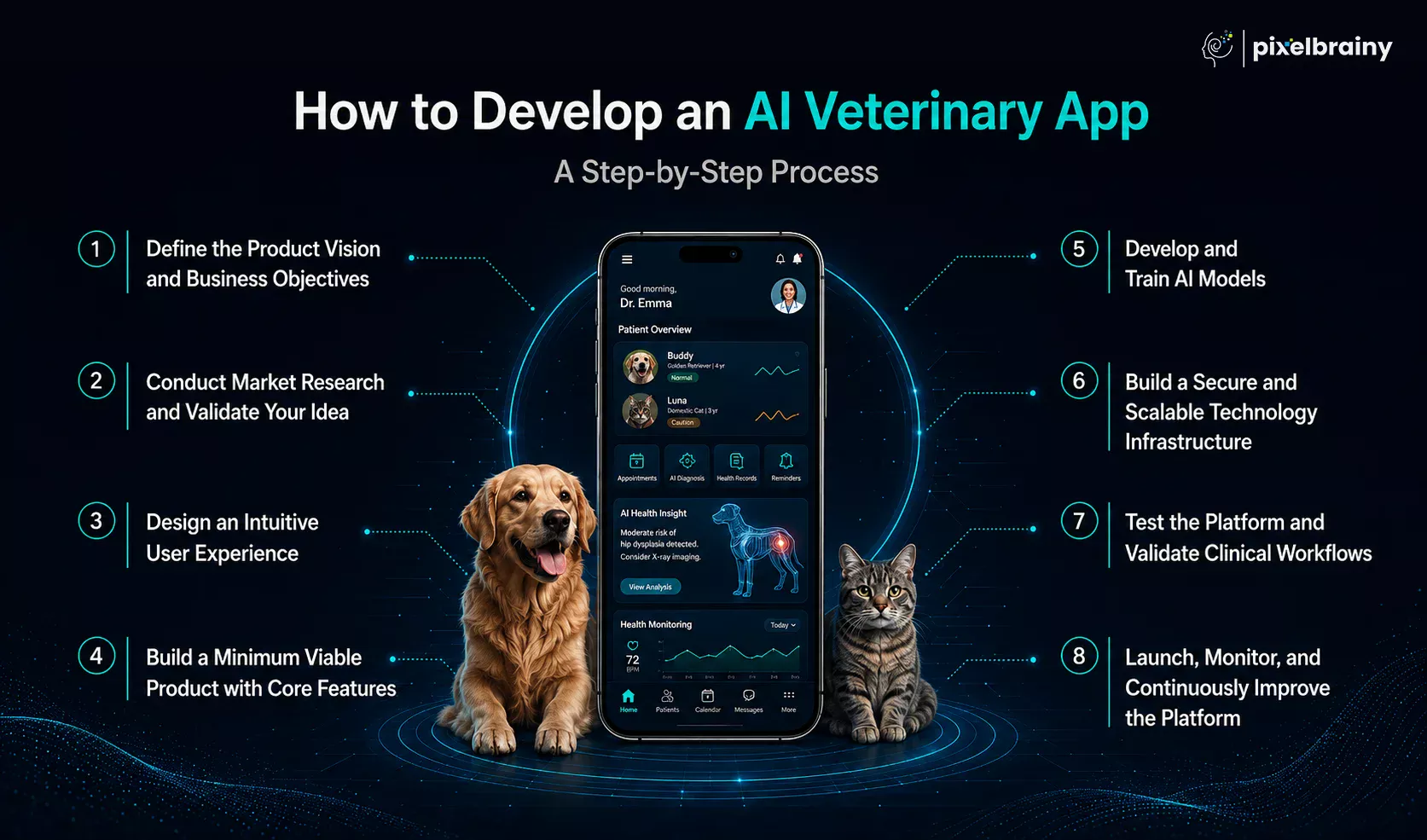
Every successful AI veterinary app development project begins with a clearly defined business objective. Before selecting technologies or designing interfaces, identify the primary problem your application will solve. Some organizations focus on reducing administrative workload, while others prioritize AI assisted diagnosis, telemedicine, preventive healthcare, or enterprise practice management.
Start by identifying your target users, whether they are veterinarians, clinic administrators, pet owners, animal hospitals, or veterinary networks. Define the core workflows your application must support and establish measurable business goals such as improving appointment efficiency, reducing manual documentation, or increasing client retention.
This early planning stage also helps determine the product scope, AI requirements, compliance considerations, and long-term roadmap before development begins.
Before investing in development, validate whether your solution addresses a genuine market need. Analyze existing veterinary software, AI healthcare platforms, and competing applications to identify feature gaps and opportunities for differentiation.
Interview veterinarians, clinic managers, veterinary technicians, and pet owners to understand their daily challenges. Evaluate how clinics currently manage appointments, patient records, prescriptions, diagnostics, and client communication.
Many organizations also begin with PoC development to validate technical feasibility before committing to full scale product development. A proof of concept helps confirm that critical AI features such as symptom analysis, unified patient records, or clinical decision support can perform reliably using real veterinary workflows.
Early validation reduces development risks while ensuring the final product aligns with market demand.
Veterinary applications are used by people with very different technical backgrounds, including veterinarians, receptionists, technicians, and pet owners. A complex interface can reduce productivity instead of improving it.
The design phase should focus on creating simple navigation, efficient clinical workflows, clear dashboards, and fast access to patient information. Every screen should minimize unnecessary clicks while supporting quick decision making during busy consultations.
Working with an experienced UI/UX design company helps create interfaces that balance usability with clinical efficiency. Features such as appointment scheduling, AI recommendations, digital prescriptions, and electronic medical records should be accessible without disrupting the veterinarian's workflow or overwhelming first-time users.
A well-designed user experience often becomes one of the strongest competitive advantages of an AI veterinary platform.
Instead of developing every possible feature at once, begin with a focused product that delivers immediate value. The first release should solve the most critical problems faced by veterinary clinics while remaining technically manageable.
An effective MVP development strategy typically includes appointment scheduling, electronic medical records, pet profile management, telemedicine, AI symptom assessment, prescription management, notifications, and secure communication.
Launching an MVP allows real users to test the platform, provide valuable feedback, and reveal workflow improvements before larger investments are made in advanced AI capabilities.
This iterative approach shortens development timelines, reduces financial risk, and creates a stronger foundation for future product expansion.
Also Read: Top 10 AI MVP Development Companies in USA
The intelligence of an AI veterinary application depends on the quality of its data and machine learning models. During this stage, developers build AI capabilities using verified veterinary datasets, clinical guidelines, anonymized patient records, diagnostic protocols, and evidence-based treatment information. Rather than generating unrestricted responses, the AI should retrieve recommendations from trusted veterinary knowledge sources and apply them based on the pet's species, breed, age, medical history, and reported symptoms.
When planning how to develop an AI veterinary app with AI recommendations, every model should be tested for accuracy, explainability, and clinical consistency. Veterinarians should participate throughout the training process to validate AI outputs and ensure recommendations support clinical decision making instead of replacing professional judgment. High-quality AI models improve trust, increase adoption, and create a safer experience for both clinics and pet owners.
A successful development of AI veterinary app requires an infrastructure capable of supporting thousands of users, multiple clinic locations, and continuously growing patient records without affecting performance. The backend architecture should allow secure data sharing across veterinary clinics, synchronize medical records in real time, and integrate smoothly with laboratory systems, payment gateways, telemedicine services, and existing practice management software.
Security should remain a priority throughout development. Sensitive patient information must be protected through encrypted storage, secure authentication, role-based access control, and regular security monitoring. Cloud based infrastructure also allows veterinary organizations to scale the platform as new clinics, veterinarians, and pet owners join the ecosystem while maintaining consistent performance and availability.
Before launching the application, every feature should undergo extensive functional, performance, usability, and security testing. Beyond technical quality assurance, the complete veterinary workflow should be validated by real veterinarians, clinic administrators, veterinary technicians, and selected pet owners to confirm that the platform supports everyday clinical operations efficiently.
Testing should include appointment scheduling, AI symptom assessment, telemedicine consultations, electronic medical records, prescription management, payment processing, and notification systems. Special attention should also be given to AI generated recommendations by measuring accuracy, consistency, confidence levels, and appropriate escalation for high-risk cases. Thorough validation reduces operational risks and helps ensure the application performs reliably in real clinical environments.
Launching the application marks the beginning of product improvement rather than the end of development. After deployment, continuously monitor platform performance, AI recommendation quality, user engagement, feature adoption, and operational metrics across clinics. Collect feedback from veterinarians, clinic staff, and pet owners to identify opportunities for refinement and future enhancements.
As the platform matures, new AI capabilities, workflow automation, predictive analytics, and clinical decision support features can be introduced based on actual user behavior and evolving business requirements. Many organizations also collaborate with top AI app development companies to expand platform capabilities, integrate emerging technologies, and support long term product innovation. Continuous improvement ensures the application remains competitive while adapting to changing veterinary practices and advances in artificial intelligence.
Following a structured development process of AI veterinary app helps clinics, startups, and enterprise veterinary networks build a secure, scalable, and intelligent platform that delivers long term clinical, operational, and business value.
Also Read: AI Mobile App Development for Startups and Enterprises: Benefits, Steps and Challenges
The AI veterinary app development cost in 2026 depends on several factors, including the application's complexity, AI capabilities, third party integrations, platform support, security requirements, and regulatory compliance. A simple solution with core clinic management features costs significantly less than an enterprise platform supporting multiple veterinary locations, AI powered diagnostics, and predictive analytics. On average, the cost of building an AI veterinary app in 2026 ranges between $30,000 and $250,000+, depending on business requirements and long-term scalability goals.
Common Budget Planning Question: "We want to create an AI veterinary app for our growing veterinary network, but how much should we realistically budget for development without overspending on features we do not need during the first release?"
The table below provides a general AI veterinary app cost breakdown based on the scope of development.
| App Type | Estimated Development Cost | What You Will Get |
|---|---|---|
| Basic AI Veterinary App | $30,000 to $70,000 | Suitable for startups and small clinics. Includes appointment scheduling, pet profile management, electronic medical records, AI symptom checker, notifications, prescription management, secure login, and basic reporting. |
| Advanced AI Veterinary App | $70,000 to $150,000 | Includes everything in the basic version plus telemedicine, AI assisted clinical notes, payment integration, laboratory report management, role-based access, analytics dashboard, and advanced workflow automation. |
| Enterprise AI Veterinary App | $150,000 to $250,000+ | Designed for veterinary groups and animal hospitals. Includes multi clinic support, unified patient records, advanced AI diagnostic tools, predictive analytics, enterprise integrations, cloud infrastructure, custom dashboards, API ecosystem, and enterprise grade security. |
The number and complexity of features have the greatest impact on the overall AI veterinary app development cost. Core features such as appointment scheduling and medical records require less development effort than AI powered diagnostics, predictive analytics, or telemedicine platforms.
Estimated Cost Impact: $10,000 to $80,000
Building reliable AI models requires veterinary datasets, model training, testing, optimization, and continuous improvement. More sophisticated AI capabilities increase development time and infrastructure requirements.
Estimated Cost Impact: $15,000 to $70,000
Developing native applications for both Android and iOS generally costs more than building a cross-platform solution. Some organizations also require a web-based administration portal for veterinary staff.
Estimated Cost Impact: $8,000 to $40,000
Creating intuitive dashboards for veterinarians, receptionists, administrators, and pet owners requires user research, wireframing, interface design, and usability testing.
Estimated Cost Impact: $5,000 to $20,000
Many veterinary applications integrate with payment gateways, telemedicine services, laboratory systems, wearable pet devices, cloud storage, email platforms, and notification services.
Estimated Cost Impact: $5,000 to $30,000
Protecting veterinary records requires secure authentication, encrypted databases, role-based access control, audit logs, and compliance with applicable healthcare and privacy regulations.
Estimated Cost Impact: $8,000 to $35,000
A scalable backend supports AI processing, real time synchronization, data storage, API management, and multi clinic access while maintaining performance as the platform grows.
Estimated Cost Impact: $10,000 to $45,000
Comprehensive testing verifies application performance, AI recommendation accuracy, security, usability, compatibility across devices, and workflow reliability before deployment.
Estimated Cost Impact: $5,000 to $20,000
After launch, regular updates, security patches, cloud hosting, AI model optimization, feature enhancements, and technical support ensure the application continues performing efficiently.
Estimated Annual Cost: 15% to 25% of the initial development cost
The final AI veterinary app development cost depends on your product vision, feature requirements, AI capabilities, and long-term business goals, making a phased development approach the most cost-effective strategy for many clinics and pet health startups.
Also Read: AI App Development Cost: From MVPs to Full-Scale AI App
Launching an AI veterinary application involves more than choosing the right technology stack or training accurate AI models. Every feature that influences diagnosis, treatment recommendations, prescriptions, telemedicine, or patient records must comply with veterinary regulations and privacy laws. Addressing compliance during the planning stage reduces legal risk, simplifies product development, and builds greater trust among veterinary professionals and pet owners.
Common Compliance Question: "I have a background in mobile app development but no veterinary experience. What regulatory and legal considerations should I address before launching an AI veterinary app?"
The following compliance areas should be evaluated before starting AI veterinary app development.
In the United States, every state follows its own Veterinary Practice Act, which defines what legally qualifies as the practice of veterinary medicine. These regulations determine whether an AI application can provide health recommendations independently or whether a licensed veterinarian must remain involved throughout the care process.
Why it matters: Your platform should support veterinary professionals rather than replace them, especially when providing clinical guidance or treatment recommendations.
Most states require an established Veterinary Client Patient Relationship before a veterinarian can diagnose, prescribe medications, or provide treatment advice through telemedicine. This directly affects consultation workflows, prescription modules, and remote care features.
Why it matters: If your application includes virtual consultations, VCPR requirements should influence both the product design and the overall user journey from the beginning.
The American Veterinary Medical Association provides professional guidance for telemedicine, virtual consultations, and technology assisted veterinary care. Although these guidelines are not legislation, they represent widely accepted standards across the veterinary profession.
Why it matters: Aligning your platform with AVMA recommendations improves credibility and encourages adoption among veterinary clinics.
Applications that include AI powered image analysis, disease prediction, or clinical decision support may cross into medical device territory depending on how diagnostic recommendations are presented. Products intended to influence medical decisions should be evaluated carefully before launch.
Why it matters: Regulatory planning becomes especially important when you develop AI veterinary app solutions containing advanced diagnostic capabilities.
Although veterinary medical records generally are not regulated under HIPAA, applications still process sensitive owner information, payment data, addresses, and pet health records. Privacy regulations such as CCPA and GDPR may apply depending on where users are located.
Many organizations also prioritize building AI veterinary app with HIPAA compliance and data security features because HIPAA level security practices improve customer confidence and strengthen enterprise security standards.
Why it matters: Secure data handling protects both users and your business from privacy related risks.
Both Apple App Store and Google Play review applications that provide health related guidance. Veterinary AI applications should avoid misleading medical claims, clearly explain how AI recommendations are generated, and communicate when users should consult a licensed veterinarian.
Why it matters: Compliance with app store policies helps prevent delays or rejection during the publishing process.
Artificial intelligence should always function as clinical decision support rather than an independent medical authority. Every AI generated recommendation should include appropriate disclaimers explaining that final diagnosis and treatment decisions belong to licensed veterinarians.
Why it matters: Well written Terms of Service, privacy policies, and AI disclaimers reduce legal exposure while setting realistic user expectations.
Prescription creation, electronic transmission, medication authorization, and controlled drug management are regulated differently across jurisdictions. If you plan how to develop AI veterinary app with drug interaction checker and dosage calculator, prescription workflows should always include veterinarian oversight and comply with applicable state regulations.
Why it matters: Proper prescription management protects patient safety while supporting regulatory compliance.
Before releasing your AI veterinary application, confirm that you have:
Regulatory requirements differ significantly between US states and international markets. Before launching or scaling an AI veterinary platform, consult a veterinary regulatory attorney and licensed veterinary professionals to validate compliance, minimize legal risk, and ensure your application meets all applicable regulatory obligations.
The technology stack you choose determines far more than how your application is built. It directly influences AI performance, platform scalability, security, integration capabilities, maintenance costs, and the overall user experience. During AI veterinary app development, selecting proven technologies from the beginning helps avoid expensive rework as your product grows from a minimum viable product into an enterprise veterinary platform.
Common Technology Planning Question: "We want to build an AI veterinary app that supports AI diagnostics, telemedicine, unified patient records, and thousands of users across multiple clinic locations. Which technology stack will provide the best balance of performance, scalability, and long-term reliability?"
Whether your goal is to create an AI veterinary app for a startup or manage the development of AI veterinary app solutions for large veterinary networks, the following technologies provide a reliable foundation for building secure, scalable, and future ready veterinary platforms in 2026.
| Technology Layer | Recommended Tools & Technologies | Why It Is Recommended |
|---|---|---|
| Mobile App Development | Flutter, React Native, Swift, Kotlin | Flutter and React Native enable faster cross platform development, while Swift and Kotlin provide native performance for applications requiring advanced device capabilities and maximum responsiveness. |
| Frontend Development | React.js, Next.js, Angular | These frameworks support responsive user interfaces, reusable components, and fast application performance, creating an intuitive experience for veterinarians, clinic staff, and pet owners. |
| Backend Development | Node.js, Python (FastAPI or Django), .NET | A scalable backend handles appointment management, AI processing, user authentication, APIs, telemedicine sessions, and patient records while supporting future platform expansion. |
| Artificial Intelligence & Machine Learning | TensorFlow, PyTorch, OpenAI API, LangChain, Scikit learn | These technologies support symptom assessment, clinical decision support, predictive analytics, natural language processing, and intelligent veterinary workflow automation. |
| Database Management | PostgreSQL, MongoDB, Firebase, Redis | Structured and unstructured databases provide secure storage for patient records, consultation history, AI data, and real time application performance optimization. |
| Cloud Infrastructure | Amazon Web Services (AWS), Microsoft Azure, Google Cloud Platform | Cloud platforms provide scalable infrastructure, secure storage, AI services, automatic backups, and high availability for growing veterinary applications. |
| Telemedicine Integration | Twilio, Agora, Vonage | These platforms enable secure video consultations, voice communication, appointment notifications, and real time messaging between veterinarians and pet owners. |
| Authentication & Security | OAuth 2.0, Firebase Authentication, Auth0, JWT | Secure authentication protects sensitive veterinary information through encrypted login, role based access control, and secure user identity management. |
| Payment Gateway Integration | Stripe, PayPal, Square | Trusted payment gateways simplify consultation payments, subscription plans, digital invoices, and recurring billing for veterinary services. |
| Notification Services | Firebase Cloud Messaging, OneSignal, Twilio | Automated push notifications, SMS reminders, appointment confirmations, medication alerts, and follow up messages improve patient engagement and clinic communication. |
| Electronic Medical Record Integration | HL7 FHIR APIs, Custom REST APIs | Standardized APIs simplify integration with veterinary practice management software, laboratory systems, diagnostic platforms, and enterprise healthcare applications. |
| Analytics & Monitoring | Google Analytics, Firebase Analytics, Mixpanel, Grafana | Analytics platforms help monitor user engagement, feature adoption, application performance, operational efficiency, and business growth through real time reporting. |
| DevOps & Deployment | Docker, Kubernetes, GitHub Actions, Jenkins | Modern DevOps tools automate testing, deployment, scaling, and infrastructure management while improving software quality and reducing release time. |
A carefully selected technology stack provides the foundation for secure, scalable, and intelligent AI veterinary app development, enabling veterinary clinics and pet health startups to deliver reliable digital healthcare experiences while supporting future AI innovation.
One of the best ways to plan a successful AI veterinary app development project is by studying platforms that have already validated demand in the market. These applications demonstrate how artificial intelligence, telemedicine, workflow automation, and personalized pet healthcare can solve real problems for veterinary clinics and pet owners. Instead of replicating existing products, founders should analyze their strengths, identify market gaps, and build solutions that deliver a more differentiated user experience.
Market Validation Scenario: "Our veterinary clinic group has started losing clients to telehealth competitors. Before investing in our own AI veterinary platform, we want to understand which existing products are succeeding and what features make them stand out."
The following AI powered veterinary platforms provide valuable insights for founders planning how to develop AI veterinary app like VetNow or Petriage while validating the growing demand for intelligent veterinary healthcare solutions.
Vetster is one of North America's leading veterinary telehealth platforms, connecting pet owners with licensed veterinarians through on demand video consultations, secure messaging, digital prescriptions, and accessible medical records. More recently, the platform expanded its AI capabilities with AI Scribe to assist veterinarians in generating structured clinical documentation after consultations.
AI Features: AI assisted triage, intelligent appointment workflows, automated clinical documentation, and consultation summarization.
What Makes It Stand Out: Vetster combines telemedicine with workflow automation, creating a seamless experience for both veterinarians and pet owners.
Key Takeaway for Founders: Focus on building a complete veterinary care ecosystem instead of offering only AI chat or symptom assessment.
Dutch is a US based veterinary telehealth platform that enables pet owners to consult licensed veterinarians virtually, receive digital prescriptions, and have medications delivered directly to their homes through a subscription-based model. The platform emphasizes convenient access to veterinary care for common health conditions.
AI Features: AI assisted symptom intake, personalized treatment workflows, digital health tracking, and intelligent prescription support.
What Makes It Stand Out: Its combination of telemedicine, pharmacy integration, and recurring subscription plans creates a predictable and scalable business model.
Key Takeaway for Founders: If you plan to build AI veterinary app solutions for consumers, consider combining AI powered healthcare with recurring subscription services instead of relying solely on consultation fees.
Airvet provides on demand veterinary consultations through secure video calls and messaging while connecting pet owners with licensed veterinarians across the United States. The platform is also widely used by employers, insurance providers, and veterinary organizations to improve access to virtual pet healthcare.
AI Features: Intelligent veterinarian matching, automated patient intake, appointment optimization, and personalized care recommendations.
What Makes It Stand Out: Airvet focuses on improving accessibility while making virtual veterinary care simple, fast, and convenient.
Key Takeaway for Founders: AI should enhance the connection between veterinarians and pet owners rather than attempting to replace professional clinical expertise.
Petriage is an AI powered symptom assessment platform that helps pet owners understand the urgency of their pet's condition before deciding whether to visit a veterinary clinic. Instead of providing definitive diagnoses, the platform focuses on evaluating symptom severity and recommending appropriate next steps.
AI Features: AI symptom analysis, urgency scoring, intelligent triage recommendations, and evidence-based health guidance.
What Makes It Stand Out: The platform addresses one specific problem exceptionally well by helping pet owners make faster and more informed healthcare decisions.
Key Takeaway for Founders: Solving one critical pain point effectively often creates greater product adoption than attempting to solve every veterinary challenge within a single application.
AllEars.Vet represents a new generation of AI native veterinary software built specifically for clinicians. The platform records consultations, automatically generates structured medical notes, drafts prescriptions, and standardizes documentation across veterinary teams, allowing veterinarians to spend more time with patients and less time completing paperwork.
AI Features: AI transcription, automated clinical documentation, prescription drafting, consultation summarization, and contextual AI assistance.
What Makes It Stand Out: Rather than focusing on pet owners, AllEars.Vet concentrates on improving veterinarian productivity by eliminating repetitive documentation tasks.
Key Takeaway for Founders: Some of the biggest opportunities in AI veterinary app development lie in reducing administrative workload for veterinary professionals instead of building consumer facing features alone.
Each of these platforms validates a different opportunity within the veterinary technology ecosystem, from AI powered triage and telemedicine to clinical documentation and workflow automation. Studying their product strategies, AI capabilities, and business models can help you develop AI veterinary app solutions that address genuine market needs while creating a strong competitive advantage.
Building an AI veterinary application involves much more than developing AI models or designing a user-friendly interface. Veterinary healthcare presents unique clinical, regulatory, and technical challenges that directly influence product quality, adoption, and long-term success.
Understanding these obstacles early allows founders to make informed architectural decisions and reduce development risks. The following are the most common AI veterinary app development challenges and solutions that every clinic, startup, and enterprise should evaluate before starting development.
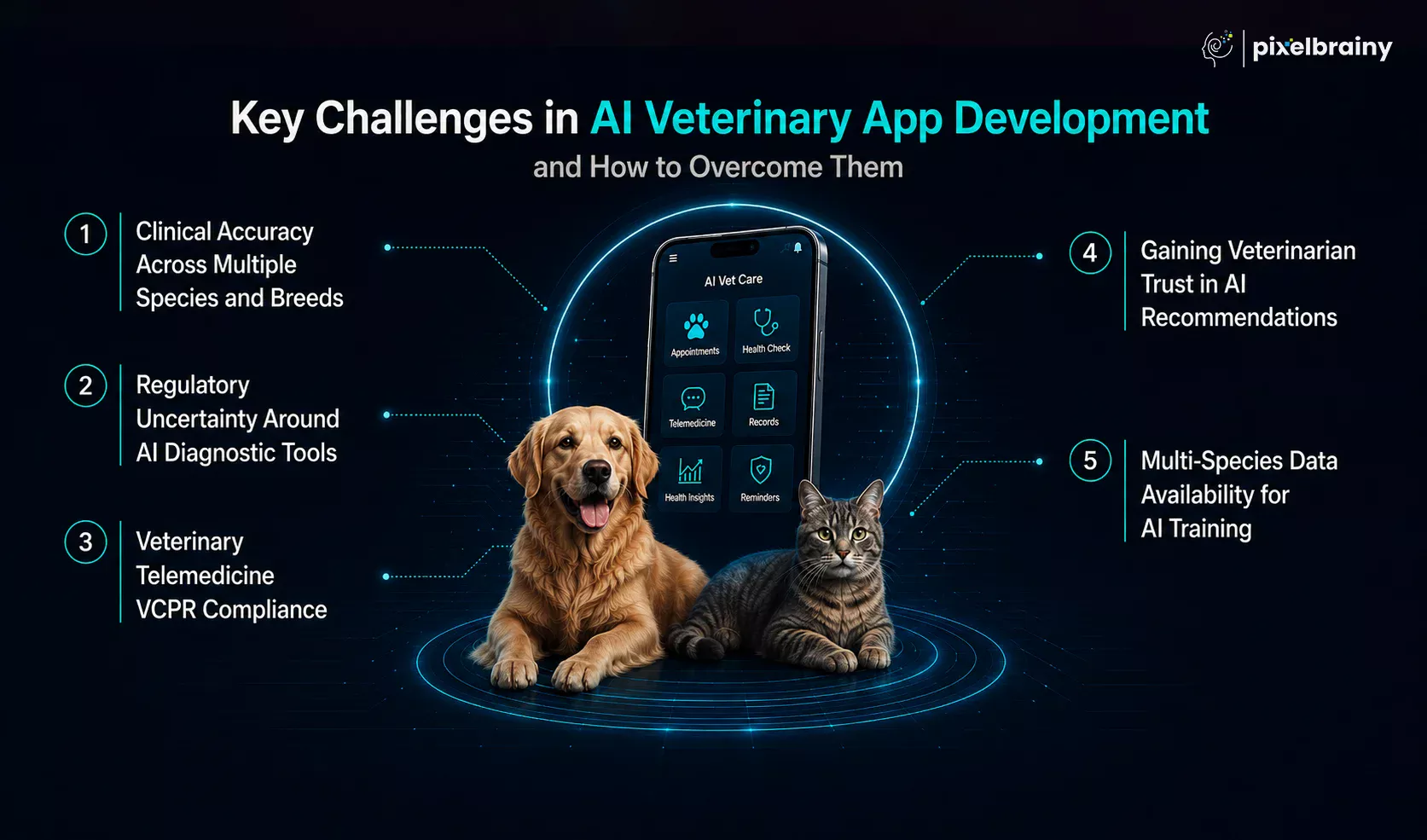
Unlike human healthcare, veterinary medicine covers a wide range of species, each with unique anatomy, physiology, disease progression, and medication requirements. An AI model trained primarily using dog and cat data is unlikely to produce reliable recommendations for birds, reptiles, rabbits, livestock, or other exotic animals.
How to solve it: Instead of supporting every species in the first release, focus Version One on two or three commonly treated species and develop dedicated training datasets for each. This approach improves AI accuracy while creating a stronger clinical foundation for future expansion.
The regulatory landscape for veterinary AI continues to evolve. In many cases, the distinction between an AI powered clinical decision support system and a regulated diagnostic device remains unclear, particularly when AI recommendations directly influence diagnosis or treatment decisions.
How to solve it: Position AI as a clinical decision support assistant that helps licensed veterinarians rather than replacing their medical judgment. Consult regulatory experts during product planning and design a flexible architecture that can accommodate future compliance requirements without major redevelopment.
Also Read: AI Medical Diagnosis App Development: Features & Cost
Veterinarian Client Patient Relationship requirements differ significantly between US states. Some jurisdictions require an existing in person relationship before telemedicine consultations, while others permit remote consultations under specific conditions.
How to solve it: Build state specific VCPR rules directly into the appointment booking workflow. The application should automatically validate veterinarian licensing requirements, clinic location, and pet owner location before allowing telemedicine consultations to proceed.
Veterinarians rely on evidence-based decision making and are naturally cautious about AI generated clinical recommendations. Overconfident responses, limited transparency, or inconsistent results can quickly reduce confidence in the platform.
How to solve it: When planning how to build an AI veterinary app that reduces misdiagnosis, display AI confidence scores, explain the clinical reasoning behind recommendations, provide supporting references, and allow veterinarians to easily override AI suggestions while submitting feedback for continuous model improvement.
Developing reliable veterinary AI models requires large volumes of accurately labeled clinical data. Compared with human healthcare, veterinary datasets are less standardized, data sharing between practices is limited, and many rare conditions have very few documented cases.
How to solve it: Partner with veterinary universities, teaching hospitals, and research organizations to obtain high-quality clinical datasets. Supplement limited real world data with carefully validated synthetic data generation while allowing additional time for model training and clinical validation.
| Challenge | Severity | Recommended Mitigation Strategy |
|---|---|---|
| Multi species clinical accuracy | Very High | Limit the first release to a small number of species and build dedicated AI training datasets for each species before expanding coverage. |
| Regulatory status of AI diagnostic tools | High | Position AI as clinical decision support, involve regulatory experts early, and design flexible architecture that supports future regulatory changes. |
| Telemedicine VCPR compliance | High | Implement state specific VCPR validation rules that automatically verify consultation eligibility based on veterinarian licensing and patient location. |
| Veterinarian trust in AI recommendations | High | Display confidence scores, clinical reasoning, supporting references, transparent performance metrics, and allow easy veterinarian feedback and recommendation overrides. |
| Multi species AI training data scarcity | High | Collaborate with veterinary universities, teaching hospitals, and research organizations while using validated synthetic datasets to strengthen AI model performance. |
| Integration with legacy clinic systems | Medium | Build an API first architecture with standardized integrations for practice management software, laboratory systems, payment platforms, and electronic medical records. |
Addressing these challenges early creates a stronger foundation for AI veterinary app development, enabling clinics and startups to build secure, clinically reliable, and scalable platforms that earn the trust of veterinarians, pet owners, and regulatory stakeholders.
The next generation of AI veterinary app development will focus less on automating routine tasks and more on predicting health risks, supporting clinical decisions, and delivering personalized veterinary care. Many of these technologies are already moving from research into commercial veterinary products, making this the ideal time for founders to prepare their platforms for future capabilities. Instead of waiting for these innovations to become industry standards, successful companies are designing their application architecture today so new AI features can be integrated without major redevelopment.
The following future trends in AI veterinary app development represent the technologies that are expected to shape veterinary healthcare over the next several years.
Smart collars, wearable health trackers, and next generation biometric devices are beginning to generate continuous information about a pet's heart rate, body temperature, activity level, sleep quality, and daily behavior. AI systems can analyze this continuous stream of health data to identify unusual patterns long before visible clinical symptoms appear.
Timeline: Near term. Commercial wearable solutions already exist, with broader adoption expected within the next two years.
Build Toward Now: If you are planning AI veterinary app development for small animal clinics, design your patient database to support continuous time series data from wearable devices. Preparing this architecture today makes future wearable integrations significantly easier without requiring database redesign.
Machine learning models are becoming increasingly capable of identifying subtle disease indicators from routine blood test results before traditional diagnostic thresholds are reached. Early research shows strong potential for detecting conditions such as chronic kidney disease, diabetes, and certain cancers using longitudinal laboratory data.
Timeline: Near term. Clinical validation is already underway, with broader commercial availability expected within approximately eighteen months.
Build Toward Now: Store laboratory reports as structured data rather than PDF documents or images. A well-organized laboratory database creates the foundation for future predictive AI models that improve as more patient data becomes available.
Future veterinary AI systems will evaluate diagnostic images, laboratory reports, consultation notes, patient history, and clinical observations together instead of analyzing each source independently. This multimodal approach provides a more complete understanding of a patient's condition and supports more accurate clinical recommendations.
Timeline: Mid-term. Most multimodal veterinary AI systems remain in research and early commercial development, with broader market adoption expected within the next three years.
Build Toward Now: Design a unified patient record that securely stores medical images, laboratory results, prescriptions, consultation notes, and clinical history in a standardized format. This architecture prepares your platform for future multimodal AI capabilities.
Current treatment guidelines are generally based on population level evidence, but future AI systems will generate individualized treatment recommendations by analyzing breed characteristics, age, medical history, previous treatment responses, lifestyle factors, and long-term clinical outcomes. This approach supports more personalized veterinary care for every patient.
Timeline: Mid-term. Early commercial development has already begun, with wider industry adoption expected within three to four years.
Build Toward Now: Capture structured treatment outcomes from every consultation instead of recording only diagnoses and prescriptions. As the platform accumulates high-quality outcome data, future AI models can generate increasingly personalized treatment recommendations.
The veterinary AI future trends 2026 clearly show that tomorrow's leading platforms will be built on scalable data architecture, structured clinical records, and AI ready infrastructure. Founders who prepare for these innovations today will be better positioned to deliver advanced veterinary healthcare solutions as the technology continues to evolve.
Building an AI veterinary application is not simply a software development project. It requires combining artificial intelligence, veterinary workflows, healthcare data management, scalable cloud infrastructure, and regulatory considerations into one reliable platform. Choosing the wrong technology partner can lead to inaccurate AI recommendations, poor user adoption, expensive redevelopment, and delayed product launches.
This is why veterinary clinics, animal hospitals, and digital health startups choose PixelBrainy, a leading AI app development company, to design, develop, and scale intelligent veterinary healthcare solutions.
Client Success Scenario: "We are a funded veterinary technology startup and our first development partner failed to deliver the AI diagnostic accuracy we expected. The application had to be rebuilt from scratch, costing us additional budget and delaying our product launch by several months. We now need a technology partner that understands clinical AI, validates AI recommendations before deployment, and has experience delivering healthcare products that perform reliably in real world environments."
At PixelBrainy, we understand that successful AI veterinary app development goes beyond writing code. Every decision, from AI model selection and data architecture to security, integrations, and user experience, directly influences how veterinarians trust the platform and how clinics adopt it in everyday practice.
We begin every project by understanding veterinary workflows instead of immediately discussing technology. This allows us to design AI features that solve genuine clinical and operational challenges rather than adding unnecessary complexity.
Unlike general software projects, healthcare AI requires explainable recommendations, confidence scoring, structured knowledge retrieval, and continuous model evaluation. Our development process prioritizes AI reliability before new capabilities are introduced into production.
Whether you plan to create an AI veterinary app for a single clinic or an enterprise veterinary network, we build cloud native platforms that support future expansion, multi-location deployments, wearable integrations, predictive analytics, and new AI services without requiring complete redevelopment.
From product discovery and UI design to AI engineering, backend development, cloud deployment, quality assurance, and post launch optimization, every stage of development is managed by one experienced team. This creates faster communication, better quality control, and more predictable project delivery.
Every milestone is planned, reviewed, and validated with stakeholders throughout development. Regular demonstrations, sprint reviews, and AI performance evaluations ensure that business goals remain aligned with technical execution from the first sprint to production launch.
A funded digital healthcare company approached PixelBrainy after an unsuccessful engagement with another software vendor. The original platform experienced inconsistent AI recommendations, fragmented patient records, and performance issues that prevented clinical adoption.
Our engineering team restructured the platform architecture, implemented a retrieval-based AI framework supported by verified clinical knowledge, redesigned the data model for long term scalability, and introduced a structured AI validation process involving domain specialists before every production release.
Client details remain confidential under a non-disclosure agreement.
If you are evaluating companies that develop AI veterinary app solutions, the most important question is not who can build the application. The real question is who can build a platform that veterinarians trust, pet owners adopt, and your business can confidently scale for years to come.
Talk to PixelBrainy to discuss how to develop an AI veterinary app with clinically reliable AI, scalable architecture, and a development methodology designed to help healthcare products succeed beyond launch.

Artificial intelligence is reshaping veterinary healthcare by helping clinics automate routine operations, improve clinical decision making, strengthen pet owner engagement, and deliver more personalized care. From AI powered symptom assessment and telemedicine to predictive analytics and workflow automation, AI veterinary app development is creating new opportunities for veterinary clinics, animal hospitals, and pet health startups to build smarter, more scalable digital healthcare solutions.
If you are planning how to develop an AI veterinary app, success depends on much more than adding AI features. It requires choosing the right product strategy, building a secure and scalable technology foundation, validating AI models with clinical expertise, and designing a platform that can adapt as veterinary technology continues to evolve. Whether your goal is to create an AI veterinary app for a single clinic or build an AI veterinary app for a growing enterprise network, investing in the right development approach from day one will significantly improve your chances of long-term success.
Ready to turn your veterinary app idea into a clinically reliable AI solution? Schedule a strategy call with the PixelBrainy team to discuss your vision, validate your product roadmap, and discover how we can help you build a secure, scalable, and future ready AI veterinary platform.
An AI veterinary app combines artificial intelligence with veterinary workflows to automate symptom assessment, clinical documentation, telemedicine, patient monitoring, and decision support. Traditional practice management software primarily handles appointments, billing, and records, while AI veterinary app development adds intelligent automation and clinical insights that improve efficiency and patient care.
The AI veterinary app development cost in 2026 typically ranges from $30,000 to $250,000+, depending on AI capabilities, telemedicine features, integrations, compliance requirements, supported platforms, and overall product complexity. Enterprise platforms with advanced AI diagnostic tools generally require a larger investment than MVP solutions.
The timeline depends on the application's scope and complexity. A basic MVP usually takes 3 to 5 months, while an advanced AI veterinary platform with telemedicine, predictive analytics, and enterprise integrations may require 8 to 12 months for design, development, testing, and deployment.
Features that consistently improve clinical outcomes include AI symptom triage, clinical decision support, automated documentation, predictive health monitoring, AI assisted medical record analysis, and intelligent follow up reminders. These capabilities directly support veterinarians, while purely conversational AI without clinical validation provides significantly less practical value.
Not every AI veterinary application requires regulatory clearance. However, applications providing AI powered diagnostic support or influencing medical decisions may be subject to additional regulatory review depending on their intended use. Consulting veterinary regulatory experts during AI veterinary app development helps reduce compliance risks before launch.
A well-designed veterinary telemedicine platform uses state specific rules to determine whether a valid Veterinarian Client Patient Relationship exists before consultations or prescriptions are allowed. The application should automatically apply compliance requirements based on the veterinarian's license location and the pet owner's state.
Yes. Modern AI veterinary platforms can integrate with practice management systems such as Cornerstone, AVImark, laboratory software, payment gateways, and other veterinary technologies using APIs or secure data integration methods. Integration planning should be included early in the development process.
For most startups, it is best to focus on dogs and cats because they represent the largest companion animal market and have stronger clinical datasets for AI training. Additional species such as birds, reptiles, rabbits, and livestock can be introduced after validating the core platform.
Clinical accuracy depends on using verified veterinary knowledge sources, retrieval-based AI models, structured testing, veterinarian validation, confidence scoring, and continuous model improvement. AI should function as clinical decision support while leaving final medical decisions to licensed veterinarians.
Design your platform to support wearable pet devices, predictive disease detection, multimodal AI diagnostics, structured laboratory data, personalized treatment recommendations, and scalable cloud infrastructure. Preparing for these future trends in AI veterinary app development makes future expansion faster and more cost effective.
PixelBrainy, a leading AI app development company, combines AI engineering, healthcare technology expertise, scalable cloud architecture, and user centered product development. Our structured AI validation process, transparent development methodology, and long-term product support help clients build clinically reliable veterinary platforms instead of generic AI applications.
Yes. PixelBrainy can develop AI veterinary platforms for dogs, cats, birds, reptiles, rabbits, and other species by creating dedicated clinical workflows and species-specific AI models. We generally recommend launching with the highest priority species first before expanding to additional animal categories using validated clinical datasets.

About The Author
Sagar Bhatnagar
Sagar Sahay Bhatnagar brings over a decade of IT industry experience to his role as Marketing Head at PixelBrainy. He's known for his knack in devising creative marketing strategies that boost brand visibility and market influence. Sagar's strategic thinking, coupled with his innovative vision and focus on results, sets him apart. His track record of successful campaigns proves his ability to utilize digital platforms effectively for impactful marketing efforts. With a genuine passion for both technology and marketing, Sagar continuously pushes PixelBrainy's marketing initiatives to greater success.

Working with the PixelBrainy team has been a highly positive experience. They understand the design requirements and create beautiful UX elements to meet the application needs. The dev team did an excellent job bringing my vision to life. We discussed usability and flow. Sagar worked with his team to design the database and begin coding. Working with Sagar was easy. He has the knowledge to create robust apps, including multi-language support, Google and Apple ID login options, Ad-enabled integrations, Stripe payment processing, and a Web Admin site for maintaining support data. I'm extremely satisfied with the services provided, the quality of the final product, and the professionalism of the entire process. I highly recommend them for Android and iOS Mobile Application Design and Development.

Great experience working with them. Had a lot of feedback and I found that unlike most contractors they were bugging me for updates instead of the other way around. They were extremely time conscience and great at communicating! All work was done extremely high quality and if not on time, early! They were always proactive when it comes to communication and the work is great/above par always. Very flexible and a great team to work with! Goes above and beyond to present us with multiple options and always provides quality. Amazing work per usual with Chitra. If you have UI/UX or branding design needs I recommend you go to them! Will likely work with them in the future as well, definitely recommended!

PixelBrainy is a joy to work with and is a great partner when thinking through branding, logo, and website layout. I appreciate that they spend time going into the "why" behind their decisions to help inform me and others about industry best practices and their expertise.

I hired them to design our software apps. Things I really like about them are excellent communication skills, they answer all project suggestions and collaborate right away, and their input on design and colors is amazing. This project was complex and needed patience and creativity. The team is amazing to do business with. I will be using them long-term. Glad to see there are some good people out there. I was afraid to try and outsource my project to someone but I am glad I met them! I really can't say enough. They went above and beyond on this project. I am very happy with everything they have done to make my business stand out from the competition.

It was great working with PixelBrainy and the team. They were very responsive and really owned the project. We'll definitely work with them again!

I recently worked with the PixelBrainy team on a project and I was blown away by their communication skills. They were prompt, clear, and articulate in all of our interactions. They listened and provided valuable feedback and suggestions to help make the project a success. They also kept me updated throughout the entire process, which made the experience stress-free and enjoyable.

PixelBrainy is very good at what it does. The team also presents themselves very professionally and takes care of their side of things very well. I could fully trust them taking up the design work in a timely and organised manner and their attention to detail saved us lots of effort and time. This particular project was quite intense and the team showed that they function very well under pressure. Very much looking forward to working with her again!

It's always an absolute pleasure working with them. They completed all of my requests quickly and followed every note I had for them to a T, which made our process go smoothly from start to finish. Everything was completed fast and following all of the guidelines. And I would recommend their services to anyone. If you need any design work done in the future, PixelBrainy should be your first call!

They took ownership of our requirements and designed and proposed multiple beautiful variants. The team is self-motivated, requires minimum supervision, committed to see-through designs with quality and delivering them on time. We would definitely love to work with PixelBrainy again when we have any requirements.

PixelBrainy was a big help with our SaaS application. We've been hard at work with a new UI/UX and they provided a lot of help with the designs. If you're looking for assistance with your website, software, or mobile application designs, PixelBrainy and the team is a great recommendation.

PixelBrainy designers are amazing. They are responsive, talented, and always willing to help craft the design until it matches your vision. I would recommend them and plan to continue them for my future projects and more!!!

They were awesome! Did a good job fast, and good communication. Will work with them again. Thank you

Creative, detail-oriented, and talented designers who take direction well and implement changes quickly and accurately. They consistently over-delivered for us.

PixelBrainy team is very talented and creative. Great designers and a pleasure to work with. PixelBrainy is an excellent communicator and I look forward to working with them again.

PixelBrainy has a very talented design team. Their work is excellent and they are very responsive. I enjoy working with them and hope to continue on all of our future projects.


Transform your ideas into reality with us.
Across these industries, each engagement brings unique challenges, from early-stage product development to scaling complex systems, helping us build a practical understanding of real-world product environments.