AI Summary Powered by PixelBrainy
Imagine you are a licensed therapist who wants to support more clients without extending every therapy session. You want to build an AI avatar therapy app that stays connected with clients between appointments, using a realistic AI avatar to deliver CBT exercises, conduct mood check-ins, reinforce therapy homework, and provide structured support based on your therapeutic approach. The objective is not to replace the therapist, but to extend clinical capacity while keeping professional oversight at the center.
This use case is becoming increasingly relevant as digital mental health continues to expand. According to Fortune Business Insights, the global mental health apps market is projected to grow from $8.68 billion in 2026 to $25.45 billion by 2034, representing a CAGR of 14.39%. The broader AI in mental health market is estimated at $2.1 billion in 2026 and is projected to reach $9.1 billion by 2033, growing at a CAGR of 23.3%, according to Grand View Research.
However, building an AI therapy app for licensed therapists involves much more than connecting a chatbot to a 3D avatar. A clinically oriented platform needs therapist-controlled content, clearly defined therapeutic boundaries, secure health-data architecture, crisis detection and escalation workflows, AI safety guardrails, auditability, and human-in-the-loop supervision.
So, how much does it cost to build a clinically safe AI avatar therapy app? What features and technologies affect the development budget? And which companies or platforms have publicly documented approaches to clinical oversight, privacy, security, or safety architecture?
This guide explores the AI avatar therapy app development process, including essential features, advanced AI capabilities, avatar technologies, clinical safety considerations, regulatory compliance, development costs, technology stack, implementation challenges, and future opportunities. For example, Hamo AI publicly documents technical PHIPA compliance across its platform, including encryption, role-based access controls, MFA, audit logging, and session controls.
Whether you are a therapist, behavioral health provider, wellness company, or healthcare entrepreneur, this guide will help you understand what it takes to build a secure, scalable, therapist-guided AI avatar therapy app that can provide meaningful between-session support while keeping clinical responsibility with qualified professionals.

An AI avatar therapy app is a digital mental health platform that combines artificial intelligence, conversational AI, and a realistic virtual avatar to deliver structured support between sessions with a licensed therapist, counselor, or coach. Instead of relying only on text-based chat, the avatar can communicate through voice, facial expressions, and conversational interactions, creating a more engaging experience for clients.
For a licensed therapist, the most practical model is not an autonomous AI therapist. It is a therapist-guided AI therapy app that extends the professional's existing care model. For example, a therapist could configure the avatar to conduct daily mood check-ins, guide clients through therapist-approved CBT exercises, remind them to complete assigned homework, provide journaling prompts, and reinforce coping strategies between scheduled appointments.
A typical AI avatar therapy platform works through several interconnected layers:
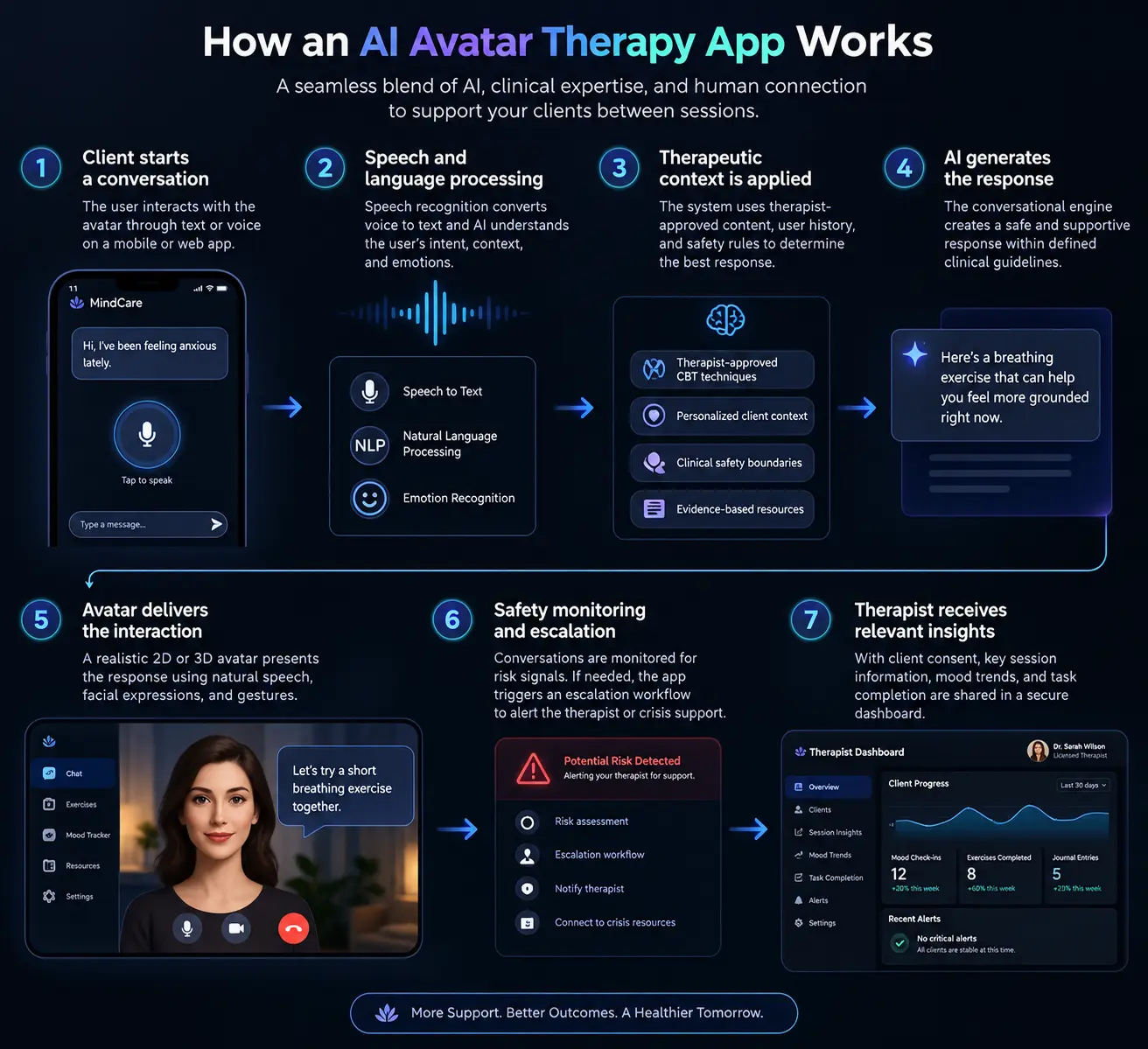
The result is a human-in-the-loop AI therapy model where the avatar handles structured, lower-risk interactions while the licensed therapist remains responsible for clinical decision-making and care. This distinction is particularly important when building an AI therapy app for licensed therapists because conversational realism alone does not make an application clinically safe.
For businesses planning AI avatar therapy app development, the technology stack typically combines conversational AI, speech-to-text and text-to-speech systems, avatar animation, secure databases, authentication, analytics, and clinical safety controls. The complexity of these components directly affects the cost to build an AI avatar therapy app, which is why clinically safe platforms generally require more architectural planning than conventional chatbot applications.
The need for AI avatar therapy apps comes from a practical challenge in modern mental healthcare: therapists often have limited time with each client, while clients may need structured support between scheduled sessions. A person may understand what they need to work on during therapy but struggle to maintain those practices during the days or weeks between appointments.
For a licensed therapist, this creates an opportunity to use an AI avatar as a between-session support layer, rather than positioning it as an independent therapist. A therapist could use the app to conduct routine mood check-ins, remind clients about assigned homework, guide them through therapist-approved CBT exercises, reinforce coping techniques, or prompt journaling. The therapist can then remain involved in clinical decisions and intervene when a situation requires professional judgment.
Several real-world challenges make this type of AI therapy app development increasingly relevant:
A therapist's time is limited, and every client cannot receive continuous one-to-one interaction outside scheduled appointments. Routine activities such as mood check-ins, homework reminders, journaling prompts, and structured exercises can also consume valuable clinical time.
An AI avatar for therapists can be designed to handle predefined between-session interactions while keeping the therapist in control of the therapeutic framework and escalation process.
Therapeutic work does not stop when a session ends. Clients may need reminders to complete assigned exercises, reflect on their mood, practice coping techniques, or maintain routines before their next appointment.
A therapist-guided AI avatar therapy app can provide structured prompts and therapist-approved activities during this interval, helping create continuity between live sessions.
People can experience emotional difficulties outside conventional appointment hours, while access to qualified professionals may be limited by location, availability, cost, or other barriers. This creates demand for digital mental health solutions that can provide appropriate, structured support without suggesting that AI can replace professional care.
Therapists may spend significant time managing recurring client interactions and monitoring routine engagement. An AI therapy platform can be designed around specific workflows, such as automated check-ins, homework reminders, session preparation, and progress updates, allowing human professionals to focus their attention where clinical judgment is required.
A general-purpose AI chatbot may generate responses that do not align with a therapist's methodology. For clinical use cases, there is therefore a need for therapist-controlled AI that follows approved content, predefined conversational boundaries, selected therapeutic techniques, and safety rules.
This is particularly important when developing an AI therapy app for licensed therapists. The avatar should not simply generate open-ended mental health advice. Its behavior needs to be constrained by the clinical framework established for the application.
Mental health applications increasingly need a clear distinction between automated support and professional care. A human-in-the-loop model allows the AI avatar to manage defined, lower-risk interactions while the therapist retains responsibility for clinical assessment, treatment decisions, and escalation when necessary.
This model is especially relevant for applications involving CBT exercises, mood tracking, therapy homework, and between-session support.
Mental health conversations can involve sensitive information and potentially high-risk situations. Building an AI avatar therapy app therefore requires safety mechanisms that go beyond conversational accuracy.
Developers need to consider risk detection, escalation workflows, therapist alerts, crisis-resource routing, consent, access controls, audit logs, data protection, and clearly defined limits on what the AI is permitted to do.
Traditional mental health apps often rely heavily on forms, text prompts, questionnaires, or static content. For some use cases, a conversational avatar can provide a more interactive interface for completing structured activities.
However, the objective should be appropriate interaction, not simply making the avatar appear human. AI avatar development for therapy needs to prioritize predictable behavior, accessibility, transparency, and clinical appropriateness alongside visual realism.
The central need is not simply to make therapy "more automated." It is to create a therapist-guided digital extension of care that can support defined activities between appointments while preserving clinical oversight.
For organizations planning to build an AI therapy app, this means starting with the clinical workflow and safety model first, then designing the avatar, conversational AI, and supporting technology around those requirements. This approach helps ensure that the resulting platform addresses a genuine care-delivery gap rather than becoming another generic mental wellness chatbot.
For a digital health startup, building an AI avatar therapy app can offer more than another text-based mental health chatbot. A realistic avatar with natural voice, facial expressions, and conversational interaction can create a more engaging interface for delivering structured mental health support. This approach is particularly relevant for startups exploring alternatives to conventional chatbot experiences offered by platforms such as Woebot and Wysa.
When designed around a therapist-guided clinical framework, an AI avatar therapy app can support activities such as mood check-ins, CBT exercises, guided reflections, coping activities, and between-session engagement. The combination of conversational AI, human-like avatar rendering, voice interaction, personalization, and therapist oversight can create a more immersive digital experience while keeping professional care at the center.
For organizations planning AI mental health app development, the potential value extends across client engagement, therapist workflows, personalization, accessibility, and ongoing progress tracking. However, the avatar itself should not be treated as evidence of clinical effectiveness. Clinical safety, evidence-based content, appropriate escalation mechanisms, privacy controls, and human oversight remain essential when developing an AI therapy solution for real-world use.
Below are the key benefits of AI avatar therapy app development and how these capabilities can contribute to a more interactive, scalable, and therapist-guided digital mental health experience.
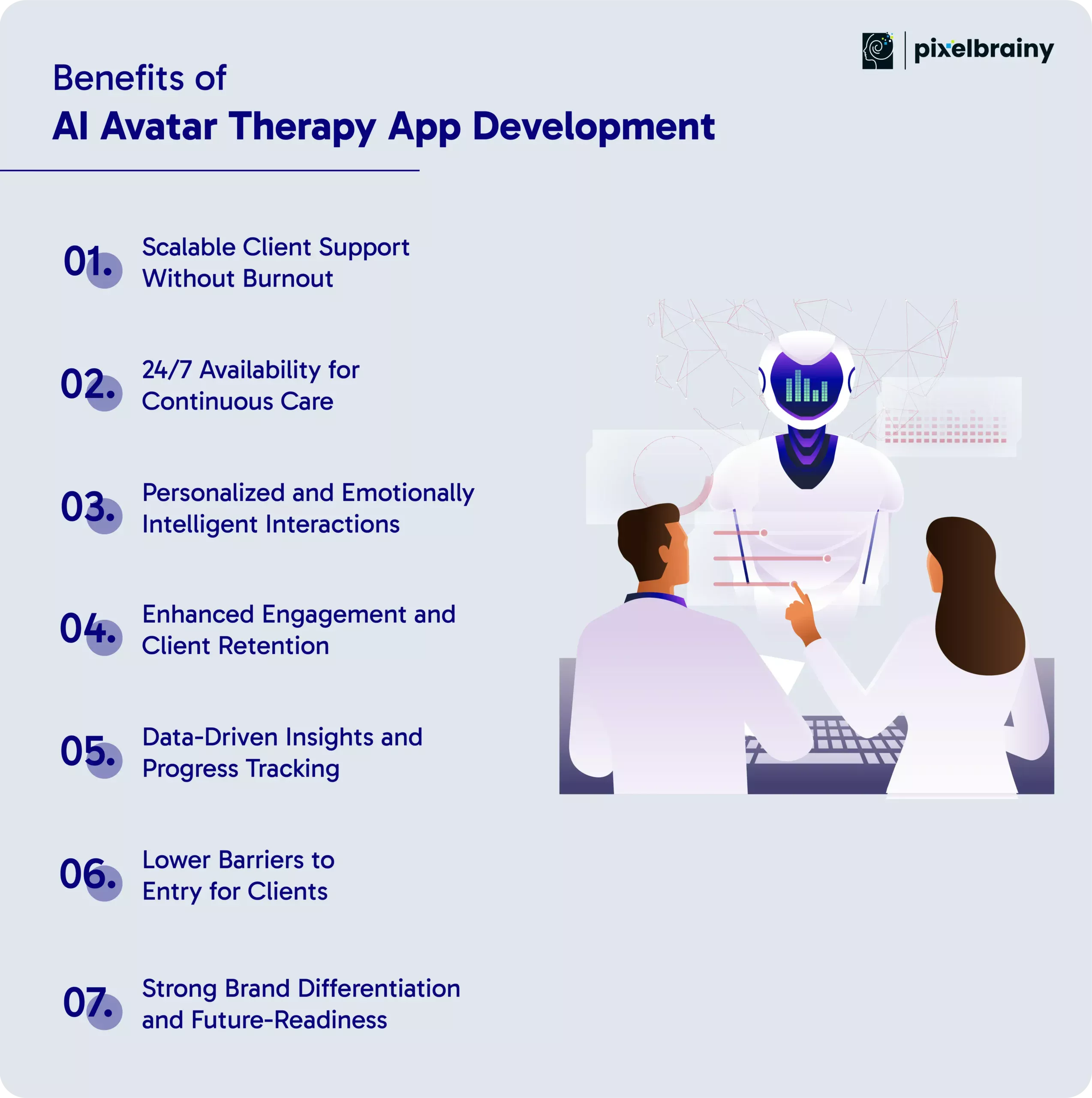
Managing multiple clients can be exhausting for therapists and coaches, especially with repetitive tasks like initial consultations or routine follow-ups.
Unlike traditional therapy, where sessions are limited to scheduled hours, AI avatars never sleep.
One of the strongest aspects of AI-powered avatars is their ability to adapt and respond based on individual needs.
Engagement is critical for progress in therapy or coaching, and avatars make the process more interactive.
AI Avatar Therapy Apps can gather valuable data on client moods, behaviors, and progress.
Many clients hesitate to start therapy or coaching due to stigma, fear, or cost concerns.
Adopting AI technology positions therapists and coaches as forward-thinking professionals.
Therefore, developing an AI avatar therapy app can help create a more engaging, personalized, and therapist-guided digital mental health experience while extending support beyond traditional sessions.
The key is to combine realistic avatar interaction with clinical safety, evidence-informed content, secure AI architecture, and human oversight.
AI avatar technology is expanding beyond traditional therapy into life coaching, personal development, workplace wellness, education, and behavioral support. For coaching businesses, one particularly relevant use case is creating an AI avatar coaching app that extends a coach's methodology beyond live sessions. Instead of replacing the coach, the avatar can carry forward their defined coaching style, communication approach, goal-setting framework, and accountability exercises between appointments.
For example, a coaching company with multiple certified coaches could develop an AI avatar app for coaches where each coach's avatar follows an individually configured methodology. Clients could use their coach's AI avatar for personalized goal check-ins, accountability activities, motivational prompts, reflection exercises, and other structured interactions between sessions. The underlying AI coaching app development can combine conversational AI, voice technology, realistic avatar rendering, personalization, and coach-controlled content to create a consistent experience at scale.
This makes AI avatar development relevant across several use cases:
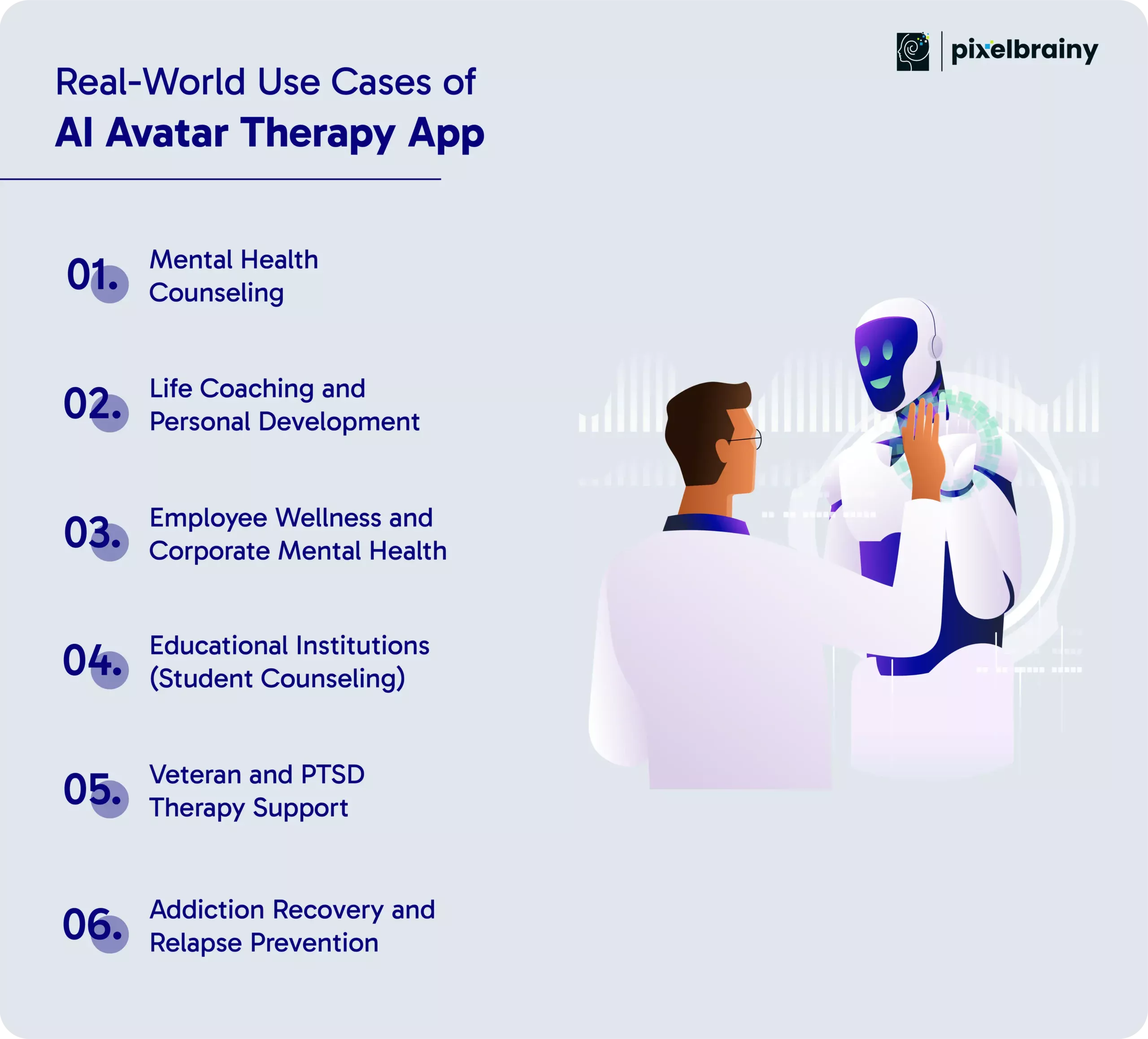
Therapists and psychologists use AI avatars to extend care beyond traditional sessions.
Life coaches leverage avatar-based apps to guide clients through goal setting, mindset work, and daily affirmations.
Organizations are integrating AI avatars into employee wellness programs to promote mental health at work.
Schools and universities use AI Avatar Therapy Apps to provide accessible, stigma-free mental health support.
AI avatars can serve as a supplementary tool in veteran care and PTSD therapy programs.
Recovery programs are adopting AI avatars to help users stay on track in their sobriety journey.
Therefore, AI avatar therapy and coaching apps can extend the reach of therapists and coaches by delivering personalized, methodology-driven support between live sessions while maintaining the professional's approach, voice, and guidance at the center.
When you build an AI avatar therapy app for licensed therapists, counselors, or coaches, the feature set needs to support more than realistic avatar conversations. The platform should connect the AI avatar, conversational AI, therapist workflows, client engagement, privacy controls, and clinical safety mechanisms into one structured experience.
For example, a therapist may want an avatar to conduct daily mood check-ins, deliver therapist-approved CBT exercises, send homework reminders, guide journaling, and maintain continuity between appointments. At the same time, the therapist should have appropriate control through an admin dashboard, including access to relevant client activity, configurable content, escalation workflows, and session insights.
This makes feature planning a critical part of AI therapy app development. The right architecture should allow the avatar to follow a defined therapeutic approach rather than operate as an unrestricted chatbot. It should also support voice and text interaction, personalization, secure authentication, consent management, protected session history, and mechanisms for identifying situations that require human intervention.
For startups and healthcare organizations looking to develop an AI therapy app, the following core features provide the foundation for a secure, scalable, and therapist-guided platform.
| Feature | Description |
| AI-Powered Avatar Interface | A lifelike virtual character that interacts with users in real-time, offering a human-like, emotionally engaging experience |
| Natural Language Processing (NLP) | Empowers the avatar to understand user input, emotional tone, and context to respond appropriately in conversation |
| Voice and Text Interaction | Supports both spoken and typed communication, allowing users to choose the method they’re most comfortable with |
| Mood Tracking | Enables users to record their emotional states daily, providing insights for self-awareness and therapeutic progress |
| User Onboarding Flow | A guided introduction that helps new users personalize their experience and understand how the app works |
| Secure User Authentication | Protects sensitive user data through password, biometric, or two-factor authentication |
| Session Logs and History | Saves previous conversations securely so users and therapists can reflect on changes and patterns |
| Goal Setting and Reminders | Helps clients define therapy or coaching goals, with gentle reminders to stay on track |
| Guided Journaling Prompts | Offers structured reflection exercises that encourage emotional expression and daily mindfulness |
| Simple Dashboard for Users | A user-friendly interface where clients can view progress, access features, and manage sessions easily |
| Therapist/Coach Admin Panel | A backend tool for professionals to monitor client activity, engagement levels, and content access |
| Notification System | Sends helpful alerts for missed check-ins, new content, or motivational nudges from the avatar |
| Privacy and Data Encryption | Ensures all personal and emotional data is securely stored and compliant with data protection laws like HIPAA or GDPR |
| Content Library | Offers access to articles, self-help tools, meditations, and emotional wellness resources |
| Feedback Collection | Allows users to rate their experience with the avatar and submit feedback for continual app improvement |
These core features provide the foundation for an AI avatar therapy app that combines realistic interaction with therapist control, personalization, secure data handling, and structured clinical workflows.
Once the core functionality is in place, advanced features can help an AI avatar therapy app deliver a more personalized, immersive, and context-aware experience. These capabilities are particularly relevant for startups and healthcare organizations looking to move beyond a conventional text chatbot and develop an AI therapy app with realistic avatar, voice, and emotion-aware interactions.
For example, a digital health company may want its AI avatar to reflect a therapist's communication style, respond differently based on conversational cues, support multiple therapeutic approaches, or connect with wearable devices. However, advanced features such as facial emotion recognition, voice sentiment analysis, and biometric integration should be treated as supporting signals rather than definitive clinical assessments. Their implementation also needs appropriate consent, privacy controls, validation, and human oversight.
When planning AI avatar development for mental health, these non-ordinary features can help differentiate the product while creating opportunities for deeper personalization, richer user experiences, and more sophisticated therapist-client workflows.
Below is a list of unique and innovative features to consider during AI avatar therapy app development that go beyond the basics:
| Feature | Description |
| Emotion AI with Facial Recognition | Uses facial expression analysis to detect micro-emotions in real-time, helping the avatar adjust tone and responses for deeper empathy |
| Voice Sentiment Analysis | Analyzes pitch, tone, and speech patterns during voice interactions to identify stress, anxiety, or emotional distress |
| Avatar Customization by Users | Allows users to personalize their avatar’s appearance, voice, or personality traits, creating a stronger emotional connection |
| Real-Time Crisis Escalation System | Detects high-risk language or emotional breakdowns and automatically alerts a human therapist or crisis support line |
| Therapy Mode Switching (CBT, Mindfulness, etc.) | Enables the avatar to shift between therapeutic approaches like Cognitive Behavioral Therapy or mindfulness based on client needs |
| Multilingual Support with Localization | Supports multiple languages and culturally sensitive interactions, making the app inclusive for global users |
| Progress Visualization with Emotional Analytics | Displays user mood trends, stress levels, and emotional growth over time using easy-to-read charts and graphs |
| AI-Coach Personality Matching Engine | Matches the user with a virtual avatar personality that aligns with their preferences and communication style |
| Augmented Reality (AR) Support | Lets users interact with their avatar in a real-world environment through AR, increasing immersion and presence |
| Wearable Device Integration | Syncs with smartwatches or fitness bands to pull biometric data like heart rate or sleep patterns to inform the avatar's responses |
These advanced features can differentiate an AI avatar therapy app from conventional chatbot-based solutions by adding personalization, voice, visual interaction, and richer contextual capabilities, while clinical oversight and safety controls remain essential.
Building an AI avatar therapy app requires more than combining conversational AI with a realistic digital human. When the goal is to let therapists and coaches create customized AI avatars that reflect their therapeutic approach, communication style, specialization, and approved content, the development process must connect product strategy, clinical workflows, avatar design, AI behavior, security, and human oversight.
If you are researching the steps to develop AI avatar therapy app from idea to launch, the following roadmap explains how to move from early validation to a production-ready platform. It also covers how to build AI avatar therapy app from scratch when each therapist needs a configurable, therapist-specific avatar rather than a generic AI assistant.
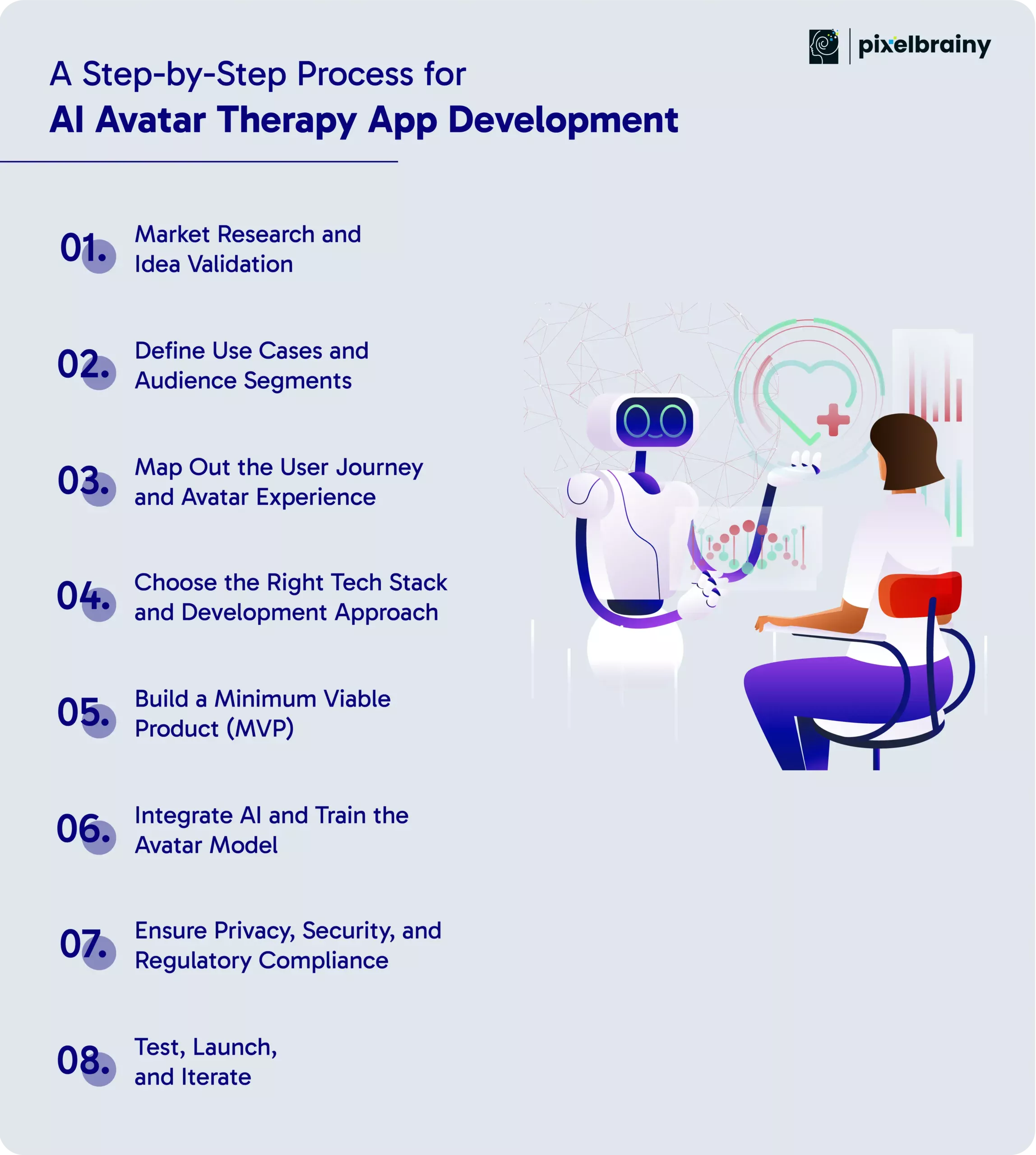
The first step in AI avatar therapy app development is to validate the problem, target users, and product model before investing heavily in development.
This research helps establish a realistic product scope and identifies which capabilities should be validated first.
Once the concept is validated, define exactly who will use the platform and what they will use it for. This is an essential part of developing an AI avatar therapy app because the intended audience directly affects the AI behavior, safety architecture, user experience, and feature requirements.
A clearly defined audience prevents the product from becoming a generic chatbot with an avatar layered on top.
The next step is to design how therapists create and manage their AI avatar and how clients interact with it. A UI/UX design company can help translate these workflows into user journeys, wireframes, prototypes, and intuitive interfaces.
The objective is to make the personalized avatar feel consistent with the therapist's defined approach while keeping the interaction transparent and appropriately bounded.
Technology decisions determine how effectively the platform can support customizable avatars, conversational intelligence, security, and future scalability. Organizations evaluating top AI app development companies should look for teams with experience across conversational AI, avatar technology, healthcare applications, and secure cloud architecture.
The development approach should support customization while maintaining centralized safety, security, and administrative controls.
After defining the architecture, build an MVP development version focused on validating the most important therapist-specific workflows. The objective is not to reproduce every planned feature, but to create enough functionality to test whether the product concept works in practice.
A focused MVP provides practical feedback before the platform moves into full-scale development.
Also Read: Top 10 AI MVP Development Companies in USA
This is the stage where the platform develops its therapist-specific intelligence. Through AI integration, the application can connect conversational models, speech technologies, avatar systems, knowledge sources, personalization logic, and safety mechanisms.
The goal is a controlled AI system that reflects the therapist's defined methodology rather than an unrestricted conversational agent.
Privacy and clinical safety must be built into the platform architecture from the beginning. When building an AI avatar therapy app, the handling of therapy-related conversations, personal information, and other sensitive data requires careful security planning.
Compliance should be treated as an ongoing product requirement rather than a final pre-launch checklist.
Before you create AI avatar therapy app functionality for broad public use, test both the technical system and the clinical interaction model. Testing should cover the avatar experience, AI responses, therapist controls, privacy mechanisms, performance, and safety workflows.
Continuous testing and iteration help transform the initial concept into a scalable, therapist-specific platform.
Therefore, the AI avatar therapy app development process should combine product validation, customizable avatar design, AI engineering, clinical safeguards, and continuous testing to move from concept to a secure therapist-guided platform.
The cost to create an AI Avatar Therapy App typically ranges between $30,000 and $300,000+, depending on your app’s scope, complexity, and the AI capabilities you plan to implement. Whether you're building a lightweight MVP or a full-featured platform powered by advanced AI, it's important to understand how different factors contribute to your development budget.
Below are the key cost drivers in AI Avatar Therapy App development:
The more features you add, the higher the cost.
Advanced AI functions like sentiment detection, contextual replies, or emotion-based suggestions require powerful machine learning models.
Creating an intuitive interface and a compelling avatar experience is a vital investment.
Where your development team is based can impact your budget significantly.
Handling mental health data demands full compliance with health and privacy regulations.
Post-launch expenses can’t be ignored.
If you plan to sync the app with calendars, video platforms, CRMs, or wearables, additional APIs and integrations will increase development time and cost.
Curious how to get started with a smart, scalable product? Explore our guide on build AI App to understand the core technologies and planning strategies.
Looking for a detailed pricing framework? Our full breakdown on AI App development cost explains what influences your budget and how to reduce unnecessary expenses.
Here’s a clear and detailed comparison table between developing an MVP and a Full-Scale AI Avatar Therapy App. This table breaks down the cost, scope, timeline, and capabilities—helping you evaluate which option suits your goals and budget.
| Category | MVP (Minimum Viable Product) | Full-Scale AI Avatar Therapy App |
| Estimated Cost | $30,000 – $60,000 | $150,000 – $300,000+ |
| Development Timeline | 8 – 12 weeks | 5 – 9 months |
| Target Users | Early adopters, test audience, pilot users | Public release, therapy clinics, global audiences |
| Core Features | Basic avatar interaction (text/voice), mood tracking, journaling, user onboarding, simple dashboard | Advanced avatar interaction, voice sentiment analysis, admin panel, personalized content, goal tracking, real-time analytics |
| AI Capabilities | Pre-built chatbot or basic NLP integration | Custom AI models, emotion AI, adaptive conversation engine |
| Design Scope | Standard UI/UX, limited avatar customization | Fully branded UI/UX, animated avatars, user-specific flows |
| Compliance & Security | Basic HIPAA/GDPR precautions | Full HIPAA/GDPR compliance, encrypted data flows, multi-layered authentication |
| Analytics | Basic mood and session logs | Deep insights, emotional analytics, therapist dashboards |
| User Feedback Loop | Manual or basic form-based feedback | Integrated feedback, session ratings, sentiment mapping |
| Use Case | Validate concept, gather user feedback, attract investors | Scalable product launch, monetization, enterprise partnerships |
Recommendation:
There is no one-size-fits-all pricing when it comes to building an AI therapy app using AI Avatar. From MVPs to enterprise-level platforms, the cost of AI Avatar Therapy App development depends on your vision, your team, and the level of intelligence and customization you aim to deliver. Making smart decisions early in the process can help you balance innovation with budget, ensuring both short-term results and long-term growth.

An AI avatar therapy app brings together several technology layers that must work reliably as one system. The technology behind the product needs to support not only realistic avatar interaction, but also conversational AI, voice processing, secure data management, therapist controls, personalization, analytics, and scalable backend infrastructure. For a therapist-specific platform, the architecture should also allow each professional to configure the avatar's communication style, therapeutic approach, approved content, and client interaction workflows without compromising centralized security and safety controls.
The right technology foundation directly influences the performance, scalability, customization, and overall AI avatar therapy app development cost. Whether your goal is to develop AI avatar therapy app functionality for individual therapists, clinics, or a larger coaching and mental health platform, each technology layer should be selected around the intended user experience and clinical requirements.
Below is a comprehensive table showing the core parameters and recommended tools or technologies for each layer.
| Category | Recommended Tools/Technologies | Purpose/Explanation |
| Frontend Development | React Native, Flutter, Swift, Kotlin | Used to build the user interface for mobile apps; supports cross-platform or native UI |
| Backend Development | Node.js, Django, Flask, Express.js | Handles server-side logic, APIs, user sessions, and connects with the database |
| AI/NLP Engine | OpenAI (GPT-4), Google Dialogflow, Rasa, IBM Watson | Powers intelligent avatar conversations with language understanding and generation |
| Avatar Animation & UI | Unity, Unreal Engine, Ready Player Me, DeepBrain AI | Used for designing, animating, and customizing interactive 3D avatars |
| Voice & Speech Tools | Google TTS, Amazon Polly, Whisper, Azure Speech API | Converts speech to text and vice versa for real-time voice interaction with avatars |
| Database | PostgreSQL, MongoDB, Firebase | Stores user data, conversation logs, and mental health tracking metrics securely |
| Cloud Hosting | AWS, Google Cloud, Microsoft Azure | Hosts the app backend, handles scalability, storage, and ensures high availability |
| Authentication & Security | OAuth 2.0, JWT, Firebase Auth, HIPAA-compliant encryption | Manages user login, access control, and ensures data privacy and compliance |
| Analytics & Monitoring | Mixpanel, Google Analytics, Sentry, Firebase Analytics | Tracks user behavior, session data, and monitors app performance in real-time |
| DevOps & CI/CD | GitHub Actions, Jenkins, Docker, Kubernetes | Supports continuous integration, automated deployment, and app scalability |
The right tech stack provides the foundation to build an AI avatar therapy app that combines realistic interaction, therapist-specific personalization, AI capabilities, secure data handling, and scalable performance.
Also Read: How To Build An AI Mental Health and Wellness App Like Wysa?
Building an AI avatar therapy app becomes significantly more complex when the goal is to create a therapist-specific AI avatar rather than a generic mental health chatbot. The avatar may need to reflect an individual therapist's communication style, therapeutic framework, voice, personality, and area of specialization while delivering only the interactions and content that the professional has approved.
This creates several development challenges across AI model behavior, emotional understanding, avatar design, privacy, crisis management, and cultural adaptation. A platform that allows multiple therapists to create their own AI avatars also needs a scalable architecture that can personalize each avatar without compromising security or clinical safeguards.
For businesses researching how to build an AI avatar therapy app from scratch, these challenges are important to address before moving into full-scale development. They also influence the complexity, technology requirements, and overall cost of AI avatar therapy app development.
Below are the major challenges involved in developing an AI avatar therapy app and practical approaches that can help development teams address them.
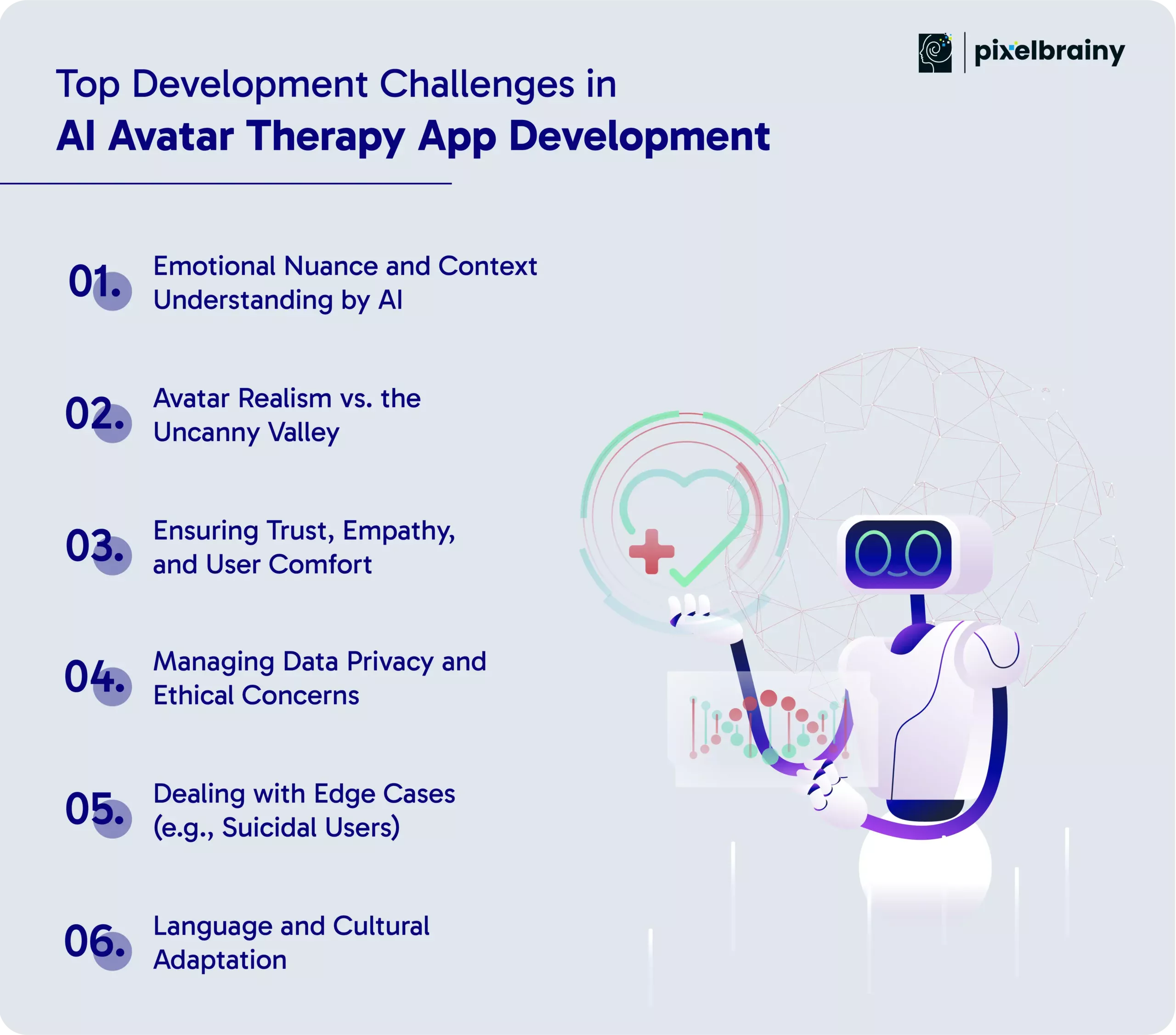
Challenge: AI often lacks the ability to understand layered emotions such as sarcasm, guilt, or grief, especially in sensitive mental health conversations. This can lead to inappropriate or emotionally flat responses.
Solution: Train AI models using large datasets of anonymized therapeutic conversations. Use advanced Natural Language Processing (NLP) and emotion detection layers to better analyze user intent, tone, and emotional state. Include fallback flows that offer human escalation when emotional complexity is detected.
Challenge: Creating overly realistic avatars may cause discomfort or unease in users due to the uncanny valley effect, where avatars are close to human-like but not quite natural.
Solution: Opt for semi-realistic or stylized avatars with warm, soft animations that focus on emotional relatability over hyperrealism. Prioritize voice tone, facial expressions, and micro-interactions that evoke trust and comfort.
Challenge: If users do not feel emotionally safe, understood, or respected by the avatar, they will disengage quickly. Trust is especially critical in mental health applications.
Solution: Incorporate therapist-approved scripts and interaction models. Design avatars with customizable personalities or voices, and embed empathetic language patterns that mirror techniques used in real therapy, such as reflective listening and validation.
Challenge: AI therapy apps handle deeply personal information. Any data misuse or security lapse can lead to significant user harm and legal risks.
Solution: Implement strict data protection protocols such as end-to-end encryption, zero-trust architecture, and regional compliance with HIPAA, GDPR, or other applicable standards. Offer transparent data policies and allow users to control how their data is used and stored.
Challenge: AI is not equipped to handle life-threatening or high-risk situations involving self-harm, trauma, or crisis behavior.
Solution: Use AI to detect crisis keywords and patterns in real-time, then immediately redirect the session to human support or provide emergency resources. Integrate with licensed professionals, helplines, or in-app escalation protocols to ensure safety.
Challenge: Users express emotions differently depending on their language and cultural background. A generic AI model may misinterpret phrases or respond inappropriately.
Solution: Train your AI model on multilingual, culturally diverse data. Offer localization for various regions and allow users to choose from a selection of culturally relevant avatar personas and communication styles.
Overcoming these challenges helps create an AI avatar therapy app that delivers a personalized therapist-specific experience while maintaining the privacy, safety, reliability, and human oversight required for sensitive mental health interactions.
The future of AI avatar therapy apps is moving toward more personalized, immersive, and human-guided digital experiences. As AI avatar therapy app development advances, therapist-specific avatars could become increasingly capable of carrying a professional's approved therapeutic approach into between-session interactions while connecting with emerging technologies such as AR/VR, wearables, emotion AI, and hybrid care platforms.
For businesses exploring developing an AI avatar therapy app, the key question is no longer simply how realistic an avatar can look, but how emerging technologies can improve personalization, continuity, accessibility, and therapist oversight without overstating what AI can clinically assess or provide. These developments are particularly relevant for platforms that want to create customizable AI avatars for individual therapists, specialized care programs, and coaching professionals.
Here are some of the key developments that could shape the future of AI avatar therapy apps:
The future of therapy will extend beyond screens.
Emotion AI is becoming more sophisticated and responsive.
AI therapy won’t be limited to mobile or desktop apps.
The future of care is collaborative, not competitive.
AI therapy apps will become more inclusive and culturally sensitive.
The future of AI avatar therapy apps will increasingly combine personalized avatars, immersive technologies, connected devices, and human-led care to create more adaptive digital mental health experiences.
Building an AI avatar therapy app requires a technology partner that understands both advanced AI development and the sensitive requirements of mental health applications. PixelBrainy helps therapists, healthcare organizations, and digital health startups turn AI avatar concepts into customized platforms with conversational AI, realistic avatar experiences, therapist-controlled workflows, and secure application architecture.
Whether you want to create an AI avatar based on a therapist's communication style, develop a platform for multiple professionals, or build a scalable mental health solution for clients, our team can support the product journey from strategy and UI/UX through AI integration, development, testing, and deployment.
We recently delivered an AI avatar therapy app for a digital health brand focused on early-intervention care for young adults. The platform featured real-time emotional check-ins, guided journaling, and an expressive avatar designed to mimic a wellness coach. In its first quarter, the app achieved a 4.8 user rating and showed a 40% improvement in session consistency across users aged 18–24.
For broader healthcare product requirements, PixelBrainy also works as an AI healthcare software development company, helping businesses develop secure AI-powered applications tailored to their specific workflows and users.
Let’s build an AI avatar therapy app that combines personalized AI interaction, realistic avatar experiences, secure architecture, and therapist-guided care.
AI avatar therapy apps are emerging as a new way to extend digital mental health support beyond traditional therapy sessions. From realistic avatar interactions and voice-based conversations to personalized therapeutic content, these platforms can create more engaging experiences while keeping therapists and coaches involved in the care journey.
As explored throughout this guide, successful AI avatar therapy app development requires more than adding an animated character to a chatbot. Building an AI avatar therapy app involves thoughtful product validation, therapist-specific personalization, conversational AI, avatar technology, secure architecture, privacy controls, safety mechanisms, and continuous testing. Whether your goal is to develop AI avatar therapy app functionality for an individual therapist, healthcare organization, coaching business, or digital health startup, the development approach should align technology with clearly defined user and clinical requirements.
With the right development partner, you can create an AI avatar therapy app that delivers personalized, scalable, and therapist-guided digital support.
Book an appointment with PixelBrainy to discuss your AI Avatar Therapy App development idea and turn your concept into a practical product roadmap.
The average cost to develop an AI Avatar Therapy App from scratch can range from $30,000 to $300,000+. A basic MVP with conversational AI and a simple avatar may fall toward the lower range, while an advanced platform with realistic avatars, voice interaction, therapist-specific customization, AI personalization, safety systems, integrations, and scalable infrastructure can exceed $300,000.
The steps to develop an AI avatar therapy app from idea to launch typically include market research, use-case definition, UX planning, technology architecture, MVP development, AI and avatar integration, security and compliance implementation, testing, launch, and continuous optimization. Therapist-specific customization should also be planned early if every professional will have an individual AI avatar.
To build an AI avatar therapy app for individual therapists, you can create a platform where each professional configures an avatar based on their communication style, therapeutic approach, specialization, voice, personality, and approved content. The platform can then use these configurations to deliver personalized between-session interactions while maintaining therapist oversight.
To create an AI avatar therapy app, essential capabilities can include therapist onboarding, customizable avatar profiles, conversational AI, voice interaction, mood check-ins, journaling, therapist-approved exercises, client management, dashboards, safety escalation, secure authentication, and protected conversation data. Advanced platforms can also include more sophisticated avatar animation and personalization.
The cost to build a therapist-specific customizable AI avatar depends on the level of customization and AI complexity. Development can start around $30,000 for a focused solution and reach $300,000+ for a sophisticated platform with photorealistic avatars, custom voice, personalized AI behavior, therapist dashboards, security infrastructure, and multi-user scalability.
The development process of an AI avatar therapy app covers product discovery, user journey design, technical architecture, avatar development, conversational AI implementation, therapist customization, backend development, security, testing, deployment, and post-launch improvements. The process should also define clear boundaries for AI interactions and situations requiring human intervention.
Yes, it is technically possible to develop an AI avatar therapy app with configurable voice and personality characteristics. A platform can allow therapists to define communication preferences, conversational tone, approved content, therapeutic methodology, and other behavioral parameters. Voice or likeness replication also requires appropriate consent, rights management, and safeguards.
To make an AI avatar therapy app scalable for multiple therapists, the platform can use a multi-tenant architecture where each professional has a separate profile, avatar configuration, approved knowledge or content, client workspace, and access permissions. Shared infrastructure can support centralized security and administration while keeping therapist-specific configurations separated.

About The Author
Sagar Bhatnagar
Sagar Sahay Bhatnagar brings over a decade of IT industry experience to his role as Marketing Head at PixelBrainy. He's known for his knack in devising creative marketing strategies that boost brand visibility and market influence. Sagar's strategic thinking, coupled with his innovative vision and focus on results, sets him apart. His track record of successful campaigns proves his ability to utilize digital platforms effectively for impactful marketing efforts. With a genuine passion for both technology and marketing, Sagar continuously pushes PixelBrainy's marketing initiatives to greater success.
Working with PixelBrainy has been a great experience. They took our vision for an AI-powered platform and turned it into a fully functional product. What impressed me most was their strong understanding of both design and development, and their ability to handle complex requirements with ease. The team was responsive, cooperative, and always open to feedback. They kept things organized, communicated clearly, and delivered quality work on time. I highly recommend PixelBrainy to anyone looking for a skilled and reliable development partner.

Working with the PixelBrainy team has been a highly positive experience. They understand the design requirements and create beautiful UX elements to meet the application needs. The dev team did an excellent job bringing my vision to life. We discussed usability and flow. Sagar worked with his team to design the database and begin coding. Working with Sagar was easy. He has the knowledge to create robust apps, including multi-language support, Google and Apple ID login options, Ad-enabled integrations, Stripe payment processing, and a Web Admin site for maintaining support data. I'm extremely satisfied with the services provided, the quality of the final product, and the professionalism of the entire process. I highly recommend them for Android and iOS Mobile Application Design and Development.

Great experience working with them. Had a lot of feedback and I found that unlike most contractors they were bugging me for updates instead of the other way around. They were extremely time conscience and great at communicating! All work was done extremely high quality and if not on time, early! They were always proactive when it comes to communication and the work is great/above par always. Very flexible and a great team to work with! Goes above and beyond to present us with multiple options and always provides quality. Amazing work per usual with Chitra. If you have UI/UX or branding design needs I recommend you go to them! Will likely work with them in the future as well, definitely recommended!

PixelBrainy is a joy to work with and is a great partner when thinking through branding, logo, and website layout. I appreciate that they spend time going into the "why" behind their decisions to help inform me and others about industry best practices and their expertise.

I hired them to design our software apps. Things I really like about them are excellent communication skills, they answer all project suggestions and collaborate right away, and their input on design and colors is amazing. This project was complex and needed patience and creativity. The team is amazing to do business with. I will be using them long-term. Glad to see there are some good people out there. I was afraid to try and outsource my project to someone but I am glad I met them! I really can't say enough. They went above and beyond on this project. I am very happy with everything they have done to make my business stand out from the competition.

It was great working with PixelBrainy and the team. They were very responsive and really owned the project. We'll definitely work with them again!

I recently worked with the PixelBrainy team on a project and I was blown away by their communication skills. They were prompt, clear, and articulate in all of our interactions. They listened and provided valuable feedback and suggestions to help make the project a success. They also kept me updated throughout the entire process, which made the experience stress-free and enjoyable.

PixelBrainy is very good at what it does. The team also presents themselves very professionally and takes care of their side of things very well. I could fully trust them taking up the design work in a timely and organised manner and their attention to detail saved us lots of effort and time. This particular project was quite intense and the team showed that they function very well under pressure. Very much looking forward to working with her again!

It's always an absolute pleasure working with them. They completed all of my requests quickly and followed every note I had for them to a T, which made our process go smoothly from start to finish. Everything was completed fast and following all of the guidelines. And I would recommend their services to anyone. If you need any design work done in the future, PixelBrainy should be your first call!

They took ownership of our requirements and designed and proposed multiple beautiful variants. The team is self-motivated, requires minimum supervision, committed to see-through designs with quality and delivering them on time. We would definitely love to work with PixelBrainy again when we have any requirements.

PixelBrainy was a big help with our SaaS application. We've been hard at work with a new UI/UX and they provided a lot of help with the designs. If you're looking for assistance with your website, software, or mobile application designs, PixelBrainy and the team is a great recommendation.

PixelBrainy designers are amazing. They are responsive, talented, and always willing to help craft the design until it matches your vision. I would recommend them and plan to continue them for my future projects and more!!!

They were awesome! Did a good job fast, and good communication. Will work with them again. Thank you

Creative, detail-oriented, and talented designers who take direction well and implement changes quickly and accurately. They consistently over-delivered for us.

PixelBrainy team is very talented and creative. Great designers and a pleasure to work with. PixelBrainy is an excellent communicator and I look forward to working with them again.

PixelBrainy has a very talented design team. Their work is excellent and they are very responsive. I enjoy working with them and hope to continue on all of our future projects.

Transform your ideas into reality with us.
Across these industries, each engagement brings unique challenges, from early-stage product development to scaling complex systems, helping us build a practical understanding of real-world product environments.