AI Summary Powered by PixelBrainy
Can artificial intelligence truly become the first line of support for mental health crises? As digital transformation reshapes the healthcare landscape, AI Mental Health First Aid Apps are emerging as powerful tools to provide timely support, early intervention, and compassionate care to individuals in distress. These apps are designed to deliver instant, accessible help that can guide users through emotional challenges before professional assistance becomes necessary.
In an era where mental health issues are on the rise globally, the demand for AI Mental Health First Aid App Development has skyrocketed. Entrepreneurs, healthcare providers, and wellness startups are now exploring how to create AI Mental Health First Aid App solutions that combine advanced AI capabilities with empathetic user experiences. The goal is not to replace therapists or counselors but to bridge the gap between the onset of mental distress and professional treatment.
Mental Health First Aid App Development using AI involves integrating technologies like natural language processing, sentiment analysis, and predictive analytics to create personalized, real-time mental health support. Whether it’s identifying early warning signs of anxiety, offering coping strategies, or escalating critical cases to professionals, these apps are becoming an essential part of the digital healthcare ecosystem.
For businesses looking to enter the healthtech space, AI mental health first aider support app development offers immense opportunities to innovate, scale, and make a positive social impact — while addressing one of the most pressing needs of our time.

An AI Mental Health First Aid App is a digital platform designed to offer immediate emotional support and guidance to individuals experiencing mental health challenges. Inspired by the principles of traditional Mental Health First Aid (MHFA) training, these apps aim to provide early intervention, assessment, and self-help tools before professional care is accessed.
These apps typically include AI-driven chatbots capable of empathetic conversations, mental state assessments through mood tracking, and educational resources that teach coping mechanisms. They also integrate with professional support networks, allowing users to escalate their cases when necessary. By combining psychology-based frameworks with intelligent technology, the app serves as a bridge between self-care and clinical care.
Artificial Intelligence is redefining how digital mental health support is delivered. By blending technology with human-centric care, AI enables apps to provide timely, personalized, and empathetic responses to users in need.
The Role of AI in Mental Health First Aid App is to empower platforms with intelligent capabilities that go beyond static content, offering dynamic support that adapts to each user’s emotional state.
In MHFA Supporter App Development, AI plays a crucial role in enhancing user experience, improving response quality, and ensuring early intervention before mental health challenges escalate. The development of Mental Health First Aid App With AI allows for advanced features that can guide users through emotional crises, provide coping strategies, and connect them to professional help when necessary.
By integrating these intelligent features, AI transforms a simple digital tool into a powerful, proactive mental health ally that supports users through every stage of their emotional journey.
Did you know the global mental health apps market is projected to reach USD 17.52 billion by 2030, growing at a CAGR of 14.6% from 2025 onward? This rapid growth underscores a rising demand for scalable, digital mental health tools that can serve large populations with flexibility, accessibility, and innovation.
When you choose AI Mental Health First Aid App Development Solutions, you are aligning with a future-proof, high-growth sector. Whether you are a startup, healthtech firm, or wellness organization, investing in an AI Mental Health First Aid Application Development pathway positions you to tap into both social impact and strong market opportunity.
There are several compelling reasons to build AI Mental Health First Aid App Development projects now:
Mental health awareness has soared in recent years, especially post-pandemic. Consumers are seeking accessible, stigma-free solutions. Digital mental health platforms are no longer niche; they are becoming mainstream.
Once the AI models and infrastructure are built, supporting additional users becomes far less expensive than deploying equivalent human resources at scale.
Basic mental health apps are already common. But developing AI Mental Health First Aid App capabilities (e.g. real-time empathy, mood prediction, crisis escalation) gives you a competitive edge and higher perceived value.
Many regions lack mental health professionals. An AI-powered app can bridge these gaps by providing preliminary support, triage, and guidance even where professional services are sparse.
Health systems, insurers, employers, and governments may license or adopt your solution to augment their mental health service offerings. Having a well developed AI app makes such partnerships more credible.
Your app can gather anonymized, aggregated data to understand population mental health trends. These data can refine your models and support research, policy, or personalized care.
Because of these drivers, stakeholders who invest in AI-augmented wellness technology now stand to benefit both economically and socially. Choosing to invest in AI Mental Health First Aid App Development Solutions today is a strategic move toward building the next generation of compassionate, scalable mental health support.
Can technology truly change the way we approach mental health care? As awareness grows and demand for support increases, digital tools powered by artificial intelligence are becoming powerful allies in mental well-being. Building an AI-based mental health first aid solution is not just a trend but a strategic step toward transforming how people access, receive, and benefit from psychological support.
Below are the six most impactful benefits of creating an AI mental health first aid app and why it can be a game-changer for both users and organizations:
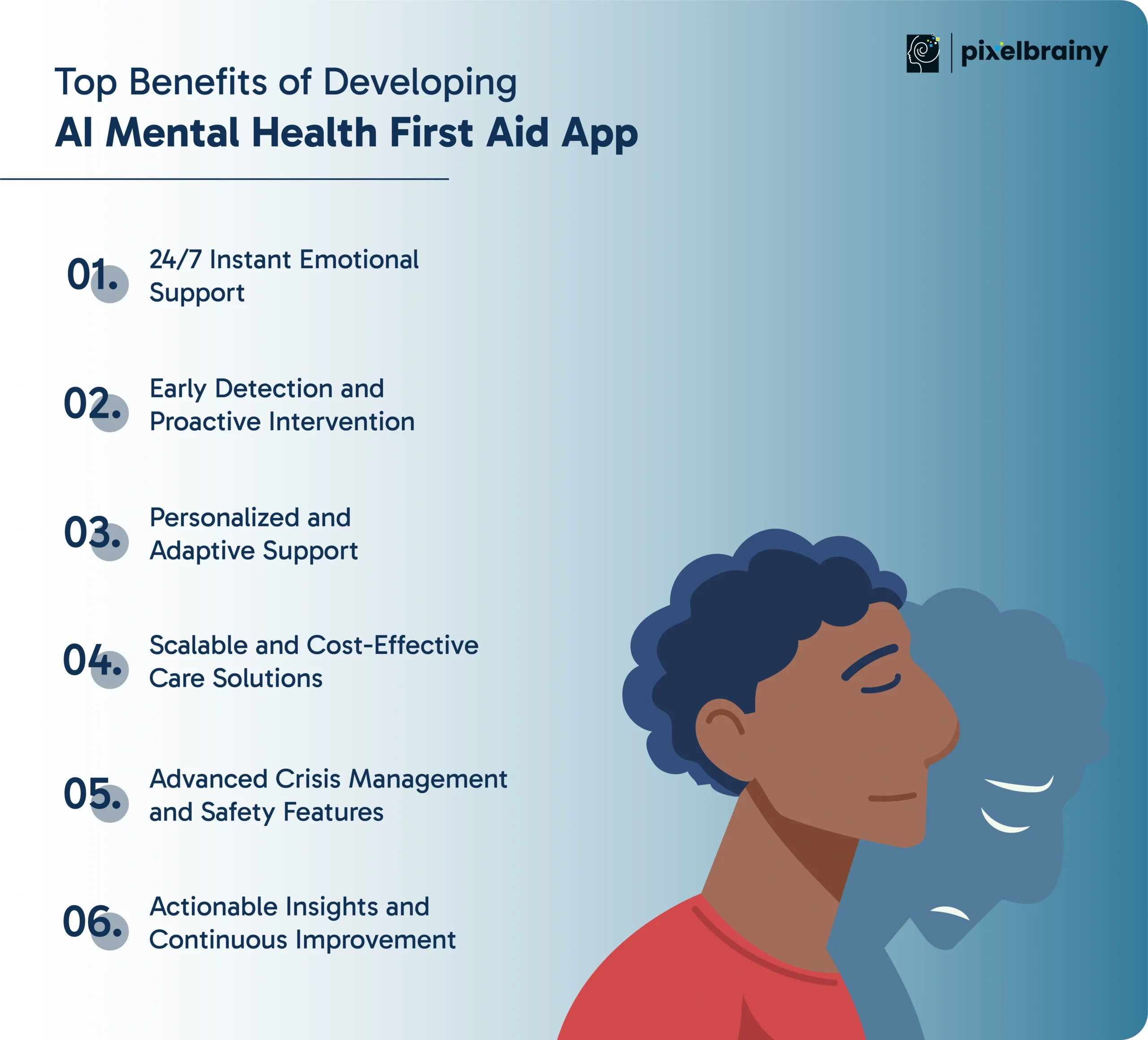
One of the most immediate advantages of AI-powered mental health apps is their ability to provide round-the-clock assistance. Mental health challenges don’t follow a schedule, and individuals often need guidance during late nights, weekends, or moments when professionals are unavailable. AI chatbots and virtual assistants can step in during these crucial times, offering empathetic conversations, coping mechanisms, and emotional support without any waiting period.
Moreover, this constant availability helps reduce feelings of isolation. Users can reach out for help in real time, receive meaningful responses, and feel heard and supported. Such continuous access can make a significant difference in preventing small emotional struggles from evolving into larger mental health crises.
AI excels in identifying early warning signs that may go unnoticed in traditional care models. By analyzing user behavior, language patterns, and emotional tone, these apps can detect signs of stress, anxiety, or depression long before they escalate.
For example, subtle changes in a user’s conversation tone or engagement patterns might indicate a shift in mental state. The system can then recommend timely self-care strategies or encourage the user to seek professional support. This proactive approach not only improves mental health outcomes but also reduces the likelihood of more severe conditions developing over time.
Every individual experiences mental health differently, and a one-size-fits-all approach is rarely effective. AI brings the power of personalization by tailoring recommendations, exercises, and content based on each user’s emotional state, history, and behavioral patterns.
Over time, machine learning algorithms adapt and refine these suggestions, ensuring that users receive support that aligns closely with their evolving needs. Whether it’s personalized mindfulness sessions, targeted stress management techniques, or curated self-help content, the level of customization significantly enhances user satisfaction and engagement.
Traditional mental health care models often face challenges such as long waiting lists, high costs, and limited availability of professionals. AI-powered platforms solve these issues by being highly scalable and cost-efficient. Once developed, a single platform can serve thousands of users simultaneously, delivering consistent and quality support without additional staffing costs.
This scalability makes mental health support more affordable for users and more sustainable for organizations. It is especially beneficial for employers, schools, and healthcare systems that want to provide large-scale mental wellness solutions without the prohibitive costs associated with traditional therapy.
AI mental health apps are not just about emotional support; they also play a critical role in crisis management. By continuously monitoring user behavior and analyzing language for red flags, the app can detect high-risk situations, such as suicidal thoughts or severe panic attacks.
In such scenarios, the system can automatically trigger emergency protocols, such as connecting users to helplines, alerting caregivers, or facilitating immediate contact with mental health professionals. This rapid response capability has the potential to save lives and ensure users receive help exactly when they need it most.
Beyond individual support, AI platforms generate valuable anonymized data that can drive ongoing improvements in mental health services. These insights provide developers and healthcare providers with information about user behavior, engagement patterns, and common triggers.
With this data, apps can evolve to offer more precise recommendations, integrate new therapeutic approaches, and enhance user experience over time. Additionally, organizations can use aggregated data for mental health research, workplace wellness initiatives, or preventive care strategies, creating broader societal impact.
From enhancing accessibility and personalization to enabling crisis response and data-driven innovation, the advantages of developing an AI Mental Health First Aid App extend far beyond technology — they reshape the very future of mental healthcare.
What are the must-have elements that make an AI mental health application truly impactful? The success of an app lies in blending intelligent technology with empathetic design so users feel supported, safe, and understood. For anyone planning AI Mental Health First Aid App Development, incorporating the right features is essential to ensure trust, usability, and effectiveness.
Here are the core features that define a powerful AI-driven mental health first aid app:
| Feature | Description |
| AI-Powered Chatbot Support | An intelligent chatbot built with natural language processing to hold empathetic conversations. It acts as the first responder, providing real-time guidance and emotional support 24/7. |
| Mood Tracking and Analytics | Enables users to log their daily moods and feelings, while AI analyzes patterns to identify mental health trends. This helps users understand triggers and adopt healthier habits. |
| Sentiment Analysis Engine | Interprets text or voice inputs to detect stress, anxiety, or depressive tones. By analyzing sentiment, the app can tailor responses and recommend timely coping mechanisms. |
| Personalized Content Recommendations | Delivers tailored self-help articles, guided meditations, or exercises that match the user’s emotional state. AI continuously adapts recommendations for better outcomes. |
| Self-Help Exercises and Tools | Provides resources like mindfulness practices, CBT-inspired activities, breathing techniques, and journaling prompts to encourage independent emotional management. |
| Crisis Alert and Escalation System | Detects high-risk behaviors or suicidal indicators and immediately connects users with hotlines or emergency resources to ensure safety. |
| Emergency Contact Integration | Lets users add trusted family or friends who can be alerted in case of a severe crisis, creating a strong support network. |
| Therapist and Specialist Booking | Allows users to schedule telehealth sessions with licensed professionals directly through the app, bridging AI support with human intervention. |
| Progress Reports and Insights Dashboard | Visualizes emotional data and progress over time through charts and insights. This helps users and therapists track improvements or recurring patterns. |
| Secure Data Storage and HIPAA Compliance | Ensures sensitive health data is encrypted and compliant with regulations like HIPAA, giving users confidence that their information is safe. |
| Push Notifications and Reminders | Sends timely nudges for self-care routines, therapy follow-ups, or check-ins. These reminders help users stay consistent in their mental wellness journey. |
| Gamified Mental Wellness Activities | Adds engagement through challenges, streaks, and rewards, encouraging users to practice mental wellness habits regularly in a motivating way. |
| Multilingual Support | Offers services in multiple languages to make the app inclusive and accessible for a diverse global audience. |
| Community and Peer Support Spaces | Creates safe digital communities +B16where users can share stories, exchange coping techniques, and feel connected to others with similar experiences. |
| Wearable Device Integration | Syncs with smartwatches and fitness trackers to analyze heart rate, sleep cycles, or activity levels. This biometric data helps AI predict stress or anxiety episodes early. |
By integrating these functions, the advantages of developing an AI Mental Health First Aid App multiply, creating meaningful impact for users and providers alike.
While core features ensure functionality, it is the non-ordinary, advanced innovations that elevate an app into a truly powerful digital companion. Adding these unique capabilities during AI Mental Health First Aider App Development can significantly improve engagement, personalization, and long-term impact.
Beyond text-based sentiment analysis, voice emotion recognition interprets tone, pitch, and speech patterns to detect hidden stress, anxiety, or sadness. This feature adds a human-like layer of empathy and helps the app deliver highly personalized responses. By integrating this into AI mental health first aid application development, developers can create experiences that feel more natural and supportive.
Augmented and virtual reality can immerse users in calming, guided therapeutic environments like meditation rooms or stress-relief landscapes. These sessions help users manage panic, anxiety, or PTSD in a safe digital space. The inclusion of AR/VR strengthens the innovation factor in developing AI mental health apps and provides a competitive edge for wellness-focused solutions.
Integrating wearable data such as heart rate, sleep quality, and movement patterns allows AI to predict potential mental health concerns before they manifest. This proactive monitoring ensures timely interventions. Adding predictive algorithms is a next-level advancement in AI mental health first aider support app development that enhances preventive care.
Instead of relying on a single input like text, multimodal systems analyze voice, facial expressions, and biometric signals simultaneously. This holistic approach creates deeper insights into user well-being. For anyone looking to build AI mental health first aid app development solutions, multimodal analysis represents a critical differentiator.
Rather than offering generic resources, advanced AI systems can design personalized mental health roadmaps. These roadmaps adapt over time, suggesting exercises, lifestyle changes, and coping strategies based on user progress. This makes the journey of AI mental health first aid application development more impactful and user-focused.
Also Read: Building an AI Avatar Therapy App for Counselors and Coaches
Beyond simple engagement tools, advanced gamification can incorporate wellness challenges tied to real-world outcomes, such as improved sleep patterns or reduced anxiety levels. Reward systems encourage users to remain consistent. Gamified models are now becoming a must-have in AI mental health app development solutions to sustain long-term adoption.
An advanced feature is connecting the app with local mental health organizations, schools, or workplace wellness programs. This allows users to access community-level support and professional resources. Building this functionality during AI mental health first aider app development strengthens collaboration between digital and offline care systems.
Given the sensitivity of mental health data, blockchain integration ensures transparency, immutability, and user control over records. This enhances trust while maintaining full regulatory compliance. As a futuristic step in developing AI mental health first aid applications, blockchain can redefine how securely mental health data is managed.
By adding these advanced innovations, the advantages of creating an AI Mental Health First Aider App go beyond ordinary support, offering futuristic and deeply personalized care.
So, what is the process to create AI Mental Health First Aid App that is both user-friendly and clinically effective? The journey involves strategic planning, design, testing, and scaling. Below is a roadmap that highlights every critical step in the development of AI Mental Health First Aid App, from ideation to deployment.
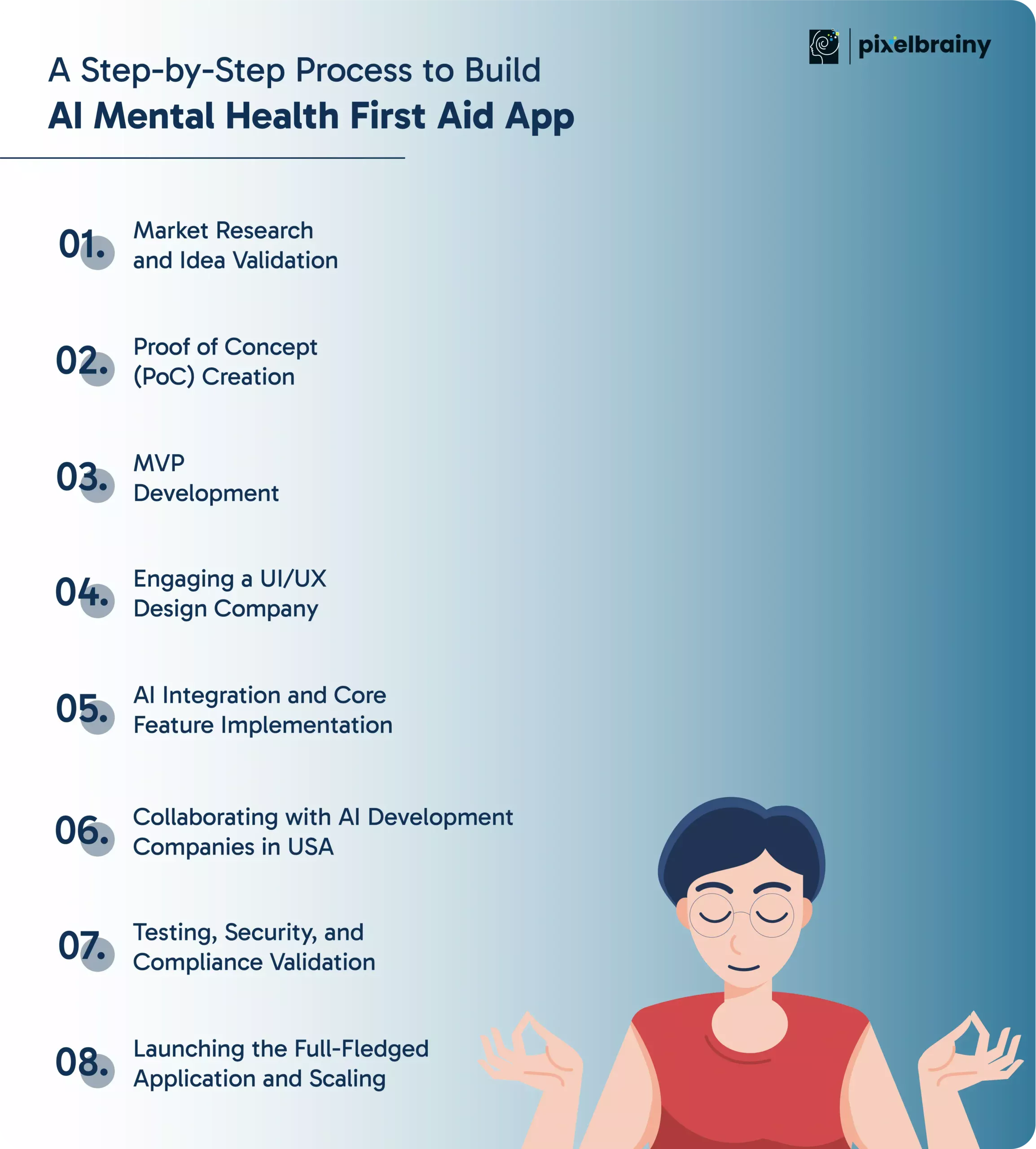
Before developing AI Mental Health First Aid App, businesses need to conduct thorough market research to identify user needs, competitor offerings, and unique features. Validation ensures that the app addresses real-world gaps in mental health care. A successful AI Mental Health First Aider App must be based on evidence-driven insights and industry demand.
Aim of this step: The goal is to deeply understand the target audience, their mental health challenges, and how AI can solve them. This stage also helps identify revenue potential, compliance requirements, and competitive advantages before investing heavily in development.
The next stage is building a PoC for AI Mental Health First Aid Apps to test core functionalities like chatbot responses, sentiment detection, or mood tracking. This stage helps developers evaluate feasibility, identify technical limitations, and refine the idea before investing heavily in Mental Health First Aid Application development with AI.
Aim of this step: The goal here is to confirm that the concept is technically achievable and valuable. A successful PoC builds confidence for stakeholders and helps in refining features before moving toward full-scale development.
In this phase, the focus shifts to MVP Development, where only the most critical features are implemented, such as AI chatbot support, user onboarding, and basic mood analytics. By launching an MVP, businesses can test the app with early adopters, gather feedback, and validate market fit. This approach reduces risks when planning AI Mental Health First Aid App Development.
Aim of this step: The goal is to release a functioning version of the product quickly to real users. Their feedback helps in identifying what works, what needs improvement, and where to invest further before committing to a full-scale build.
Design plays a vital role in making users feel comfortable. Partnering with a UI/UX design company ensures intuitive navigation, empathetic layouts, and user-friendly interaction flows. A well-designed interface in AI Mental Health First Aid Apps improves engagement, retention, and trust, making it easier for users to seek help without hesitation.
Aim of this step: The goal is to ensure that the app is not only functional but also emotionally supportive and easy to use. Good design reduces friction, increases engagement, and builds trust — crucial for mental health support platforms.
The heart of to build AI Mental Health First Aid App lies in AI-driven functionalities. This stage focuses on AI integration, including natural language processing for chatbots, sentiment analysis, and personalized content recommendations. By embedding advanced algorithms, AI Mental Health First Aider App platforms become capable of offering real-time, empathetic, and personalized support.
Aim of this step: The main objective is to make the app intelligent and responsive. This phase ensures that the platform can analyze emotional states, provide tailored advice, and escalate critical cases — all autonomously and accurately.
For specialized tasks, businesses often collaborate with AI Development companies in USA that bring technical expertise and compliance knowledge. Their experience in developing AI Mental Health First Aid App ensures scalability, data security, and alignment with healthcare standards such as HIPAA and GDPR.
Aim of this step: The goal is to leverage expert support to overcome technical, legal, and compliance complexities. Working with seasoned partners accelerates development timelines, reduces errors, and ensures high-quality output.
No AI Mental Health First Aid App Development is complete without rigorous testing. This step ensures functional performance, emotional accuracy in AI responses, and strong data privacy measures. Security validation is critical since AI Mental Health First Aid Apps deal with sensitive user information that requires strict compliance.
Aim of this step: The purpose here is to ensure that the platform is stable, secure, and fully compliant with healthcare regulations. Thorough testing also helps build user trust and minimizes the risk of data breaches or functional errors.
Once testing is complete, businesses can launch a full version of the AI Mental Health First Aider App with all advanced features, including crisis escalation, telehealth integration, and progress tracking. At this stage, the development of AI Mental Health First Aid App transitions from MVP to a scalable product that serves thousands of users while continuously improving through machine learning.
Aim of this step: The goal is to go live with a feature-rich, fully functional platform that is ready to scale. Continuous monitoring and updates ensure the app evolves with user feedback and advances in AI technology.
By following this structured roadmap, businesses can confidently move from concept to reality, ensuring their AI Mental Health First Aid Apps deliver trusted, effective, and transformative mental health support.
Also Read: A Comprehensive Guide To AI Mobile App Development
One of the most common questions entrepreneurs, healthcare providers, and tech startups ask is: “How much does it cost to build an AI Mental Health First Aider App?” The answer depends on several variables, including the app’s complexity, features, design, integrations, and long-term goals. On average, the cost of AI Mental Health First Aid App Development ranges from $20,000 to $200,000+, with ongoing maintenance and AI model updates adding additional costs annually.
Investing in mental health technology is more than a financial decision — it’s a strategic step toward building a scalable, impactful solution that addresses a rapidly growing market demand.
| Type of App | Cost Range | What’s Included |
| Basic MVP (Proof-of-Concept) | $20,000 – $40,000 | Includes core features like AI chatbot, user registration, basic sentiment analysis, and mood tracking. Ideal for startups validating their concept before full-scale launch. |
| Mid-Level App (Feature-Rich MVP) | $40,000 – $80,000 | Adds advanced features such as personalized recommendations, crisis detection, analytics dashboard, push notifications, and limited telehealth integration. Best for early-stage products targeting initial users. |
| Advanced AI Mental Health First Aid App | $80,000 – $150,000 | Offers comprehensive features like multilingual support, wearable integrations, therapist booking, advanced emotion AI, gamification, and HIPAA-compliant security infrastructure. |
| Enterprise-Grade Platform (Custom & Scalable) | $150,000 – $200,000+ | Designed for hospitals, corporations, or nationwide deployment. Includes predictive AI, AR/VR therapy modules, blockchain security, real-time analytics, and custom integrations with health ecosystems. |
The more advanced the features — such as predictive analytics, voice emotion recognition, or AR/VR therapy — the higher the development cost. Basic MVPs cost significantly less but offer limited functionality.
Custom AI models tailored to mental health data sets require significant time and expertise, impacting overall costs. Pre-trained models can lower initial expenses but may offer less precision.
Partnering with a professional design team ensures the app is intuitive and user-friendly, especially for sensitive mental health use cases. High-quality design may increase initial costs but greatly improves adoption.
Integrating APIs for telehealth, wearables, cloud storage, or analytics platforms adds additional development time and cost but significantly enhances app capabilities.
Building HIPAA and GDPR-compliant infrastructure is essential and requires investment in encryption, secure databases, and regular audits — especially when dealing with sensitive health data.
Post-launch, continuous improvement is crucial. Expect to allocate 15–20% of initial development cost annually for maintenance, AI retraining, and feature updates.
Ultimately, the cost of developing an AI Mental Health First Aid App depends on your vision, feature set, and scalability goals, but the investment lays the foundation for a transformative, future-ready mental health solution.
Also Read: AI App Development Cost: From MVPs to Full-Scale AI App
The success of any intelligent mental health application depends not only on innovative features but also on the powerful technologies behind it. Choosing the right tools and frameworks ensures scalability, security, and real-time performance while delivering personalized support to users.
Below is a comprehensive breakdown of the essential tools and technologies used in building AI Mental Health First Aid Apps:
| Category | Tools & Technologies | Explanation |
| Frontend Development | React Native, Flutter, Swift (iOS), Kotlin (Android) | These frameworks allow building responsive, cross-platform mobile applications. React Native and Flutter help reduce time-to-market, while Swift and Kotlin provide native performance and smooth user experiences. |
| Backend Development | Node.js, Django, Ruby on Rails, Laravel | Backend technologies handle server-side logic, data processing, and API integration. Node.js is ideal for real-time applications, Django and Laravel ensure scalability and security, while Rails accelerates rapid development. |
| AI and Machine Learning Frameworks | TensorFlow, PyTorch, Scikit-learn | These are the core technologies for building and training AI models. TensorFlow and PyTorch are widely used for deep learning tasks, while Scikit-learn is great for predictive analytics and sentiment analysis. |
| Natural Language Processing (NLP) | OpenAI GPT, Google Dialogflow, Hugging Face Transformers | NLP tools enable chatbots to understand, interpret, and respond empathetically to user conversations. They are crucial for real-time emotional support and contextual communication in mental health apps. |
| Cloud Infrastructure | AWS, Google Cloud, Microsoft Azure | Cloud platforms provide reliable hosting, AI model deployment, data storage, and scalability. They also include built-in machine learning tools, reducing infrastructure complexity and costs. |
| Database Management | PostgreSQL, MongoDB, Firebase | These databases securely store user profiles, emotional data, and conversation history. PostgreSQL is ideal for structured data, MongoDB for flexibility, and Firebase for real-time synchronization. |
| Data Security & Compliance | OAuth 2.0, SSL Encryption, HIPAA Toolkits | Security layers protect sensitive mental health data, ensuring safe storage, transfer, and compliance with healthcare regulations like HIPAA and GDPR. |
| Analytics & Insights | IBM Watson, Google Analytics, Mixpanel | Analytics tools track user behavior, engagement, and emotional trends. They provide actionable insights for continuous AI model improvement and feature enhancement. |
| APIs & Integrations | Twilio, Stripe, Zoom SDK, Apple HealthKit | APIs expand app capabilities, including communication, payment processing, telehealth video sessions, and wearable health data integration. They help deliver a seamless and feature-rich experience. |
| DevOps & CI/CD Tools | Docker, Kubernetes, Jenkins, GitHub Actions | These tools ensure efficient deployment, scaling, and version control. They streamline continuous integration and delivery, helping the development team maintain and update the app effortlessly. |
By selecting the right combination of these advanced technologies, you can ensure that your AI Mental Health First Aid App is intelligent, scalable, secure, and ready for real-world impact.
Also Read: 10 Innovative Mobile App Ideas for the Healthcare Sector
Building a mental health platform is not just about impact, it is also about sustainability and profitability. With the growing adoption of digital wellness platforms, businesses must explore multiple monetization strategies for AI Mental Health First Aid App to ensure long-term success and growth.
Below are six powerful revenue models that can be integrated to create AI Mental Health First Aid App capable of generating consistent revenue while delivering life-changing value.
This is one of the most popular revenue strategies for wellness platforms. The basic version of the app is offered for free, giving users access to essential features like chatbot support and basic self-help tools. However, advanced features such as personalized therapy plans, AI insights, and professional consultation options are locked behind a premium subscription.
This model works well for startups during early stages of Mental Health First Aid App development with AI, while paving the way for scalable revenue.
The subscription model involves charging users a monthly or annual fee for continued access to mental health support tools. It provides predictable, recurring revenue while encouraging continuous user engagement. Subscribers often get access to exclusive features like real-time therapy sessions, AI-driven progress analytics, and premium content libraries.
This model is ideal for long-term sustainability and consistent revenue growth.
Instead of focusing solely on individuals, businesses can license the app to organizations, schools, healthcare providers, or insurance companies. Many employers now offer mental health support as part of their employee wellness programs, creating a high-demand B2B market.
This approach turns your platform into a scalable solution for enterprise-level clients.
This revenue model charges users based on specific services they use, such as booking therapy sessions, joining workshops, or accessing premium AI-driven assessments. It offers flexibility for users who prefer not to commit to subscriptions while still generating revenue from occasional usage.
This model adds flexibility to your revenue structure while reaching price-sensitive users.
AI mental health platforms can integrate a digital marketplace where users purchase additional tools, personalized programs, or wellness content. These could include guided meditations, therapy courses, habit trackers, or specialized cognitive exercises.
This model enhances user experience while creating multiple micro-revenue streams.
Partnering with mental health brands, wellness organizations, or pharmaceutical companies to promote relevant products or services can generate additional revenue. Sponsored articles, curated content, and recommended products can be integrated into the app in a non-intrusive manner.
This model diversifies revenue and strengthens the brand’s ecosystem.
By combining these revenue models strategically, you can ensure that your AI Mental Health First Aid App remains profitable, impactful, and scalable for years to come.
Also Read: AI Companion App Development: Steps, Cost and Monetization Insights
Developing an AI Mental Health First Aider Supporter App is an impactful yet complex process. While the potential of such a platform is enormous, the development journey involves several critical challenges that go beyond typical app-building tasks. These challenges stem from the sensitive nature of mental health, strict compliance requirements, evolving AI technology, and the necessity to balance innovation with empathy.
Below are the most significant challenges developers face, along with practical solutions to overcome them:
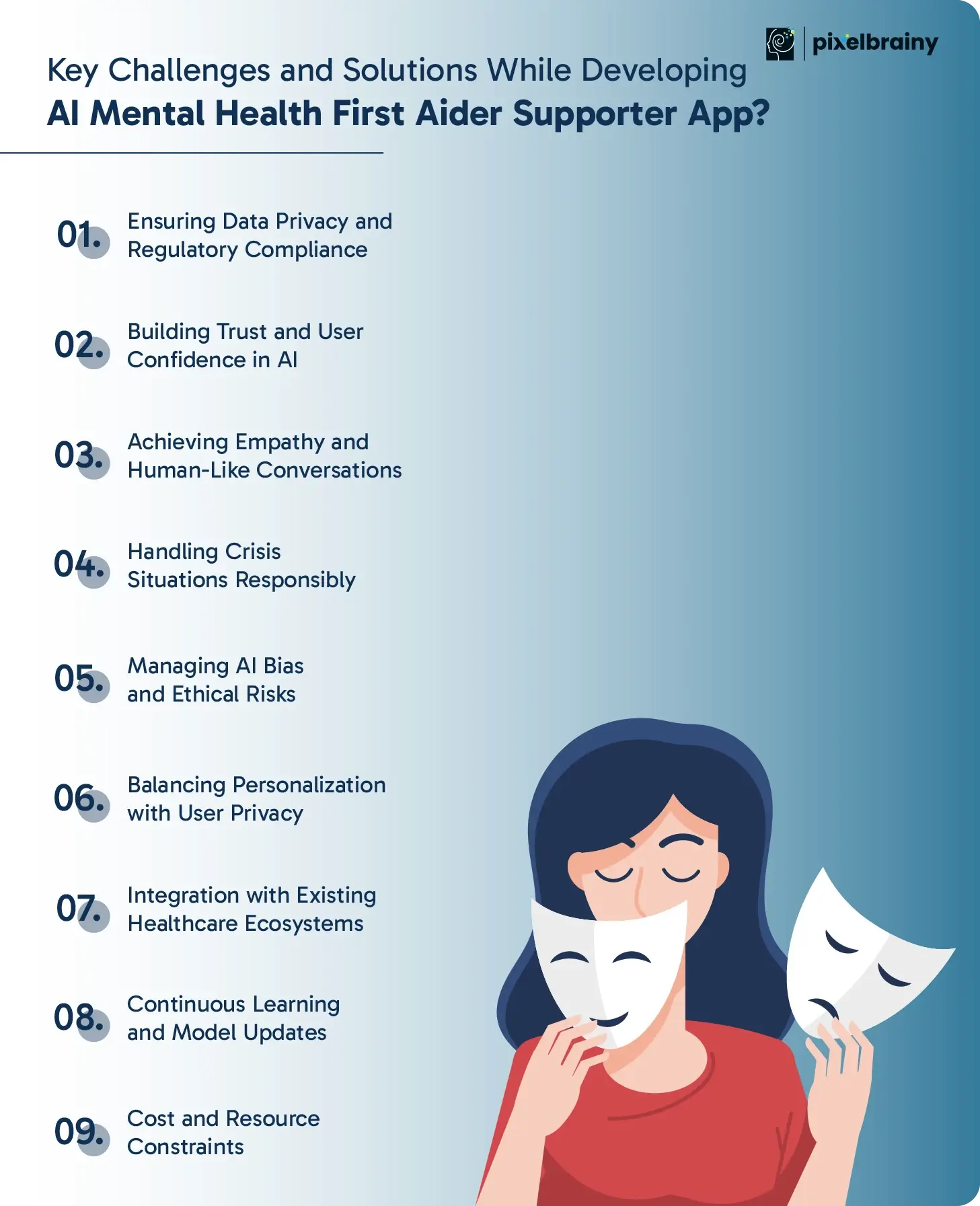
Challenge: Mental health data is among the most sensitive types of personal information. Collecting, storing, and processing this data requires strict adherence to privacy laws such as HIPAA in the United States and GDPR in Europe. A single data breach or misuse of personal health information can not only lead to legal consequences but also destroy user trust.
Solution: Implement robust encryption protocols for data storage and transmission, apply access control policies, and ensure end-to-end security for all user interactions. Work closely with legal and compliance experts to integrate regulatory requirements from the earliest stages of development. Regular security audits, penetration testing, and transparent data policies further enhance user confidence.
Challenge: Users are often hesitant to rely on AI for mental health support due to concerns about accuracy, empathy, and reliability. If the AI responds inappropriately or fails to understand emotional nuances, it could harm user trust or even worsen their mental state.
Solution: Train AI models on diverse, high-quality, and ethically sourced datasets that reflect real human emotional patterns. Incorporate supervised learning techniques with human oversight to ensure accuracy. Use clear disclaimers explaining the role of AI and provide users with easy access to human professionals if needed. Over time, refine models based on user feedback to build stronger trust.
Challenge: Unlike traditional applications, mental health platforms must communicate with warmth, sensitivity, and understanding. Designing AI systems that truly empathize with user emotions is one of the biggest development challenges.
Solution: Use advanced Natural Language Processing (NLP) and sentiment analysis models capable of detecting emotional tone and context. Incorporate psychological frameworks into conversational flows, ensuring responses are supportive rather than robotic. Continuously train the AI on real-world mental health conversations to improve its emotional intelligence and communication style.
Challenge: In critical scenarios, such as when a user exhibits signs of self-harm or suicidal thoughts, the app must respond swiftly and appropriately. Mishandling such situations can have serious ethical and legal consequences.
Solution: Integrate robust crisis detection algorithms that identify high-risk language and behavior patterns. Establish escalation protocols that connect users to emergency helplines, notify trusted contacts, or alert mental health professionals when necessary. Ensure the app clearly communicates its crisis support capabilities and limitations to users.
Challenge: AI systems can unintentionally inherit biases from training data, resulting in responses that may be insensitive, inaccurate, or discriminatory. This is particularly problematic in mental health contexts where inclusivity and cultural sensitivity are crucial.
Solution: Use diverse, unbiased datasets that represent various demographics, languages, and cultural backgrounds. Regularly audit and test the AI for biased outputs and establish a review mechanism for sensitive responses. Collaborate with mental health professionals and ethicists during the development process to ensure fairness and inclusivity.
Challenge: Personalization improves user experience, but it often requires collecting large volumes of personal and behavioral data. This raises privacy concerns and increases the risk of data misuse.
Solution: Adopt a privacy-by-design approach where personalization is achieved using anonymized or locally stored data instead of centralized databases. Allow users to control what data they share and give them transparent choices about how their information is used to tailor their experience.
Challenge: For the app to be truly effective, it must integrate seamlessly with existing healthcare platforms, therapist networks, wearable devices, and telehealth services. Achieving this level of interoperability can be technically challenging and time-consuming.
Solution: Use standardized APIs and secure data-sharing protocols to ensure smooth interoperability. Collaborate with healthcare providers and system vendors during the development phase to align workflows. This not only improves functionality but also increases adoption by organizations and professionals.
Challenge: Mental health challenges evolve over time, and so do the ways people express them. Without regular updates, the AI may become outdated or less effective in understanding new trends and language patterns.
Solution: Implement continuous learning pipelines that allow the AI to evolve with user behavior and new research. Regularly retrain the models with updated data and integrate insights from psychologists and therapists. Ongoing performance monitoring ensures the system remains relevant, effective, and adaptive.
Challenge: Building a sophisticated AI mental health app involves significant investment in data, infrastructure, compliance, and expert collaboration. Budget limitations can slow development or force compromises in quality.
Solution: Adopt a phased development strategy, starting with an MVP to validate the concept before scaling. Use cost-effective cloud infrastructure and open-source AI tools where possible. Partnering with healthcare organizations or seeking grants can also help offset costs.
Overcoming these challenges with the right strategies ensures that your AI Mental Health First Aider Supporter App is not only technologically advanced but also ethical, trustworthy, and deeply impactful in supporting users’ mental well-being.
When you finalized the decision to build an AI-powered mental health platform, the next critical step is choosing a technology partner who can bring that vision to life with the right mix of innovation, reliability, and empathy. PixelBrainy is a trusted AI Mental Health App Development Company that helps healthcare organizations, startups, and enterprises design and deploy intelligent, secure, and human-centric digital mental health solutions.
Our approach goes beyond just building apps. We focus on creating impactful platforms that help individuals receive timely support, enable healthcare providers to scale their services, and allow businesses to deliver value-driven digital wellness experiences. Whether you aim to Develop AI Mental Health First Aid App for clinical use, workplace wellness, or consumer support, PixelBrainy provides complete expertise in strategy, design, development, deployment, and scaling.
Recently, PixelBrainy collaborated with a confidential global healthcare organization to design a next-generation mental wellness platform. The solution integrated real-time emotional intelligence chatbots, predictive analytics, wearable data analysis, and crisis management tools.
Within six months, it achieved over 150,000 active users, improved early intervention success, and increased user satisfaction by more than 70%. This highlights our proven capabilities in AI App Development for Mental Health First Aider Supporter platforms that deliver real-world results.
Choosing PixelBrainy a well-renowned AI app development company for Mental Health First Aid App Development Integrating AI means you’re partnering with experts who understand the sensitivity, complexity, and business potential of digital mental health innovation.
Partnering with PixelBrainy means collaborating with a team that shares your mission to build intelligent, innovative, and trusted AI mental health solutions that truly make a difference.
The future of mental health support lies in intelligent, accessible, and empathetic technology. Developing an AI Mental Health First Aider App is not just about building a digital product; it is about creating a lifeline that empowers individuals to seek help, manage emotions, and access timely interventions. With the right blend of AI, user-focused design, and clinical insight, businesses can make a significant impact while tapping into a rapidly growing digital healthcare market.
PixelBrainy stands ready to guide you through every stage of this transformative journey, from concept to deployment, ensuring your solution is powerful, compliant, and future-ready.
Ready to turn your vision into a life-changing mental health platform? Book an appointment with PixelBrainy today and start building a smarter, more compassionate future.
An AI Mental Health First Aid App is designed to offer immediate emotional support, mental health guidance, and crisis intervention using artificial intelligence. It helps users manage stress, anxiety, and other mental health concerns while providing tools for self-help, mood tracking, and professional referrals when needed.
Security is a top priority. All sensitive data is encrypted, stored securely, and managed in compliance with global healthcare regulations like HIPAA and GDPR. Users also have control over data sharing preferences to ensure privacy.
AI cannot replace human therapists but acts as a powerful support tool. It offers 24/7 assistance, detects early warning signs, and connects users to professionals when human intervention is necessary.
The timeline varies based on complexity and features. A basic MVP can take 3–4 months, while a full-scale, feature-rich application with advanced AI integration may require 6–10 months or more.
Healthcare providers, mental wellness startups, corporate wellness programs, educational institutions, and telehealth platforms can all leverage AI mental health apps to support users, enhance services, and improve overall mental well-being.
Yes, multilingual support can be integrated to ensure accessibility across diverse user groups. AI models can also be trained to understand cultural nuances, making the app more inclusive and effective globally.

About The Author
Sagar Bhatnagar
Sagar Sahay Bhatnagar brings over a decade of IT industry experience to his role as Marketing Head at PixelBrainy. He's known for his knack in devising creative marketing strategies that boost brand visibility and market influence. Sagar's strategic thinking, coupled with his innovative vision and focus on results, sets him apart. His track record of successful campaigns proves his ability to utilize digital platforms effectively for impactful marketing efforts. With a genuine passion for both technology and marketing, Sagar continuously pushes PixelBrainy's marketing initiatives to greater success.

Working with the PixelBrainy team has been a highly positive experience. They understand the design requirements and create beautiful UX elements to meet the application needs. The dev team did an excellent job bringing my vision to life. We discussed usability and flow. Sagar worked with his team to design the database and begin coding. Working with Sagar was easy. He has the knowledge to create robust apps, including multi-language support, Google and Apple ID login options, Ad-enabled integrations, Stripe payment processing, and a Web Admin site for maintaining support data. I'm extremely satisfied with the services provided, the quality of the final product, and the professionalism of the entire process. I highly recommend them for Android and iOS Mobile Application Design and Development.

Great experience working with them. Had a lot of feedback and I found that unlike most contractors they were bugging me for updates instead of the other way around. They were extremely time conscience and great at communicating! All work was done extremely high quality and if not on time, early! They were always proactive when it comes to communication and the work is great/above par always. Very flexible and a great team to work with! Goes above and beyond to present us with multiple options and always provides quality. Amazing work per usual with Chitra. If you have UI/UX or branding design needs I recommend you go to them! Will likely work with them in the future as well, definitely recommended!

PixelBrainy is a joy to work with and is a great partner when thinking through branding, logo, and website layout. I appreciate that they spend time going into the "why" behind their decisions to help inform me and others about industry best practices and their expertise.

I hired them to design our software apps. Things I really like about them are excellent communication skills, they answer all project suggestions and collaborate right away, and their input on design and colors is amazing. This project was complex and needed patience and creativity. The team is amazing to do business with. I will be using them long-term. Glad to see there are some good people out there. I was afraid to try and outsource my project to someone but I am glad I met them! I really can't say enough. They went above and beyond on this project. I am very happy with everything they have done to make my business stand out from the competition.

It was great working with PixelBrainy and the team. They were very responsive and really owned the project. We'll definitely work with them again!

I recently worked with the PixelBrainy team on a project and I was blown away by their communication skills. They were prompt, clear, and articulate in all of our interactions. They listened and provided valuable feedback and suggestions to help make the project a success. They also kept me updated throughout the entire process, which made the experience stress-free and enjoyable.

PixelBrainy is very good at what it does. The team also presents themselves very professionally and takes care of their side of things very well. I could fully trust them taking up the design work in a timely and organised manner and their attention to detail saved us lots of effort and time. This particular project was quite intense and the team showed that they function very well under pressure. Very much looking forward to working with her again!

It's always an absolute pleasure working with them. They completed all of my requests quickly and followed every note I had for them to a T, which made our process go smoothly from start to finish. Everything was completed fast and following all of the guidelines. And I would recommend their services to anyone. If you need any design work done in the future, PixelBrainy should be your first call!

They took ownership of our requirements and designed and proposed multiple beautiful variants. The team is self-motivated, requires minimum supervision, committed to see-through designs with quality and delivering them on time. We would definitely love to work with PixelBrainy again when we have any requirements.

PixelBrainy was a big help with our SaaS application. We've been hard at work with a new UI/UX and they provided a lot of help with the designs. If you're looking for assistance with your website, software, or mobile application designs, PixelBrainy and the team is a great recommendation.

PixelBrainy designers are amazing. They are responsive, talented, and always willing to help craft the design until it matches your vision. I would recommend them and plan to continue them for my future projects and more!!!

They were awesome! Did a good job fast, and good communication. Will work with them again. Thank you

Creative, detail-oriented, and talented designers who take direction well and implement changes quickly and accurately. They consistently over-delivered for us.

PixelBrainy team is very talented and creative. Great designers and a pleasure to work with. PixelBrainy is an excellent communicator and I look forward to working with them again.

PixelBrainy has a very talented design team. Their work is excellent and they are very responsive. I enjoy working with them and hope to continue on all of our future projects.


Transform your ideas into reality with us.
Across these industries, each engagement brings unique challenges, from early-stage product development to scaling complex systems, helping us build a practical understanding of real-world product environments.