AI Summary Powered by PixelBrainy
Why do some telemedicine startups spend hundreds of thousands of dollars building a healthcare app only to fail compliance audits and face app store approval issues before reaching their first patients?
The healthcare industry is undergoing a massive digital transformation, with virtual care becoming a standard part of patient treatment and healthcare delivery. Patients increasingly prefer convenient access to doctors through smartphones, tablets, and web platforms rather than waiting days or weeks for in-person appointments. This shift has created significant opportunities for healthcare startups, hospitals, clinics, insurance providers, and entrepreneurs looking to launch innovative telemedicine solutions.
One of the most common concerns among founders today is: we are a healthtech startup and we tried building a telemedicine app in-house but it failed compliance audits twice. how do companies actually build a teladoc-like app that passes HIPAA from day one and does not get rejected during app store review?
The reality is that successful telemedicine platforms are not built by focusing only on features such as video consultations and appointment scheduling. Industry leaders prioritize compliance, security, scalability, and healthcare workflows from the very beginning of the development process. Instead of treating HIPAA requirements, data encryption, audit logs, consent management, and secure infrastructure as afterthoughts, they integrate them into the application's architecture from day one.
For healthcare businesses investing in telemedicine app development like Teladoc, understanding the complete development ecosystem is essential. Organizations planning to build a telehealth app like Teladoc must carefully balance patient experience, clinical efficiency, and regulatory compliance. Likewise, businesses exploring HIPAA-compliant Teladoc like app development, evaluating Teladoc clone development 2026, or researching how to make a Teladoc like app need a clear roadmap that minimizes risk while maximizing long-term growth.
This comprehensive guide explains everything you need to know about building a secure and scalable Teladoc-style telemedicine platform in 2026. From market opportunities and compliance requirements to AI-powered features, technology stack selection, development costs, monetization strategies, and post-launch optimization, you will learn the proven framework used by leading healthcare software companies to create telemedicine applications that meet regulatory standards, gain user trust, and succeed in a highly competitive digital healthcare market.

If you are asking, "we are a healthtech startup. is there still room to build a teladoc competitor app in 2026 or is the market already saturated?", the short answer is yes. In fact, 2026 may be one of the best opportunities the digital healthcare industry has seen in years.
The global telemedicine industry continues to expand at an impressive pace. According to Fortune Business Insights, the global telemedicine market is expected to reach approximately $123.39 billion in 2026 and grow to over $441 billion by 2034, reflecting sustained demand for virtual healthcare services across multiple regions and specialties.
The United States remains the largest opportunity for companies seeking to develop Teladoc alternative platforms. Industry research frequently cites an estimated $261 billion addressable virtual care opportunity in the U.S., driven by increasing patient adoption, payer support, and provider willingness to deliver care remotely. Teladoc operates within this massive market, but demand continues to outpace specialized supply.
Another reason the telehealth app development opportunity remains attractive is the permanent behavioral shift that occurred after the pandemic. Before COVID-19, only about 35% of physicians regularly used telemedicine solutions. Today, approximately 76% of physicians incorporate virtual care into their practice workflows, making telemedicine a mainstream healthcare delivery model rather than a temporary alternative.
However, significant gaps still exist.
Many large platforms focus primarily on general consultations, leaving underserved markets such as:
These gaps create opportunities for entrepreneurs interested in building telemedicine startup like Teladoc while targeting a specific healthcare segment rather than competing solely on scale.
Three major trends are also accelerating growth in telemedicine market size 2026:
AI is being integrated into symptom checking, clinical documentation, patient triage, appointment scheduling, and predictive healthcare analytics, improving both efficiency and patient outcomes.
Healthcare providers increasingly rely on remote monitoring and virtual follow-ups to manage diabetes, hypertension, cardiovascular disease, and other long-term conditions.
Modern telemedicine platforms are integrating with smartwatches, fitness trackers, glucose monitors, and remote patient monitoring devices to deliver continuous care beyond video consultations.
The strategic reason to build now is simple: patient adoption is established, physician acceptance is widespread, AI technology has matured, compliance frameworks are clearer than ever, and healthcare organizations are actively investing in digital transformation. Unlike the early years of telemedicine, startups launching in 2026 can build on proven business models while addressing underserved niches that industry leaders have not fully captured yet.
One of the most common questions healthcare entrepreneurs ask is: "I want to build a telemedicine app like Teladoc but I do not fully understand how Teladoc actually makes money. Can you explain its business model so I can design mine better?"
Understanding how Teladoc business model works is essential before investing in product development. Many startups focus heavily on features and technology, but Teladoc's success comes from a carefully designed healthcare ecosystem that combines virtual care delivery, enterprise partnerships, regulatory compliance, and patient trust at scale.
Today, Teladoc serves more than 55 million paid members worldwide, operates across 175+ countries, and generated approximately $2.53 billion in revenue in 2025, making it one of the most recognized names in digital healthcare. Its scale demonstrates that telemedicine is no longer a niche service but a mainstream healthcare delivery model.
When analyzing Teladoc revenue streams, it becomes clear that the company does not rely on a single source of income. Instead, it uses a diversified business model designed for long-term sustainability.
A significant portion of Teladoc's revenue comes from recurring subscription agreements with employers, insurance providers, healthcare organizations, and government programs.
Organizations pay ongoing fees to provide employees or members with access to virtual healthcare services. This creates predictable recurring revenue while increasing patient adoption.
Patients may also pay consultation fees for virtual appointments, depending on their insurance coverage and healthcare plan.
These fees typically apply to:
This transaction-based model generates additional revenue alongside subscription income.
One of Teladoc's most valuable revenue channels comes from enterprise healthcare partnerships.
Large employers use Teladoc to provide virtual healthcare benefits to their workforce, helping reduce healthcare costs, improve employee wellness, and increase access to medical professionals.
For startups looking to create Teladoc competitor app, this B2B segment often offers stronger growth potential than relying solely on direct-to-consumer users.
Teladoc's growth is driven by multiple healthcare solutions rather than a single telemedicine application.
Its major product lines include:
This diversified portfolio allows Teladoc to serve patients across different healthcare journeys while generating revenue from multiple service categories.
Although Teladoc dominates the telemedicine industry, several opportunities remain available for startups seeking to build better app than Teladoc.
Common gaps include:
These weaknesses create opportunities for startups targeting specific patient populations or healthcare verticals.
Many entrepreneurs assume Teladoc's competitive advantage comes from technology. In reality, its strongest moat is not the app itself.
The real advantage lies in its compliance framework, healthcare partnerships, provider network, security infrastructure, clinical workflows, and years of patient trust.
Another often-overlooked factor is Teladoc's approach to artificial intelligence. Rather than using AI to replace physicians, Teladoc primarily uses AI to support clinical decision-making, improve operational efficiency, assist with documentation, and enhance patient engagement. This human-centered approach helps maintain trust while improving care quality.
For startups planning to enter the telemedicine market, the key takeaway is simple: winning in healthcare is not about building the most advanced technology. It is about building the most trusted, compliant, and patient-centric platform. Those foundations ultimately determine whether a telemedicine business can scale successfully and compete with industry leaders.
One of the most important questions healthcare founders ask is: "We are building a telehealth platform like Teladoc for both US and European patients. What does it actually take in the codebase to satisfy HIPAA and GDPR at the same time without rebuilding the whole app later?"
The answer is simple: compliance cannot be added after development. It must be engineered into the product architecture from the very first sprint. Most telemedicine startups that fail audits do not fail because their features are weak. They fail because security, privacy, and regulatory requirements were treated as secondary priorities.
When it comes to HIPAA-compliant telemedicine app development, the companies that succeed build compliance into every layer of the application, from databases and APIs to user authentication and data storage.
Many healthcare startups discover compliance issues only after investing months of development time.
The most common reasons include:
A surprising number of healthcare applications encrypt data during transmission but fail to encrypt sensitive patient information at rest.
Example: Medical records stored in cloud databases without proper encryption keys can trigger compliance violations during security reviews.
Healthcare regulations require organizations to track who accessed patient information, when they accessed it, and what changes were made.
Example: A physician updates a patient record, but the system does not log the action. This creates an audit failure.
Many applications rely on simple role management without implementing granular permission controls.
Example: Administrative staff gaining access to clinical notes they do not need to view.
Developers often integrate messaging, analytics, storage, or video APIs that are not approved for healthcare data.
Example: Using a standard video conferencing solution without a Business Associate Agreement (BAA).
Applications frequently fail to document patient consent properly or provide mechanisms for data access and deletion requests.
Example: Users cannot view, export, or revoke consent regarding their personal health information.
For organizations planning to build HIPAA Teladoc-style app solutions, HIPAA compliance extends far beyond legal paperwork.
Your application should include:
Every vendor handling Protected Health Information (PHI) must provide a signed BAA.
Common vendors requiring BAAs include:
Without these safeguards, a telemedicine platform will struggle to pass enterprise security reviews or HIPAA assessments.
Many startups focus entirely on HIPAA and overlook the requirements of GDPR telehealth app development.
While HIPAA protects healthcare information, GDPR governs broader personal data rights.
If your platform serves both US and European patients, you must support:
Users must clearly agree to how their data will be processed.
Patients can request copies of stored personal information.
Users can request corrections to inaccurate data.
Under specific conditions, patients can request deletion of personal data.
Patients must be able to export their information in a usable format.
Some organizations choose EU-based data storage environments to simplify compliance and reduce regulatory risks.
The smartest approach when creating compliant Teladoc app from day one is to design privacy architecture around the strictest applicable standards so one codebase can serve multiple jurisdictions.
The HITECH Act strengthens HIPAA enforcement and introduces strict breach notification obligations.
If a data breach involving protected health information occurs:
These requirements directly influence system architecture.
Development teams should implement:
A delayed breach response can significantly increase legal and financial exposure.
Many founders assume federal compliance is enough. It is not.
Telehealth regulations vary by state and commonly affect:
For example, a doctor licensed in one state may not legally provide care to patients in another state without meeting additional requirements.
Your platform should support configurable workflows based on provider location and patient jurisdiction.
Most telemedicine platforms are not regulated as medical devices.
However, FDA oversight may apply when software:
For example, a video consultation platform is typically not an FDA-regulated medical device. An AI system that independently diagnoses cardiac conditions may fall under FDA requirements.
This distinction becomes increasingly important as AI capabilities expand.
Healthcare compliance adds cost, but delaying compliance often costs far more.
Typical compliance-related expenses include:
| Compliance Component | Estimated Cost Range |
| Security Architecture | $10,000 to $30,000 |
| HIPAA Compliance Implementation | $15,000 to $50,000 |
| Legal Documentation & Policies | $5,000 to $20,000 |
| Penetration Testing | $5,000 to $25,000 |
| GDPR Compliance Features | $10,000 to $40,000 |
| Monitoring & Audit Systems | $5,000 to $15,000 |
For most healthcare products, compliance activities increase development budgets by approximately 15% to 30%, depending on complexity.
Use this checklist before launch:
The biggest lesson in healthcare compliance telemedicine development 2026 is simple: compliance should be treated as a product feature, not a legal requirement. The companies that build privacy, security, and regulatory controls into their architecture from day one avoid expensive rebuilds, pass audits faster, and earn the trust required to compete with established telemedicine platforms like Teladoc.
Understanding the complete telemedicine app user journey development process is essential before building a healthcare platform. Many founders focus only on video consultations and appointment scheduling, but a successful telemedicine solution depends on creating a smooth experience for both patients and healthcare providers.
If you are wondering, "What is the exact flow a patient follows in a Teladoc-style app from the moment they open it to finishing a consultation and getting their prescription?", the answer involves several connected workflows working together in real time.
The following process explains how Teladoc-like app works step by step while highlighting where AI enhances the experience and where most telemedicine platforms lose users.
Patient Registration → Doctor Discovery → Appointment Booking → Pre-Consultation → Video Consultation → Prescription & Payment → Follow-Up Care
At the same time:
Doctor Onboarding → Availability Management → Appointment Acceptance → Consultation → Clinical Documentation → Prescription Issuance → Follow-Up Management
Patient Journey:
The user downloads the app and creates an account using email, phone number, or social login.
The patient then completes:
Doctor Journey:
Doctors complete:
Common Failure Point: Lengthy registration forms.
Solution: Progressive onboarding that collects information gradually instead of requiring everything upfront.
Before booking an appointment, patients can describe symptoms through an AI symptom checker.
Patient Journey:
The system asks questions such as:
The AI then recommends:
Doctor Journey: Doctors receive symptom summaries before consultations begin, helping them prepare in advance.
AI Touchpoint: Symptom triage and provider matching.
Common Failure Point: Too many provider options creating decision fatigue.
Solution: AI-driven doctor recommendations based on specialty, ratings, location, language, and availability.
Patients Journey:
The platform sends automated confirmations and reminders.
Doctor Journey: Doctors receive booking requests and calendar updates automatically.
Common Failure Point: Limited appointment availability.
Solution: Real-time scheduling systems and instant consultation options.
Before the appointment starts, patients can:
Doctor Journey: Doctors review patient history and uploaded documents before joining the consultation.
This preparation significantly improves consultation efficiency.
This is the core of the build virtual doctor consultation app experience.
Patients connect through:
Doctors evaluate symptoms, discuss treatment options, and provide recommendations.
AI Touchpoint During Consultation:
Modern telemedicine platforms use AI to:
Importantly, AI supports physicians rather than replacing them.
Common Failure Point: Poor video quality and connection issues.
Solution: Healthcare-grade video infrastructure with automatic fallback to voice or chat.
After the consultation:
Doctor Journey:
Doctors can:
Patient Journey:
Patients receive:
The payment system processes:
Common Failure Point: Complex payment experiences.
Solution: Multiple payment options and transparent pricing before consultation begins.
The patient journey does not end after the consultation.
Patients receive:
Doctor Journey:
Doctors monitor:
AI Touchpoint:
AI can identify:
This transforms a telemedicine app from a consultation platform into a continuous care ecosystem.
The biggest mistake healthcare startups make is treating telemedicine as a simple video calling application. Successful platforms optimize every stage of the patient and provider journey, from onboarding and appointment scheduling to post-consultation engagement.
The strongest telemedicine products reduce friction, automate repetitive tasks with AI, improve provider efficiency, and create a seamless healthcare experience that keeps patients engaged long after their first appointment. That is the foundation behind every scalable Teladoc-style platform in 2026.
The success of any telemedicine platform depends on more than just video consultations. To maximize adoption and retention, every feature must solve real problems for patients, healthcare providers, and platform administrators. When evaluating the essential features to build telemedicine app like Teladoc, the goal should be creating a frictionless healthcare experience that encourages repeat usage and daily engagement.
Many healthcare startups ask: "What features should we include in our Teladoc-style app to make sure doctors actually use it every day and patients do not abandon it after the first visit?" The answer lies in building a balanced ecosystem that serves all three user groups effectively.
| Panel | Feature | Why It Matters |
| Patient Panel | User Registration & Profile Management | Allows patients to create accounts, manage personal details, store medical history, update insurance information, and maintain accurate health records for future consultations |
| Patient Panel | Doctor Search & Discovery | Helps users find suitable physicians based on specialty, language, availability, experience, consultation fees, and patient reviews, improving appointment conversion rates |
| Patient Panel | Appointment Scheduling | Enables patients to book, reschedule, or cancel appointments easily while reducing administrative workload and improving scheduling efficiency |
| Patient Panel | Secure Video Consultation | Core functionality required to create video consultation app like Teladoc, allowing patients to connect with healthcare providers through encrypted virtual consultations |
| Patient Panel | Medical Records Access | Provides centralized access to prescriptions, consultation history, treatment plans, diagnostic reports, and healthcare documents anytime |
| Patient Panel | E-Prescription Management | Allows patients to receive digital prescriptions, medication instructions, and pharmacy recommendations directly within the application |
| Patient Panel | Payment & Billing | Simplifies payments through insurance processing, card payments, subscription plans, invoices, and payment history tracking |
| Patient Panel | Notifications & Reminders | Sends appointment reminders, medication alerts, follow-up notifications, and important healthcare updates to improve patient engagement |
| Doctor Panel | Professional Profile Management | Enables doctors to manage credentials, specialties, certifications, consultation fees, languages, and availability preferences |
| Doctor Panel | Appointment Calendar | Provides a centralized scheduling dashboard where healthcare providers can manage appointments, availability, cancellations, and follow-up visits efficiently |
| Doctor Panel | Patient History Access | Gives physicians instant access to medical records, previous consultations, prescriptions, allergies, and treatment history before appointments |
| Doctor Panel | Consultation Dashboard | Offers a streamlined workspace for conducting virtual visits, reviewing records, documenting observations, and managing patient interactions |
| Doctor Panel | E-Prescription System | Allows healthcare professionals to generate, manage, and share digital prescriptions securely with patients after consultations |
| Doctor Panel | Clinical Notes Management | Helps physicians maintain consultation summaries, treatment recommendations, and patient records in an organized manner |
| Doctor Panel | Earnings & Revenue Tracking | Enables doctors to monitor consultation revenue, payouts, completed appointments, and financial performance through a dedicated dashboard |
| Doctor Panel | Availability Management | Allows providers to define consultation hours, vacation schedules, emergency availability, and recurring appointment slots |
| Admin Panel | User Management | Enables administrators to monitor, approve, suspend, or manage patient and doctor accounts across the platform |
| Admin Panel | Doctor Verification System | Ensures only qualified healthcare professionals join the platform through license verification and credential validation processes |
| Admin Panel | Appointment Monitoring | Provides visibility into appointment volumes, cancellations, no-shows, and platform usage trends for operational optimization |
| Admin Panel | Content & Communication Management | Allows administrators to manage notifications, announcements, educational content, and platform-wide communications |
| Admin Panel | Payment Management | Oversees subscriptions, provider payouts, refunds, commissions, transaction records, and financial reporting activities |
| Admin Panel | Analytics & Reporting Dashboard | Delivers insights into patient growth, provider performance, appointment trends, revenue generation, and operational efficiency |
| Admin Panel | Compliance & Audit Controls | Supports HIPAA, GDPR, and regulatory requirements through audit logs, access controls, consent tracking, and compliance monitoring |
| Admin Panel | Support Ticket Management | Enables customer support teams to track issues, resolve user concerns, and improve overall service quality |
Artificial intelligence is rapidly transforming virtual healthcare from a simple video consultation platform into an intelligent, proactive care ecosystem. While Teladoc already leverages AI in several areas, the next generation of healthcare startups has an opportunity to go much further by integrating predictive analytics, ambient clinical documentation, real-time monitoring, and personalized patient engagement.
Many founders ask: "I want to build a telemedicine app like Teladoc but with AI features Teladoc does not yet have. What AI capabilities like predictive diagnostics or voice documentation can I add to make my platform more competitive in 2026?"
The answer is not replacing doctors with AI. The most successful examples of AI-powered telemedicine app development use artificial intelligence to reduce administrative burden, improve patient outcomes, accelerate decision-making, and identify health risks before they become emergencies.
The following AI capabilities represent the most valuable opportunities for a Teladoc competitor 2026 strategy.
| AI Feature | How It Works & Business Value |
| AI Symptom Checker | Uses Large Language Models, clinical decision trees, medical ontologies, and symptom databases to assess patient inputs before appointments, improving triage efficiency and helping direct patients toward appropriate care pathways |
| AI Medical Assistant | Acts as a clinical workflow assistant rather than a basic chatbot, retrieving records, summarizing patient history, surfacing treatment guidelines, and reducing physician administrative workload by more than 40% in many healthcare environments |
| AI Voice Documentation | Converts consultation conversations into structured SOAP notes, diagnoses, treatment summaries, and follow-up recommendations in real time, eliminating manual note-taking and allowing physicians to focus entirely on patients |
| AI Scheduling & Follow-Up Assistant | Automates appointment booking, rescheduling, reminders, medication adherence notifications, and follow-up outreach, significantly reducing response times while improving patient retention and reducing drop-offs |
| Predictive Health Analytics | Analyzes patient history, symptoms, lab reports, medication adherence, and behavioral patterns to identify individuals at risk of hospitalization, complications, or disease progression before critical events occur |
| AI Remote Patient Monitoring | Continuously analyzes incoming health data from connected devices to detect anomalies and notify healthcare providers when intervention may be required |
| Clinical Decision Support System | Assists physicians by highlighting possible diagnoses, drug interactions, treatment recommendations, and evidence-based care pathways while keeping final medical decisions under human supervision |
| Personalized Care Recommendation Engine | Uses patient-specific health profiles to generate tailored wellness plans, medication reminders, follow-up schedules, and lifestyle recommendations that improve long-term health outcomes |
| Multilingual Medical Translation AI | Enables patients and doctors speaking different languages to communicate more effectively through real-time healthcare-focused translation and interpretation assistance |
| Population Health Analytics | Helps healthcare organizations identify trends across patient groups, improve preventive care strategies, and allocate medical resources more efficiently |
The most successful telemedicine products will not simply offer virtual consultations. They will combine intelligent triage, automated documentation, predictive care, remote monitoring, and personalized healthcare experiences into a unified platform that helps providers deliver better outcomes while improving operational efficiency.
Building a successful telemedicine platform requires far more than hiring developers and creating a video consultation feature. Healthcare products involve compliance requirements, complex workflows, security considerations, and user experiences that directly impact patient outcomes. Without a structured roadmap, many startups spend months and significant budgets only to end up with an unusable product.
A common concern among healthcare founders is: "I already lost 6 months to a developer who delivered nothing usable. What is the realistic timeline to develop a telemedicine app like Teladoc and what milestones should I hold my development team accountable to?"
The reality is that a well-executed step-by-step develop Teladoc-like app process typically takes between 5 and 8 months for an MVP and up to 12 to 15 months for a fully featured enterprise platform. The key is knowing what should happen at each stage and what deliverables your development team should produce.
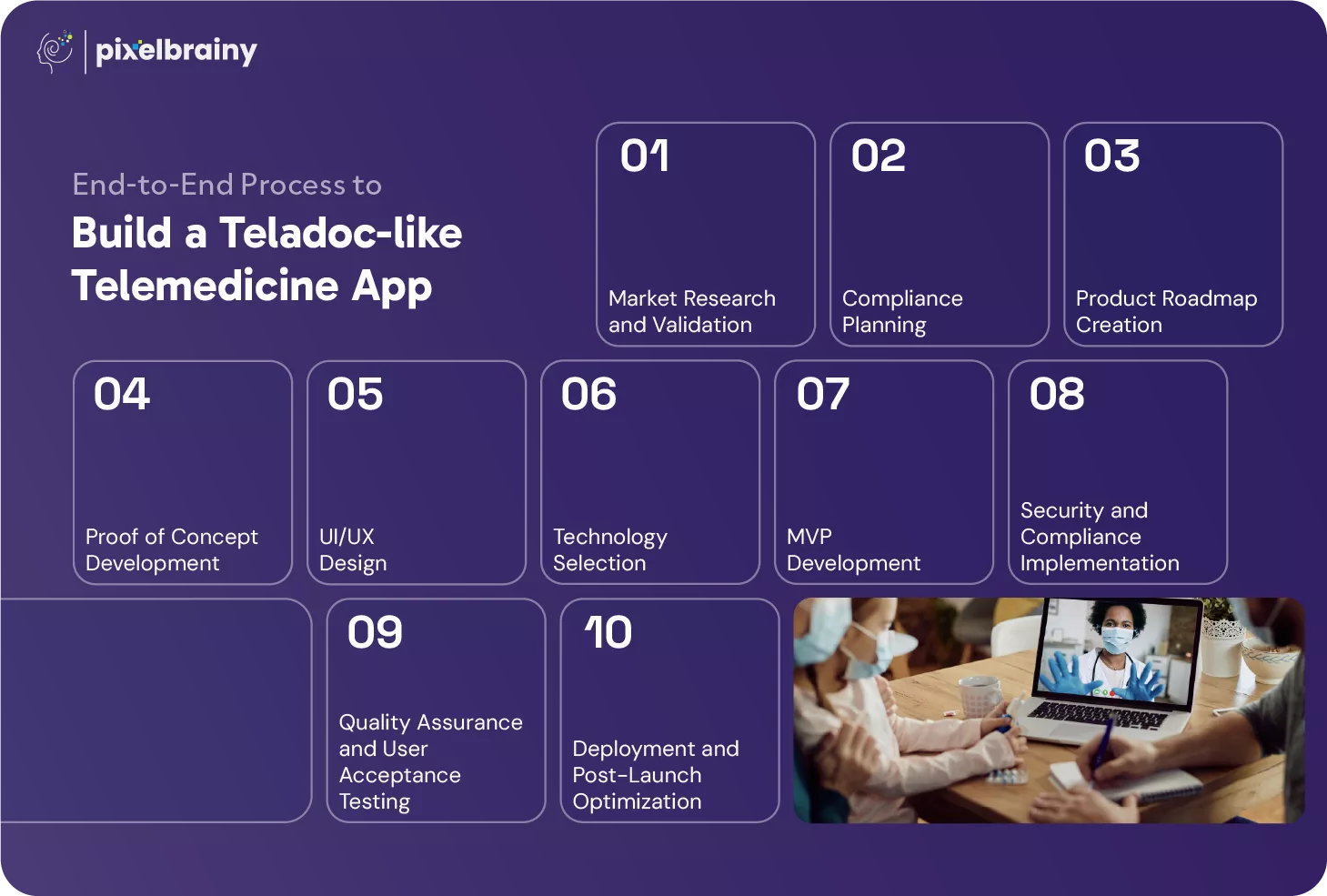
Every successful healthcare platform begins with market research. Before writing a single line of code, identify your target audience, study competitors, validate demand, and uncover market gaps.
The biggest mistake at this stage is building a generic telemedicine solution that offers nothing unique. Instead, focus on underserved markets such as mental health, chronic care, rural healthcare, women's health, or specialist consultations.
The deliverable should be a validated business case, competitor analysis, and clear product positioning strategy.
Before development starts, compliance requirements must be mapped into the product architecture.
This includes:
Many startups make the mistake of treating compliance as a legal task rather than a product requirement. Fixing compliance issues later often costs significantly more than designing them correctly from the start.
This stage defines what will be included in the first release and what will be postponed.
One of the biggest reasons projects fail is attempting to replicate every Teladoc feature immediately.
The roadmap should clearly separate:
Before investing heavily in full-scale development, create a Proof of Concept.
PoC development validates:
Many startups skip this stage and discover major technical problems months later.
Healthcare products succeed or fail based on usability.
Partnering with an experienced UI/UX design company can significantly improve patient retention and physician adoption.
Design should focus on:
The most common mistake is prioritizing visual aesthetics over workflow efficiency.
At this stage, the development team finalizes:
Technology decisions should support long-term scalability, compliance, and future AI integrations.
This is the core development phase.
During MVP development, focus only on essential features:
A common mistake is adding advanced features too early, which delays launch and increases costs.
Security should not be left until launch.
Compliance reviews should occur during every sprint.
Development teams should continuously validate:
This proactive approach prevents expensive redesigns later.
Testing extends beyond finding bugs.
A healthcare application must undergo:
Many projects fail because they focus exclusively on feature testing while ignoring real-world healthcare workflows.
Launching the application is only the beginning.
Post-launch activities include:
Successful telemedicine companies treat launch as the start of optimization, not the finish line.
For startups developing telemedicine MVP like Teladoc, the first release should focus on delivering a complete patient consultation journey.
Build first:
Defer to Phase 2:
This approach reduces development risk and accelerates time-to-market.
A realistic timeline for how long to build Teladoc-style telehealth app depends on scope:
When evaluating top AI healthcare software development companies or AI product development companies in USA, focus less on promises of rapid delivery and more on milestone accountability. Every stage should produce measurable outcomes, documented progress, and compliance validation.
The most successful telemedicine startups do not attempt to launch a complete Teladoc competitor on day one. They validate the market with a focused MVP, establish compliance foundations, gather user feedback, and then scale strategically based on real-world adoption and business goals.
When you decided to build telemedicine app like Teladoc, choosing the right technology stack will become one of the most important decisions in healthcare product development. The wrong technical foundation can lead to performance issues, security vulnerabilities, compliance failures, and expensive infrastructure migrations later. The right architecture, on the other hand, enables scalability, regulatory compliance, and seamless patient experiences from day one.
A common question founders ask is: "I am planning to build a Teladoc-like telemedicine app using React Native and Node.js. Which video API does Teladoc actually use and what backend architecture handles 50,000 concurrent consultations without breaking?"
The reality is that large telemedicine platforms rarely rely on a single technology. Instead, they use carefully designed architectures optimized for reliability, compliance, video performance, and healthcare data management.
The frontend directly impacts user experience, performance, development cost, and long-term maintenance.
| Technology | Best For | Advantages | Limitations |
| React Native | Most telemedicine startups | Single codebase, faster development, large ecosystem, strong healthcare app support | May require native modules for advanced healthcare integrations |
| Flutter | Feature-rich healthcare apps | Excellent UI performance, consistent design across devices, growing ecosystem | Smaller talent pool compared to React Native |
| Swift (iOS) + Kotlin (Android) | Enterprise-grade healthcare platforms | Maximum performance, native device access, strongest user experience | Higher development and maintenance costs due to separate codebases |
For most startups building Teladoc-style app with React Native, React Native remains the most practical choice because it balances speed, cost, and scalability.
The backend powers scheduling, patient records, video sessions, authentication, notifications, and compliance workflows.
| Backend Technology | Best Use Case | Strengths | Challenges |
| Node.js | Real-time telemedicine platforms | Fast APIs, event-driven architecture, ideal for chat and scheduling | Requires careful scaling for complex workloads |
| Python (FastAPI/Django) | AI-heavy healthcare products | Excellent AI ecosystem, rapid development, healthcare analytics support | Can require optimization at very large scale |
| Java (Spring Boot) | Enterprise healthcare systems | High reliability, strong security, excellent scalability | Longer development cycles |
For most telemedicine startups, a combination of React Native and Node.js offers an efficient foundation. Enterprise healthcare organizations often adopt Java-based microservices for long-term scalability.
Video consultations are the heart of any telemedicine platform. The choice of communication technology directly affects reliability and patient satisfaction.
| Video Technology | Advantages | Limitations | Recommended For |
| Twilio Video | HIPAA support, fast implementation, global infrastructure | Higher cost at scale | MVPs and mid-size healthcare platforms |
| WebRTC | Full control, no licensing fees, highly customizable | Requires significant engineering expertise | Enterprise telemedicine platforms |
| Agora | Excellent global video quality, low latency | Compliance setup requires careful configuration | International telemedicine platforms |
| Vonage Video API | Reliable healthcare features, scalable architecture | Smaller ecosystem than Twilio | Mid-size telemedicine businesses |
Many large healthcare companies build custom communication layers on top of WebRTC rather than relying entirely on third-party solutions. For startups, Twilio remains one of the fastest paths to launch.
Healthcare applications manage structured patient records, appointment data, prescriptions, audit logs, and clinical information.
| Database | Best Use Case | Advantages | Limitations |
| PostgreSQL | Most telemedicine platforms | Strong consistency, ACID compliance, complex healthcare data relationships | Less flexible for unstructured data |
| MongoDB | Large-scale document-heavy systems | Flexible schema, high scalability, fast iteration | Complex relational healthcare workflows can become challenging |
For patient records, prescriptions, appointments, and compliance requirements, PostgreSQL is generally the preferred choice.
Healthcare applications require HIPAA-eligible cloud services and strong security controls.
| Cloud Platform | Strengths | Healthcare Advantages |
| AWS | Largest ecosystem, extensive healthcare services | Wide range of HIPAA-eligible services, HealthLake, strong compliance support |
| Microsoft Azure | Strong healthcare partnerships | Excellent integration with healthcare organizations and enterprise systems |
| Google Cloud Platform | Advanced AI and analytics capabilities | Strong machine learning infrastructure and healthcare APIs |
For most healthcare startups, AWS remains the most commonly selected cloud provider due to its maturity and compliance ecosystem.
A telemedicine platform cannot rely solely on application-level security.
The recommended security stack includes:
| Security Component | Recommended Technologies |
| Encryption at Rest | AES-256 |
| Encryption in Transit | TLS 1.3 |
| Multi-Factor Authentication | Auth0, AWS Cognito, Okta |
| Role-Based Access Control | Custom RBAC or Keycloak |
| Intrusion Detection | AWS GuardDuty, CrowdStrike, Microsoft Defender |
| Security Monitoring | Datadog, Splunk, Elastic Security |
| Secrets Management | AWS Secrets Manager, HashiCorp Vault |
These controls are essential for HIPAA and GDPR compliance.
Electronic Health Record integration is often one of the most underestimated aspects of healthcare software development.
| Integration Type | Advantages | Challenges |
| HL7 FHIR | Modern standard, better interoperability, growing adoption | Requires healthcare integration expertise |
| Proprietary APIs | Direct access to specific systems | Vendor-specific limitations and maintenance burden |
For Teladoc EHR integration, FHIR should be the default strategy whenever available.
Integrating with major healthcare systems such as Epic and Cerner often involves:
These integrations can add anywhere from several weeks to several months to development timelines and may cost tens of thousands of dollars depending on scope.
| Component | MVP Telemedicine Platform | Mid-Size Telemedicine Business | Enterprise Teladoc Alternative |
| Frontend | React Native | React Native + Web Portal | Native Swift + Kotlin + Web Platform |
| Backend | Node.js | Node.js + Microservices | Java Spring Boot + Microservices |
| Video | Twilio Video | Agora or Twilio | Custom WebRTC Infrastructure |
| Database | PostgreSQL | PostgreSQL + Redis | PostgreSQL + Redis + Data Warehouse |
| Cloud | AWS | AWS or Azure | Multi-Cloud Architecture |
| Authentication | AWS Cognito | Auth0 | Okta Enterprise |
| EHR Integration | FHIR APIs | FHIR + Epic Integration | Multi-EHR Integration Layer |
| Monitoring | Datadog | Datadog + Splunk | Enterprise Observability Stack |
The most effective tech stack to develop app like Teladoc is not necessarily the most complex one. For most startups following a Teladoc app development guide, a combination of React Native, Node.js, PostgreSQL, Twilio Video, AWS, and FHIR integrations provides the best balance of development speed, scalability, compliance readiness, and cost efficiency while leaving room for future AI and enterprise healthcare capabilities.
For most healthcare founders, cost is the first question that comes up after validating the business idea. Unfortunately, many online estimates are either too vague or unrealistically low. Building a healthcare application involves far more than designing screens and integrating video calls. Compliance, security, cloud infrastructure, testing, and ongoing maintenance all contribute significantly to the final investment.
A common founder question is: "We have a seed budget of $80,000 and we want to build a telemedicine app similar to Teladoc. Is that realistic for an MVP and what corners can we safely cut without breaking HIPAA or hurting patient experience?"
The short answer is yes. An $80,000 budget is realistic for a well-planned MVP if development is focused on core features and compliance is built into the architecture from the beginning. However, it is not enough to build a full-scale Teladoc competitor with advanced AI, multi-country support, complex EHR integrations, and enterprise infrastructure.
The total cost to build telemedicine app like Teladoc depends heavily on the scope of features, compliance requirements, integrations, and scalability expectations.
| Product Type | Estimated Cost Range | Best For |
| Basic MVP for Telemedicine Platform | $25,000 to $70,000 | Startups validating product-market fit |
| Mid-Level Platform for Telemedicine | $80,000 to $150,000 | Growing healthcare businesses |
| Enterprise Telemedicine Platform | $150,000 to $300,000+ | Hospitals, insurers, large healthcare networks |
A startup attempting to develop telemedicine MVP like Teladoc under $50000 should focus exclusively on essential workflows such as patient registration, doctor onboarding, appointment scheduling, secure video consultations, prescriptions, and payment processing.
One of the biggest mistakes founders make is allocating budget only for coding. In reality, software development represents only part of the total investment.
| Development Phase | Estimated Cost |
| Discovery & Product Strategy | $3,000 to $10,000 |
| UI/UX Design | $5,000 to $20,000 |
| Frontend Development | $10,000 to $50,000 |
| Backend Development | $15,000 to $70,000 |
| Video Consultation Integration | $3,000 to $20,000 |
| HIPAA & GDPR Compliance Implementation | $10,000 to $40,000 |
| QA Testing & Security Validation | $5,000 to $25,000 |
| Deployment & DevOps Setup | $2,000 to $15,000 |
| Post-Launch Maintenance (Annual) | 15% to 25% of development cost |
For most healthcare startups, backend development and compliance implementation account for the largest share of the budget.
Where your development team is located significantly impacts the final project cost.
| Region | Average Hourly Rate | Typical Project Cost |
| United States | $120 to $250/hour | $150,000 to $400,000+ |
| Western Europe | $80 to $180/hour | $120,000 to $300,000+ |
| Eastern Europe | $40 to $90/hour | $70,000 to $180,000 |
| India | $25 to $70/hour | $25,000 to $120,000 |
When evaluating Teladoc app development cost in USA 2026, founders should understand that higher rates do not automatically guarantee better healthcare expertise. Many successful healthcare startups use hybrid teams that combine U.S.-based product leadership with offshore engineering resources.
Many articles discussing how much to make an app like Teladoc focus only on development expenses while ignoring ongoing operational costs.
These hidden expenses often surprise first-time founders.
Small costs, but still required.
External compliance assessments can cost:
Telemedicine apps frequently depend on:
Monthly costs increase as user volume grows.
Even modest telemedicine platforms can spend:
Healthcare platforms often require:
These expenses continue throughout the product lifecycle.
Many organizations initially use existing telemedicine platforms before building custom software.
Custom development often becomes financially attractive when:
At scale, subscription fees paid to third-party telemedicine providers can exceed the cost of maintaining a proprietary platform.
Many startups reduce costs by cutting security or compliance. This almost always becomes more expensive later.
Instead, focus on smarter cost optimization strategies.
Launch only core workflows and postpone advanced capabilities until user demand is validated.
Leverage AWS, Azure, or Google Cloud services rather than building custom infrastructure from scratch.
FHIR integrations, authentication services, and video APIs reduce development time significantly.
React Native or Flutter can reduce mobile development costs by supporting iOS and Android with a shared codebase.
Focus on core telemedicine workflows first and introduce predictive analytics, remote monitoring, and AI automation after validating product-market fit.
If your startup has an $80,000 budget, the most practical approach is:
This budget range is sufficient to produce a functional and compliant MVP capable of validating demand and attracting users.
The most accurate Teladoc clone development cost estimate is not determined by the number of screens or features. It depends on compliance requirements, security architecture, scalability goals, integrations, and the quality of the development team. For most healthcare startups in 2026, a realistic investment ranges between $50,000 and $150,000 for a launch-ready telemedicine platform that can support future growth without requiring a complete rebuild.
Building a telemedicine platform is not simply a software development project. It is a healthcare infrastructure project that must balance compliance, security, scalability, reliability, and user experience simultaneously. This is why many startups discover that the biggest costs often come from problems they failed to anticipate during development.
If your concern is, "Our current telehealth app keeps crashing during peak hours and patients are dropping mid-consultation. We want to rebuild it properly. How did Teladoc architect its platform to handle thousands of simultaneous video consultations without failure?", understanding the most common failure points is the first step toward avoiding them.
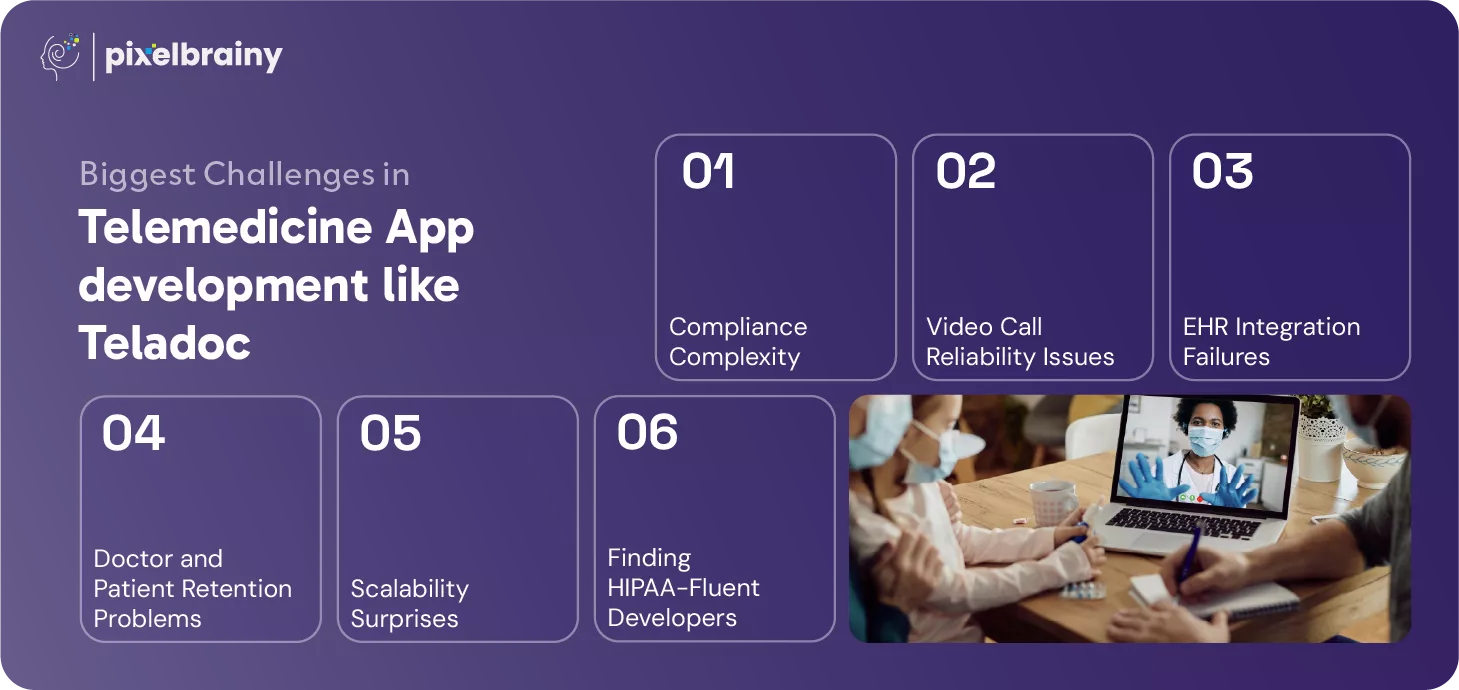
One of the biggest challenges building telemedicine app Teladoc founders face is underestimating compliance requirements. Many teams budget for development but forget HIPAA audits, security testing, legal reviews, audit logging, and vendor compliance.
Solution: Allocate 15% to 30% of the total project budget specifically for compliance activities. Use HIPAA-ready services such as AWS HIPAA Eligible Services, Auth0, AWS Cognito, and Vanta for compliance monitoring. Conduct quarterly security assessments instead of waiting until launch.
Poor video quality remains one of the primary reasons patients abandon telemedicine platforms. Common causes include overloaded servers, weak network handling, inadequate video routing, and lack of failover systems.
Solution: Use healthcare-grade communication infrastructure such as Twilio Video, Agora, or custom WebRTC deployments. Implement adaptive bitrate streaming, global media servers, and automatic fallback to voice calls. Combine AWS Auto Scaling with CloudFront to maintain high availability and target 99.9% uptime.
Many healthcare startups underestimate the complexity of electronic health record integrations. Data mapping errors, inconsistent patient identifiers, and incompatible healthcare standards often cause production issues.
Solution: Adopt HL7 FHIR as the primary interoperability standard whenever possible. Use middleware platforms such as Redox, Health Gorilla, or Smile Digital Health to simplify integrations and reduce maintenance overhead.
One reason why telemedicine apps fail after launch is poor retention. Many platforms lose a significant percentage of users within the first two months because there is little engagement after the initial consultation.
Solution: Implement appointment reminders, medication tracking, follow-up scheduling, patient education content, and loyalty programs. For providers, streamline workflows through simplified scheduling, documentation tools, and efficient patient management dashboards.
Many startups build for hundreds of users and suddenly face thousands. Without proper infrastructure, application performance degrades rapidly during traffic spikes.
This is one of the most common Teladoc-style app scalability problems.
Solution: Use microservices architecture, Kubernetes, AWS Elastic Kubernetes Service (EKS), Redis caching, load balancers, and database replication. Regularly conduct load testing using tools such as JMeter or k6 to simulate traffic spikes before they occur.
Many software engineers are excellent programmers but lack healthcare-specific knowledge. This often results in security gaps, compliance issues, and poor healthcare workflows.
Solution: Hire developers with prior healthcare experience or partner with healthcare-focused development teams. During interviews, assess knowledge of HIPAA, FHIR, audit logging, role-based access controls, and healthcare data handling rather than focusing solely on programming skills.
The most effective way to solve telemedicine app development problems is to address compliance, infrastructure, integrations, scalability, and user retention during architecture planning rather than after launch. Companies like Teladoc succeeded not because they built the most complex technology, but because they anticipated these challenges early and designed their platforms to handle growth, compliance, and reliability from the beginning.
Development of a successful telemedicine platform is only half the challenge. The other half is creating a sustainable revenue strategy that supports growth without creating friction for patients and providers. Many founders ask: "I want to create a telemedicine app like Teladoc and make money from it but I cannot decide between a subscription model or per-consultation fees. What revenue model do most successful Teladoc alternatives use when they are just starting out?"
The answer is that most successful platforms start with one primary model and gradually add additional revenue streams as they scale.
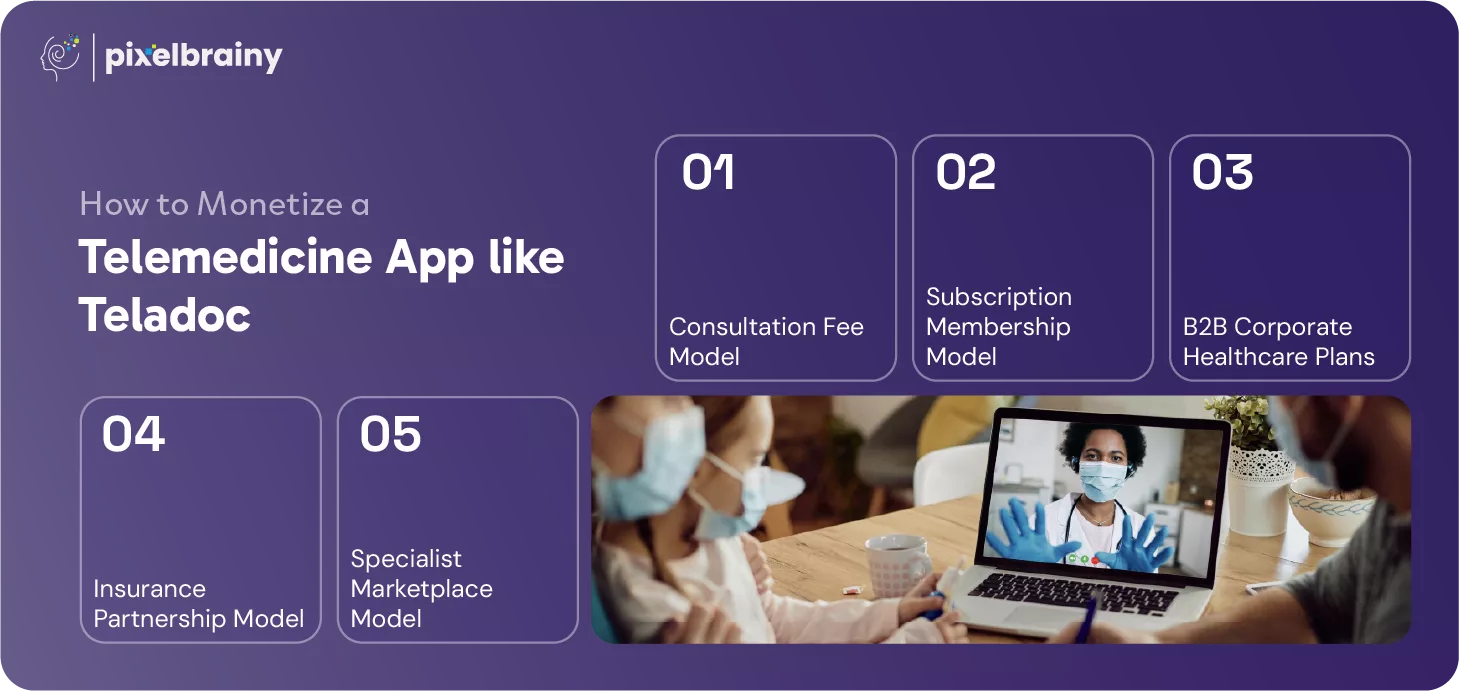
Patients pay for each consultation individually.
Best For: Early-stage startups
This model is simple to understand, easy to launch, and requires minimal commitment from users. It works particularly well when building trust and acquiring initial customers.
Patients pay a recurring monthly or annual fee for access to virtual healthcare services.
Best For: Growth-stage companies
Subscription models typically generate more predictable revenue and often achieve higher long-term retention than purely transactional platforms. Patients who subscribe tend to engage more consistently with healthcare services.
Employers pay to provide telemedicine access as an employee benefit.
Best For: Growth and Enterprise stages
This model mirrors a major component of the Teladoc revenue model for new platforms and often delivers larger contracts and recurring revenue compared to individual consumers.
Insurance providers reimburse consultations or include the platform within member healthcare plans.
Best For: Enterprise-scale telemedicine companies
Although integration and contracting can be complex, insurance partnerships significantly increase patient acquisition and credibility.
The platform earns commissions from specialist consultations completed through the marketplace.
Best For: Early and Growth stages
This approach works particularly well for mental health, dermatology, nutrition, pediatrics, and other specialized healthcare services.
One monetization strategy many startups ignore is white label Teladoc-style app development clinics can use under their own brand.
Instead of serving patients directly, you license the platform to:
This creates recurring SaaS revenue while reducing customer acquisition costs.
Per-consultation models generally help startups acquire users faster because there is no recurring commitment.
However, subscription models usually outperform transactional pricing in long-term retention, revenue predictability, and customer lifetime value. Many successful telemedicine businesses combine both approaches by offering pay-per-visit access alongside premium membership plans.
Although results vary by specialty and geography, many telemedicine platforms generate:
The most effective approach is to keep pricing simple:
The most successful companies that monetize telemedicine app like Teladoc rarely rely on a single revenue stream. Instead, they build a layered monetization strategy that starts with consultation fees and gradually expands into subscriptions, enterprise healthcare contracts, insurance partnerships, and licensing opportunities as the platform grows.
The next wave of digital healthcare will look very different from today's telemedicine platforms. While first-generation solutions focused primarily on video consultations and appointment scheduling, the future of telemedicine app development 2026 is centered around intelligent automation, continuous monitoring, connected healthcare ecosystems, and personalized care delivery.
Many founders ask: "I am developing a telemedicine platform for the Indian and Middle East markets where patients are underserved but internet is unreliable. How do Teladoc-style apps handle low bandwidth video consultations and what do I need to build in from day one?"
The answer lies in designing for the future while solving current infrastructure challenges.
The next evolution of healthcare AI goes beyond chatbots. Agentic AI healthcare app development focuses on autonomous systems that can schedule appointments, coordinate care plans, remind patients about medications, manage follow-ups, and assist providers with administrative workflows without constant human input.
Rather than simply answering questions, these AI agents proactively manage healthcare journeys and improve operational efficiency.
Digital therapeutics are becoming a major growth area in virtual care.
These software-based treatment programs help patients manage:
Instead of relying solely on consultations, healthcare providers can deliver evidence-based treatment programs directly through the application.
The future of AI wearable integration telemedicine Teladoc lies in continuous health monitoring.
Smartwatches, glucose monitors, blood pressure devices, ECG sensors, and fitness trackers continuously collect health data and send it to healthcare platforms.
This shifts healthcare from episodic consultations to proactive monitoring and early intervention.
Augmented Reality and Virtual Reality are beginning to influence telemedicine through:
While still emerging, these technologies are expected to become more practical as hardware adoption increases.
The most successful telemedicine platforms will evolve into unified healthcare ecosystems.
Instead of functioning as standalone applications, future platforms will connect:
Through FHIR-based interoperability, patients will experience seamless care across multiple healthcare providers.
For startups building Teladoc alternative emerging markets solutions, low-bandwidth optimization may become one of the strongest competitive advantages.
In regions where internet reliability is inconsistent, platforms should support:
These capabilities allow consultations to continue even under poor network conditions, improving accessibility for underserved populations.
Founders developing telemedicine platforms today should prioritize low-bandwidth infrastructure, interoperability, wearable readiness, and AI-assisted workflows from the beginning. Technologies such as digital therapeutics, advanced agentic AI, and immersive AR/VR experiences can be introduced in later phases as the platform matures.
The companies that will outperform traditional telemedicine providers in the coming years are not necessarily those with the most features. They will be the platforms that combine intelligent automation, continuous patient monitoring, connected healthcare services, and accessibility for underserved populations while remaining scalable, compliant, and user-friendly from day one.
Telehealth projects require far more than a development team that can create mobile screens and integrate video calling. Success depends on regulatory compliance, healthcare-specific workflows, secure cloud architecture, scalability planning, AI readiness, and a deep understanding of how patients, providers, and healthcare organizations interact within a digital ecosystem.
As a specialized telemedicine app development company like Teladoc, PixelBrainy helps healthcare startups, clinics, hospitals, and digital health innovators transform ideas into secure and scalable virtual care platforms. Our team follows a compliance-first approach that incorporates HIPAA, GDPR, HITECH, and healthcare security requirements from the beginning of the development lifecycle, reducing costly rework and compliance risks later.
We have partnered with healthcare startups, medical service providers, wellness brands, and healthcare enterprises to design, develop, and launch telemedicine solutions tailored to their unique business objectives. From product discovery and UI/UX design to MVP development, cloud deployment, compliance implementation, and long-term optimization, we provide end-to-end healthcare technology expertise.
As your HIPAA-compliant Teladoc app development partner, we help organizations build patient portals, doctor dashboards, remote patient monitoring systems, and enterprise-grade virtual healthcare ecosystems. We also deliver AI development solutions for healthcare startups and enterprises, enabling businesses to leverage AI symptom assessment, intelligent clinical documentation, predictive healthcare analytics, patient engagement automation, and wearable device integrations to enhance care delivery and operational efficiency.
Whether you need to build Teladoc-style app PixelBrainy solutions from scratch, create a niche telehealth platform, or scale an existing healthcare product, our focus remains the same: delivering secure, compliant, scalable, and future-ready healthcare applications.
Let's connect and discuss your telehealth project. Our healthcare technology experts can help you validate your idea, define the right development roadmap, estimate realistic costs, identify compliance requirements, and launch a high-performance virtual care platform designed for long-term growth in the evolving digital healthcare landscape.
Successful telemedicine app development like Teladoc is not defined by the number of features you launch with. The platforms that succeed are the ones that get five fundamentals right: compliance from day one, a seamless patient and doctor experience, scalable cloud architecture, clear monetization strategy, and a roadmap for AI-powered innovation.
If you need complete control over workflows, branding, integrations, and long-term growth, custom development is the right choice. If your goal is to enter the market quickly with limited customization, a white-label solution may be a better starting point.
Before hiring any developer, focus on these three actions this week:
The difference between a successful telemedicine platform and an expensive failed project often comes down to planning before development begins.
Ready to turn your idea into a secure, scalable telemedicine platform? Schedule a free consultation or project scoping call with the PixelBrainy team to discuss your requirements, budget, and launch strategy.
The timeline depends on complexity, compliance requirements, and feature scope. A basic telemedicine MVP typically takes 5 to 8 months, while an enterprise-grade Teladoc-style platform with AI capabilities, EHR integrations, and advanced compliance features may require 9 to 15 months or more.
Yes. Modern telemedicine platforms can support multiple specialties including primary care, mental health, dermatology, pediatrics, cardiology, nutrition, and chronic disease management. This requires specialty-specific workflows, scheduling logic, provider management, and consultation templates.
Telemedicine primarily focuses on remote clinical consultations between patients and healthcare providers. Telehealth is a broader category that includes telemedicine, remote patient monitoring, wellness programs, patient education, digital therapeutics, and preventive healthcare services.
If a third-party vendor stores, processes, transmits, or accesses Protected Health Information (PHI), a HIPAA Business Associate Agreement (BAA) is generally required. Common examples include cloud providers, video communication platforms, messaging services, email providers, and data storage vendors.
Yes. Many healthcare startups use offshore development teams while serving U.S. patients. However, the platform must comply with HIPAA requirements, use HIPAA-compliant infrastructure, implement proper security controls, and ensure all vendors handling PHI meet regulatory obligations. Development location does not determine compliance. Security, architecture, policies, and operational practices do.
A practical MVP should include: Patient registration Doctor onboarding Appointment scheduling Secure video consultations E-prescriptions Payment processing Medical records management Admin dashboard HIPAA-ready security controls Advanced AI features, wearable integrations, and predictive analytics can be added in later phases.
Start by targeting a specific specialty or geographic region. Offer competitive revenue sharing, flexible scheduling, streamlined onboarding, and efficient clinical workflows. Reducing administrative burden is often more attractive to providers than simply offering higher consultation fees.
If speed to market is the priority, a white-label solution can help you launch faster and at a lower initial cost. If you require custom workflows, unique features, AI capabilities, deep integrations, or long-term ownership of the technology, custom development is usually the better investment.
Yes. Modern telemedicine platforms can integrate with insurance verification systems, claims processing solutions, billing platforms, and healthcare clearinghouses. These integrations often require compliance reviews, payer-specific requirements, and healthcare interoperability standards such as HL7 FHIR.

About The Author
Sagar Bhatnagar
Sagar Sahay Bhatnagar brings over a decade of IT industry experience to his role as Marketing Head at PixelBrainy. He's known for his knack in devising creative marketing strategies that boost brand visibility and market influence. Sagar's strategic thinking, coupled with his innovative vision and focus on results, sets him apart. His track record of successful campaigns proves his ability to utilize digital platforms effectively for impactful marketing efforts. With a genuine passion for both technology and marketing, Sagar continuously pushes PixelBrainy's marketing initiatives to greater success.

Working with the PixelBrainy team has been a highly positive experience. They understand the design requirements and create beautiful UX elements to meet the application needs. The dev team did an excellent job bringing my vision to life. We discussed usability and flow. Sagar worked with his team to design the database and begin coding. Working with Sagar was easy. He has the knowledge to create robust apps, including multi-language support, Google and Apple ID login options, Ad-enabled integrations, Stripe payment processing, and a Web Admin site for maintaining support data. I'm extremely satisfied with the services provided, the quality of the final product, and the professionalism of the entire process. I highly recommend them for Android and iOS Mobile Application Design and Development.

Great experience working with them. Had a lot of feedback and I found that unlike most contractors they were bugging me for updates instead of the other way around. They were extremely time conscience and great at communicating! All work was done extremely high quality and if not on time, early! They were always proactive when it comes to communication and the work is great/above par always. Very flexible and a great team to work with! Goes above and beyond to present us with multiple options and always provides quality. Amazing work per usual with Chitra. If you have UI/UX or branding design needs I recommend you go to them! Will likely work with them in the future as well, definitely recommended!

PixelBrainy is a joy to work with and is a great partner when thinking through branding, logo, and website layout. I appreciate that they spend time going into the "why" behind their decisions to help inform me and others about industry best practices and their expertise.

I hired them to design our software apps. Things I really like about them are excellent communication skills, they answer all project suggestions and collaborate right away, and their input on design and colors is amazing. This project was complex and needed patience and creativity. The team is amazing to do business with. I will be using them long-term. Glad to see there are some good people out there. I was afraid to try and outsource my project to someone but I am glad I met them! I really can't say enough. They went above and beyond on this project. I am very happy with everything they have done to make my business stand out from the competition.

It was great working with PixelBrainy and the team. They were very responsive and really owned the project. We'll definitely work with them again!

I recently worked with the PixelBrainy team on a project and I was blown away by their communication skills. They were prompt, clear, and articulate in all of our interactions. They listened and provided valuable feedback and suggestions to help make the project a success. They also kept me updated throughout the entire process, which made the experience stress-free and enjoyable.

PixelBrainy is very good at what it does. The team also presents themselves very professionally and takes care of their side of things very well. I could fully trust them taking up the design work in a timely and organised manner and their attention to detail saved us lots of effort and time. This particular project was quite intense and the team showed that they function very well under pressure. Very much looking forward to working with her again!

It's always an absolute pleasure working with them. They completed all of my requests quickly and followed every note I had for them to a T, which made our process go smoothly from start to finish. Everything was completed fast and following all of the guidelines. And I would recommend their services to anyone. If you need any design work done in the future, PixelBrainy should be your first call!

They took ownership of our requirements and designed and proposed multiple beautiful variants. The team is self-motivated, requires minimum supervision, committed to see-through designs with quality and delivering them on time. We would definitely love to work with PixelBrainy again when we have any requirements.

PixelBrainy was a big help with our SaaS application. We've been hard at work with a new UI/UX and they provided a lot of help with the designs. If you're looking for assistance with your website, software, or mobile application designs, PixelBrainy and the team is a great recommendation.

PixelBrainy designers are amazing. They are responsive, talented, and always willing to help craft the design until it matches your vision. I would recommend them and plan to continue them for my future projects and more!!!

They were awesome! Did a good job fast, and good communication. Will work with them again. Thank you

Creative, detail-oriented, and talented designers who take direction well and implement changes quickly and accurately. They consistently over-delivered for us.

PixelBrainy team is very talented and creative. Great designers and a pleasure to work with. PixelBrainy is an excellent communicator and I look forward to working with them again.

PixelBrainy has a very talented design team. Their work is excellent and they are very responsive. I enjoy working with them and hope to continue on all of our future projects.


Transform your ideas into reality with us.
Across these industries, each engagement brings unique challenges, from early-stage product development to scaling complex systems, helping us build a practical understanding of real-world product environments.