AI Summary Powered by PixelBrainy
Is healthcare ready to be transformed by AI Health Assessment Apps, or are we still underestimating their true potential? The shift toward digital health has already begun, and one of the most impactful innovations is the rise of AI-powered health assessment solutions. With increasing patient demand for accessible, accurate, and personalized healthcare services, businesses and startups are asking how to develop an AI Health Assessment App that can address real-world challenges while creating long-term value.
AI Health Assessment App development is not just about coding a mobile platform. It is about rethinking how healthcare providers interact with patients, how data is collected and processed, and how medical decisions are supported. For healthcare organizations, insurers, and health tech startups, the ability to build AI Health Assessment Apps means offering a more efficient and scalable model of care. Patients benefit from faster self-assessments, remote health monitoring, and data-driven recommendations, while providers reduce workloads and improve diagnosis accuracy.
If you are a healthcare entrepreneur, a tech founder, or a medical professional looking to leverage AI, understanding the step-by-step process of developing AI Health Assessment Apps is essential. This guide will walk you through everything you need to know: from defining the concept and exploring core features to understanding development costs, compliance requirements, and technology stacks. By the end, you will have a clear roadmap to build AI Health Assessment Apps that stand out in a highly competitive and regulated industry.
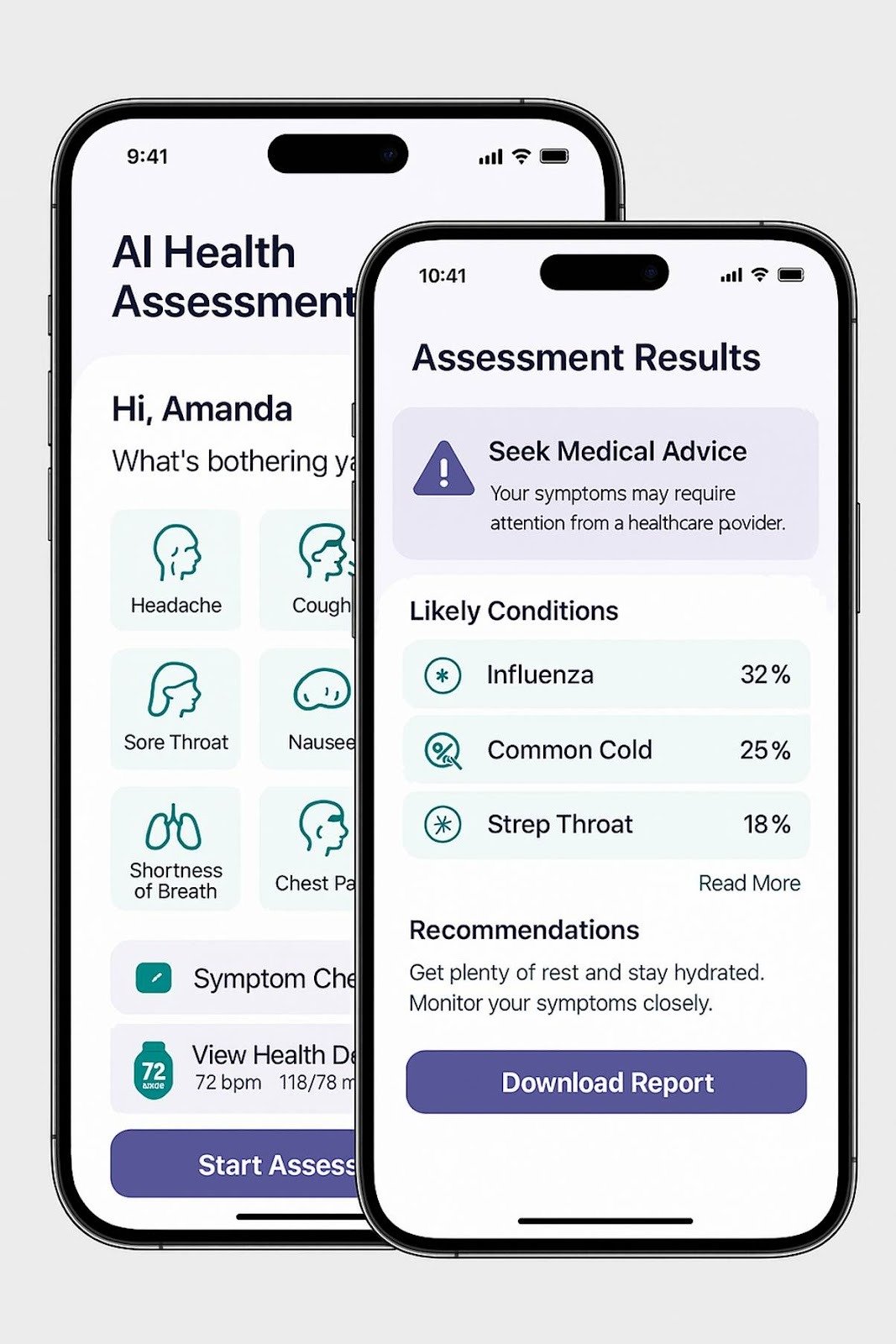
An AI Health Assessment App is a smart healthcare tool that allows patients to check their symptoms, monitor vital signs, and receive health insights right from their mobile devices. Instead of waiting for in-person visits, users can get quick, data-driven feedback about their health and guidance on the next steps to take. These apps combine medical knowledge with artificial intelligence to make healthcare more accessible, personalized, and proactive.
Here’s a step-by-step look at how an AI Health Assessment App works:
The process starts when a patient enters their health details. This could be typing in symptoms like headaches, fever, or fatigue, or automatically syncing data from wearables such as smartwatches that track heart rate, sleep, or physical activity.
Once the information is submitted, the app organizes and standardizes it so the system can make sense of it. For example, if a user writes “tiredness,” the app matches it to medical terminology like “fatigue” to ensure accurate analysis.
The app’s algorithms compare the input data with large medical databases and previous case patterns. Using AI and machine learning models, it identifies possible conditions or health risks and narrows down the most likely causes.
Based on the analysis, the user receives a tailored health assessment. This could include recommendations like lifestyle changes, alerts about potential risks, or a suggestion to consult a doctor if the issue seems serious.
Over time, the app gets smarter. Each interaction, feedback from users, and medical updates improve its accuracy, ensuring that future assessments become more reliable and aligned with real-world health outcomes.
By simplifying complex medical data into actionable insights, AI Health Assessment Apps empower individuals to take better control of their health while reducing unnecessary clinical visits.
The healthcare industry is undergoing a digital revolution, and artificial intelligence is one of the leading forces behind it. For modern healthcare providers, startups, and insurers, choosing to invest in AI Health Assessment App Development is not simply about following a trend. It is about building sustainable solutions that improve patient outcomes, reduce operational costs, and expand access to care. Patients today want speed, convenience, and accuracy, while businesses need scalability and efficiency. AI-powered health assessment apps are the answer to both sides of this equation.
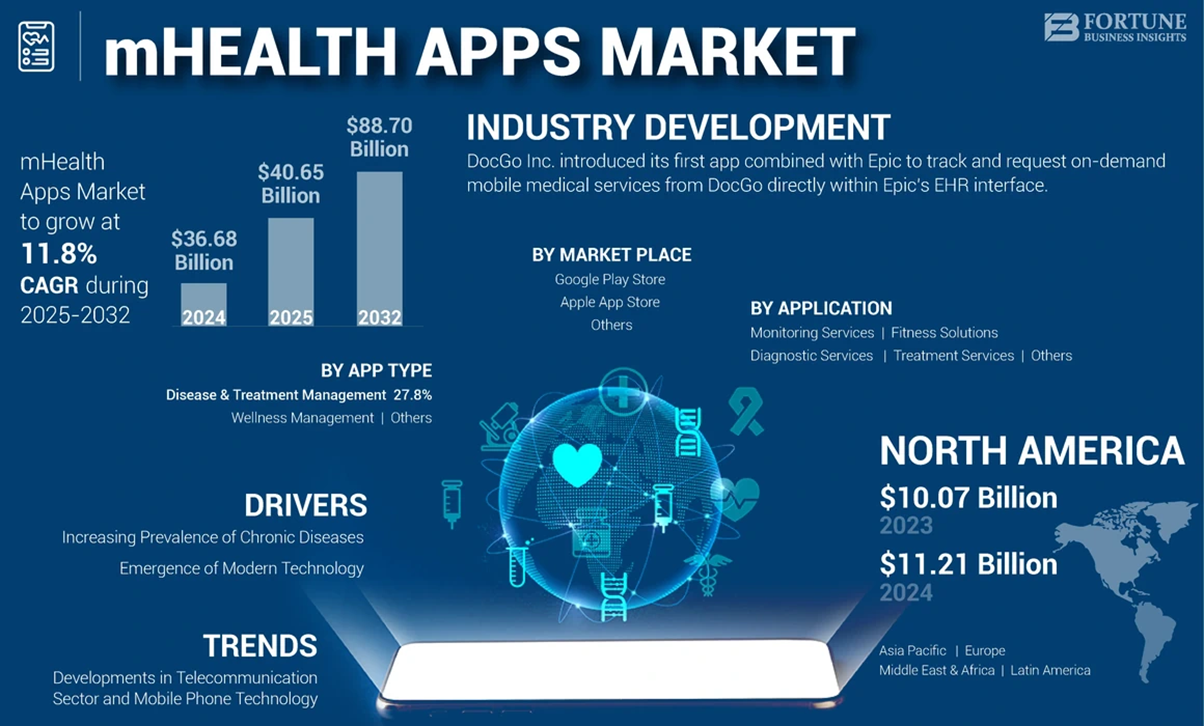
According to a recent report, the global Health apps market size was USD 36.68 billion in 2024 and is projected to grow from USD 40.65 billion in 2025 to USD 88.70 billion by 2032, exhibiting a CAGR of 11.8% during the forecast period. This growth shows that businesses looking to build AI Health Assessment App solutions are entering a market full of opportunities with rising adoption among patients and healthcare organizations.
Here are the most important reasons why healthcare businesses should focus on the development of AI Health Assessment App initiatives:
AI-based health assessment apps encourage patients to actively participate in their health journey. By allowing them to log symptoms, monitor vital signs, and access instant feedback, patients become more engaged in preventive care and chronic disease management. This ongoing interaction builds trust and increases the likelihood of patients following medical advice, which leads to better long-term health outcomes.
Healthcare providers often face overwhelming demand that stretches their resources thin. AI apps help filter out cases that do not require immediate doctor attention by providing reliable preliminary assessments. This reduces unnecessary clinic visits, cuts administrative burdens, and allows physicians to allocate more time to critical cases. Over time, this efficiency translates into significant cost savings while maintaining high-quality patient care.
Traditional healthcare models are often limited by geography and infrastructure. AI-driven apps remove these barriers by bringing medical insights directly to users’ smartphones. Whether it is a rural patient without access to specialists or a busy urban professional who wants quick guidance, the app ensures healthcare is available anywhere, anytime. This scalability makes it possible for providers to serve larger populations without proportionally increasing costs.
An AI health assessment app does more than deliver results to users. It collects massive amounts of structured and unstructured data that can be analyzed to uncover health trends, identify potential risks, and support predictive healthcare models. Providers can use this data to design better treatment plans, personalize care, and even anticipate outbreaks or health crises before they escalate.
With healthcare becoming increasingly digital, businesses that adopt AI-driven solutions gain a clear advantage over their competitors. Offering a reliable AI health assessment app signals innovation, patient-first thinking, and a commitment to technology-driven care. This not only attracts patients but also strengthens partnerships with insurers, employers, and other stakeholders in the healthcare ecosystem.
Also Read: AI Medical Diagnosis App Development: Features & Cost
For healthcare businesses that want to harness the power of AI to deliver smarter and more accessible care, understanding the practical applications of these apps is essential. These use cases demonstrate how AI Health Assessment Apps can solve real challenges, improve patient engagement, and create new growth opportunities for providers and startups.
By exploring them, decision-makers can see exactly where AI can bring measurable value to their healthcare operations.
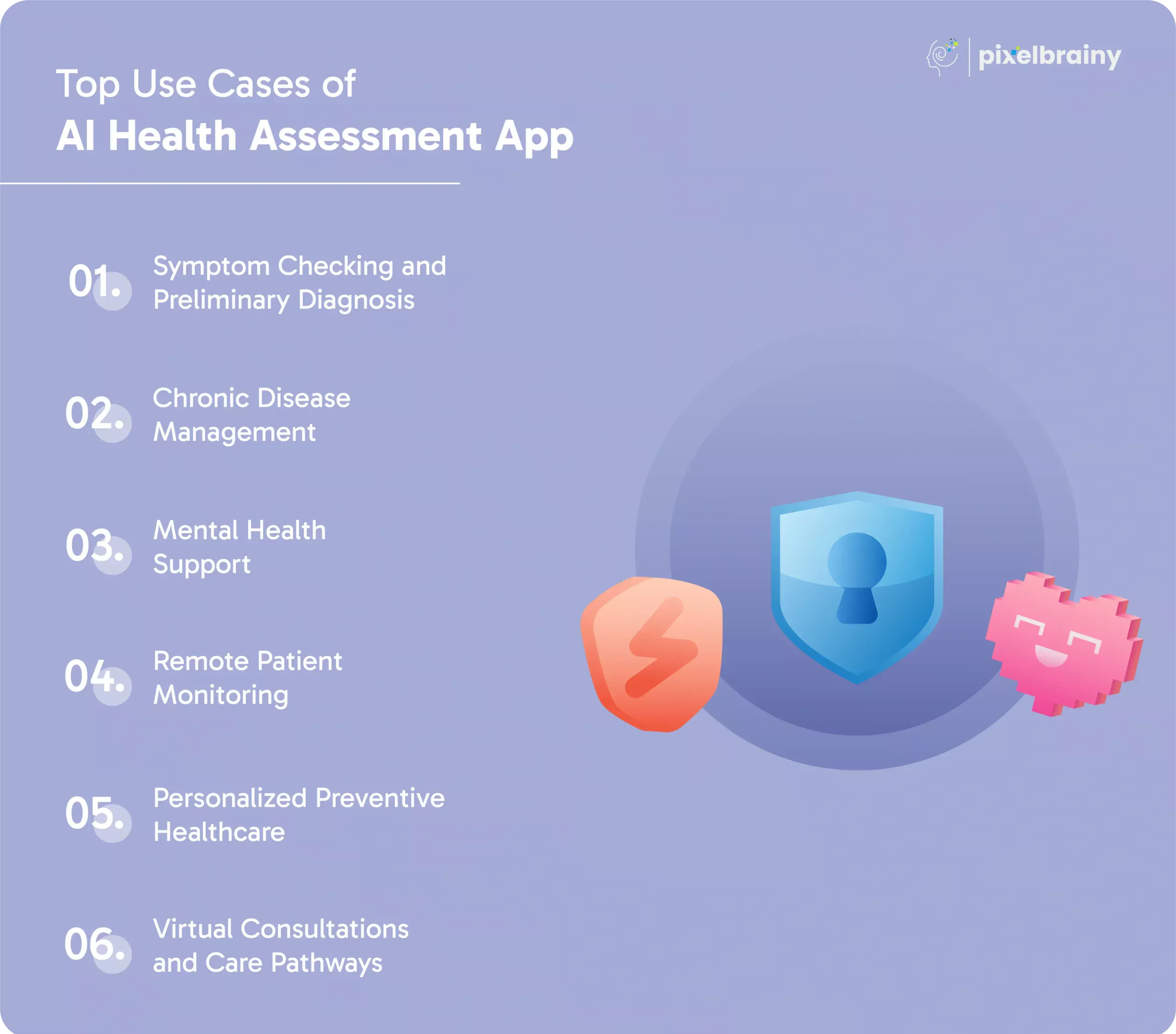
AI-driven symptom checkers allow users to input their health conditions and receive instant feedback about potential causes. By analyzing symptoms against large medical databases, the app provides early insights that help patients decide whether they need professional medical care. This not only reduces unnecessary visits but also gives patients peace of mind.
Managing long-term conditions like diabetes, hypertension, and asthma becomes easier with AI-powered apps. These platforms track patient data, monitor symptoms, and provide personalized advice to keep conditions under control. For providers, it offers a real-time view of a patient’s progress outside of clinical visits.
AI Health Assessment Apps are increasingly used to screen for stress, anxiety, and depression. By analyzing user responses, speech patterns, or mood tracking data, these apps provide early identification of mental health challenges and suggest resources or professional support.
Also Read: How To Build An AI Mental Health and Wellness App Like Wysa?
Remote monitoring is one of the strongest use cases for AI in healthcare. Patients with conditions that require continuous observation, such as cardiac issues, can be monitored in real-time using wearable devices connected to the app. AI helps detect anomalies early and alerts providers immediately.
AI can analyze user data to provide preventive care recommendations tailored to each individual. These insights include diet planning, fitness routines, sleep monitoring, and lifestyle adjustments aimed at reducing future health risks. Preventive care reduces long-term costs and improves quality of life.
An AI Health Assessment App can act as the first step before connecting patients with doctors. By providing preliminary assessments, the app ensures that virtual consultations are more focused and efficient. This also helps streamline care pathways by directing patients to the right specialists.
AI Health Assessment Apps prove their value by addressing a wide variety of healthcare needs while improving efficiency, accessibility, and patient satisfaction.
For any healthcare organization, the journey of building AI Health Assessment App solutions starts with understanding what features patients and providers truly need. The right features not only enhance user experience but also ensure compliance, accuracy, and long-term adoption.
Below are the most important core features to implement while developing AI Health Assessment App, explained in detail so businesses can make informed choices during the development process.
| Feature | Explanation |
| User Registration & Profiles | A secure sign-up and profile creation feature ensures that each user can store personal health details such as age, medical history, and lifestyle preferences. This allows the AI system to provide tailored assessments and personalized health recommendations. |
| Symptom Checker | The AI-powered symptom checker enables patients to log symptoms in simple language and receive feedback about possible health conditions. It provides early guidance that can reduce anxiety and prevent unnecessary doctor visits. |
| Wearable & IoT Integration | By connecting with smart devices like Apple Watch, Fitbit, or glucose monitors, the app continuously gathers real-time health data. This integration makes monitoring vitals like heart rate, oxygen saturation, and sleep patterns seamless and accurate. |
| Electronic Health Record (EHR) Access | Access to centralized medical records ensures that patients and providers always have a complete picture of health history. It speeds up diagnosis, reduces duplication of tests, and allows for better coordinated care. |
| Telemedicine Support | Virtual consultations can be integrated within the app, where patients connect with doctors through chat or video. Since the AI pre-assesses symptoms, doctors receive structured information before consultations, making sessions more effective. |
| Personalized Health Insights | AI analyzes user data to provide actionable lifestyle tips such as dietary advice, exercise recommendations, or wellness goals. These insights are customized for each patient, making preventive care more practical and achievable. |
| Notifications & Reminders | Automated alerts remind patients about medication schedules, upcoming consultations, or important health checks. This feature helps improve adherence and ensures users stay on track with treatment plans. |
| Multi-language Support | Offering content in multiple languages makes healthcare more inclusive and accessible. It ensures patients from diverse backgrounds can comfortably use the app without facing communication barriers. |
| AI-driven Predictive Analytics | The app uses advanced algorithms to predict potential risks, such as diabetes or cardiac problems, based on lifestyle and historical data. This allows patients and providers to act before the condition escalates. |
| Mental Health Screening | Built-in mood and stress trackers allow users to assess their mental well-being regularly. Early detection of anxiety, depression, or burnout ensures timely intervention and better mental health support. |
| Health Risk Scoring | The app generates an easy-to-read score that reflects overall health status. This score helps patients understand where they stand and motivates them to take action toward healthier habits. |
| Secure Data Encryption | Ensuring patient trust is critical, and this feature safeguards sensitive medical data through encryption. It also ensures compliance with regulations like HIPAA and GDPR, which are mandatory for handling healthcare data. |
| Chatbot Assistance | AI-powered chatbots are available around the clock to answer questions, guide users through symptom checks, and offer initial support. This creates a smooth user experience while reducing dependency on human staff. |
| Doctor & Specialist Directory | Patients can browse and connect with the right medical professionals through a searchable directory. It includes filters such as specialization, location, and appointment availability for quick access. |
| Reporting & Analytics Dashboard | The app generates detailed health reports that patients can download or share with their doctors. For providers, dashboards offer valuable insights into patient trends and treatment effectiveness. |
Integrating these AI Health Assessment App features ensures the solution is practical, trustworthy, and impactful for both patients and healthcare businesses.
While core features make an app functional, the real value comes from advanced capabilities that differentiate it from competitors. Businesses that focus on these non-ordinary features during the development of AI Health Assessment App can deliver smarter, more engaging, and future-ready healthcare solutions.
These features elevate the patient experience while strengthening trust and long-term adoption.
Adding voice recognition powered by natural language processing (NLP) allows patients to describe their symptoms verbally. This makes the experience more natural and user-friendly, especially for elderly users who may struggle with typing. It also speeds up the process, improving accessibility.
Unlike basic chatbots, an advanced AI assistant can detect emotional tones in patient queries. By responding with empathy and context, it creates a more human-like interaction and builds patient trust while offering initial medical guidance.
For personalized medicine, integrating genomic data can help predict risks of hereditary diseases. Patients receive customized recommendations based on their DNA profile, making the app far more advanced than traditional assessment tools.
AR-powered modules can visually explain conditions, treatments, or anatomy to patients. This interactive feature makes learning about health more engaging and enhances patient awareness, which leads to better decision-making.
Beyond patient use, AI can help providers predict hospital visits, bed occupancy, or resource demand. By integrating this capability, the app becomes a tool not only for patients but also for healthcare organizations to optimize operations.
Blockchain technology can be implemented to store and share health data securely. It ensures transparency, prevents tampering, and gives patients complete control over who can access their medical information.
A digital twin is a virtual representation of a patient that tracks lifestyle, vitals, and health metrics. By simulating different health scenarios, the app can provide personalized predictions and preventive strategies.
Next-generation wearables equipped with AI can analyze real-time data before sending it to the app. This provides continuous monitoring for chronic diseases and ensures early detection of abnormalities, reducing emergencies.
By combining such advanced functionalities, healthcare businesses can create a truly intelligent and patient-centered AI health platform that stands out in the market.
For businesses planning to develop AI Health Assessment App solutions, following a structured approach is the key to success. The process involves multiple stages, from research to launch, where every step ensures compliance, usability, and innovation. Let’s look at what is the process to build AI Health Assessment App and how companies can streamline their journey with the right strategies.
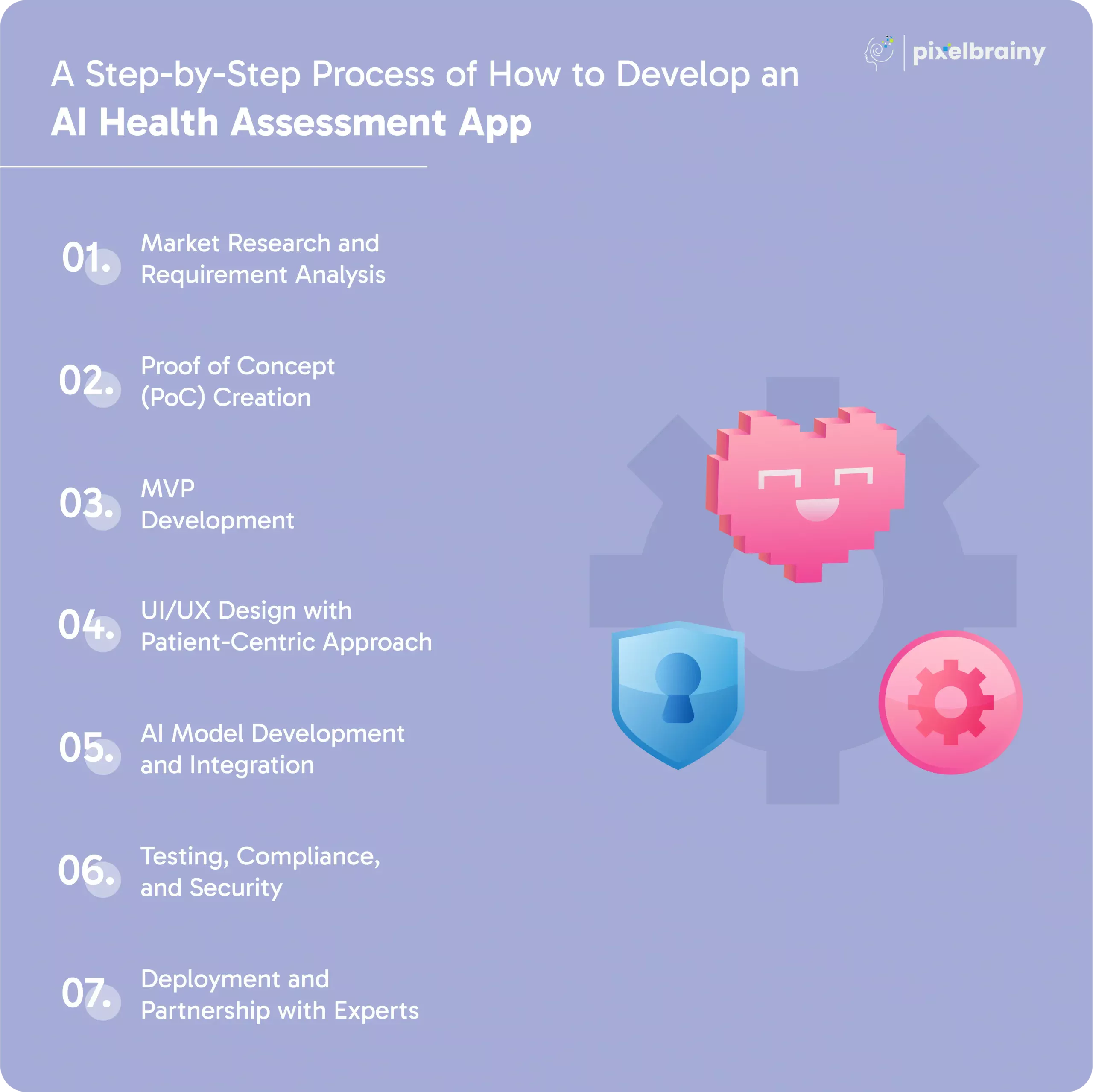
The first step in AI Health Assessment App Development is conducting thorough research to understand market demand, user expectations, and competitor offerings. Businesses analyze healthcare gaps and identify how AI features like symptom checking or predictive analysis can add unique value. Clear requirement analysis sets the foundation for the entire project.
Aim/Why this matters: This ensures the app solves real-world healthcare problems rather than becoming just another generic product, giving it higher adoption potential and market success.
Before diving deep, it’s wise to create AI Health Assessment App PoC. A PoC helps validate whether the chosen technology stack, algorithms, and integrations will deliver accurate and practical results. By testing the feasibility early, businesses minimize risks and avoid costly mistakes in later stages.
Aim/Why this matters: This step confirms the idea is technically viable, ensuring investors and stakeholders are confident before committing significant resources.
An MVP development phase ensures that a simplified version of the AI Health Assessment App is built with essential features like symptom checkers, profile creation, and AI-driven assessments. The goal is to quickly launch a usable version, gather user feedback, and refine the app for broader adoption.
Aim/Why this matters: An MVP reduces time-to-market, allows real user testing, and helps businesses refine features based on actual patient needs instead of assumptions.
A critical part of AI Health Assessment Application development is designing interfaces that are intuitive and user-friendly. Patients must be able to input symptoms easily, access results quickly, and navigate the app without confusion. A clean design enhances trust and encourages regular use of the app.
Aim/Why this matters: A strong UI/UX design builds patient confidence and ensures the app is accessible to people of all ages, including elderly users or those with limited technical knowledge.
Here, developers work on training and integrating AI algorithms into the AI Health Assessment App. This includes using natural language processing for symptom interpretation, machine learning for predictive analytics, and integration with medical databases for accurate assessments. This step ensures the app is truly intelligent and reliable.
Aim/Why this matters: High-quality AI models make the difference between a useful app and an unreliable one, ensuring clinical accuracy and building trust among users and healthcare providers.
When businesses ask to build AI Health Assessment App safely, testing becomes non-negotiable. The app undergoes multiple rounds of testing to ensure accuracy, speed, and usability. Additionally, compliance with HIPAA, GDPR, and strict security measures like data encryption ensures patient trust and regulatory approval.
Aim/Why this matters: Proper testing and compliance protect patients, reduce liability risks, and ensure the app can legally operate in multiple regions without facing restrictions.
The final stage in AI Health Assessment App creation is deployment, where the app is launched on chosen platforms such as iOS and Android. To stay competitive, businesses often collaborate with the Top AI Development Companies in USA, who bring expertise, scalability, and best practices to ensure the app remains future-ready.
Aim/Why this matters: Partnering with experts guarantees the app’s scalability, continuous improvement, and alignment with fast-evolving healthcare standards.
By following these steps, businesses can ensure that AI Health Assessment App solutions are practical, compliant, and impactful for both patients and providers.
One of the most common questions healthcare entrepreneurs ask is what is the cost to develop an AI Health Assessment App. The truth is, there is no single figure because pricing depends on factors like app complexity, features, integrations, compliance requirements, and the development team’s location. On average, the AI Health Assessment App Development cost ranges between $20,000 and $200,000+, with advanced solutions exceeding that range depending on scalability and AI sophistication.
To make it easier to understand, here’s a breakdown of the cost to create AI Health Assessment App based on complexity levels:
| Type of AI Health Assessment App | Features Included | Estimated Cost Range |
| Basic AI Health Assessment App | Includes essential features such as user registration, symptom checker, basic AI-driven suggestions, limited wearable integration, and simple reporting. Designed for startups or small-scale pilots. | $20,000 – $50,000 |
| Medium AI Health Assessment App | Comes with advanced functionality such as EHR integration, telemedicine support, predictive analytics, personalized health insights, secure data storage, and multi-language options. Suitable for mid-sized healthcare businesses. | $50,000 – $120,000 |
| Advanced AI Health Assessment App | A highly sophisticated solution with AI-powered chatbots, emotional intelligence, genomic integration, blockchain data security, AR modules for patient education, and real-time monitoring with wearables. Best for enterprises and large-scale healthcare providers. | $120,000 – $200,000+ |
The cost of developing AI Health Assessment App also varies depending on design complexity, compliance with HIPAA or GDPR, cloud hosting fees, ongoing maintenance, and whether businesses partner with in-house developers or outsource to a specialized AI development company.
In short, the more advanced features and compliance requirements an app has, the higher the investment, but the long-term returns in terms of patient engagement, efficiency, and scalability make it worthwhile.

Also Read: AI App Development Cost: From MVPs to Full-Scale AI App
The success of any healthcare solution depends heavily on the right technology stack. Choosing suitable frameworks, AI libraries, and cloud platforms ensures performance, scalability, and compliance. For businesses exploring for the development of AI Health Assessment App, the following tools and technologies are commonly used during development.
| Category | Tools & Technologies | Explanation |
| Programming Languages | Python, Java, Kotlin, Swift, JavaScript | Python is widely used for AI and machine learning, while Java, Kotlin, and Swift are popular for mobile app development. JavaScript powers cross-platform and web integration. |
| AI & ML Frameworks | TensorFlow, PyTorch, Scikit-learn, Keras | These frameworks support building and training AI models used in symptom analysis, predictive analytics, and natural language processing. |
| Natural Language Processing (NLP) | spaCy, NLTK, Dialogflow | NLP libraries process user input, interpret symptoms, and allow conversational chatbots to deliver a human-like interaction. |
| Cloud Infrastructure | AWS, Microsoft Azure, Google Cloud | Cloud platforms provide scalable hosting, AI model deployment, and secure data storage. They also offer HIPAA-compliant healthcare solutions. |
| Databases | MySQL, MongoDB, PostgreSQL, Firebase | Structured and unstructured databases store user health records, AI training data, and real-time monitoring inputs from connected devices. |
| Data Security & Compliance | OAuth 2.0, SSL, Blockchain, HIPAA SDKs | Encryption protocols, blockchain integration, and healthcare compliance SDKs safeguard patient data and maintain regulatory standards. |
| Wearable & IoT Integration | Apple HealthKit, Google Fit, Fitbit APIs | APIs that connect smart devices to the app, enabling real-time tracking of vitals such as heart rate, glucose, and oxygen levels. |
| Telemedicine & Video APIs | Twilio, WebRTC, Zoom SDK | APIs that support real-time video consultations, chat features, and secure communication between patients and doctors. |
| UI/UX Design Tools | Figma, Adobe XD, Sketch | Used to design patient-friendly, intuitive app interfaces that improve engagement and accessibility. |
| Analytics & Monitoring Tools | Google Analytics, Mixpanel, Power BI | These tools analyze patient usage data, app performance, and generate insights for healthcare providers and business stakeholders. |
By leveraging the right blend of AI frameworks, cloud platforms, and healthcare-compliant security tools, businesses can ensure that their AI Health Assessment App Development is powerful, secure, and scalable for future growth.
The journey of AI Health Assessment App Development is full of opportunities, but it also comes with unique challenges that must be addressed strategically. From compliance to data quality, businesses need to plan carefully to ensure smooth adoption and reliable outcomes. Below are the top challenges and their solutions.
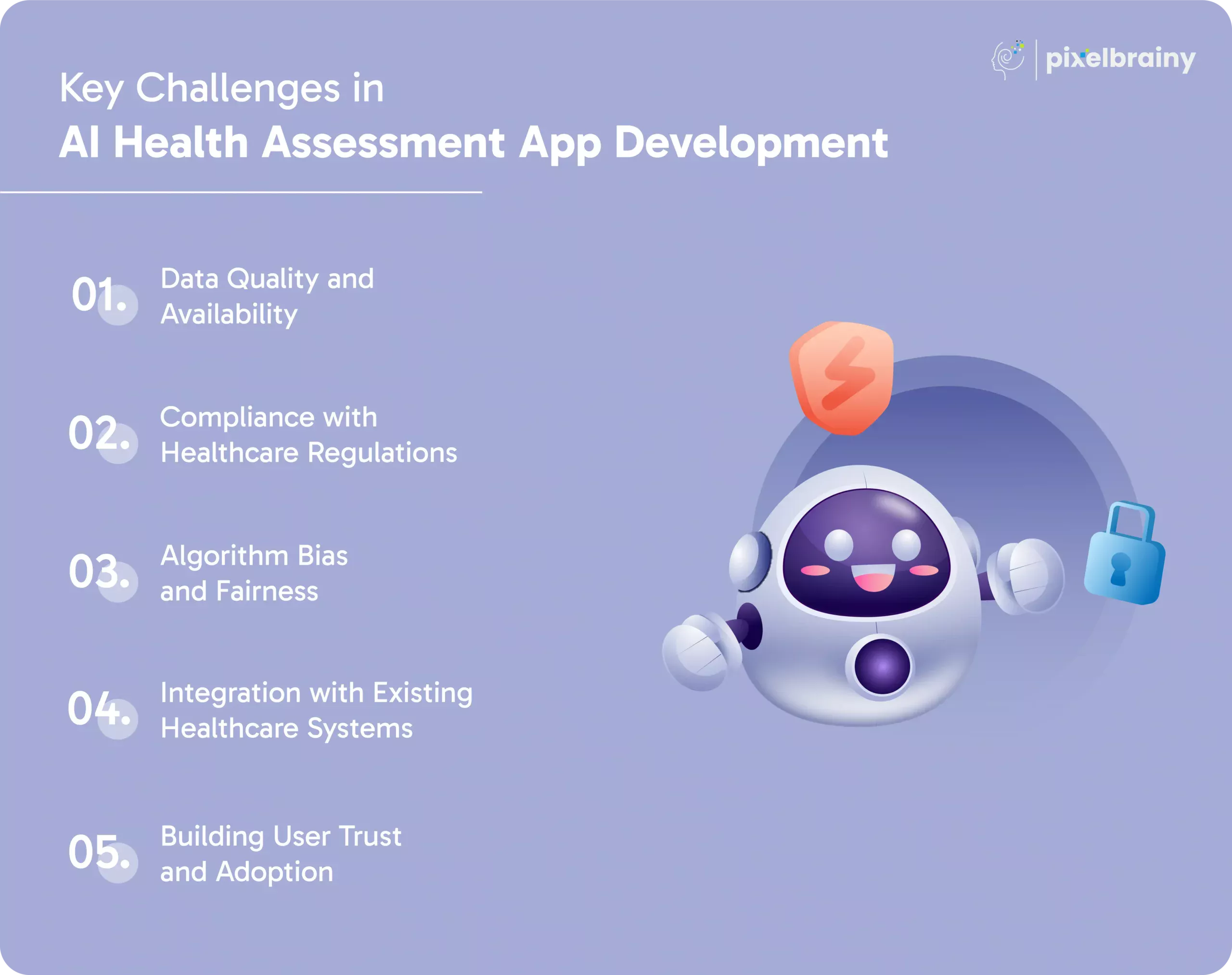
AI models rely on large volumes of accurate medical data to deliver precise assessments. Inconsistent or incomplete data can lead to unreliable results.
Solution: Partner with hospitals, medical institutions, or research bodies to access verified datasets. Use data preprocessing and cleaning techniques to ensure information fed into the AI system is trustworthy.
The building of AI Health Assessment App requires strict adherence to regulations like HIPAA and GDPR. Non-compliance can result in heavy penalties and loss of trust.
Solution: Integrate compliance measures early in the development cycle, use secure encryption protocols, and regularly audit systems to ensure data privacy and legal alignment.
AI systems can unintentionally produce biased results if the training data is skewed toward specific demographics. This limits accuracy and fairness in assessments.
Solution: Diversify training datasets across gender, ethnicity, and age groups. Continuously monitor AI predictions and update algorithms to reduce bias over time.
To develop AI Health Assessment App that works effectively, it must connect with electronic health records, telemedicine platforms, and wearable devices. Complex integration often slows development.
Solution: Use standardized APIs and interoperability protocols like HL7 and FHIR. Collaborating with IT teams from healthcare providers ensures seamless system integration.
Patients may hesitate to rely on AI Health Risk Assessment Application development if they fear incorrect results or data misuse. Low adoption reduces the app’s impact.
Solution: Ensure transparency by showing how AI results are generated, provide clear disclaimers, and integrate features like human-in-the-loop consultations to boost confidence.
By anticipating these challenges and addressing them early, businesses can ensure their AI Health Assessment Apps are secure, accurate, and widely accepted.
Choosing the right technology partner can make or break your success in AI development. PixelBrainy stands as a trusted AI healthcare development company, helping healthcare providers, startups, and enterprises transform their vision into powerful, compliant, and scalable solutions. With a strong focus on innovation, security, and usability, we bring the expertise required for seamless AI Health Risk Assessment App Development.
At PixelBrainy a top AI app development company works closely with clients to build AI Health Assessment App solutions that deliver real-world value. From concept validation and MVP creation to full-scale deployment and post-launch support, our team ensures every stage of the project is handled with precision. We don’t just build applications; we create patient-centered experiences that improve healthcare outcomes while meeting strict regulatory standards.
Recently, our team successfully completed a project for a healthcare client (confidential) that aimed to improve patient self-assessments and connect users with specialists remotely. The solution integrated wearable devices, predictive analytics, and a secure telemedicine module. Post-launch analytics revealed a 40% increase in patient engagement and a noticeable reduction in unnecessary in-person visits. This project demonstrated how AI-driven innovation can directly impact efficiency and patient satisfaction.
Partnering with PixelBrainy means gaining a reliable team that understands healthcare technology inside and out. With us, your journey from idea to fully functional AI health solution becomes faster, safer, and future-proof.
From above, it is clear that AI is no longer a futuristic idea but a present necessity in healthcare. The journey of AI Health Assessment App Development brings opportunities to improve patient engagement, reduce costs, and deliver more personalized care. Whether it is early symptom detection, chronic disease monitoring, or predictive analytics, the impact of these apps is profound. For healthcare providers and startups, the decision to invest in this technology is not only about innovation but also about staying competitive in a rapidly evolving industry.
By choosing the right partner, businesses can overcome challenges, ensure compliance, and deliver apps that patients trust. PixelBrainy is ready to guide you every step of the way, turning ideas into impactful healthcare solutions.
Book an appointment with PixelBrainy today and take the first step toward building your AI Health Assessment App.
AI Health Assessment Apps are designed to provide preliminary guidance and support, not to replace doctors. They use advanced algorithms and medical data to offer insights, but final medical decisions should always involve healthcare professionals.
These apps integrate strong security protocols such as end-to-end encryption, role-based access, and compliance with HIPAA or GDPR to protect sensitive medical data and maintain user trust.
Yes, startups can begin with a basic version or MVP that includes core features. This allows them to test the market, gather feedback, and scale up gradually without overspending.
Apart from hospitals, insurers, telemedicine platforms, wellness companies, and even corporate health programs can leverage AI Health Assessment Apps to improve efficiency and customer engagement.
These apps connect through APIs like Apple HealthKit, Google Fit, or Fitbit, allowing them to track vitals such as heart rate, blood pressure, and sleep data in real time.
Regular updates are essential to add new features, patch security vulnerabilities, and ensure AI models remain accurate by incorporating the latest medical research and datasets.

About The Author
Sagar Bhatnagar
Sagar Sahay Bhatnagar brings over a decade of IT industry experience to his role as Marketing Head at PixelBrainy. He's known for his knack in devising creative marketing strategies that boost brand visibility and market influence. Sagar's strategic thinking, coupled with his innovative vision and focus on results, sets him apart. His track record of successful campaigns proves his ability to utilize digital platforms effectively for impactful marketing efforts. With a genuine passion for both technology and marketing, Sagar continuously pushes PixelBrainy's marketing initiatives to greater success.

Working with the PixelBrainy team has been a highly positive experience. They understand the design requirements and create beautiful UX elements to meet the application needs. The dev team did an excellent job bringing my vision to life. We discussed usability and flow. Sagar worked with his team to design the database and begin coding. Working with Sagar was easy. He has the knowledge to create robust apps, including multi-language support, Google and Apple ID login options, Ad-enabled integrations, Stripe payment processing, and a Web Admin site for maintaining support data. I'm extremely satisfied with the services provided, the quality of the final product, and the professionalism of the entire process. I highly recommend them for Android and iOS Mobile Application Design and Development.

Great experience working with them. Had a lot of feedback and I found that unlike most contractors they were bugging me for updates instead of the other way around. They were extremely time conscience and great at communicating! All work was done extremely high quality and if not on time, early! They were always proactive when it comes to communication and the work is great/above par always. Very flexible and a great team to work with! Goes above and beyond to present us with multiple options and always provides quality. Amazing work per usual with Chitra. If you have UI/UX or branding design needs I recommend you go to them! Will likely work with them in the future as well, definitely recommended!

PixelBrainy is a joy to work with and is a great partner when thinking through branding, logo, and website layout. I appreciate that they spend time going into the "why" behind their decisions to help inform me and others about industry best practices and their expertise.

I hired them to design our software apps. Things I really like about them are excellent communication skills, they answer all project suggestions and collaborate right away, and their input on design and colors is amazing. This project was complex and needed patience and creativity. The team is amazing to do business with. I will be using them long-term. Glad to see there are some good people out there. I was afraid to try and outsource my project to someone but I am glad I met them! I really can't say enough. They went above and beyond on this project. I am very happy with everything they have done to make my business stand out from the competition.

It was great working with PixelBrainy and the team. They were very responsive and really owned the project. We'll definitely work with them again!

I recently worked with the PixelBrainy team on a project and I was blown away by their communication skills. They were prompt, clear, and articulate in all of our interactions. They listened and provided valuable feedback and suggestions to help make the project a success. They also kept me updated throughout the entire process, which made the experience stress-free and enjoyable.

PixelBrainy is very good at what it does. The team also presents themselves very professionally and takes care of their side of things very well. I could fully trust them taking up the design work in a timely and organised manner and their attention to detail saved us lots of effort and time. This particular project was quite intense and the team showed that they function very well under pressure. Very much looking forward to working with her again!

It's always an absolute pleasure working with them. They completed all of my requests quickly and followed every note I had for them to a T, which made our process go smoothly from start to finish. Everything was completed fast and following all of the guidelines. And I would recommend their services to anyone. If you need any design work done in the future, PixelBrainy should be your first call!

They took ownership of our requirements and designed and proposed multiple beautiful variants. The team is self-motivated, requires minimum supervision, committed to see-through designs with quality and delivering them on time. We would definitely love to work with PixelBrainy again when we have any requirements.

PixelBrainy was a big help with our SaaS application. We've been hard at work with a new UI/UX and they provided a lot of help with the designs. If you're looking for assistance with your website, software, or mobile application designs, PixelBrainy and the team is a great recommendation.

PixelBrainy designers are amazing. They are responsive, talented, and always willing to help craft the design until it matches your vision. I would recommend them and plan to continue them for my future projects and more!!!

They were awesome! Did a good job fast, and good communication. Will work with them again. Thank you

Creative, detail-oriented, and talented designers who take direction well and implement changes quickly and accurately. They consistently over-delivered for us.

PixelBrainy team is very talented and creative. Great designers and a pleasure to work with. PixelBrainy is an excellent communicator and I look forward to working with them again.

PixelBrainy has a very talented design team. Their work is excellent and they are very responsive. I enjoy working with them and hope to continue on all of our future projects.


Transform your ideas into reality with us.
Across these industries, each engagement brings unique challenges, from early-stage product development to scaling complex systems, helping us build a practical understanding of real-world product environments.