AI Summary Powered by PixelBrainy
What separates AI startups that merely survive from those that fundamentally reshape industries?
As artificial intelligence moves from experimentation to execution, successful AI startup case studies are becoming essential learning tools for founders, executives, and investors alike. In AI startup case studies 2026, the difference between success and failure is no longer about model size or novelty. It is about solving real problems with precision, speed, and measurable outcomes. Across healthcare, finance, insurance, education, and human resources, AI startup success stories are proving that focused, well integrated AI delivers tangible business value.
This article explores innovative AI use cases that go beyond automation and directly influence decision making, revenue growth, risk reduction, and operational efficiency. These are not theoretical concepts. They are real world AI use cases already deployed by AI startups in 2026 that work closely with enterprises and regulated industries. From enterprise AI use cases in financial forecasting to AI driven clinical decision support in healthcare, these examples show how AI use cases redefining business are accelerating AI adoption in enterprises.
So, what are successful AI startup case studies? They are stories where technology aligns with business reality. They demonstrate how startups identify a narrow but critical problem, apply AI with purpose, and integrate seamlessly into existing workflows. This blog is designed for startup founders, enterprise leaders, product managers, investors, and decision makers across healthcare, fintech, insurance, real estate, education, HR tech, and financial services who want practical insight into how AI creates real competitive advantage.
As AI becomes a standard part of modern software, case studies matter more than ideas. They reveal how successful AI startups turn technology into measurable business impact.
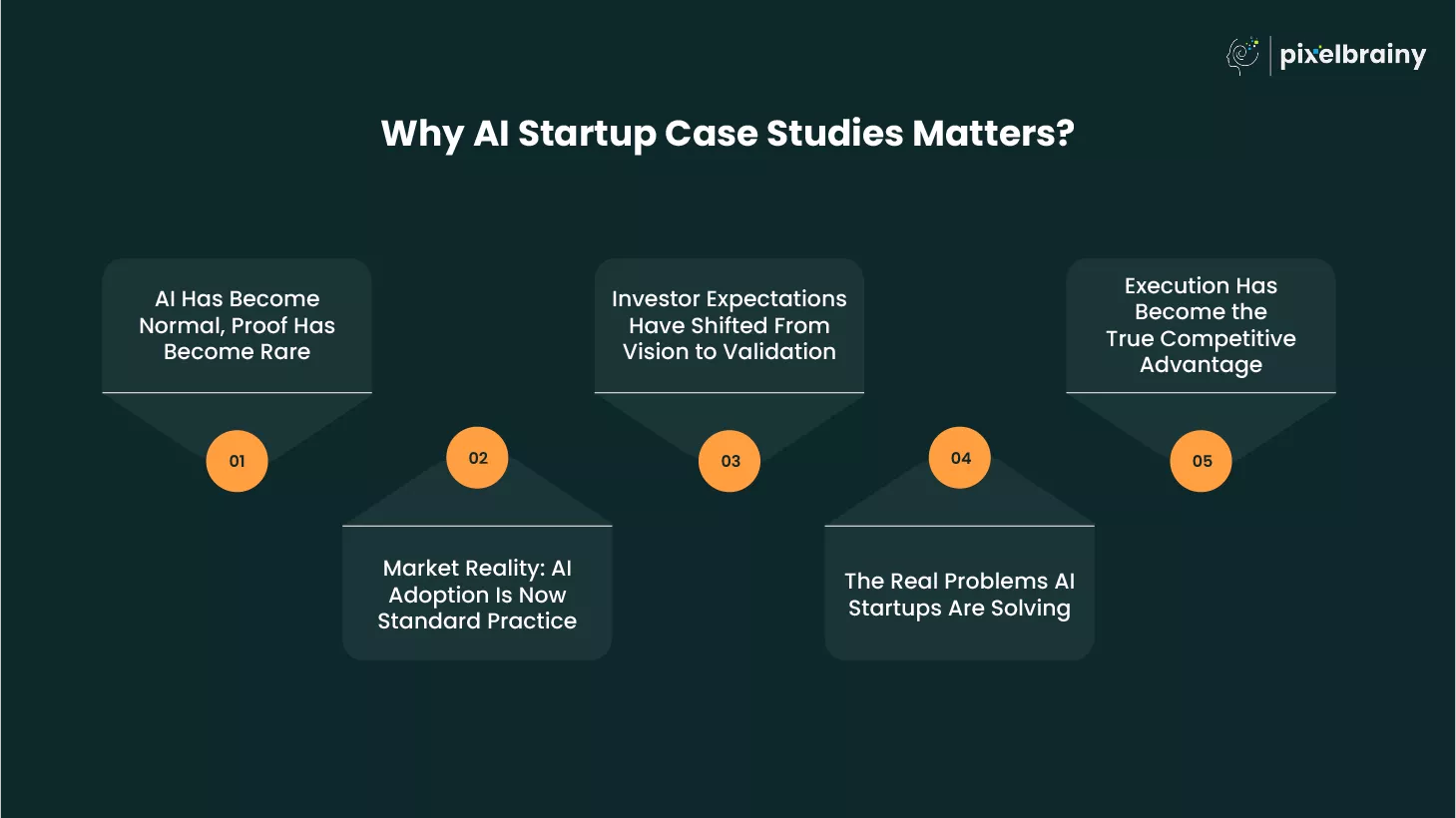
By 2026, artificial intelligence is no longer novel. It is expected. Nearly every software product, platform, or service now includes some form of AI. This saturation has created a new problem for founders, buyers, and investors alike. Claims are easy to make, but results are harder to prove.
This is exactly why successful AI startup case studies matter more than ever. They cut through marketing language and show how AI performs under real business pressure. The most valuable AI startup case studies 2026 focus less on ambitious ideas and more on execution, integration, and outcomes. They answer practical questions like what problem was solved, how AI was deployed, and what changed after adoption.
AI adoption has entered a mature phase where businesses no longer ask whether to use AI, but how effectively they are using it.
Key adoption indicators in 2026 include:
This environment explains why modern AI startup success stories emphasize smooth deployment and workflow alignment rather than experimental features. AI that fits naturally into existing systems drives adoption faster than complex standalone tools.
In 2026, investors treat AI as infrastructure, not innovation theater. Simply labeling a product as AI powered is no longer enough.
Across recent funding rounds, investors consistently look for:
AI startups still attract significant funding, but expectations are stricter. Many investors now benchmark startups against proven enterprise AI use cases and AI consulting outcomes where efficiency gains, cost reduction, or decision quality are clearly measurable.
When analyzing real world AI use cases, a clear pattern emerges. The most successful startups are not chasing futuristic scenarios. They are solving persistent business problems that slow growth.
Common problems addressed by AI startups include:
Startups that apply AI early to these challenges often achieve faster growth and stronger unit economics. Insights from AI business transformation case studies 2026 show that automation and prediction consistently outperform surface level personalization or novelty features.
By 2026, almost every founder has access to similar AI models, tools, and platforms. Ideas alone no longer separate winners from losers.
What differentiates successful AI startups today includes:
Many startups fail not because their AI idea was flawed, but because they underestimated the operational effort required to maintain AI systems in production. As a result, founders increasingly treat AI as core infrastructure rather than an experiment. This shift explains why collaboration with experienced AI engineers or AI app development partners has become common among startups that scale successfully.
In 2026 and beyond, execution, not hype, is what consistently defines successful AI startup case studies.
With tens of thousands of AI startups operating globally in 2026, identifying which stories truly matter requires a structured and disciplined approach. This methodology outlines how each case study was evaluated to ensure it represents real business value, sustainable execution, and practical insight for founders and enterprise leaders.
The focus was on depth, credibility, and relevance rather than popularity or hype.
Each case study was selected based on the presence of a well-defined AI business use case that directly addresses a specific operational, financial, or strategic challenge. Startups were evaluated on whether AI played a meaningful role in solving a real problem rather than acting as a superficial enhancement.
Key evaluation points included:
We prioritized AI powered startups that demonstrated strong execution beyond early experimentation. This meant focusing on companies with live deployments, active users, or enterprise contracts rather than conceptual products.
Selection criteria included:
Rather than focusing on research driven breakthroughs, we looked for AI innovation in business that improved how work is actually done. The emphasis was on applied intelligence that integrates into daily workflows.
Considerations included:
Many selected startups operate in complex or regulated environments, making enterprise AI use cases a critical selection factor. These startups had to demonstrate reliability, security, and compliance alongside innovation.
We assessed:
Each case study needed to serve as a practical reference. These AI startup examples were chosen because their approaches could realistically be applied by other startups or enterprises facing similar challenges.
Evaluation points included:
We placed significant emphasis on AI driven business models where artificial intelligence forms the foundation of value creation. Startups using AI as a core capability rather than an add on ranked higher.
Key indicators included:
Selected startups showed how AI applications for business growth translated into tangible improvements across the organization. Growth impact was assessed across multiple dimensions.
Metrics considered included:
A strong preference was given to vertical AI startups that focus deeply on a single industry or function. These companies often demonstrate stronger product market fit due to domain expertise.
Selection factors included:
To qualify as successful AI startup case studies, each company had to demonstrate real world traction. This helped filter out theoretical success stories.
Evidence included:
Finally, we assessed whether each startup showed potential beyond early wins. The strongest AI startup case studies 2026 demonstrate readiness for long term growth.
Key indicators included:
By applying these criteria, this methodology ensures that the AI startup success stories featured reflect practical execution, proven impact, and scalable business value in 2026 and beyond.
Artificial intelligence is no longer confined to experiments or niche tools. The following AI startup case studies from 2026 showcase how practical, well-executed AI use cases are delivering measurable business impact across industries.
These examples highlight how startups apply AI to real operational challenges, turning innovation into scalable, revenue-generating solutions.
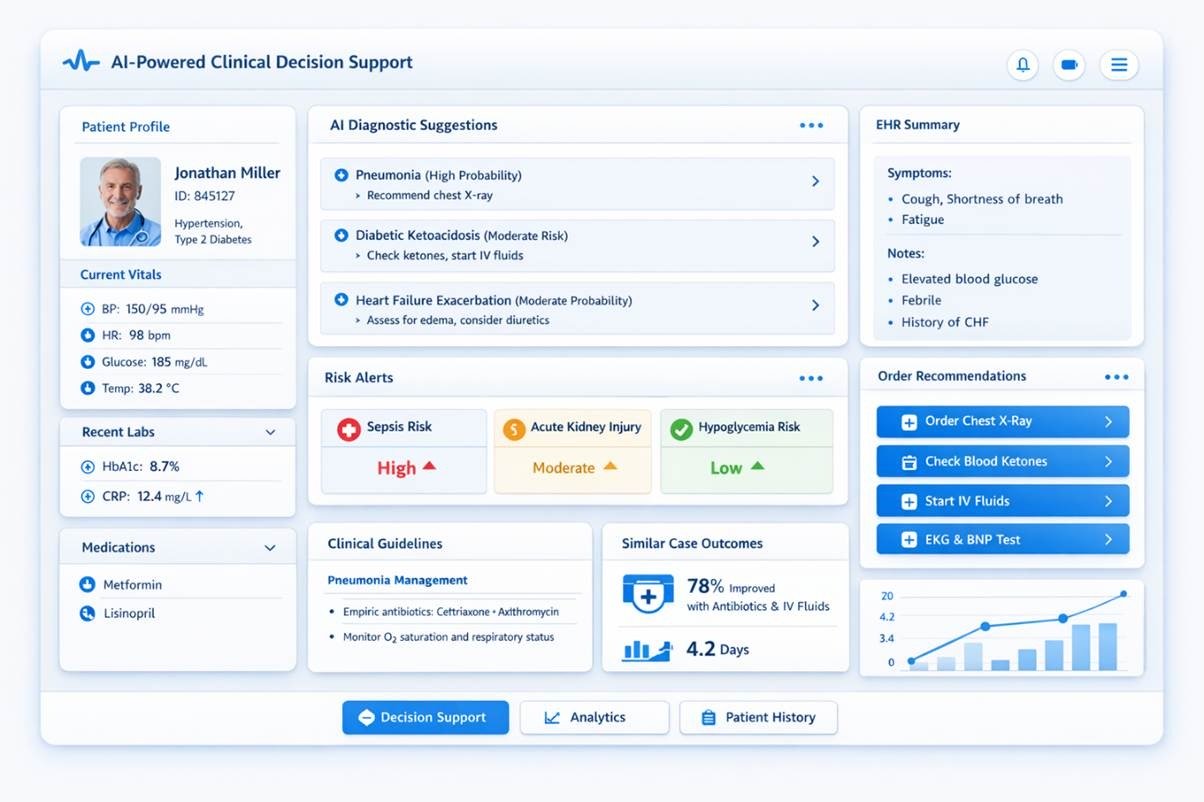
Among the most impactful AI startup case studies 2026, AI-powered clinical decision support systems stand out for their ability to improve both patient outcomes and hospital efficiency. Healthcare organizations generate enormous volumes of data every day, including patient histories, lab results, imaging, and treatment protocols. AI startups in this space focus on transforming that data into actionable insights that assist clinicians during critical decision moments. These platforms are now widely recognized as some of the most valuable enterprise AI use cases in modern healthcare.
Healthcare professionals face increasing complexity in diagnosis and treatment planning. Physicians often operate under time pressure while managing fragmented data across multiple systems. This leads to several challenges:
Traditional clinical decision tools rely heavily on static rules and manual interpretation, making them difficult to scale and slow to adapt to new medical knowledge. As patient volumes rise and staffing shortages persist, healthcare organizations need smarter systems that support clinical judgment rather than replace it.
AI-powered clinical decision support platforms apply machine learning and predictive analytics to real-time patient data. These systems ingest structured and unstructured data such as electronic health records, lab results, medical imaging metadata, and clinical guidelines. Using trained models, the AI identifies patterns, flags potential risks, and suggests evidence-based recommendations directly within existing clinical workflows.
Key capabilities typically include:
Importantly, these solutions are designed to integrate seamlessly with hospital information systems, reducing friction and increasing adoption.
Healthcare providers using AI-powered clinical decision support report measurable improvements across multiple dimensions. Diagnosis times are reduced as clinicians receive faster, more relevant insights. Error rates decline due to consistent application of evidence-based guidance. Hospitals also experience operational benefits such as shorter patient stays and improved resource allocation.
From a business perspective, these platforms drive strong ROI by reducing readmissions, improving care quality metrics, and supporting compliance with regulatory standards. These outcomes make clinical decision support one of the most compelling AI applications for business growth within healthcare.
This use case succeeds because it addresses a high-stakes problem where accuracy and trust matter deeply. The AI does not attempt to replace medical expertise. Instead, it enhances decision making by surfacing insights clinicians might otherwise miss. The value is immediate, measurable, and aligned with both clinical and operational goals.
Healthcare is also a data rich environment, which allows AI models to continuously improve as more cases are processed. This creates a strong feedback loop that strengthens long-term performance.
For founders building AI solutions in regulated industries, this case study shows the importance of positioning AI as a decision support layer rather than an autonomous authority. Successful AI startup success stories in healthcare prioritize trust, workflow integration, and measurable impact over technical novelty. Treating AI as core infrastructure, not a feature, is what enables sustainable adoption and long-term growth.
Also Read: AI Medical Diagnosis App Development: Features & Cost
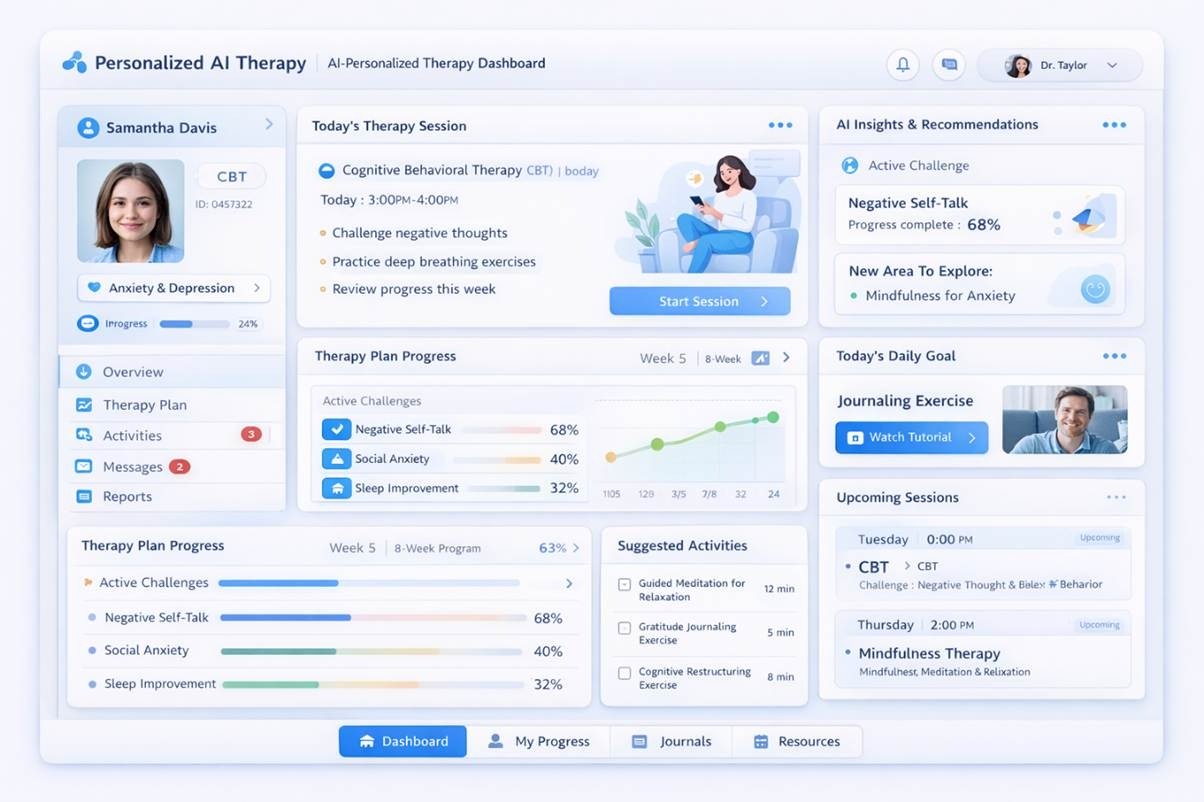
Personalized AI therapy platforms have emerged as one of the most meaningful AI startup success stories in 2026, particularly as global demand for mental health services continues to outpace the availability of human professionals. These platforms represent a powerful intersection of healthcare, behavioral science, and AI innovation in business, offering scalable, accessible, and data-driven mental health support. As a real-world AI use case, this category highlights how AI startups are redefining care delivery while maintaining ethical responsibility.
Mental health systems worldwide face persistent structural challenges. Access to qualified therapists is limited, wait times are long, and costs are high. Many individuals drop out of therapy due to lack of personalization, inconsistent engagement, or scheduling constraints. Traditional digital mental health tools often rely on static content or generalized programs that fail to adapt to individual emotional needs.
For providers and platforms, these issues translate into:
As mental health awareness grows, startups must balance scale with sensitivity while delivering measurable results. This challenge has made mental health one of the most promising AI business use cases in healthcare.
Personalized AI therapy platforms use machine learning, natural language processing, and behavioral analytics to tailor mental health support at the individual level. These systems analyze user interactions, mood check-ins, journaling inputs, engagement patterns, and therapy progress to dynamically adjust content, pacing, and intervention style.
Core AI capabilities typically include:
Rather than replacing therapists, AI acts as an intelligent layer that supports users between sessions or provides guided self-help when human access is limited. Many platforms integrate hybrid models where AI handles personalization while clinicians oversee care protocols.
AI-driven personalization has delivered strong outcomes across engagement, accessibility, and care effectiveness. Platforms report higher session completion rates, lower dropout rates, and improved consistency in user participation. Users benefit from therapy experiences that feel more relevant and responsive to their emotional state.
From a business standpoint, these platforms achieve:
These results position personalized AI therapy as one of the most impactful AI applications for business growth within digital health.
This use case succeeds because it aligns AI capabilities with a deeply human need. Mental health care depends on relevance, empathy, and timing, all areas where personalization creates meaningful value. AI excels at detecting patterns over time and adapting experiences continuously, something difficult to achieve at scale with human-only approaches.
Additionally, the availability of behavioral data creates strong feedback loops that improve model performance while maintaining ethical guardrails. Startups that emphasize transparency, consent, and human oversight gain trust from both users and regulators.
For founders exploring AI startup case studies 2026, this use case demonstrates the importance of designing AI around human experience rather than efficiency alone. Successful mental health platforms treat AI as a personalization engine that enhances care, not a replacement for empathy. The strongest AI-driven business models in this space balance scale, responsibility, and measurable outcomes, proving that AI can expand access to care while preserving trust.
Also Read: How To Build An AI Mental Health and Wellness App Like Wysa?
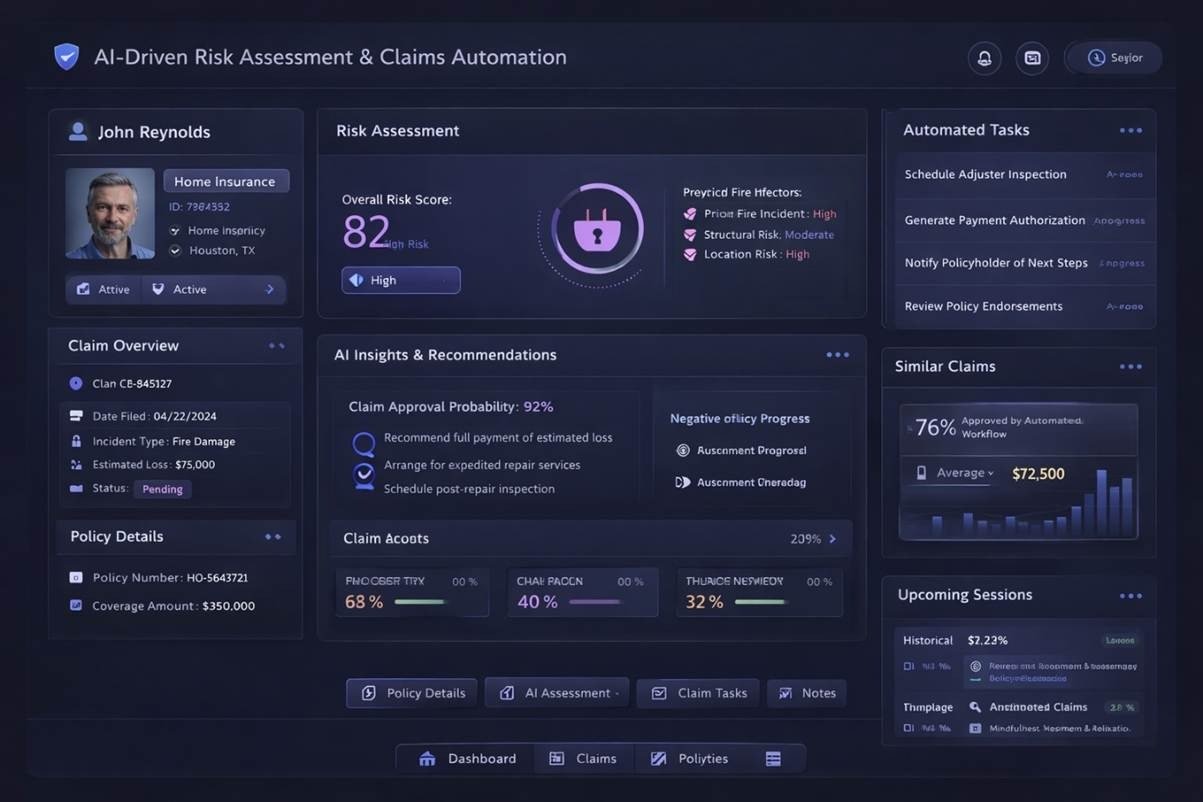
AI-driven risk assessment and claims automation has become one of the most practical and profitable AI startup case studies 2026, especially within the insurance industry. Insurance companies operate in highly data-intensive environments, making them ideal candidates for advanced analytics and machine learning. AI-powered insurtech startups are redefining how insurers evaluate risk, process claims, and prevent fraud, positioning this use case as a cornerstone of enterprise AI use cases in financial services.
Traditional insurance workflows rely heavily on manual review, rigid rule-based systems, and fragmented data sources. Underwriters and claims adjusters often analyze large volumes of documents, historical records, and third-party data under tight timelines. This leads to several persistent challenges:
As insurance volumes grow and customer expectations shift toward faster, digital-first experiences, legacy systems struggle to keep pace. Insurers need solutions that improve accuracy while reducing processing time and operational overhead. This challenge has made insurance a prime target for AI business use cases focused on automation and prediction.
AI-driven insurance platforms apply machine learning models to assess risk and automate claims decisions at scale. These systems ingest structured data such as policy information and claims history alongside unstructured data like images, reports, and customer submissions. Advanced models identify patterns that signal risk, anomalies, or potential fraud.
Typical AI capabilities include:
The AI integrates directly into existing insurance workflows, enabling adjusters and underwriters to focus on complex cases while routine decisions are handled automatically. Over time, continuous learning improves model accuracy as more claims are processed.
Insurers adopting AI-driven risk assessment and claims automation report significant improvements in speed, accuracy, and cost efficiency. Claims that once took days or weeks can now be processed in minutes or hours. Fraud detection rates increase as AI identifies subtle patterns often missed by manual review.
From a business perspective, this use case delivers:
These outcomes contribute directly to profitability, making this one of the strongest AI applications for business growth in the insurance sector.
This use case works because insurance operations are highly structured and data rich, which aligns well with machine learning capabilities. The value proposition is clear and measurable, focusing on efficiency, accuracy, and risk reduction rather than abstract innovation.
Additionally, AI does not replace human expertise but augments it. Adjusters retain control over edge cases, while AI handles volume and pattern recognition. This balance accelerates adoption and builds trust across organizations.
For founders studying successful AI startup case studies, insurance automation highlights the power of targeting workflow-heavy industries with clear pain points. The most successful insurtech startups treat AI as operational infrastructure, not a feature. By focusing on measurable ROI, compliance readiness, and seamless integration, AI startups can unlock rapid adoption and long-term enterprise partnerships.
Also Read: How to Build an AI Chatbot for Insurance Agencies?
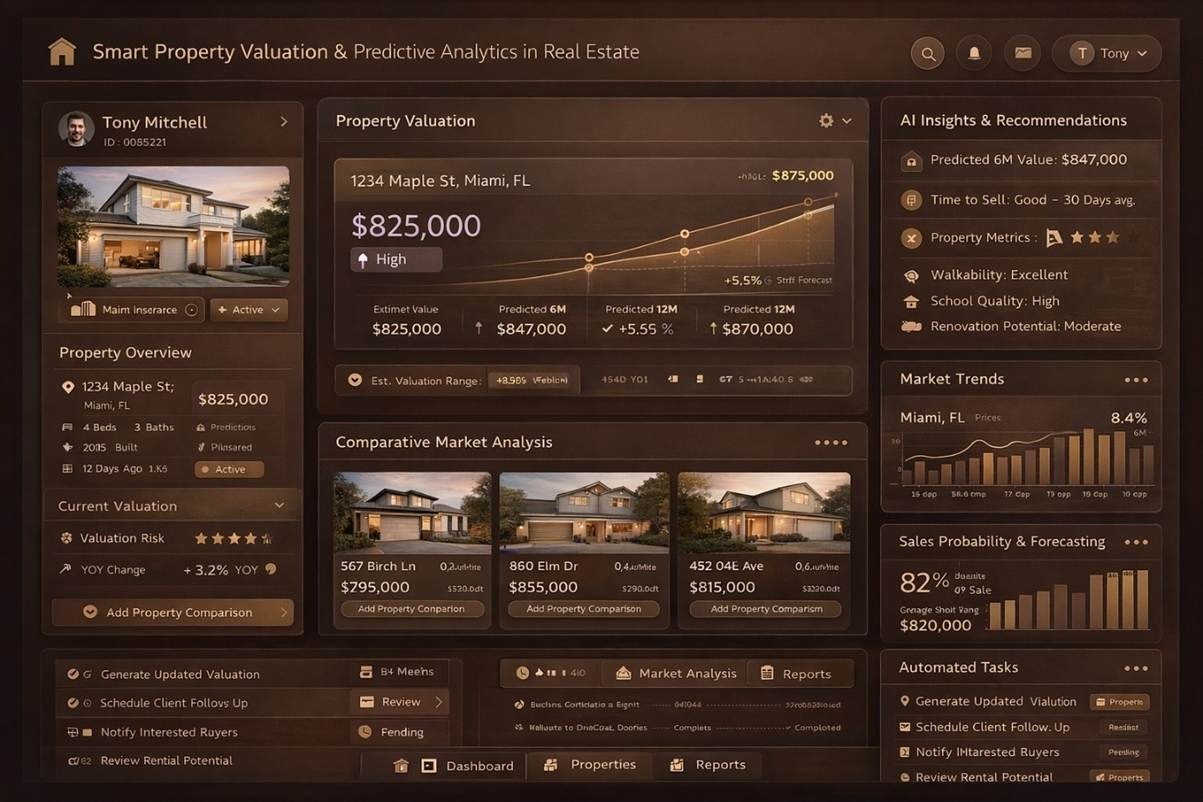
Smart property valuation and predictive analytics represent one of the fastest growing AI startup case studies 2026 within the real estate sector. Real estate decisions have traditionally depended on historical comparisons, manual assessments, and subjective judgment. AI-powered real estate startups are transforming this process by delivering data-driven insights that improve valuation accuracy, reduce risk, and accelerate investment decisions. This use case highlights how AI innovation in business is reshaping a historically slow-moving industry.
Property valuation is complex and often inconsistent. Appraisers, investors, and developers rely on limited comparable sales, outdated market data, and human interpretation. This creates several challenges:
As real estate markets become more volatile due to economic shifts, interest rate changes, and urban development patterns, traditional valuation methods struggle to keep up. For large portfolios and enterprise real estate firms, these inefficiencies translate directly into financial risk and missed opportunities. This has made real estate a prime domain for AI business use cases focused on prediction and optimization.
AI-driven property valuation platforms use machine learning and predictive analytics to assess property value dynamically. These systems ingest a wide range of data sources, including historical transactions, location intelligence, zoning data, demographic trends, economic indicators, and even satellite imagery.
Core AI capabilities typically include:
Unlike static valuation tools, these AI systems continuously update their predictions as new data becomes available. The platforms integrate with enterprise real estate systems, allowing analysts, investors, and lenders to access insights in real time.
Organizations using AI-powered valuation and analytics platforms report more accurate pricing and faster decision cycles. Investment teams gain better visibility into future market movements, while lenders reduce exposure to valuation risk. Developers use predictive insights to identify high-potential locations earlier in the planning process.
Business outcomes commonly include:
These measurable outcomes position smart valuation as a leading AI application for business growth in real estate and finance.
This use case works because real estate decisions are influenced by many variables that humans struggle to process simultaneously. AI excels at identifying complex patterns across geography, time, and economic conditions. The availability of large historical datasets creates strong foundations for predictive modeling.
Another reason for success is the clear alignment with revenue and risk management. Accurate valuations directly affect profitability, lending decisions, and portfolio performance. As a result, enterprise adoption is driven by tangible financial benefits rather than experimentation.
For founders analyzing successful AI startup case studies, this use case demonstrates the power of combining domain expertise with predictive intelligence. Real estate AI startups succeed when they focus on accuracy, transparency, and integration with existing workflows. Treating AI as a decision intelligence layer rather than a replacement for human judgment enables faster adoption and long-term trust across enterprise customers.
Also Read: How to Develop an AI Real Estate App for Realtors and Startups?


AI-based algorithmic trading systems represent one of the most mature and revenue-driven AI startup case studies 2026 within financial markets. Trading has always been data intensive, fast paced, and highly competitive, making it an ideal environment for advanced machine learning. AI-powered fintech startups are redefining how trades are executed, risks are managed, and strategies are optimized, positioning this use case as a leading example of AI innovation in business.
Traditional trading strategies rely heavily on human judgment, predefined rules, and historical backtesting. While effective to a point, these approaches struggle in modern markets characterized by high volatility, massive data streams, and rapid information flow. Key challenges include:
For institutional investors and trading firms, even small inefficiencies can result in significant financial losses. As markets evolve faster than human decision cycles, firms require systems that can process information, identify patterns, and execute trades at machine speed. This need has driven strong demand for enterprise AI use cases in algorithmic trading.
AI-driven algorithmic trading platforms use machine learning, deep learning, and reinforcement learning to analyze market data and optimize trading strategies dynamically. These systems process vast datasets including price movements, order book data, macroeconomic indicators, news sentiment, and historical performance.
Common AI capabilities include:
Unlike static trading algorithms, AI models continuously learn from outcomes and adjust strategies accordingly. These platforms integrate directly with trading infrastructure, enabling seamless execution while maintaining strict compliance and governance standards.
Organizations deploying AI-based trading systems report measurable improvements in both performance and consistency. AI enables faster reaction times, improved execution accuracy, and reduced exposure to emotional bias. Over time, these systems often outperform traditional strategies, especially in volatile or high-frequency trading environments.
Business outcomes typically include:
These results make algorithmic trading one of the most established AI applications for business growth within financial services.
This use case succeeds because financial markets produce continuous, high-quality data streams that AI models can learn from effectively. Trading environments provide immediate feedback, allowing models to refine strategies rapidly. Additionally, the value proposition is directly tied to financial performance, making ROI easy to measure and justify.
AI also complements human traders by handling complexity and speed while humans focus on strategic oversight and governance. This hybrid approach accelerates adoption and mitigates operational risk.
For founders studying AI startup success stories, algorithmic trading demonstrates the importance of targeting environments where AI’s strengths are undeniable. Successful fintech startups treat AI as core infrastructure embedded deeply into execution pipelines. Clear performance metrics, strong risk controls, and continuous learning are essential for building trust and achieving long-term success in AI-driven financial markets.
Also Read: How to Develop AI Trading Software: A Step-by-Step Guide
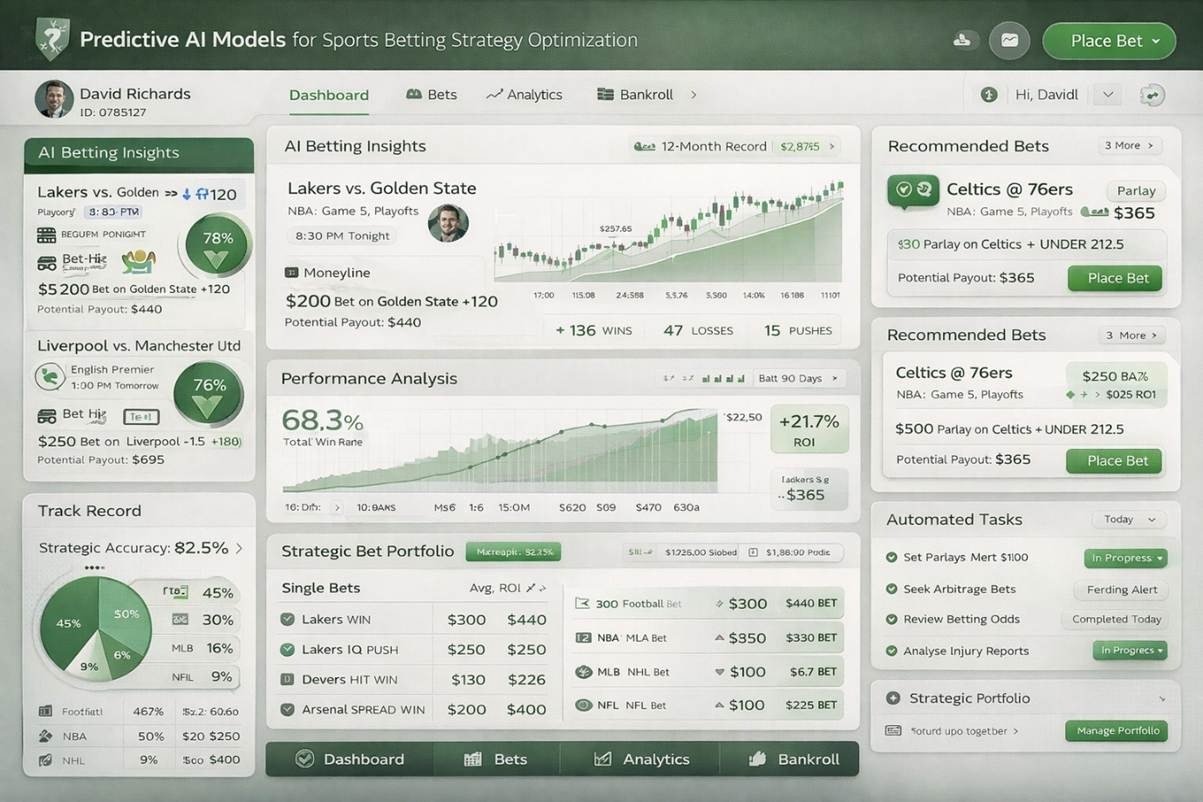
Predictive AI models for sports betting strategy optimization have emerged as a high-velocity AI startup case study 2026, combining real-time analytics, probability modeling, and behavioral data. Sports betting is an industry where outcomes are uncertain, data is abundant, and decisions must be made quickly. AI-powered startups in this space are redefining how bettors, platforms, and operators evaluate odds, manage risk, and optimize strategy, making this one of the most visible real-world AI use cases in consumer and enterprise analytics.
Sports betting decisions have traditionally relied on basic statistics, expert intuition, and historical trends. While experienced bettors may develop instincts over time, these approaches struggle to account for the sheer number of variables that influence outcomes. Common challenges include:
For betting platforms and professional bettors alike, small miscalculations can compound into significant losses. As betting markets grow more competitive and dynamic, the need for data-driven decision support has become critical. This environment has created strong demand for AI business use cases that improve prediction accuracy and strategic consistency.
AI-driven sports betting platforms apply predictive modeling and machine learning to analyze large volumes of structured and unstructured sports data. These systems ingest player statistics, team performance history, weather conditions, injury reports, betting market movements, and real-time game events.
Core AI capabilities typically include:
Unlike static prediction tools, AI models continuously learn from outcomes and adjust their probabilities as new data becomes available. Many platforms provide decision support dashboards rather than automated betting, allowing users to retain control while benefiting from AI insights.
AI-powered sports betting tools deliver measurable improvements in consistency and long-term performance. Users gain a clearer understanding of risk and probability, leading to more disciplined betting behavior. Platforms report higher user engagement, longer retention, and increased trust when AI insights are transparent and explainable.
Business impact often includes:
These outcomes demonstrate how predictive analytics can drive AI applications for business growth even in fast-moving, consumer-focused industries.
This use case works because sports betting environments generate continuous feedback loops. Outcomes are known quickly, allowing AI models to refine predictions at a rapid pace. The abundance of historical and live data provides strong training signals, while the probabilistic nature of sports aligns well with machine learning techniques.
Another reason for success is user alignment. AI does not remove decision making authority from bettors. Instead, it enhances judgment with data-backed probabilities, which improves adoption and trust. Platforms that emphasize transparency and explainability see stronger long-term engagement.
For founders examining successful AI startup case studies, sports betting analytics highlights the importance of speed, feedback, and clarity. AI solutions perform best in environments where results are quickly measurable and strategies can evolve continuously. Startups that frame AI as a strategic assistant rather than a black-box decision maker are more likely to build sustainable, trusted products in high-risk, data-driven markets.
Also Read: Top Sports Betting App Development Companies in USA
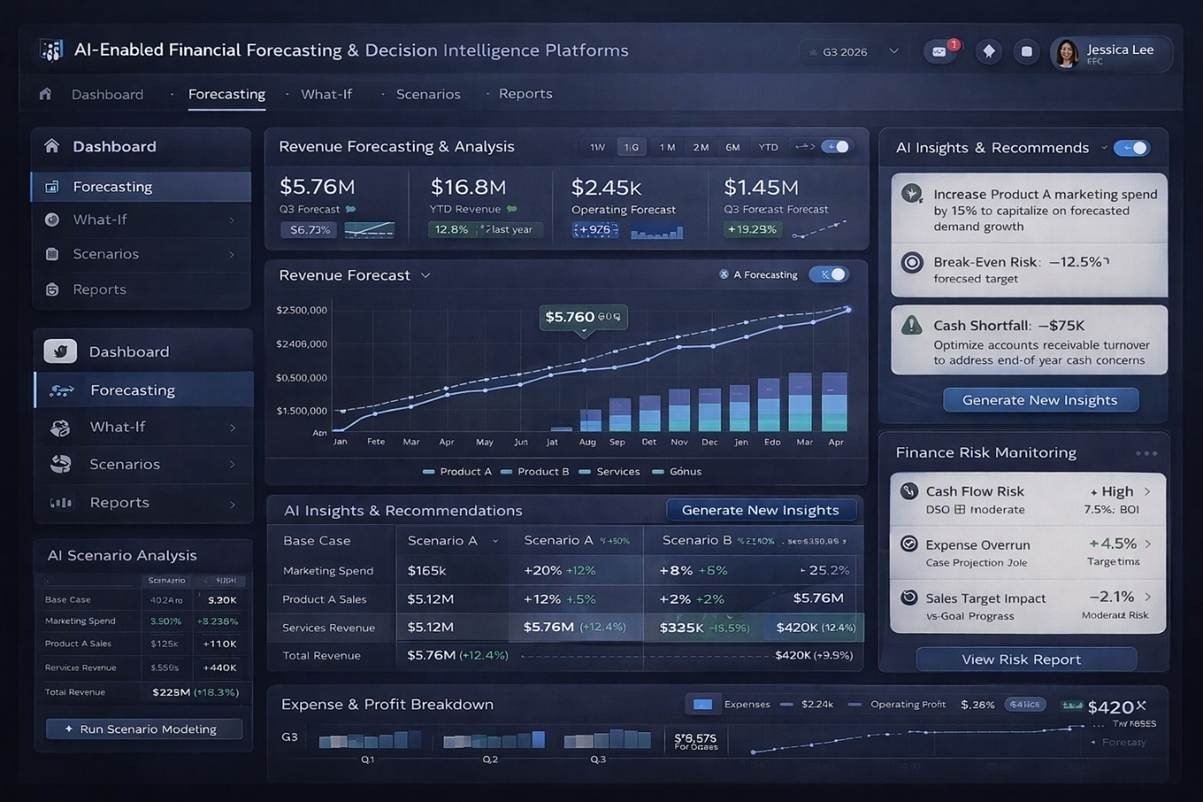
AI-enabled financial forecasting and decision intelligence platforms have become one of the most valuable AI startup case studies 2026, particularly for enterprises operating in volatile economic environments. Finance teams are under constant pressure to deliver accurate forecasts, manage uncertainty, and support strategic decisions. AI-powered startups in this space are transforming traditional financial planning by shifting from static forecasts to continuous, data-driven decision intelligence, making this a cornerstone of modern enterprise AI use cases.
Traditional financial forecasting relies heavily on historical data, spreadsheets, and manual scenario modeling. While these methods have worked in stable markets, they struggle in environments characterized by rapid change, supply chain disruptions, and fluctuating demand. Common challenges include:
For CFOs and finance leaders, inaccurate forecasts can lead to poor capital allocation, missed growth opportunities, and increased financial risk. As businesses scale, these limitations become more pronounced, creating a strong demand for AI business use cases focused on prediction and decision support.
AI-driven financial forecasting platforms apply machine learning models to continuously analyze internal and external data sources. These systems ingest financial records, operational metrics, market indicators, and macroeconomic signals to generate dynamic forecasts that update in real time.
Key capabilities often include:
Unlike traditional tools, these platforms adapt as conditions change. AI models learn from new data, improving accuracy over time while reducing reliance on manual assumptions. Integration with existing ERP and finance systems ensures minimal disruption to established workflows.
Enterprises using AI-enabled forecasting platforms report significant improvements in planning accuracy and agility. Finance teams spend less time on data preparation and more time on strategic analysis. Leadership gains clearer visibility into potential risks and opportunities.
Business outcomes commonly include:
These improvements translate directly into stronger financial performance, positioning this use case as a high-impact AI application for business growth.
This use case succeeds because finance decisions benefit greatly from pattern recognition and predictive insight. AI excels at analyzing complex relationships across large datasets that humans struggle to interpret consistently. Continuous learning allows forecasts to remain relevant even as conditions evolve.
Another factor is executive alignment. Decision intelligence platforms present insights in clear, business-friendly formats, making them easier for leaders to trust and act upon. When AI directly supports strategic planning, adoption accelerates across the organization.
For founders reviewing AI startup success stories, financial forecasting platforms illustrate the importance of aligning AI outputs with executive decision making. Successful startups focus on usability, transparency, and measurable impact rather than technical complexity. Treating AI as a strategic partner in planning, not just an analytical tool, is what enables long-term enterprise adoption and competitive advantage.
Also Read: AI Trading Bot Development: Features, Steps and Cost
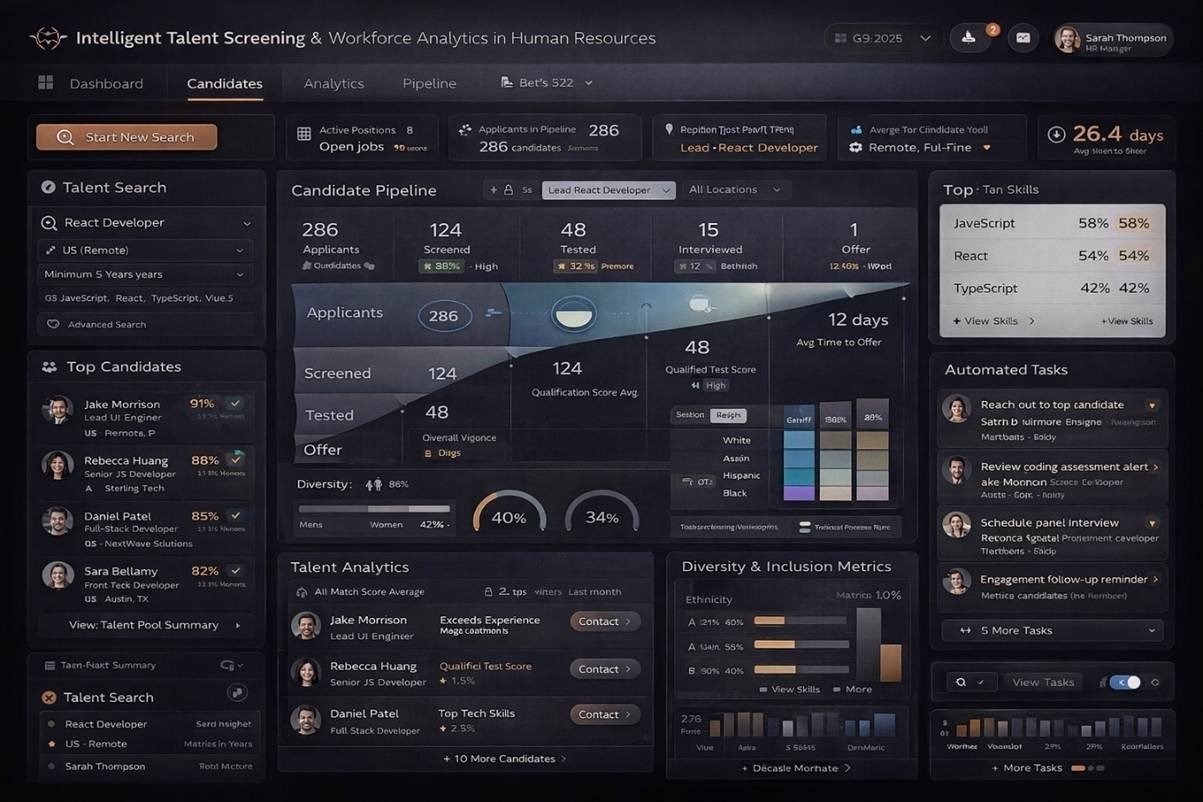
Intelligent talent screening and workforce analytics have become some of the most widely adopted AI startup case studies in HR technology. As companies scale rapidly and compete for skilled talent, traditional recruitment and workforce planning methods struggle to keep up. AI-powered HR startups are transforming how organizations attract, evaluate, and retain talent by turning people data into actionable insight. This use case represents a strong example of AI innovation in business applied to human-centric decision making.
Hiring and workforce management have long been affected by inefficiency, bias, and inconsistency. Recruiters often sift through thousands of resumes manually, rely on subjective judgment, and operate with limited visibility into long-term employee performance. Common challenges include:
As organizations grow, these problems compound. Poor hiring decisions increase turnover, raise costs, and negatively affect company culture. HR leaders need systems that support fair, data-driven decisions while scaling efficiently. This has made HR one of the most active areas for AI business use cases.
AI-driven talent screening platforms use machine learning and data analytics to evaluate candidates and monitor workforce trends objectively. These systems analyze resumes, assessments, interview feedback, performance data, and engagement signals to identify patterns linked to success.
Core AI capabilities typically include:
Unlike traditional applicant tracking systems, AI platforms continuously learn from hiring outcomes and employee performance. Many tools integrate directly into existing HR systems, allowing recruiters and managers to use AI insights without changing established workflows.
Organizations adopting AI-driven HR platforms report faster hiring cycles and improved candidate quality. Recruiters spend less time on manual screening and more time on meaningful interactions. Workforce analytics provide leadership with early signals about engagement issues, enabling proactive intervention.
Business impact often includes:
These results make intelligent talent screening one of the most practical AI applications for business growth in people operations.
This use case works because HR processes generate large volumes of structured and semi-structured data that AI can analyze effectively. By focusing on patterns rather than subjective impressions, AI supports fairer and more consistent decision making.
Another reason for success is alignment with business outcomes. Hiring quality directly affects productivity, culture, and financial performance. AI systems that clearly connect insights to these outcomes gain faster trust from HR leaders and executives.
For founders exploring successful AI startup case studies, HR analytics demonstrates the importance of transparency and explainability. AI tools that influence people decisions must be understandable and ethical. Startups that prioritize bias mitigation, clear insights, and seamless integration are best positioned to scale in enterprise environments while delivering long-term value.
Also Read: AI HR SaaS Platform Development: Features, Costs, and Best Practices
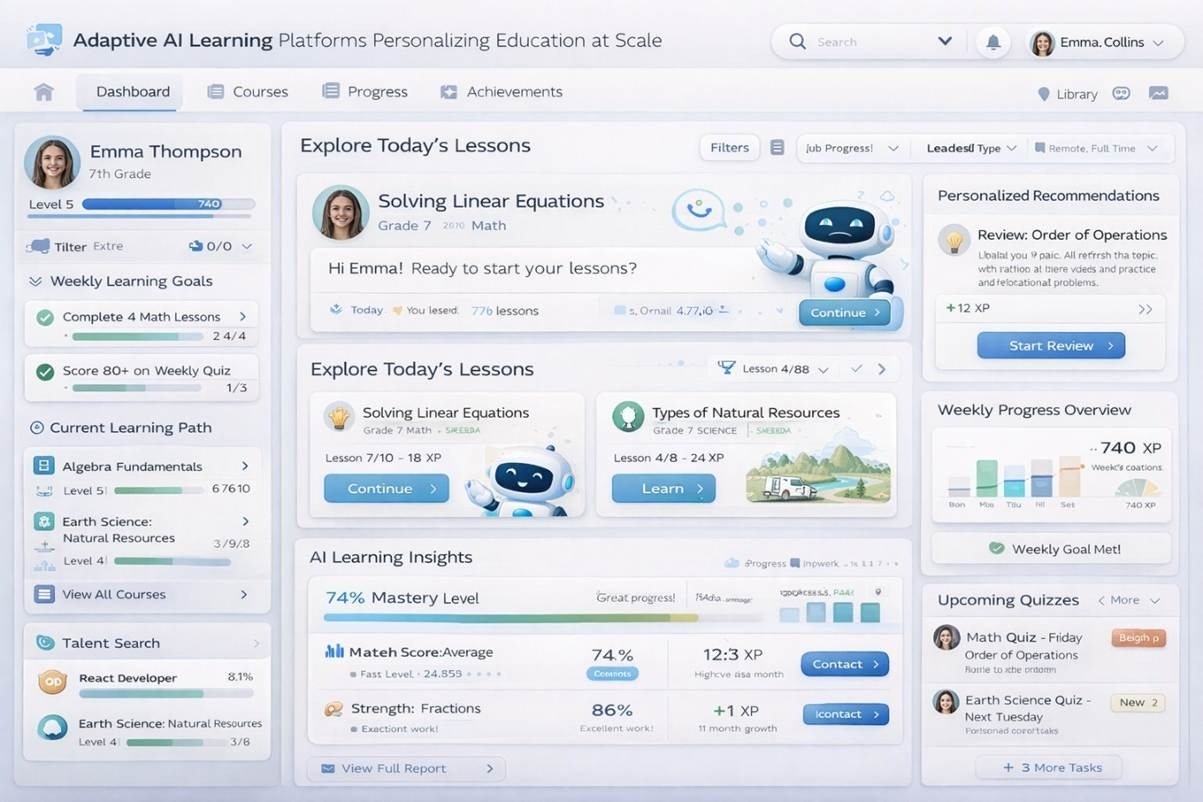
Adaptive AI learning platforms have emerged as one of the most impactful AI startup case studies in the education sector. As digital learning becomes mainstream, educators and institutions face growing pressure to deliver personalized learning experiences at scale. AI-powered edtech startups are addressing this challenge by using data-driven personalization to improve engagement, learning outcomes, and accessibility. This use case highlights how AI innovation in business can transform education from a standardized system into a learner-centric model.
Traditional education systems are largely designed around uniform curricula and fixed pacing. Whether in schools, universities, or corporate training programs, learners progress at different speeds and have varying strengths, yet instructional content often fails to adapt. This creates several issues:
As digital education scales globally, these limitations become more pronounced. Organizations need solutions that personalize learning without increasing administrative or instructional burden. This has positioned education as a strong candidate for AI business use cases focused on adaptability and insight.
Adaptive AI learning platforms apply machine learning and behavioral analytics to tailor educational experiences in real time. These systems analyze learner interactions such as quiz performance, content engagement, response time, and learning patterns to adjust difficulty, pacing, and content recommendations.
Core AI capabilities often include:
Unlike static learning management systems, AI-driven platforms continuously refine their recommendations as learners interact with content. Integration with existing education platforms allows institutions to adopt AI without replacing their entire infrastructure.
Organizations using adaptive AI learning platforms report higher engagement and improved learning outcomes. Learners benefit from content that matches their ability level, while educators gain visibility into performance trends and intervention opportunities.
Typical outcomes include:
These benefits make adaptive learning one of the most scalable AI applications for business growth across education, professional training, and workforce upskilling.
This use case succeeds because learning is inherently data driven. Every interaction generates signals that AI can analyze to improve personalization. AI excels at identifying patterns across large learner populations while still tailoring experiences at the individual level.
Another factor is stakeholder alignment. Learners receive more relevant experiences, educators gain actionable insight, and institutions achieve better outcomes without proportional increases in cost. This shared value accelerates adoption and long-term use.
For founders studying AI startup success stories, adaptive learning platforms demonstrate the power of personalization at scale. Successful edtech startups focus on measurable learning outcomes, seamless integration, and clear value for both learners and administrators. Treating AI as a continuous improvement engine rather than a one-time feature is what enables sustainable impact in education.
Also Read: AI App Development Cost: From MVPs to Full-Scale AI App
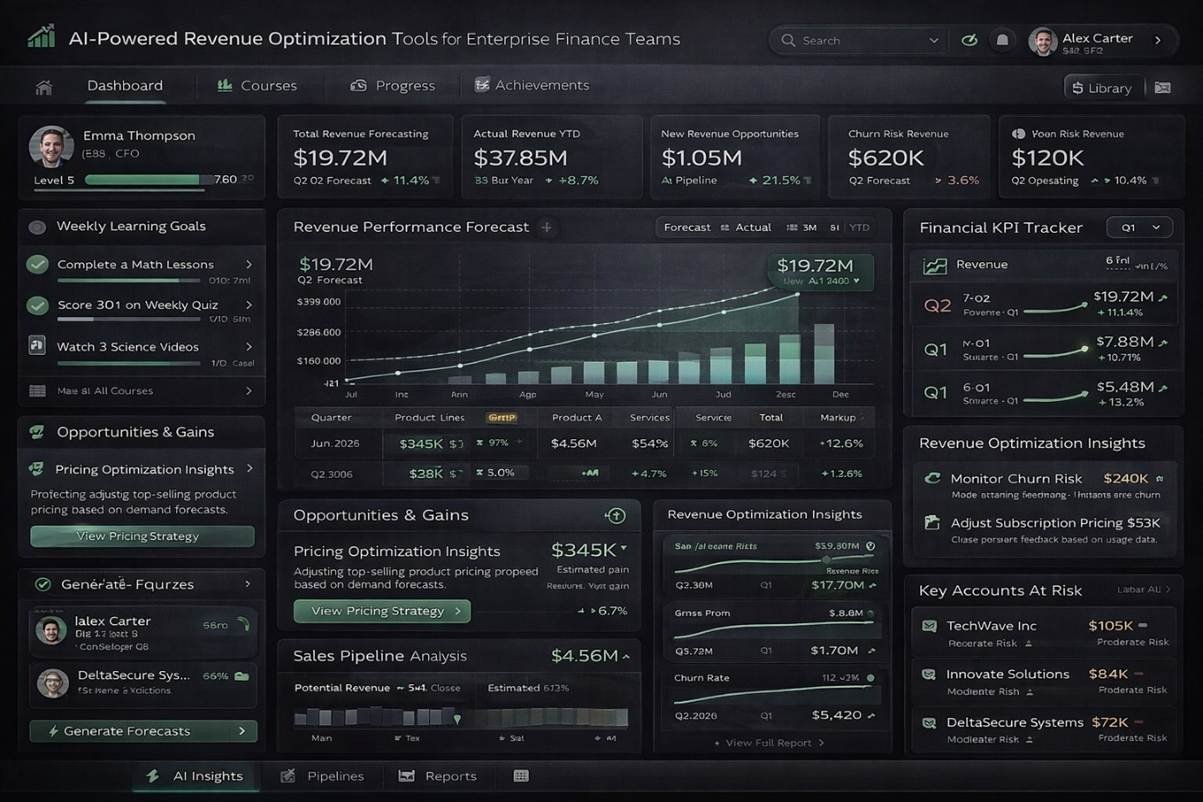
AI-powered revenue optimization tools have become one of the most commercially impactful AI startup case studies 2026, especially for large enterprises operating across complex pricing, billing, and customer segments. As markets grow more competitive and margins tighten, finance teams are under pressure to identify revenue leakage, optimize pricing strategies, and forecast growth accurately. AI-driven startups in this space are redefining how organizations understand and maximize revenue, making this a critical enterprise AI use case.
Enterprise revenue management is often fragmented across multiple systems, teams, and data sources. Pricing decisions may rely on outdated assumptions, contracts may be underutilized, and usage patterns can be difficult to track at scale. Common challenges include:
For CFOs and finance leaders, these issues directly affect profitability and growth. Traditional reporting tools provide historical views but lack the predictive and prescriptive insight needed to act proactively. This gap has created strong demand for AI business use cases focused on revenue intelligence.
AI-powered revenue optimization platforms apply machine learning and advanced analytics to unify and analyze financial, customer, and operational data. These systems ingest contract data, usage metrics, pricing models, and customer behavior to identify patterns that impact revenue performance.
Core AI capabilities typically include:
Unlike traditional finance tools, AI-driven platforms continuously update insights as new data becomes available. Integration with ERP, CRM, and billing systems allows finance teams to embed AI recommendations directly into decision making workflows.
Enterprises adopting AI-powered revenue optimization tools report measurable improvements in financial performance and operational efficiency. Finance teams gain clearer insight into where revenue is generated, lost, or underexploited. Pricing strategies become more responsive to customer behavior and market conditions.
Business impact commonly includes:
These outcomes position revenue optimization as one of the highest ROI AI applications for business growth in enterprise environments.
This use case works because revenue data is both abundant and highly structured, making it well suited for machine learning. AI excels at identifying hidden patterns across contracts, customers, and transactions that are difficult for humans to detect consistently.
Another reason for success is executive alignment. Revenue optimization directly affects top-line growth, which accelerates buy-in from CFOs and CEOs. When AI insights are presented in clear financial terms, adoption spreads quickly across the organization.
For founders examining successful AI startup case studies, revenue optimization highlights the importance of linking AI capabilities to core financial outcomes. Startups that position AI as a strategic revenue engine rather than an analytics add-on gain faster enterprise adoption. Clear ROI, seamless system integration, and actionable insights are what define long-term success in this category.
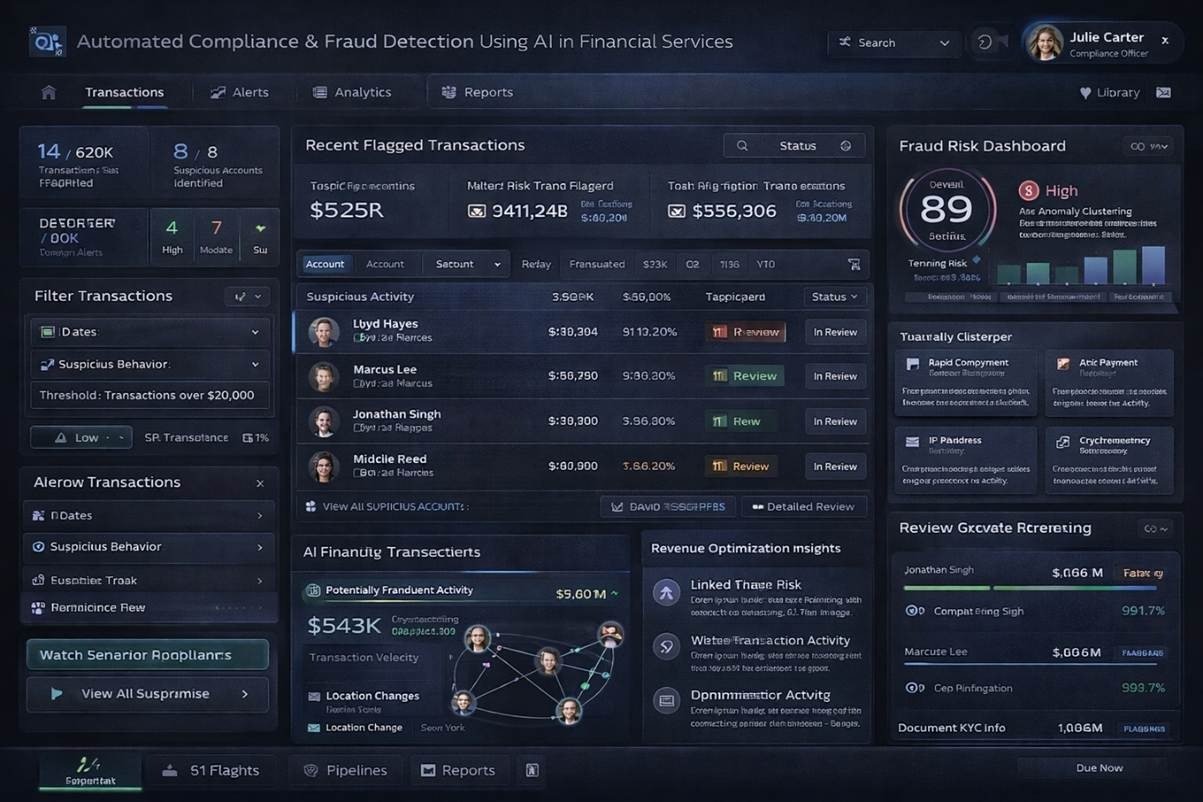
Automated compliance and fraud detection has become one of the most critical AI startup case studies 2026 within financial services. As regulatory requirements grow more complex and transaction volumes increase, banks, fintech firms, and payment providers face mounting pressure to monitor risk continuously. AI-powered startups in this domain are redefining compliance operations by replacing manual, rule-based systems with adaptive, intelligent monitoring platforms. This use case stands out as a high-impact enterprise AI use case where accuracy and reliability directly protect both revenue and reputation.
Financial institutions operate in one of the most heavily regulated environments in the world. Compliance teams are responsible for monitoring millions of transactions, detecting fraud, and ensuring adherence to evolving regulatory standards. Traditional systems struggle with:
As digital payments, cross-border transactions, and fintech services expand, these challenges intensify. Regulatory penalties and reputational damage from missed fraud incidents can be severe. This reality has driven strong demand for AI business use cases that improve accuracy while reducing operational burden.
AI-driven compliance platforms apply machine learning, anomaly detection, and pattern recognition to monitor financial activity in real time. These systems analyze transaction data, customer behavior, network relationships, and historical fraud cases to identify suspicious activity.
Typical AI capabilities include:
Unlike traditional rule-based engines, AI models learn from new data and outcomes, improving detection accuracy over time. Integration with core banking and payment systems allows these platforms to operate seamlessly within existing compliance workflows.
Financial institutions adopting AI-powered compliance and fraud detection report significant improvements in both efficiency and effectiveness. False positives decline, allowing teams to focus on high-risk cases. Detection rates improve as AI identifies complex fraud patterns that manual systems miss.
Business impact commonly includes:
These outcomes make automated compliance one of the most defensible AI applications for business growth in financial services.
This use case succeeds because fraud and compliance are pattern-driven problems with large, high-quality datasets. AI excels at identifying subtle relationships across transactions and customer behavior. Continuous learning ensures that systems evolve alongside emerging threats.
Another reason for success is executive alignment. Compliance failures carry high consequences, making investment in reliable AI solutions a strategic priority rather than an optional upgrade.
For founders studying successful AI startup case studies, compliance automation highlights the importance of trust, explainability, and scalability. AI startups that prioritize transparency and regulatory alignment build stronger enterprise relationships. Treating AI as a risk management foundation rather than a cost center enables long-term adoption and competitive advantage.
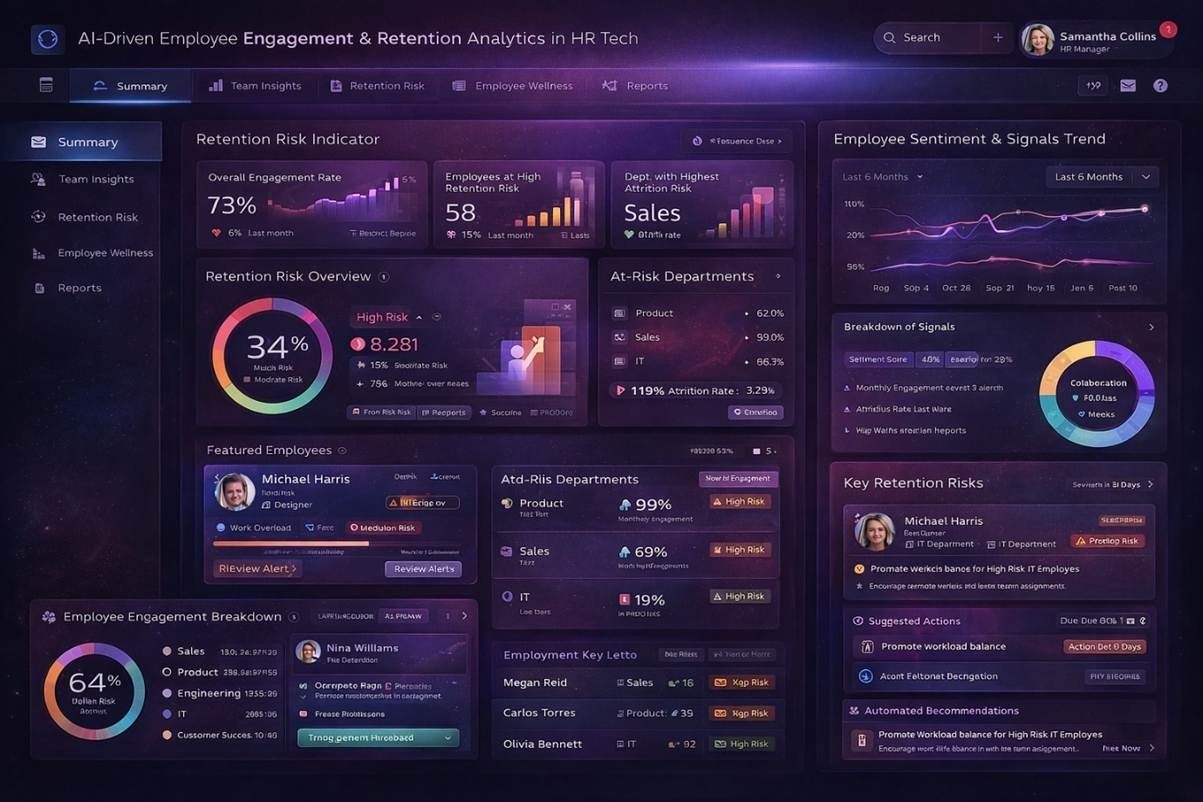
AI-driven employee engagement and retention analytics have become one of the fastest growing AI startup success stories in HR technology. As workforce dynamics shift toward remote and hybrid models, organizations struggle to understand employee sentiment, predict attrition, and maintain engagement at scale. AI-powered HR tech startups are redefining workforce intelligence by transforming behavioral data into predictive insight. This use case exemplifies AI innovation in business focused on people-centric outcomes.
Employee turnover is costly, disruptive, and often preventable. Traditional HR tools rely on periodic surveys and reactive reporting, which fail to capture early warning signs of disengagement. Common challenges include:
As organizations scale, these issues intensify. Losing high-performing employees affects productivity, morale, and long-term growth. This has made employee analytics one of the most valuable AI business use cases in modern HR.
AI-driven engagement platforms use machine learning and behavioral analytics to monitor workforce signals continuously. These systems analyze data from surveys, communication tools, performance metrics, attendance patterns, and collaboration platforms to identify trends linked to engagement and retention.
Core AI capabilities typically include:
Rather than relying on retrospective analysis, AI platforms provide forward-looking indicators that enable proactive intervention. Integration with existing HR systems ensures adoption without disrupting workflows.
Organizations using AI-driven retention analytics report improved workforce stability and stronger engagement. HR teams gain visibility into issues before they escalate, while managers receive guidance on how to support their teams effectively.
Business outcomes often include:
These benefits make engagement analytics a high-value AI application for business growth in people operations.
This use case works because employee behavior generates continuous data signals that AI can interpret effectively. Predictive models identify patterns that humans may overlook, especially in large or distributed organizations.
Another key factor is alignment with organizational goals. Retaining talent directly supports productivity, culture, and financial performance. When AI insights are presented clearly and ethically, trust and adoption increase rapidly.
For founders exploring AI startup case studies 2026, employee analytics demonstrates how AI can drive value beyond automation. Successful HR tech startups focus on explainability, privacy, and actionable insight. Treating AI as a strategic partner in workforce planning, rather than a monitoring tool, is what enables sustainable impact and long-term success.

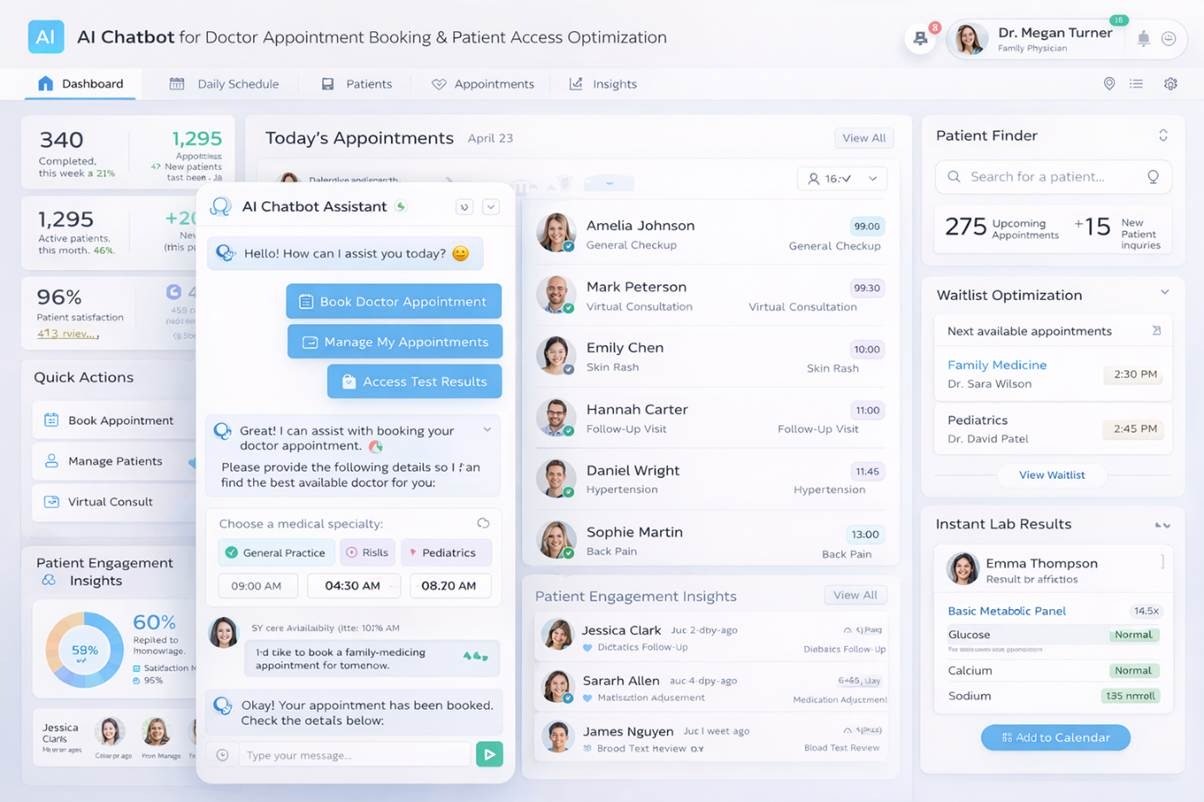
AI chatbots for doctor appointment booking have become a standout AI startup case study 2026 in digital healthcare. As hospitals, clinics, and telehealth providers struggle with rising patient volumes, AI-powered conversational systems are redefining how patients access care. These solutions go beyond simple scheduling tools, acting as intelligent front-line assistants that improve patient experience while reducing administrative burden. This use case demonstrates how real-world AI use cases can drive efficiency and accessibility in healthcare operations.
Healthcare providers face persistent challenges in managing patient appointments and access. Call centers are overwhelmed, front-desk staff are stretched thin, and patients experience long wait times just to book or reschedule appointments. Common issues include:
These inefficiencies increase operational costs and frustrate patients, ultimately impacting care delivery and revenue. Traditional online booking systems often lack flexibility and cannot handle complex scheduling logic, such as provider availability, visit type, or insurance constraints.
AI-powered healthcare chatbots use natural language processing and conversational AI to automate appointment booking and patient inquiries across channels such as websites, mobile apps, and messaging platforms. These systems understand patient intent, ask follow-up questions, and guide users through the scheduling process in real time.
Key capabilities typically include:
Unlike static booking forms, AI chatbots adapt to patient responses and handle edge cases smoothly. Many platforms also support multilingual interactions and operate 24/7, significantly expanding access to care.
Healthcare organizations using AI chatbots for appointment management report significant operational and patient experience improvements. Call volumes decrease as more patients self-serve through conversational interfaces. Appointment utilization improves due to fewer no-shows and faster booking cycles.
Typical outcomes include:
These benefits make AI chatbots adoption one of the most scalable AI applications for business growth in healthcare services.
This use case succeeds because appointment booking is a repetitive, rules-driven process that aligns well with conversational AI. Patients are comfortable interacting with chat interfaces, and the value is immediate and visible. Integration with existing systems ensures minimal disruption while delivering clear ROI.
For founders exploring successful AI startup case studies, healthcare chatbots highlight the power of solving high-volume operational problems with simple, user-friendly AI. Startups that focus on workflow integration, reliability, and patient trust can achieve rapid adoption and long-term partnerships in healthcare.
Also Read: How To Develop Custom AI Chatbot: Benefits, Types, And Cost
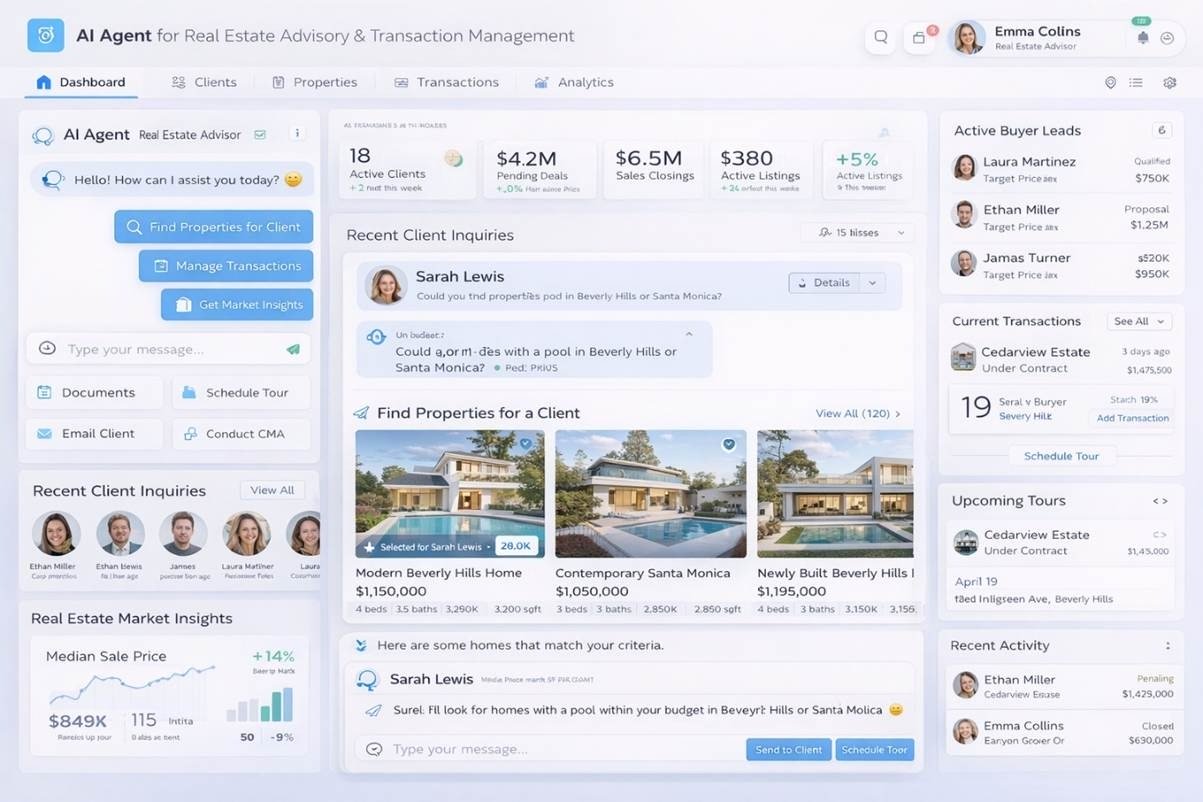
AI agents for real estate advisory have emerged as a compelling AI startup success story in 2026, transforming how buyers, sellers, and investors navigate complex property transactions. Unlike traditional tools, AI agents adoption act as proactive digital advisors that guide users through discovery, evaluation, and decision making. This use case illustrates how AI-driven business models can elevate customer experience while improving efficiency across real estate operations.
Real estate transactions involve large financial decisions, fragmented information, and long sales cycles. Buyers struggle to find suitable properties, understand pricing, and evaluate trade-offs, while agents manage multiple clients, listings, and negotiations simultaneously.
Common challenges include:
As customer expectations shift toward digital-first experiences, traditional real estate workflows struggle to keep pace.
AI-powered real estate agents use machine learning, recommendation systems, and conversational AI to act as intelligent property advisors. These agents analyze user preferences, budget constraints, market trends, and inventory data to deliver personalized recommendations and guidance.
Core capabilities often include:
These AI agents integrate with listing platforms, CRM systems, and market data providers, allowing them to support both consumers and professional agents throughout the transaction lifecycle.
Real estate firms using AI agents report shorter sales cycles and higher client engagement. Buyers find relevant properties faster, while agents handle more clients without sacrificing service quality.
Business impact includes:
These results position AI agents as a strong AI business use case in real estate and proptech.
This use case works because real estate decisions involve repeated patterns that AI can learn from, while still benefiting from human oversight. AI agents augment human expertise rather than replacing it, making adoption easier across the industry.
For founders studying AI startup case studies 2026, real estate AI agents demonstrate the value of personalization and proactive guidance. Startups that combine domain knowledge with conversational intelligence can create differentiated, scalable platforms in traditionally relationship-driven industries.
Also Read: How To Build An AI Agent: A Step-by-Step Guide
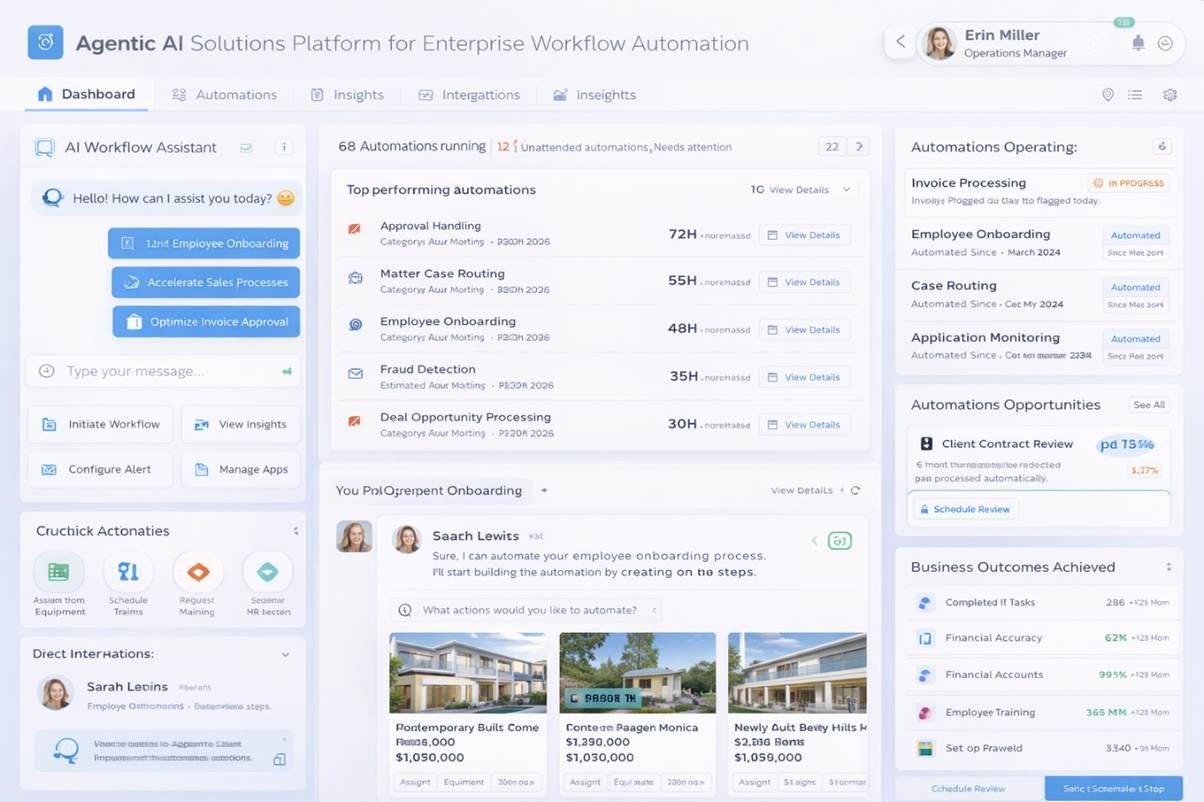
Agentic AI solutions platforms have become one of the most advanced enterprise AI use cases in 2026, enabling organizations to automate complex, multi-step workflows. Unlike traditional automation tools, agentic AI systems can plan, reason, and act autonomously across systems. AI startups building these platforms are redefining enterprise productivity and operational efficiency, making this a landmark AI innovation in business.
Enterprises operate across dozens of tools, teams, and processes. Many workflows span multiple systems and require constant human coordination. Traditional automation tools handle simple tasks but break down when processes become dynamic or context-dependent.
Common challenges include:
As enterprises scale, these inefficiencies create bottlenecks that limit agility and growth.
Agentic AI platforms use autonomous AI agents capable of planning tasks, executing actions, and adapting based on outcomes. These systems integrate with enterprise software such as CRM, ERP, ticketing, and communication tools to automate workflows end to end.
Typical capabilities include:
Unlike robotic process automation, agentic AI can handle variability and exceptions, making it suitable for complex enterprise environments.
Enterprises adopting agentic AI platforms report significant productivity gains and faster execution. Teams spend less time coordinating work and more time on strategic tasks.
Business outcomes often include:
These platforms represent some of the most powerful AI applications for business growth in large organizations.
This use case succeeds because agentic AI mirrors how humans plan and execute work, but at machine speed and scale. Enterprises benefit from automation that adapts rather than breaks when conditions change.
For founders analyzing successful AI startup case studies, agentic AI platforms show the future of enterprise automation. Startups that focus on reliability, governance, and integration will lead the next wave of AI-driven enterprise transformation.
Together, these case studies demonstrate that in 2026, successful AI startups win by combining focused use cases, strong execution, and clear business value.
Also Read: Top 15+ AI Agent Development Companies In USA
Across all the AI startup case studies discussed, clear patterns emerge that explain why some companies succeed while others struggle. These startups did not rely on hype or broad promises. Instead, they focused on disciplined execution and practical value creation.
Below are the core principles that consistently set the strongest AI startups apart in 2026.
Every successful startup began with a clearly defined business problem, not an AI capability. Rather than asking how to use AI, they asked where inefficiencies, risks, or bottlenecks were hurting the business most.
They focused on:
This approach ensured that AI development was grounded in real business needs rather than experimentation for its own sake.
Instead of building broad, all-purpose AI platforms, these startups concentrated on narrow use cases with high economic value. This focus allowed them to deliver results faster and demonstrate ROI early.
Common characteristics included:
By narrowing scope, these startups reduced complexity and increased adoption.
Data quality and accessibility played a central role in every successful case study. These startups treated data as a strategic asset rather than a byproduct.
They invested early in:
A strong data foundation allowed AI models to remain accurate, reliable, and scalable over time.
Successful startups embedded AI into existing tools and processes instead of forcing users to adopt separate systems. AI was designed to support daily work, not interrupt it.
This showed up through:
By fitting into real workflows, AI adoption became natural rather than forced.
Rather than waiting for perfect models, these startups launched early and improved continuously. Real-world usage provided the feedback needed to refine both models and user experience.
They emphasized:
This agility allowed them to adapt quickly as markets, users, and data evolved.
Equally important is what these startups chose not to do. They avoided over-generalization, resisted chasing every possible use case, and did not oversell AI capabilities. Most importantly, they did not treat AI as a standalone product but as part of a broader business system.
Together, these patterns show that successful AI startups win by combining focus, execution, and integration, proving that disciplined strategy matters more than technical ambition alone.
As AI adoption matures in 2026, the conversation has shifted from experimentation to execution at scale. The most successful AI startups are no longer defined by the models they use, but by how they apply intelligence to real business decisions. The case studies explored earlier reflect a broader movement where AI is becoming deeply embedded into how organizations operate, manage risk, and create value.
Below are the key AI use case trends shaping business transformation in 2026.
Autonomous AI agents are increasingly responsible for executing multi-step tasks without constant human intervention. These agents manage workflows such as customer onboarding, document processing, claims handling, and internal approvals. Unlike traditional automation, agentic AI can adapt to changing conditions, make contextual decisions, and coordinate across systems, significantly reducing operational overhead.
AI copilots are designed to support professionals such as doctors, lawyers, analysts, recruiters, and finance leaders. Instead of replacing expertise, these copilots enhance it by summarizing information, surfacing insights, and recommending next actions. This trend reflects a shift toward human-centered AI that augments decision making in high-skill roles.
As regulations grow more complex, AI is becoming a critical tool for continuous compliance and risk monitoring. Businesses are using AI to detect anomalies, predict regulatory exposure, and manage risk in real time. This trend is especially prominent in finance, healthcare, and insurance, where accuracy and trust are essential.
Generic AI models are giving way to vertical-specific LLMs trained on industry data, terminology, and workflows. These models deliver higher accuracy and relevance in sectors such as healthcare, real estate, legal services, and HR. Vertical focus enables startups to build defensible products that outperform horizontal solutions.
The most advanced AI use cases in 2026 focus on decision intelligence rather than task automation alone. Businesses are using AI to forecast outcomes, evaluate scenarios, and guide strategic choices. This shift positions AI as a core component of leadership and planning, not just operational efficiency.
Together, these emerging trends show that AI in 2026 is evolving into a strategic decision engine, tightly aligned with real business outcomes rather than experimental innovation.

The AI startup case studies explored in this article offer clear, practical lessons for anyone building or buying AI-powered products in 2026. Whether you are a startup founder, a product manager, or an enterprise decision-maker, these insights focus on execution, not theory.
These lessons show that successful AI adoption in 2026 is less about advanced algorithms and more about focus, discipline, and aligning AI with real business value.
Turning an AI idea into a scalable, revenue-generating product requires more than models and tools. It demands the right strategy, execution discipline, and deep understanding of business workflows. PixelBrainy LLC works with startups, product teams, and enterprises to transform AI concepts into practical solutions that deliver measurable impact across industries.
PixelBrainy LLC supports founders and organizations from early ideation to production deployment. As an experienced AI development company, the team focuses on identifying high-value AI use cases, aligning them with business goals, and designing solutions that are technically sound and commercially viable. Every engagement begins with problem validation, not technology selection.
From MVPs to enterprise-grade platforms, PixelBrainy LLC specializes in AI app development that prioritizes usability, performance, and scalability. Solutions are built to integrate seamlessly with existing systems, ensuring adoption across real-world workflows. Whether the goal is automation, decision intelligence, or personalization, development is guided by long-term growth and maintainability.
PixelBrainy LLC provides AI consulting focused on practical outcomes rather than experimentation. This includes AI readiness assessments, data strategy planning, ROI modeling, and roadmap creation. The emphasis is on helping teams make informed decisions about where AI adds value and how to deploy it responsibly.
Successful AI solutions must work within the tools teams already use. PixelBrainy LLC enables smooth AI Integration across enterprise systems such as CRM, ERP, HR, and analytics platforms. This ensures AI enhances productivity without disrupting operations, compliance, or security.
PixelBrainy LLC helps organizations move beyond ideas and build AI solutions that scale, perform, and create lasting business value.
The successful AI startup case studies of 2026 make one thing clear. AI delivers real value when it is focused, practical, and closely aligned with business outcomes. Across industries, the startups that succeeded did not chase hype or overbuild complex systems. Instead, they concentrated on solving specific problems where AI could create measurable impact.
These examples show that execution, data quality, and user adoption matter more than model sophistication alone. AI works best when it is embedded into real workflows, supported by strong data foundations, and continuously improved through real-world usage.
As businesses move toward 2027, AI will continue to shift from experimentation to essential infrastructure. Organizations that learn from proven use cases and apply AI with discipline and clarity will be best positioned for sustainable growth.
Ready to turn your AI idea into a real, scalable solution? Book an appointment with PixelBrainy LLC and start building with confidence.
Successful AI startup case studies are real-world examples of companies that have applied artificial intelligence to solve specific business problems and achieved measurable results. These case studies highlight how AI is integrated into workflows, delivers ROI, and scales in production environments rather than remaining experimental.
AI startup case studies in 2026 focus more on execution, integration, and business outcomes than on novelty. Unlike earlier years, success is defined by enterprise adoption, operational impact, and decision intelligence rather than model size or technical complexity.
Industries such as healthcare, financial services, insurance, real estate, education, HR technology, and enterprise operations benefit the most. These sectors are data-rich and process-driven, making them ideal for real-world AI use cases that improve efficiency, accuracy, and decision making.
Startups can validate AI ROI early by defining success metrics upfront, running small pilots, comparing AI-driven outcomes against existing processes, and gathering continuous user feedback. Linking AI performance directly to revenue, cost savings, or time reduction helps prove value quickly.
Common mistakes include building AI before validating the problem, trying to solve too many use cases at once, underestimating data quality requirements, and deploying AI as a standalone tool rather than embedding it into existing workflows.
Enterprises should evaluate AI startups based on business impact, integration capability, data security, and scalability. Proven case studies, clear ROI metrics, and alignment with existing systems are stronger indicators of success than marketing claims alone.

About The Author
Sagar Bhatnagar
Sagar Sahay Bhatnagar brings over a decade of IT industry experience to his role as Marketing Head at PixelBrainy. He's known for his knack in devising creative marketing strategies that boost brand visibility and market influence. Sagar's strategic thinking, coupled with his innovative vision and focus on results, sets him apart. His track record of successful campaigns proves his ability to utilize digital platforms effectively for impactful marketing efforts. With a genuine passion for both technology and marketing, Sagar continuously pushes PixelBrainy's marketing initiatives to greater success.

Working with the PixelBrainy team has been a highly positive experience. They understand the design requirements and create beautiful UX elements to meet the application needs. The dev team did an excellent job bringing my vision to life. We discussed usability and flow. Sagar worked with his team to design the database and begin coding. Working with Sagar was easy. He has the knowledge to create robust apps, including multi-language support, Google and Apple ID login options, Ad-enabled integrations, Stripe payment processing, and a Web Admin site for maintaining support data. I'm extremely satisfied with the services provided, the quality of the final product, and the professionalism of the entire process. I highly recommend them for Android and iOS Mobile Application Design and Development.

Great experience working with them. Had a lot of feedback and I found that unlike most contractors they were bugging me for updates instead of the other way around. They were extremely time conscience and great at communicating! All work was done extremely high quality and if not on time, early! They were always proactive when it comes to communication and the work is great/above par always. Very flexible and a great team to work with! Goes above and beyond to present us with multiple options and always provides quality. Amazing work per usual with Chitra. If you have UI/UX or branding design needs I recommend you go to them! Will likely work with them in the future as well, definitely recommended!

PixelBrainy is a joy to work with and is a great partner when thinking through branding, logo, and website layout. I appreciate that they spend time going into the "why" behind their decisions to help inform me and others about industry best practices and their expertise.

I hired them to design our software apps. Things I really like about them are excellent communication skills, they answer all project suggestions and collaborate right away, and their input on design and colors is amazing. This project was complex and needed patience and creativity. The team is amazing to do business with. I will be using them long-term. Glad to see there are some good people out there. I was afraid to try and outsource my project to someone but I am glad I met them! I really can't say enough. They went above and beyond on this project. I am very happy with everything they have done to make my business stand out from the competition.

It was great working with PixelBrainy and the team. They were very responsive and really owned the project. We'll definitely work with them again!

I recently worked with the PixelBrainy team on a project and I was blown away by their communication skills. They were prompt, clear, and articulate in all of our interactions. They listened and provided valuable feedback and suggestions to help make the project a success. They also kept me updated throughout the entire process, which made the experience stress-free and enjoyable.

PixelBrainy is very good at what it does. The team also presents themselves very professionally and takes care of their side of things very well. I could fully trust them taking up the design work in a timely and organised manner and their attention to detail saved us lots of effort and time. This particular project was quite intense and the team showed that they function very well under pressure. Very much looking forward to working with her again!

It's always an absolute pleasure working with them. They completed all of my requests quickly and followed every note I had for them to a T, which made our process go smoothly from start to finish. Everything was completed fast and following all of the guidelines. And I would recommend their services to anyone. If you need any design work done in the future, PixelBrainy should be your first call!

They took ownership of our requirements and designed and proposed multiple beautiful variants. The team is self-motivated, requires minimum supervision, committed to see-through designs with quality and delivering them on time. We would definitely love to work with PixelBrainy again when we have any requirements.

PixelBrainy was a big help with our SaaS application. We've been hard at work with a new UI/UX and they provided a lot of help with the designs. If you're looking for assistance with your website, software, or mobile application designs, PixelBrainy and the team is a great recommendation.

PixelBrainy designers are amazing. They are responsive, talented, and always willing to help craft the design until it matches your vision. I would recommend them and plan to continue them for my future projects and more!!!

They were awesome! Did a good job fast, and good communication. Will work with them again. Thank you

Creative, detail-oriented, and talented designers who take direction well and implement changes quickly and accurately. They consistently over-delivered for us.

PixelBrainy team is very talented and creative. Great designers and a pleasure to work with. PixelBrainy is an excellent communicator and I look forward to working with them again.

PixelBrainy has a very talented design team. Their work is excellent and they are very responsive. I enjoy working with them and hope to continue on all of our future projects.


Transform your ideas into reality with us.
Across these industries, each engagement brings unique challenges, from early-stage product development to scaling complex systems, helping us build a practical understanding of real-world product environments.