
 AI Summary Powered by PixelBrainy
Are miscommunications, delayed responses, and frustrated residents slowly breaking down trust in your HOA community?
For many property management companies, poor communication between residents and HOA boards is no longer just a minor inconvenience, it is a serious operational bottleneck. Emails go unanswered, maintenance requests get buried, and important updates fail to reach the right people at the right time. If you are thinking, “We are facing communication issues in our HOA and looking for a company in the USA that can build a custom AI solution,” you are not alone. With over 377,000 community associations in 2026 across the United States, the scale of communication challenges has grown significantly.
The rising complexity of community management is driving rapid adoption of AI HOA management softwares that can streamline operations and improve engagement. According to a recent report, the global property management software market is projected to exceed $52 billion by 2030, fueled by automation and AI-driven communication tools.
This growing demand is accelerating HOA management software development integrating AI, allowing property managers to move beyond outdated systems. Through custom HOA management software development with AI, companies can enable real-time messaging, automate resident queries, and reduce manual workload. If you are exploring how to build AI HOA management software for property management companies, the focus should be on scalability, user experience, and intelligent automation.
By following a well-defined AI HOA management software development process, businesses can deploy powerful HOA automation software that not only fixes communication gaps but also enhances transparency, efficiency, and overall community satisfaction.
Continue reading this blog to explore features, costs, use cases, and the complete roadmap to building a powerful AI-driven HOA management solution tailored for your property management company.
AI Homeowners Association (HOA) management software is an intelligent platform designed to automate and optimize communication, operations, and administrative workflows within homeowner associations.
As property management companies grow, the limitations of manual coordination and disconnected tools become more visible. Delayed responses, missed maintenance updates, and unclear communication channels are not isolated issues. They are signs of systems that were never designed for modern, fast-moving communities.
AI HOA management software addresses this gap by transforming how operations are executed. Instead of relying on manual inputs, AI HOA management software development focuses on building systems that can analyze data, trigger actions, and manage workflows automatically. From handling resident inquiries to scheduling maintenance and processing payments, the platform operates continuously with minimal human intervention.
With HOA management software development integrating AI, routine processes become streamlined and consistent. Requests are categorized and assigned instantly, communication flows through structured channels, and reporting becomes real time and data-driven. This is why many firms are investing in custom HOA management software development with AI to create solutions tailored to their unique operational needs. If you are evaluating how to build AI HOA management software for property management companies, the key is to design systems that prioritize automation, scalability, and seamless user experience.
Traditional HOA tools were built to store records, not to run operations. As communities expand, this limitation creates inefficiencies across every function.
Over time, these inefficiencies lead to slower response times, reduced transparency, and declining resident satisfaction.
This is where HOA automation software, built through a robust AI HOA management software development process, becomes essential. It enables property management companies to move from reactive operations to proactive, intelligent management.
In the next section, we will explore how these AI-powered systems function at a technical and architectural level.
To understand the real value of AI HOA management softwares, it is important to look beyond features and focus on how the system actually works behind the scenes. The architecture is designed to ensure seamless communication, automation, and scalability across all HOA operations.
At a high level, AI HOA management software development involves building a multi-layered system where each component plays a specific role in managing and automating workflows.
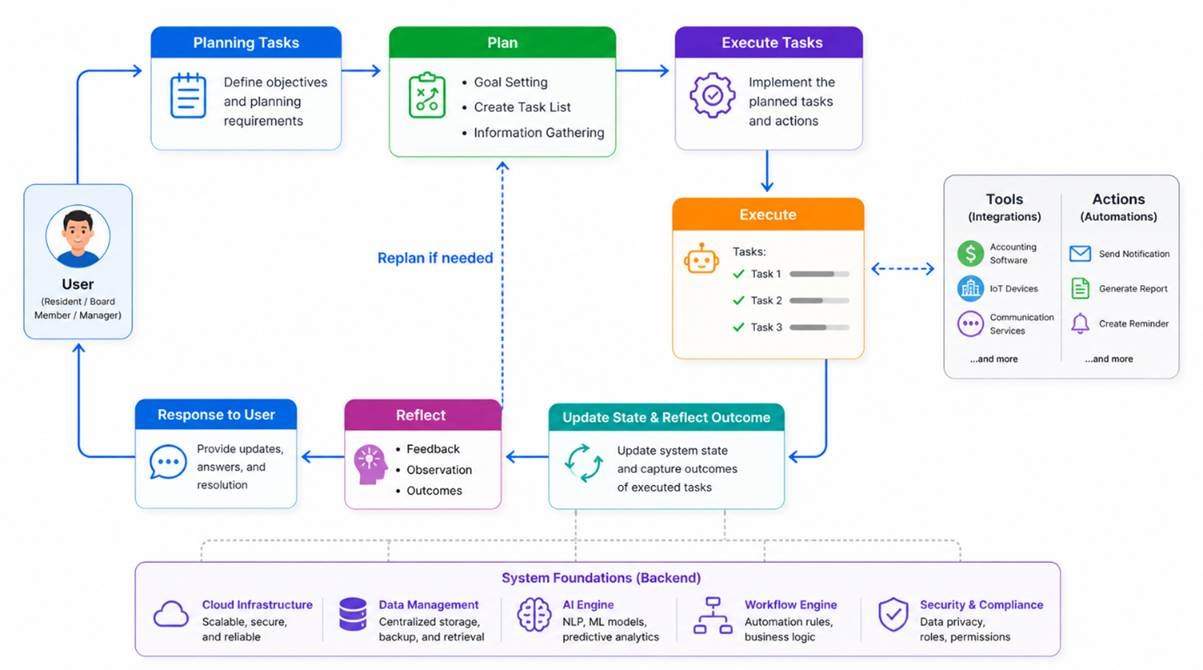
This is the interface used by residents, board members, and property managers. It includes web and mobile dashboards where users can submit requests, track updates, make payments, and communicate in real time. A well-designed frontend ensures accessibility and smooth user experience.
The backend handles all business logic, data processing, and workflow execution. It manages tasks such as request routing, billing cycles, notifications, and system rules. In HOA management software development integrating AI, this layer is tightly connected with automation engines to reduce manual intervention.
This is the core of HOA automation software.
It includes:
This layer enables systems to make decisions, not just store data.
Cloud platforms like AWS or Azure provide secure data storage, high availability, and scalability. As more communities are added, the system can scale without performance issues, which is critical in custom HOA management software development using AI.
This layer connects the platform with third-party tools such as accounting software, payment gateways, IoT devices, and communication services. It ensures a unified ecosystem where all systems work together.
When a resident submits a query or maintenance request, the AI engine instantly analyzes the input, categorizes it, and assigns it to the appropriate workflow. Notifications are triggered, tasks are tracked, and updates are shared automatically. Over time, the system learns patterns, predicts issues, and improves response accuracy.
If you are exploring how to build AI HOA management software for property management companies, this architecture forms the foundation of a scalable and intelligent system. It ensures that operations are not only automated but also continuously optimized through data and AI-driven insights.
If you are a property management company asking, “Should we invest in developing AI HOA management software for our operations?”, the real question is not whether you should invest, but how long you can afford to delay it.
The market itself clearly shows where the industry is heading. The global HOA software market is expected to reach around $6.03 billion in 2026 and grow to over $9.15 billion by 2032, reflecting steady adoption across property management companies.
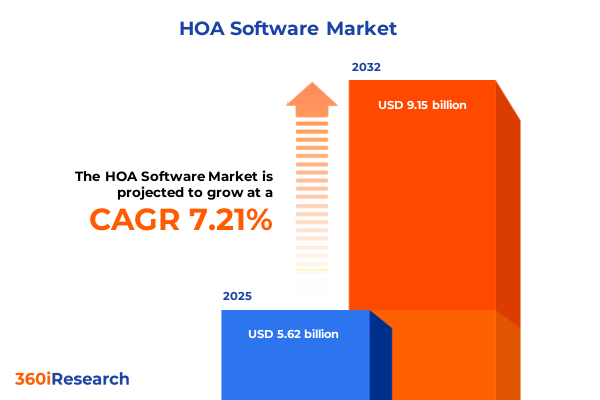
Another report highlights that the broader HOA software market could grow to $6.23 billion by 2035 with a CAGR of over 13 percent, driven by digital transformation and automation needs.
This growth is not just a trend, it is a direct response to operational inefficiencies and increasing expectations from residents and boards.
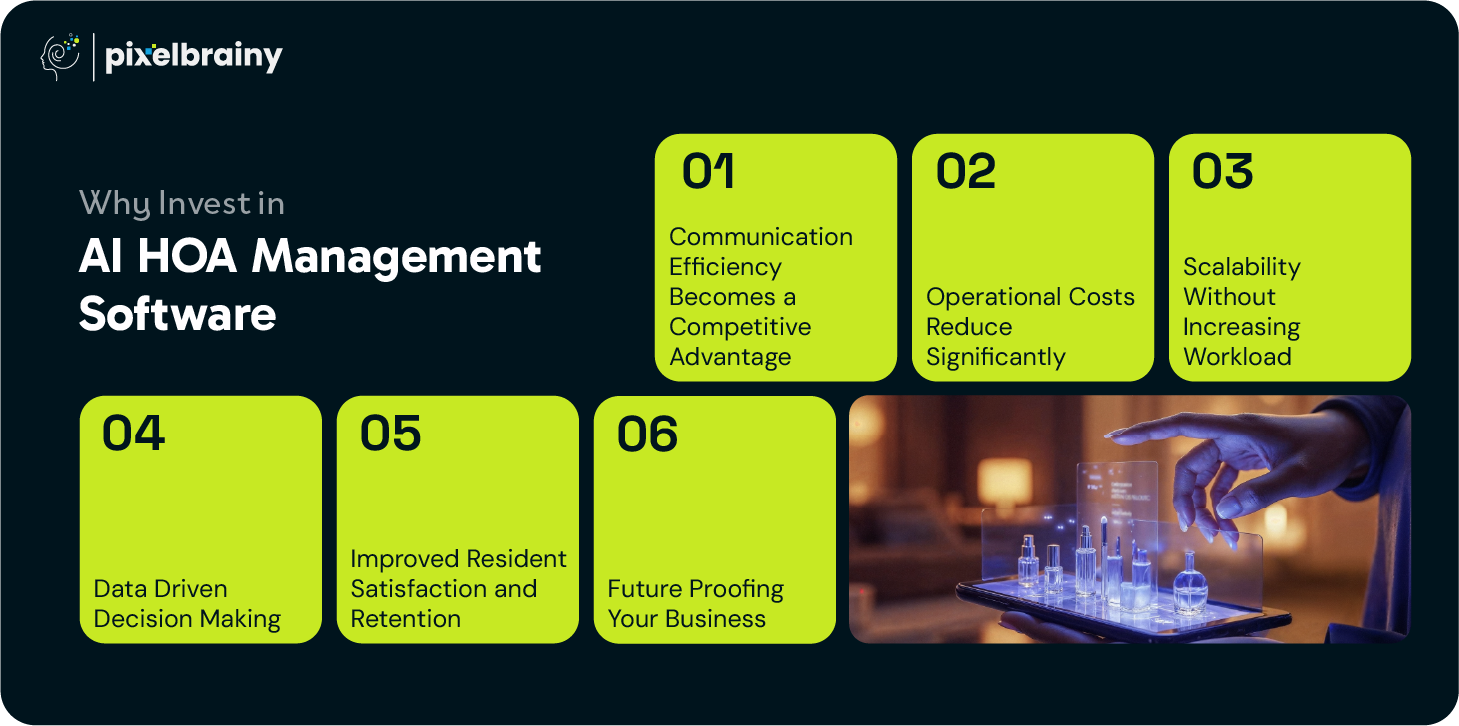
Communication is at the core of every HOA operation, yet it is also the most common failure point. Traditional systems rely heavily on emails, phone calls, and manual follow ups, which often leads to delays and missed information.
With AI HOA management softwares, communication becomes structured and centralized. Residents can receive instant updates, automated responses, and timely notifications without depending on manual intervention. This not only reduces response time but also builds trust and transparency across the community.
Over time, improved communication becomes a competitive advantage. Property management companies that respond faster and more consistently are more likely to retain clients and attract new communities.
Managing HOAs manually requires significant human effort. Staff members spend hours handling repetitive tasks such as sending reminders, tracking payments, assigning maintenance requests, and responding to common queries.
Through HOA management software development integrating AI, these repetitive processes are automated. AI systems can send payment reminders, categorize requests, and trigger workflows without human involvement.
This reduces the need for large operational teams and minimizes errors caused by manual handling. As a result, companies can optimize costs while maintaining or even improving service quality.
As property management companies grow, managing multiple communities becomes increasingly complex. Traditional systems struggle to handle this growth because every new HOA adds more manual work.
With custom HOA management software development with AI, scalability becomes much more manageable. AI systems are designed to handle increased workloads without requiring proportional increases in staff.
This means you can onboard new communities, expand your portfolio, and manage more residents without overwhelming your operations team. Scalability becomes a built-in advantage rather than a challenge.
In traditional setups, decision making is often based on limited visibility and fragmented data. Important insights about maintenance trends, financial performance, or resident concerns are difficult to track and analyze.
AI powered systems change this completely. They collect, process, and analyze large volumes of data in real time. This allows property managers to identify patterns, predict issues, and make informed decisions.
For example, you can anticipate maintenance needs before they become urgent or identify recurring complaints and address them proactively. This level of insight improves both operational efficiency and long-term planning.
Resident satisfaction is directly linked to how efficiently their concerns are addressed. Delayed responses, lack of transparency, and inconsistent communication often lead to frustration and dissatisfaction.
With HOA automation software, residents experience faster response times, clear communication, and better service delivery. Automated updates keep them informed, while AI driven systems ensure that their requests are handled promptly.
Satisfied residents are more likely to stay within the community and recommend your services. This has a direct impact on retention rates and overall business growth.
The property management industry is rapidly evolving, with technology playing a central role in shaping its future. Companies that continue to rely on outdated systems risk falling behind competitors who are adopting modern solutions.
By investing in the AI HOA management software development process, you position your business for long term success. You gain the ability to adapt to changing market demands, integrate new technologies, and continuously improve your operations.
Future proofing is not just about staying relevant, it is about building a foundation that supports growth, innovation, and resilience in an increasingly AI driven landscape.
Investing in HOA automation software is no longer just a technology upgrade. It is a strategic decision that impacts efficiency, scalability, and long-term competitiveness. For property management companies, adopting AI is becoming essential to meet modern expectations and sustain growth.
The real value of AI HOA management softwares becomes clear when you look at how they are used in day-to-day operations. These systems are not just theoretical upgrades. They directly solve common inefficiencies in communication, maintenance, financial management, and decision making.
Below are the most impactful use cases that property management companies are implementing through HOA management software development integrating AI.
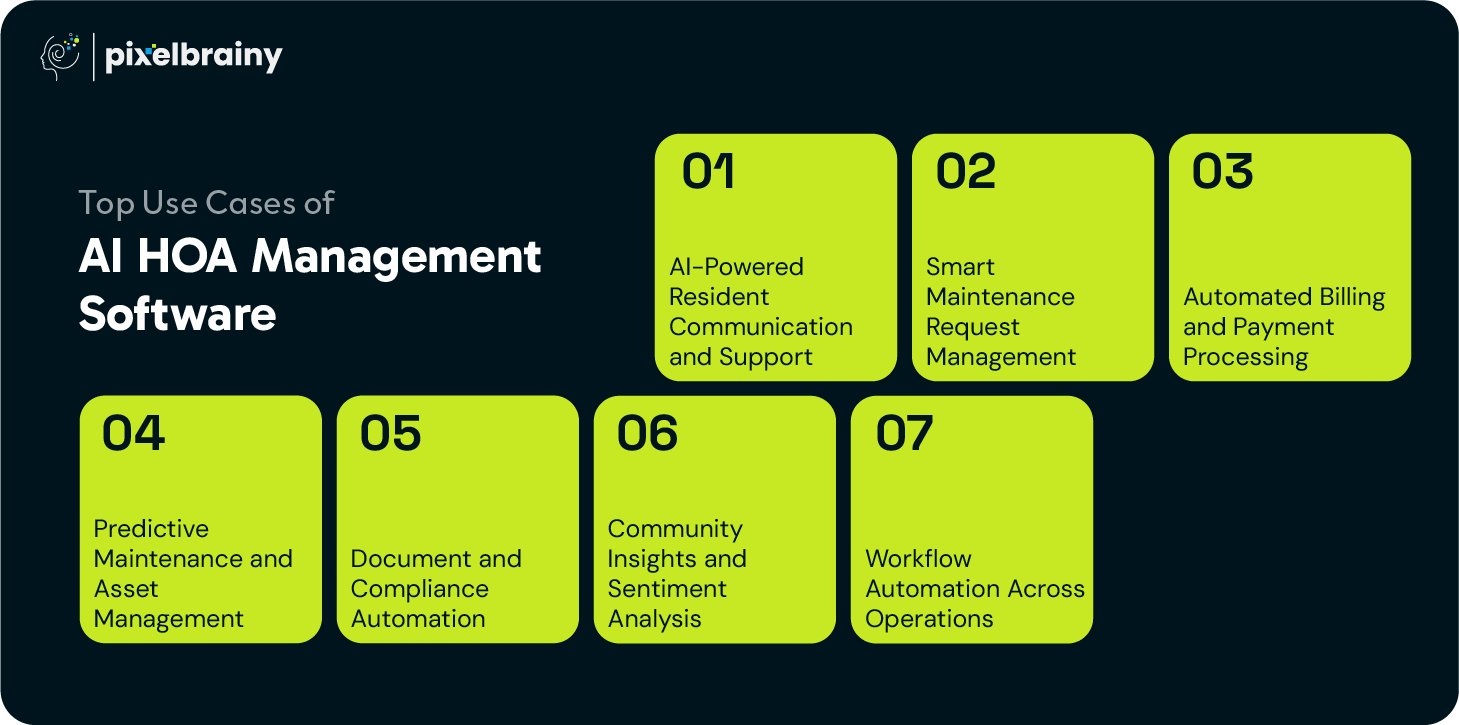
One of the most critical use cases is automating communication between residents and HOA boards. AI driven chat systems can handle common queries such as dues, rules, maintenance updates, and announcements instantly.
Instead of waiting for manual responses, residents receive real time answers. This significantly reduces response delays and eliminates communication gaps. Over time, the system learns from interactions and improves accuracy, making it a key component in custom HOA management software development with AI.
Maintenance requests are often one of the most time-consuming tasks in HOA operations. AI systems can automatically categorize, prioritize, and assign these requests based on urgency and type.
For example, urgent issues like water leaks can be flagged and escalated immediately, while routine tasks are scheduled efficiently. This reduces manual workload and ensures faster resolution times, improving overall service quality.
Billing errors and delayed payments are common challenges in traditional systems. With AI integration, invoicing, reminders, and payment tracking can be fully automated.
The system can send timely reminders, detect late payments, and even provide predictive insights on payment trends. This ensures consistent cash flow and reduces the administrative burden on staff.
AI does not just react to problems, it predicts them. By analyzing historical data and usage patterns, the system can forecast when maintenance is likely to be required.
This allows property managers to take proactive action before issues escalate. Predictive maintenance reduces costs, prevents major breakdowns, and extends the lifespan of community assets.
HOAs deal with a large volume of documents such as bylaws, contracts, notices, and compliance records. Managing these manually increases the risk of errors and missed deadlines.
AI systems can organize, categorize, and retrieve documents instantly. They can also track compliance requirements and send alerts for important deadlines, ensuring that nothing is overlooked.
Also Read: AI Compliance Software Development: A Complete Guide for Regulated Industries
Understanding resident sentiment is essential for improving community satisfaction. AI tools can analyze feedback, complaints, and communication patterns to identify trends and concerns.
This helps property managers address issues proactively and make data driven improvements. It also supports better decision making across operations.
From onboarding new residents to managing approvals and generating reports, AI can automate complete workflows. Tasks are triggered automatically based on predefined rules and conditions.
This is a core outcome of a well-executed AI HOA management software development process, where operations run smoothly without constant manual oversight.
These use cases show how HOA automation software transforms everyday HOA management into a streamlined, intelligent system. Instead of reacting to problems, property management companies can operate proactively, efficiently, and at scale.

When property management companies plan to build AI HOA management system, the foundation always starts with the right set of core features. These are not optional capabilities. They directly impact how efficiently your platform performs daily operations such as communication, billing, maintenance, and reporting.
Whether you are focusing on affordable AI HOA software development for small property management companies or planning to create HOA management platform with AI at an enterprise level, these must-have features ensure scalability, automation, and long-term usability. The goal is to reduce manual effort while improving transparency and operational control.
| Feature | Description |
| AI Chatbot Support | AI powered chatbot handles resident queries instantly, reducing response delays and improving communication efficiency while learning from interactions to provide more accurate and context aware responses over time. |
| Centralized Communication Dashboard | A unified communication panel allows residents, board members, and managers to interact in one place, eliminating scattered emails and ensuring all updates, notices, and discussions are easily accessible and trackable. |
| Automated Billing System | The system generates invoices, sends reminders, tracks payments, and handles late fees automatically, ensuring consistent financial operations and reducing manual errors in billing and reconciliation processes. |
| Maintenance Request Management | Residents can submit requests digitally, while AI categorizes, prioritizes, and assigns them to the right personnel, ensuring faster resolution and efficient tracking of maintenance workflows. |
| Document Management System | Secure storage and easy retrieval of documents such as bylaws, contracts, and notices, with AI tagging and categorization for faster search and better compliance management. |
| Role Based Access Control | Provides controlled access to different users such as residents, board members, and managers, ensuring data security and allowing each user to interact only with relevant system features. |
| Notification and Alerts System | Automated notifications for payments, meetings, maintenance updates, and announcements ensure that all stakeholders stay informed without relying on manual communication methods. |
| Financial Reporting and Analytics | Generates real time financial reports, tracks income and expenses, and provides insights that help property managers make better financial decisions and maintain transparency. |
| Compliance Tracking | Tracks legal requirements, deadlines, and HOA rules, sending alerts and reminders to ensure compliance is maintained without manual monitoring. |
| Multi Property Management | Allows property managers to handle multiple HOAs within a single platform, providing centralized control and consistent operations across different communities. |
| Mobile Accessibility | Mobile friendly interface or app ensures residents and managers can access the system anytime, improving engagement and responsiveness across all operations. |
| Payment Gateway Integration | Integrates secure payment options for residents, enabling online transactions, recurring payments, and faster processing while ensuring financial security. |
| Workflow Automation Engine | Automates repetitive processes such as approvals, task assignments, and follow ups, reducing manual workload and improving operational efficiency. |
| Data Security and Privacy | Implements strong encryption, secure authentication, and compliance standards to protect sensitive resident and financial data from unauthorized access. |
| Customizable Dashboard | Allows users to personalize their interface based on roles and preferences, ensuring quick access to important data, tasks, and insights relevant to their responsibilities. |
These essential features form the backbone of any successful HOA automation software, ensuring your platform is scalable, efficient, and ready to handle modern community management challenges.
Once the core system is in place, property management companies can gain a strong competitive edge by integrating advanced capabilities. These go beyond standard automation and focus on intelligence, prediction, and enhanced user experience.
If you are exploring advanced features to include when building HOA management software, these innovations can help you build centralized HOA communication platform and even create HOA billing and payment management software that stands out in the market.
| Feature | Description |
| Voice Enabled Assistance | Enables residents and managers to interact with the system using voice commands, making communication faster and more accessible, especially for non technical users or elderly residents. |
| AI Based Conflict Resolution | Analyzes communication patterns and disputes to suggest possible resolutions, helping HOA boards manage conflicts efficiently while maintaining transparency and fairness in decision making. |
| Predictive Financial Forecasting | Uses historical financial data to predict future expenses, revenue trends, and budget requirements, helping property managers plan proactively and avoid financial shortfalls. |
| Image Recognition for Maintenance | Residents can upload images of issues, and AI identifies the problem type, urgency, and required action, improving accuracy and speeding up maintenance response times. |
| Smart Meeting Management | Automates scheduling, agenda creation, reminders, and minutes generation for HOA meetings, ensuring efficient coordination and better documentation of decisions. |
| Sentiment Analysis Engine | Analyzes resident feedback, complaints, and communication tone to identify dissatisfaction trends and help management take proactive actions to improve community experience. |
| IoT Integration | Connects with smart devices such as sensors, cameras, and meters to monitor property conditions in real time and trigger automated alerts for maintenance or security issues. |
| Advanced Reporting Dashboards | Provides interactive and customizable dashboards with deep insights into operations, finances, and resident behavior, enabling smarter and faster decision making. |
| Automated Vendor Management | Manages vendor contracts, performance tracking, and payments automatically, ensuring better coordination and accountability in external service management. |
| AI Driven Personalization | Tailors notifications, recommendations, and user experiences based on individual preferences and behavior, improving engagement and satisfaction across all stakeholders. |
Integrating these advanced capabilities ensures your platform evolves from a basic system into a powerful, intelligent solution that redefines how modern HOA communities are managed.
Developing an intelligent solution for HOA operations requires a clear roadmap that aligns technology with real business challenges. Property management companies often struggle with scattered workflows, communication gaps, and limited scalability, which makes structured development essential from the very beginning.
Understanding What is the process to create an AI HOA management software? helps organizations move from idea to execution with clarity. A well-planned approach allows you to create an AI-based HOA management system that is not only functional but also future ready. The goal is to build a system that simplifies operations while supporting long term growth for modern communities.
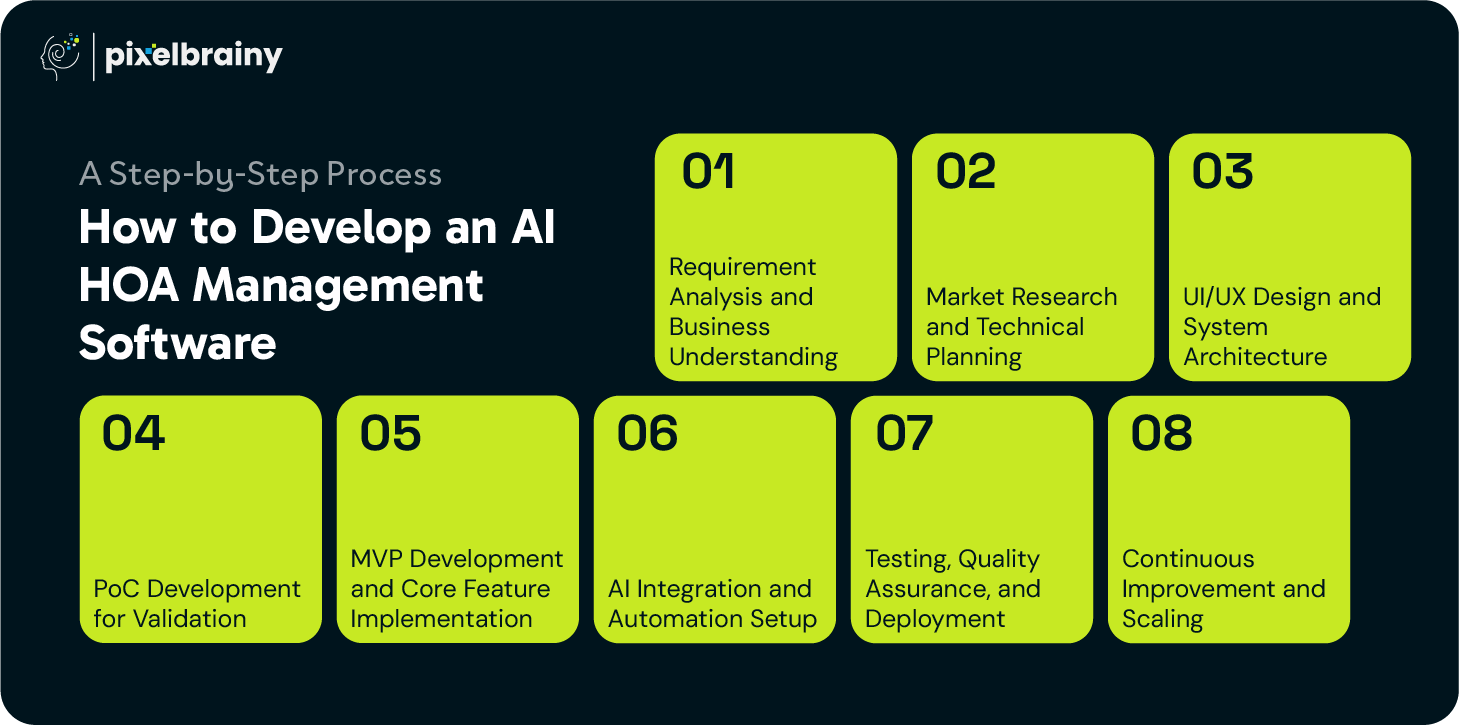
The first step focuses on identifying operational gaps, communication challenges, and workflow inefficiencies within your HOA processes. This includes gathering input from residents, board members, and property managers to understand real pain points.
Clear business objectives are defined during this phase, such as improving response times, automating billing, or streamlining maintenance tracking. A strong requirement analysis ensures that the development process is aligned with actual needs rather than assumptions, creating a solid foundation for success.
This stage involves evaluating existing solutions, identifying industry gaps, and understanding current technology trends. It also includes reviewing insights from top AI real estate software development companies in USA to benchmark quality standards and innovation.
On the technical side, decisions are made regarding architecture, cloud infrastructure, and integrations. This planning phase is critical to develop scalable AI HOA software for property management companies, ensuring that the system can handle growth without performance issues.
A user-friendly system is essential for adoption and efficiency. During the UI/UX design phase, wireframes and prototypes are created to map user journeys and interactions across the platform.
At the same time, system architecture is structured to ensure smooth communication between frontend interfaces, backend systems, and data layers. This step plays a key role when you build custom HOA management software with AI features, as both usability and performance must work together seamlessly.
Before full scale development begins, testing core concepts is crucial. PoC development focuses on validating key features such as AI based communication, automation workflows, or predictive analytics capabilities.
This stage minimizes risks by identifying potential challenges early. It also provides a clear demonstration of how the system will function, allowing stakeholders to refine requirements and ensure alignment before investing further resources.
Once validation is complete, development moves to building a Minimum Viable Product. MVP development includes essential modules such as communication systems, billing management, and maintenance tracking.
This phase allows companies to launch quickly, gather real user feedback, and refine the product based on actual usage. It also helps in gradually introducing automation features to automate HOA operations using AI without overwhelming users.
The real transformation begins when intelligence is embedded into the platform. During AI integration, machine learning models and automation engines are introduced to handle tasks such as query resolution, request prioritization, and predictive maintenance.
This step enables the system to analyze data patterns and make decisions independently. It plays a crucial role in AI-based HOA platform development for property managers, where efficiency and automation are key drivers of success.
Comprehensive testing ensures that the platform performs reliably across different scenarios. Functional testing, usability checks, and performance evaluations are conducted to identify and resolve any issues.
After successful testing, the system is deployed on a secure and scalable cloud environment. Proper deployment ensures smooth operation, data security, and readiness for real time usage across multiple communities.
Post deployment, continuous improvement becomes a priority. Feedback from users, system analytics, and operational data are used to enhance features and optimize workflows.
As the platform grows, it is scaled to support additional communities and users. New functionalities and AI capabilities can be introduced over time, ensuring long term relevance and adaptability in a competitive market.
A step-by-step development approach ensures your AI HOA platform is scalable, efficient, and capable of transforming property management operations with long term impact.
Also Read: How to Build Real Estate AI Software: Cost, Features & Tech Stack Explained
The cost of AI HOA management software development can vary significantly depending on the complexity of features, level of AI integration, scalability requirements, and customization needs. On average, developing a solution can range between $40,000 to $350,000+.
A basic platform with limited automation, standard communication tools, and simple billing features typically falls on the lower end of the range. However, as you move toward advanced capabilities such as predictive analytics, AI chatbots, multi property management, and third-party integrations, the cost increases accordingly. Factors like UI complexity, security requirements, and cloud infrastructure also play a major role in determining the final investment.
For property management companies aiming to build a fully customized and scalable solution, the cost reflects long term value rather than just initial development. Investing in a robust system helps reduce operational expenses, improve efficiency, and enhance resident satisfaction over time. The overall budget is also influenced by the development approach, whether you choose an MVP first strategy or a full-scale deployment from the beginning.
For more details regarding cost view this blog in well detailed: AI HOA Management Software Development Cost.
Also Read: AI Real Estate Software Development Cost: Know How Much Your Real Estate Software Will Cost
A strong technical foundation plays a critical role in the success of any AI driven platform. For property management companies planning to build a modern solution, the technology stack must support automation, real time communication, scalability, and data security. The right combination of tools ensures that your platform performs efficiently while handling complex HOA operations such as billing, maintenance tracking, and resident communication.
An effective stack not only supports current requirements but also allows future enhancements like advanced analytics, predictive insights, and deeper AI capabilities. It becomes easier to create HOA management platform with AI that adapts to growing communities and evolving user expectations. Below is a comprehensive breakdown of the recommended tools and technologies required for development.
| Category | Tools / Technologies | Detailed Explanation |
| Frontend Development | React, Angular, Vue.js | These frameworks help build responsive and dynamic user interfaces for residents, board members, and managers. They ensure smooth navigation, faster load times, and real time updates across different devices and screen sizes. |
| Backend Development | Node.js, Django, Ruby on Rails | Backend technologies manage business logic, workflows, and data processing. They ensure efficient handling of user requests, secure data exchange, and the ability to scale operations as the number of communities increases. |
| AI and Machine Learning | TensorFlow, PyTorch, OpenAI APIs | These technologies power intelligent features such as chatbots, predictive maintenance, and automation workflows. They enable the system to analyze large datasets, learn patterns, and improve decision making over time. |
| Database Management | PostgreSQL, MongoDB, MySQL | Databases store structured and unstructured data including resident records, financial transactions, and maintenance logs. They ensure quick data retrieval, consistency, and reliability across all system operations. |
| Cloud Infrastructure | AWS, Microsoft Azure, Google Cloud | Cloud platforms provide scalability, high availability, and secure data storage. They allow the system to handle increasing workloads, support multiple HOAs, and ensure continuous system performance. |
| API Integration | REST APIs, GraphQL | APIs connect the platform with external systems such as accounting tools, payment gateways, and communication services, enabling seamless data flow and a fully integrated ecosystem. |
| Payment Integration | Stripe, PayPal, Square | These tools enable secure and convenient payment processing for HOA dues and fees. They support recurring billing, automated reminders, and efficient financial transactions within the system. |
| Real Time Communication | WebSockets, Firebase, Twilio | These technologies enable instant messaging, alerts, and notifications, ensuring residents and managers stay connected and informed without delays. |
| Security and Authentication | OAuth 2.0, JWT, SSL Encryption | Security frameworks protect sensitive data and ensure safe access to the system. They provide authentication, authorization, and encryption to prevent unauthorized access and maintain compliance. |
| DevOps and Deployment | Docker, Kubernetes, Jenkins | DevOps tools automate development, testing, and deployment processes. They ensure smooth updates, faster releases, and efficient scaling of the application. |
| Mobile App Development | Flutter, React Native | These frameworks enable cross platform mobile app development, allowing users to access the platform easily on both Android and iOS devices with a consistent experience. |
| Analytics and Reporting | Power BI, Tableau, Google Analytics | Analytics tools provide insights into financial performance, user behavior, and system efficiency, helping property managers make informed and data driven decisions. |
A well-planned technology stack ensures your AI HOA platform delivers high performance, strong security, and the flexibility needed to support long term growth and innovation.
Building a powerful platform is only one part of the journey. The way you monetize your solution plays a major role in long term success, scalability, and revenue stability. For property management companies and startups entering this space, selecting the right business model helps align pricing with customer expectations while maximizing return on investment.
Whether you are planning to build AI HOA management system for internal use or offer it as a commercial product, these business models provide flexibility based on your target audience, feature set, and growth strategy.
This is the most popular model for AI HOA management softwares. Users pay a monthly or annual subscription fee to access the platform.
Pricing can be based on the number of units, communities, or features. This model ensures recurring revenue, easier scalability, and continuous customer engagement. It also allows you to roll out updates and new AI features without requiring users to reinstall or upgrade manually.
Key Highlights:
In this model, pricing is based on the number of residential units or properties managed. The more units a client manages, the higher the cost.
This approach works well for property management companies as it directly aligns pricing with their portfolio size. It is predictable, transparent, and easy to scale as clients grow their operations.
Key Highlights:
Under this model, companies pay a one-time fee to use the software, often with optional annual maintenance or support charges.
It is suitable for organizations that prefer ownership over recurring payments. However, it may require higher upfront investment and does not always provide continuous revenue unless combined with support or upgrade fees.
Key Highlights:
The freemium model offers basic features for free while charging for advanced functionalities such as AI automation, analytics, or integrations.
This model helps attract a large user base quickly and allows customers to experience the platform before committing financially. It is especially useful when you want to create HOA management platform with AI that targets small communities or startups.
Key Highlights:
This model focuses on providing fully customized solutions tailored to specific client needs. Pricing is based on project scope, features, integrations, and level of AI implementation.
It is ideal for large property management companies that require unique workflows, advanced automation, and high scalability. This approach is commonly used in custom HOA management software development with AI projects.
Key Highlights:
In this model, revenue is generated through transaction fees on payments, service bookings, or vendor interactions within the platform.
For example, a small percentage can be charged on each payment processed through the system. This model works well when the platform handles a high volume of financial transactions.
Key Highlights:
A hybrid model combines multiple approaches such as subscription plus transaction fees or licensing with paid add ons.
This provides flexibility and allows you to diversify revenue streams. It is particularly effective when scaling your platform across different customer segments with varying needs.
Key Highlights:
Choosing the right business model ensures your AI HOA platform not only delivers value to users but also generates sustainable and scalable revenue for long term success.
Developing an AI powered platform for Homeowners Association (HOA) management is a strategic and forward-looking decision, but it comes with multiple technical and operational challenges. Property management companies often struggle with planning, execution, and adoption while building such systems. These challenges can impact timelines, increase costs, and reduce efficiency if not handled properly from the beginning.
A structured approach to identifying and solving these issues helps ensure smoother development, better performance, and long-term success. Below are the most common challenges along with practical solutions to overcome them effectively.
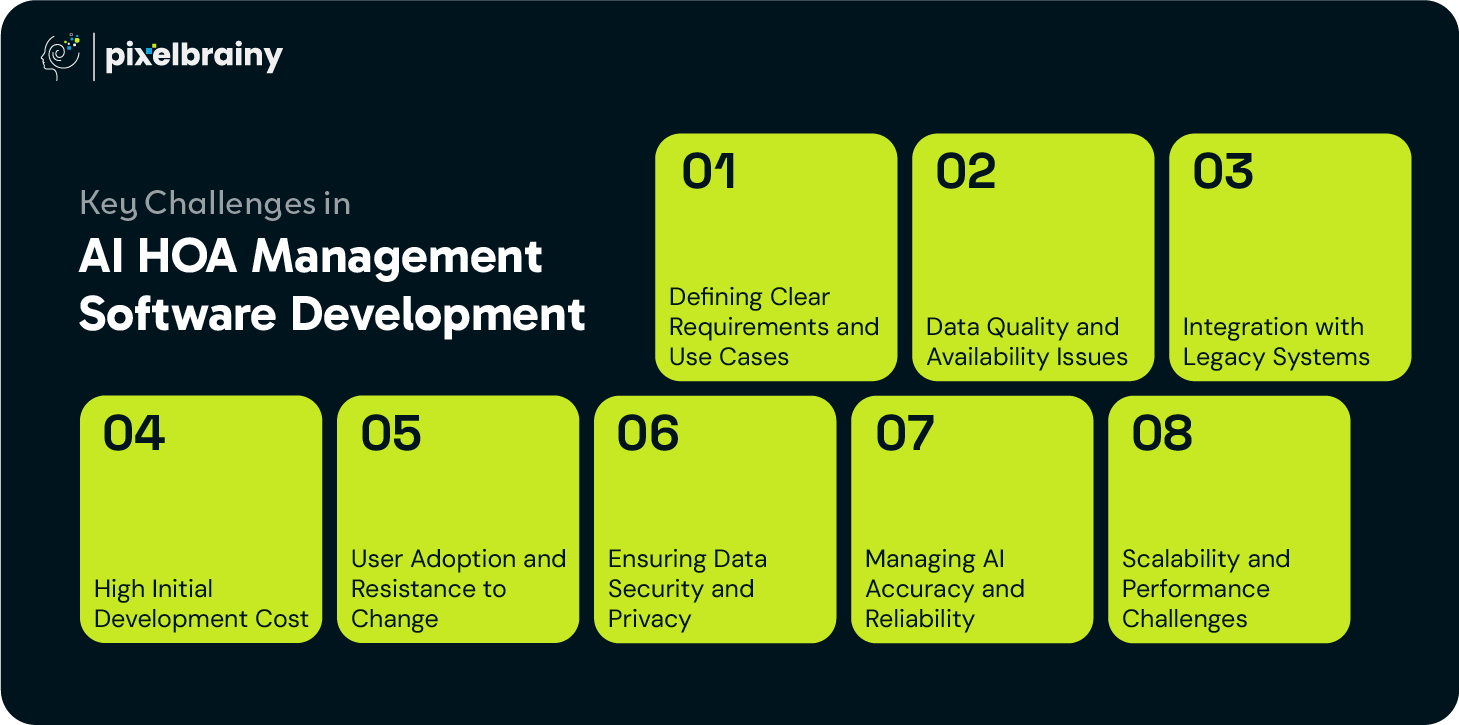
Many companies begin development without clearly defined requirements or priorities, leading to confusion, feature overload, and misalignment between business goals and technical execution across different teams and stakeholders.
How to Overcome:
AI systems depend heavily on structured and high-quality data, but many organizations have incomplete, inconsistent, or scattered data, making it difficult to train models and generate accurate results.
How to Overcome:
Existing property management tools and legacy systems often lack compatibility with modern AI platforms, creating integration challenges that can delay development and disrupt current workflows if not planned carefully.
How to Overcome:
Building an AI powered solution requires significant investment in technology, development resources, and infrastructure, which can be challenging for companies with limited budgets or uncertain return on investment expectations.
How to Overcome:
Residents, board members, and staff may resist adopting new systems due to lack of familiarity, fear of complexity, or preference for traditional processes, which can slow down implementation and reduce effectiveness.
How to Overcome:
Handling sensitive resident and financial data requires strong security measures, and any gaps in protection can lead to data breaches, compliance issues, and loss of trust among users and stakeholders.
How to Overcome:
AI systems require continuous monitoring and training, and without proper updates, they may produce inaccurate outputs or inconsistent results, affecting trust and reliability in automated decision-making processes.
How to Overcome:
As the number of users and communities increases, the system must handle higher workloads efficiently, and poor scalability planning can result in slow performance, system failures, and reduced user experience.
How to Overcome:
Addressing these challenges with a structured and balanced approach ensures successful AI HOA software development and long-term operational efficiency.
The evolution of AI HOA management software development is entering a phase where systems are no longer just tools but intelligent operational engines. The future is centered around automation that thinks, systems that adapt, and platforms that connect entire communities into a single digital ecosystem.
For companies focused on building scalable HOA management platform for real estate companies, the shift is moving from managing tasks to enabling autonomous operations. These future ready platforms will not only handle daily workflows but also predict outcomes, optimize processes, and continuously enhance performance without constant human involvement.
Below are the key trends shaping the next generation of AI driven HOA platforms.
Upcoming platforms will be capable of analyzing past operations and automatically refining workflows over time. Tasks such as approvals, maintenance scheduling, and communication routing will be adjusted dynamically based on usage patterns and performance data.
This means systems will not remain static. They will evolve continuously, improving efficiency without requiring manual intervention and significantly reducing operational friction.
Advanced systems will introduce simulation environments where property managers can test decisions before applying them in real communities. Whether it is budgeting, infrastructure planning, or resource allocation, these virtual models will provide data backed insights.
This approach will help reduce risks, avoid costly mistakes, and improve long term planning accuracy across multiple properties.
Future platforms will go beyond generic communication by delivering highly personalized experiences. AI will analyze resident behavior, preferences, and interaction history to provide tailored notifications, reminders, and support responses.
This level of personalization will make communication more relevant and engaging, leading to higher satisfaction and stronger community relationships.
HOA platforms will increasingly integrate with smart technologies such as IoT devices, surveillance systems, access controls, and energy monitoring tools. This will create a unified system that manages both digital and physical aspects of communities.
With real time data flowing across systems, property managers will gain better visibility and control over operations, improving both efficiency and security.
Future systems will automate policy enforcement by continuously monitoring activities and comparing them against community rules. Violations, approvals, and compliance tracking will be handled automatically with minimal manual oversight.
This will ensure consistency across operations and reduce the burden on management teams while maintaining transparency and accountability.
Interaction with HOA platforms will become more natural through voice enabled and conversational interfaces. Residents and managers will be able to perform tasks such as making payments, submitting requests, or checking updates using simple voice commands.
This trend will improve accessibility and simplify user interactions, especially for those who prefer intuitive and hands-free communication methods.
AI driven systems will increasingly focus on forecasting future events rather than reacting to current issues. From predicting maintenance needs to identifying operational bottlenecks, these insights will help property managers take proactive actions.
This shift will improve efficiency, reduce unexpected costs, and enable better planning across communities, making operations more strategic and less reactive.
As HOA management software development integrating AI continues to evolve, platforms will become more intelligent, adaptive, and interconnected. Companies investing early in these innovations will gain a significant advantage in managing complex communities while delivering a superior resident experience.
Looking to transform your HOA operations with a reliable technology partner who understands both AI and property management challenges? PixelBrainy LLC positions itself as a trusted AI development solutions provider for real estate industry in USA, helping property management companies move from outdated systems to intelligent, scalable platforms.
For organizations saying, “We want to partner with a US-based team to create an HOA management SaaS platform using AI,” PixelBrainy delivers end to end expertise. From strategy to deployment, the team focuses on developing an AI HOA management software for property managers that is tailored, scalable, and built to solve real world communication and operational gaps.
PixelBrainy helps property management companies create a modern HOA software platform to fix communication issues while improving transparency and operational control. Their approach is not generic. They analyze your workflows, identify inefficiencies, and design systems that directly address your challenges.
Whether your goal is to streamline billing, automate maintenance requests, or centralize communication, the team understands HOA challenges and can build a tailored AI platform that fits your needs perfectly. If you are planning to hire a US-based development company to build a custom HOA management system with AI, PixelBrainy offers both technical expertise and strategic guidance.
A mid-sized property management company managing multiple residential communities faced ongoing communication delays, manual billing errors, and inefficient maintenance tracking. Their existing system lacked automation and required constant manual intervention.
PixelBrainy stepped in to design and develop a custom AI driven HOA platform. The solution included automated communication workflows, AI powered chat support, smart billing systems, and centralized dashboards for real time tracking.
Within a few months of deployment, the company experienced:
The platform also enabled them to scale operations without increasing their internal team size.
PixelBrainy focuses on delivering solutions that are not only functional but also future ready. Their development approach ensures that your platform can evolve with new technologies, support growing communities, and continuously improve through AI driven insights.
Partnering with PixelBrainy LLC gives you the technical expertise, industry knowledge, and strategic direction needed to build a powerful AI driven HOA platform that solves communication challenges and supports long term business growth.

AI is rapidly becoming a core part of modern HOA management, helping property management companies improve efficiency, communication, and overall service quality. From resolving communication gaps to automating billing, maintenance workflows, and resident interactions, AI driven platforms are reshaping how communities are managed at scale.
Investing in AI HOA management software development enables businesses to transition from manual, time consuming processes to intelligent systems that enhance transparency, reduce operational workload, and deliver faster responses. Whether your goal is to improve internal operations or launch a scalable SaaS platform, adopting the right development approach ensures long term value and growth.
Success depends on choosing the right strategy, technology stack, and development partner who understands your business needs and can deliver a tailored solution.
Schedule a call today to explore how you can build a custom AI powered HOA management solution for your property management company.
AI powered systems centralize all communication into one platform and automate responses using chatbots and notification systems. This ensures residents receive instant updates, reduces missed messages, and improves transparency between boards and community members.
The development timeline typically ranges from 6 to 12 weeks depending on the complexity, features, and level of AI integration. An MVP can be built faster, while a fully customized scalable platform may take longer.
Yes, with affordable AI HOA software development for small property management companies, businesses can start with essential features and scale gradually. MVP based development helps reduce initial costs while still delivering value.
Core features like communication management, automated billing, maintenance tracking, and notification systems should be prioritized. These directly address operational inefficiencies and provide immediate benefits to both managers and residents.
Existing solutions may work for basic needs, but they often lack flexibility. Custom HOA management software development with AI allows you to tailor features, automate workflows, and scale according to your business requirements.
Look for a company with experience in AI and real estate solutions, strong technical expertise, and a proven development process. A reliable partner should understand HOA challenges and be able to deliver a scalable, customized platform.

About The Author
Sagar Bhatnagar
Sagar Sahay Bhatnagar brings over a decade of IT industry experience to his role as Marketing Head at PixelBrainy. He's known for his knack in devising creative marketing strategies that boost brand visibility and market influence. Sagar's strategic thinking, coupled with his innovative vision and focus on results, sets him apart. His track record of successful campaigns proves his ability to utilize digital platforms effectively for impactful marketing efforts. With a genuine passion for both technology and marketing, Sagar continuously pushes PixelBrainy's marketing initiatives to greater success.


Transform your ideas into reality with us.
Working with the PixelBrainy team has been a highly positive experience. They understand the design requirements and create beautiful UX elements to meet the application needs. The dev team did an excellent job bringing my vision to life. We discussed usability and flow. Sagar worked with his team to design the database and begin coding. Working with Sagar was easy. He has the knowledge to create robust apps, including multi-language support, Google and Apple ID login options, Ad-enabled integrations, Stripe payment processing, and a Web Admin site for maintaining support data. I'm extremely satisfied with the services provided, the quality of the final product, and the professionalism of the entire process. I highly recommend them for Android and iOS Mobile Application Design and Development.

Great experience working with them. Had a lot of feedback and I found that unlike most contractors they were bugging me for updates instead of the other way around. They were extremely time conscience and great at communicating! All work was done extremely high quality and if not on time, early! They were always proactive when it comes to communication and the work is great/above par always. Very flexible and a great team to work with! Goes above and beyond to present us with multiple options and always provides quality. Amazing work per usual with Chitra. If you have UI/UX or branding design needs I recommend you go to them! Will likely work with them in the future as well, definitely recommended!

PixelBrainy is a joy to work with and is a great partner when thinking through branding, logo, and website layout. I appreciate that they spend time going into the "why" behind their decisions to help inform me and others about industry best practices and their expertise.

I hired them to design our software apps. Things I really like about them are excellent communication skills, they answer all project suggestions and collaborate right away, and their input on design and colors is amazing. This project was complex and needed patience and creativity. The team is amazing to do business with. I will be using them long-term. Glad to see there are some good people out there. I was afraid to try and outsource my project to someone but I am glad I met them! I really can't say enough. They went above and beyond on this project. I am very happy with everything they have done to make my business stand out from the competition.

It was great working with PixelBrainy and the team. They were very responsive and really owned the project. We'll definitely work with them again!

I recently worked with the PixelBrainy team on a project and I was blown away by their communication skills. They were prompt, clear, and articulate in all of our interactions. They listened and provided valuable feedback and suggestions to help make the project a success. They also kept me updated throughout the entire process, which made the experience stress-free and enjoyable.

PixelBrainy is very good at what it does. The team also presents themselves very professionally and takes care of their side of things very well. I could fully trust them taking up the design work in a timely and organised manner and their attention to detail saved us lots of effort and time. This particular project was quite intense and the team showed that they function very well under pressure. Very much looking forward to working with her again!

It's always an absolute pleasure working with them. They completed all of my requests quickly and followed every note I had for them to a T, which made our process go smoothly from start to finish. Everything was completed fast and following all of the guidelines. And I would recommend their services to anyone. If you need any design work done in the future, PixelBrainy should be your first call!

They took ownership of our requirements and designed and proposed multiple beautiful variants. The team is self-motivated, requires minimum supervision, committed to see-through designs with quality and delivering them on time. We would definitely love to work with PixelBrainy again when we have any requirements.

PixelBrainy was a big help with our SaaS application. We've been hard at work with a new UI/UX and they provided a lot of help with the designs. If you're looking for assistance with your website, software, or mobile application designs, PixelBrainy and the team is a great recommendation.

PixelBrainy designers are amazing. They are responsive, talented, and always willing to help craft the design until it matches your vision. I would recommend them and plan to continue them for my future projects and more!!!

They were awesome! Did a good job fast, and good communication. Will work with them again. Thank you

Creative, detail-oriented, and talented designers who take direction well and implement changes quickly and accurately. They consistently over-delivered for us.

PixelBrainy team is very talented and creative. Great designers and a pleasure to work with. PixelBrainy is an excellent communicator and I look forward to working with them again.

PixelBrainy has a very talented design team. Their work is excellent and they are very responsive. I enjoy working with them and hope to continue on all of our future projects.


