AI Summary Powered by PixelBrainy
How can a healthtech entrepreneur build an AI medicine delivery app that does more than deliver prescriptions and actively helps patients manage their medications? Beyond online ordering and doorstep delivery, modern pharmacy platforms can use artificial intelligence to support medication management, predict refill needs, improve prescription workflows, and provide more personalized patient experiences.
For businesses exploring AI medicine delivery app development, the opportunity lies in combining pharmacy operations with intelligent automation. AI-powered capabilities can help analyze prescription information, flag potential drug interactions for appropriate professional review, send adherence reminders aligned with individual medication schedules, predict when patients may need refills, and identify suitable alternatives when prescribed medicines are unavailable. These features can help pharmacies streamline operations while supporting patients throughout their medication journey.
However, developing a reliable solution requires more than adding an AI chatbot or automated ordering system. Entrepreneurs need to consider prescription verification, medication data accuracy, pharmacist oversight, secure health information management, inventory synchronization, delivery logistics, and applicable healthcare regulations. Drug interaction alerts and substitution recommendations must be designed with appropriate clinical safeguards rather than treated as autonomous prescribing decisions.
For founders asking, “How can I create an AI medicine delivery app with prescription verification and drug interaction features, what does a production-grade solution cost to build, and which development companies have documented improvements in patient medication adherence?”, the answers depend on the app's scope, AI capabilities, integrations, security requirements, and clinical validation needs. Claims about improved adherence should be supported by verifiable evidence from actual deployments.
This guide explores how to build an AI medicine delivery app, covering essential and advanced features, development steps, technology choices, cost factors, monetization strategies, implementation challenges, and real-world examples. It also explains how specialized AI medicine delivery app development services can help businesses plan and develop scalable, secure, and patient-focused digital pharmacy solutions.

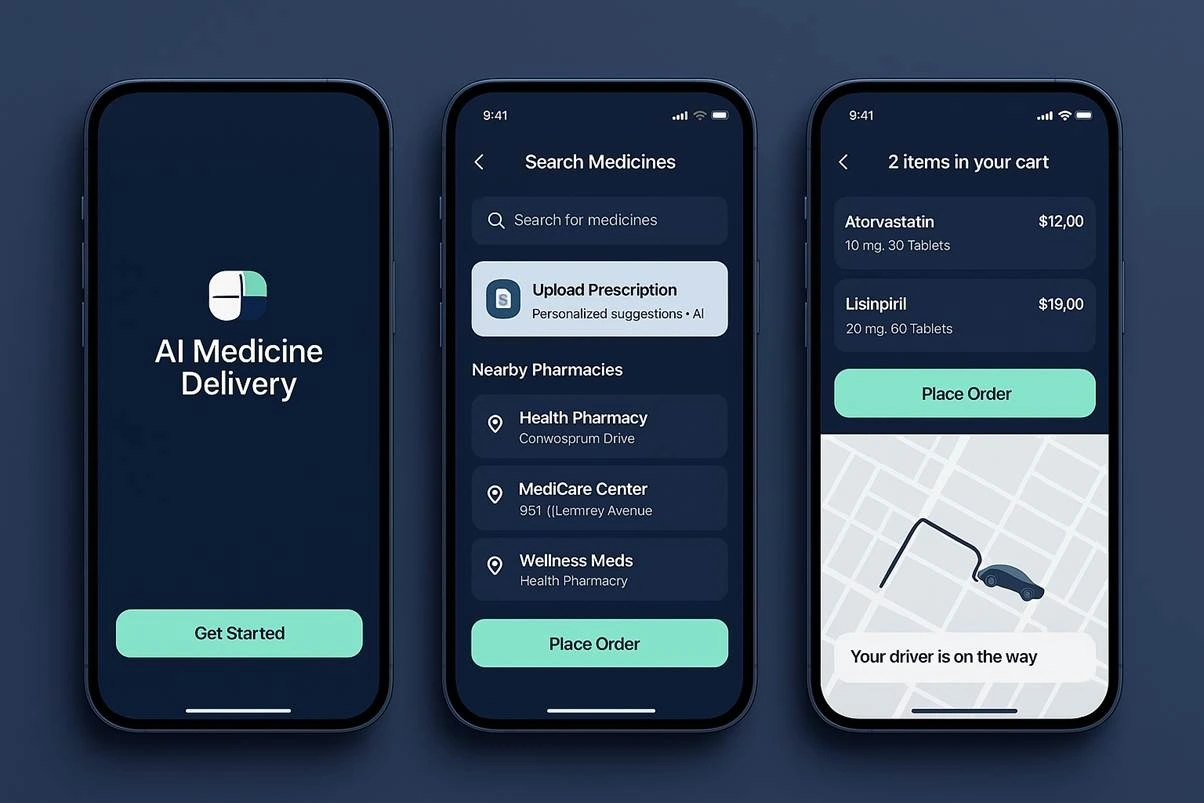
An AI Medicine Delivery App is an intelligent digital platform that simplifies the process of ordering, managing, and delivering medicines using artificial intelligence and automation. Unlike traditional pharmacy apps, AI-powered solutions analyze user behavior, medical history, and prescription data to offer personalized recommendations, timely delivery, and seamless healthcare experiences.
In simple terms, an AI Medicine Delivery App bridges the gap between pharmacies and customers through smart technology. It helps users upload prescriptions, find nearby pharmacies, compare prices, and get medicines delivered to their doorstep efficiently and securely.
The working process of an AI-powered Medicine Delivery App involves several smart steps that make the entire journey smooth and automated:
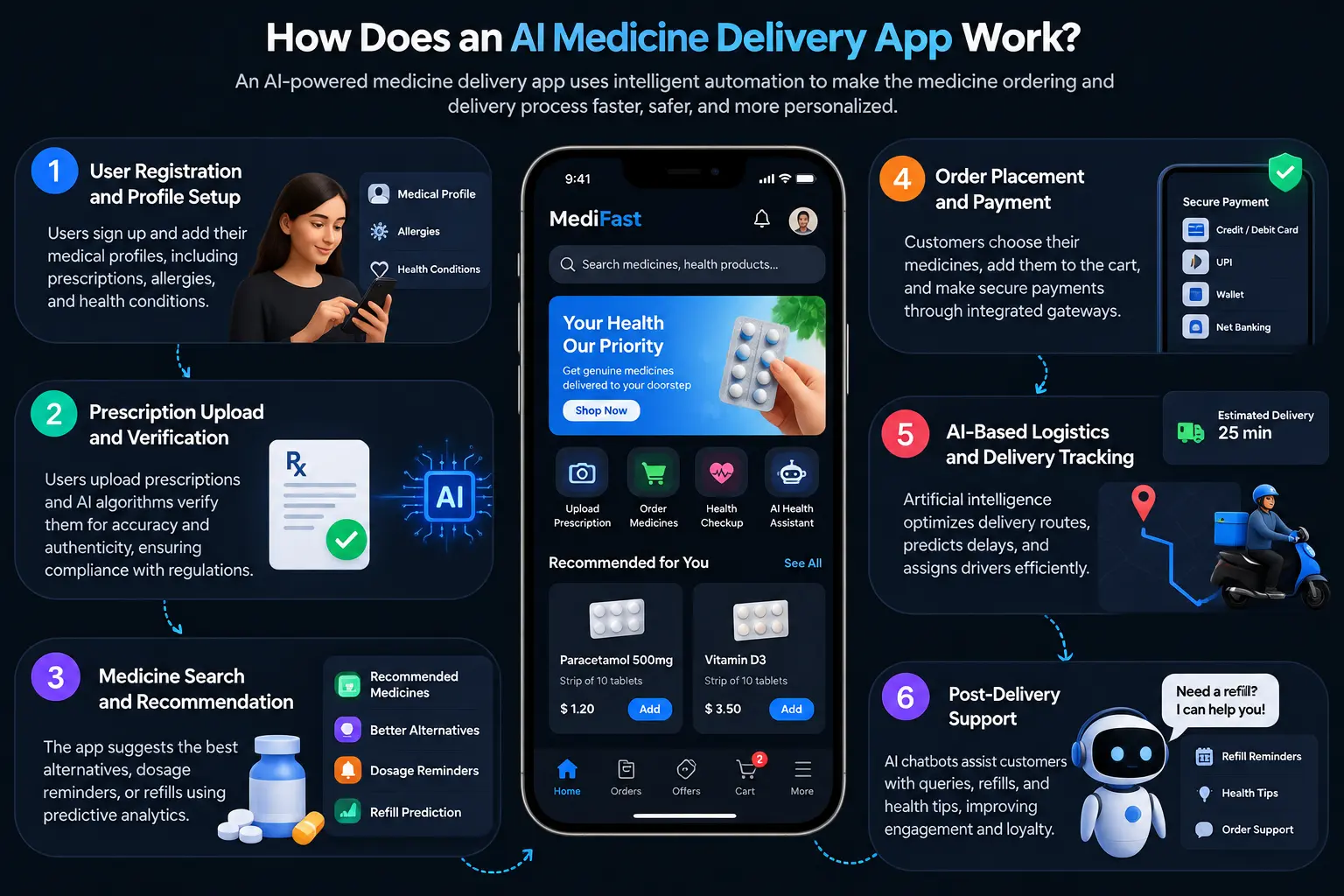
In essence, AI Medicine Delivery App Development combines automation, data intelligence, and real-time analytics to create a personalized, efficient, and safe medicine delivery experience for every user.
The AI medicine delivery app market presents an opportunity for healthcare entrepreneurs to combine online pharmacy services with intelligent medication management. Beyond medicine ordering, AI-powered platforms can support prescription workflows, refill planning, inventory forecasting, delivery coordination, and personalized medication reminders.
According to Grand View Research, the global ePharmacy market is estimated to reach USD 147.8 billion in 2026 and is projected to grow to USD 513.4 billion by 2033, at a forecast CAGR of 19.5%.
Separately, Coherent Market Insights estimates the global online pharmacy market at USD 123.91 billion in 2026, reaching a projected USD 436.29 billion by 2033, with a CAGR of 19.7%. These are independent forecasts based on different market definitions, not estimates of the AI-only market.
Coherent Market Insights also projects that mobile applications will account for 66.2% of the online pharmacy market in 2026, emphasizing the importance of mobile-first pharmacy experiences.
The next generation of AI medicine delivery apps may combine prescription verification, medication management, predictive refills, and pharmacy inventory intelligence in one platform. These capabilities require reliable medication data, strong privacy safeguards, and appropriate pharmacist oversight.
For entrepreneurs planning to build an AI medicine delivery app, the opportunity lies in solving measurable patient and pharmacy challenges. A secure, scalable platform with clinically appropriate AI features can establish a stronger foundation for sustainable growth.
Artificial intelligence is transforming online pharmacy services by helping businesses deliver medicines more efficiently while improving inventory accuracy, customer experience, and medication management. Developing an AI medicine delivery app allows pharmacies and healthtech startups to move beyond basic ordering with features such as predictive refills, prescription verification, drug interaction alerts, and AI-powered logistics.
But why is investing in AI medicine delivery app development a smart business move? The real value lies in solving everyday pharmacy challenges, reducing avoidable operational inefficiencies, and delivering personalized patient support. With the right combination of AI capabilities, secure technology, and reliable pharmacy operations, businesses can build scalable platforms that meet evolving healthcare demands.

AI can dramatically reduce operational expenses across inventory management, logistics, and customer service. By automating time-consuming manual tasks such as prescription verification, stock updates, and delivery route planning, pharmacies can cut down human errors and lower administrative costs.
Moreover, predictive analytics minimizes wasted resources by aligning stock levels with real-time demand. Over time, this efficiency contributes to better profit margins and a more sustainable business model. In AI Medicine Delivery App Development, cost optimization is not an afterthought but a measurable outcome of smart automation.
Trust is critical in healthcare, and AI technology helps establish it through accuracy, reliability, and transparency. When customers experience consistent delivery timelines, correct prescriptions, and instant support, their confidence in the brand grows.
AI ensures error-free order management, secure handling of sensitive data, and compliance with healthcare regulations. For businesses looking to make an AI Medicine Delivery App, building credibility through reliable service directly translates into repeat purchases and long-term customer relationships.
One of the most impactful advantages of creating AI Medicine Delivery App solutions is the ability to reach underserved areas. AI-based location tracking, predictive demand mapping, and smart logistics allow pharmacies to extend delivery networks to remote regions.
This helps ensure timely access to essential medicines for patients who might otherwise struggle to visit physical stores. By leveraging AI-driven delivery systems, companies contribute to improving public health outcomes while expanding their business footprint in emerging markets.
AI empowers business leaders with actionable insights drawn from real-time and historical data. Instead of relying on guesswork, pharmacies can make data-backed decisions on pricing, inventory, and marketing strategies.
For example, machine learning models can identify seasonal demand trends, customer buying patterns, and even forecast future medicine shortages. This enables proactive planning and stronger market positioning. In AI Medicine Delivery App Development, data becomes the foundation for strategic business growth and innovation.
As the healthcare landscape evolves, scalability is crucial for success. AI systems can easily adapt to higher order volumes, expanded product catalogs, and new service regions without the need for extensive reengineering.
This flexibility ensures that businesses remain competitive and agile in changing market conditions. Entrepreneurs who invest in Developing an AI Medicine Delivery App gain the advantage of a future-ready digital ecosystem that can grow seamlessly with user demand.
AI innovation sets your platform apart in a crowded market. Intelligent features such as automated logistics, real-time insights, and personalized recommendations help businesses outperform traditional delivery models.
By continually learning from user data and optimizing performance, AI-driven platforms enhance customer satisfaction and reduce operational bottlenecks. The decision to make an AI Medicine Delivery App is therefore not just about digital transformation but about creating a sustainable, innovation-led business model that stays ahead of competitors.
Therefore, a successful AI medicine delivery app combines intelligent automation with reliable pharmacy services to improve operational efficiency, patient experience, and business growth. The key is to invest in practical AI features that solve real problems while maintaining patient safety, data privacy, and trust.

Building an AI medicine delivery app for a hospital or health system involves more than enabling patients to order prescriptions online. It connects hospital discharge workflows, pharmacy operations, medication delivery, and adherence tracking to help patients continue treatment after leaving the hospital.
How can a hospital build an AI medicine delivery app that delivers discharge medications within two hours and helps reduce unfilled prescriptions and medication-related readmissions? The solution requires integrating hospital systems with pharmacy inventory, prescription verification, delivery logistics, and patient communication tools. AI can support delivery prioritization, fulfillment forecasting, and personalized adherence reminders, while clinical teams oversee medication safety and prescribing decisions.
Below are the key steps to develop an AI medicine delivery app, from validating the concept and defining core features to integrating AI, testing the MVP, and launching a secure, scalable solution.

Before you begin AI Medicine Delivery App Development, conduct in-depth research to understand patient needs, pharmacy workflows, and competitor strategies. Examine the current gaps in the online medicine delivery landscape and how AI can provide innovative solutions.
Creating a Proof of Concept (PoC) helps validate your business idea by testing technical feasibility, demand potential, and compliance requirements.
Why this matters: This step ensures your concept aligns with real-world market needs. For healthcare entrepreneurs and pharmacy owners, proper validation prevents financial risks and positions the business to meet consumer expectations efficiently.
Also Read: AI Chatbot Proof of Concept (PoC) Development for Enterprises: From Idea to Impact
Once validation is complete, outline your app’s goals and expected outcomes. Define key metrics such as delivery speed, prescription verification time, and inventory accuracy.
At this stage, determine the features that will form your Minimum Viable Product (MVP). Launching an MVP allows your team to test the market with minimal investment, collect user feedback, and identify areas for improvement before scaling into a full-fledged platform.
Why this matters: For startups and investors, this approach reduces development costs and enables faster market entry. It also provides actionable data for decision-making, ensuring that every feature added later drives measurable value.
User experience defines how patients and pharmacies interact with your platform. Partner with a skilled UI/UX Design company that understands healthcare usability standards. Designers should focus on clarity, accessibility, and empathy-driven design to ensure users of all ages can navigate easily.
Attention to details such as color contrast, button size, and font readability improves the experience for patients, doctors, and delivery partners.
Why this matters: A smooth, intuitive interface builds trust and encourages consistent engagement. For pharmacies and healthcare brands, superior UX increases user retention and satisfaction, translating to stronger brand loyalty and word-of-mouth referrals.
Selecting the correct technological foundation is vital to develop AI Medicine Delivery App solutions that are secure and scalable. Choose robust mobile frameworks like React Native or Flutter for cross-platform compatibility.
For AI and data processing, leverage frameworks such as TensorFlow, PyTorch, or OpenAI APIs to implement intelligent automation. Integrate APIs for healthcare compliance, payment gateways, and GPS tracking for seamless operations.
Why this matters: The right tech stack ensures long-term scalability, speed, and flexibility. For technology founders and pharmacy networks, strong infrastructure minimizes downtime and future-proof your investment against emerging innovations.
During Medicine Delivery App development integrating AI, focus on embedding algorithms that personalize user recommendations, optimize delivery logistics, and predict inventory demands. AI can automate medicine substitutions, detect prescription fraud, and assist in demand forecasting.
Machine learning models continuously improve accuracy by analyzing user behavior and refining future predictions.
Why this matters: This step forms the foundation of innovation. For entrepreneurs and healthcare businesses, AI integration transforms manual operations into automated, data-driven workflows that boost efficiency and competitiveness.
After completing the core functionalities, launch the MVP to a limited audience for testing. Gather feedback from users, pharmacies, and logistics partners to evaluate usability, reliability, and scalability.
Once stability is confirmed, transition into a full-fledged solution by adding advanced AI-driven features such as predictive delivery scheduling, voice-assisted orders, and health analytics dashboards.
Why this matters: Testing ensures that your app meets real-world performance standards. For investors and pharmacy operators, it mitigates risk, validates the product-market fit, and builds confidence in scaling operations.
To execute efficiently, collaborate with one of the top AI development companies in USA that specializes in healthcare technology. A professional team ensures data compliance, AI accuracy, and robust backend architecture.
Their expertise accelerates deployment and enhances quality while maintaining regulatory compliance with HIPAA or GDPR standards.
Why this matters: Partnering with experienced developers allows healthcare entrepreneurs to focus on growth instead of technical hurdles. It ensures a smooth journey from development to deployment with fewer revisions and predictable results.
Also Read: Top 10 AI Development Companies in Sheridan
Once launched, continuously monitor analytics related to delivery efficiency, order accuracy, and customer satisfaction. Regular updates and performance evaluations keep your app relevant and reliable.
Data-driven insights will help you introduce new features, improve AI model precision, and strengthen your overall service ecosystem for both pharmacies and patients.
Why this matters: In the building of AI Medicine Delivery App projects, post-launch improvement determines long-term success. For business owners, this step ensures sustained growth, adaptability to changing trends, and a steady rise in brand reputation.
A well-designed AI medicine delivery app for hospitals can connect discharge prescription fulfillment with home delivery and ongoing medication adherence support. Prioritize reliable integrations, timely delivery, patient safety, and measurable outcomes to build a scalable solution that supports continuity of care.
A successful AI medicine delivery app needs more than online ordering. It should combine intelligent medicine search, prescription verification, secure payments, inventory forecasting, delivery tracking, and personalized medication support to create a seamless experience for patients and pharmacies. For businesses investing in AI medicine delivery app development, the right feature set can improve operational efficiency, simplify pharmacy workflows, and support better patient engagement.
What features should you include when building an AI medicine delivery app with prescription verification, drug interaction alerts, and automated refill reminders? The answer depends on your target users, pharmacy operations, and business goals. Core capabilities should prioritize convenience, security, and reliable order fulfillment, while advanced AI features should provide practical value without replacing qualified medical professionals.
The following essential features outline what to consider when developing a scalable, secure, and user-friendly AI-powered medicine delivery platform.
| Feature | Explanation |
| AI-Powered Medicine Search | An intelligent search system allows users to find medicines quickly by name, composition, or symptoms. AI enhances search accuracy by suggesting relevant results and substitutes, improving convenience and accessibility. |
| Prescription Upload and Verification | Users can upload images of prescriptions that are automatically scanned and validated using OCR (Optical Character Recognition) and AI models. This ensures compliance, reduces human errors, and speeds up order processing. |
| Personalized Medicine Recommendations | The app analyzes user history and health patterns to recommend suitable medicines or alternatives. It adds a personalized touch to the healthcare experience, making medicine management more intuitive. |
| Real-Time Order Tracking | GPS-enabled tracking allows users to monitor delivery progress in real time. It builds trust and enhances transparency by providing accurate delivery timelines and status notifications. |
| Smart Inventory and Stock Prediction | AI algorithms predict future medicine demand based on order trends and seasonal data. Pharmacies can maintain optimal inventory levels, avoiding both shortages and excess stock. |
| Secure Payment Gateway Integration | The platform should include multiple payment options like credit cards, wallets, and UPI. Integrated encryption ensures financial security, making transactions smooth and trustworthy. |
| 24/7 AI Chatbot Assistance | An AI-driven chatbot helps users with order inquiries, dosage questions, and delivery support at any hour. This reduces manual workload and enhances customer satisfaction. |
| Multi-Language Support | Offering content in multiple languages helps reach a wider audience, especially in diverse regions. It creates an inclusive environment where every user feels comfortable using the app. |
| Push Notifications and Refill Reminders | The system sends alerts for refill reminders, order status, and promotional offers. These reminders improve adherence to treatment schedules and increase repeat orders. |
| Doctor Consultation Integration | In-app teleconsultation allows users to connect with licensed doctors before ordering medicines. This feature boosts credibility and expands the app’s healthcare service range. |
| Advanced Analytics Dashboard | Admins can track sales performance, delivery data, and customer behavior in a visual dashboard. Insights from analytics support data-driven decision-making and business growth. |
| Geo-Targeted Delivery Optimization | AI automatically assigns delivery agents and routes based on location data, traffic conditions, and delivery urgency. This ensures fast and cost-efficient medicine distribution. |
| Data Privacy and HIPAA Compliance | The app must safeguard sensitive health information under HIPAA and GDPR regulations. Strong encryption and secure data storage enhance trust among patients and pharmacies. |
| Ratings and Review System | Users can provide feedback on medicines, delivery experiences, and customer support. Continuous feedback helps maintain quality and credibility while improving future services. |
| Admin and Pharmacy Management Panel | The admin dashboard gives pharmacies control over listings, pricing, promotions, and stock management. Centralized oversight ensures consistent operations and better coordination with delivery partners. |
The right combination of AI medicine delivery app features can help businesses streamline pharmacy operations, strengthen patient trust, and deliver more personalized medication support. Prioritize features that solve real user needs, protect sensitive health data, and support safe, reliable medicine delivery.
As digital pharmacy services evolve, AI medicine delivery app development is moving beyond basic ordering toward intelligent, personalized, and connected healthcare experiences. Advanced capabilities such as predictive healthcare analytics, voice-based ordering, AI-powered fraud detection, wearable integrations, and automated delivery systems can help businesses improve operational efficiency and create more convenient patient experiences.
Which advanced AI features can help a medicine delivery app stand out from competitors and remain scalable as healthcare technology evolves? The answer depends on your business goals, target audience, and operational needs. Integrating the right innovations can help pharmacies streamline workflows, strengthen security, personalize medication support, and prepare for future growth.
The following advanced features highlight opportunities to make your AI medicine delivery app more intelligent, differentiated, and future-ready.
| Advanced Feature | Explanation |
| AI-Driven Predictive Healthcare Analytics | Advanced predictive models analyze user health data to forecast medicine needs and potential illnesses. This helps pharmacies proactively stock essential medicines and enables users to manage their health more effectively. |
| Voice-Based Ordering System | Voice command integration allows users, especially elderly or visually impaired individuals, to order medicines effortlessly. This feature improves accessibility and creates a more inclusive and convenient experience. |
| AI-Based Fraud Detection and Security Layer | Artificial intelligence monitors patterns in transactions, prescriptions, and user activities to detect fraudulent behavior. This strengthens data integrity and ensures compliance with healthcare security standards. |
| Personal Health Assistant Integration | The app can include an AI-powered virtual assistant that offers health tips, monitors medicine intake, and reminds users about upcoming refills. It transforms the app into a continuous wellness companion rather than just a delivery service. |
| Augmented Reality (AR) for Medicine Information | AR technology enables users to scan medicine packages and view dosage instructions, expiration details, and 3D visuals of drug composition. It enhances engagement while promoting informed healthcare choices. |
| Blockchain-Based Prescription Records | Blockchain ensures tamper-proof storage of prescription data, allowing secure sharing between patients, doctors, and pharmacies. This feature enhances transparency and trust across all stakeholders. |
| Integration with Wearable Health Devices | Connecting the app with fitness trackers and smartwatches helps collect real-time health metrics. These insights enable AI algorithms to suggest medication adjustments or preventive measures tailored to individual needs. |
| Dynamic Pricing and Smart Offers Engine | AI automatically adjusts prices and promotions based on stock, demand, and user preferences. This ensures competitive pricing while maximizing business profitability and customer retention. |
| AI-Powered Delivery Drones and Robotics | Future-ready logistics systems will use drones and autonomous robots for faster and contactless medicine deliveries. This technology reduces delivery time and revolutionizes last-mile logistics in healthcare. |
| Cloud-Based Scalability and Data Intelligence | Cloud infrastructure ensures smooth scalability and real-time data analytics across multiple regions. Businesses can expand operations globally while maintaining consistent performance and compliance. |
Integrating advanced AI capabilities can help your AI medicine delivery app differentiate its services, improve pharmacy operations, and adapt to changing patient expectations. Prioritize innovations that deliver measurable value, protect patient data, and maintain appropriate clinical oversight.
The cost to develop an AI medicine delivery app depends on the platform's features, AI capabilities, security requirements, and integration with pharmacy and healthcare systems. For businesses planning AI medicine delivery app development, a basic MVP may cost less, while enterprise-grade solutions with predictive analytics, prescription verification, medication management, and intelligent delivery optimization require a larger investment.
Based on the estimates outlined in this guide, AI medicine delivery app development costs typically range from $20,000 to $200,000 or more, with an indicative average budget of around $85,000 for planning purposes. Actual costs vary depending on project scope, development location, and technical complexity.
How much does it cost to build an AI medicine delivery app with prescription verification, drug interaction checking, refill prediction, and real-time delivery tracking? The answer depends on how these capabilities are implemented, the level of clinical oversight required, and the systems the app must integrate with. Understanding the main cost drivers helps businesses prioritize essential features, plan their budgets, and build a secure, scalable digital pharmacy solution.
| App Type | Description | Estimated Cost Range (USD) |
| Basic AI Medicine Delivery App | This version is ideal for startups and small pharmacies entering the digital space. It includes essential modules like user login, prescription upload, AI-powered medicine search, simple chatbot support, and payment gateways. The development timeline is shorter, making it a perfect MVP launch solution for testing market viability. | $20,000 – $50,000 |
| Intermediate AI Medicine Delivery App | Designed for growing businesses, this version integrates predictive analytics, real-time delivery tracking, personalized recommendations, and a pharmacy management panel. It combines strong performance with smart automation, giving users a more tailored experience while ensuring scalability. | $50,000 – $120,000 |
| Advanced AI Medicine Delivery App | A robust, enterprise-grade solution developed for large pharmacy chains or healthcare enterprises. It includes high-level AI features like machine learning algorithms, voice ordering, blockchain-based prescription storage, wearable integration, and drone delivery support. Perfect for those who want to lead in digital healthcare innovation. | $120,000 – $200,000+ |
The depth of functionality directly affects the total Cost of creating AI Medicine Delivery App. Apps with core ordering and delivery functions cost less, while those including AI-driven personalization, automation, and advanced analytics require additional development time and specialized expertise.
The Medicine Delivery App Development cost Integrating AI depends on how deeply AI is embedded. A basic AI chatbot or search algorithm costs less, while predictive models, autonomous logistics, and NLP-based recommendation systems raise the investment but greatly enhance app performance.
Choosing between Android, iOS, or a cross-platform approach influences cost significantly. Using advanced frameworks like Flutter or React Native helps maintain cost efficiency while ensuring consistent performance across devices.
Professional healthcare apps must be designed for clarity, accessibility, and trust. Collaborating with expert designers increases the cost of building AI Medicine Delivery App, but it enhances patient engagement and user retention — crucial for long-term success.
Since these apps handle sensitive medical data, they must comply with HIPAA and GDPR regulations. Encryption, audit trails, and secure APIs safeguard patient information, though they slightly increase development costs.
Hiring experienced developers or partnering with leading AI software firms in high-cost regions like the USA or UK increases initial investment, but ensures reliability, compliance, and faster delivery timelines. Outsourcing can reduce costs, but may require closer oversight to maintain quality.
A robust backend is essential for scalability and AI training. Cloud platforms like AWS or Google Cloud improve real-time data handling, predictive analysis, and uptime stability but add to overall infrastructure costs.
Even after launch, ongoing updates, feature enhancements, and AI model retraining are critical. Regular maintenance ensures your app continues learning from user data and adapting to new healthcare trends, maintaining peak efficiency and user satisfaction.
The AI medicine delivery app development cost should reflect your business goals, required AI capabilities, security needs, and long-term operating expenses. Start with a well-defined MVP, validate its value, and expand strategically as your platform and user base grow.

Leading digital pharmacy platforms offer valuable insights into how businesses can combine convenient medicine delivery, digital prescriptions, automation, and personalized healthcare services. For entrepreneurs exploring AI medicine delivery app development, these platforms provide useful examples of business models, customer experiences, and technology-driven pharmacy operations.
What can businesses learn from successful medicine delivery apps when building an AI-powered pharmacy platform? From streamlined prescription ordering and automated refills to intelligent inventory management and delivery optimization, established platforms demonstrate the importance of solving real customer needs. However, not every digital pharmacy publicly documents its use of AI, so it is important to distinguish verified platform capabilities from assumed AI implementations.
The following examples explore established medicine delivery brands, their key features, and the lessons businesses can apply when planning to build an AI medicine delivery app.
Applications: Tata 1mg is one of India’s leading digital healthcare platforms that allows users to order prescription and over-the-counter medicines, schedule diagnostic tests, and consult certified doctors all in one app. It integrates AI to suggest alternate medicines, analyze prescriptions, and provide health insights.
Usability: The platform has an intuitive interface, accessible even to first-time users. It offers multilingual support, one-click ordering, and real-time order tracking to ensure convenience for patients across various age groups. AI-driven tools enhance personalization by remembering user preferences and past purchases.
Benefits: Tata 1mg’s model demonstrates how effective AI Medicine Delivery App Development can improve accessibility, ensure medication accuracy, and build customer trust. By integrating multiple healthcare services, it has become a one-stop solution for millions, bridging the gap between patients and medical providers.
Applications: Capsule is a New York–based digital pharmacy that revolutionized urban medicine delivery. The app offers same-day prescription deliveries, automated refills, and direct chat support with pharmacists. AI technology supports inventory prediction, route optimization, and personalized health guidance.
Usability: The app’s design focuses on simplicity and trust. Users can manage prescriptions, schedule deliveries, and consult pharmacists with minimal clicks. Capsule’s clean UI ensures users feel confident managing their healthcare digitally, while AI ensures timely deliveries with precision.
Benefits: Capsule exemplifies the cost of building AI Medicine Delivery App that adds measurable value to user experience. By combining real-time logistics with professional consultation, it enhances patient safety, medication adherence, and customer satisfaction, becoming a benchmark in the US e-pharmacy market.
Applications: NetMeds provides digital prescription uploads, medicine ordering, and nationwide delivery through a unified mobile and web platform. AI is used to verify prescriptions, automate restocks, and forecast regional medicine demand. The platform also offers video consultations with doctors and subscription-based medicine refills.
Usability: Its easy-to-navigate interface, fast checkout, and reliable tracking features make the app highly user-friendly. NetMeds caters to both urban and rural users, ensuring timely access to healthcare services even in remote areas.
Benefits: This platform highlights how Medicine Delivery App Development Integrating AI can enhance scalability, reduce operational overheads, and improve customer engagement. NetMeds’ AI-backed infrastructure ensures high delivery accuracy and builds long-term patient loyalty through convenience and reliability.
Applications: Amazon Pharmacy is Amazon’s AI-powered healthcare initiative offering prescription fulfillment, competitive pricing, and home delivery through the user’s existing Amazon account. The system integrates AI to verify prescriptions, manage stock levels, and personalize offers based on user purchase patterns.
Usability: Users can seamlessly access the service through the Amazon app or website. The integration of AI enables smooth prescription management, automated insurance verification, and personalized medicine suggestions for returning customers.
Benefits: Amazon Pharmacy demonstrates the scalability of building of AI Medicine Delivery App at a global level. It combines automation, affordability, and accessibility, proving that AI can bring large-scale healthcare convenience to millions of users.
Applications: PharmEasy offers medicine delivery, diagnostic test booking, and virtual consultations with licensed practitioners. Its AI-based system predicts refill schedules, recommends health packages, and assists users with chronic disease management through timely reminders.
Usability: The app offers an engaging, mobile-first experience. Its smart filters, one-tap reorder function, and seamless doctor integration make it suitable for both individual consumers and families managing multiple prescriptions.
Benefits: PharmEasy showcases how advanced AI Medicine Delivery App Development creates a holistic digital healthcare ecosystem. It not only saves users time but also ensures better medication adherence and preventive health management through data-driven personalization.
These success stories prove that innovation powered by artificial intelligence, smart design, and user trust is the foundation of every leading medicine delivery platform today.
Successful platforms show how AI medicine delivery app development can improve pharmacy operations, medication management, and patient experience through practical, patient-focused innovation.
A sustainable AI medicine delivery app business model should generate revenue while maintaining patient trust, affordable access, and reliable pharmacy services. Beyond medicine sales, businesses can monetize their platforms through pharmacy commissions, subscription plans, sponsored listings, telemedicine services, and healthcare technology partnerships.
How can you monetize an AI medicine delivery app to generate recurring revenue while scaling your digital pharmacy business? The answer depends on your target audience, market positioning, partner network, and the value your AI features deliver. Combining suitable revenue streams can help startups, pharmacy chains, and healthcare entrepreneurs build a commercially viable platform without compromising patient experience or data privacy.

One of the most common revenue strategies is charging a commission on every order placed through the app. Pharmacies, diagnostic centers, and healthcare partners pay a small percentage of each transaction.
This approach allows your platform to grow organically as more partners join. It ensures consistent cash flow while maintaining accessibility for users and incentivizing pharmacies to increase order volumes.
Offering premium memberships or loyalty programs is a strong way to ensure predictable recurring revenue. Users can subscribe monthly or annually to unlock benefits such as free delivery, priority service, exclusive discounts, or personalized health insights powered by AI.
For pharmacies and healthcare professionals, B2B subscription plans can provide access to analytics dashboards, advanced AI tools, and targeted marketing features that enhance their business operations.
Pharmacies and healthcare brands can pay to feature their listings prominently within the app. This advertising-based model boosts their visibility to potential customers searching for medicines or medical services.
Sponsored product placement helps companies reach high-intent users while your platform generates steady advertising income. This strategy works particularly well in markets with multiple competing pharmacies.
Many AI-powered medicine delivery platforms integrate virtual doctor consultations directly within the app. You can earn revenue by charging consultation fees, taking a share of telemedicine session payments, or partnering with healthcare institutions.
This not only strengthens your app’s value proposition but also promotes holistic healthcare by connecting patients with certified doctors for accurate prescriptions and ongoing treatment guidance.
AI-generated insights from user behavior, medicine demand, and regional trends can be anonymized and sold as valuable data reports to healthcare companies, pharmaceutical brands, or insurance providers.
Providing this business intelligence as a service allows organizations to optimize marketing, inventory planning, and product development while ensuring full compliance with data privacy laws.
Pharmaceutical companies, medical equipment providers, and wellness brands often seek targeted advertising opportunities. Your platform can display relevant, non-intrusive ads to users based on their preferences and purchase patterns.
AI ensures that these ads remain personalized, increasing click-through rates and engagement without disrupting the user experience. This model diversifies income without directly charging the end user.
Collaborating with insurance companies, hospitals, and healthtech startups can create additional revenue streams. Integration fees or revenue-sharing agreements for digital health APIs, medication tracking systems, and loyalty integrations can generate consistent income.
This approach enhances your app’s credibility and expands its role from a delivery platform into a full-fledged AI-driven healthcare ecosystem.
A well-planned AI medicine delivery app monetization strategy combines sustainable revenue streams with patient-focused services. Choose models that align with your business goals, protect health data, and support long-term growth.
Developing an AI medicine delivery app involves unique challenges that go beyond standard eCommerce development. From protecting sensitive patient information and maintaining prescription accuracy to complying with pharmaceutical regulations and coordinating time-sensitive deliveries, every component must prioritize safety, reliability, and trust.
What are the biggest challenges in AI medicine delivery app development, and how can businesses overcome them without compromising patient safety or operational efficiency? The solution lies in combining secure architecture, validated AI models, regulatory compliance, efficient logistics, and qualified pharmacist oversight. Addressing these factors early helps healthcare startups, pharmacy chains, and digital health businesses build scalable platforms that support reliable medicine delivery and responsible AI adoption.

The Challenge: Handling patient health records, prescriptions, and payment details makes data privacy one of the top concerns in online AI Medicine Delivery App Development. Failing to comply with healthcare regulations such as HIPAA, GDPR, or local medical data laws can lead to major legal risks.
The Solution: Adopt end-to-end encryption, secure authentication, and anonymization techniques. Partner with certified cloud service providers and conduct regular security audits. Compliance-driven design ensures your users trust the platform with their most sensitive medical data.
The Challenge: AI-powered predictions and automation rely heavily on accurate, high-quality data. In Medicine Delivery App Development integrating AI, poorly trained algorithms can misinterpret prescriptions, make incorrect recommendations, or fail to detect fraudulent uploads.
The Solution: Use diverse, verified medical datasets to train your AI models and apply continuous learning mechanisms. Collaborate with pharmacists and healthcare experts to validate results regularly. Real-time AI monitoring systems can detect anomalies and retrain models dynamically.
The Challenge: Each country enforces its own set of pharmaceutical regulations, licensing requirements, and telemedicine rules. Navigating this legal landscape can be difficult, especially for startups figuring out how to create AI Medicine Delivery App platforms that operate internationally.
The Solution: Partner with legal experts in healthcare compliance early in the development process. Build region-specific workflows within the app to comply with local laws automatically. Transparency and documentation are key to maintaining long-term operational stability.
The Challenge: Healthcare users are cautious about trying new digital platforms. Gaining their trust in developing AI Medicine Delivery App solutions involves not only functionality but also credibility, reliability, and transparency.
The Solution: Showcase verified pharmacy partnerships, doctor certifications, and transparent pricing models. Include easy access to customer support and pharmacist consultations. Trust-building measures like verified reviews and clear privacy policies help retain long-term users.
The Challenge: Medicine delivery apps rely heavily on accurate logistics management. In urban areas, traffic delays, address mismatches, and delivery bottlenecks can affect service reliability and user satisfaction.
The Solution: Leverage AI-driven route optimization, predictive demand analytics, and automated dispatch management. Integrate IoT and GPS systems to track real-time deliveries and alert users proactively about expected delays or changes in delivery time.
The Challenge: While automation enhances speed and efficiency, over-reliance on algorithms without human supervision can lead to errors or ethical challenges. Striking the right balance in AI Medicine Delivery App Development is essential.
The Solution: Maintain a hybrid model where AI handles repetitive, data-heavy tasks and pharmacists oversee final verifications. Combining automation with human judgment ensures safety, accuracy, and ethical decision-making in healthcare delivery.
Overcoming these challenges requires secure, compliant, and responsible AI medicine delivery app development, supported by reliable logistics and human clinical oversight. Prioritizing patient safety and data protection helps create a trustworthy platform built for sustainable growth.
Building a successful AI medicine delivery app requires more than technical expertise. Healthcare businesses need a technology partner who understands pharmacy workflows, AI integration, data security, regulatory requirements, and the importance of reliable medication delivery. PixelBrainy helps businesses turn digital healthcare ideas into tailored software solutions aligned with their operational needs and long-term goals.
As an AI app development company in USA, PixelBrainy offers development services covering solution planning, UI/UX design, AI integration, application development, testing, deployment, and ongoing maintenance.
Every pharmacy business has different requirements, from prescription ordering and inventory management to medication adherence and delivery coordination. PixelBrainy develops customized solutions that can incorporate AI capabilities based on your business model, target users, and technical requirements.
Our AI medicine delivery app development approach can include:
PixelBrainy focuses on aligning technology decisions with your business objectives. Whether you are launching an MVP or developing an enterprise-grade pharmacy platform, the development process can be tailored to your required features, integration needs, budget, and launch timeline.
Our approach emphasizes scalable architecture, intuitive interfaces, secure data handling, and maintainable AI integrations. We can also help plan future enhancements involving analytics, connected health devices, and other emerging technologies when they offer practical value.
Healthcare software requires continuous attention to reliability, security, and changing operational needs. PixelBrainy supports the development lifecycle from initial planning through deployment and post-launch improvements.
Businesses can benefit from:
Healthcare compliance requirements vary by market and use case, so solutions should be designed around applicable regulations rather than relying on a one-size-fits-all approach.
If your business plans to develop a custom AI medicine delivery app, PixelBrainy can help, so let’s connect with our experts.

AI is reshaping digital pharmacy services by making medicine delivery more intelligent, efficient, and patient-focused. Investing in AI medicine delivery app development enables startups, pharmacy chains, and healthcare enterprises to streamline operations, improve inventory planning, simplify prescription workflows, and support medication adherence through personalized reminders and predictive refill management.
However, building a successful platform requires more than integrating advanced AI features. Businesses must prioritize prescription accuracy, patient data security, regulatory compliance, reliable delivery operations, and appropriate pharmacist oversight. A well-planned development strategy helps balance innovation, patient safety, scalability, and long-term business objectives.
Partnering with an experienced AI development company in the USA can help transform your vision into a customized digital pharmacy solution. PixelBrainy supports businesses in planning and developing AI-powered applications tailored to their operational needs.
Ready to build your next-generation AI medicine delivery app? Book an appointment with PixelBrainy to discuss your project requirements, essential features, and development roadmap.
The essential AI medicine delivery app features include AI-powered medicine search, prescription upload and verification, drug interaction alerts, personalized refill reminders, predictive inventory management, secure payments, and real-time delivery tracking. Advanced features may include medication adherence monitoring, AI chatbots, and intelligent delivery optimization.
The AI medicine delivery app development cost typically ranges from $20,000 to $200,000 or more, depending on the project's complexity. A basic MVP costs less, while enterprise platforms with predictive analytics, healthcare integrations, advanced AI models, and enhanced security require a larger investment.
The timeline to build an AI medicine delivery app depends on the scope, features, integrations, and testing requirements. A basic MVP may take approximately 3 to 5 months, while a complex, enterprise-grade platform may require 6 to 12 months or longer.
AI medicine delivery app development can incorporate optical character recognition (OCR) and machine learning to extract prescription details, identify missing information, and flag potential inconsistencies. Pharmacists must review prescriptions when required, as AI cannot independently guarantee prescription authenticity or clinical accuracy.
Yes. An AI-powered medicine delivery app can integrate validated drug databases to flag potential interactions and identify possible alternatives based on active ingredients, dosage strength, and availability. Substitution recommendations must follow applicable regulations and receive appropriate pharmacist or prescriber approval.
An AI medicine delivery app with medication adherence features can provide personalized reminders, predict refill dates, track prescription fulfillment, and notify patients when refills may be due. These features can support consistent medication use, although actual adherence improvements depend on patient behavior and implementation.
Developing an AI medicine delivery app may involve Flutter or React Native for mobile development, cloud infrastructure for backend services, OCR for prescription processing, machine learning for demand forecasting, and APIs for pharmacy systems, payments, and delivery tracking. Healthcare data security and regulatory requirements should guide the architecture.
When evaluating AI medicine delivery app development services, assess the company's AI expertise, healthcare integration capabilities, security practices, technical team, and ongoing maintenance support. Request verifiable case studies involving prescription verification, medication management, pharmacy integrations, or delivery optimization before making a decision.

About The Author
Sagar Bhatnagar
Sagar Sahay Bhatnagar brings over a decade of IT industry experience to his role as Marketing Head at PixelBrainy. He's known for his knack in devising creative marketing strategies that boost brand visibility and market influence. Sagar's strategic thinking, coupled with his innovative vision and focus on results, sets him apart. His track record of successful campaigns proves his ability to utilize digital platforms effectively for impactful marketing efforts. With a genuine passion for both technology and marketing, Sagar continuously pushes PixelBrainy's marketing initiatives to greater success.

Working with PixelBrainy has been a great experience. They took our vision for an AI-powered platform and turned it into a fully functional product. What impressed me most was their strong understanding of both design and development, and their ability to handle complex requirements with ease. The team was responsive, cooperative, and always open to feedback. They kept things organized, communicated clearly, and delivered quality work on time. I highly recommend PixelBrainy to anyone looking for a skilled and reliable development partner.

Working with the PixelBrainy team has been a highly positive experience. They understand the design requirements and create beautiful UX elements to meet the application needs. The dev team did an excellent job bringing my vision to life. We discussed usability and flow. Sagar worked with his team to design the database and begin coding. Working with Sagar was easy. He has the knowledge to create robust apps, including multi-language support, Google and Apple ID login options, Ad-enabled integrations, Stripe payment processing, and a Web Admin site for maintaining support data. I'm extremely satisfied with the services provided, the quality of the final product, and the professionalism of the entire process. I highly recommend them for Android and iOS Mobile Application Design and Development.

Great experience working with them. Had a lot of feedback and I found that unlike most contractors they were bugging me for updates instead of the other way around. They were extremely time conscience and great at communicating! All work was done extremely high quality and if not on time, early! They were always proactive when it comes to communication and the work is great/above par always. Very flexible and a great team to work with! Goes above and beyond to present us with multiple options and always provides quality. Amazing work per usual with Chitra. If you have UI/UX or branding design needs I recommend you go to them! Will likely work with them in the future as well, definitely recommended!

PixelBrainy is a joy to work with and is a great partner when thinking through branding, logo, and website layout. I appreciate that they spend time going into the "why" behind their decisions to help inform me and others about industry best practices and their expertise.

I hired them to design our software apps. Things I really like about them are excellent communication skills, they answer all project suggestions and collaborate right away, and their input on design and colors is amazing. This project was complex and needed patience and creativity. The team is amazing to do business with. I will be using them long-term. Glad to see there are some good people out there. I was afraid to try and outsource my project to someone but I am glad I met them! I really can't say enough. They went above and beyond on this project. I am very happy with everything they have done to make my business stand out from the competition.

It was great working with PixelBrainy and the team. They were very responsive and really owned the project. We'll definitely work with them again!

I recently worked with the PixelBrainy team on a project and I was blown away by their communication skills. They were prompt, clear, and articulate in all of our interactions. They listened and provided valuable feedback and suggestions to help make the project a success. They also kept me updated throughout the entire process, which made the experience stress-free and enjoyable.

PixelBrainy is very good at what it does. The team also presents themselves very professionally and takes care of their side of things very well. I could fully trust them taking up the design work in a timely and organised manner and their attention to detail saved us lots of effort and time. This particular project was quite intense and the team showed that they function very well under pressure. Very much looking forward to working with her again!

It's always an absolute pleasure working with them. They completed all of my requests quickly and followed every note I had for them to a T, which made our process go smoothly from start to finish. Everything was completed fast and following all of the guidelines. And I would recommend their services to anyone. If you need any design work done in the future, PixelBrainy should be your first call!

They took ownership of our requirements and designed and proposed multiple beautiful variants. The team is self-motivated, requires minimum supervision, committed to see-through designs with quality and delivering them on time. We would definitely love to work with PixelBrainy again when we have any requirements.

PixelBrainy was a big help with our SaaS application. We've been hard at work with a new UI/UX and they provided a lot of help with the designs. If you're looking for assistance with your website, software, or mobile application designs, PixelBrainy and the team is a great recommendation.

PixelBrainy designers are amazing. They are responsive, talented, and always willing to help craft the design until it matches your vision. I would recommend them and plan to continue them for my future projects and more!!!

They were awesome! Did a good job fast, and good communication. Will work with them again. Thank you

Creative, detail-oriented, and talented designers who take direction well and implement changes quickly and accurately. They consistently over-delivered for us.

PixelBrainy team is very talented and creative. Great designers and a pleasure to work with. PixelBrainy is an excellent communicator and I look forward to working with them again.

PixelBrainy has a very talented design team. Their work is excellent and they are very responsive. I enjoy working with them and hope to continue on all of our future projects.


Transform your ideas into reality with us.
Across these industries, each engagement brings unique challenges, from early-stage product development to scaling complex systems, helping us build a practical understanding of real-world product environments.