
 AI Summary Powered by PixelBrainy
Why are many US companies spending significant amounts on AI development but still struggling to build successful computer vision solutions?
A common reason is that businesses often rely on general AI developers or software engineers instead of specialists with deep computer vision expertise. This approach can lead to longer development cycles, inaccurate model performance, repeated testing, and higher project costs. Organizations looking to hire AI computer vision engineers in USA frequently discover that specialized talent delivers faster results and reduces costly mistakes throughout the development process.
The demand for computer vision expertise is growing rapidly as businesses adopt AI-powered image recognition, video analytics, object detection, medical imaging, manufacturing inspection, and autonomous systems. According to MarketsandMarkets, the AI in Computer Vision market is projected to grow from $23.42 billion in 2025 to $63.48 billion by 2030, representing a compound annual growth rate of 22.1%. This growth is increasing competition for skilled professionals and encouraging companies to hire computer vision experts USA who can build scalable, production-ready AI solutions.
As a result, many decision-makers are asking the same question: our in-house team lacks computer vision expertise and we are losing time and money trying to build an AI system internally, what is the best hiring solution in the USA? The answer depends on your business goals, project complexity, and budget. Some organizations prefer to hire freelance computer vision engineer USA professionals for short-term needs, while others evaluate the best way to hire computer vision engineers for AI projects through dedicated teams or specialized AI development partners.
In this guide, you will learn how to hire the right computer vision talent in the United States, avoid expensive hiring mistakes, and reduce AI development costs by up to 40% in 2026 while maintaining high-quality project outcomes.
If your company plans to build software that can analyze images, videos, or visual data, hiring the right specialist is critical. Many business leaders ask, what does a computer vision engineer do? In simple terms, an AI computer vision engineer develops systems that enable computers to see, interpret, and make decisions from visual information in the same way humans analyze what they see.
Unlike a general AI engineer who may work on chatbots, recommendation engines, predictive analytics, or natural language processing applications, a computer vision specialist focuses specifically on visual intelligence. Their expertise is centered on training AI models to identify objects, recognize patterns, process images, detect defects, analyze video streams, and automate visual decision-making tasks.
This distinction is important because businesses often hire a general AI developer when they actually need an AI computer vision developer USA with specialized experience in image and video-based systems.
| Role | Primary Focus | Common Business Applications |
|---|---|---|
| General AI Engineer | Text, predictions, automation, data analysis | Chatbots, forecasting, recommendation systems |
| Computer Vision Engineer | Images, videos, visual recognition | Object detection, facial recognition, medical imaging |
A skilled machine learning computer vision engineer can build solutions that directly improve efficiency, safety, quality control, and customer experience.
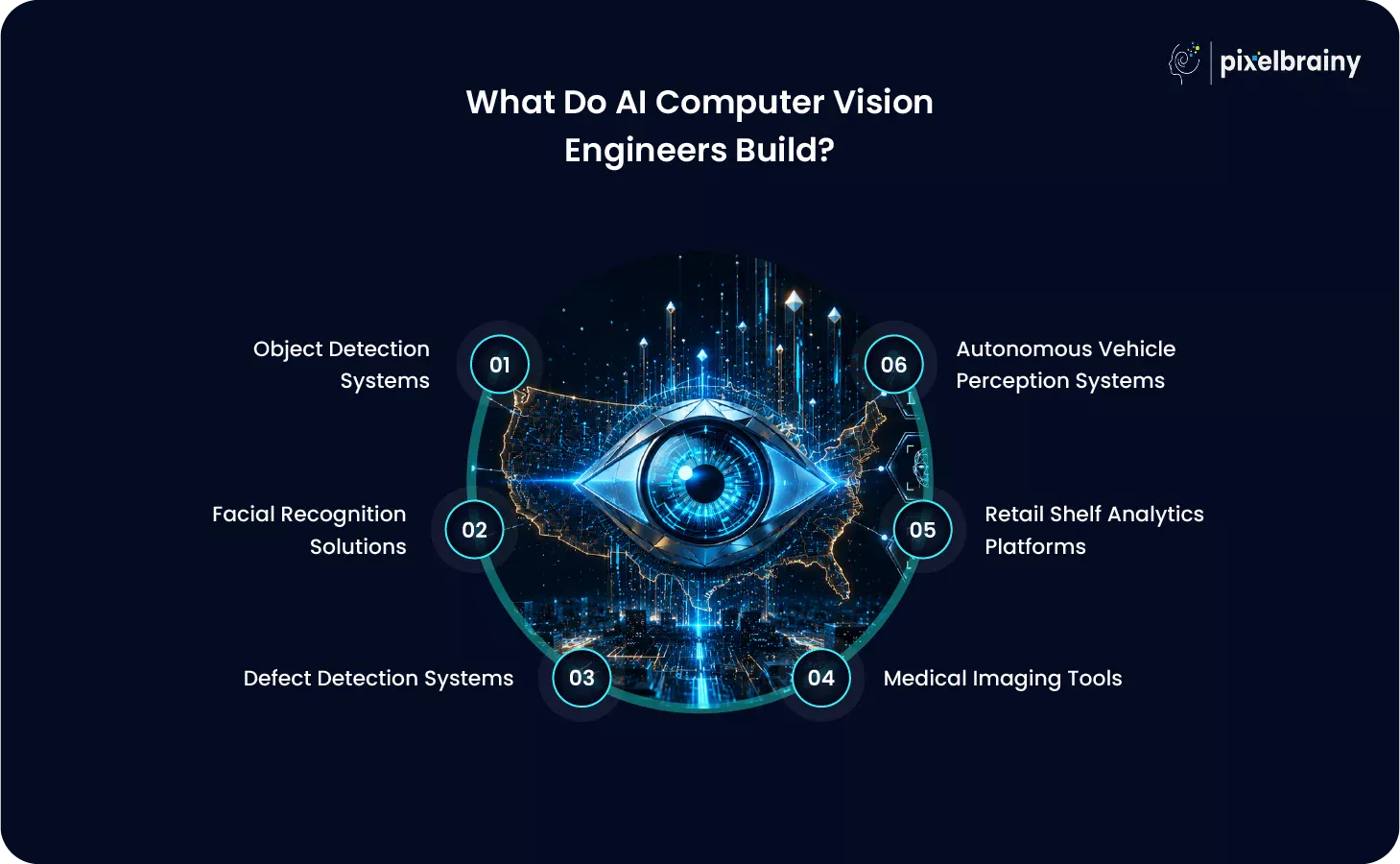
Some of the most common applications include:
One of the biggest hiring mistakes businesses make is assuming every computer vision professional has the same skill set. In reality, specialization matters.
| Specialist Type | What They Build | Industry Focus |
|---|---|---|
| Perception Engineer | Vehicle vision and sensor fusion systems | Autonomous Vehicles |
| Industrial Vision Engineer | Automated inspection and defect detection | Manufacturing |
| Medical Vision Engineer | Diagnostic image analysis tools | Healthcare |
| Retail Vision Engineer | Shelf monitoring and customer analytics | Retail |
| Security Vision Engineer | Surveillance and facial recognition systems | Security & Public Safety |
For example, if your goal is to build an object detection platform for factory inspections, hiring deep learning engineers for hire USA with manufacturing vision experience will typically deliver better results than choosing a professional whose background is autonomous driving.
Understanding these differences helps businesses select the right specialist, reduce development risks, and build computer vision solutions that align with their industry requirements and long-term objectives.
Many companies assume that finding a computer vision engineer is similar to hiring a software developer. In reality, computer vision is one of the most specialized areas of artificial intelligence, making recruitment significantly more challenging. This is why many businesses spend months searching for talent, only to hire the wrong person, delay their project, or exceed their budget.
If your team has been struggling to find qualified AI talent, you are not alone. Many organizations looking to AI hire computer vision experts USA face the same obstacles.
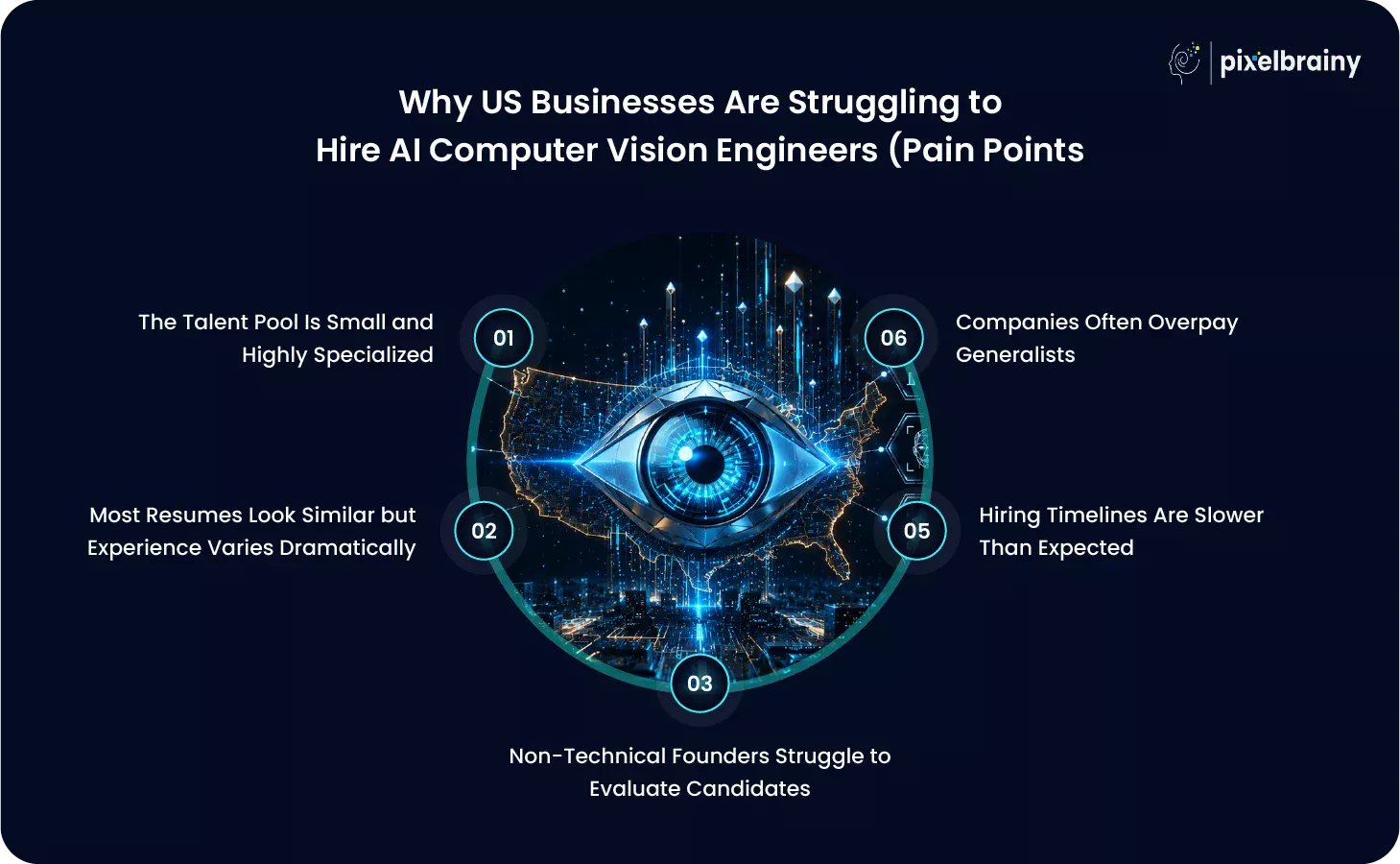
One of the biggest misconceptions is that all computer vision engineers have similar skills. In reality, the talent pool is fragmented across multiple specialties, including:
An engineer who excels at developing autonomous driving perception models may not be the right fit for a medical imaging platform or a factory defect detection system. Businesses often struggle because they search for a generic computer vision engineer instead of identifying the exact specialization required for their project.
Many candidates list the same technologies:
At first glance, resumes can appear nearly identical. However, there is a major difference between someone who built a proof-of-concept model and someone who has deployed large-scale computer vision systems in production environments.
This gap often explains why companies hire a developer, only to discover later that the engineer lacks experience with scalability, model optimization, deployment, and real-world performance requirements.
Many startup founders and business owners are not AI specialists. As a result, they often rely on portfolios, certifications, or interview confidence rather than technical validation.
This creates several risks:
This challenge frequently leads to failed projects, inaccurate AI models, and expensive redevelopment efforts.
Computer vision recruitment is rarely a quick process. A properly scoped search often takes between 4 and 9 weeks depending on project complexity, required specialization, and candidate availability.
During this period, businesses may experience:
The longer a project remains understaffed, the more expensive it becomes.
Many organizations hire general AI developers believing they can handle computer vision requirements. While these professionals may have strong machine learning knowledge, they often lack hands-on experience with advanced image processing, visual model optimization, real-time video analytics, and production deployment.
This is where AI computer vision engineer cost USA becomes an important consideration. Paying a higher salary does not automatically guarantee specialized expertise. In many cases, businesses spend more money while receiving slower development progress and lower model accuracy.
Hiring a computer vision engineer before defining your use case.
Before evaluating candidates, clearly identify whether you need expertise in object detection, medical imaging, defect detection, facial recognition, retail analytics, autonomous systems, or another specialized domain. The right hire depends on the problem you are trying to solve.
Many failed AI projects are not caused by poor technology. They are caused by hiring mismatches. Businesses that define their use case, validate real-world experience, and align expertise with project requirements are far more likely to succeed.
Understanding these challenges is also the first step in learning how to reduce AI development cost with computer vision engineers. When the right specialist is hired from the beginning, companies avoid unnecessary rework, shorten development timelines, improve model performance, and maximize their return on AI investment.
Hiring the right computer vision professional requires much more than checking whether a candidate knows Python or machine learning. The difference between a successful AI project and an expensive failure often comes down to whether the engineer can build, optimize, and deploy computer vision systems in real-world environments.
Many business leaders ask: what skills should I look for when hiring an AI computer vision engineer in the USA? The answer depends on your use case, but there are several technical competencies that every production-ready computer vision engineer should possess in 2026.
Whether you want to hire PyTorch TensorFlow computer vision developer USA professionals for a new AI initiative or need an object detection AI engineer hire USA strategy for a large-scale project, the following checklist can help you identify qualified candidates.
| Core Must-Have Skills | Nice-to-Have Skills |
|---|---|
| Python Programming | C++ Development |
| PyTorch | CUDA Optimization |
| TensorFlow | Kubernetes |
| OpenCV | MLOps & Model Monitoring |
| CNN Architectures | LiDAR Integration |
| YOLO v8, YOLO v9, YOLO v11 | Depth Camera Experience |
| Image Segmentation (SAM, UNet) | Vision-Language Models (CLIP, BLIP) |
| ONNX Model Conversion | Multi-Sensor Fusion |
| TensorRT Optimization | Robotics Experience |
| Cloud Deployment | Edge AI Specialization |
| Edge AI Deployment | Autonomous Systems Experience |
One of the biggest hiring mistakes is assuming that years of experience automatically indicate expertise.
A junior engineer may successfully train a model using public datasets and pre-built frameworks. However, a senior engineer understands how to:
This is often the biggest difference between a proof-of-concept and a commercially viable AI product.
In 2026, training a model is only part of the job. Businesses need engineers who can deploy and maintain AI systems in production.
Qualified candidates should have experience deploying models on:
If a candidate cannot explain where their models were deployed, how inference performance was optimized, or what hardware was used in production, that should raise concerns.
Many companies focus too heavily on technical buzzwords and overlook practical experience. The following warning signs often indicate an unqualified candidate:
When preparing computer vision engineer interview questions USA, focus on practical experience rather than theory.
Ask candidates:
The strongest candidates will discuss deployment environments, performance metrics, scalability challenges, and business outcomes rather than only model architecture.
Ultimately, the best computer vision engineers combine deep technical knowledge with proven production experience. Businesses that prioritize deployment expertise, optimization skills, and real-world problem-solving capabilities are far more likely to build scalable AI computer vision systems that deliver measurable value.
Many businesses searching for how to hire AI computer vision engineers in USA focus immediately on resumes, job boards, and technical interviews. In reality, successful hiring begins long before candidates enter the process. The companies that consistently build high-performing computer vision teams follow a structured approach that aligns business objectives with specialized technical expertise.
The following seven-step framework helps organizations reduce hiring risks, accelerate recruitment, and find engineers who can deliver real business outcomes.
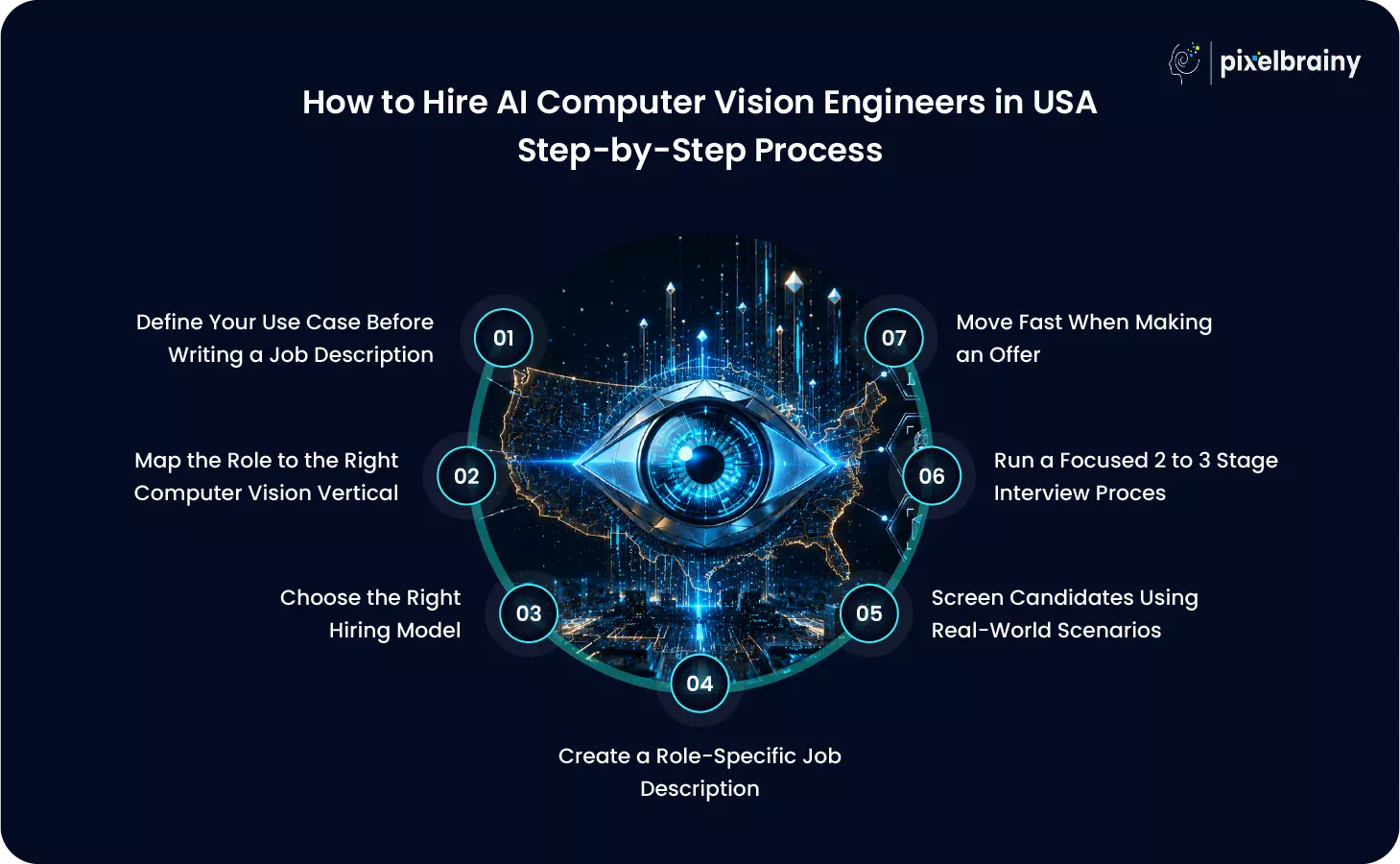
The biggest mistake companies make is posting a generic "Computer Vision Engineer" role without clearly defining the problem they need solved.
Different use cases require different expertise:
For example, an engineer who specializes in medical imaging may have little experience building industrial quality inspection systems.
Before starting your search, answer these questions:
A clearly defined use case improves hiring accuracy and reduces costly mismatches.
Computer vision is not a single discipline. It consists of multiple specialized domains.
| Computer Vision Vertical | Typical Applications |
|---|---|
| Industrial Vision | Defect detection, quality inspection |
| Autonomous Vehicle Perception | Object tracking, lane detection |
| Medical Imaging | MRI, CT scan, X-ray analysis |
| Retail Analytics | Shelf monitoring, shopper insights |
| Security & Surveillance | Facial recognition, threat detection |
| AR & Spatial Computing | 3D mapping, mixed reality |
Before you hire AI computer vision engineers in USA, identify which vertical best matches your project requirements.
This step alone can dramatically improve candidate quality.
One of the most common questions businesses ask is whether they should hire a freelancer, build an internal team, or work with an external partner.
The answer depends on budget, project complexity, and speed requirements.
| Hiring Model | Cost | Speed | Control | Best For |
|---|---|---|---|---|
| Freelancer | Low to Medium | Fast | Moderate | MVPs, short-term projects |
| In-House Employee | High | Slow | High | Long-term AI initiatives |
| Agency / Outsourcing Partner | Medium to High | Fast | High | Complex production systems |
A dedicated computer vision AI development team USA is often the preferred choice for organizations that need specialized expertise without the lengthy hiring process associated with internal recruitment.
Generic job descriptions attract generic candidates.
Instead of listing every AI framework imaginable, focus on the specific outcomes the engineer will be responsible for delivering.
Include requirements such as:
The more specific the role description, the more qualified and relevant your candidate pool becomes.
Many companies rely too heavily on theoretical questions.
The best way to hire computer vision engineers for AI projects is to evaluate practical problem-solving ability.
Ask questions such as:
Avoid spending interview time on:
Real-world scenarios reveal far more about a candidate's capabilities than theoretical quizzes.
Top computer vision engineers are often evaluating multiple opportunities simultaneously.
An overly complicated hiring process can cause strong candidates to withdraw.
A streamlined process typically works best:
Assess:
Review:
Use real business scenarios rather than hypothetical puzzles.
Validate:
Avoid take-home assignments exceeding two hours. Senior engineers often decline lengthy unpaid assessments.
Many businesses lose top candidates simply because they move too slowly.
Experienced computer vision professionals often have multiple interviews and competing offers active at the same time.
Once your team reaches a hiring decision:
In 2026, a 24 to 48-hour offer window is considered standard for highly sought-after AI talent.
Delays often result in losing candidates to competitors.
The most successful companies do not begin by searching for resumes. They begin by defining the business problem, identifying the correct computer vision specialization, selecting the right hiring model, and evaluating candidates through practical scenarios.
By following this seven-step process, businesses can significantly improve hiring outcomes, reduce project delays, avoid costly recruitment mistakes, and build computer vision solutions that deliver measurable business value. This structured approach remains the most effective way to hire AI computer vision engineers in the USA for both startups and enterprise organizations.
One of the first questions businesses ask before starting an AI initiative is: how much does it cost to hire a computer vision engineer in USA? The answer depends on several factors, including experience level, industry specialization, deployment expertise, and whether you hire a full-time employee, contractor, freelancer, or dedicated development team.
In 2026, demand for experienced computer vision talent continues to exceed supply, particularly in industries such as healthcare, autonomous vehicles, manufacturing, robotics, and security. As a result, compensation levels remain significantly higher than those of many traditional software engineering roles.
The following table provides realistic market ranges for both full-time employees and contract professionals.
| Experience Level | Annual Salary Range (USA) | Contract Hourly Rate |
|---|---|---|
| Junior | $90,000 to $130,000 | $60 to $85/hr |
| Mid-Level | $145,000 to $190,000 | $85 to $115/hr |
| Senior | $200,000 to $275,000 | $115 to $145/hr |
| Specialist (Medical Imaging / Autonomous Systems) | $290,000 to $410,000 | $150 to $200/hr |
These figures represent current hiring realities and are often more accurate than publicly available salary reports.
When researching computer vision engineer salary USA 2026, many businesses rely on salary websites and industry reports. However, published salary medians frequently lag actual hiring activity by six to nine months.
This lag is particularly noticeable in fast-growing AI domains where demand can shift quickly. Engineers with recent production experience in edge AI, autonomous systems, foundation models, and large-scale deployment environments often command significantly higher compensation than historical salary benchmarks suggest.
A major trend shaping compensation in 2026 is the growing demand for engineers experienced with vision-language models.
Professionals who have worked with technologies such as:
typically command higher salaries and consulting rates because these skills are increasingly required for next-generation AI products.
For businesses that do not require a full-time employee, contractors can offer flexibility and faster onboarding.
Typical computer vision engineer hourly rate USA 2026 ranges include:
Project complexity and industry requirements can further influence pricing.
Many organizations exploring the cost to build computer vision AI system USA 2026 discover that talent acquisition represents one of the largest budget categories.
Building a complete in-house team often requires:
For this reason, many companies choose outsourcing or dedicated development partners. Compared with building an internal team from scratch, a specialized agency or dedicated AI engineering team can often reduce overall development costs by 20% to 40% while providing immediate access to experienced talent.
If you are evaluating how much does it cost to hire a computer vision engineer in USA, start by matching your hiring model to your project scope.
The most successful businesses focus not only on salary costs but also on expertise, deployment experience, and speed of execution. Hiring the right specialist from the beginning often reduces total project costs far more effectively than choosing the lowest-priced candidate.
The hiring model you choose for your AI computer vision engineers directly determines your project timeline, quality of output, and total development cost. Most businesses pick the wrong model not because of budget but because they did not match the model to their project stage.
Many companies choose to hire freelance computer vision engineer USA professionals because they offer quick access to specialized talent without long-term commitments.
Best For:
Typical Cost:
What You Get:
What You Risk:
Many freelance engineers have strong academic backgrounds but limited production deployment experience. A model that performs well in a controlled testing environment can fail once exposed to real-world data, changing lighting conditions, hardware limitations, or unexpected edge cases.
Businesses are also responsible for:
If you lack internal computer vision expertise, there is often no safety net when technical problems emerge.
A common scenario is hiring a freelancer who delivers excellent benchmark results, only for the system to perform poorly after deployment because production readiness was never part of the original scope.
Building an internal team provides maximum control but requires significant investment and long-term commitment.
Best For:
Typical Cost:
What You Get:
What You Risk:
Many businesses underestimate the complexity of building a complete computer vision team.
A production-ready environment often requires:
Hiring timelines for senior talent frequently range from 4 to 9 weeks per role.
If a key engineer leaves, project momentum can slow dramatically. For startups and mid-sized companies, total annual costs can easily exceed $600,000 to $800,000 before accounting for cloud infrastructure and operational expenses.
This is one reason many organizations pursuing AI development cost reduction 2026 strategies are reconsidering traditional in-house hiring models.
Many startups and growing businesses choose a dedicated computer vision AI development team USA model because it combines specialized expertise with faster execution.
Best For:
Typical Cost:
What You Get:
Specialist providers that outsource computer vision development USA projects often deliver working prototypes and production-ready systems significantly faster than internally assembled teams.
What You Risk:
Before selecting a provider:
The strongest vendors can clearly explain where their systems were deployed, how they were optimized, and what business results they achieved.
Use the following framework before you hire AI computer vision engineers in USA:
| Your Situation | Best Hiring Model |
|---|---|
| One-time prototype or POC under $30K budget | Freelance Computer Vision Engineer |
| Ongoing AI vision product with 12+ month roadmap | In-House Computer Vision Team |
| Production system needed within 3 months | Dedicated Computer Vision Engineer Team |
| Limited budget and no internal AI team | Dedicated Computer Vision Engineer Team |
If your goal is to launch a production-ready computer vision solution within the next three months and you do not have an experienced internal AI team to manage development, a dedicated computer vision engineering team is typically the most practical option. It offers faster execution, lower hiring risk, predictable delivery, and significant cost advantages compared with building an in-house team from scratch in the USA market in 2026.
As AI adoption accelerates across the United States, organizations are investing in computer vision systems to automate workflows, improve operational efficiency, increase accuracy, and create new revenue opportunities. However, the type of engineer required varies significantly based on the industry and business problem being solved.
Companies evaluating computer vision AI development services should focus on hiring engineers with direct experience in their specific domain rather than relying solely on general AI expertise.
Manufacturers use computer vision to automate quality control, defect detection, assembly verification, and production-line monitoring. AI models can inspect thousands of products per hour and identify issues that may be missed during manual inspections.
The ideal candidate is typically an object detection AI engineer hire USA specialist with experience in industrial automation, edge AI deployment, and real-time inspection systems.
Hospitals, diagnostic centers, and healthcare technology companies use computer vision for medical imaging analysis, pathology slide examination, radiology assistance, and disease detection.
These projects require engineers who understand medical datasets, image segmentation, healthcare compliance requirements, and high-accuracy diagnostic systems.
Also Read: AI Medical Diagnosis App Development: Features & Cost
Retail businesses implement computer vision for shelf analytics, inventory tracking, automated checkout systems, customer behavior analysis, and loss prevention.
Engineers working in this domain should have experience with video analytics, image recognition, and large-scale retail monitoring platforms.
Also Read: Retail AI Software Development: Use Cases, Benefits & Cost
Self-driving vehicle companies rely heavily on computer vision for object detection, lane recognition, pedestrian tracking, traffic sign identification, and environmental perception.
These projects require perception engineers with expertise in sensor fusion, real-time inference, safety-critical systems, and autonomous navigation technologies.
Security organizations use computer vision for facial recognition, access control, crowd monitoring, suspicious activity detection, and threat analysis.
Many businesses seeking to hire AI engineers for image recognition projects USA require specialists with experience in large-scale surveillance systems and real-time video processing.
Ecommerce companies use computer vision to improve product discovery and customer experience through visual search, automated product tagging, image categorization, and image-based recommendation engines.
Engineers in this space often combine computer vision expertise with customer-focused product development experience.
Logistics providers use computer vision for package tracking, warehouse automation, inventory counting, barcode recognition, and robotic picking systems.
The ideal engineers understand warehouse operations, object tracking, and high-speed image processing environments.
Agricultural businesses use AI-powered vision systems for crop health monitoring, disease detection, yield estimation, weed identification, and precision farming.
Computer vision specialists in this sector often work with drone imagery, satellite data, and field-based edge devices.
Construction companies deploy computer vision systems for site monitoring, worker safety compliance, equipment tracking, progress reporting, and infrastructure inspections.
These projects require engineers experienced in video analytics, drone-based inspections, and environmental image analysis.
Insurance providers use computer vision to automate claims processing, vehicle damage assessment, property inspections, and fraud detection.
AI systems can analyze uploaded images and generate preliminary assessments in minutes, significantly reducing manual review time.
Many startups and growth-stage companies entering these industries invest heavily in computer vision AI startup engineer recruitment USA initiatives to gain access to specialized talent capable of building production-ready solutions faster.
Also Read: Top 10 AI Insurance Claim Management Software Development Companies in USA
That's why hiring an engineer with experience in your industry often has a greater impact on project success than hiring the most expensive AI specialist available.
Many AI projects exceed their original budgets because of poor planning, unclear requirements, hiring mismatches, and unnecessary development complexity. The good news is that businesses can significantly lower costs without sacrificing quality, accuracy, or scalability.
If your goal is to understand how to reduce AI development cost with computer vision engineers, the following six strategies can help control spending while improving project outcomes.
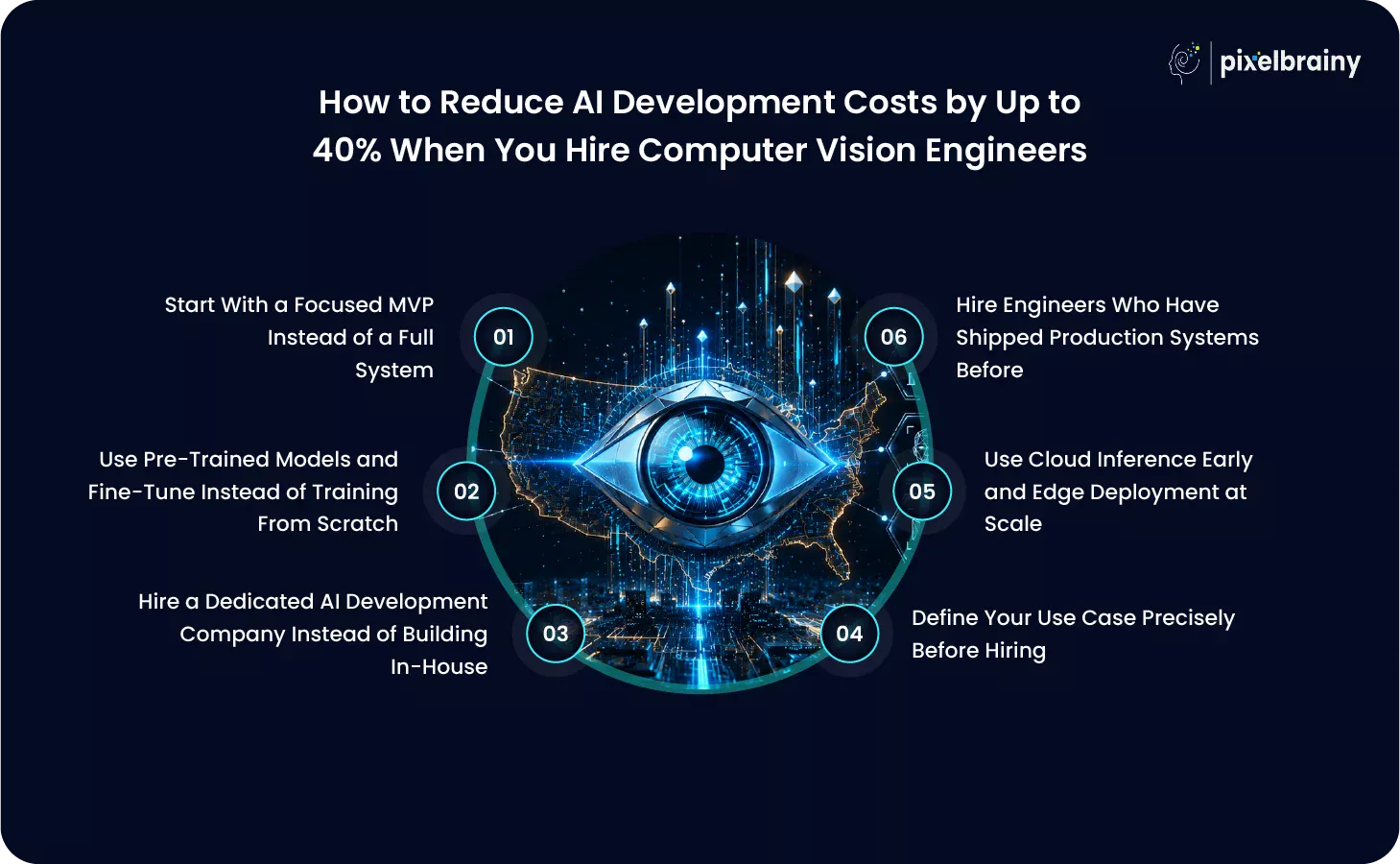
Businesses often attempt to build a complete AI platform from day one. This increases development scope, data collection requirements, infrastructure costs, and engineering effort.
A more effective approach is to launch a Minimum Viable Product (MVP) focused on solving a single business problem first.
Examples include:
A focused MVP helps validate business value before larger investments are made.
Estimated Savings: 20% to 30%
Also Read: Top 10 AI MVP Development Companies in USA
Training computer vision models from scratch requires large datasets, significant GPU resources, and substantial engineering time.
In many cases, existing models can be adapted to your use case through fine-tuning.
Popular options include:
This approach accelerates development while reducing compute expenses and engineering hours.
Estimated Savings: 20% to 40%
Building an internal computer vision team involves recruitment costs, salaries, benefits, onboarding, infrastructure, and management overhead.
Businesses pursuing AI development cost reduction 2026 initiatives increasingly partner with specialized AI development firms that already have experienced engineers, established workflows, and deployment expertise.
Benefits include:
Estimated Savings: 20% to 40%
Also Read: Top 10 AI Product Development Companies in USA
A poorly defined project almost always leads to scope creep, hiring mistakes, and expensive redevelopment.
Before hiring, clearly identify:
A clear project scope makes it easier to select the right engineer and avoid unnecessary costs.
Estimated Savings: 10% to 20%
During the initial development phase, cloud infrastructure is often the most cost-effective option because it eliminates upfront hardware expenses.
As usage grows, deploying models on edge devices can significantly lower long-term inference costs.
Common production hardware includes:
This phased approach helps control the cost to build computer vision AI system USA 2026 while maintaining flexibility and scalability.
Estimated Savings: Varies based on workload and deployment volume.
Engineers with strong academic backgrounds are not always prepared for real-world deployment challenges.
Production-ready engineers understand:
During interviews, ask a simple but powerful question:
"Which hardware platforms have you deployed computer vision models on?"
Experienced professionals should be able to discuss deployment environments, performance bottlenecks, optimization methods, and production results.
While experienced specialists may increase the initial computer vision engineer cost USA, they often prevent expensive rework cycles that can dramatically increase total project costs.
Estimated Savings: 15% to 30%
| Strategy | Estimated Savings |
|---|---|
| Focused MVP Development | 20% to 30% |
| Fine-Tuning Pre-Trained Models | 20% to 40% |
| Dedicated AI Development Company | 20% to 40% |
| Clearly Defined Use Case | 10% to 20% |
| Cloud-to-Edge Deployment Strategy | Variable |
| Production-Experienced Engineers | 15% to 30% |
The most effective way to reduce AI development costs is to combine the right hiring strategy, the right AI computer vision expertise, and a clearly defined project scope before development begins.
PixelBrainy helps businesses hire AI computer vision engineers in USA through flexible engagement models, dedicated engineering teams, and end-to-end AI solution development. Companies looking for scalable computer vision solutions partner with PixelBrainy to accelerate development, reduce hiring complexity, and gain access to production-ready AI expertise without building large internal teams.
As demand for computer vision continues to grow across industries, many organizations face the same challenge: finding engineers who can move beyond prototypes and deliver real-world AI systems that operate reliably in production environments. PixelBrainy ranked among top AI computer vision development companies in USA bridges this gap by providing experienced computer vision specialists who can support projects from initial planning and model development to deployment, optimization, and long-term maintenance.
Whether a business is building an object detection platform, image recognition solution, video analytics application, medical imaging tool, or AI-powered automation system, PixelBrainy provides a dedicated computer vision AI development team USA organizations can scale based on project requirements.
Unlike traditional hiring, which can take weeks or months, PixelBrainy provides immediate access to specialized computer vision talent with practical deployment experience.
Organizations choose PixelBrainy because they receive:
For many businesses, this approach helps reduce development timelines by up to 40% compared with traditional in-house recruitment and onboarding processes.
To maintain client confidentiality, project names and company details are not publicly disclosed.
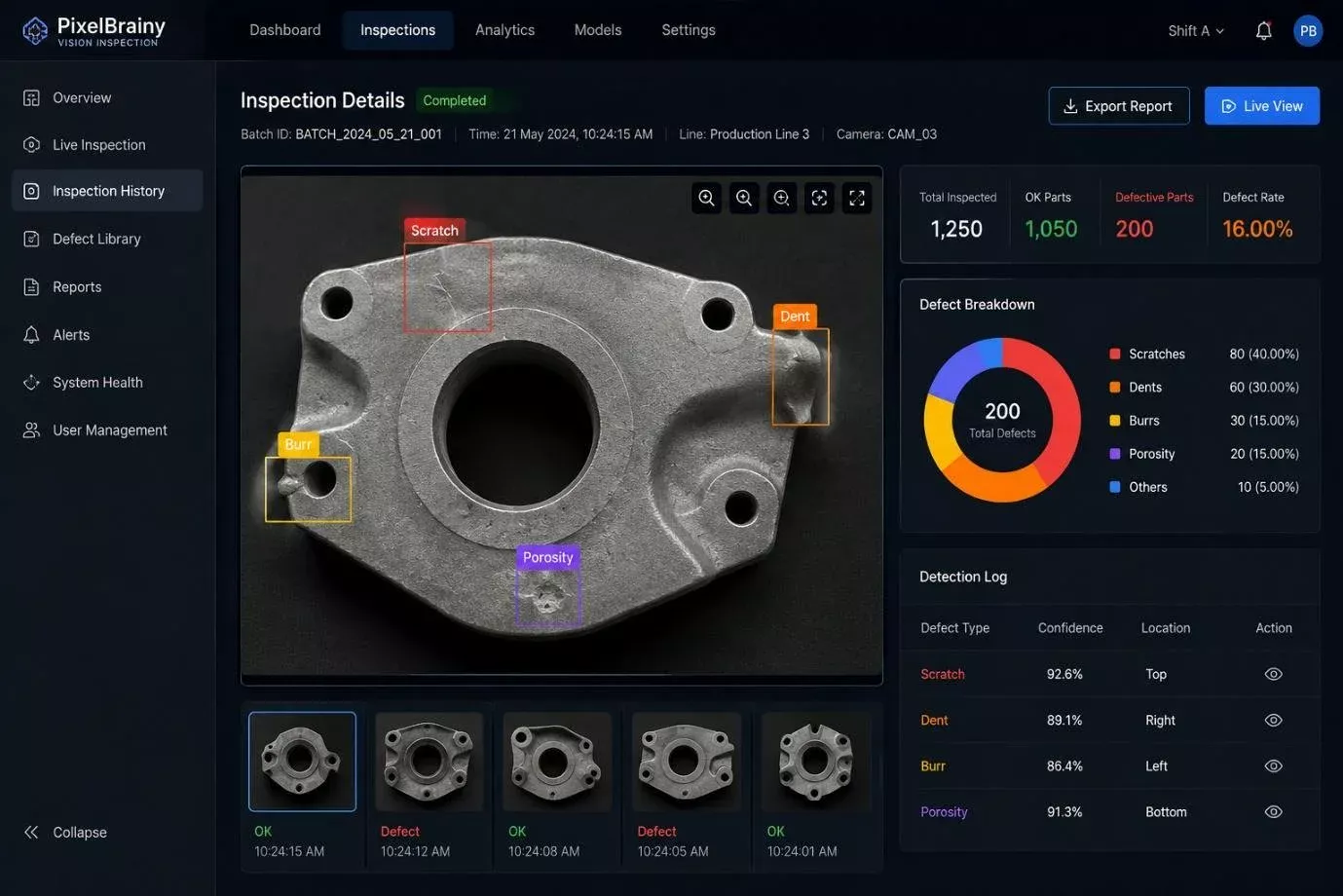
Designed and deployed a computer vision solution that automatically identifies surface defects, assembly inconsistencies, and product quality issues in real time. The system helped automate inspection workflows, reduce manual review efforts, and improve quality control accuracy across high-volume manufacturing operations.
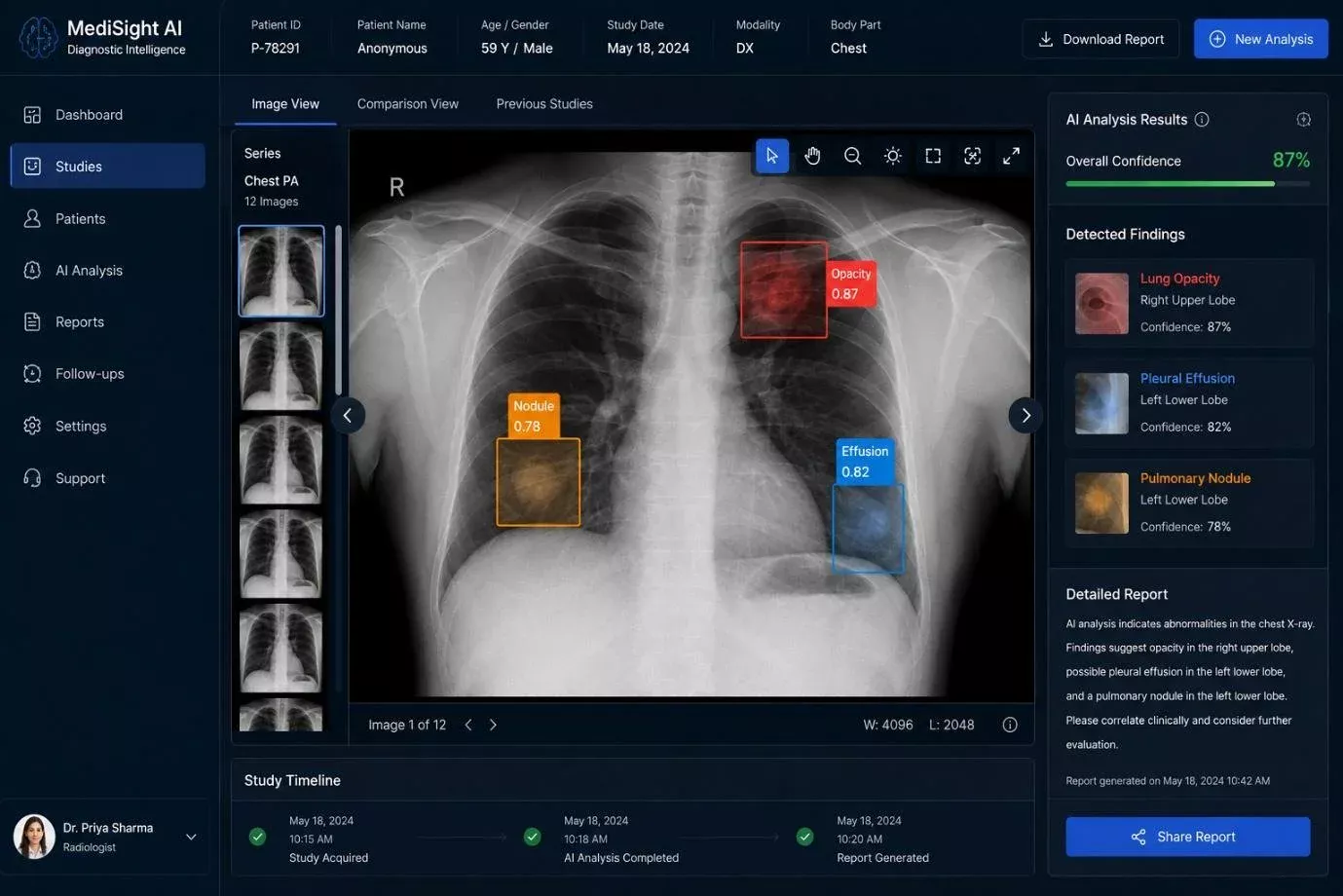
Developed an AI-powered medical imaging solution capable of analyzing diagnostic scans and highlighting potential abnormalities for clinical review. The platform was designed to support healthcare professionals with faster image assessment workflows while maintaining high levels of accuracy and reliability.
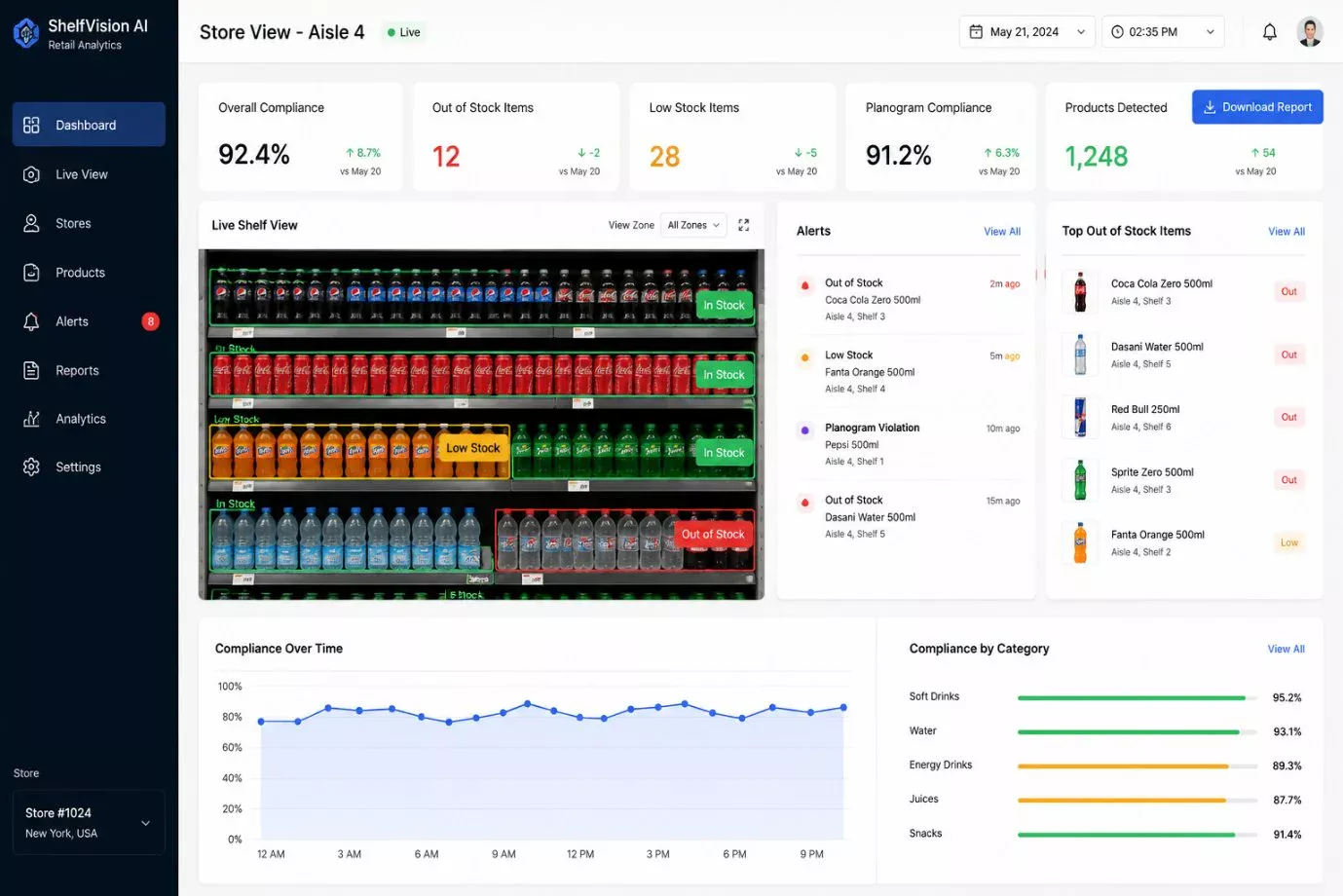
Built a computer vision platform that monitors product availability, shelf compliance, and inventory visibility using real-time image and video analysis. The solution provided retailers with actionable insights to improve stock management, reduce out-of-stock incidents, and enhance operational efficiency.
Many providers can build AI models. Fewer can successfully deploy, optimize, and maintain computer vision systems in real-world business environments. PixelBrainy focuses on practical implementation, measurable business outcomes, and long-term project success rather than experimental prototypes.
For organizations searching for the best AI computer vision development company USA, the ability to combine engineering expertise, deployment experience, and end-to-end project ownership often makes the difference between a successful AI initiative and an expensive proof of concept.
Whether you need a single specialist, a complete engineering team, or full-scale computer vision AI development services, PixelBrainy can help accelerate your project while reducing development costs and hiring risks.
Talk to our computer vision AI team today and get a free project scope review.
Building a successful computer vision solution is not simply about finding AI talent. It is about hiring the right specialist, choosing the right engagement model, and aligning technical expertise with your business goals. Throughout this guide, we explored how industry requirements, technical skills, deployment experience, and hiring strategies can directly impact project success, delivery timelines, and overall development costs.
Whether you need a freelance specialist for a proof of concept, an in-house team for a long-term AI roadmap, or a dedicated computer vision AI development team USA businesses can scale on demand, selecting the right approach can significantly improve outcomes. Organizations that carefully plan their hiring process often achieve faster deployments, higher model accuracy, and measurable AI development cost reduction 2026 goals.
If you are planning to hire AI computer vision engineers in USA, working with experienced professionals who understand production environments can help you avoid costly mistakes, reduce rework, and accelerate time to market.
At PixelBrainy, we help businesses transform computer vision ideas into production-ready solutions through dedicated engineering expertise, proven development processes, and scalable engagement models.
The sooner you align the right computer vision expertise with your project goals, the faster you can launch AI solutions that deliver real business value while reducing development costs by up to 40%. So, let's connect!
The answer depends on experience level, specialization, and hiring model. Junior engineers typically earn between $90,000 and $130,000 annually, while senior specialists can command $200,000 to $275,000+ per year. Businesses researching how much does it cost to hire a computer vision engineer in USA should also account for benefits, infrastructure, and recruitment costs when budgeting.
Most companies require between 4 and 9 weeks to hire an experienced computer vision engineer through traditional recruitment channels. The timeline can be longer for highly specialized roles such as medical imaging, autonomous vehicle perception, or edge AI deployment specialists.
Freelancers are often suitable for proof-of-concept projects, short-term engagements, or model fine-tuning tasks. For production systems, many businesses prefer AI development companies because they provide access to multiple specialists, deployment expertise, project accountability, and faster delivery timelines.
The primary difference is specialization. A machine learning engineer may work on recommendation systems, predictive analytics, NLP, or general AI applications, while a computer vision engineer focuses on image recognition, video analytics, object detection, image segmentation, and visual intelligence systems. This distinction is important when evaluating the computer vision engineer vs machine learning engineer USA hiring decision.
Most computer vision engineers work with Python, PyTorch, TensorFlow, OpenCV, ONNX, TensorRT, and YOLO frameworks. Depending on the project, they may also use C++, CUDA, Kubernetes, cloud platforms, and edge AI hardware for deployment and optimization.
Specialized engineers can reduce development costs by avoiding common implementation mistakes, improving model performance faster, and minimizing expensive redevelopment cycles. Businesses that hire experienced computer vision professionals often accelerate project delivery and improve overall return on investment.
Industries with strong visual data requirements typically benefit the most. This includes manufacturing, healthcare, retail, ecommerce, logistics, security and surveillance, autonomous vehicles, agriculture, insurance, and construction. Many organizations choose to hire AI computer vision engineers in USA to automate processes, improve accuracy, and scale operations.
Common red flags include candidates who only worked on academic datasets, lack production deployment experience, cannot explain how they optimized models, or cannot identify the hardware they deployed on. During computer vision engineer interview questions USA processes, businesses should focus on real-world deployment experience rather than theoretical knowledge alone.

About The Author
Sagar Bhatnagar
Sagar Sahay Bhatnagar brings over a decade of IT industry experience to his role as Marketing Head at PixelBrainy. He's known for his knack in devising creative marketing strategies that boost brand visibility and market influence. Sagar's strategic thinking, coupled with his innovative vision and focus on results, sets him apart. His track record of successful campaigns proves his ability to utilize digital platforms effectively for impactful marketing efforts. With a genuine passion for both technology and marketing, Sagar continuously pushes PixelBrainy's marketing initiatives to greater success.


Transform your ideas into reality with us.
Working with the PixelBrainy team has been a highly positive experience. They understand the design requirements and create beautiful UX elements to meet the application needs. The dev team did an excellent job bringing my vision to life. We discussed usability and flow. Sagar worked with his team to design the database and begin coding. Working with Sagar was easy. He has the knowledge to create robust apps, including multi-language support, Google and Apple ID login options, Ad-enabled integrations, Stripe payment processing, and a Web Admin site for maintaining support data. I'm extremely satisfied with the services provided, the quality of the final product, and the professionalism of the entire process. I highly recommend them for Android and iOS Mobile Application Design and Development.

Great experience working with them. Had a lot of feedback and I found that unlike most contractors they were bugging me for updates instead of the other way around. They were extremely time conscience and great at communicating! All work was done extremely high quality and if not on time, early! They were always proactive when it comes to communication and the work is great/above par always. Very flexible and a great team to work with! Goes above and beyond to present us with multiple options and always provides quality. Amazing work per usual with Chitra. If you have UI/UX or branding design needs I recommend you go to them! Will likely work with them in the future as well, definitely recommended!

PixelBrainy is a joy to work with and is a great partner when thinking through branding, logo, and website layout. I appreciate that they spend time going into the "why" behind their decisions to help inform me and others about industry best practices and their expertise.

I hired them to design our software apps. Things I really like about them are excellent communication skills, they answer all project suggestions and collaborate right away, and their input on design and colors is amazing. This project was complex and needed patience and creativity. The team is amazing to do business with. I will be using them long-term. Glad to see there are some good people out there. I was afraid to try and outsource my project to someone but I am glad I met them! I really can't say enough. They went above and beyond on this project. I am very happy with everything they have done to make my business stand out from the competition.

It was great working with PixelBrainy and the team. They were very responsive and really owned the project. We'll definitely work with them again!

I recently worked with the PixelBrainy team on a project and I was blown away by their communication skills. They were prompt, clear, and articulate in all of our interactions. They listened and provided valuable feedback and suggestions to help make the project a success. They also kept me updated throughout the entire process, which made the experience stress-free and enjoyable.

PixelBrainy is very good at what it does. The team also presents themselves very professionally and takes care of their side of things very well. I could fully trust them taking up the design work in a timely and organised manner and their attention to detail saved us lots of effort and time. This particular project was quite intense and the team showed that they function very well under pressure. Very much looking forward to working with her again!

It's always an absolute pleasure working with them. They completed all of my requests quickly and followed every note I had for them to a T, which made our process go smoothly from start to finish. Everything was completed fast and following all of the guidelines. And I would recommend their services to anyone. If you need any design work done in the future, PixelBrainy should be your first call!

They took ownership of our requirements and designed and proposed multiple beautiful variants. The team is self-motivated, requires minimum supervision, committed to see-through designs with quality and delivering them on time. We would definitely love to work with PixelBrainy again when we have any requirements.

PixelBrainy was a big help with our SaaS application. We've been hard at work with a new UI/UX and they provided a lot of help with the designs. If you're looking for assistance with your website, software, or mobile application designs, PixelBrainy and the team is a great recommendation.

PixelBrainy designers are amazing. They are responsive, talented, and always willing to help craft the design until it matches your vision. I would recommend them and plan to continue them for my future projects and more!!!

They were awesome! Did a good job fast, and good communication. Will work with them again. Thank you

Creative, detail-oriented, and talented designers who take direction well and implement changes quickly and accurately. They consistently over-delivered for us.

PixelBrainy team is very talented and creative. Great designers and a pleasure to work with. PixelBrainy is an excellent communicator and I look forward to working with them again.

PixelBrainy has a very talented design team. Their work is excellent and they are very responsive. I enjoy working with them and hope to continue on all of our future projects.


