AI Summary Powered by PixelBrainy
Are you looking for a company that can create AI healthcare agents for automation and patient support while improving clinical efficiency and patient outcomes at scale?
Healthcare AI agent development is rapidly transforming how hospitals, clinics, and digital health organizations deliver care. AI agents are intelligent, autonomous systems capable of analyzing medical data, making decisions, and executing both clinical and administrative tasks with minimal human intervention. From real-time clinical decision support and automated appointment scheduling to continuous patient monitoring and follow-up care, these systems enable healthcare providers to operate faster, smarter, and more efficiently.
The healthcare industry faces growing challenges, including increasing patient volumes, clinician burnout due to documentation overload, fragmented patient experiences, and complex administrative workflows. Healthcare automation using AI agents directly addresses these issues by managing repetitive and multi-step processes such as patient triage, medical documentation, billing, compliance tracking, and care coordination without constant human input.
For organizations aiming to create intelligent AI agents in healthcare, the opportunity is substantial. These systems enhance patient engagement, improve diagnostic accuracy, and streamline operations while maintaining consistency and scalability. Whether you are a hospital network, digital health startup, pharmaceutical company, or insurance provider, AI agents can significantly improve both patient support and operational performance.
If you are wondering who can develop AI agents for hospitals or how to implement AI-driven healthcare automation effectively, this guide provides a comprehensive overview. It covers key use cases, benefits, development steps, cost considerations, compliance requirements, and performance metrics needed to successfully build and scale AI healthcare agents.
A healthcare AI agent is an intelligent software system designed to analyze medical data, make decisions, and perform clinical or administrative tasks with minimal human intervention. These agents are built to support healthcare professionals by handling repetitive, data-driven, and time-sensitive processes across hospital environments.
In hospitals, AI agents work by continuously collecting and processing data from multiple sources such as electronic health records, lab reports, medical imaging systems, and patient inputs. Using machine learning and natural language processing, they identify patterns, generate insights, and trigger appropriate actions based on predefined clinical rules and real-time data analysis.
Healthcare AI agents are commonly used to support:
In a typical hospital workflow, an AI agent can review patient history, detect potential risks, notify clinicians, and even initiate follow-up actions such as scheduling tests or sending patient reminders. This allows healthcare teams to focus more on patient care rather than administrative workload.
As healthcare organizations adopt digital transformation, AI agents are becoming a core part of modern hospital systems by improving efficiency, accuracy, and patient support across multiple departments.
Healthcare AI agent architecture refers to the system design that enables AI agents to collect, process, and act on medical data across hospital environments. It defines how different components work together to support clinical decision-making, automate workflows, and ensure secure handling of sensitive patient information.
In healthcare systems, this architecture is designed to manage complex data flows, integrate with existing hospital infrastructure, and operate within strict regulatory requirements. A well-defined architecture ensures accuracy, reliability, scalability, and compliance across clinical and administrative use cases.
The core components of healthcare AI agent architecture include:
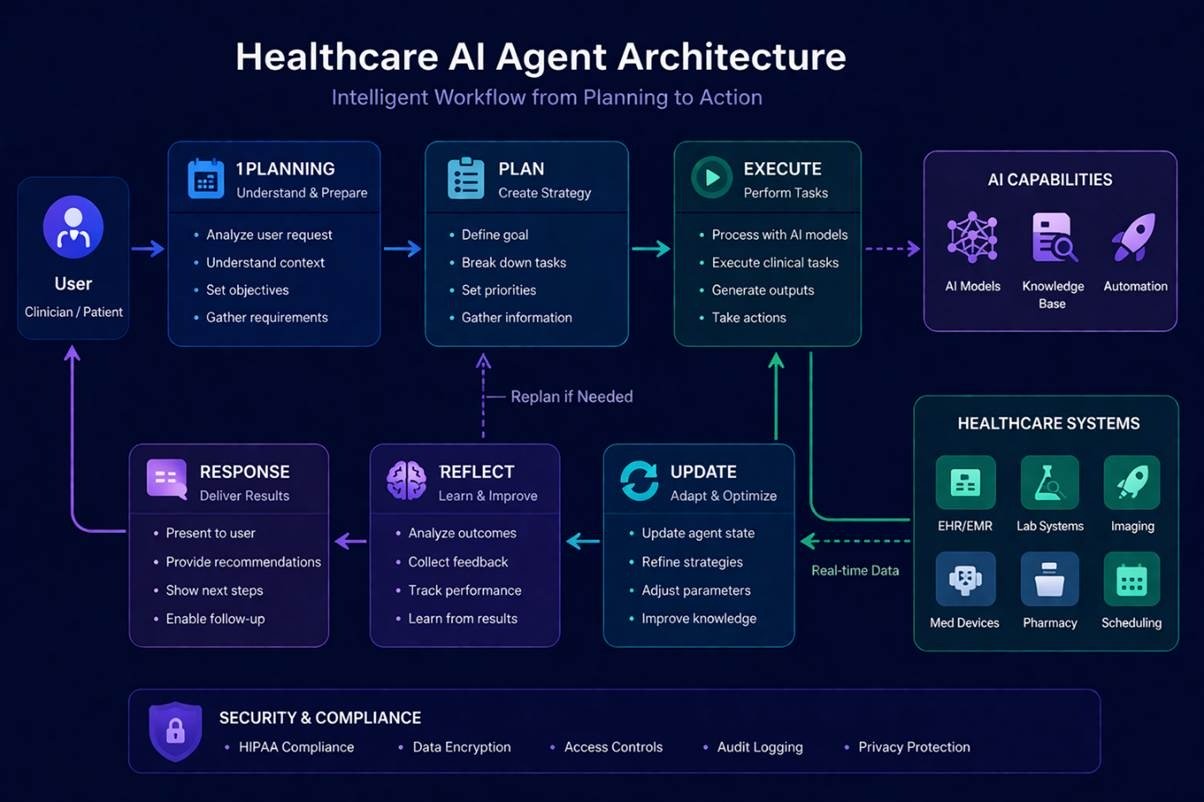
This component collects data from electronic health records, laboratory systems, medical devices, and patient applications. It ensures continuous and accurate data flow into the AI system.
Healthcare data is often fragmented and unstructured. This layer standardizes and organizes the data so it can be reliably used for analysis and model training.
These models analyze patient data, identify patterns, and generate predictions or recommendations for clinical and operational use cases.
The decision engine combines model outputs with clinical rules and protocols to determine actions such as alerts, recommendations, or workflow triggers.
This layer connects the AI agent with hospital systems including EHR platforms, scheduling tools, billing systems, and communication channels.
Interfaces allow clinicians, administrators, and patients to interact with the AI agent through dashboards, applications, or conversational systems.
This component ensures data protection through encryption, access control, and adherence to healthcare regulations.
This system tracks performance, accuracy, and system behavior while enabling continuous improvement through feedback and model updates.
A well-structured healthcare AI agent architecture ensures reliable performance, seamless system integration, and secure, data-driven decision-making across clinical and operational workflows.
Healthcare businesses should invest in AI agent development to address growing operational pressure, meet rising patient expectations, and build scalable systems that support modern healthcare delivery. AI agents enable organizations to manage complex workflows, handle increasing data volumes, and operate more efficiently across clinical and administrative environments.
The healthcare industry is facing challenges such as rising patient demand, workforce shortages, increasing administrative complexity, and strict regulatory requirements. These challenges are difficult to manage with traditional systems alone. Healthcare AI agent development provides a structured approach to introducing intelligent automation that can operate continuously and adapt to dynamic clinical environments.
According to Grand View Research, the global agentic AI in healthcare market is projected to grow from USD 538.51 million in 2024 to USD 4.96 billion by 2030, reflecting strong adoption across healthcare organizations worldwide.
Healthcare organizations are actively exploring how to build and deploy AI agents to support evolving care delivery models. These systems are being adopted across hospitals, digital health platforms, pharmaceutical companies, and insurance providers to manage workflows, process data, and support clinical environments at scale.
As healthcare continues to move toward data-driven and technology-enabled models, investing in AI agent development has become a strategic priority. Organizations that act early are better positioned to adapt to changing industry demands and build systems that can support long-term operational and clinical transformation.
Also Read: AI Healthcare Triage Software Development: A Complete Guide
The best use cases to build AI agents in healthcare include clinical decision support, patient triage, administrative automation, chronic disease management, drug discovery, and remote patient monitoring. These applications show how AI agent development in healthcare industry is transforming clinical workflows and operational systems.
Healthcare organizations and agencies that create AI agents for healthcare automation are focusing on high-impact areas where intelligent systems can process data, support decisions, and manage workflows at scale.
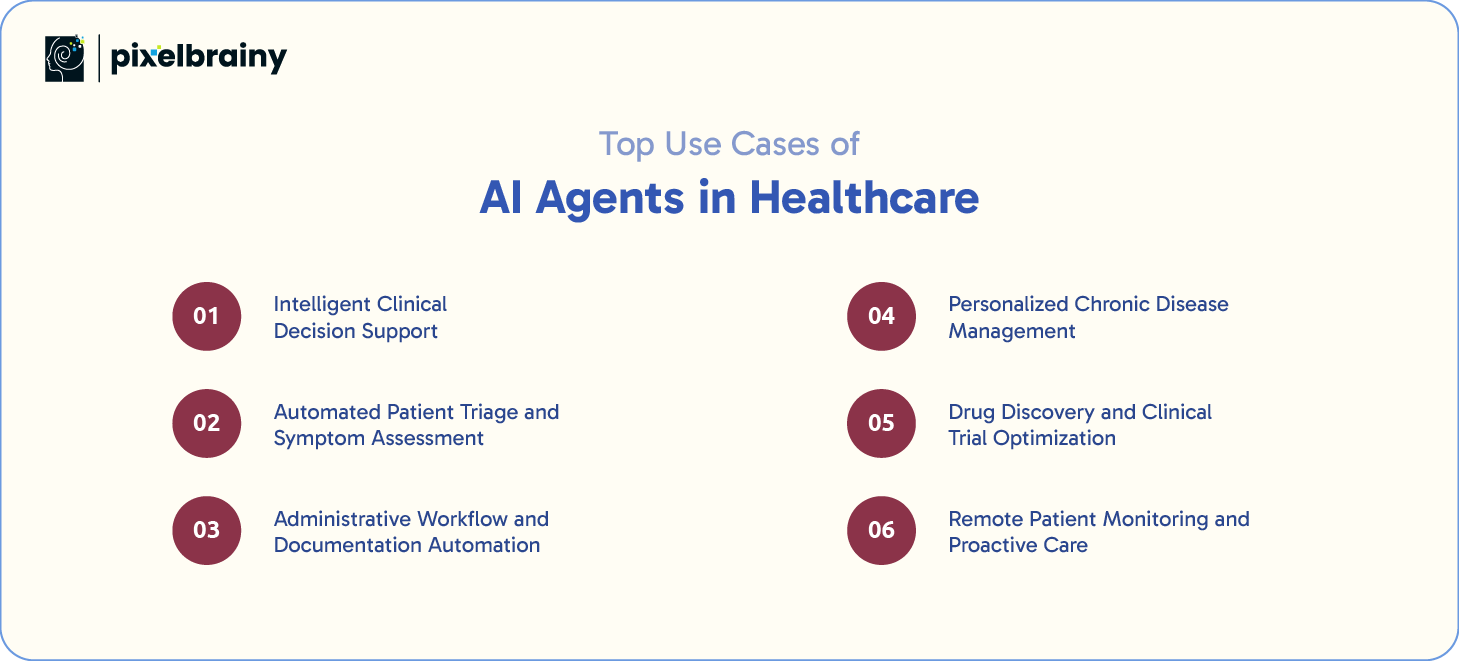
AI agents analyze patient data such as vitals, lab results, imaging reports, and medication history to assist clinicians with real-time, evidence-based recommendations. These systems support faster and more accurate decision-making in critical care environments.
For example, an AI agent monitoring a post-surgical patient can detect early signs of sepsis by identifying subtle changes in clinical indicators and alerting the care team before the condition becomes severe.
AI agents enable conversational triage systems that collect symptoms, assess urgency, and guide patients to the appropriate level of care. This approach helps manage patient flow and supports early intervention.
For instance, a patient reporting chest discomfort through a hospital app can be assessed by an AI agent, which identifies risk patterns and escalates the case for immediate clinical attention.
AI agents handle operational tasks such as appointment scheduling, prior authorizations, medical coding, billing, and clinical documentation. This reduces manual workload and improves workflow efficiency across healthcare systems.
Organizations developing an AI agent for healthcare often begin with administrative automation because of its immediate impact on workflow management and system efficiency.
AI agents support continuous monitoring and personalized care for patients with chronic conditions such as diabetes or hypertension. These systems analyze data from wearables and patient inputs to provide timely recommendations and alerts.
For example, an AI agent can monitor glucose levels, identify risk patterns, and notify both the patient and care team when intervention is needed.
AI agents are used in pharmaceutical research to analyze molecular data, identify potential drug candidates, and optimize clinical trials. They can also monitor trial data and detect inconsistencies or risks during the process.
This use case highlights how AI agent development in healthcare industry extends beyond clinical care into research and innovation.
AI agents enable continuous monitoring of patients outside hospital settings by analyzing data from connected devices and health applications. These systems help detect early signs of deterioration and support proactive care delivery.
For example, a heart failure patient can be monitored remotely, with the AI agent identifying patterns that indicate potential risk and initiating timely follow-up actions.
These examples of AI agents in healthcare systems show how intelligent automation is being applied across clinical, operational, and research environments. For startups exploring how can startups build AI agents for healthcare that improve patient outcomes, focusing on these use cases provides a strong foundation for building scalable and impactful solutions.
The best advantages to build AI agents in healthcare include improved efficiency, better clinical accuracy, continuous patient engagement, cost optimization, regulatory compliance, and long-term scalability. These benefits highlight why create AI agents for healthcare automation across modern healthcare systems.
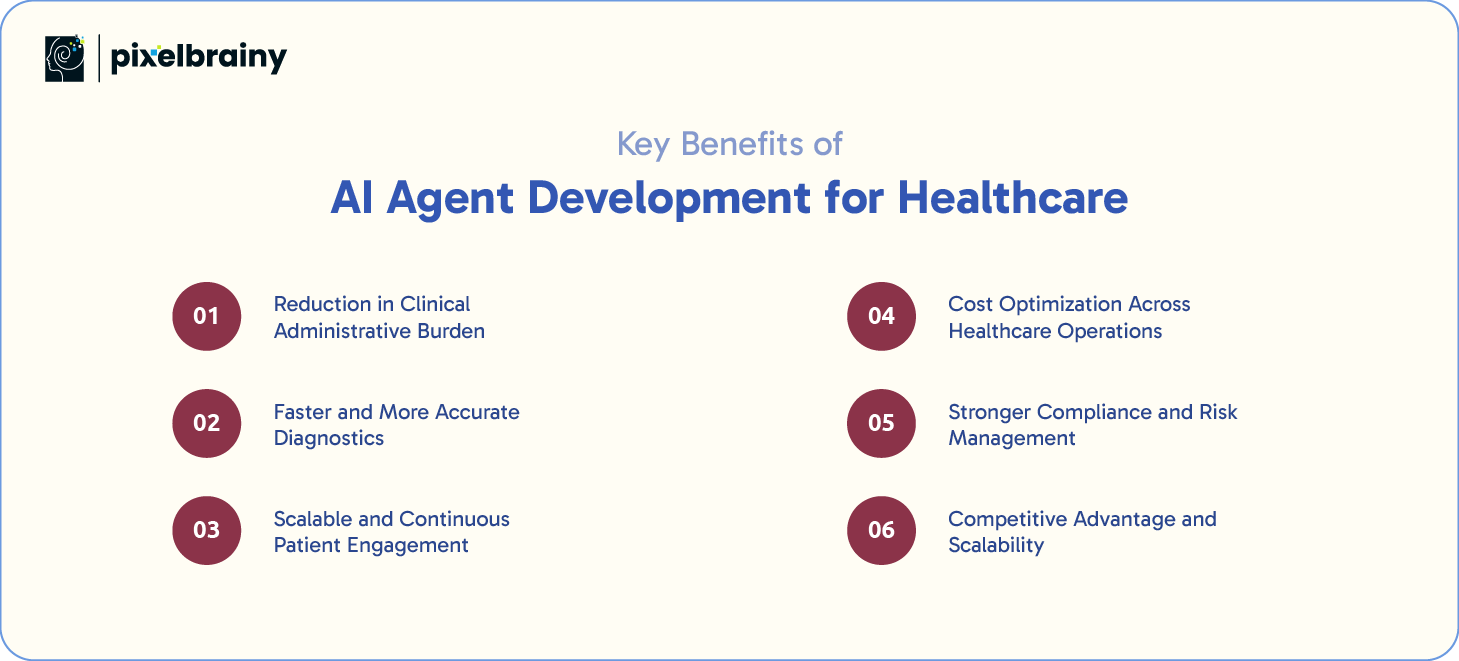
Healthcare AI agent development significantly reduces time spent on documentation, scheduling, coding, and prior authorizations by automating repetitive workflows. This allows clinicians to focus more on patient care while improving operational efficiency across healthcare systems.
AI agents analyze patient data from multiple sources including labs, imaging, vitals, and history to support faster and more accurate clinical decisions. This improves early detection of critical conditions and enhances overall diagnostic precision in healthcare environments.
Developing AI agents for healthcare automation enables continuous patient interaction through automated communication, reminders, and follow-ups. These systems support patient engagement beyond clinical settings and ensure consistent communication across different stages of care delivery.
AI agents reduce operational costs by automating high-volume processes such as billing, insurance verification, and documentation. This improves financial efficiency and reduces the need for large administrative teams across healthcare organizations.
Organizations can make HIPAA-compliant AI agents for healthcare that monitor workflows, maintain audit trails, and ensure regulatory adherence. These systems reduce risks related to data privacy, compliance violations, and operational errors across healthcare environments.
Healthcare providers adopting AI agents early can build scalable digital systems that support long-term growth. This is especially relevant for those asking can AI agents be developed for small healthcare businesses, as these systems enable efficient scaling without large infrastructure investments.
AI agents are becoming a foundational part of modern healthcare systems by enabling efficiency, scalability, and data-driven care delivery. Organizations investing in these technologies are better positioned to adapt, grow, and deliver consistent patient outcomes.
Also Read: AI Avatar Development for Mental Health App: A Complete Guide
Healthcare AI agent development requires a robust set of features that support clinical workflows, operational efficiency, and regulatory compliance. These systems must be designed to handle real-time medical data, integrate with hospital infrastructure, and deliver accurate, secure, and scalable performance across different healthcare environments.
Each feature plays a critical role in ensuring that AI agents can support clinicians, streamline administrative processes, and enhance patient care without compromising data privacy or safety. Below are the essential features explained in detail:
| Feature | Description |
|---|---|
| Intelligent Patient Triage Engine | Evaluates patient symptoms using natural language processing and clinical logic to determine urgency levels. Prioritizes cases based on severity and directs patients to appropriate care pathways or specialists without requiring immediate human intervention. |
| Clinical Decision Support Module | Analyzes real-time patient data including vitals, lab reports, and medical history. Compares findings with clinical guidelines and protocols to generate evidence-based recommendations that assist clinicians in making faster and more accurate decisions. |
| EHR Integration & Data Synchronization | Connects with electronic health record systems to access, update, and synchronize patient information. Ensures consistent data flow across departments and eliminates manual data entry while maintaining accuracy and continuity in clinical workflows. |
| Automated Appointment Scheduling | Manages appointment booking, cancellations, and rescheduling based on availability and urgency. Sends automated reminders to patients and reduces no-shows while improving scheduling efficiency and optimizing resource utilization across healthcare facilities. |
| Medical Coding & Billing Automation | Automatically assigns standardized ICD-10 and CPT codes based on clinical data. Generates billing documentation, reduces coding errors, and improves claim approval rates while minimizing administrative workload and delays in reimbursement processes. |
| Conversational Patient Engagement Interface | Enables communication through chat or voice-based systems to provide personalized guidance, reminders, and follow-ups. Supports continuous patient interaction, improves engagement, and ensures timely communication throughout the patient care journey. |
| Remote Patient Monitoring Dashboard | Collects and displays patient data from wearable devices and connected systems in real time. Enables continuous monitoring of health metrics and supports early detection of risks, allowing healthcare providers to intervene proactively when needed. |
| Chronic Disease Management Protocols | Supports long-term management of conditions such as diabetes and hypertension. Tracks patient data, delivers personalized recommendations, and ensures consistent monitoring to help maintain stable health outcomes and reduce complications over time. |
| Prior Authorization Automation | Automates submission and tracking of insurance authorization requests. Reduces administrative delays, minimizes manual follow-ups, and ensures faster approval processes so patients can receive timely access to required treatments and procedures. |
| Role-Based Clinician Access Controls | Controls access to sensitive healthcare data based on user roles and permissions. Ensures that only authorized individuals can view or modify information, strengthening data security and maintaining compliance with healthcare privacy regulations. |
| Predictive Risk Stratification | Uses machine learning models to analyze patient data and identify individuals at high risk of complications. Enables early intervention and proactive care planning, helping healthcare providers prevent deterioration and improve overall patient outcomes. |
| HIPAA-Compliant Data Management | Ensures secure handling of patient health information through encryption, access controls, and audit trails. Maintains compliance with healthcare regulations while protecting sensitive data from unauthorized access and potential security breaches. |
| Multi-Language Patient Support | Allows AI agents to communicate with patients in multiple languages. Improves accessibility for diverse populations, enhances understanding of medical instructions, and supports inclusive healthcare delivery across different regions and communities. |
| Clinical Documentation Assistant | Automatically converts clinical interactions into structured medical records, including notes and discharge summaries. Reduces documentation time for healthcare providers while improving accuracy and consistency in patient records and clinical reporting. |
| Analytics & Outcomes Reporting Dashboard | Provides real-time insights into patient outcomes, operational performance, and system efficiency. Helps healthcare organizations track key metrics, identify trends, and make data-driven decisions for continuous improvement and better care delivery. |
These features form the foundation of a reliable healthcare AI agent, enabling seamless integration across clinical and administrative workflows. Implementing them ensures scalable, secure, and efficient healthcare systems that can adapt to evolving patient and operational needs.
Also Read: AI Healthcare Triage Software Development: A Complete Guide
To build AI agents for healthcare that deliver advanced clinical intelligence and operational scalability, organizations should integrate capabilities that go beyond standard automation. These features enable deeper personalization, predictive care, and intelligent coordination across complex healthcare environments.
Advanced features are especially important for organizations aiming to build next-generation healthcare systems that support precision medicine, real-time analytics, and large-scale clinical operations.
| Advanced Feature | Description |
|---|---|
| Multi-Agent Clinical Orchestration | Coordinates multiple specialized AI agents working together across complex care pathways. Enables seamless collaboration between diagnostic, treatment, and communication agents to manage multi-step clinical processes efficiently within hospital systems. |
| Generative AI for Clinical Report Writing | Uses large language models to generate structured clinical reports such as radiology summaries and discharge notes. Reduces documentation workload while maintaining consistency, accuracy, and speed in clinical reporting processes. |
| Federated Learning for Privacy-Safe Model Training | Enables AI models to train on distributed hospital datasets without centralizing sensitive patient data. Maintains data privacy while allowing collaborative model improvement across institutions and healthcare systems. |
| Digital Patient Twin Technology | Creates a virtual representation of a patient using clinical, genetic, and lifestyle data. Supports simulation of treatment outcomes and enables highly personalized care planning based on individual patient profiles. |
| Voice AI for Clinical Documentation | Converts clinician speech into structured clinical notes in real time. Allows hands-free documentation, reduces manual entry, and improves efficiency during patient interactions and clinical workflows. |
| Predictive Readmission Prevention | Analyzes patient discharge data, behavioral patterns, and social determinants of health. Identifies patients at risk of readmission and enables proactive interventions to improve long-term outcomes and reduce hospital returns. |
| AI-Powered Medical Imaging Analysis | Processes medical images to detect abnormalities, track disease progression, and assist in diagnosis. Provides visual insights and supports clinicians with faster and more accurate interpretation of imaging data. |
| Genomic Data Analysis Agents | Analyzes genomic and proteomic data to support precision medicine decisions. Identifies treatment options based on individual genetic profiles, enabling targeted therapies and improved patient outcomes. |
| Real-Time Sepsis & Deterioration Alerts | Continuously monitors patient vitals and lab data to detect early signs of deterioration. Triggers timely alerts for care teams, enabling immediate intervention before conditions become critical. |
| Autonomous Clinical Trial Matching | Matches patients with suitable clinical trials based on diagnosis, history, and demographics. Improves trial enrollment efficiency and helps researchers identify eligible participants more effectively. |
These advanced capabilities enable healthcare AI agents to move beyond automation and support predictive, personalized, and data-driven healthcare delivery at scale.
The process to build AI agents for healthcare applications from scratch requires a structured approach that combines clinical expertise, data quality, technical development, and regulatory compliance. Organizations planning to create healthcare AI agent systems must follow a clear roadmap to ensure accuracy, safety, and scalability across real-world healthcare environments.
For teams asking, I want to build an AI agent for healthcare, how do I start, the answer lies in following a validated development framework that aligns technology with clinical needs. Whether the goal is developing AI agents for healthcare to improve diagnosis and treatment recommendations or building a scalable AI agents for healthcare SaaS platforms, the steps below provide a practical roadmap to build AI healthcare agent solutions.
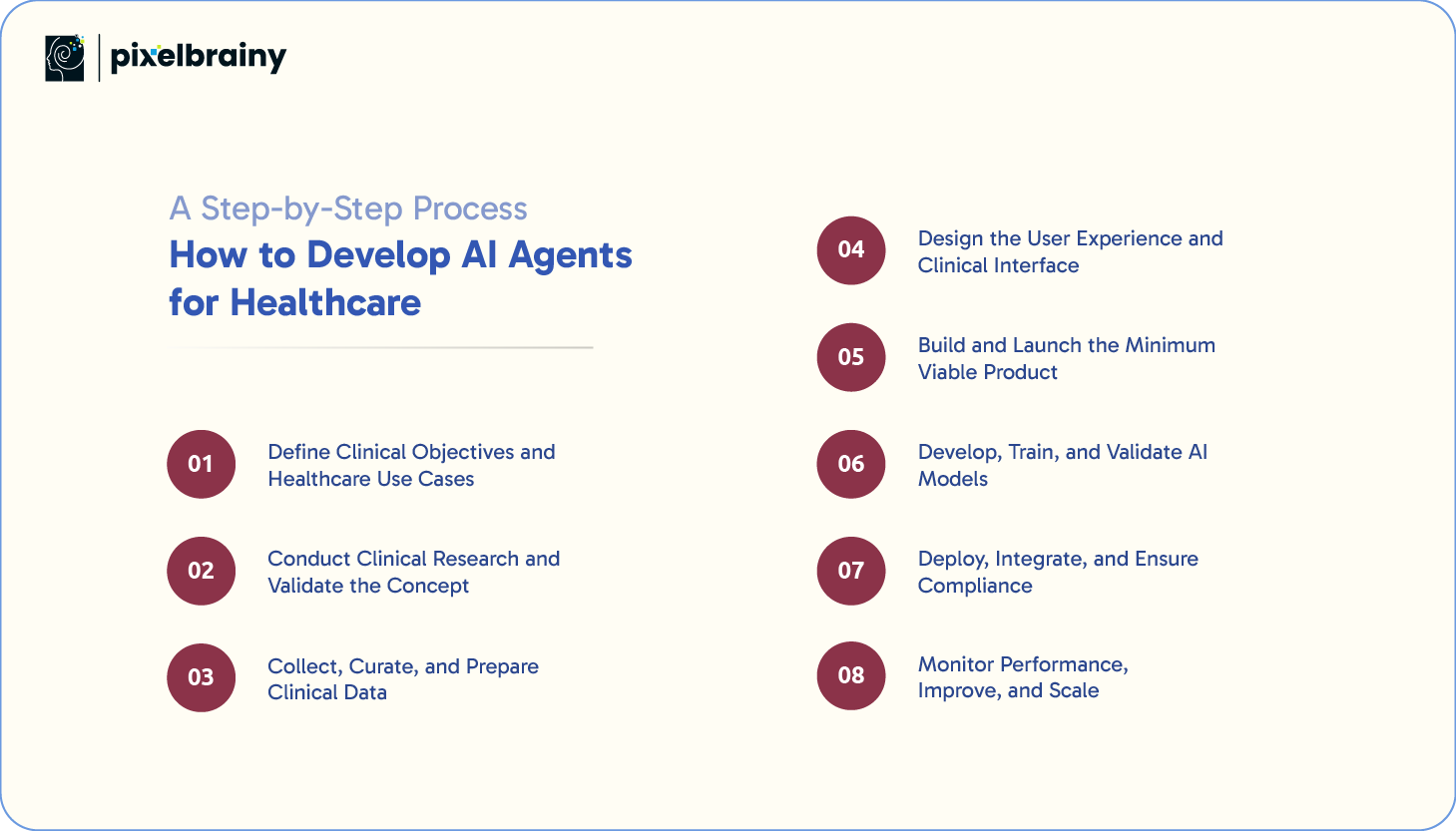
Aim: Identify the exact clinical or operational problem the AI agent will solve. This includes defining use cases such as patient triage, clinical decision support, documentation automation, or remote monitoring, along with measurable success metrics.
Why This Matters: Clearly defined objectives ensure the AI agent delivers real clinical value and aligns with healthcare priorities. It prevents misalignment between technical development and actual healthcare needs.
What to Focus On:
Aim: Perform in-depth clinical and market research, engage healthcare professionals, and build a proof of concept using representative datasets to validate feasibility and expected outcomes.
Why This Matters: Early validation reduces development risks and ensures the AI agent is clinically relevant, safe, and aligned with real-world use cases before large-scale investment.
What to Focus On:
Also Read: MVP vs Prototype vs Proof of Concept: A Strategic Approach to Product Development
Aim: Gather high-quality datasets from EHR systems, medical imaging platforms, wearable devices, and research databases. Clean, label, and structure the data for training and evaluation.
Why This Matters: Data quality directly impacts model performance. Poor data leads to inaccurate predictions, bias, and clinical risks that can affect patient safety and compliance.
What to Focus On:
Aim: Create user-friendly interfaces that align with clinical workflows and support both healthcare professionals and patients. Focus on usability, clarity, and accessibility.
Why This Matters: A well-designed interface improves adoption, reduces user errors, and ensures AI-generated insights are easily understood and actionable in clinical settings.
What to Focus On:
Aim: Develop a focused MVP that includes essential features such as core AI functionality, basic integrations, and workflow automation to test real-world performance.
Why This Matters: MVP deployment allows early feedback, identifies technical and clinical gaps, and supports iterative improvements before scaling the system.
What to Focus On:
Also Read: Top 10 AI MVP Development Companies in USA
Aim: Build and train machine learning models using clinical datasets. In many cases, building AI agents with LLM for healthcare enables advanced capabilities such as clinical documentation, summarization, and conversational interactions.
Why This Matters: Model accuracy and reliability are critical in healthcare. Proper validation ensures the AI agent performs safely and consistently across different patient populations.
What to Focus On:
Aim: Deploy the AI agent within healthcare systems and integrate it with EHR platforms, clinical tools, and patient applications. Ensure full compliance with healthcare regulations and data protection standards.
Why This Matters: Proper deployment ensures system reliability, regulatory adherence, and seamless integration into existing healthcare workflows without disruption.
What to Focus On:
Aim: Continuously monitor system performance, track KPIs, retrain models with new data, and expand capabilities across departments or healthcare networks.
Why This Matters: Healthcare environments evolve constantly. Continuous monitoring and improvement ensure long-term accuracy, scalability, and relevance of the AI agent.
What to Focus On:
For organizations evaluating who can develop AI agents for hospitals, following this structured process ensures the system is clinically reliable, compliant, and scalable while supporting long-term innovation and operational growth.
The cost to build AI agents for healthcare typically ranges from $25,000 to $250,000+, depending on factors such as use case complexity, level of AI model development, system integrations, and regulatory compliance requirements. More advanced solutions require higher investment due to clinical validation, data infrastructure, and security standards.
Healthcare organizations should evaluate costs based on project scope, scalability needs, and long-term operational goals rather than just initial development expenses.
| Agent Tier | Cost Range | What It Includes |
|---|---|---|
| Basic Healthcare AI Agent | $25,000 – $60,000 | Focuses on a single use case such as appointment scheduling, symptom triage, or basic documentation. Includes standard AI models, simple EHR integration, a basic dashboard, and essential HIPAA-compliant data handling. Suitable for startups or small clinics validating AI adoption. |
| Medium Healthcare AI Agent | $60,000 – $130,000 | Supports multiple use cases such as clinical decision support, chronic disease management, and remote monitoring. Includes advanced machine learning models, multi-channel patient engagement, wearable integrations, role-based access control, and scalable cloud infrastructure. |
| Advanced Healthcare AI Agent | $130,000 – $250,000+ | Includes enterprise-level capabilities such as multi-agent systems, medical imaging analysis, generative AI documentation, genomic data processing, and full regulatory compliance architecture. Designed for large hospitals, pharmaceutical companies, and enterprise healthcare platforms. |
Beyond initial development, healthcare organizations must plan for recurring investments to maintain system performance and compliance:
Investing in healthcare AI agent development requires a balance between initial build costs and long-term value. Organizations that plan for scalability, compliance, and continuous improvement can achieve sustainable returns while maintaining high standards of patient care and system performance.
Also Read: Agentic AI Development Cost: Factors & Examples
Building a scalable and clinically reliable healthcare AI agent requires a well-structured technology stack that supports data processing, model development, system integration, security, and compliance. The right combination of tools ensures that AI agents can operate efficiently within healthcare environments while meeting strict regulatory and performance requirements.
These tools are typically grouped across multiple layers including development, data infrastructure, AI modeling, integration, and deployment.
| Category | Tools & Technologies | Explanation |
|---|---|---|
| Programming Languages | Python, Java, Swift, Kotlin, TypeScript | Python is widely used for AI and data processing tasks. Java supports enterprise-level healthcare integrations. Swift and Kotlin enable mobile healthcare applications. TypeScript is used for frontend development and API management. |
| Agentic AI Frameworks | LangChain, AutoGen, CrewAI, Microsoft Semantic Kernel | These frameworks help build autonomous AI agents capable of reasoning, planning, and executing multi-step workflows. They enable orchestration of tools and support complex healthcare use cases. |
| Machine Learning & NLP Libraries | TensorFlow, PyTorch, scikit-learn, spaCy, Hugging Face | These libraries are used to build, train, and deploy models for clinical decision support, text analysis, medical entity recognition, and patient interaction across healthcare applications. |
| Large Language Model APIs | OpenAI GPT Models, Anthropic Claude, Google Gemini, Med-PaLM 2 | These APIs enable conversational AI, clinical documentation generation, and medical question answering. They enhance patient engagement and support advanced language-based healthcare applications. |
| EHR Integration Standards | HL7 FHIR, SMART on FHIR, Epic APIs, Cerner APIs | These standards ensure secure and standardized integration with electronic health record systems. They enable seamless data exchange and interoperability across healthcare platforms. |
| Medical Imaging AI Tools | MONAI, PyDicom, ITK-SNAP, Google Health AI APIs | These tools support development of AI models for radiology analysis, image segmentation, and diagnostic assistance. They are essential for imaging-based healthcare applications. |
| Data Infrastructure & ETL | Apache Kafka, Apache Spark, AWS Glue, Google BigQuery | These technologies handle real-time data streaming, large-scale processing, and data warehousing. They enable efficient handling of healthcare data for training and inference. |
| Databases & Vector Stores | PostgreSQL, MongoDB, Redis, Pinecone, FAISS | These systems store structured and unstructured healthcare data. Vector databases enable semantic search and memory retrieval for AI agents handling clinical information. |
| Security & Compliance Tools | OAuth 2.0, JWT, AES-256 Encryption, HashiCorp Vault | These tools ensure secure authentication, encryption, and access control. They help maintain compliance with healthcare data protection regulations such as HIPAA and GDPR. |
| Wearable & IoT Integration | Apple HealthKit, Google Health Connect, Bluetooth Medical SDKs | These integrations allow AI agents to collect real-time health data from wearable devices and connected medical equipment for monitoring and analysis. |
| Cloud Platforms | AWS HealthLake, Microsoft Azure Health Data Services, Google Cloud Healthcare API | These platforms provide secure and scalable infrastructure for storing, processing, and deploying healthcare AI applications while meeting compliance requirements. |
| DevOps & Deployment Tools | Docker, Kubernetes, Jenkins, Terraform | These tools support containerization, orchestration, and continuous deployment. They ensure scalability, reliability, and efficient management of AI agent infrastructure. |
| Analytics & Monitoring Tools | Grafana, Prometheus, Datadog, AWS CloudWatch | These tools track system performance, monitor AI model accuracy, and ensure system reliability through real-time alerts and analytics. |
| Testing & Quality Assurance | PyTest, Selenium, Postman, JMeter | These tools validate system performance, API functionality, and model accuracy under real-world conditions to ensure reliability before deployment. |
| Collaboration & Version Control | GitHub, GitLab, Jira, Confluence | These platforms support team collaboration, version control, and documentation throughout the AI agent development lifecycle. |
A well-chosen technology stack ensures that healthcare AI agents are secure, scalable, and capable of handling complex clinical workflows while maintaining high performance and regulatory compliance.
Also Read: AI Chatbot Development for Chronic Disease Management
Healthcare AI agents must be developed within strict regulatory frameworks to ensure patient safety, data protection, and clinical reliability. Compliance is a core requirement that governs how AI systems handle medical data, support clinical decisions, and operate within healthcare environments.
Organizations building healthcare AI agents must align with global standards covering data privacy, medical software validation, interoperability, and quality management. Below are the key compliance frameworks and their requirements.
HIPAA regulates the protection of patient health information in the United States. Any AI agent handling protected health information must comply with HIPAA privacy, security, and breach notification rules.
Key Requirements:
AI agents used for diagnosis, treatment support, or clinical decision-making may be classified as Software as a Medical Device. These systems must follow FDA guidelines for safety, validation, and lifecycle management.
Key Requirements:
GDPR governs the processing of personal data for individuals in the European Union. Healthcare data is classified as highly sensitive and requires strict protection measures.
Key Requirements:
HL7 FHIR is the standard for secure and standardized healthcare data exchange. It enables AI agents to integrate with electronic health record systems and other clinical platforms.
Key Requirements:
IEC 62304 defines the lifecycle requirements for medical software development. It ensures that healthcare AI systems are built using structured engineering and risk management practices.
Key Requirements:
ISO 13485 establishes quality management standards for organizations developing medical device software, including AI-based healthcare systems.
Key Requirements:
Adhering to these compliance frameworks ensures that healthcare AI agents are secure, reliable, and aligned with global regulatory standards, enabling safe deployment across clinical and operational environments.
Measuring the success of healthcare AI agents requires tracking key performance indicators that reflect clinical accuracy, operational efficiency, patient outcomes, and system reliability. These KPIs help organizations evaluate whether AI agents are delivering real value across healthcare workflows.
Defining and monitoring the right metrics ensures continuous improvement, regulatory alignment, and long-term scalability of AI-powered healthcare systems.
| KPI | Description |
|---|---|
| Clinical Decision Accuracy Rate | Measures the percentage of AI-generated recommendations that align with clinical guidelines or clinician judgment. High accuracy indicates reliable decision support, while lower accuracy highlights the need for model retraining or data quality improvements. |
| Patient Triage Accuracy & Escalation Rate | Tracks how accurately the AI agent assesses patient urgency and directs cases to appropriate care levels. Balanced accuracy and escalation rates indicate safe triage and effective patient flow management. |
| Clinical Documentation Time Reduction | Compares clinician time spent on documentation before and after AI implementation. Reduced time confirms improved efficiency and allows clinicians to focus more on patient care instead of administrative tasks. |
| Patient Engagement & Adherence Rate | Measures how actively patients interact with AI systems and follow care recommendations. Higher engagement and adherence indicate effective communication and improved patient participation in care plans. |
| Readmission Rate Reduction | Evaluates changes in hospital readmission rates after AI deployment. Lower readmission rates indicate better patient monitoring, timely intervention, and improved care continuity. |
| Administrative Cost Per Operation | Calculates the cost of completing workflows such as scheduling, billing, and coding. A reduction in cost per operation reflects improved efficiency and automation of administrative processes. |
| Regulatory Compliance Audit Pass Rate | Measures the percentage of audits or compliance checks passed without manual corrections. High pass rates indicate strong adherence to regulatory standards and reduced compliance risks. |
| Net Promoter Score for Patients & Clinicians | Assesses satisfaction levels among users interacting with the AI system. Higher scores indicate improved user experience, trust, and overall effectiveness of the AI agent in healthcare environments. |
Tracking these KPIs enables healthcare organizations to continuously evaluate performance, optimize AI systems, and ensure that healthcare AI agents deliver measurable clinical and operational value over time.
Developing healthcare AI agents involves addressing complex challenges related to data privacy, regulatory compliance, system integration, and clinical reliability. Identifying these challenges early and applying structured solutions ensures safe, scalable, and effective deployment across real-world healthcare environments.
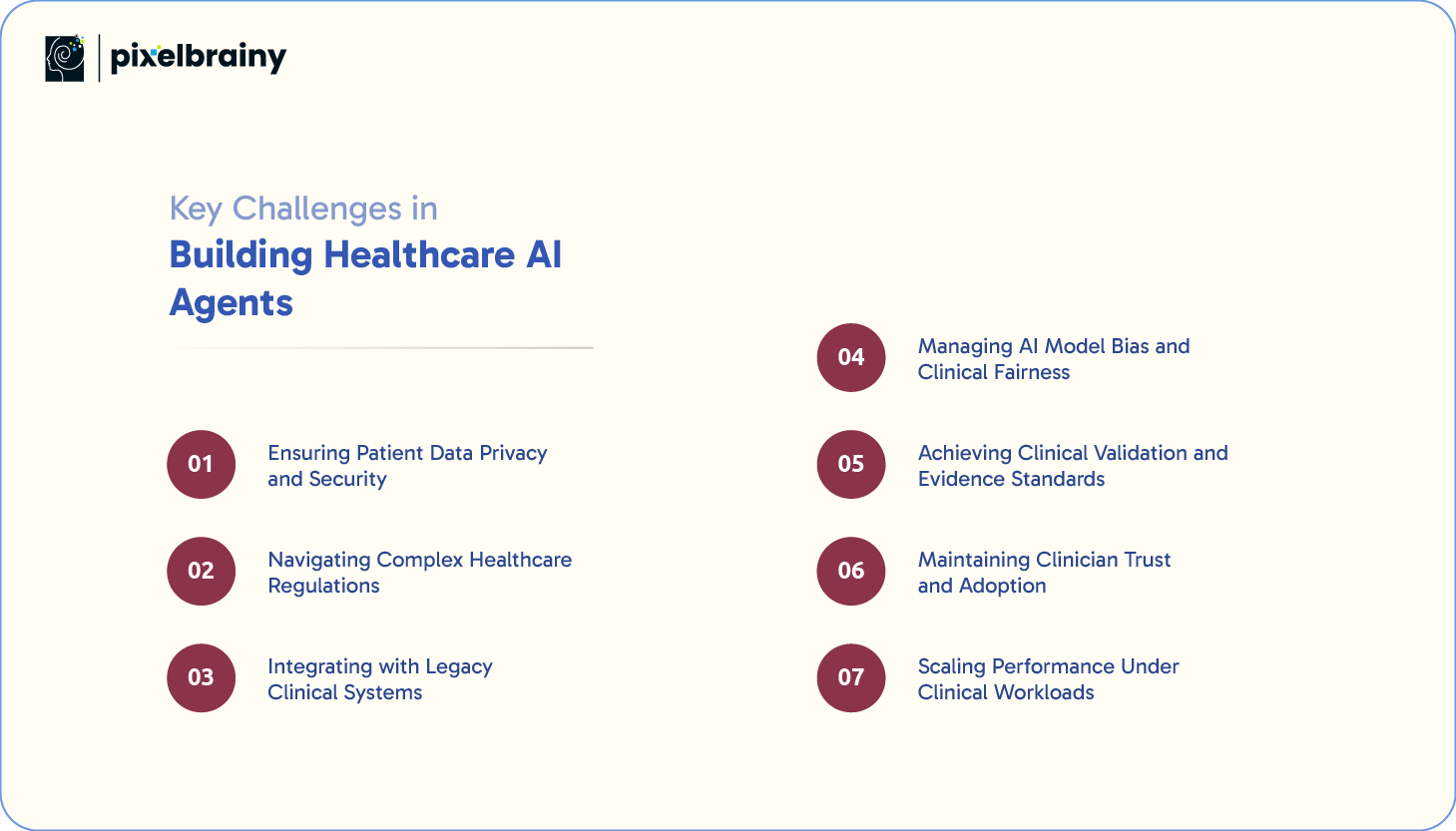
Healthcare data is highly sensitive and frequently targeted, making security a critical concern. AI agents that process patient information must be designed with strong protection mechanisms from the beginning.
How to overcome: Implement end-to-end encryption, zero-trust security architecture, and role-based access controls. Conduct regular security audits and use privacy-preserving techniques such as federated learning to minimize exposure of sensitive data.
Healthcare AI systems must comply with multiple regulatory frameworks such as HIPAA, GDPR, and FDA requirements. Managing these regulations without proper expertise can lead to delays and compliance risks.
How to overcome: Engage regulatory specialists early, follow standards like IEC 62304 and ISO 13485, and integrate compliance into system architecture from the start. Maintain clear documentation throughout the development lifecycle.
Many healthcare organizations rely on legacy systems that are not designed to integrate with modern AI technologies. This creates challenges in data exchange and workflow integration.
How to overcome: Use HL7 FHIR-based APIs and SMART on FHIR protocols to enable interoperability. Adopt a modular integration approach to connect systems gradually without disrupting existing infrastructure.
AI models trained on historical data may reflect existing biases, which can impact clinical decisions and patient outcomes. Ensuring fairness is essential in healthcare environments.
How to overcome: Train models on diverse datasets, conduct regular bias audits, and implement human oversight for high-risk decisions. Continuously monitor model performance across different patient groups.
Healthcare AI agents must meet strict validation requirements to demonstrate safety and effectiveness. Many organizations underestimate the effort required for clinical validation.
How to overcome: Integrate validation into the development process, collaborate with healthcare institutions, and conduct structured clinical studies. Continuously collect real-world evidence to support compliance and improvements.
AI systems will not deliver value if clinicians do not trust or adopt them. Lack of transparency and poor usability can limit adoption.
How to overcome: Build explainable AI systems that provide clear reasoning for recommendations. Involve clinicians in development and testing, and ensure the system aligns with real clinical workflows.
Healthcare AI agents must perform reliably under high patient volumes and time-sensitive conditions. Poor system design can lead to performance issues during peak demand.
How to overcome: Use scalable cloud infrastructure, design systems for parallel processing, and implement real-time monitoring with failover mechanisms to ensure consistent performance.
Addressing these challenges with structured solutions ensures that healthcare AI agents remain secure, compliant, reliable, and capable of scaling across complex healthcare systems.
Choosing the right partner is critical when building AI agents for healthcare. PixelBrainy combines deep expertise in healthcare AI agent development with strong clinical understanding and a proven delivery approach to build systems that are reliable, secure, and ready for real-world healthcare environments.
As a leading AI agent development company in USA, PixelBrainy specializes in designing and deploying intelligent AI agents for hospitals, digital health platforms, and healthcare startups. Our focus is on building solutions that align with clinical workflows, meet regulatory standards, and deliver measurable impact across patient care and operations.
We provide end-to-end AI development solutions tailored for healthcare, covering strategy, design, development, deployment, and continuous optimization. Our team integrates advanced technologies such as LangChain, AutoGen, and TensorFlow with HIPAA-compliant cloud infrastructure to ensure every AI agent operates safely and efficiently in live clinical settings.
PixelBrainy builds healthcare AI agents that seamlessly integrate with EHR systems, clinical tools, and patient engagement platforms. Our multidisciplinary team of developers, clinical consultants, and compliance experts ensures that every solution meets both technical and regulatory requirements without compromising usability or performance.
PixelBrainy partnered with a digital health organization in the United States to develop an AI agent platform focused on patient triage, chronic disease management, and clinical documentation.
The solution included a multi-agent system capable of assessing symptoms, delivering personalized care recommendations, and generating structured clinical documentation within a HIPAA-compliant environment integrated with existing EHR systems.
Results achieved:
This engagement highlights how working with the right AI partner can deliver measurable improvements in efficiency, patient outcomes, and operational performance.
With proven expertise, healthcare-focused development practices, and a commitment to innovation, PixelBrainy helps organizations build AI agents that transform how healthcare is delivered, managed, and experienced.
From understanding healthcare AI agent development to exploring architecture, use cases, benefits, and implementation strategies, it is clear that AI agents are transforming modern healthcare systems. Organizations looking to create intelligent AI agents in healthcare can streamline operations, enhance patient support, and build scalable, data-driven solutions that align with evolving clinical demands.
Whether you are exploring healthcare automation using AI agents or evaluating who can develop AI agents for hospitals, adopting the right approach and technology partner is essential. From startups to large healthcare enterprises, AI agents are becoming a core component of digital health transformation.
Businesses investing in developing AI agents for healthcare today are positioning themselves for long-term innovation, efficiency, and improved patient outcomes.
If you are ready to build a healthcare AI solution tailored to your needs, book an appointment with PixelBrainy and start your journey toward smarter healthcare systems.
AI agent development for healthcare is relevant for hospitals, clinics, telehealth platforms, pharmaceutical companies, insurance providers, and digital health startups. Any organization managing patient data, clinical workflows, or large-scale healthcare operations can use AI agents to improve efficiency, coordination, and care delivery.
Healthcare AI agents protect patient data through encryption, access control, and secure data handling practices. Systems are built with HIPAA-compliant frameworks, audit trails, and role-based permissions. Advanced techniques such as federated learning also reduce the need to store or transfer sensitive patient data centrally.
FDA approval depends on the function of the AI agent. Systems used for diagnosis, treatment recommendations, or clinical decision support may be classified as Software as a Medical Device and require regulatory review. Administrative AI agents typically do not require FDA approval but must still follow data protection standards.
The development timeline depends on complexity and scope. A basic MVP can be developed within 4 to 6 weeks, while a full-scale healthcare AI platform with integrations, validation, and compliance requirements may take several weeks to complete.
Yes, healthcare AI agents are designed to integrate with EHR systems using standards such as HL7 FHIR and SMART on FHIR. This allows secure access, updates, and synchronization of patient data across platforms like Epic, Cerner, and other clinical systems.
Maintaining accuracy requires continuous monitoring, regular model retraining, and periodic validation. Healthcare organizations implement performance tracking, detect model drift, and update systems using new clinical data to ensure consistent and reliable outcomes over time.

About The Author
Sagar Bhatnagar
Sagar Sahay Bhatnagar brings over a decade of IT industry experience to his role as Marketing Head at PixelBrainy. He's known for his knack in devising creative marketing strategies that boost brand visibility and market influence. Sagar's strategic thinking, coupled with his innovative vision and focus on results, sets him apart. His track record of successful campaigns proves his ability to utilize digital platforms effectively for impactful marketing efforts. With a genuine passion for both technology and marketing, Sagar continuously pushes PixelBrainy's marketing initiatives to greater success.

Working with the PixelBrainy team has been a highly positive experience. They understand the design requirements and create beautiful UX elements to meet the application needs. The dev team did an excellent job bringing my vision to life. We discussed usability and flow. Sagar worked with his team to design the database and begin coding. Working with Sagar was easy. He has the knowledge to create robust apps, including multi-language support, Google and Apple ID login options, Ad-enabled integrations, Stripe payment processing, and a Web Admin site for maintaining support data. I'm extremely satisfied with the services provided, the quality of the final product, and the professionalism of the entire process. I highly recommend them for Android and iOS Mobile Application Design and Development.

Great experience working with them. Had a lot of feedback and I found that unlike most contractors they were bugging me for updates instead of the other way around. They were extremely time conscience and great at communicating! All work was done extremely high quality and if not on time, early! They were always proactive when it comes to communication and the work is great/above par always. Very flexible and a great team to work with! Goes above and beyond to present us with multiple options and always provides quality. Amazing work per usual with Chitra. If you have UI/UX or branding design needs I recommend you go to them! Will likely work with them in the future as well, definitely recommended!

PixelBrainy is a joy to work with and is a great partner when thinking through branding, logo, and website layout. I appreciate that they spend time going into the "why" behind their decisions to help inform me and others about industry best practices and their expertise.

I hired them to design our software apps. Things I really like about them are excellent communication skills, they answer all project suggestions and collaborate right away, and their input on design and colors is amazing. This project was complex and needed patience and creativity. The team is amazing to do business with. I will be using them long-term. Glad to see there are some good people out there. I was afraid to try and outsource my project to someone but I am glad I met them! I really can't say enough. They went above and beyond on this project. I am very happy with everything they have done to make my business stand out from the competition.

It was great working with PixelBrainy and the team. They were very responsive and really owned the project. We'll definitely work with them again!

I recently worked with the PixelBrainy team on a project and I was blown away by their communication skills. They were prompt, clear, and articulate in all of our interactions. They listened and provided valuable feedback and suggestions to help make the project a success. They also kept me updated throughout the entire process, which made the experience stress-free and enjoyable.

PixelBrainy is very good at what it does. The team also presents themselves very professionally and takes care of their side of things very well. I could fully trust them taking up the design work in a timely and organised manner and their attention to detail saved us lots of effort and time. This particular project was quite intense and the team showed that they function very well under pressure. Very much looking forward to working with her again!

It's always an absolute pleasure working with them. They completed all of my requests quickly and followed every note I had for them to a T, which made our process go smoothly from start to finish. Everything was completed fast and following all of the guidelines. And I would recommend their services to anyone. If you need any design work done in the future, PixelBrainy should be your first call!

They took ownership of our requirements and designed and proposed multiple beautiful variants. The team is self-motivated, requires minimum supervision, committed to see-through designs with quality and delivering them on time. We would definitely love to work with PixelBrainy again when we have any requirements.

PixelBrainy was a big help with our SaaS application. We've been hard at work with a new UI/UX and they provided a lot of help with the designs. If you're looking for assistance with your website, software, or mobile application designs, PixelBrainy and the team is a great recommendation.

PixelBrainy designers are amazing. They are responsive, talented, and always willing to help craft the design until it matches your vision. I would recommend them and plan to continue them for my future projects and more!!!

They were awesome! Did a good job fast, and good communication. Will work with them again. Thank you

Creative, detail-oriented, and talented designers who take direction well and implement changes quickly and accurately. They consistently over-delivered for us.

PixelBrainy team is very talented and creative. Great designers and a pleasure to work with. PixelBrainy is an excellent communicator and I look forward to working with them again.

PixelBrainy has a very talented design team. Their work is excellent and they are very responsive. I enjoy working with them and hope to continue on all of our future projects.


Transform your ideas into reality with us.
Across these industries, each engagement brings unique challenges, from early-stage product development to scaling complex systems, helping us build a practical understanding of real-world product environments.