AI Summary Powered by PixelBrainy
When your SaaS platform needs an intelligent chatbot, outsourcing AI chatbot development can help you access specialized AI expertise without the expense of building an entire in-house team. However, a production-ready solution requires more than a basic FAQ bot. It may need large language model (LLM) integration, retrieval-augmented generation (RAG), secure data access, contextual conversations, and integration with your existing SaaS workflows.
The opportunity is growing rapidly. According to Grand View Research’s 2026 chatbot market report, the global chatbot market is projected to grow from $11.8 billion in 2026 to $41.2 billion by 2033, at a compound annual growth rate (CAGR) of 19.6%. This forecast highlights the expanding opportunity for businesses investing in intelligent customer support and conversational automation.
But how do you outsource AI chatbot development to the right company when vendors offer different levels of technical expertise, pricing, and delivery capabilities? Start by asking how they implement RAG pipelines, evaluate LLM responses, reduce hallucinations, protect sensitive information, and monitor performance after launch. Request working demonstrations and client references from comparable SaaS projects to distinguish genuine AI engineering expertise from conventional chatbot development.
The cost of outsourcing AI chatbot development depends on chatbot complexity, model selection, data preparation, integrations, security requirements, and ongoing maintenance. A focused project may take several weeks, while a production-grade SaaS chatbot can require several months. Your budget should also account for recurring expenses such as model API usage, cloud hosting, monitoring, and updates.
For businesses considering AI chatbot development outsourcing in the USA, compare providers based on technical capability, industry experience, transparent pricing, and post-launch support, not location alone.
This guide explores outsourcing AI chatbot development services, project costs, vendor evaluation, implementation steps, and common risks. It also explains how to manage an outsourced AI chatbot development project successfully, from defining requirements and validating expertise to deploying and optimizing a reliable conversational AI solution.
When a SaaS business needs a production-ready AI chatbot, building everything in-house can create challenges around hiring AI specialists, integrating large language models (LLMs), preparing business data, and maintaining response quality. Outsourcing AI chatbot development gives businesses access to specialized technical skills without requiring them to establish a complete AI engineering team internally.
However, outsourcing is not simply about reducing development costs. The right partner should understand your business workflows, demonstrate experience with conversational AI, and build a solution that integrates securely with your existing systems. If you're evaluating vendors, look beyond basic FAQ bots and ask about RAG architecture, response evaluation, data privacy, scalability, and post-launch support.
Here are seven key reasons businesses outsource AI chatbot development services in 2026 and beyond.
Developing a custom AI chatbot requires expertise in natural language processing (NLP), LLM integration, RAG pipelines, API development, and data engineering. Recruiting specialists across these areas can be expensive and time-consuming.
An experienced outsourcing partner can provide access to the relevant expertise, frameworks, and development tools needed to build chatbots that understand context, retrieve information from business data, and respond to customer queries. Before signing a contract, ask vendors to demonstrate these capabilities using a use case similar to yours.
Outsourcing can help businesses accelerate chatbot development through established workflows, dedicated teams, and iterative delivery. Instead of spending months assembling an internal team, you can begin with a defined scope and move through discovery, prototyping, integration, testing, and deployment.
For SaaS companies, this approach can help validate conversational AI features sooner. Actual delivery time depends on data readiness, integration complexity, security requirements, and the level of customization involved.
Building an in-house AI team involves salaries, recruitment, training, infrastructure, and ongoing research. Outsourcing AI chatbot development costs can be easier to manage through fixed-price projects, milestone-based payments, or dedicated development teams.
A realistic budget should include more than initial coding. Model API usage, cloud hosting, data preparation, third-party integrations, monitoring, and maintenance can all affect the total cost of ownership. Request an itemized estimate before committing to a vendor.
Developing an AI chatbot internally can divert product, engineering, and operations teams from their primary responsibilities. Outsourcing allows your internal team to focus on customer acquisition, product strategy, and revenue growth while specialists handle defined chatbot development tasks.
For the best results, your team should still contribute business knowledge, approved data sources, user scenarios, and feedback during development.
As your business grows, your chatbot may need additional integrations, more users, new languages, or support for complex workflows. Outsourcing provides flexibility to add specialized resources as requirements evolve.
For production-grade applications, evaluate how the vendor handles traffic spikes, retrieval latency, model costs, access controls, and system monitoring. A scalable architecture should support growth without introducing unnecessary infrastructure expenses.
An AI chatbot needs ongoing evaluation after launch. Changes in business information, user behavior, model performance, and connected systems can affect response quality.
A reliable outsourcing agreement should define responsibility for bug fixes, model and prompt updates, knowledge-base refreshes, security patches, performance monitoring, and incident response. Establish measurable service-level agreements (SLAs) so your team knows what support to expect.
AI chatbot projects can face risks such as inaccurate answers, data exposure, integration failures, unexpected usage costs, and missed delivery milestones. An experienced partner should address these risks through structured testing, access controls, documented requirements, and clear project governance.
When evaluating how to outsource AI chatbot development to the right company, ask how the vendor measures response accuracy, tests RAG retrieval, prevents unauthorized data access, handles hallucinations, and validates performance before launch. Request relevant case studies and client references to assess whether the company has delivered comparable production systems.
Outsourcing AI chatbot development can help your business access specialized expertise, manage costs, and bring reliable conversational AI to market faster. The key is to partner with a team that can demonstrate relevant technical experience and support your chatbot beyond launch.
When planning an AI chatbot for your SaaS platform, the decision to build internally or outsource development affects your budget, delivery timeline, technical control, and long-term maintenance. An in-house team offers direct oversight and internal knowledge retention, while outsourcing AI chatbot development provides access to specialized expertise without requiring you to recruit every AI skill internally.
For example, if your chatbot requires LLM integration, retrieval-augmented generation (RAG), CRM connectivity, and secure access to business data, should you build an in-house AI team or hire an outsourcing company with proven production experience? The answer depends on your existing technical capabilities, project complexity, available budget, and long-term product roadmap.
The following comparison examines the key differences between in-house and outsourced AI chatbot development, helping you determine which approach best fits your business requirements.
| Criteria | In-House AI Chatbot Development | Outsourced AI Chatbot Development |
| Expertise & Skills | Requires recruiting or training AI, NLP, and data science experts. Development may take longer due to skill-building and limited exposure. | Provides instant access to experienced AI professionals, data scientists, and chatbot specialists who use proven frameworks and tools. |
| Cost Structure | Involves high fixed costs for hiring, infrastructure, and ongoing training. | Offers flexible pricing models such as fixed, milestone-based, or pay-as-you-go, with lower setup costs. |
| Time-to-Market | Typically slower due to internal setup, team formation, and testing cycles. | Faster deployment using established workflows, pre-built modules, and agile methodologies. |
| Control & Customization | Full control over development, design, and data management. | Requires shared decision-making but ensures control through structured contracts and progress reviews. |
| Scalability | Scaling up requires new hires, additional tools, and longer onboarding processes. | Easily scalable with access to larger remote teams and adaptable resources based on project size. |
| Maintenance & Support | Internal teams manage all updates, bug fixes, and retraining tasks. | Vendors provide ongoing maintenance, updates, and optimization as part of long-term support packages. |
| Innovation & Best Practices | Innovation depends on internal research capacity and available knowledge. | Outsourcing partners bring insights from multiple industries and early adoption of the latest AI technologies. |
| Risk Management | The organization carries full responsibility for delivery risks, delays, or errors. | Shared accountability through service level agreements (SLAs) and vendor performance guarantees. |
| Resource Flexibility | Hard to reassign or scale down resources once the team is hired. | Offers flexibility to increase or reduce team size as project needs evolve. |
| Long-Term Value | Suitable for organizations building proprietary AI systems or long-term R&D initiatives. | Ideal for companies seeking rapid development, cost efficiency, and faster ROI. |
Both approaches can deliver effective AI chatbot solutions, but the right model depends on your resources and objectives. In-house development may suit businesses building proprietary AI capabilities for continuous innovation, while outsourcing AI chatbot development services can help companies access specialized skills, accelerate implementation, and scale resources more flexibly.
Before making a decision, compare the total development cost, technical expertise, data security practices, ownership terms, and post-launch support. A qualified outsourcing partner should also demonstrate experience with production-grade conversational AI, not just basic FAQ bots, and provide relevant client references where available.
When an outsourced AI chatbot project falls behind schedule, delivers poor results, or leaves your team without clear answers, you need a practical recovery plan. If your agency has missed deadlines for months and the chatbot quality falls short of its sales promises, consider an independent technical audit, corrective milestones, or transferring the project to another development partner.
Start by reviewing the contract, source code, documentation, and agreed acceptance criteria. Identify whether the problems stem from weak LLM integration, poor RAG implementation, inadequate testing, or communication failures.
If you're wondering how to recover a failing outsourced AI chatbot development project, look for a partner who can audit existing code, resolve performance issues, complete unfinished integrations, and take over abandoned or underdelivered projects. Ask for relevant case studies and client references to verify their recovery experience.
The following 10 steps explain how to manage outsourcing AI chatbot development, from defining requirements and evaluating vendors to testing, deployment, and ongoing maintenance, while helping businesses recover delayed projects and move toward production readiness.
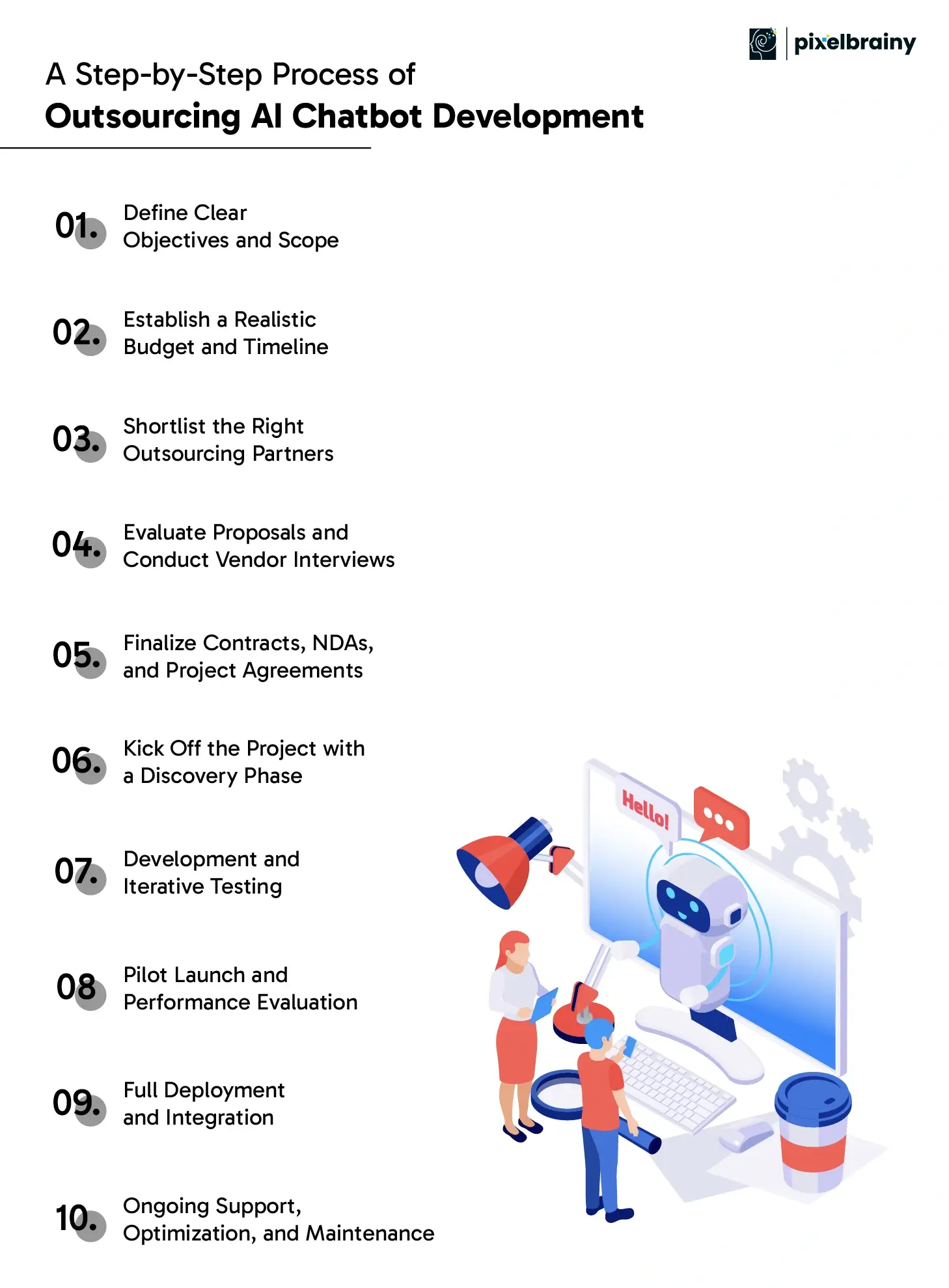
Before approaching a development partner, document what the chatbot must accomplish. Define the business problems it should solve, such as automating customer support, generating leads, answering product questions, or assisting SaaS users.
Specify the following requirements:
For AI-powered applications, also clarify whether you need LLM integration, retrieval-augmented generation (RAG), multilingual support, or access to internal business data.
A detailed scope helps your outsourcing partner estimate costs, select suitable technologies, and establish measurable deliverables.
The budget and timeline for outsourcing AI chatbot development depend on the chatbot's complexity, integrations, data readiness, security requirements, and AI capabilities.
A focused chatbot may take several weeks to develop, while a production-grade conversational AI system with custom RAG pipelines and multiple integrations can require several months.
Include these expenses in your budget:
Request an itemized estimate with delivery milestones, dependencies, and assumptions. If you're recovering a delayed project, ask the new provider to assess the existing codebase before quoting the remaining work.
Research companies with relevant experience in AI chatbot development, particularly those familiar with your industry and technical requirements.
Evaluate potential partners based on:
For businesses considering AI chatbot development outsourcing in USA, compare technical capabilities and delivery experience rather than location alone.
If your previous agency underdelivered, specifically ask prospective vendors whether they can audit, repair, and complete an existing chatbot project. Request examples of similar work and client references where available.
Ask shortlisted companies to explain their technical approach, implementation plan, estimated costs, and testing process.
Proposals should cover:
Ask technical questions that distinguish genuine AI expertise from basic FAQ bot development:
For a troubled project, also ask how the vendor diagnoses existing code, identifies technical debt, and validates incomplete functionality before recommending a recovery plan.
Before development begins, document the responsibilities and expectations of both parties.
The agreement should define:
Use a non-disclosure agreement (NDA) when appropriate to protect confidential business information. Clarify ownership and licensing rights for custom code, datasets, and third-party components.
For project recovery, verify your contractual rights to access existing code, documentation, cloud accounts, and other assets needed for continued development.
The discovery phase translates business requirements into a technical implementation plan. Your team and the outsourcing partner should agree on the architecture, data sources, user journeys, and performance expectations before development progresses.
Typical activities include:
For an existing project, discovery should also include a technical audit of the current codebase, integrations, AI configuration, test coverage, and unresolved defects. This helps establish what can be reused and what needs rebuilding.
During development, the team builds the chatbot in manageable stages, allowing stakeholders to review progress and provide feedback.
Key development tasks may include:
Testing should happen throughout development. Include functional, integration, security, and user acceptance testing, alongside AI-specific evaluations for factual accuracy, retrieval relevance, grounded responses, and prompt injection resistance.
For a project takeover, establish baseline test results before making major changes. This helps determine whether subsequent fixes actually improve performance.
Before releasing the chatbot to all users, deploy it to a limited audience. A pilot helps identify usability issues, inaccurate answers, integration failures, and unexpected operating costs.
Track metrics such as:
For RAG-based chatbots, check whether responses are supported by retrieved information and whether the system escalates questions it cannot answer reliably.
Use the results to improve prompts, retrieval settings, knowledge sources, and conversation flows before a wider launch.
Once the pilot meets the agreed acceptance criteria, deploy the chatbot across the required channels, such as your website, SaaS application, mobile app, or messaging platforms.
Before launch, verify that:
Coordinate deployment with your internal engineering and operations teams. A staged rollout can help identify production issues early and minimize disruption.
An AI chatbot requires ongoing monitoring because changing business information, user behavior, models, and integrations can affect its performance.
Your outsourcing partner should support:
Establish service-level agreements (SLAs) covering incident response, maintenance, and support. Review performance regularly to ensure improvements are based on real usage data.
For a recovered project, confirm that the new team has documented the system, resolved critical defects, and established a sustainable maintenance process before closing the recovery phase.
A structured approach to outsourcing AI chatbot development services helps businesses control costs, evaluate technical expertise, and reduce delivery risks. If a project is already failing, an independent audit, clear acceptance criteria, and a realistic recovery plan can help you regain control and move toward a reliable production-ready chatbot.
A successful AI chatbot depends on more than the technology behind it. Your development partner must understand your business workflows, demonstrate genuine AI engineering expertise, and deliver a solution that meets your performance, security, and scalability requirements. For businesses planning outsourcing AI chatbot development, evaluating vendors carefully can help prevent missed deadlines, poor chatbot quality, and unexpected costs.
For example, if you're building a SaaS chatbot with large language model (LLM) integration and retrieval-augmented generation (RAG), how can you distinguish a company with production-grade AI experience from one that mainly develops basic FAQ bots? Ask for technical demonstrations, relevant client references, documented testing methods, and a clear explanation of how the team handles hallucinations, data privacy, and ongoing optimization.
The following factors will help you evaluate AI chatbot development outsourcing companies, compare proposals, and identify a partner capable of delivering a reliable solution.

The first step is to assess the vendor’s technical proficiency. A capable outsourcing partner should have proven experience in artificial intelligence, natural language processing (NLP), and machine learning. Ask about their knowledge of popular frameworks such as TensorFlow, PyTorch, Dialogflow, or Rasa, and their ability to integrate with APIs, CRMs, and analytics platforms.
In addition, consider their industry experience. A vendor who has worked in your specific sector will better understand user behaviors, compliance requirements, and business workflows, which helps accelerate development and reduce errors.
A credible partner will have a portfolio showcasing previous chatbot projects. Review these examples to understand their design quality, user experience, and technical innovation. Look for real-world case studies that demonstrate tangible results, such as improved customer engagement or reduced support costs.
If possible, request references from previous clients to confirm the vendor’s ability to deliver on time, stay within budget, and maintain transparency throughout the project.
Strong technical skills alone are not enough. Effective communication and collaboration are equally important. Ask who will be on your project team and what roles they play — such as AI engineers, UX designers, data scientists, and project managers.
Evaluate how the team communicates progress, handles feedback, and resolves challenges. A reliable partner will maintain consistent updates through channels like Slack, email, or project management tools and will be open to joint reviews and regular check-ins.
Since chatbots often process sensitive customer data, your outsourcing partner must follow strict data security and privacy regulations. Verify their compliance with standards like GDPR, HIPAA, or ISO certifications, depending on your region and industry.
Ensure that the company uses encryption, secure data storage, and controlled access systems. Discuss how they handle user data, anonymization, and backups to prevent unauthorized access or data breaches.
A structured and transparent development process ensures accountability and clarity. The best outsourcing partners follow agile methodologies, which promote flexibility, collaboration, and iterative improvements.
Ask your vendor to outline their process, from discovery and design to testing and deployment. Clear milestones, sprint cycles, and performance tracking help you stay informed and confident that the project is on schedule.
Before starting the project, confirm who will own the source code, training data, and final deliverables. Your business should retain full ownership of all intellectual property developed during the project.
Include this clause in the contract to prevent future disputes or dependency on the vendor. A trustworthy partner will always respect IP rights and ensure full transfer of assets upon project completion.
AI chatbot development does not end after deployment. Continuous support is vital to maintain performance, fix bugs, and retrain models as new data comes in. Ask if the vendor provides long-term maintenance, regular updates, and performance monitoring.
An ideal partner will offer service-level agreements (SLAs) that define response times, maintenance schedules, and escalation procedures to ensure the chatbot remains efficient and reliable.
While cost is a critical factor, it should not be the only deciding element. Some vendors may offer low prices but compromise on quality or support. Compare proposals carefully to understand what is included — development, integration, training, and ongoing maintenance.
Look for partners who focus on delivering measurable business outcomes rather than just technical delivery. A vendor who aligns pricing with performance and ROI often proves to be more valuable in the long run.
Cultural understanding and time zone compatibility can significantly influence collaboration quality. Choose a vendor whose communication style, work ethics, and values align with your organization.
If you operate in different time zones, ensure there are overlapping working hours to allow for daily coordination, quick feedback, and real-time updates.
Before committing to a long-term contract, start with a small pilot project. This allows you to evaluate the vendor’s working style, response speed, and technical capabilities in real conditions.
A successful pilot builds trust and confidence, confirming that the partner can handle larger, more complex chatbot initiatives effectively.
Selecting the right outsourcing partner for AI chatbot development requires careful evaluation across technical, operational, and cultural dimensions. The right partner will not only build a chatbot that meets your current goals but also support you in scaling and optimizing it for future needs.
The right outsourcing partner for AI chatbot development should offer technical expertise, transparent communication, clear ownership terms, and dependable post-launch support. Evaluate each company against your business requirements, verify its relevant experience, and establish measurable deliverables before committing to a project.
Also Read: Top 20 Chatbot Development Companies in United States
The average cost of outsourcing AI chatbot development ranges from $10,000 to $50,000+, depending on chatbot complexity, AI capabilities, integrations, and production requirements. Basic FAQ bots cost less than AI-powered customer service solutions that handle complex queries, retrieve business data, and maintain conversational context.
Consider a mid-market enterprise handling 8,000 customer inquiries daily. Your procurement team receives two proposals for similar features: one costs $20,000 and the other $50,000. What explains the difference, and can the cheaper option handle your actual conversation complexity?
The price gap may reflect differences in LLM integration, retrieval-augmented generation (RAG), CRM connectivity, security, testing, scalability, and ongoing support. A lower quote may also exclude hosting, model API usage, monitoring, and maintenance.
When comparing AI chatbot development outsourcing costs, evaluate technical scope, response accuracy, expected resolution rates, and total operating expenses, not just the initial price.
The biggest factor affecting AI chatbot development cost is the functionality required.
| Chatbot type | Estimated development cost | Typical capabilities |
| Basic FAQ chatbot | $10,000 to $15,000 | Predefined responses and common questions |
| Mid-level AI chatbot | $15,000 to $30,000 | NLP, contextual conversations, CRM integration |
| Advanced AI chatbot | $30,000 to $50,000+ | LLMs, RAG, complex workflows, advanced security |
For an enterprise handling thousands of daily inquiries, a basic chatbot may work if questions are repetitive. Complex troubleshooting, account-specific queries, and multiple data sources require more engineering.
What to check: Ask vendors to demonstrate how their solutions handle real customer questions, follow-ups, exceptions, and escalation to human agents.
The technology stack affects development effort, flexibility, and ongoing costs. Rule-based platforms suit predictable workflows, while LLM-powered chatbots support more flexible conversations. RAG can ground responses in approved company documents and product information.
Costs may increase with:
Third-party providers may charge recurring API or licensing fees, so compare operating costs alongside initial development pricing.
Connecting the chatbot to existing systems can significantly increase development effort.
Common integrations include:
Individual integrations may cost approximately $2,000 to $10,000, depending on complexity. A chatbot that retrieves information is generally less complex than one that updates tickets, checks orders, or modifies customer accounts.
A standard website chat widget usually costs less than a custom interface supporting multiple channels, rich media, and multilingual conversations.
Design expenses may include custom chat interfaces, conversation flows, mobile integration, accessibility, and human-agent handoff.
For customer service operations, prioritize clear responses and smooth escalation over visual features that do not improve resolution.
AI chatbots depend on the quality of their source data. Preparing FAQs, product documentation, and historical support conversations may involve:
RAG projects vary in cost based on document volume, data formats, and update frequency. Custom model training may add expense, but it is not necessary for every chatbot.
Initial development costs do not cover the chatbot's entire lifecycle. Annual maintenance may cost approximately 15% to 25% of the initial development cost, depending on the support agreement.
Recurring expenses include:
For 8,000 daily inquiries, request operating cost estimates based on conversation length, model choice, peak traffic, and expected escalation rates.
Development rates vary by region and expertise.
| Outsourcing region | Indicative hourly rate |
| North America or Western Europe | $40 to $80 |
| Eastern Europe or Latin America | $25 to $50 |
| Asia, including India and the Philippines | $15 to $40 |
These are planning estimates, not fixed rates. Compare technical expertise, communication, security, and support alongside hourly pricing. A lower rate may not reduce total costs if it leads to rework.
Budget for expenses that may fall outside the initial proposal:
Separating one-time development expenses from recurring costs gives you a more realistic total budget.
Use the same checklist to evaluate both vendors.
| Evaluation area | What to verify |
| Conversation complexity | Can it handle real questions and follow-ups? |
| AI architecture | Are LLM integration and RAG included where needed? |
| Integrations | Are CRM and helpdesk connections included? |
| Quality assurance | Are accuracy and security tests documented? |
| Daily inquiry volume | Has expected traffic been considered? |
| Operating costs | Are hosting, API usage, and maintenance estimated? |
| Business outcomes | Will resolution and escalation rates be measured? |
A $20,000 proposal may be sufficient for a focused chatbot, while a $50,000 proposal may include additional integrations, stronger testing, and production-readiness work. Price alone does not prove quality. Request demonstrations, clear deliverables, and documented results from comparable deployments.
The cost of outsourcing AI chatbot development typically ranges from $10,000 to $50,000+. Compare technical scope, expected performance, and ongoing expenses to determine which proposal best fits your customer service needs.
A successful outsourced AI chatbot development project requires more than technical expertise. Clear requirements, measurable performance targets, regular communication, and ongoing quality checks help ensure the chatbot meets business expectations and stays within budget.
For example, if your outsourced chatbot is missing deadlines, producing inaccurate responses, or failing to meet agreed performance targets, how can you keep the project on track and hold your development partner accountable? Establishing clear KPIs, milestone-based reviews, documented acceptance criteria, and defined escalation procedures from the beginning can help prevent these problems and make issues easier to resolve.
When outsourcing AI chatbot development services, businesses should also address data security, source code ownership, integration testing, and post-launch maintenance. These practices are particularly important for AI-powered solutions that use large language models (LLMs), retrieval-augmented generation (RAG), and customer data to deliver contextual responses.
The following best practices will help you manage an outsourced AI chatbot development project successfully, maintain quality throughout development, and build a reliable chatbot that supports your long-term business goals.
Before starting any project, define what success looks like. Your goals might include reducing customer service response time, improving lead generation, or increasing engagement on digital platforms.
Translate these goals into measurable KPIs such as chatbot accuracy rate, resolution rate, customer satisfaction score (CSAT), or cost savings per month.
Clear KPIs give your outsourcing partner a concrete direction and allow both teams to track progress effectively.
A well-defined project scope prevents confusion, delays, and additional costs. Document everything, including chatbot functionalities, conversation flows, target user segments, integration points, and timelines.
Share reference examples and user scenarios to help your vendor understand your expectations. The more detailed the documentation, the fewer misunderstandings will arise during development.
Select an outsourcing partner with proven expertise in AI chatbot development, NLP, and machine learning. Review their past work, industry experience, and case studies to ensure they can handle your project’s complexity.
A reliable vendor brings technical excellence and strategic insight, helping you build a chatbot that aligns with both your business goals and customer needs.
Consistent communication is crucial for outsourcing success. Set up dedicated collaboration tools such as Slack, Microsoft Teams, or Jira for updates and progress tracking.
Schedule weekly or bi-weekly review meetings to evaluate progress, address concerns, and discuss adjustments. This ongoing communication builds trust, ensures transparency, and keeps the project aligned with business objectives.
AI chatbot projects benefit greatly from an agile development model. Instead of delivering everything at once, the project is divided into smaller sprints or phases.
This allows for regular feedback, continuous testing, and iterative improvements. Agile practices reduce risks, improve quality, and ensure that the chatbot evolves based on user feedback and real-world performance.
Since chatbots handle sensitive customer data, make data protection a top priority. Work with your outsourcing partner to define security protocols, encryption methods, and compliance measures for data storage and handling.
Confirm that the vendor adheres to international data protection regulations such as GDPR, HIPAA, or local privacy laws applicable to your region. This builds customer trust and safeguards your brand reputation.
An effective chatbot is more than an automated responder; it delivers human-like interactions that reflect your brand’s voice. Collaborate closely with the vendor’s UX and conversation design team to ensure that tone, responses, and personality align with your business identity.
Encourage user testing throughout development to refine the experience. A well-designed chatbot interface with a friendly and accurate tone boosts customer engagement and satisfaction.
Thorough testing ensures that your chatbot performs reliably under real-world conditions. Include functional testing, integration testing, and load testing to confirm stability and responsiveness.
Simulate customer conversations to evaluate intent recognition accuracy and error handling. A pilot test or soft launch with a small user group helps identify issues early before full-scale deployment.
When outsourcing development, clarify ownership of all assets such as source code, training data, and documentation. Ensure these are transferred to your company after project completion.
Also, request a handover session where the vendor trains your internal team on chatbot maintenance, performance tracking, and future updates.
A chatbot’s performance improves over time as it learns from interactions. After deployment, collaborate with your outsourcing partner to monitor metrics and retrain the model periodically.
Regular performance reviews, user feedback analysis, and feature updates help your chatbot stay relevant and effective. Continuous improvement transforms your chatbot from a simple support tool into a long-term business asset.
A well-defined SLA sets expectations for quality, response times, maintenance frequency, and escalation procedures. It protects both parties by providing accountability and measurable standards for post-launch support.
Review SLAs carefully to ensure they cover all essential aspects, including uptime guarantees, bug-fix timelines, and reporting protocols.
The most successful chatbot projects happen when the client and vendor operate as partners rather than separate entities. Treat your outsourcing team as an extension of your organization.
Involve them in strategy discussions, share user insights, and encourage proactive suggestions. A collaborative approach results in better solutions, faster innovation, and higher long-term value.
Following these best practices helps reduce delivery risks, improve chatbot quality, and strengthen collaboration with your development partner. With clear KPIs, transparent communication, robust security, and continuous performance monitoring, outsourcing AI chatbot development can deliver measurable business value well beyond launch.
Even with a clear strategy, outsourcing AI chatbot development can present challenges that affect delivery timelines, chatbot quality, budgets, and long-term performance. Communication gaps, integration issues, unclear ownership, and inadequate testing can turn an otherwise promising project into an expensive setback.
For example, if your outsourced AI chatbot is behind schedule, delivers inaccurate responses, and fails to integrate with your CRM as promised, what practical steps can you take to get the project back on track? Start by reviewing the agreed scope, milestones, acceptance criteria, and contract terms. Then identify the root causes, document unresolved issues, and establish a corrective action plan with measurable deadlines. If the vendor cannot address the problems, an independent technical audit or transition to another development partner may be necessary.
Businesses investing in AI chatbot development outsourcing services can reduce these risks by setting clear expectations, validating technical capabilities, protecting intellectual property, and defining accountability before development begins. Proactive planning is especially important for AI-powered chatbots that rely on large language models (LLMs), business data, and integrations with existing systems.
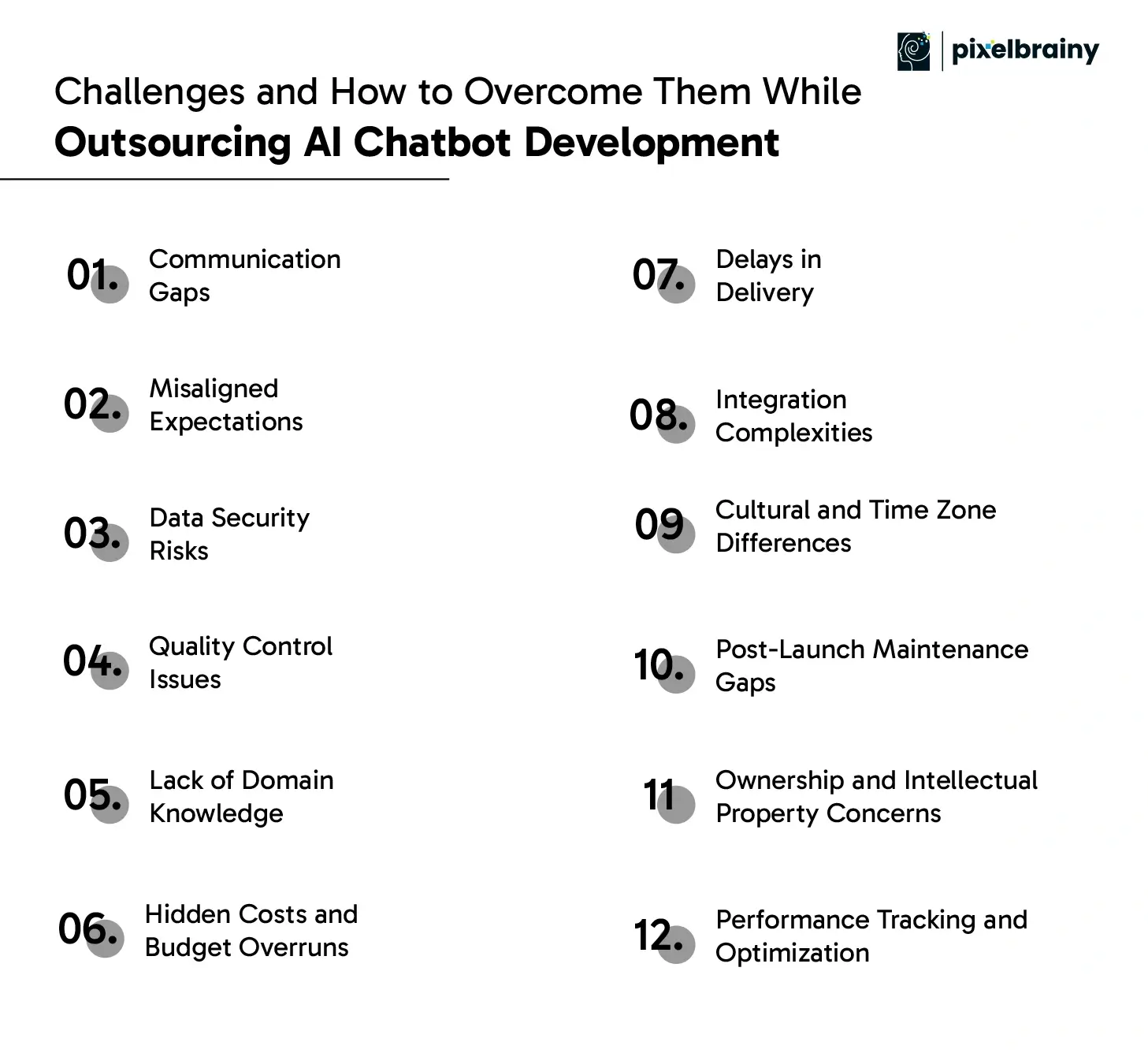
The table below highlights common AI chatbot outsourcing challenges, explains why they occur, and outlines practical ways to prevent or resolve them.
| Common Challenge | Explanation | How to Overcome It |
| Communication Gaps | Time zone differences, unclear requirements, and limited updates can lead to miscommunication between your internal team and the vendor | Establish consistent communication through tools like Slack or Teams. Schedule regular check-ins and maintain detailed project documentation to ensure clarity. |
| Misaligned Expectations | A lack of shared understanding around goals, deliverables, or quality standards can cause frustration and rework | Begin with a detailed discovery phase and define objectives, KPIs, and milestones clearly. Conduct regular project reviews to stay aligned. |
| Data Security Risks | Chatbots process sensitive user or company data, making security breaches a major concern | Work only with vendors who follow data privacy regulations such as GDPR or HIPAA. Use encryption, NDAs, and access control policies to protect information. |
| Quality Control Issues | Rushed development or lack of proper testing can result in unreliable chatbot performance | Set clear quality benchmarks, include multiple testing stages, and request periodic demos for validation. |
| Lack of Domain Knowledge | Vendors unfamiliar with your industry may not fully understand customer needs or workflows | Choose a partner with proven experience in your industry or provide comprehensive onboarding sessions and documentation. |
| Hidden Costs and Budget Overruns | Additional expenses such as integrations or maintenance can increase total project cost unexpectedly | Request detailed pricing breakdowns upfront and use milestone-based or fixed-cost contracts for transparency. |
| Delays in Delivery | Poor project planning or lack of resource allocation may lead to missed deadlines | Agree on a timeline with defined deliverables and adopt agile methodologies to ensure faster, iterative progress. |
| Integration Complexities | Connecting chatbots with existing systems like CRMs, ERPs, or APIs can be technically challenging | Involve your IT team early, document all integration requirements, and select vendors experienced in system integration. |
| Cultural and Time Zone Differences | Limited overlapping work hours or differing communication styles can slow progress | Choose vendors with compatible working hours or assign dedicated project coordinators. Use asynchronous tools for updates and documentation. |
| Post-Launch Maintenance Gaps | Some vendors provide limited post-launch support, leading to declining performance over time | Include maintenance and optimization services in your agreement, with clear SLAs outlining support frequency and response times. |
| Ownership and Intellectual Property Concerns | Unclear contracts can cause disputes over who owns chatbot code and training data | Clearly define IP ownership in the contract and ensure full transfer of source code and assets after project completion. |
| Performance Tracking and Optimization | Without tracking key metrics, it becomes difficult to measure chatbot success | Implement analytics tools to monitor user engagement and accuracy. Conduct performance reviews and retrain models regularly. |
Successful outsourcing AI chatbot development depends on identifying risks early and managing them with clear processes, measurable standards, and consistent communication. By addressing these challenges proactively, businesses can improve delivery reliability, protect their investment, and build chatbots that deliver better customer experiences and measurable business value.
At PixelBrainy, a top AI chatbot development company, we believe that the success of every AI chatbot project lies in combining business strategy, human-centered design, and cutting-edge technology. Over the years, our team has delivered chatbot solutions across industries such as finance, eCommerce, healthcare, and education.
Below are two examples that showcase how PixelBrainy’s AI-driven approach helps businesses automate communication, enhance engagement, and achieve measurable results.
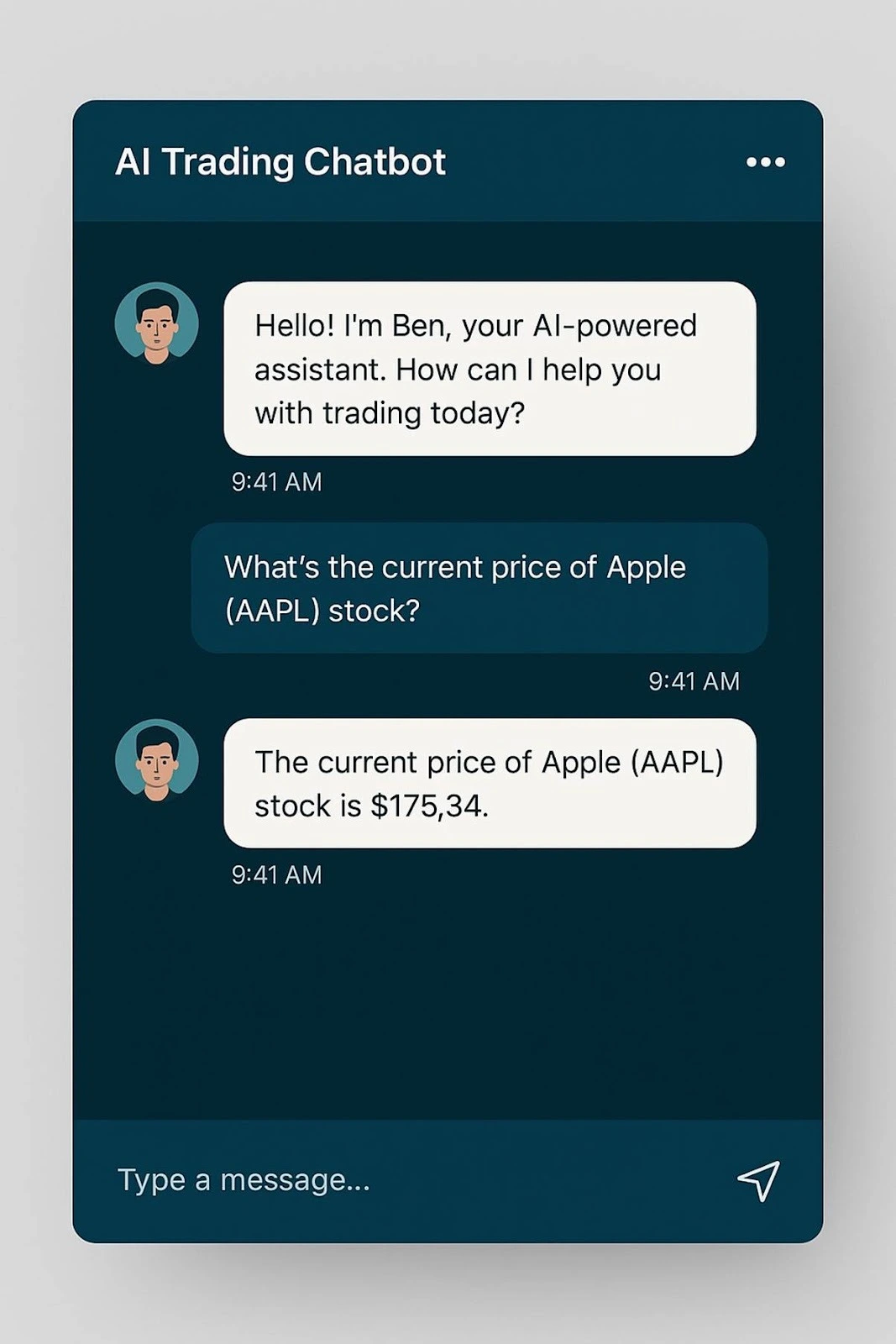
Client: A fintech startup offering online trading and portfolio management tools
Objective: To automate client interactions, provide personalized market insights, and deliver instant portfolio updates through an intelligent chatbot.
Solution: PixelBrainy developed an AI-powered trading assistant capable of real-time data interpretation, trade summaries, and personalized financial insights. The chatbot integrated with the client’s trading APIs and used NLP models to understand complex financial queries.
Key Features:
Results:
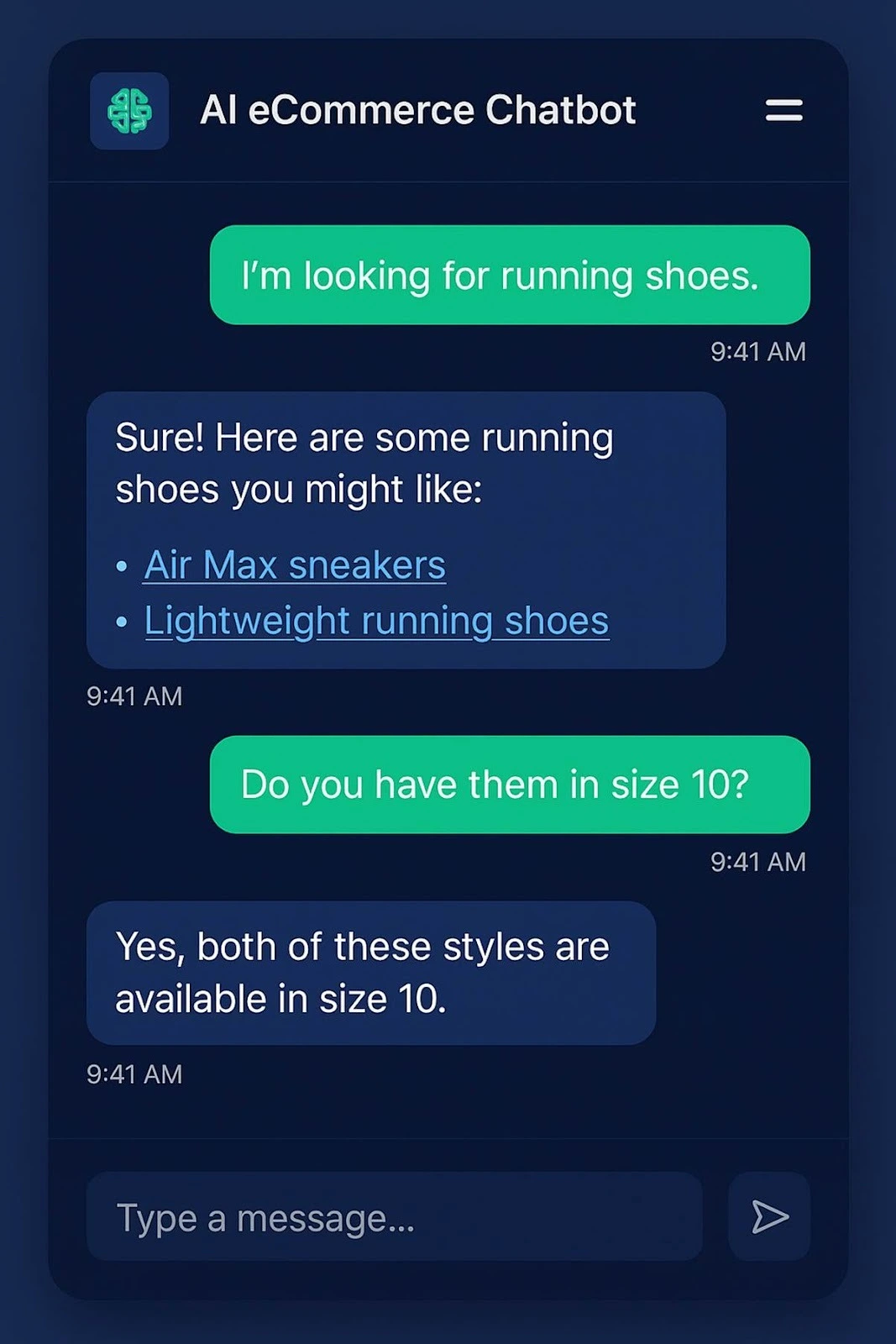
Client: A leading online fashion retailer
Objective: To improve customer experience by automating product recommendations, order tracking, and support queries across multiple channels.
Solution: PixelBrainy designed a multi-channel eCommerce chatbot integrated with Shopify, WhatsApp, and Facebook Messenger. The chatbot used AI-based recommendation engines and sentiment analysis to deliver personalized interactions.
Key Features:
Results:
PixelBrainy doesn’t just build chatbots; we create intelligent communication ecosystems that integrate seamlessly with business workflows. Our unique framework combines:
By partnering with PixelBrainy, businesses gain more than just automation — they gain a digital assistant that understands, learns, and drives measurable business outcomes.
Outsourcing AI chatbot development enables businesses to access specialized AI expertise, manage development costs, and accelerate time to market without building every capability in-house. However, long-term success depends on choosing a partner that understands your business requirements, delivers reliable AI functionality, and provides ongoing support after deployment.
Whether you're automating customer service, improving lead generation, or building personalized digital experiences, define clear performance goals and evaluate vendors based on technical expertise, transparent pricing, data security, integration capabilities, and measurable results. A structured approach to outsourcing AI chatbot development services can help reduce project risks, improve chatbot performance, and deliver lasting business value.
PixelBrainy helps businesses plan and develop AI chatbot solutions tailored to their operational needs. If you're exploring an AI chatbot project, discuss your requirements, expected outcomes, and technical challenges with the team to determine the right approach for your business.
Ready to build an AI-powered chatbot for your business? Schedule a call with PixelBrainy to discuss your project requirements and development goals.
The cost of outsourcing AI chatbot development typically ranges from $10,000 to $50,000+, depending on chatbot complexity, LLM integration, RAG implementation, third-party integrations, security requirements, and ongoing maintenance. Request a detailed cost breakdown covering development, hosting, API usage, and post-launch support before comparing vendor proposals.
To choose the right AI chatbot development outsourcing company, evaluate its LLM and RAG expertise, industry experience, integration capabilities, security practices, and post-launch support. Request technical demonstrations, relevant client references, and documented testing methods to verify that the vendor can deliver a production-ready chatbot rather than a basic FAQ bot.
To outsource AI chatbot development for enterprise customer service, define your daily inquiry volume, conversation complexity, required integrations, security standards, and resolution targets. Evaluate vendors on their ability to handle contextual conversations, retrieve accurate business information, escalate complex cases to human agents, and scale reliably under peak workloads.
If an outsourced AI chatbot development project is delayed or underperforming, review the contract, acceptance criteria, source code, and outstanding deliverables. Arrange an independent technical audit and establish a corrective action plan with measurable deadlines. If the agency cannot resolve the issues, assess contractual exit options and transfer requirements before engaging a team experienced in chatbot project recovery.
In-house vs. outsourced AI chatbot development comes down to control, cost, expertise, and long-term strategy. In-house teams provide direct oversight and retain internal knowledge, while outsourcing provides access to specialized AI engineers without building a complete team internally. Compare total ownership costs, delivery timelines, security needs, and ongoing development requirements.
To verify an AI chatbot development company's LLM and RAG expertise, request a live demonstration using realistic customer queries and follow-up questions. Ask how the team evaluates retrieval accuracy, prevents hallucinations, protects sensitive data, and monitors production performance. Look for relevant project references and documented results rather than relying solely on sales presentations.
When evaluating AI chatbot development outsourcing companies in the USA, review technical capabilities, data protection practices, intellectual property terms, communication processes, and support commitments. Define project milestones, measurable KPIs, acceptance criteria, and escalation procedures in the contract. Compare vendors on total project value rather than hourly rates alone.
To measure ROI from an outsourced AI chatbot development project, track automated resolution rates, cost per resolved inquiry, customer satisfaction, response times, and human-agent escalation rates. Compare these metrics with pre-launch baselines and account for development costs, LLM API usage, hosting, and maintenance. This helps determine whether the chatbot is delivering measurable operational savings and customer service improvements.

About The Author
Sagar Bhatnagar
Sagar Sahay Bhatnagar brings over a decade of IT industry experience to his role as Marketing Head at PixelBrainy. He's known for his knack in devising creative marketing strategies that boost brand visibility and market influence. Sagar's strategic thinking, coupled with his innovative vision and focus on results, sets him apart. His track record of successful campaigns proves his ability to utilize digital platforms effectively for impactful marketing efforts. With a genuine passion for both technology and marketing, Sagar continuously pushes PixelBrainy's marketing initiatives to greater success.

Working with the PixelBrainy team has been a highly positive experience. They understand the design requirements and create beautiful UX elements to meet the application needs. The dev team did an excellent job bringing my vision to life. We discussed usability and flow. Sagar worked with his team to design the database and begin coding. Working with Sagar was easy. He has the knowledge to create robust apps, including multi-language support, Google and Apple ID login options, Ad-enabled integrations, Stripe payment processing, and a Web Admin site for maintaining support data. I'm extremely satisfied with the services provided, the quality of the final product, and the professionalism of the entire process. I highly recommend them for Android and iOS Mobile Application Design and Development.

Great experience working with them. Had a lot of feedback and I found that unlike most contractors they were bugging me for updates instead of the other way around. They were extremely time conscience and great at communicating! All work was done extremely high quality and if not on time, early! They were always proactive when it comes to communication and the work is great/above par always. Very flexible and a great team to work with! Goes above and beyond to present us with multiple options and always provides quality. Amazing work per usual with Chitra. If you have UI/UX or branding design needs I recommend you go to them! Will likely work with them in the future as well, definitely recommended!

PixelBrainy is a joy to work with and is a great partner when thinking through branding, logo, and website layout. I appreciate that they spend time going into the "why" behind their decisions to help inform me and others about industry best practices and their expertise.

I hired them to design our software apps. Things I really like about them are excellent communication skills, they answer all project suggestions and collaborate right away, and their input on design and colors is amazing. This project was complex and needed patience and creativity. The team is amazing to do business with. I will be using them long-term. Glad to see there are some good people out there. I was afraid to try and outsource my project to someone but I am glad I met them! I really can't say enough. They went above and beyond on this project. I am very happy with everything they have done to make my business stand out from the competition.

It was great working with PixelBrainy and the team. They were very responsive and really owned the project. We'll definitely work with them again!

I recently worked with the PixelBrainy team on a project and I was blown away by their communication skills. They were prompt, clear, and articulate in all of our interactions. They listened and provided valuable feedback and suggestions to help make the project a success. They also kept me updated throughout the entire process, which made the experience stress-free and enjoyable.

PixelBrainy is very good at what it does. The team also presents themselves very professionally and takes care of their side of things very well. I could fully trust them taking up the design work in a timely and organised manner and their attention to detail saved us lots of effort and time. This particular project was quite intense and the team showed that they function very well under pressure. Very much looking forward to working with her again!

It's always an absolute pleasure working with them. They completed all of my requests quickly and followed every note I had for them to a T, which made our process go smoothly from start to finish. Everything was completed fast and following all of the guidelines. And I would recommend their services to anyone. If you need any design work done in the future, PixelBrainy should be your first call!

They took ownership of our requirements and designed and proposed multiple beautiful variants. The team is self-motivated, requires minimum supervision, committed to see-through designs with quality and delivering them on time. We would definitely love to work with PixelBrainy again when we have any requirements.

PixelBrainy was a big help with our SaaS application. We've been hard at work with a new UI/UX and they provided a lot of help with the designs. If you're looking for assistance with your website, software, or mobile application designs, PixelBrainy and the team is a great recommendation.

PixelBrainy designers are amazing. They are responsive, talented, and always willing to help craft the design until it matches your vision. I would recommend them and plan to continue them for my future projects and more!!!

They were awesome! Did a good job fast, and good communication. Will work with them again. Thank you

Creative, detail-oriented, and talented designers who take direction well and implement changes quickly and accurately. They consistently over-delivered for us.

PixelBrainy team is very talented and creative. Great designers and a pleasure to work with. PixelBrainy is an excellent communicator and I look forward to working with them again.

PixelBrainy has a very talented design team. Their work is excellent and they are very responsive. I enjoy working with them and hope to continue on all of our future projects.

Transform your ideas into reality with us.
Across these industries, each engagement brings unique challenges, from early-stage product development to scaling complex systems, helping us build a practical understanding of real-world product environments.