
 AI Summary Powered by PixelBrainy
Imagine testing trading strategies in real time without risking a single rupee. AI Paper Trading Apps make that possible by combining simulation safety with machine learning intelligence.
In the evolving world of finance, AI Paper Trading App Development has emerged as a critical tool. Developers and traders alike are finding ways to create AI Paper Trading App platforms that analyze trends, offer data-driven trade suggestions, and provide real-time feedback—all before deploying strategies in actual markets. Whether you're learning how to build AI Paper Trading App or more advanced methods in developing AI Paper Trading App, the goal is the same: powerful AI fused with seamless user experience and accurate market simulation.
These platforms are no longer niche tools. In fact, the broader AI in trading market is expanding rapidly. The global artificial intelligence in trading segment is expected to grow from US $21.59 billion in 2024 to US $24.53 billion in 2025, and further skyrocket to US $40.47 billion by 2029, at a CAGR of ~13.3 %. At the same time, the more focused AI trading platform market is projected to reach US $13.52 billion in 2025, with long-term forecasts estimating as high as US $69.95 billion by 2034.
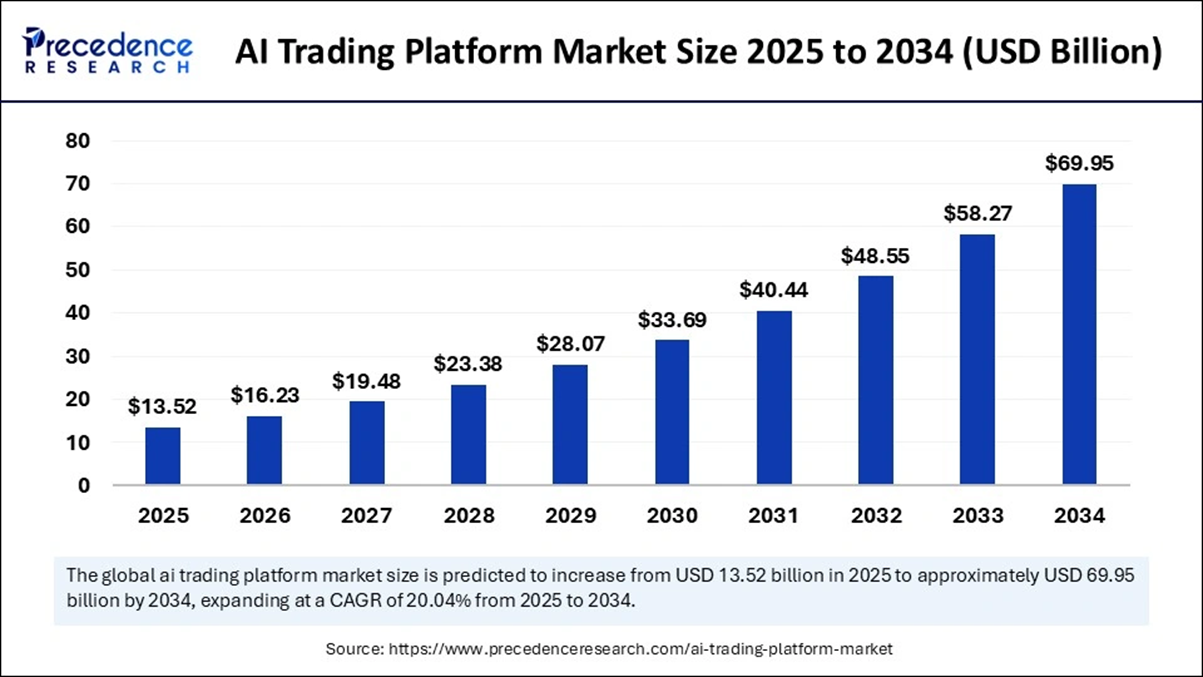
This explosive growth signals a world of opportunity for those ready to create AI Paper Trading App platforms that are not only functional, but strategic, scalable, and market-savvy.
This guide will walk you through the journey of AI Paper Trading App Development, covering everything from ideation and design to deployment and future trends.
An AI Paper Trading App is a simulated trading platform that allows users to test financial strategies without risking actual capital. Unlike traditional paper trading, which once meant manually recording trades on paper, these modern applications use artificial intelligence to provide a dynamic, data-driven environment. The result is a realistic simulation of live markets where users can experiment, learn, and optimize strategies safely.
At its foundation, paper trading replicates market conditions using virtual money. This enables beginners to practice trading fundamentals and experienced traders to refine strategies. The app mirrors live market feeds, giving users the same pricing, volatility, and execution experience they would encounter in real-world exchanges.
Artificial intelligence enhances this simulation by going beyond simple order execution. AI algorithms analyze historical and real-time data, detect patterns, and generate predictive insights. These capabilities help users identify potential entry and exit points, optimize portfolio allocation, and measure risk exposure. Unlike static simulators, AI-driven apps continuously adapt and learn from user behavior and market shifts.
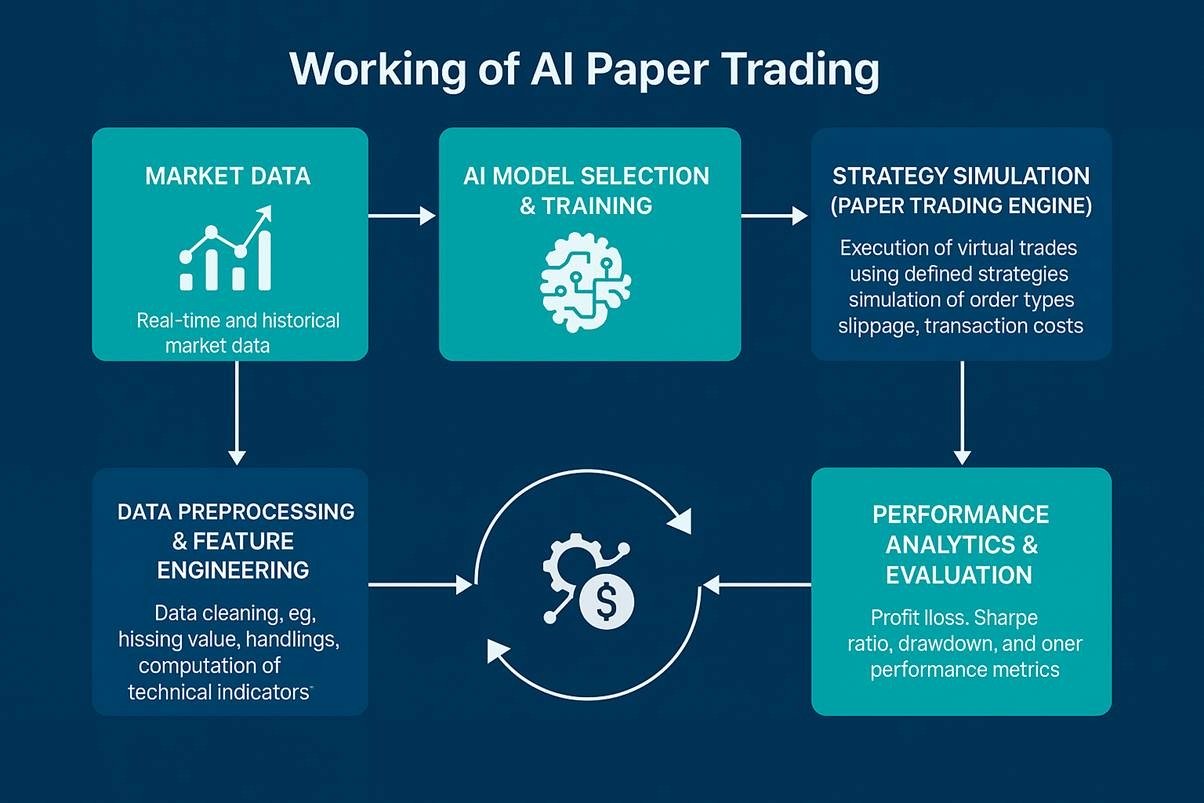
The app connects to reliable APIs that deliver both historical and real-time market data. This includes stock prices, forex movements, crypto valuations, and even macroeconomic indicators. Accurate data ensures that the simulation closely matches live trading conditions.
Machine learning models are deployed to process massive datasets. They identify hidden correlations, predict short-term price movements, and suggest adjustments to user strategies. For example, an AI model might detect when a stock is overbought or forecast volatility spikes before they happen.
Users place trades with virtual capital. The app simulates execution as if trades were placed in the real market, factoring in slippage, transaction fees, and order types (market, limit, stop-loss). This creates an authentic trading experience while eliminating financial risk.
The platform doesn’t just show wins and losses; it provides deep analytics such as Sharpe ratios, drawdowns, risk-adjusted returns, and portfolio diversification reports. These metrics allow traders to evaluate strategies with professional-level insights.
AI models evolve with every simulated trade. The app learns from user decisions, adapts predictions, and refines future strategy suggestions. Over time, this feedback loop helps users build more resilient, data-driven trading approaches.
Some advanced AI paper trading apps also integrate sentiment analysis (news, social media), reinforcement learning models, and automated bots that suggest or execute trades under set rules. This mirrors the sophistication of hedge funds and institutional trading desks.
By combining simulation with intelligence, an AI Paper Trading App transforms the learning process into a smart, interactive experience. It helps beginners gain confidence, while giving professional traders a powerful sandbox for testing complex strategies before risking real money.
Businesses that invest in AI Paper Trading App solutions gain a competitive edge by offering smarter, risk-free trading experiences powered by AI. The building of AI Paper Trading App creates opportunities for customer engagement, revenue generation, and market differentiation. With rapid growth in fintech, prioritizing AI Paper Trading App Development ensures future readiness while bridging the gap between simulation and real-world trading.
Here are some reasons to invest in AI Paper Trading App:
The financial markets are complex and intimidating for new investors. By offering a safe, AI-powered simulation environment, businesses can address a growing demand for interactive financial education tools. Users want to test strategies without the fear of losing money. Organizations that invest in AI Paper Trading App can capture this segment by providing advanced, user-friendly learning platforms.
Fintech is a highly competitive industry. Traditional paper trading apps often lack personalization and adaptability. With AI Paper Trading App Development, businesses can integrate predictive analytics, personalized trade recommendations, and automated strategy insights. This creates differentiation and builds a strong competitive advantage.
The building of AI Paper Trading App opens direct and indirect revenue streams. Apps can be monetized through premium subscriptions, advanced features, API integrations, or partnerships with brokerages. Additionally, companies can use these apps internally to refine trading algorithms, cutting research costs and speeding innovation.
Every trade simulated in a paper trading environment generates valuable behavioral and market interaction data. Businesses that invest in AI Paper Trading App gain access to anonymized insights about how users interact with markets. These insights can inform product development, customer segmentation, and future AI model training.
The global AI trading platform market is expected to grow rapidly, with billions of dollars in projected value over the next decade. Businesses that prioritize AI Paper Trading App Development now will be better positioned to scale their platforms as demand accelerates. Early movers stand to benefit the most in terms of brand recognition, customer trust, and technological maturity.
For financial institutions, building these apps also creates a bridge to real-world trading services. A user who builds confidence through simulation is more likely to transition into live trading with the same platform or brokerage. This drives customer retention and long-term growth.
Now is the ideal time for businesses to embrace AI Paper Trading App Development and lead the future of intelligent, risk-free trading innovation.
AI Paper Trading Applications are no longer just practice tools; they have evolved into multifunctional platforms that empower traders, support institutions, and strengthen fintech ecosystems. By merging the accuracy of artificial intelligence with the safety of simulation, these apps deliver practical benefits across education, strategy building, and business growth.
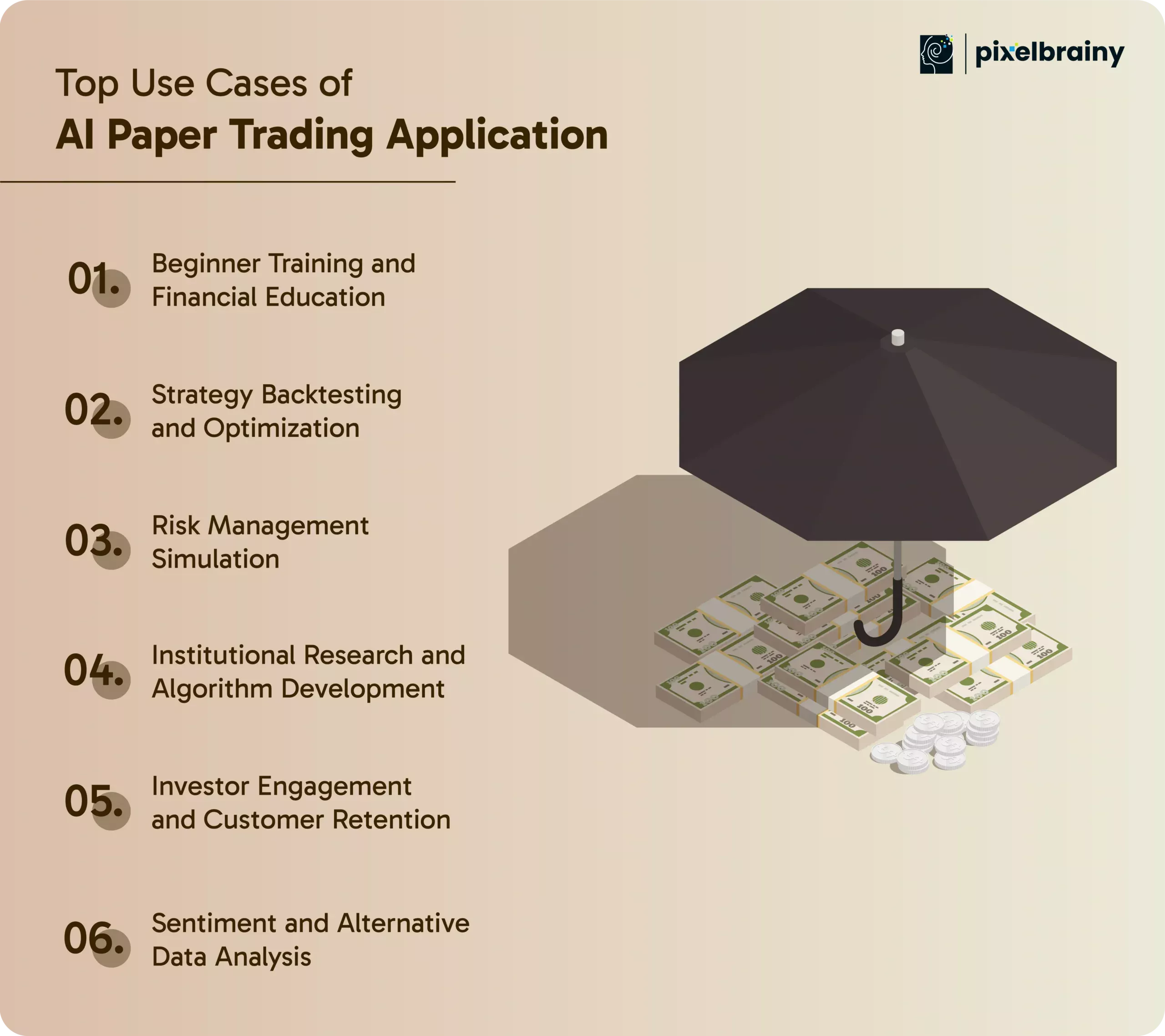
One of the most significant use cases of AI Paper Trading Apps is providing a risk-free entry point for beginners. Financial markets are complex, with fast price movements, multiple asset classes, and high stakes. New traders often feel intimidated, and mistakes can be costly. Paper trading with AI helps bridge this gap. These apps don’t just simulate orders; they also act as mentors, analyzing user trades and offering corrective feedback.
Example: A university offering financial literacy courses could integrate an AI paper trading app into its curriculum. Students would practice real-time trading scenarios, receive AI-generated insights on decision-making, and gradually build confidence before stepping into real-world investing.
Professional and retail traders alike rely on backtesting to validate whether a strategy can survive under different market conditions. AI-enhanced paper trading apps make this process far more effective. Instead of manually testing strategies, AI can crunch years of historical data, spot hidden correlations, and highlight risks. This ensures strategies are stress-tested against bullish, bearish, and sideways market cycles.
Example: A retail trader can test a swing trading strategy on 15 years of NASDAQ data. The AI might reveal that while the strategy performs well in bullish conditions, it suffers during high volatility periods. The app could then suggest modifications such as tighter stop-losses or adjusting position sizes.
Managing risk is critical for long-term success in trading. AI Paper Trading Apps allow traders to experiment with different risk management techniques without financial consequences. By simulating scenarios like sudden crashes, stop-loss strategies, leverage adjustments, and diversification, traders can clearly see the outcomes of their decisions. AI enhances this by predicting potential drawdowns and portfolio vulnerabilities.
Example: An investor can simulate holding a tech-heavy portfolio during the 2008 financial crisis. The AI would show how diversification into bonds or commodities might have reduced losses, teaching traders the importance of hedging and balanced portfolios.
For hedge funds and financial institutions, AI Paper Trading Apps serve as innovation testbeds. Before deploying trading bots or machine learning algorithms in real markets, institutions can test them under paper trading environments that replicate live conditions. This minimizes risk, reduces R&D costs, and accelerates the time to market for new strategies.
Example: A hedge fund working on an AI-driven arbitrage algorithm could first run it through a paper trading environment. The app would simulate execution latency, liquidity issues, and transaction costs, allowing the fund to refine its model before risking millions in capital.
Beyond traders, fintech companies and brokerages benefit immensely from these apps. Offering an AI Paper Trading App helps build trust with new users by giving them a safe environment to practice. Once comfortable, users are more likely to open real accounts with the same provider. Additionally, businesses can gamify the experience with leaderboards, badges, and competitions to keep customers engaged.
Example: A brokerage firm could offer a free AI-powered demo account where users practice trading with $100,000 in virtual funds. After users gain confidence, the platform can encourage them to switch to a live account, effectively converting practice traders into paying clients.
Markets are not solely driven by technical indicators; sentiment, news, and alternative data play huge roles. Advanced AI Paper Trading Apps incorporate sentiment analysis, natural language processing, and external signals like earnings reports, political events, or even social media trends. This allows traders to test how strategies respond to real-world triggers beyond charts and numbers.
Example: A paper trading app could simulate how Bitcoin prices react to Twitter buzz or central bank announcements. Users would learn how external signals influence asset volatility and adjust their strategies accordingly, making them more adaptable in real markets.
From guiding beginners to supporting institutional innovation, the use cases of AI Paper Trading Applications highlight their broad value. They not only help individuals gain confidence but also empower businesses and financial institutions with insights, customer growth, and future-ready tools.
Also Read: AI Trading Agent Development: Benefits and Features
Building a successful AI Paper Trading App requires a strong foundation of core features that ensure functionality, usability, and reliability. Whether you are planning to develop AI Paper Trading App, these must-have features form the backbone of a robust trading simulation platform.
| Feature | Explanation |
| Real-Time Market Data Integration | Essential to build AI Paper Trading App, live data feeds mirror real trading conditions. This helps users practice with accuracy and understand market dynamics effectively |
| User-Friendly Dashboard | A clean, intuitive interface is critical in developing AI Paper Trading App. Traders can monitor their portfolios, track trades, and view analytics seamlessly |
| Virtual Currency Allocation | When you create AI Paper Trading App, virtual funds allow users to trade without risk. It encourages beginners to learn and practice with confidence |
| Order Placement Simulation | To build AI Paper Trading App realistically, users must execute market, limit, and stop orders just as they would in live markets. This simulates authentic trading behavior |
| Performance Analytics | A must for AI Paper Trading App development, this feature provides reports on profits, losses, win ratios, and risk levels, offering actionable feedback for users |
| Strategy Backtesting | Traders can test strategies against historical data before execution. This ensures your developed AI Paper Trading App is practical for both learning and optimization |
| Portfolio Management | A feature that allows users to manage multiple assets, track diversification, and measure overall performance. It’s crucial when you create AI Paper Trading App for realistic simulation |
| Risk Management Tools | Users can set stop-loss limits, leverage ratios, and hedging strategies. Including this in AI Paper Trading App development teaches traders disciplined risk practices |
| Notifications and Alerts | Push alerts for price movements, trade outcomes, or performance updates are vital when you build AI Paper Trading App for engaged learning |
| Multi-Device Compatibility | Responsive design ensures accessibility across web, mobile, and tablets. This is fundamental in developing AI Paper Trading App for today’s diverse user base |
These core elements ensure that when you create and deploy AI Paper Trading App, it offers realism, engagement, and value to users across all trading levels.
While core features make the foundation strong, advanced features elevate the platform into a next-generation trading ecosystem. By developing AI Paper Trading Apps with these sophisticated tools, businesses can attract serious traders and stand out in a competitive market.
| Advanced Feature | Explanation |
| AI-Powered Trade Recommendations | Advanced algorithms suggest optimal entry and exit points. Including this while developing AI Paper Trading App enhances decision-making and user trust |
| Reinforcement Learning Models | By making AI Paper Trading App with adaptive learning models, the system improves strategies by learning from user and market behavior over time |
| Sentiment Analysis Integration | Using NLP, the app processes news and social media to predict market movements. This feature, when building AI Paper Trading App, adds an edge beyond charts |
| Gamification & Leaderboards | Adding competitions, badges, and rankings makes learning engaging. It motivates users when you make AI Paper Trading App for a wide audience |
| Customizable Trading Bots | Users can design and deploy AI bots that execute trades automatically. Including this in developing AI Paper Trading App attracts algorithmic traders |
| Multi-Asset Support | By building AI Paper Trading App with stocks, forex, crypto, and commodities, developers widen its appeal and training value |
| Scenario-Based Simulations | Simulating market crashes, bull runs, or black swan events helps traders practice resilience. This feature enhances the practicality of AI Paper Trading App development |
| API Integrations with Brokers | When you make AI Paper Trading App, linking it with brokerage APIs creates a seamless transition from paper trading to live trading |
| Voice and Chat-Based Assistance | AI-driven chatbots and voice commands make the app more interactive. Integrating this while building AI Paper Trading App improves user experience |
| Blockchain-Based Transparency | Using blockchain ensures data security and transparent trade records. This advanced layer adds trust to AI Paper Trading App development |
By making AI Paper Trading App with these advanced features, businesses can deliver innovation-driven platforms that set new benchmarks in fintech.

After finalizing the core and advanced features, it’s time now to move from planning into execution. Many product owners and founders often ask, What is the process to build AI Paper Trading App? The reality is that the development of AI Paper Trading Application requires a step-by-step journey where every stage reduces risk and builds confidence.
By approaching it with clear milestones, you will not just be developing AI Paper Trading App, but creating a long-term solution that scales with your business and your users.
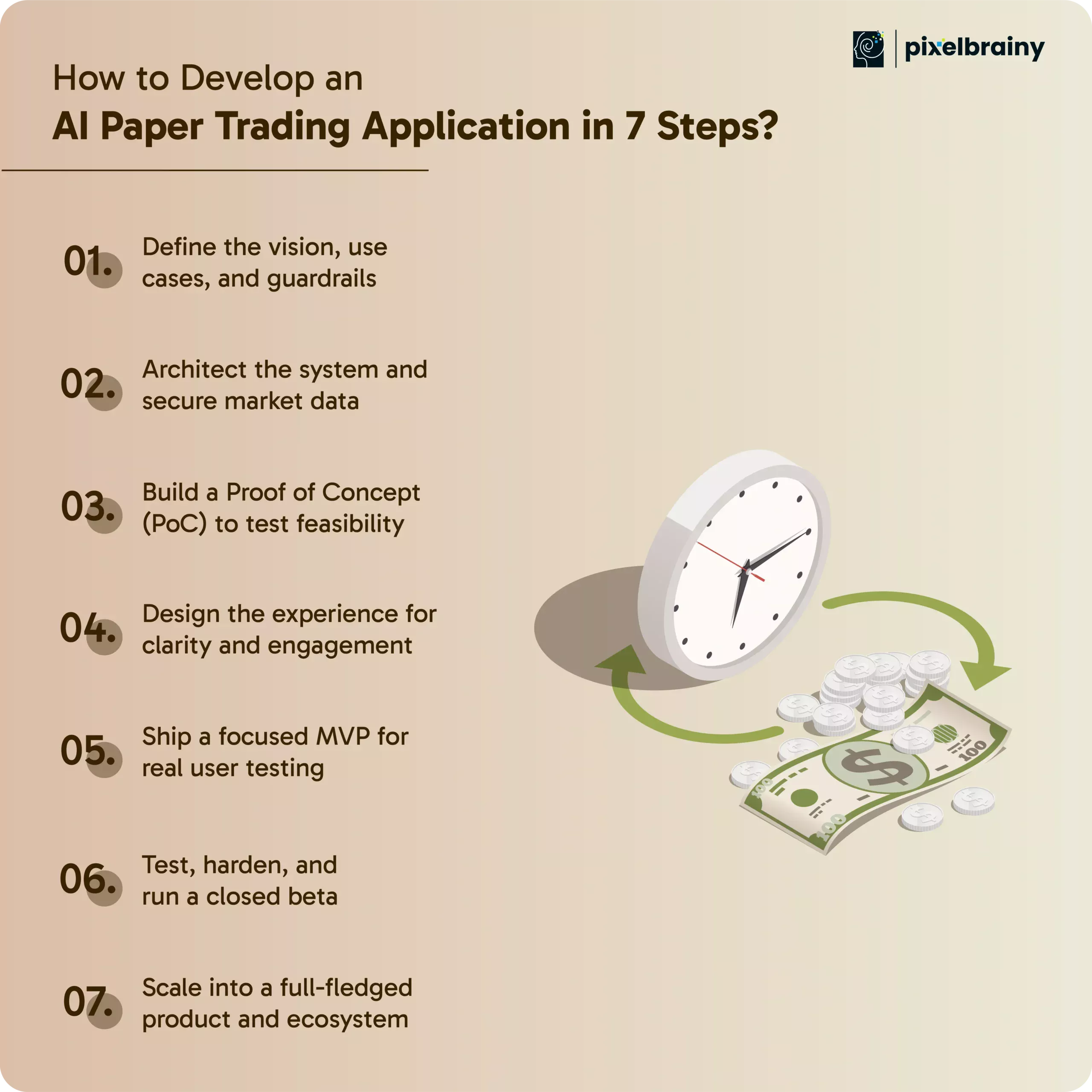
The first step is about clarity. Define the purpose of your app, the type of traders you want to serve, and the key problems you want to solve. Will it focus on beginners learning the basics, professionals testing advanced strategies, or institutions simulating algorithms? Write down compliance requirements, privacy concerns, and measurable success criteria such as engagement levels or conversion rates.
Why this matters: Without a strong vision, your app risks being a collection of disconnected features. A clear foundation aligns every decision with user needs and business goals.
Once the vision is clear, the next step is designing the technical backbone. Create a modular architecture with separate layers for data ingestion, AI models, simulation engine, analytics, and the user interface. Secure reliable real-time and historical market data APIs, and enrich them with indicators like moving averages or volatility measures. Build a Paper Trading App with realistic conditions such as transaction fees, order execution times, and slippage so the simulation feels authentic.
Why this matters: A robust architecture ensures your app can grow with new features, handle thousands of trades per second, and still deliver accurate and seamless experiences to users.
A PoC is a small but powerful step. Develop a minimal system that connects live data, runs a basic AI prediction, and executes a simple simulated trade. This is not about perfection but about testing whether your idea works technically. Measure prediction accuracy, latency, and system responsiveness. Adjust assumptions early, rather than after large investments.
Why this matters: A PoC saves time and money by proving feasibility before scaling. It reduces risk and helps secure internal or investor buy-in with evidence instead of promises.
Even the smartest AI models fail if users cannot easily navigate the app. Start by mapping workflows from sign-up to the first successful trade. Develop wireframes, prototypes, and test them with real users for feedback. Pay special attention to dashboards, performance reports, and risk panels that teach while they guide. Collaborating with a UI/UX design company can elevate the experience with accessibility, consistent visuals, and responsive layouts across all devices.
Why this matters: A seamless design reduces friction and keeps users motivated to practice. The more engaging the experience, the more likely they are to return and trust your app.
At this stage, bring your concept to life by launching a Minimum Viable Product. Include only the essentials such as onboarding, virtual funds, real-time data, trade execution, and analytics dashboards. Monitor how users interact with features and gather insights on what excites them the most. Partnering with an MVP development company can help accelerate delivery and ensure that development follows proven best practices.
Why this matters: An MVP development helps you learn what the market truly values. Instead of building everything at once, you can focus resources on features that generate impact and user adoption.
Testing is where your app matures. Run historical backtests on diverse scenarios, from market crashes to high-growth cycles. Conduct stress tests to measure how your app performs under thousands of simultaneous trades. Harden the system with encryption, secure authentication, and penetration testing. Then run a closed beta with selected users who provide real-world feedback on usability, performance, and AI accuracy.
Why this matters: A closed beta ensures your product is market-ready. It reveals usability issues, strengthens security, and confirms that your system performs under realistic pressure.
Once the beta is stable, focus on scaling the application. Add multi-asset support for stocks, forex, crypto, and commodities. Enhance the platform with gamification, customizable trading bots, and social features like competitions and leaderboards. Introduce governance for AI model updates, compliance audits, and transparent reporting. Collaborating with top trading software development companies in USA ensures integrations are smooth, while top ai development companies in USA can support advanced AI pipelines, MLOps, and continual learning.
Why this matters: Scaling transforms your app from a working product into a full trading ecosystem. It not only retains users but also builds trust, brand recognition, and long-term growth opportunities.
By carefully following these seven steps, you can confidently move from idea to launch, ensuring that the development of AI Paper Trading Application delivers a product that is scalable, innovative, and trusted by traders.
One of the most common questions business owners and entrepreneurs ask is “What is the cost to develop AI Paper Trading Application?” The answer depends on the scope, features, complexity, and the expertise of your development team. The AI Paper Trading App Development cost can range from as low as $30,000 for a basic version to $300,000+ for a full-fledged advanced platform.
When estimating the cost of creating AI Paper Trading App, consider factors such as the number of features, integration with real-time market data APIs, use of advanced AI models, security requirements, scalability options, and design complexity. Partnering with the right team ensures the investment aligns with your long-term goals.
Here’s a simplified breakdown of potential costs:
| Type of AI Paper Trading App | Estimated Cost Range | What’s Included |
| Basic AI Paper Trading App | $30,000 – $60,000 | Includes core features like virtual currency allocation, real-time data integration, order execution simulation, simple analytics dashboards, and a clean UI. Ideal for startups testing the waters |
| Medium AI Paper Trading App | $70,000 – $150,000 | Adds advanced portfolio management, backtesting, risk management tools, notifications, and more sophisticated AI predictions. Suitable for fintech businesses looking to capture a wide range of users |
| Advanced AI Paper Trading App | $160,000 – $300,000+ | Full-fledged platform with multi-asset support, customizable trading bots, sentiment analysis, gamification, API integration with brokers, and enterprise-grade security. Built for businesses scaling to large user bases |
AI Paper Trading App Development cost will also vary depending on the location and expertise of developers. For example, hiring offshore developers may lower costs, while partnering with top-tier fintech specialists will increase initial expenses but ensure better scalability and performance.
The Cost to Build AI Paper Trading App is ultimately an investment in innovation—your choice between basic, medium, or advanced builds should align with your vision, growth strategy, and user expectations.
Also Read: How Much Does AI Trading Agent Development Cost?
Choosing the right technology stack is the foundation of creating a scalable and efficient solution. For the Development of AI Paper Trading App, every layer—from frontend to backend and AI frameworks—must be carefully selected to ensure smooth performance, security, and long-term scalability.
| Layer | Technologies & Tools | Explanation |
| Frontend | React.js, Angular, Vue.js, Flutter (for mobile) | A responsive and intuitive user interface is essential for engaging traders. These tools allow developers to design dashboards, charts, and trading panels with seamless performance across devices |
| Backend | Node.js, Django, Flask, Spring Boot | The backend powers order simulations, user management, and API integrations. Robust frameworks ensure fast execution, reliable data handling, and scalability under heavy trading loads |
| AI & Data Layer | TensorFlow, PyTorch, scikit-learn, NLP libraries | The intelligence of the app comes from this layer. AI models process market data, predict trends, and provide strategy recommendations, while NLP can be used for sentiment analysis |
| Database | PostgreSQL, MongoDB, Redis | Databases store user data, historical trades, and analytics. Choosing the right mix ensures fast queries, accurate reporting, and secure handling of sensitive information |
| Cloud & Deployment | AWS, Microsoft Azure, Google Cloud, Docker, Kubernetes | Cloud platforms provide elasticity to handle real-time data loads. Containerization and orchestration tools simplify deployment and ensure continuous availability |
| APIs & Integrations | Alpaca, IEX Cloud, Yahoo Finance APIs | Market data feeds and brokerage integrations are crucial for realism. APIs ensure the app reflects actual market conditions and transitions smoothly to live trading when needed |
By selecting the right tools across frontend, backend, AI, and infrastructure, you ensure AI Paper Trading App Development results in a reliable, scalable, and innovative platform. The secret to Building a high-performance AI paper trading app lies in aligning technology choices with user needs and business goals.

As traders look for safe ways to learn and test strategies, AI-powered paper trading apps are becoming essential tools. These platforms combine the security of virtual money with intelligent features that replicate live market conditions. They allow users to practice, analyze, and refine strategies without the fear of financial loss.
Below are five of the most popular apps in the current market.
Webull is popular among beginners for its user-friendly design and simple paper trading feature. With just a click of the “paperTrade” button, users can access a virtual account to start practicing immediately. The app provides multi-chart layouts, technical indicators, and a clean dashboard, making it an excellent choice for those who want to gain hands-on experience in a stress-free environment.
Charles Schwab’s thinkorswim platform includes “paperMoney,” a highly advanced simulator. It offers access to real-time market data, customizable charting tools, and comprehensive analytics that mirror professional-grade trading systems. With added features like news feeds and streaming CNBC, it is perfect for active traders and learners who want to test strategies under realistic conditions.
Interactive Brokers provides one of the most versatile paper trading experiences. Through its Trader Workstation (TWS) and mobile apps, users can simulate trades across global markets, including equities, options, futures, and forex. With advanced order types and professional-level charting, IBKR is ideal for traders who want to experiment with diverse assets and global strategies.
QuantConnect is a strong choice for developers, quants, and researchers who want to explore algorithmic trading. Powered by its open-source LEAN engine, the platform enables coding, backtesting, and simulation with live or historical data. Supporting multiple asset classes like equities, forex, and crypto, it serves as a powerful environment for testing AI-driven and algorithmic strategies before going live.
Cryptohopper focuses on cryptocurrency enthusiasts by offering a dedicated paper trading environment for digital assets. Traders can simulate strategies on popular exchanges using real-time data. With features such as automated trading bots, strategy backtesting, and market simulations, Cryptohopper provides a safe yet advanced playground for testing AI-based crypto strategies.
| App | Best For | Key Highlights |
| Webull | Beginners | Quick setup, free paper trading, clean and simple UI |
| Charles Schwab | Advanced & Active Traders | Professional analytics, real-time feeds, customizable tools |
| Interactive Brokers | Global Multi-Asset Traders | Wide asset support, advanced orders, professional-grade tools |
| QuantConnect | Quants & Developers | Algorithmic trading, AI testing, supports multiple markets |
| Cryptohopper | Crypto Traders | Simulated crypto trades, backtesting, automated bot support |
Each of these apps has unique strengths. Beginners may prefer Webull for its simplicity, while professionals and quants will benefit from the depth of platforms like Interactive Brokers or QuantConnect. Crypto-focused traders can explore Cryptohopper to practice strategies in a risk-free environment.
Building an AI Paper Trading App is a rewarding journey, but it comes with significant challenges that businesses and developers must prepare for. From data reliability to compliance and user adoption, these hurdles can slow down progress if not addressed strategically. Below are the key challenges in AI Paper Trading App Development and practical ways to overcome them.

Challenge: Reliable, real-time market data is the backbone of any paper trading app. Inaccurate or delayed data can lead to poor simulations, misleading insights, and loss of user trust.
How to Overcome: Partner with trusted data providers and APIs that deliver low-latency feeds and historical datasets. Implement data validation layers to filter out anomalies before they affect user simulations.
Challenge: While paper trading eliminates financial risk, it can sometimes create a false sense of confidence. Without realistic elements like slippage, transaction costs, and liquidity, users may be unprepared for live markets.
How to Overcome: Design the simulation engine to replicate real-world trading conditions. Incorporate fees, spreads, and order delays so users experience the challenges of actual trading.
Challenge: Developing effective AI models for predictions, sentiment analysis, or portfolio recommendations requires expertise, high-quality data, and ongoing tuning. Poorly designed models may produce inaccurate or irrelevant results.
How to Overcome: Start with simpler models and scale up gradually. Involve experienced data scientists and adopt MLOps practices for continuous training, monitoring, and improvement of AI models.
Challenge: Even though paper trading uses virtual money, sensitive user data such as login credentials, personal details, and activity logs must be protected. Weak security may expose users to breaches or fraud.
How to Overcome: Apply industry-standard security protocols like encryption, multi-factor authentication, and role-based access control. Regular penetration testing ensures vulnerabilities are discovered and patched early.
Challenge: Many users try paper trading for a short time and abandon it when the novelty wears off. Without strong engagement features, retention rates can drop significantly.
How to Overcome: Gamify the experience with leaderboards, competitions, and achievements. Provide AI-driven feedback on trades, helping users learn and improve, which keeps them coming back.
Challenge: Even though paper trading does not involve real money, apps must still comply with data privacy regulations (GDPR, CCPA) and in some cases, trading-related compliance rules.
How to Overcome: Work with legal experts to ensure the app adheres to regional laws. Keep transparent disclaimers clarifying that simulations do not guarantee live-trading outcomes.
Challenge: The cost of integrating real-time data, building AI models, and maintaining cloud infrastructure can be significant. For startups, this may limit growth.
How to Overcome: Start with a Minimum Viable Product (MVP) and add features incrementally. Use scalable cloud services that grow with your user base and optimize resource allocation to control expenses.
Challenge: Traders expect seamless access across web, iOS, and Android devices. Inconsistent design or missing features between platforms can hurt user experience.
How to Overcome: Use responsive design principles and cross-platform frameworks like Flutter or React Native. Test extensively on all devices to ensure uniform functionality and design.
The challenges in AI Paper Trading App Development are real, but they are not insurmountable. By combining the right technical choices, user-focused design, and compliance strategies, businesses can turn obstacles into opportunities and deliver a platform that is both innovative and dependable.
As financial technology evolves, AI Paper Trading Apps are expected to become more intelligent, immersive, and adaptive. The future of AI Paper Trading App Development will be shaped by innovations in AI, data integration, and user experience, opening new possibilities for both traders and businesses. Below are five key trends to watch.
Generative AI models will transform how trading strategies are created and explained. Instead of just predicting outcomes, these models will provide natural-language insights and actionable suggestions tailored to user behavior.
Future apps will not rely only on price charts and fundamentals. They will integrate alternative data such as social media sentiment, satellite imagery, and supply chain metrics to generate deeper insights.
Reinforcement learning will allow AI models to “learn by doing,” simulating trades continuously to improve over time. This will enable more adaptive and self-improving strategies in paper trading apps.
AR and VR technologies will make trading simulations more engaging. Users may practice in 3D environments with interactive dashboards, enhancing learning through visualization.
Blockchain technology will add transparency, security, and trust to AI Paper Trading Apps. Decentralized paper trading platforms will ensure data integrity and user trust in simulated results.
These future trends highlight how AI Paper Trading App Development will move beyond simple simulations to become holistic, intelligent ecosystems. Businesses that embrace these innovations early will gain a strong advantage in fintech’s next wave.
Choosing the right partner can make the difference between a good product and a market-leading platform. At PixelBrainy, we are recognized as a trusted AI Trading Software Development Company in USA with proven expertise in crafting intelligent trading solutions. Our team specializes in AI Paper Trading App Development, delivering platforms that blend innovation, scalability, and real-world financial insights.
We understand what it takes to create AI Paper Trading App that is user-friendly, robust, and secure. From building of AI Paper Trading App architectures with realistic simulations to embedding advanced analytics and AI models, our approach ensures your vision translates into a future-ready product. Beyond just coding, we bring strategic thinking and end-to-end execution—from concept and design to deployment and scaling.
Recently, PixelBrainy partnered with a fintech startup in the United States to design and deliver a next-generation AI-powered paper trading platform. The app featured real-time equity and crypto data, customizable trading bots, gamified user engagement, and advanced risk analytics. By integrating cutting-edge AI development, we enabled predictive insights that guided users on trade timing and portfolio balancing. This project successfully attracted thousands of active learners and early-stage traders within its first three months of launch, helping our client strengthen its position in the competitive fintech space.
If you’re looking for a reliable partner to drive your vision, PixelBrainy combines technical depth, AI expertise, and fintech domain knowledge to deliver results. With us, your journey in AI Paper Trading App Development is not just about building an app—it’s about creating a sustainable product that grows with the market.

The future of trading belongs to those who innovate, and AI Paper Trading App Development is the perfect gateway to that future. By combining artificial intelligence with realistic simulations, businesses can empower users to practice, learn, and grow in a risk-free environment.
Whether you are exploring the building of AI Paper Trading App for beginners, professionals, or institutions, the possibilities are endless. From strategy backtesting to risk management and engagement tools, every feature plays a vital role in shaping smarter traders and stronger businesses.
At PixelBrainy, we bring the expertise to create AI Paper Trading App that is scalable, intelligent, and market-ready. Let’s turn your vision into a product that defines the next era of fintech.
Book an appointment with our experts today and take the first step toward your AI-powered trading future.
No, it serves both beginners and professionals. Beginners use it to learn market basics without financial risk, while advanced traders and institutions use it to test complex strategies, AI models, and trading bots before deploying them in live markets.
Even though trades are simulated with virtual money, user accounts, activity logs, and personal data need enterprise-grade protection. When properly developed with encryption, authentication, and secure cloud deployment, AI Paper Trading Apps are highly secure and compliant with privacy regulations.
Yes, many modern apps are designed with APIs that connect to brokerage platforms. This allows users to smoothly transition from simulation to live trading when they feel confident, making the app more practical and user-friendly.
While fintech companies are the primary adopters, industries such as edtech, financial advisory, and investment research firms also benefit. These apps are used for client training, investor engagement, and algorithm testing.
AI adds intelligence beyond basic simulations. It can analyze patterns, suggest personalized strategies, simulate real-time risks like slippage, and provide predictive insights. This makes the experience far more realistic and valuable for users at all levels.
The future includes advanced AI features like reinforcement learning, sentiment analysis, gamification, and integration of alternative data. These apps will evolve into holistic trading ecosystems, bridging education, simulation, and live market readiness.

About The Author
Sagar Bhatnagar
Sagar Sahay Bhatnagar brings over a decade of IT industry experience to his role as Marketing Head at PixelBrainy. He's known for his knack in devising creative marketing strategies that boost brand visibility and market influence. Sagar's strategic thinking, coupled with his innovative vision and focus on results, sets him apart. His track record of successful campaigns proves his ability to utilize digital platforms effectively for impactful marketing efforts. With a genuine passion for both technology and marketing, Sagar continuously pushes PixelBrainy's marketing initiatives to greater success.


Transform your ideas into reality with us.
Working with the PixelBrainy team has been a highly positive experience. They understand the design requirements and create beautiful UX elements to meet the application needs. The dev team did an excellent job bringing my vision to life. We discussed usability and flow. Sagar worked with his team to design the database and begin coding. Working with Sagar was easy. He has the knowledge to create robust apps, including multi-language support, Google and Apple ID login options, Ad-enabled integrations, Stripe payment processing, and a Web Admin site for maintaining support data. I'm extremely satisfied with the services provided, the quality of the final product, and the professionalism of the entire process. I highly recommend them for Android and iOS Mobile Application Design and Development.

Great experience working with them. Had a lot of feedback and I found that unlike most contractors they were bugging me for updates instead of the other way around. They were extremely time conscience and great at communicating! All work was done extremely high quality and if not on time, early! They were always proactive when it comes to communication and the work is great/above par always. Very flexible and a great team to work with! Goes above and beyond to present us with multiple options and always provides quality. Amazing work per usual with Chitra. If you have UI/UX or branding design needs I recommend you go to them! Will likely work with them in the future as well, definitely recommended!

PixelBrainy is a joy to work with and is a great partner when thinking through branding, logo, and website layout. I appreciate that they spend time going into the "why" behind their decisions to help inform me and others about industry best practices and their expertise.

I hired them to design our software apps. Things I really like about them are excellent communication skills, they answer all project suggestions and collaborate right away, and their input on design and colors is amazing. This project was complex and needed patience and creativity. The team is amazing to do business with. I will be using them long-term. Glad to see there are some good people out there. I was afraid to try and outsource my project to someone but I am glad I met them! I really can't say enough. They went above and beyond on this project. I am very happy with everything they have done to make my business stand out from the competition.

It was great working with PixelBrainy and the team. They were very responsive and really owned the project. We'll definitely work with them again!

I recently worked with the PixelBrainy team on a project and I was blown away by their communication skills. They were prompt, clear, and articulate in all of our interactions. They listened and provided valuable feedback and suggestions to help make the project a success. They also kept me updated throughout the entire process, which made the experience stress-free and enjoyable.

PixelBrainy is very good at what it does. The team also presents themselves very professionally and takes care of their side of things very well. I could fully trust them taking up the design work in a timely and organised manner and their attention to detail saved us lots of effort and time. This particular project was quite intense and the team showed that they function very well under pressure. Very much looking forward to working with her again!

It's always an absolute pleasure working with them. They completed all of my requests quickly and followed every note I had for them to a T, which made our process go smoothly from start to finish. Everything was completed fast and following all of the guidelines. And I would recommend their services to anyone. If you need any design work done in the future, PixelBrainy should be your first call!

They took ownership of our requirements and designed and proposed multiple beautiful variants. The team is self-motivated, requires minimum supervision, committed to see-through designs with quality and delivering them on time. We would definitely love to work with PixelBrainy again when we have any requirements.

PixelBrainy was a big help with our SaaS application. We've been hard at work with a new UI/UX and they provided a lot of help with the designs. If you're looking for assistance with your website, software, or mobile application designs, PixelBrainy and the team is a great recommendation.

PixelBrainy designers are amazing. They are responsive, talented, and always willing to help craft the design until it matches your vision. I would recommend them and plan to continue them for my future projects and more!!!

They were awesome! Did a good job fast, and good communication. Will work with them again. Thank you

Creative, detail-oriented, and talented designers who take direction well and implement changes quickly and accurately. They consistently over-delivered for us.

PixelBrainy team is very talented and creative. Great designers and a pleasure to work with. PixelBrainy is an excellent communicator and I look forward to working with them again.

PixelBrainy has a very talented design team. Their work is excellent and they are very responsive. I enjoy working with them and hope to continue on all of our future projects.


